
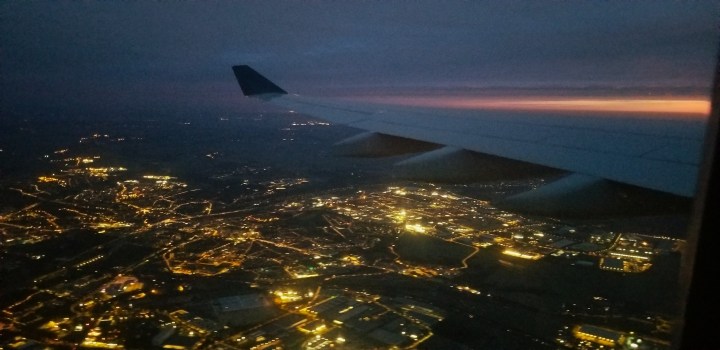
As I have mentioned before, my husband and I were in France for three weeks; he was working for the second half of February, and we stayed in Beauvais, and then we went to Paris for the first week of March, to enjoy a wonderful holiday. The photo above is a view of Paris from the plane at daybreak, as we approached the airport on February 15. We rented a car from there, to go to our first destination: Beauvais, in the Oise department, about two hours north of Paris.
It is now officially spring in the Northern Hemisphere, so in this post, I would like to talk about climate, and how even though Southern Ontario is closer to the equator than most of France, and definitely than Beauvais or Paris (around 6-7 degrees by latitude), spring had sprung when we were in France, while back home in Canada, the ground was still frozen.
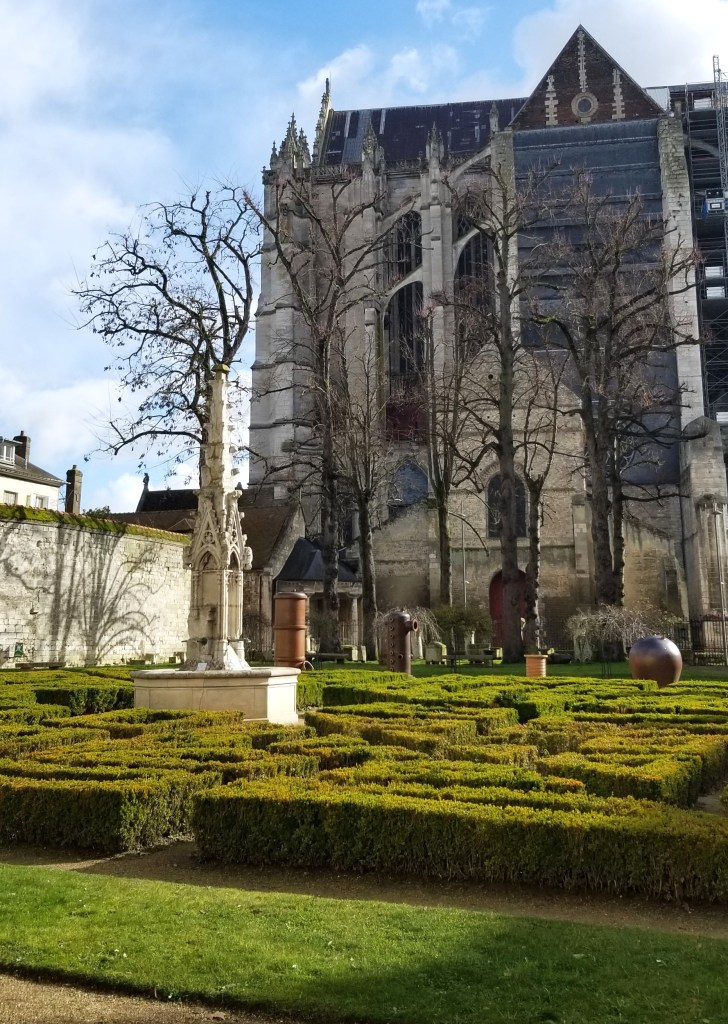
The first photo, below, is from Monday February 16, showing a green a courtyard garden in Beauvais, with its amazing cathedral in the background:
The next day, I walked to the general cemetery; lots of fresh flowers and potted plants by the graves, and also an emerald landscape of the hills may be seen in the background:

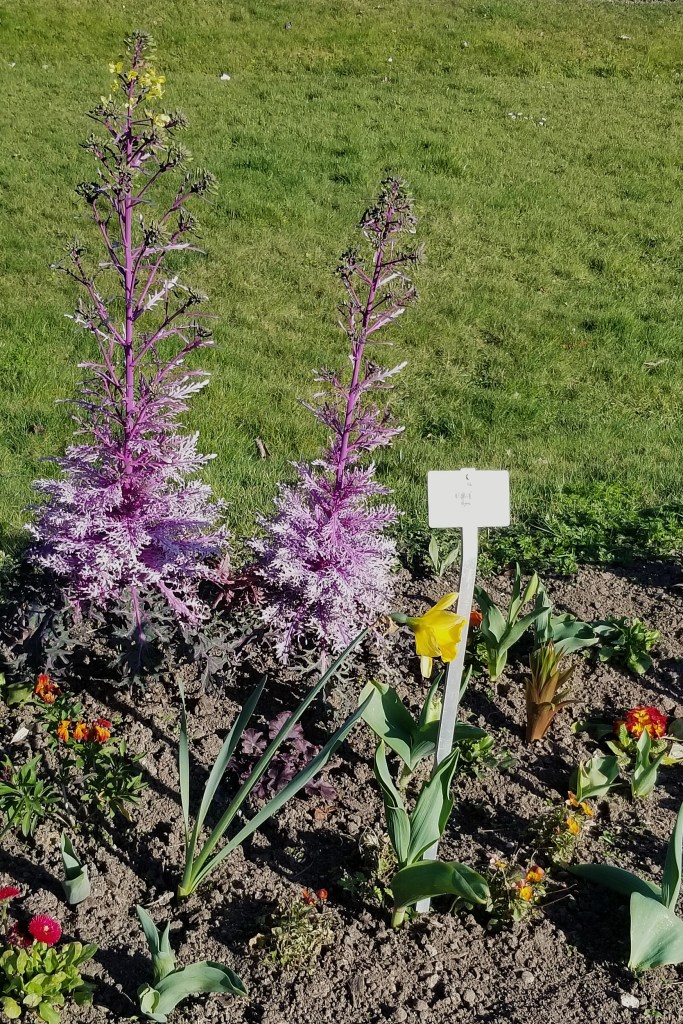
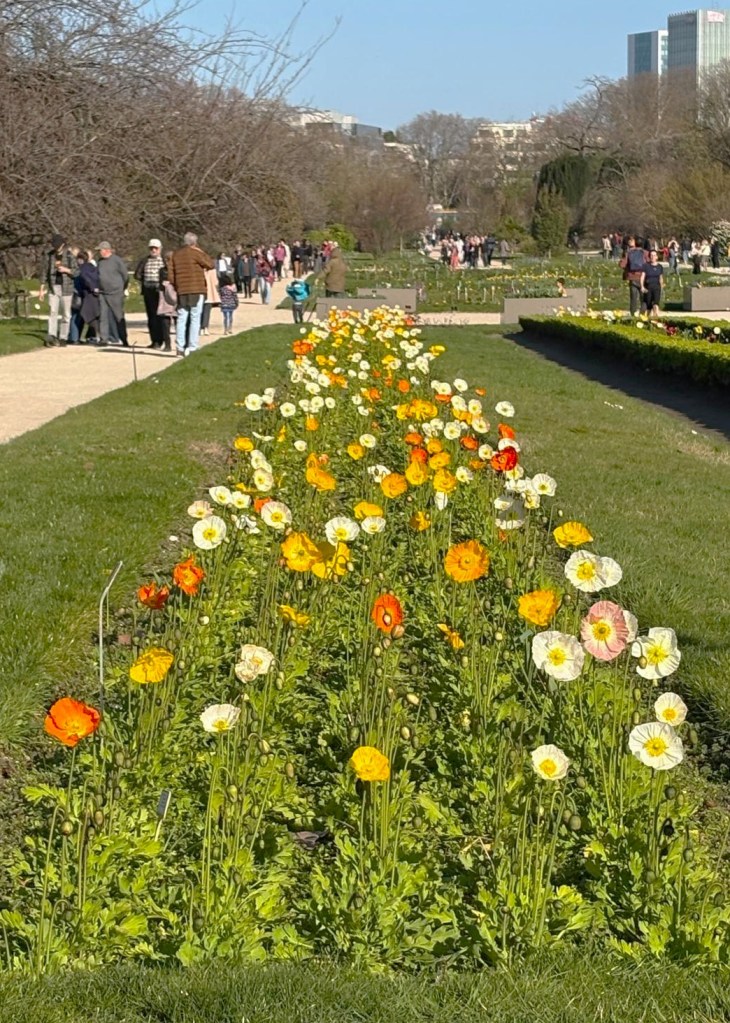
On March 4, now in Paris, we visited the Sorbonne University grounds. The fauna was active and in spring mode, while the botanical gardens were in full bloom; in the photo below, centre, an ornamental purple plant from the cabbage family, already bolting, as well as tulips and other bulbs growing and some even blooming; the photo right, showing a long bed of Iceland poppies Oreomecon nudicaulis (click on images to enlarge):
In the photo below, a street view with flowering trees, from the Viaduct des Arts, in Paris on March 5:
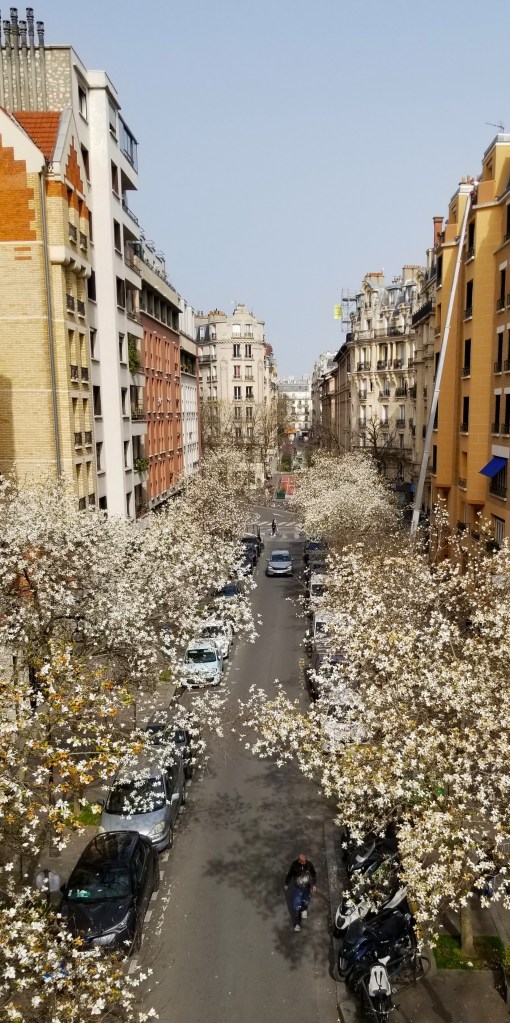
Aaah, spring time in Paris, so beautiful and romantic!
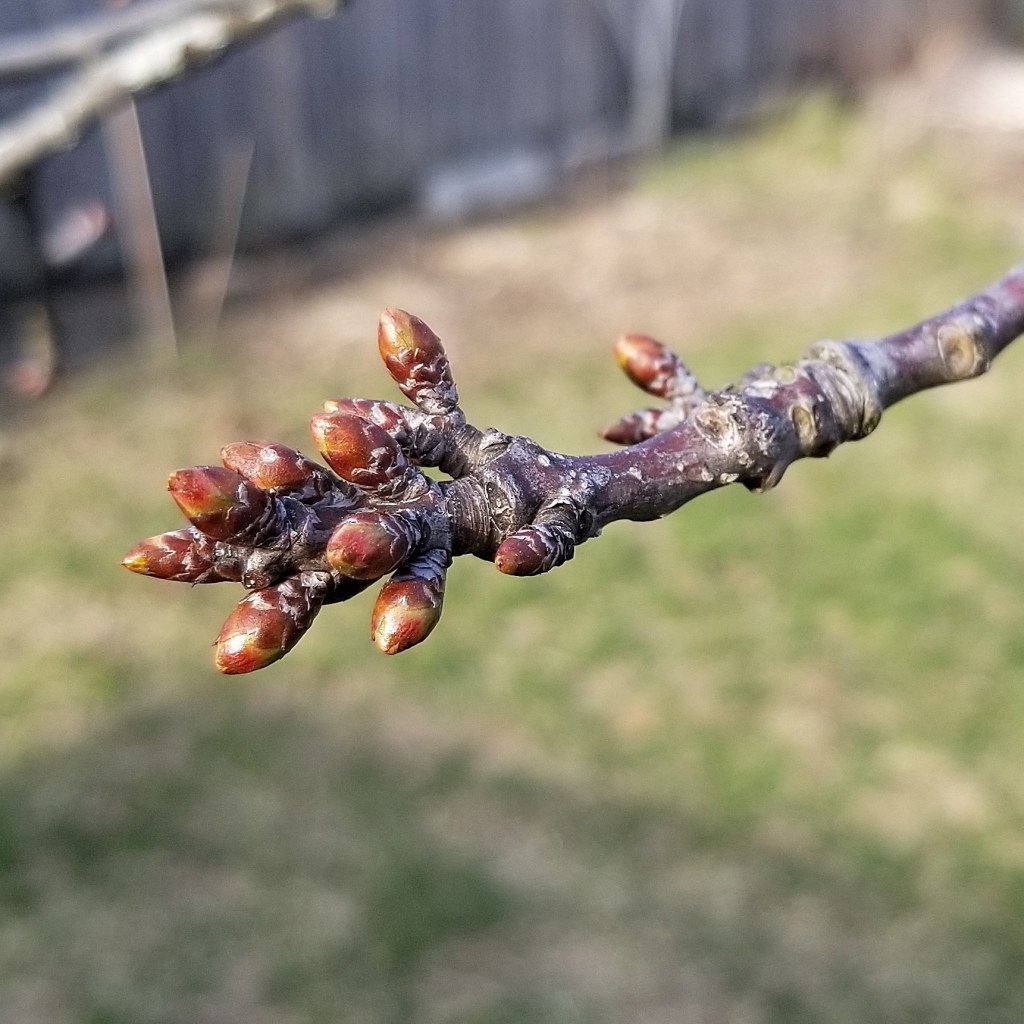
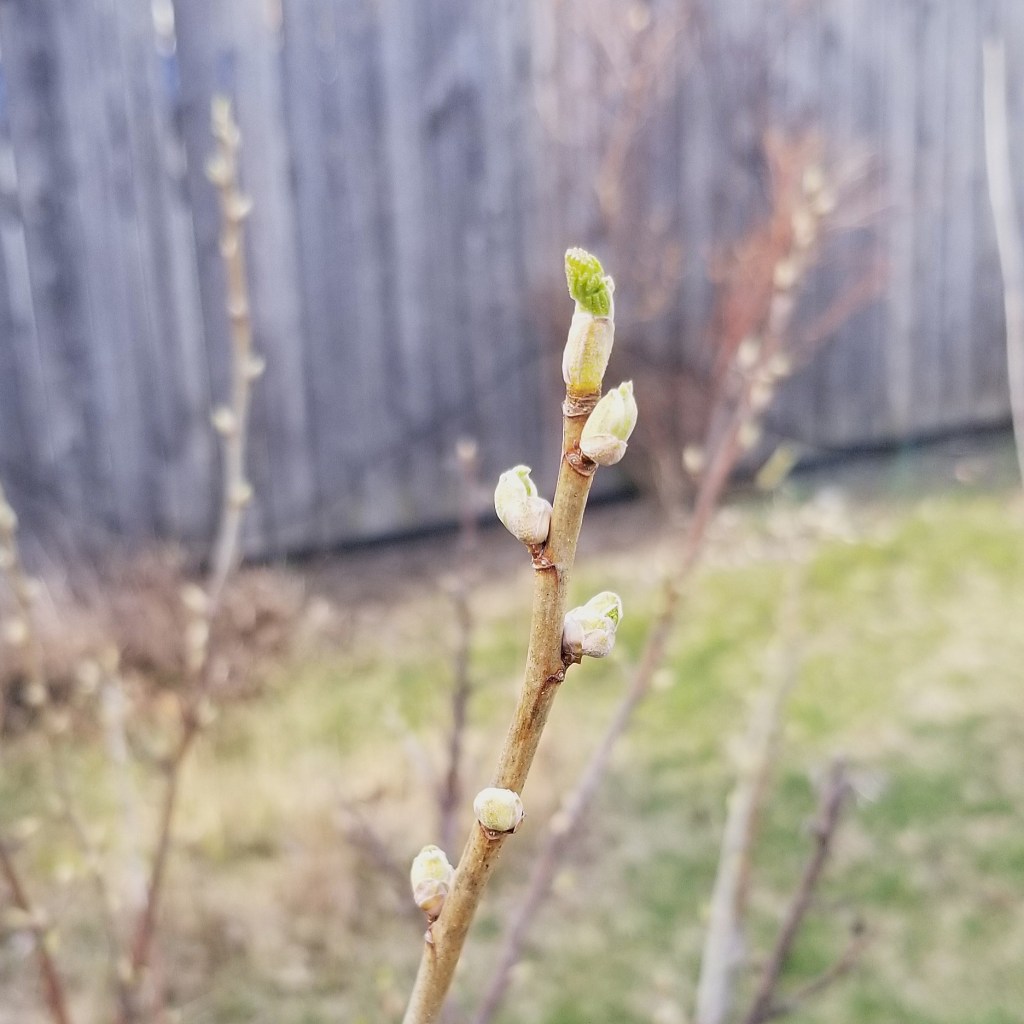
On March 8, we took a flight from Paris to Detroit, then drove back home across the border to Canada. My garden was spotted with a little green from garlic and onions sowed last fall, but that was it. Fast forward to March 19; the photos below show the tip of a branch of my cherry tree, just showing its coppery, almost metallic, shiny buds, and some from my black currant plant starting to open:
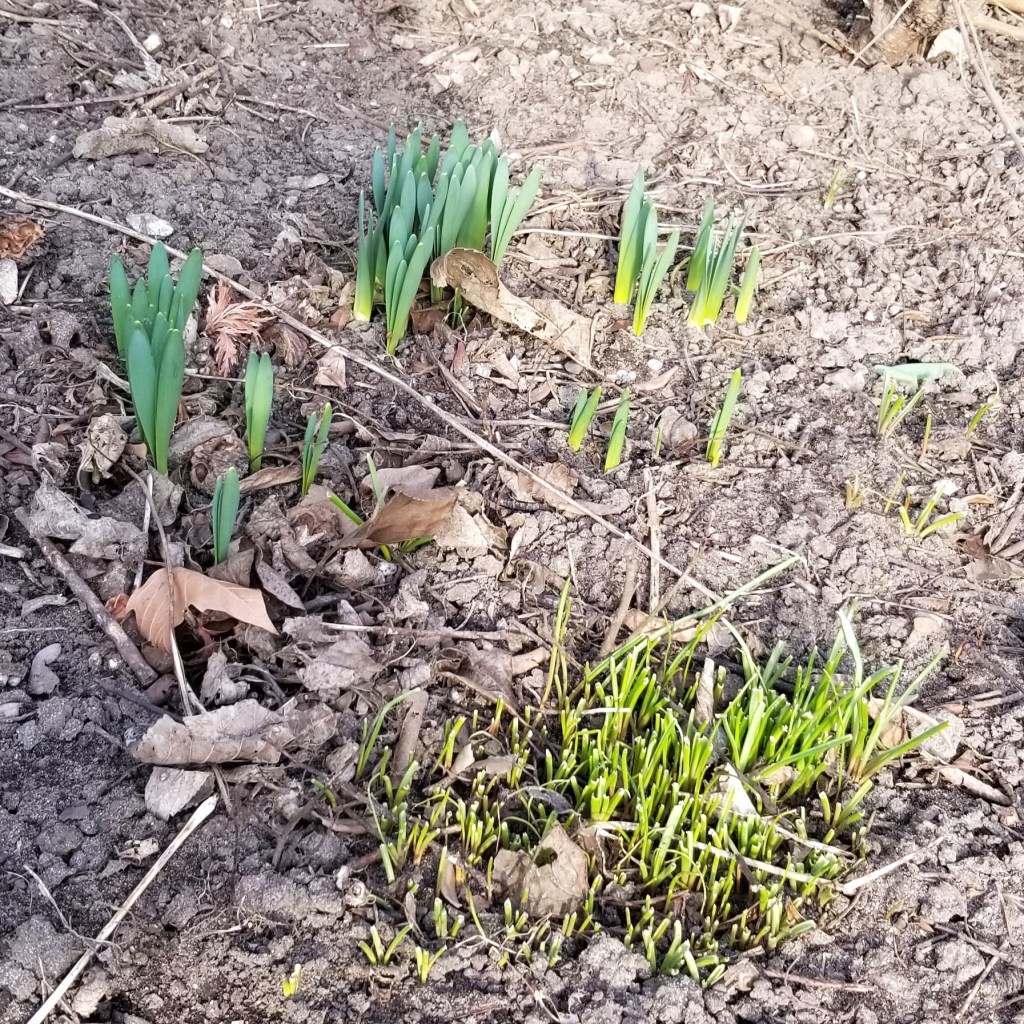
And my daffodils and grape hyacinths are just sprouting:
The earlier signs of spring in France in spite of being farther north than Southern Ontario in Canada, have to do with a current called the North Atlantic Current (NAC), originated as a warm current in the Gulf of Mexico (the Gulf Stream). The NAC carries this tropical water to the Northwestern coasts of Europe, and it is a strong factor that causes climate to be milder there than in other regions at similar latitudes (such as Beauvais and Paris vs Southern Ontario.) Spanish explorers realized the importance of the Gulf Stream and the NAC, as early as 1513, with Juan Ponce de León describing how the voyage to the new land was much harder than the way back to Europe, with the currents proving more powerful than the wind.
FUN FACT: Our flight from Detroit to Paris took about 7 hr. and 50 min., while the way back from Paris to Detroit took 9 hr. and 10 min., that is 1 hr. and 20 min. longer! Just as climate has to do with the Gulf Stream and the North Atlantic Current, there is a strong air current called the Jet Stream, that affects plane routes; it is caused by the combination of temperature differences between the tropics and the poles, as well as the rotation of the Earth. Warm air rises from the tropics and moves toward the poles, and the rotation of the planet deflects this air to the East, producing strong winds at high altitudes, flowing from West to East. In the Northern Hemisphere, the Jet Stream “carries” flights from North America to Europe, and it opposes them the other way, which explains why my flight back was longer than the flight to France.
I am joining Six on Saturday for March 21, 2026, hosted by Jim Stephens @ Garden Ruminations.
Stay tuned for a lot more about Beauvais and Paris in my next posts.






 My Slice of Mexico
Wonderful pictures you must have had a brilliant time – strange thing – time travel time⏱️😃
LikeLike
Yes, it was awesome (more posts to come.) I was dealing with jetlag, but then I saw my friends and they were just the same as me from daylight saving time 🤭
LikeLiked by 1 person
😃♥️
LikeLiked by 1 person
Beautiful pics. Nice to see your garden is starting to bloom. We had Juncos at the feeder all winter and the red wing blackbirds have been back for a couple of weeks. Saw a bald eagle fly over our next street over. It was spectacular. Jane
LikeLike
Wow, it does sound spectacular, Jane!
LikeLike
We are still waiting here in Wisconsin, so not surprising that your pictures mirror what I am seeing. My daffodils emerged early this year, Feb 22, but they have been in a holding pattern and look like they will bloom according to the usual schedule. I had to laugh at the purple cabbage picture, because a former colleague from Paris made fun of the use of ornamental cabbage in decorative plantings which is common in Seattle where we last worked together, calling it ugly, yet there is is on the hallowed grounds of the Sorbonne! (He is now a big deal in in the field of Diabetes Research in Montreal, and a great person, if opinionated on what makes an attractive planting). I am half tempted to email him to let him know that France is falling down on the job, allowing cruciferous vegetables into their flower beds!
LikeLike
That’s a funny story. It surprised me, too. Feel free to share, as you said, if the Sorbonne is doing it … now I will not feel too bad when my cruciferous bolt before I get to harvest 🤭
LikeLike