
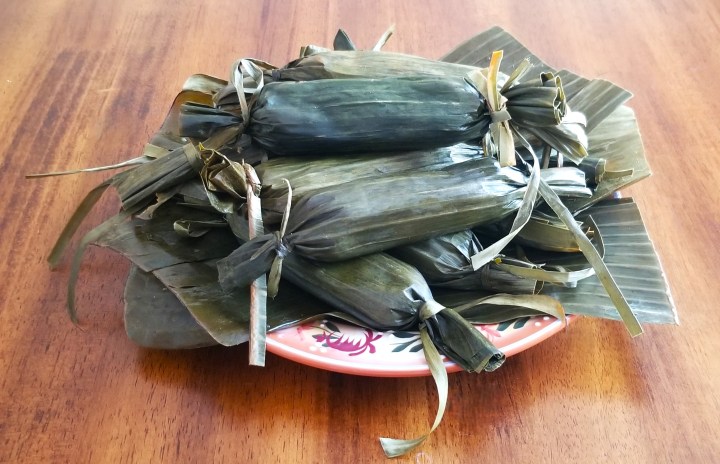
Click here to go to printable recipe: Tamales de Cambray
Candlemas (Día de la Candelaria) is observed by Christians around the world on February 2; in particular, in Mexico, this celebration involves church services for the blessing of candles and figurines representing baby Jesus, and as a vestige of pre-Hispanic ceremonies, corn-based foodstuffs, such as tamales and atole, are shared later, at a meal usually hosted by the person(s) who found figurines representing baby Jesus in their special bread, served on Epiphany Day, on January 6. Last year, I shared a recipe for red pork tamales from Northern Mexico, so this year I decided to go to the other end of the country, with this recipe of Tamales de Cambray from the Southern state of Chiapas.
The name “Cambray” comes from the town of Cambray (Cambrai) in France, which has been an important trade centre since the 16th and 17th centuries. In Mexico and other Latin American countries, the term is traditionally associated with small and cute items, such as “cebollitas de Cambray” (knob onions). Tamales de Cambray are indeed small, and consider fancy, reserved for family events and other special celebrations in Chiapas. I reviewed several recipes online and asked my friends from Chiapas to tell me how they remember these treats to be prepared; it turned out that this is one of those dishes in which different regions and families each have their own versions. The common aspects are the size, the sauce (with tomato and guajillo peppers), and the preparation of the corn dough (with lard and broth); ingredients that change are the type of wrap (banana leaves or corn husks), and the fillings, such as meat (pork or/and chicken), plantain, cooked vegetables, hard boiled eggs, capers, and so on.
I found a video of a workshop on tamales de Cambray, where the instructor explained how the original recipe has been modified over time, incorporating techniques and ingredients from other types of tamales. This workshop was trying to bring back one of the oldest recipes, with banana leaves, pork and chicken meat, port wine, capers, green olives, almonds and raisins, but without egg, plantain or cooked vegetables. I decided to mostly follow the guidelines on that video, omitting the port wine, and I also prepared plantain and cooked veggies to add to some of the tamales during assembly.
Tamales de Cambray
Printable recipe: Tamales de Cambray
Ingredients (for one dozen tamales)
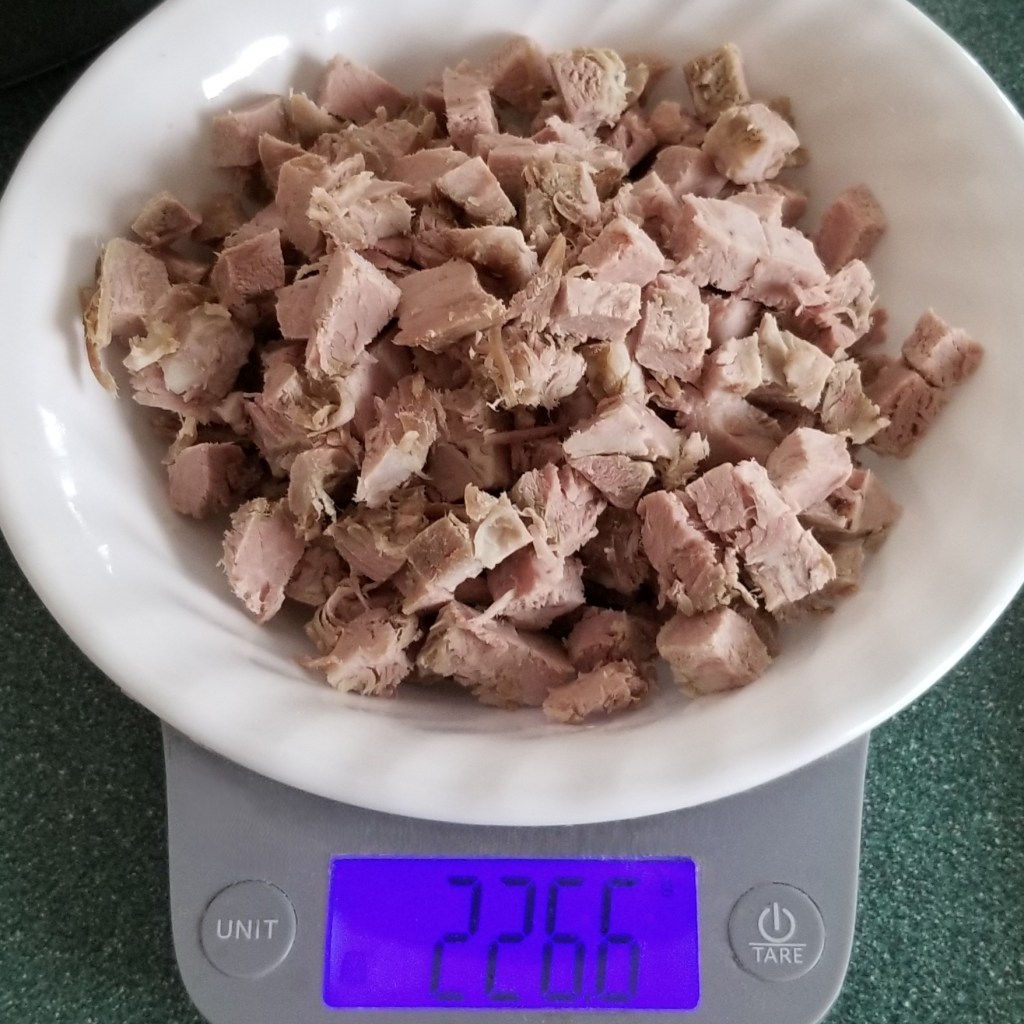
½ lb (227 g) pork meat; cooked, fat and bones removed, and cubed finely
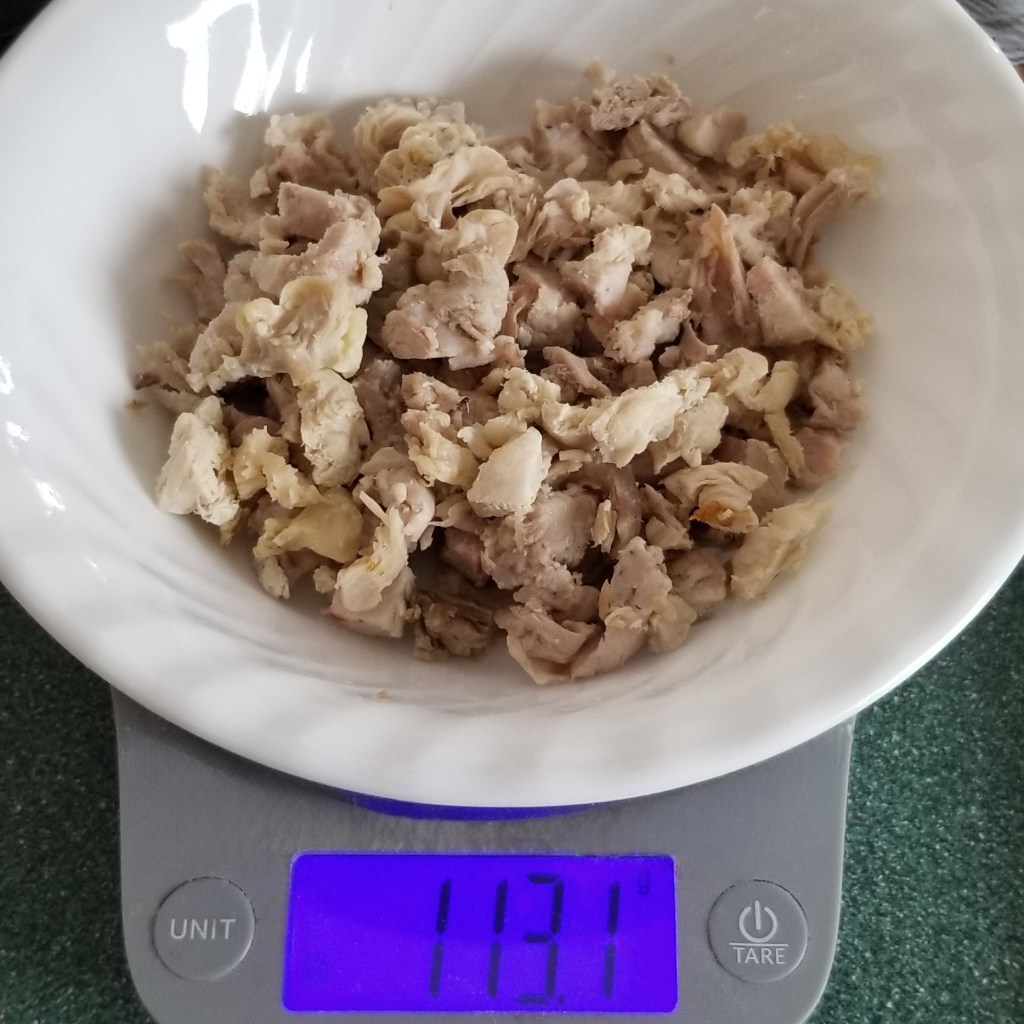
¼ lb (113 g) chicken meat; cooked, fat, bones and skin removed, and chopped
3 cups broth form cooking the meat
1 cup tomatoes; washed, stem spots removed and cut into chunks
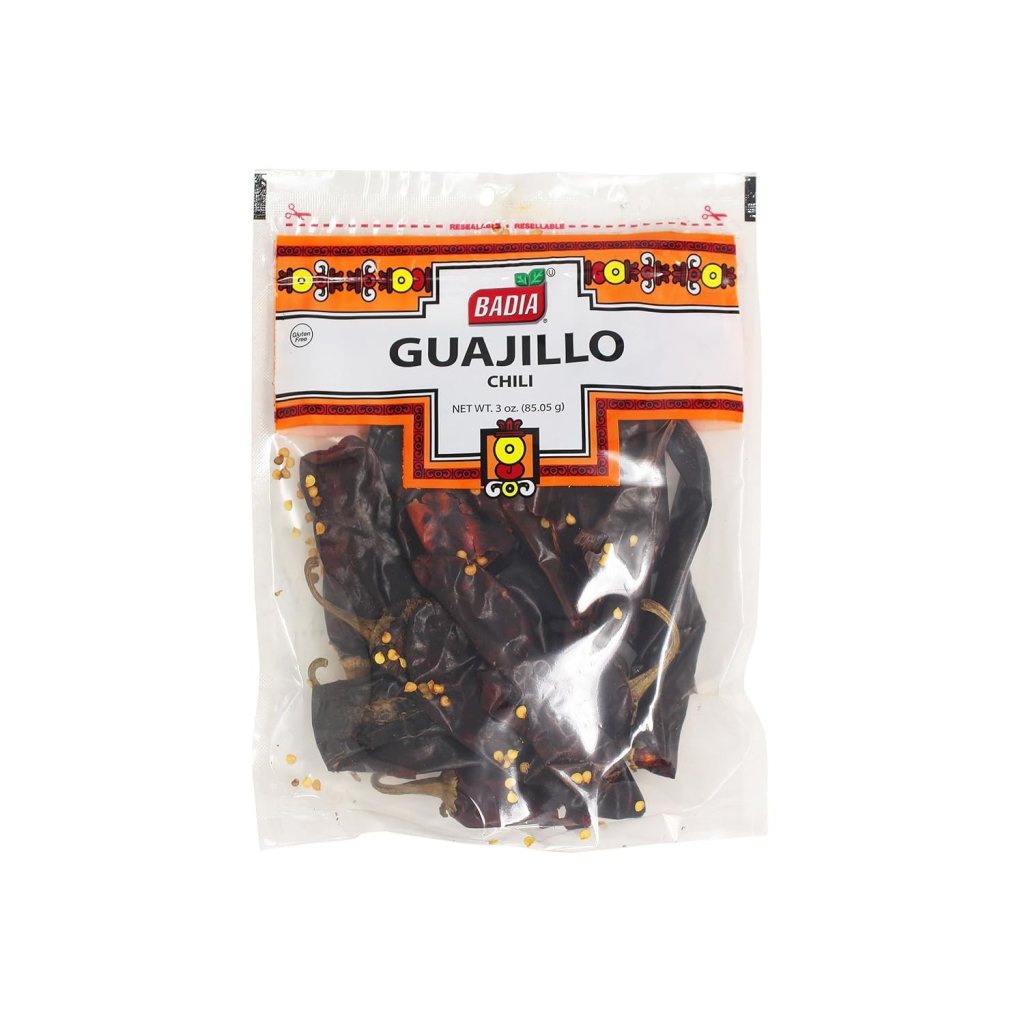
1 guajillo pepper; wiped clean, stem and seeds removed
½ white onion; peeled, divided into two equal pieces
1/3 cup (30 g) blanched almond slices
¼ cup (36 g) raisins
¼ cup (36 g) capers
12 green olives, preferably pitted or stuffed
2 tbsp olive oil
1 tsp salt, or to taste
½ tsp ground black pepper, or to taste
½ tsp dry thyme
½ tsp ground cinnamon
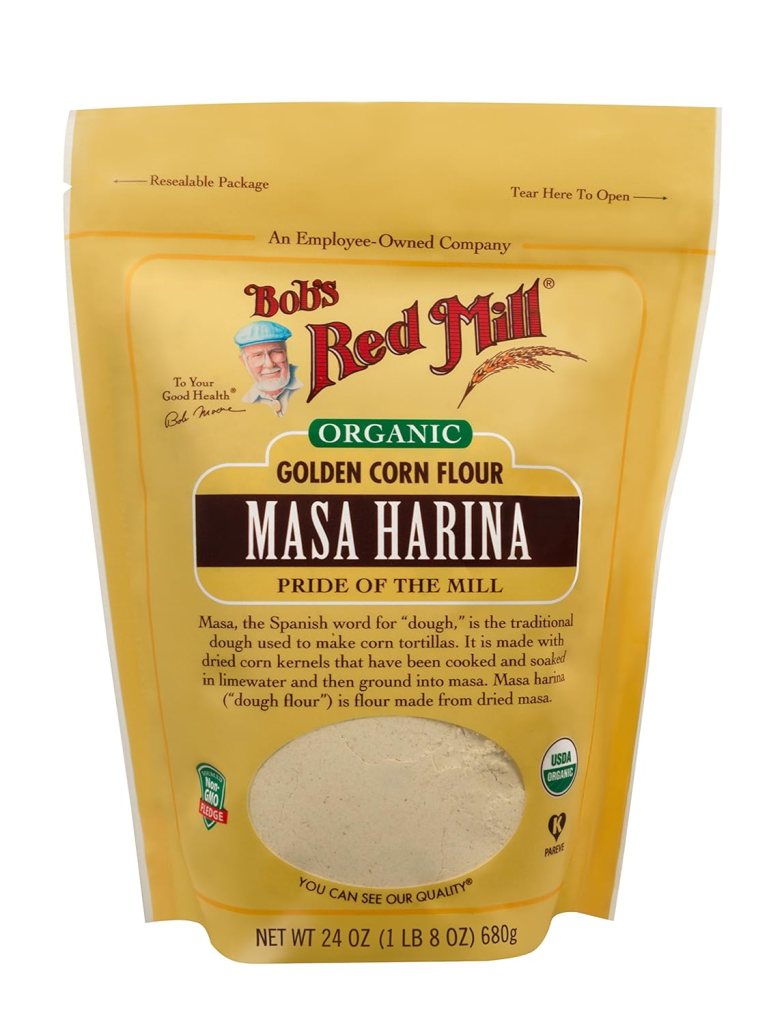
2 cups nixtamalized corn flour (masa harina, such as Bob’s Red Mill™)
¼ cup pork lard; at room temperature
Hot water, as needed
1 plantain; washed, peeled, and sliced into rounds (optional)
1 tbsp oil (if using plantain)
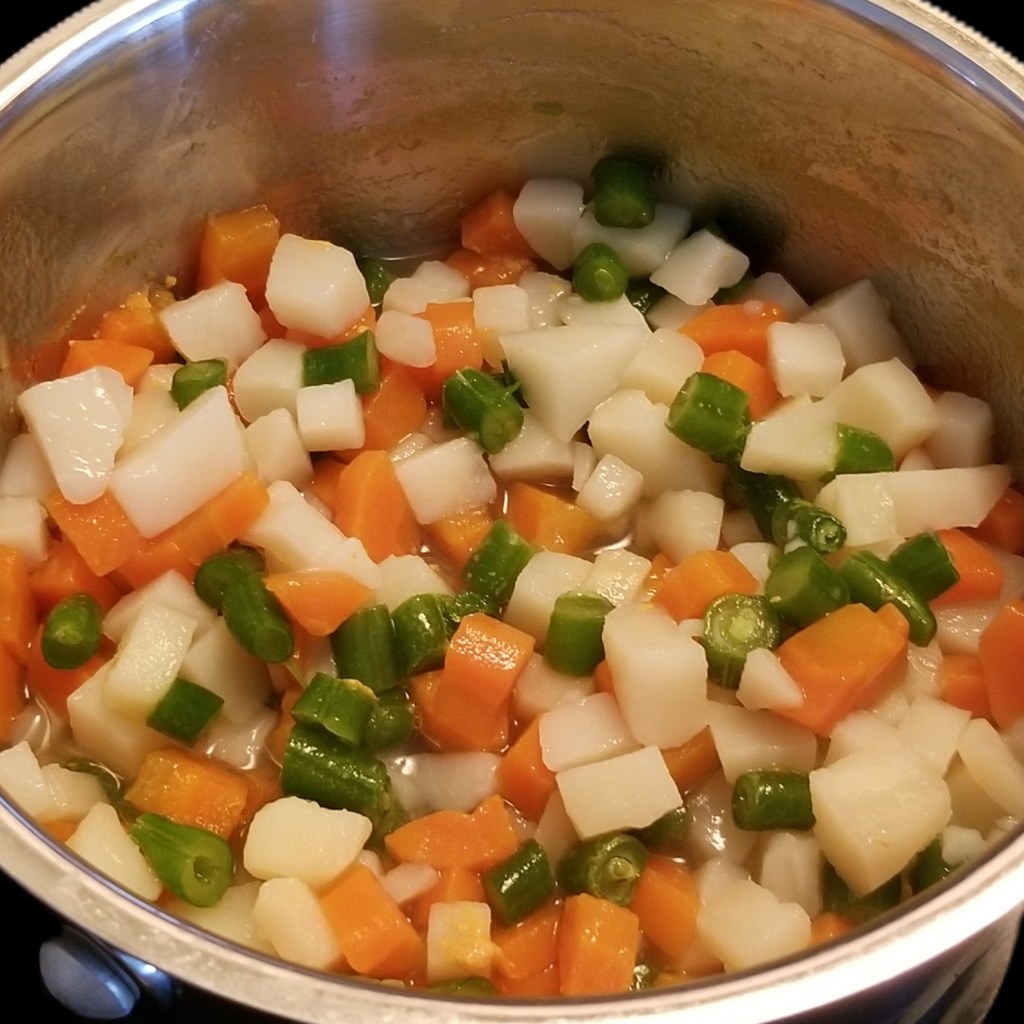
1 cup cooked veggies (cubed carrots, potatoes and green beans, optional)
1 package banana leaves (fresh or thawed from frozen)
For the pork: start with a piece of about one pound (454 grams), of pork shoulder. Place in a pan with plenty of water over high heat and bring to boil; reduce to medium and cook, covered, until the meat is tender and fully cooked, about one hour. Remove meat from the pot, remove and discard bones and fat, then chop the meat into small cubes, measuring half a pound (227 g) for this recipe (photo below, left); reserve broth. For the chicken: place one or two pieces of chicken in a pot with water and bring to boil over high heat; bring to boil, then reduce to medium and cook, covered, from about twenty minutes, until the chicken is tender and fully cooked. Remove chicken from the pot, remove and discard bones and skin, then chop meat and measure a quarter of a pound (113 g) for this recipe (photo below, right):
Reserve. Any extra pork or chicken meat, and the chicken broth may be used in another recipe.
For the cooked veggies (if using): wash, peel and cube one carrot and one potato; wash about 10 green beans, then slice into small cylinders. place veggies in a pot with water, bring to boil, then reduce to a simmer, cover, and cook for ten minutes. Reserve:
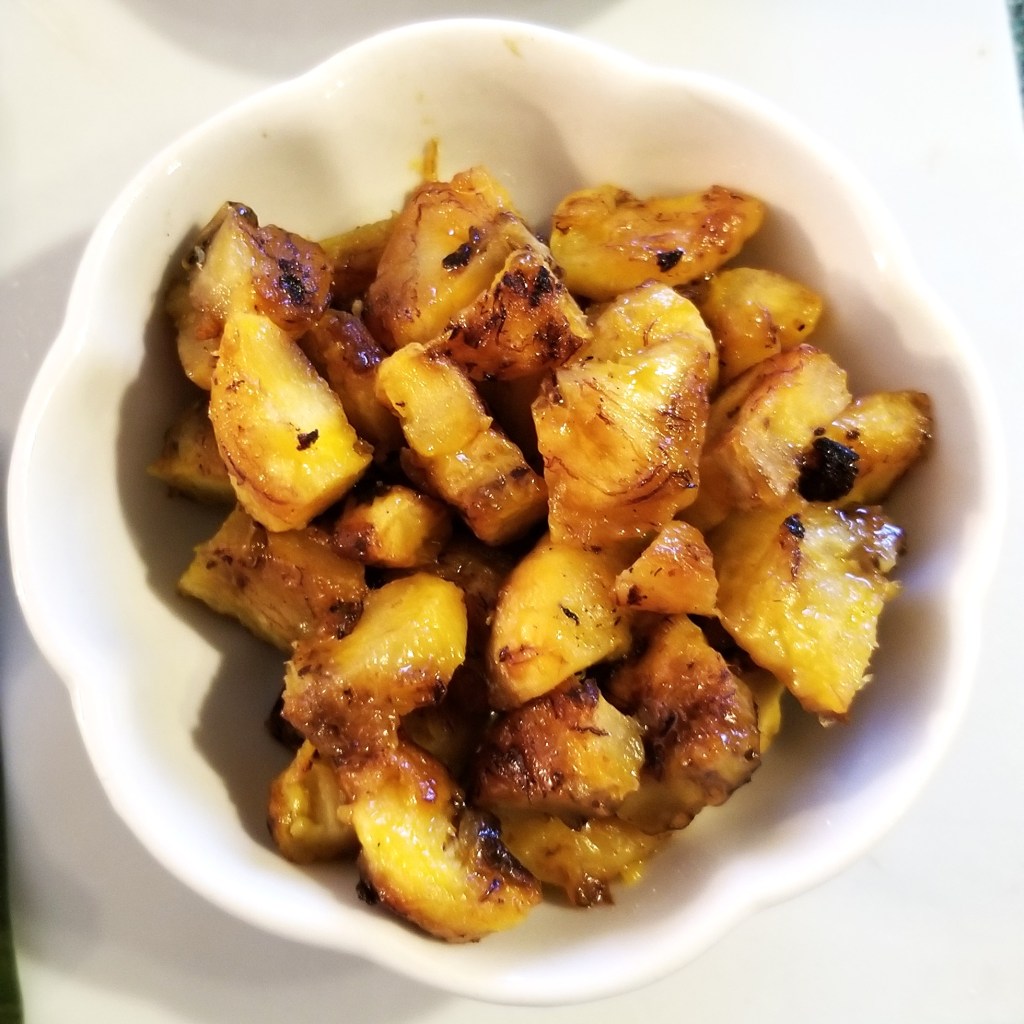
For the plantain (if using): wash, peel and slice into rounds. Warm up one tablespoon of oil in a large pan over medium heat; add plantain slices in a single layer, flipping after a few seconds, to brown on both sides. Transfer to a cutting board, chop, and reserve in a small bowl:
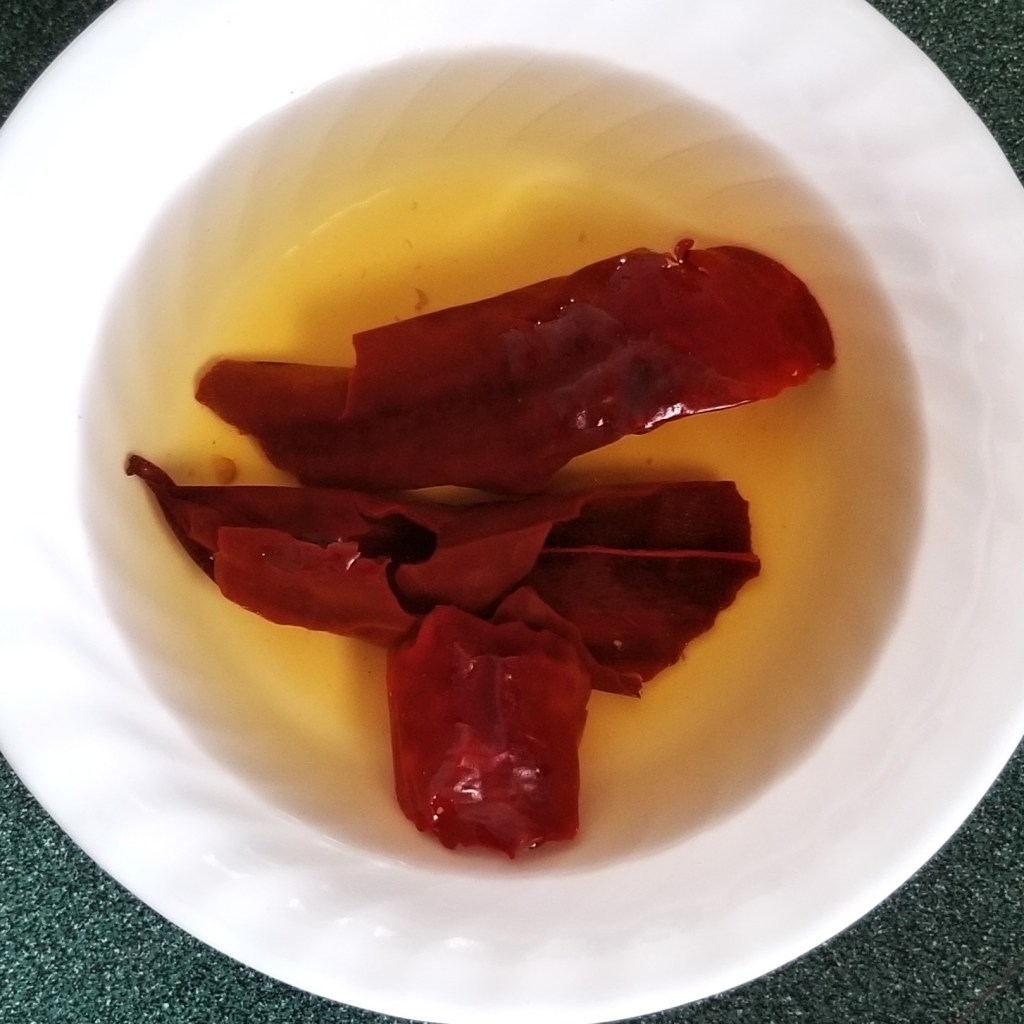
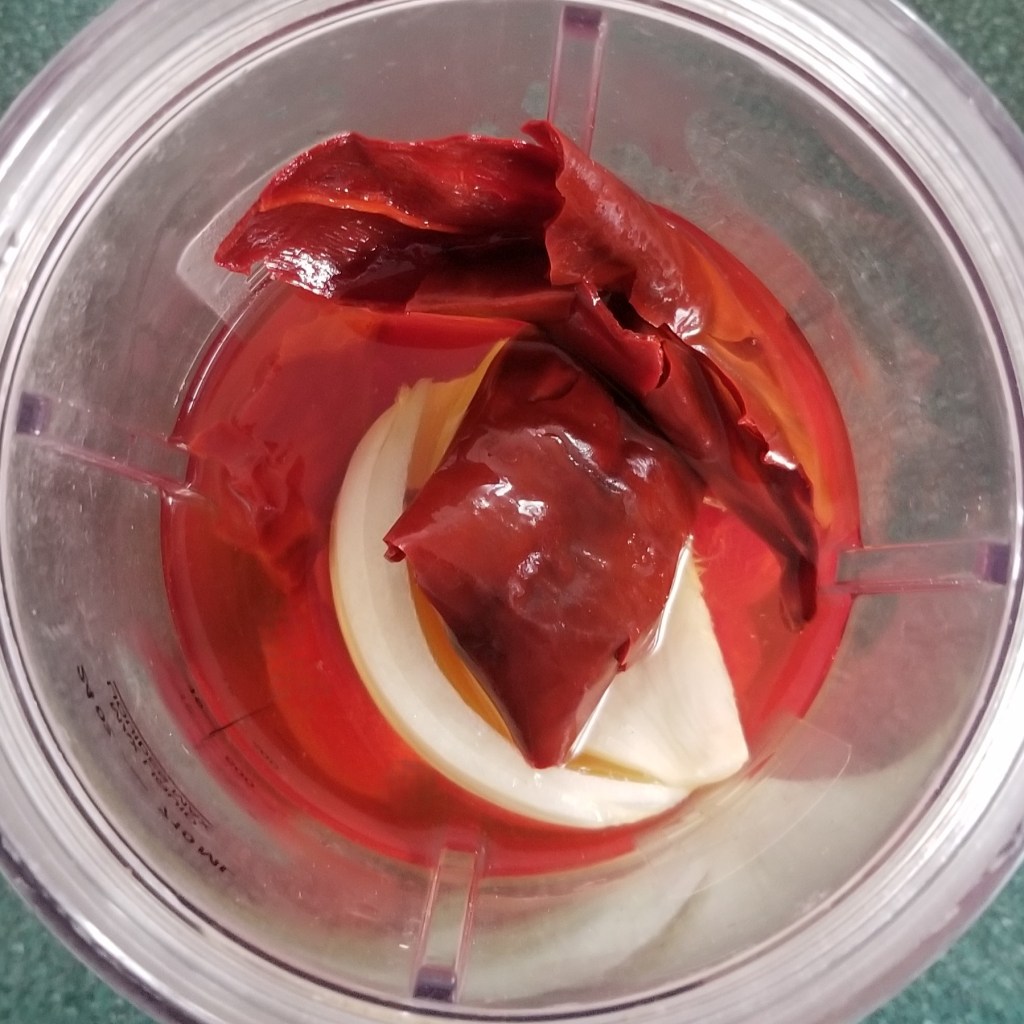
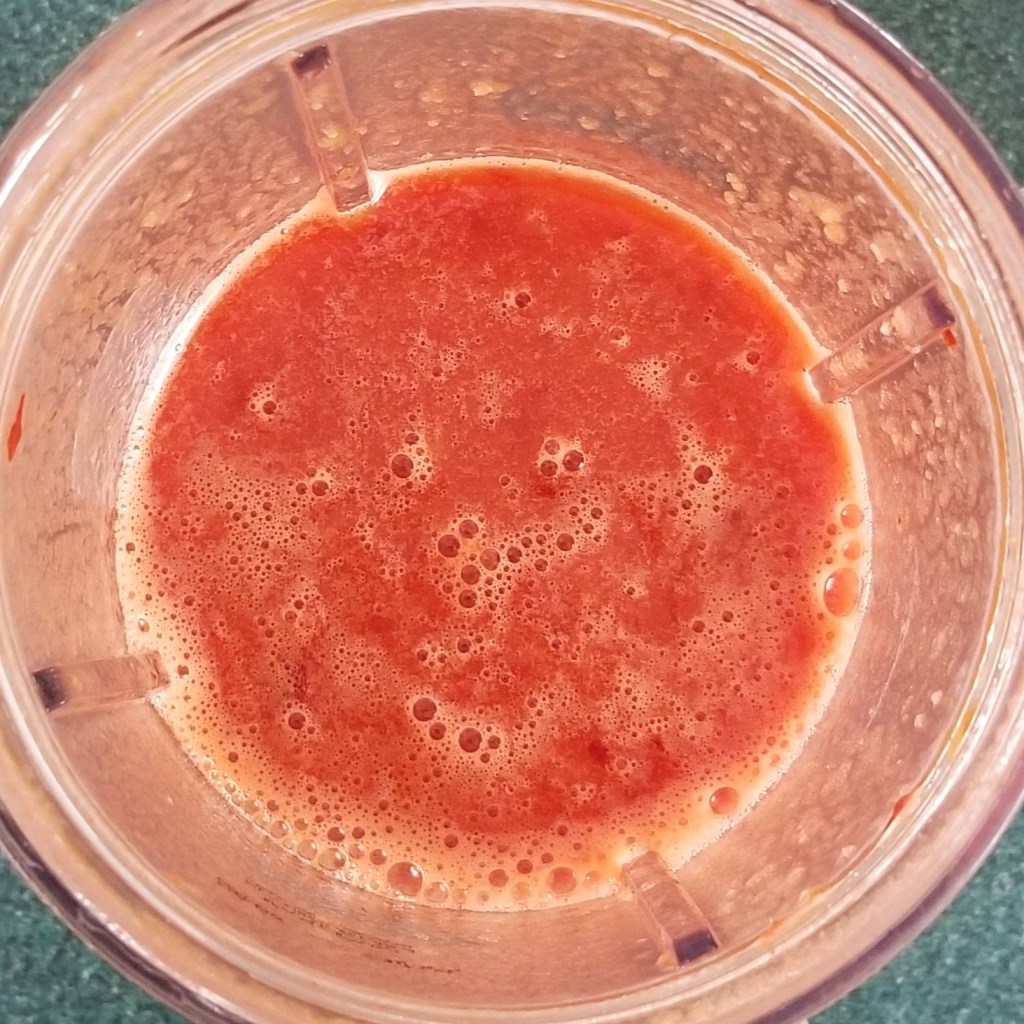
For the sauce: place clean guajillo pepper in a bowl, then add one cup of boiling water. Allow to soak for about ten minutes (photo below, left). Place tomato chunks and one piece of onion in a blender jar, then add soaked guajillo and its liquid (photo below, centre). Process to obtain a smooth sauce (photo below, right):
Reserve.
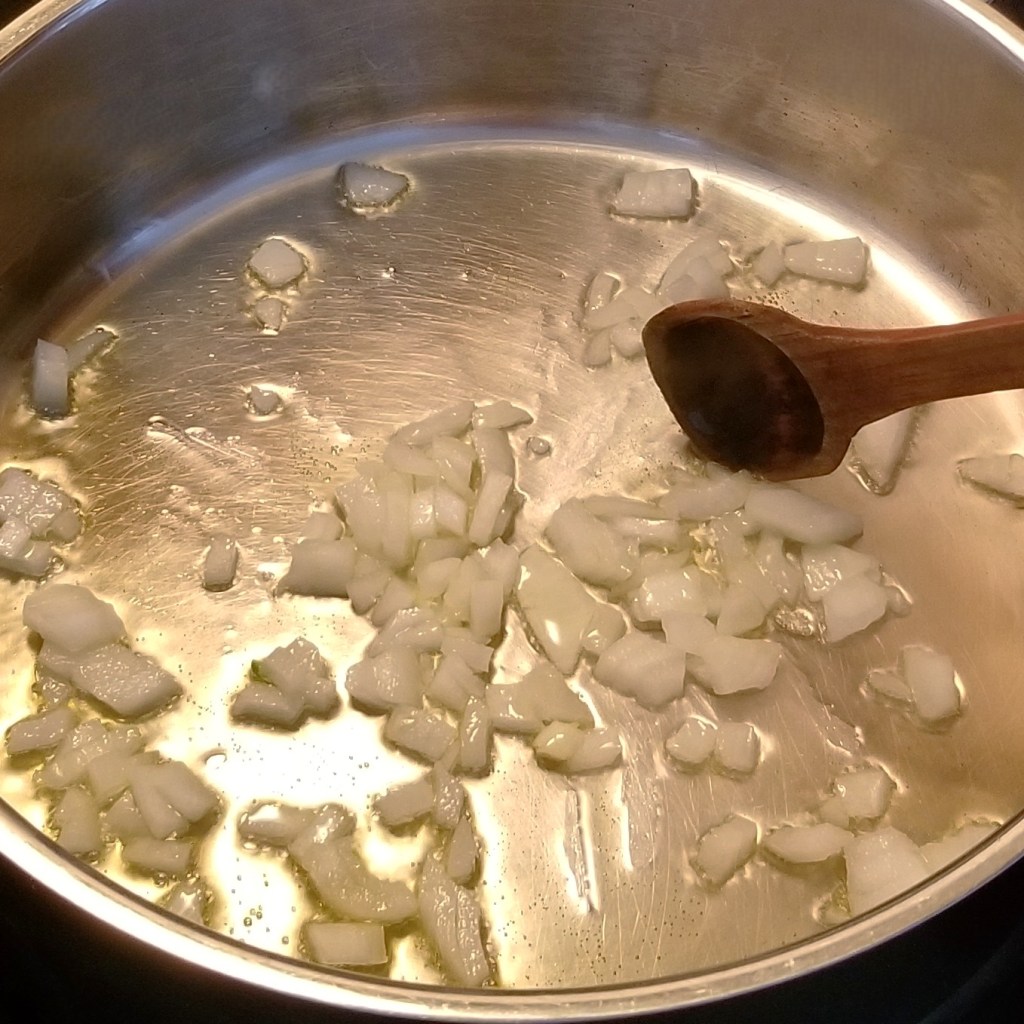
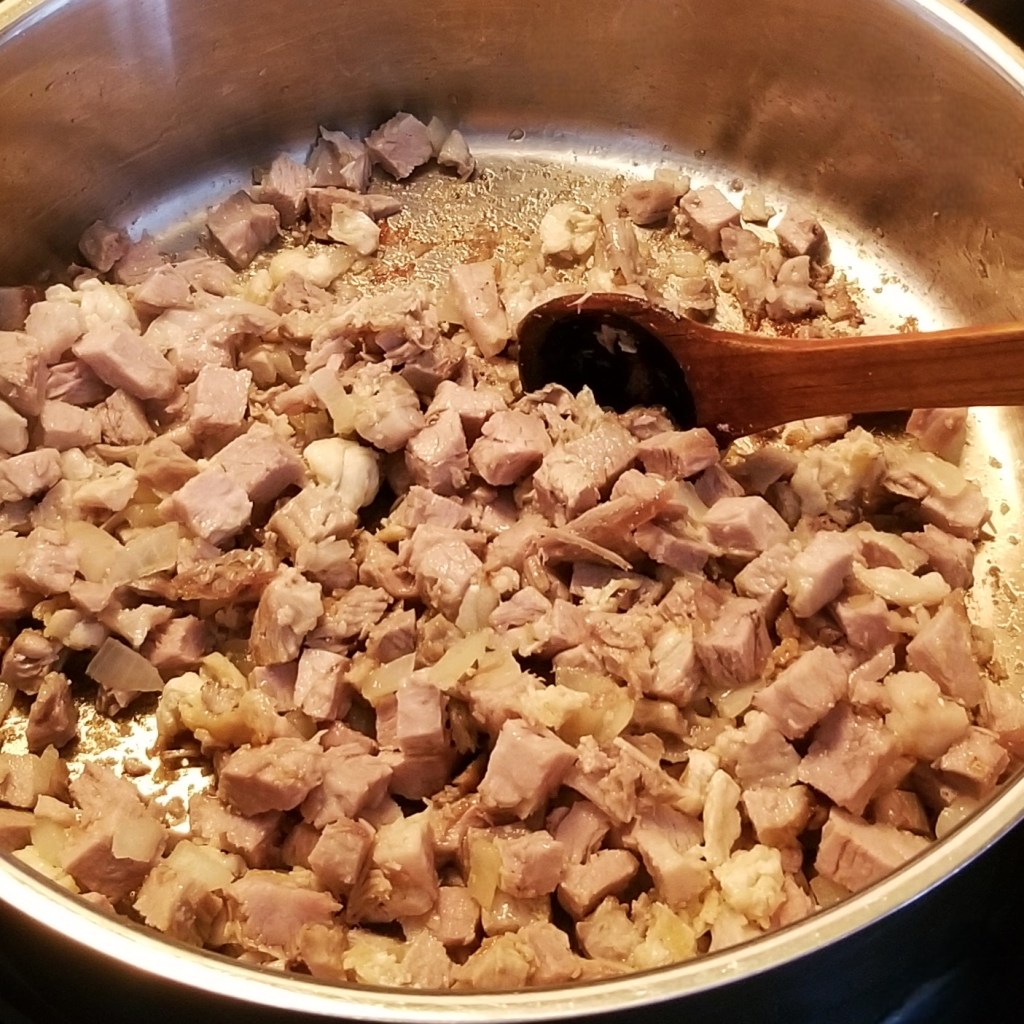
Finish the filling: chop the other piece of onion. In a large pan, warm up two tablespoons of olive oil over medium heat. Add chopped onions and sauté until translucent (photo below, left). add chopped pork and chicken, stirring to coat with the oil and onions (photo below, right):
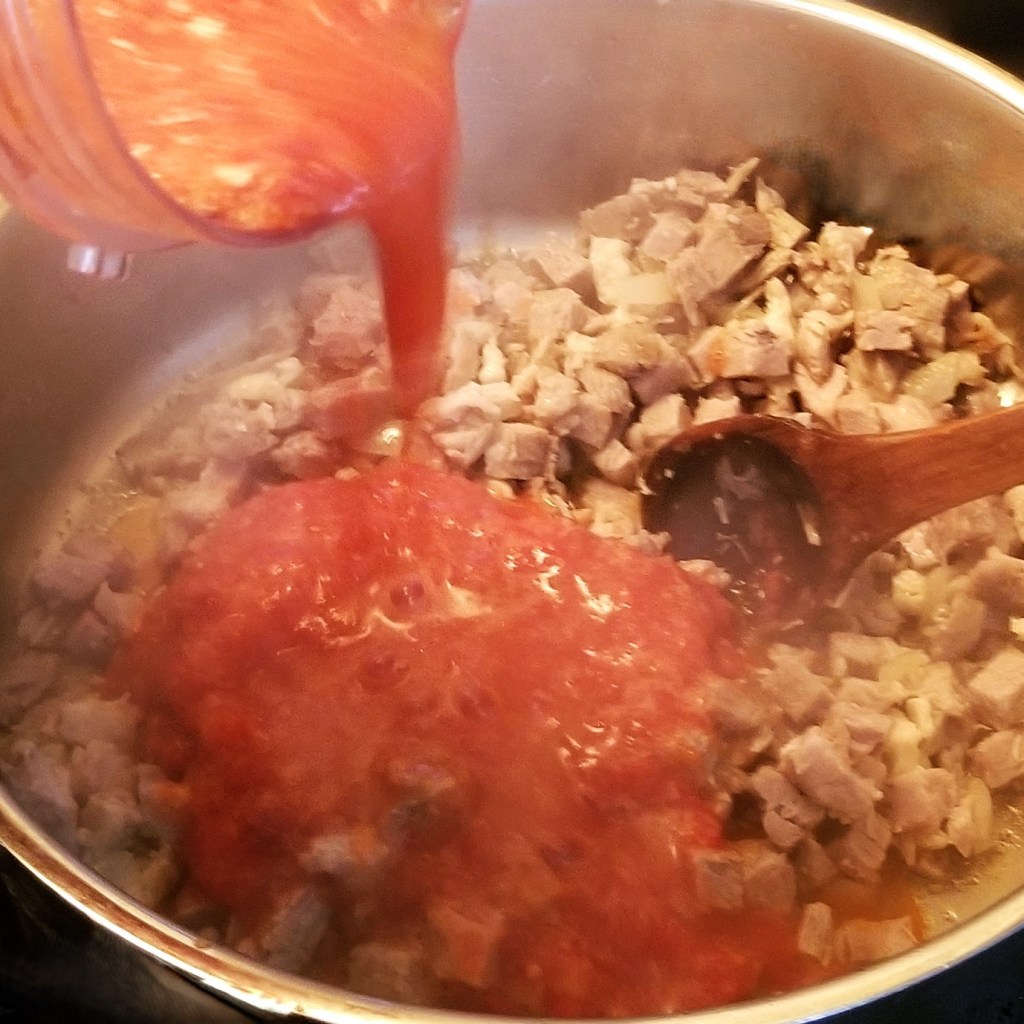
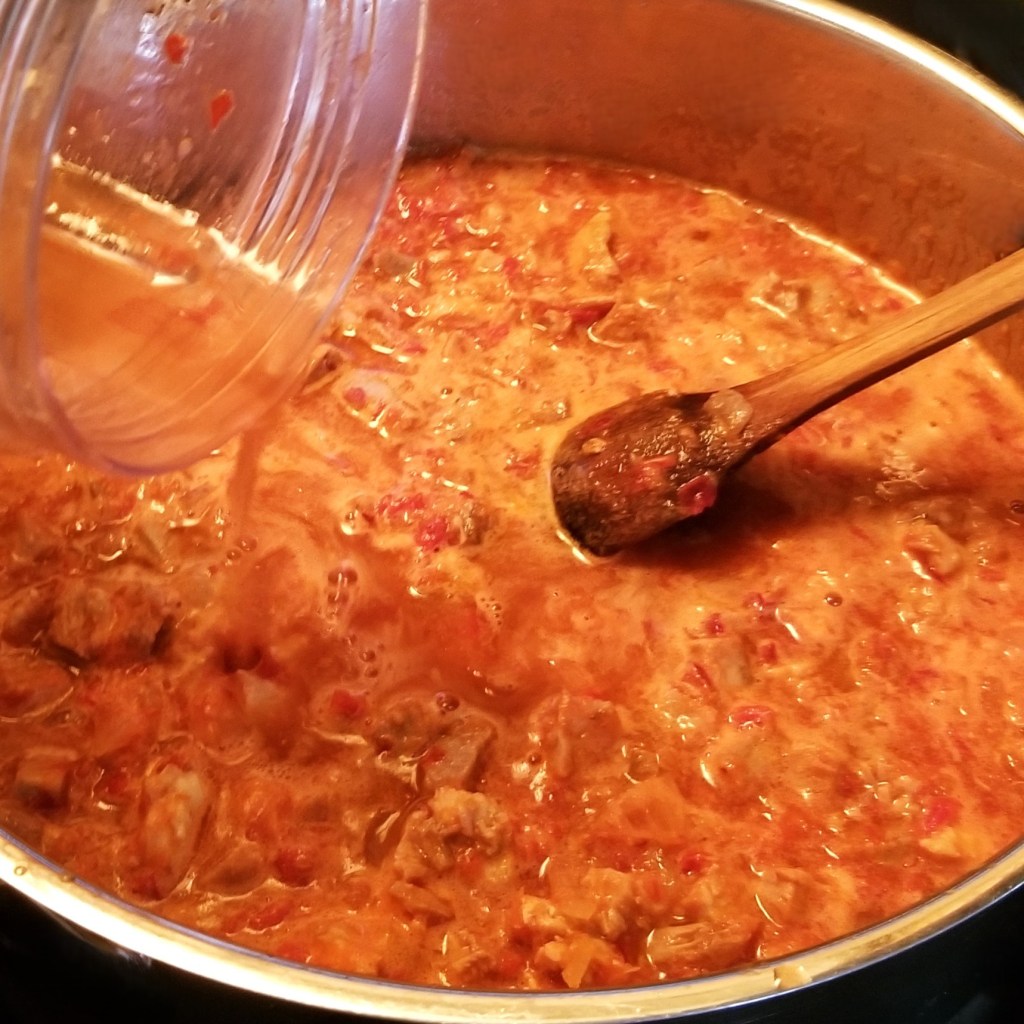
Continue cooking for a couple of minutes, then add reserved sauce (photo below, left). Pour about half a cup of hot water in the blender jar, swirl to collect any sauce, and add to the pan (photo below, right):
Bring to a boil, then add cinnamon, thyme, salt and pepper:
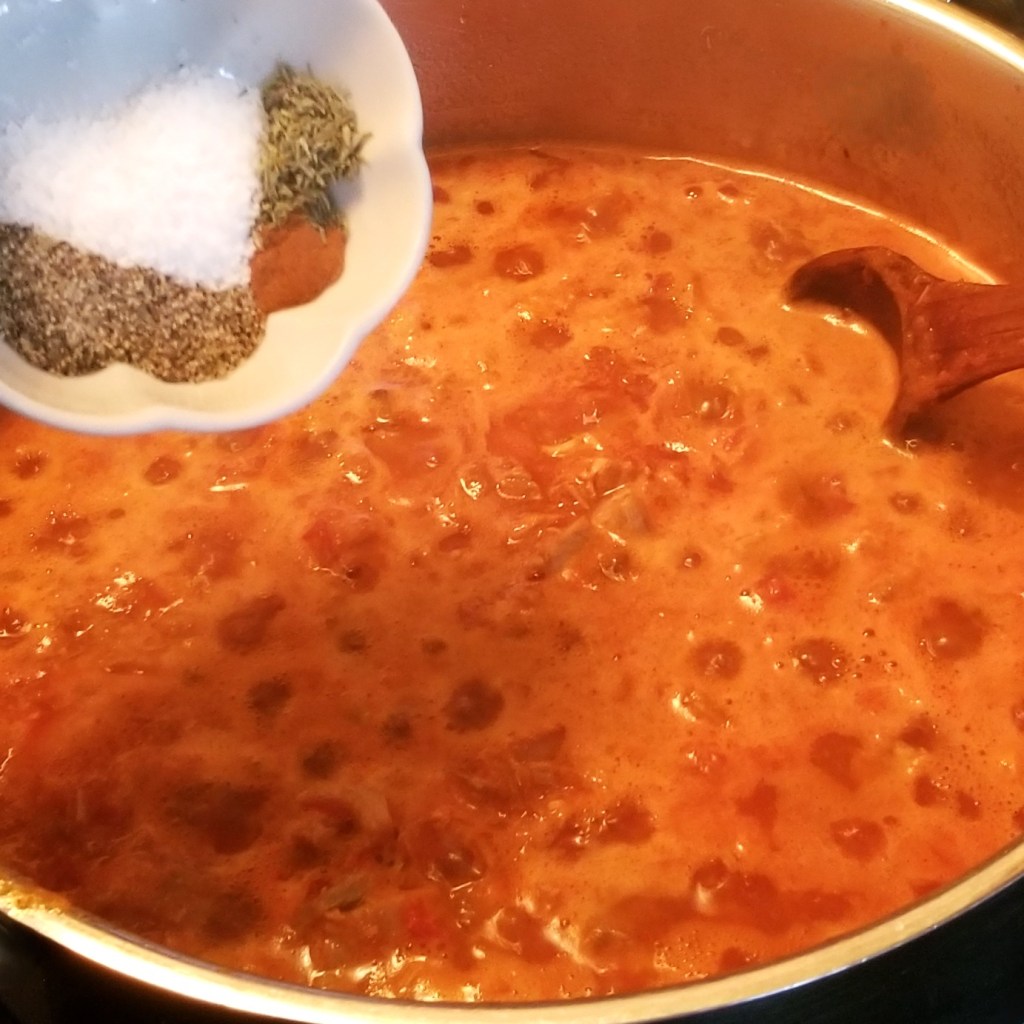
Reduce to a simmer, cover, and allow to cook for ten minutes.
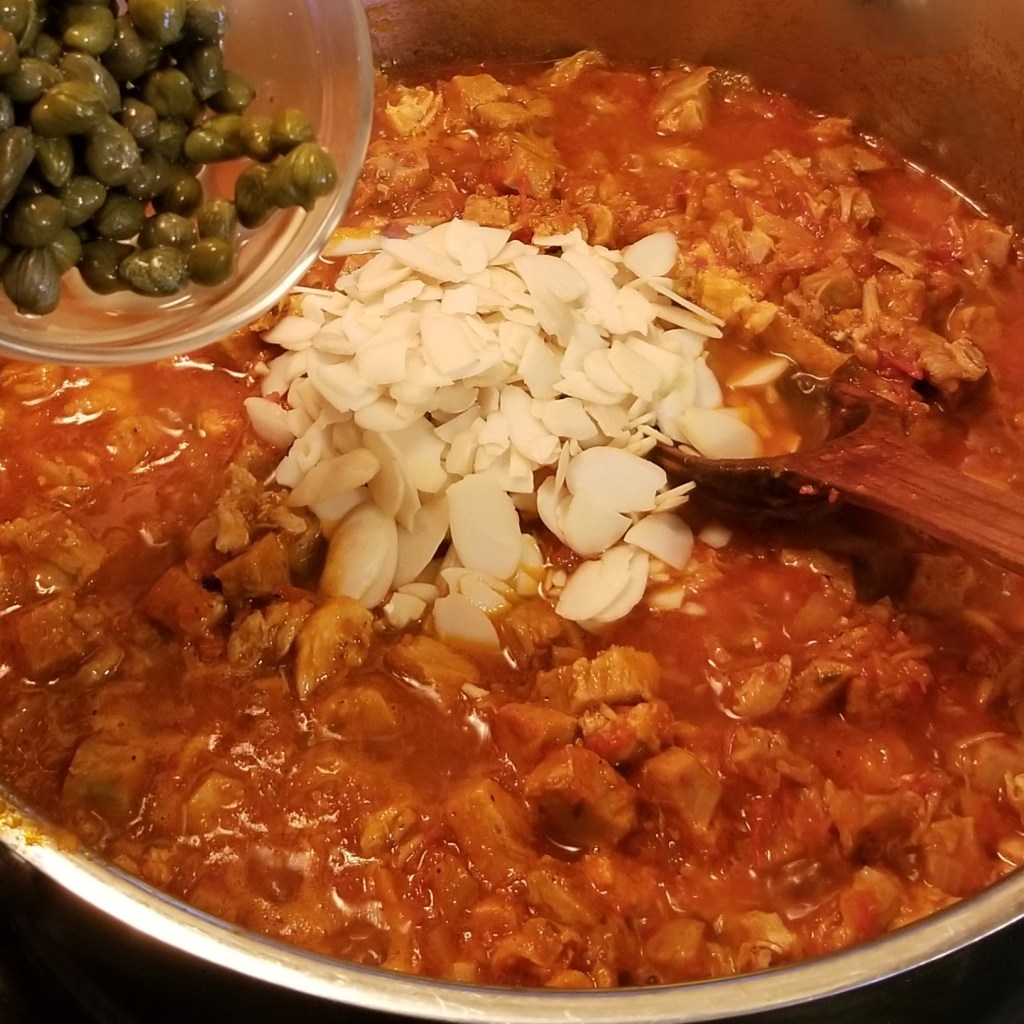
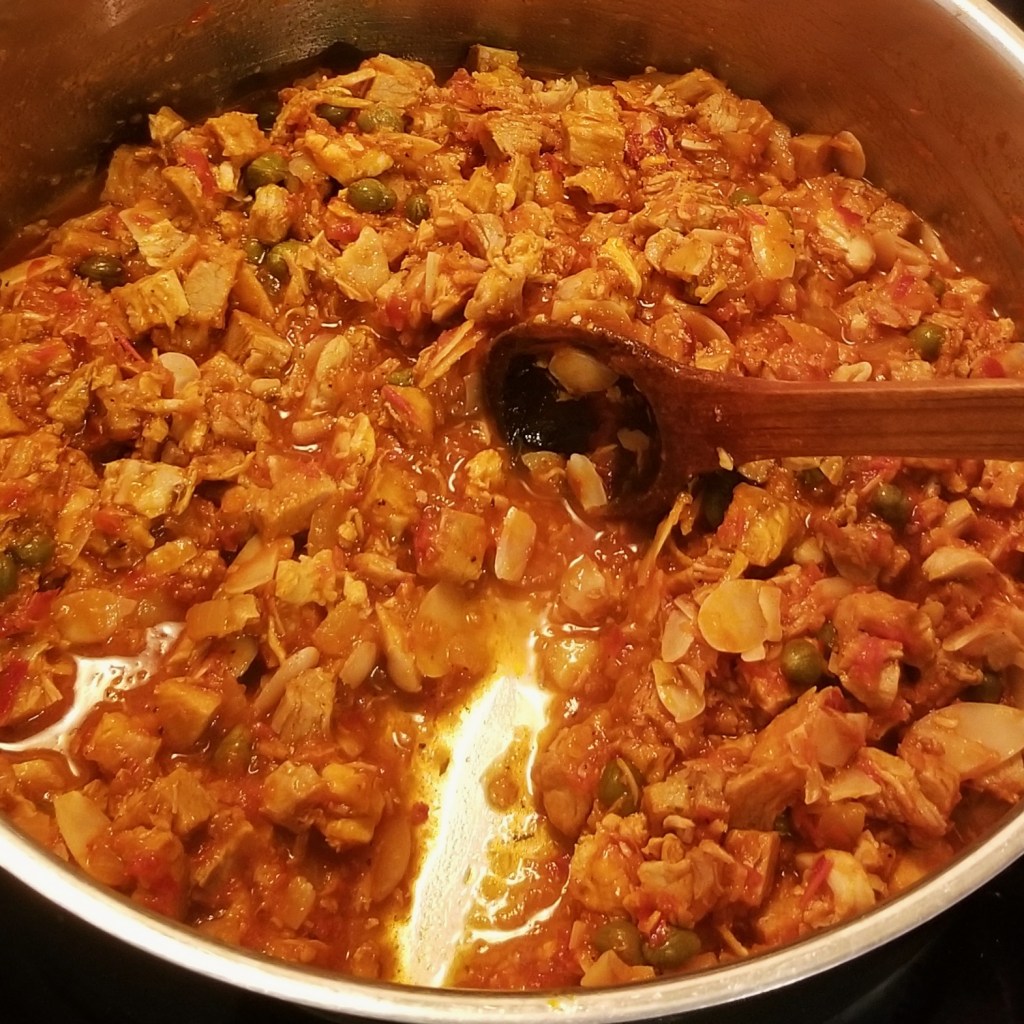
Uncover pot and add capers and slivered almonds (photo below, left). Continue cooking uncovered, stirring occasionally, for about five to seven more minutes, until the sauce thickens and the bottom of the pan may be seen when scraped with the back of the spoon (photo below, right):
Remove from heat and allow to cool down.
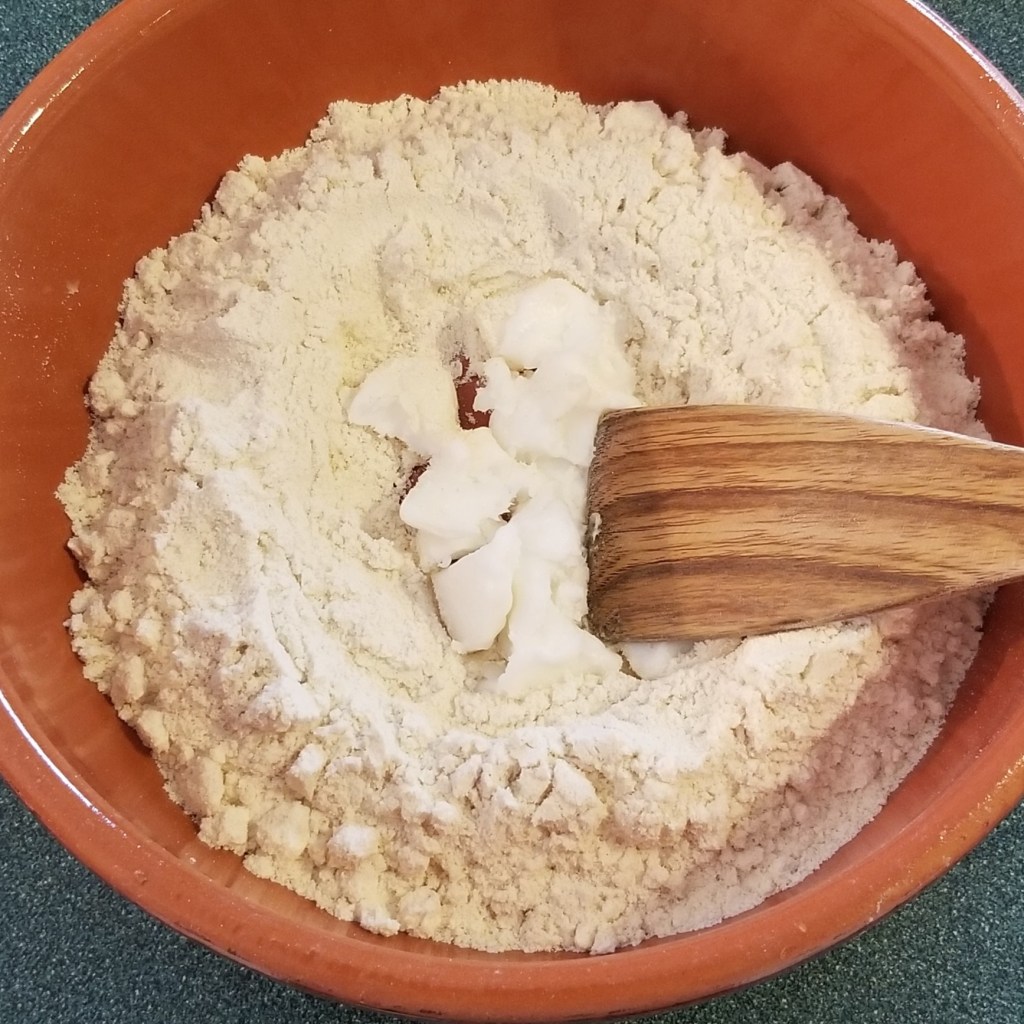
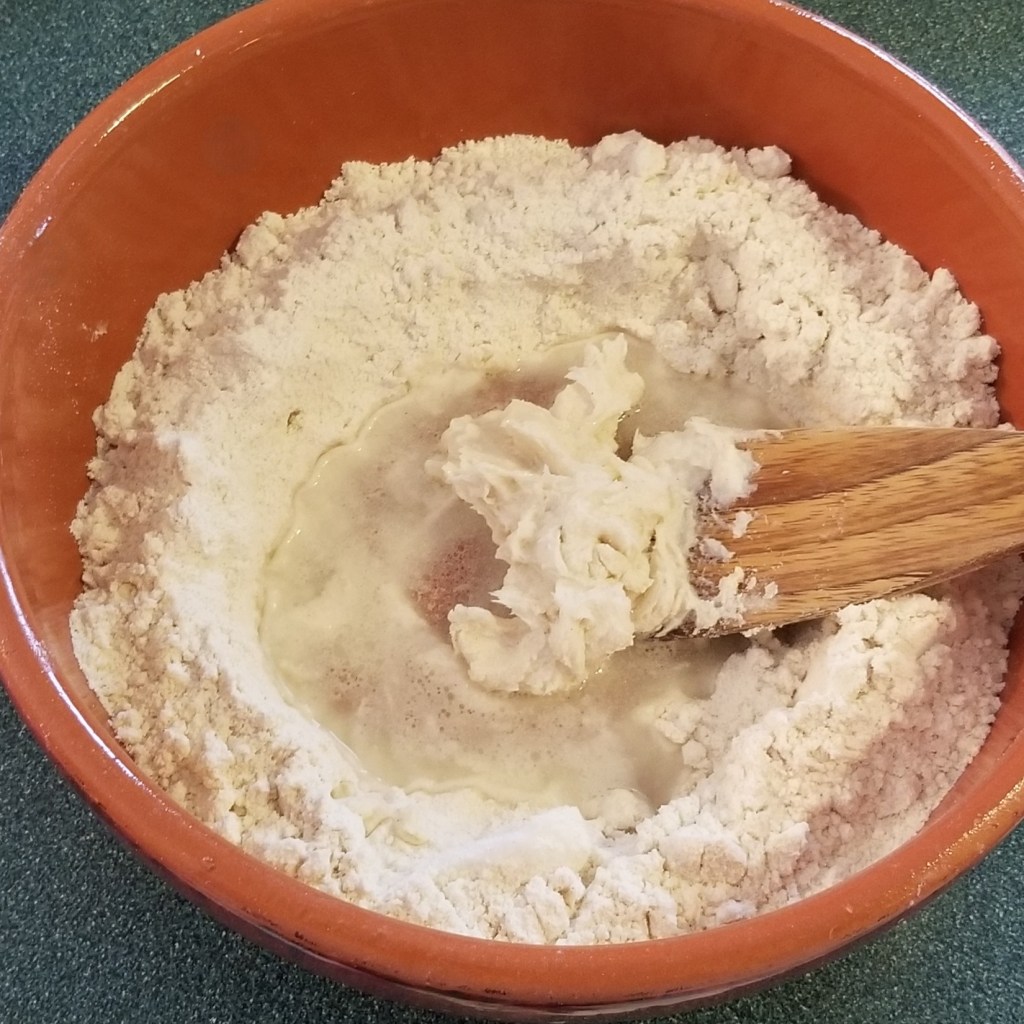
Meanwhile, prepare dough: Place flour in a large mixing bowl, opening a well in the centre; add lard to the well, beating until creamy (photo below, left). Pour one cup of the reserved pork broth, and incorporate slowly with the lard and flour (photo below, right):
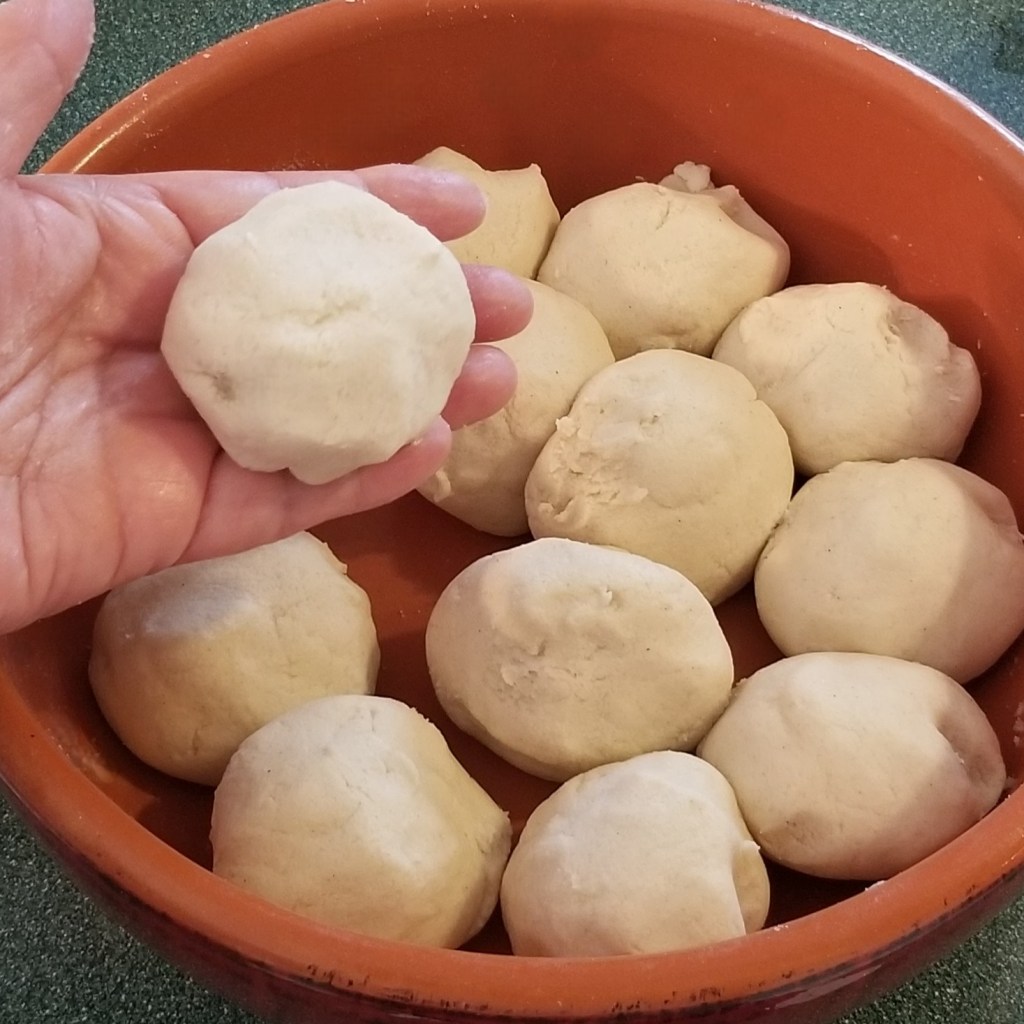
Continue adding broth and mixing, around two and a half to three cups, to hydrate all the flour, until the mix may be kneaded with hands without sticking, to form a moist dough. Divide into twelve portions (approximately 60 g each):
Cover the dough with a clean kitchen towel and allow to rest for a few minutes.
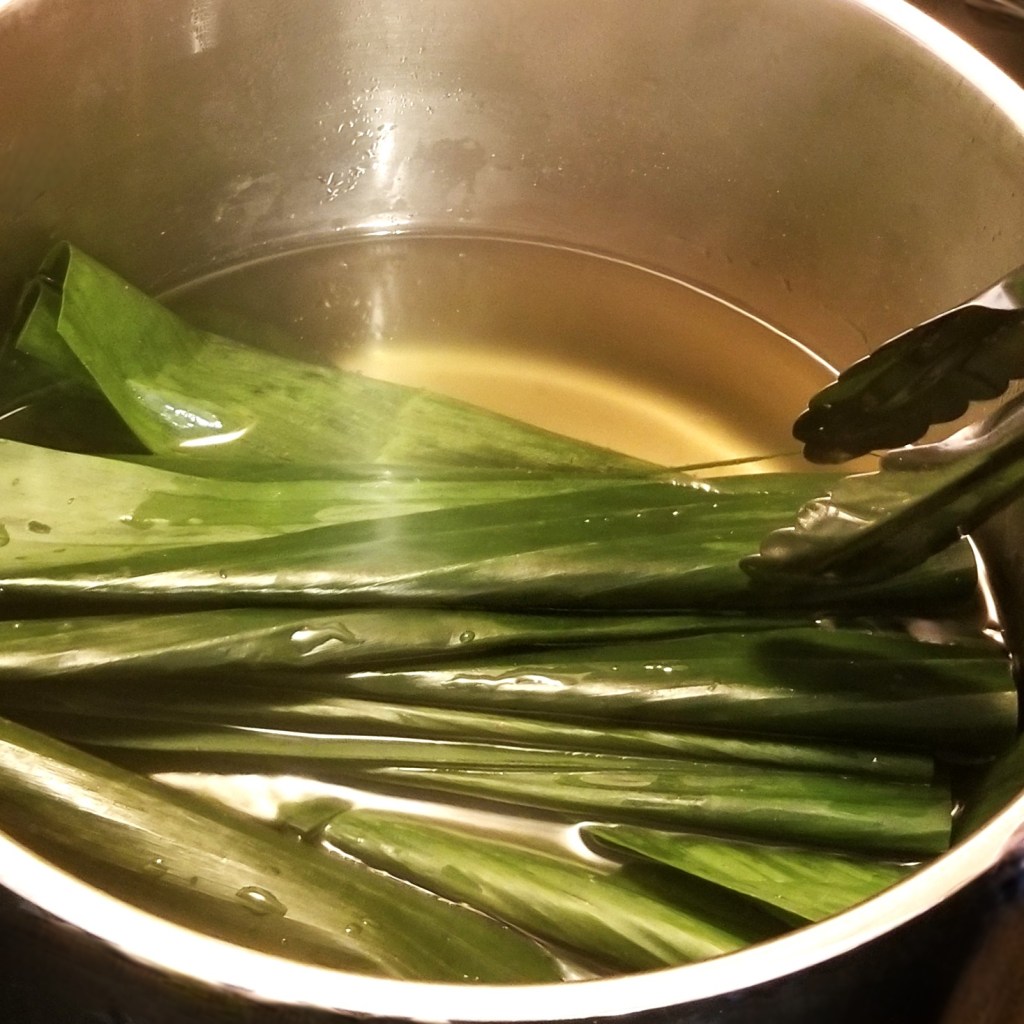
Prepare banana leaves: wash each banana leaf under running water. Trim ends and cut twelve squares, approximately 8 in (20 cm) per side. Save the trimmings and extra leaves. Bring a large pot of water to boil, and blanch the banana leaf squares for a couple of minutes:
Transfer blanched leaves to a colander, allowing to drain.
Assemble tamales: set up the corn dough portions, blanched leaves, filling, green olives, raisins, and if using, veggies and fried plantain, around a clean working area:
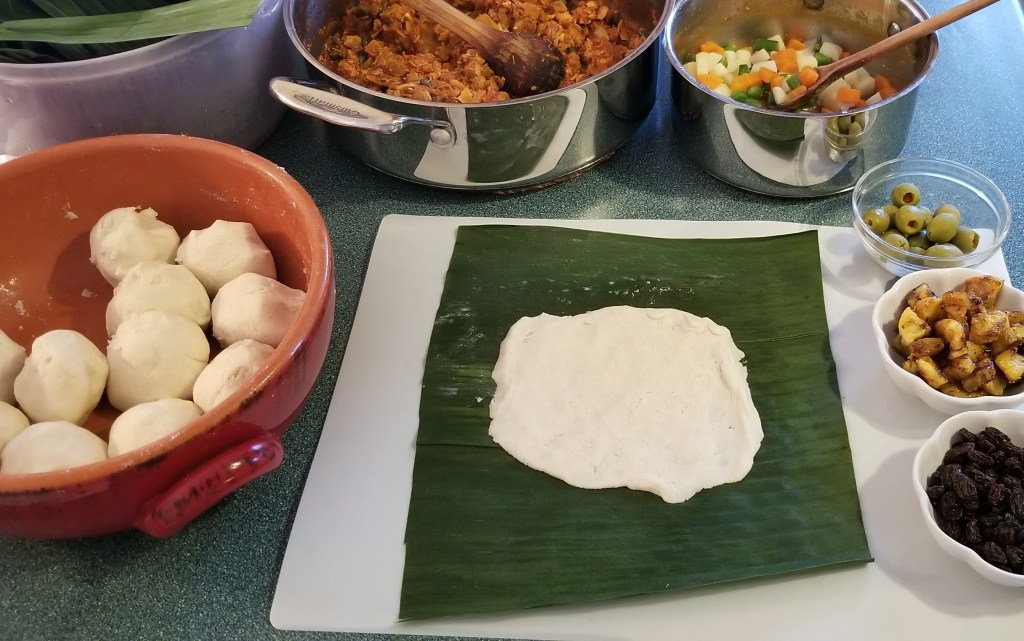
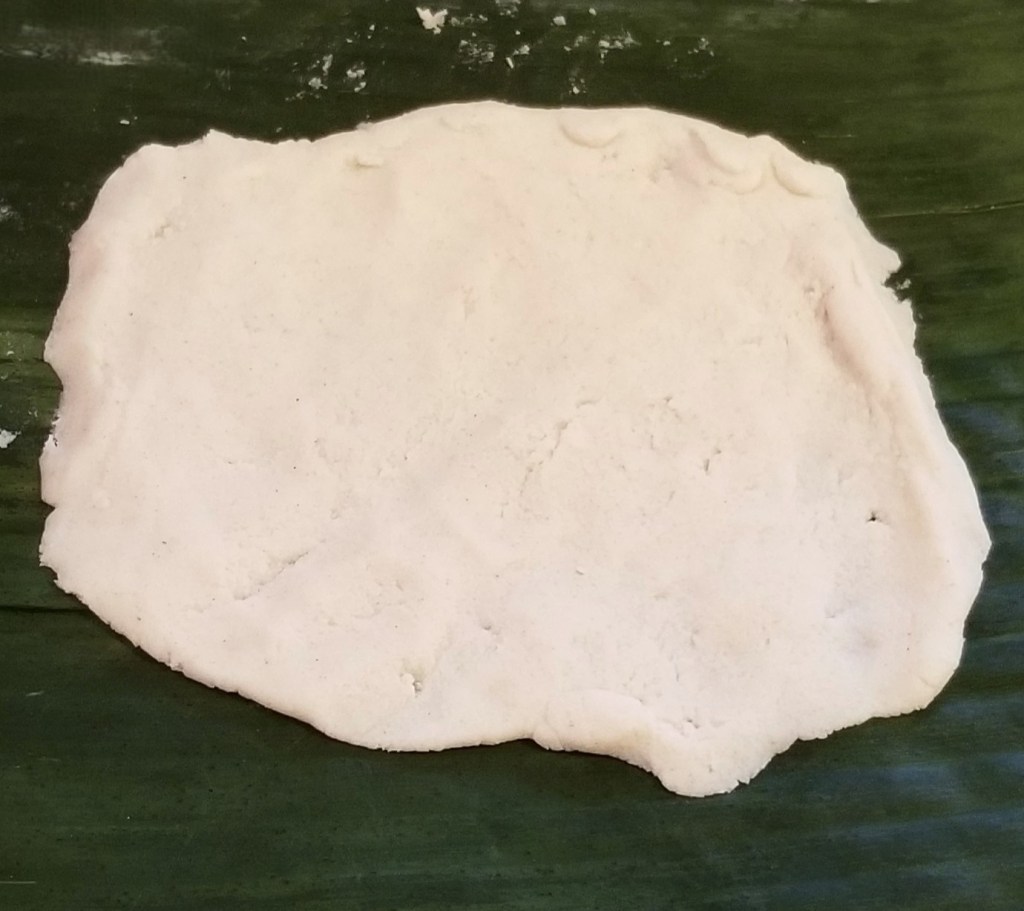
Working with one banana leaf square and one portion of dough, spread the dough into a thin layer on the centre of the leaf:
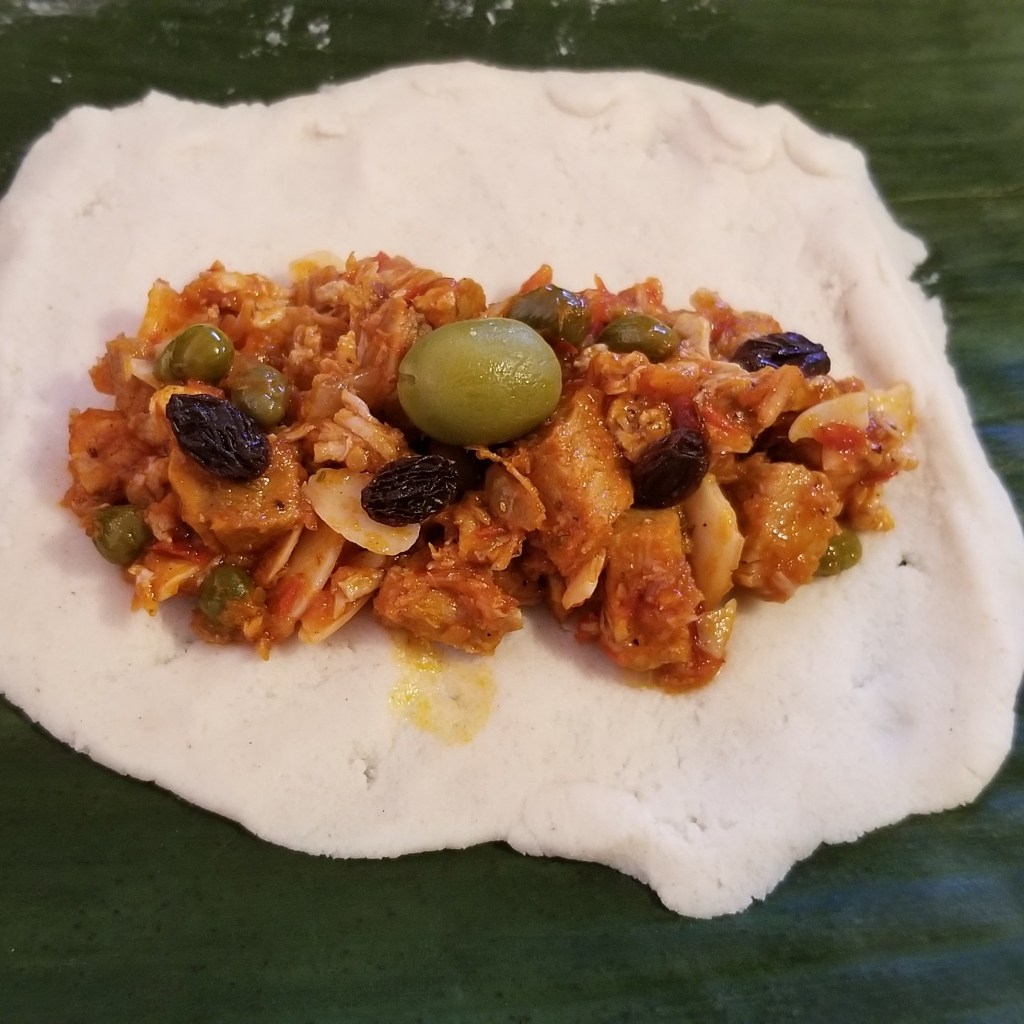
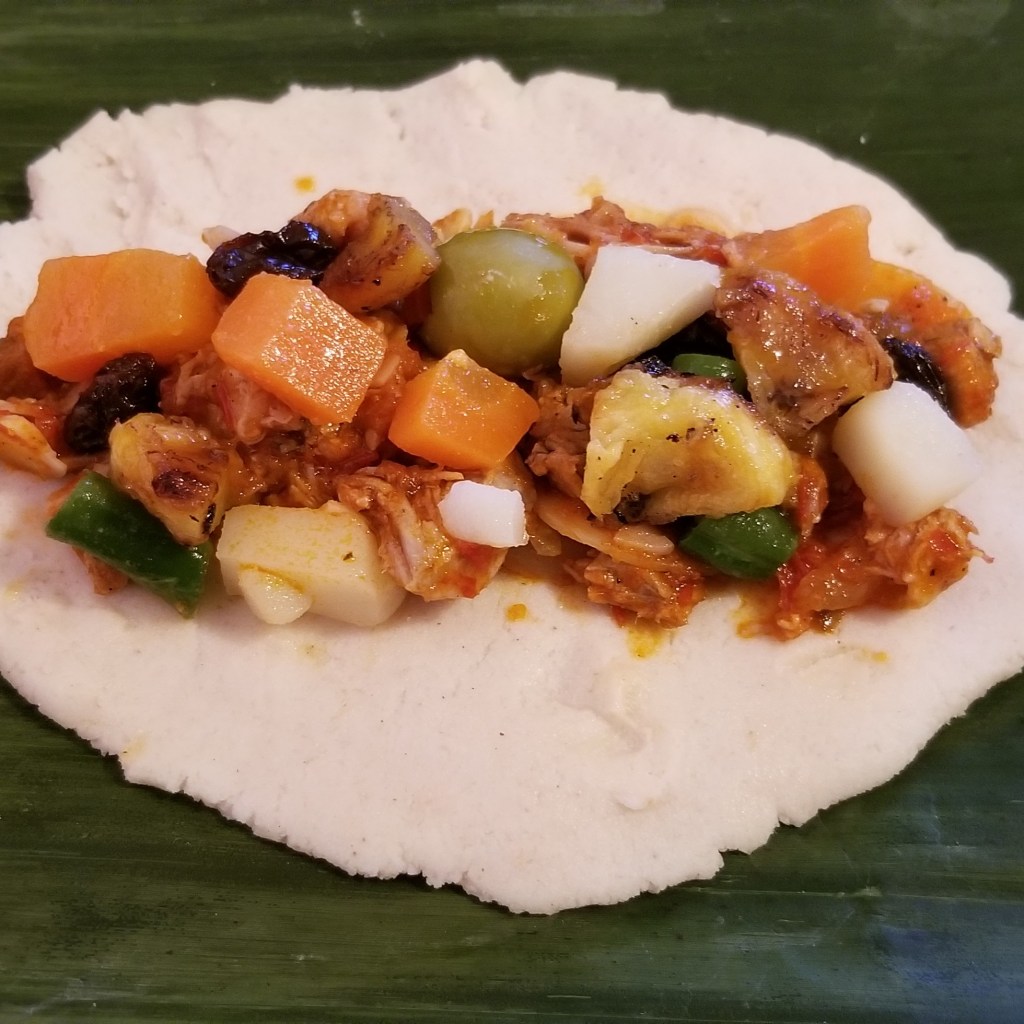
Top with about half a cup of filling, three or four raisins, and one green olive at the centre, on top of the filling (photo below, left). If using veggies and plantain, spread a little of everything along the filling (photo below, right):
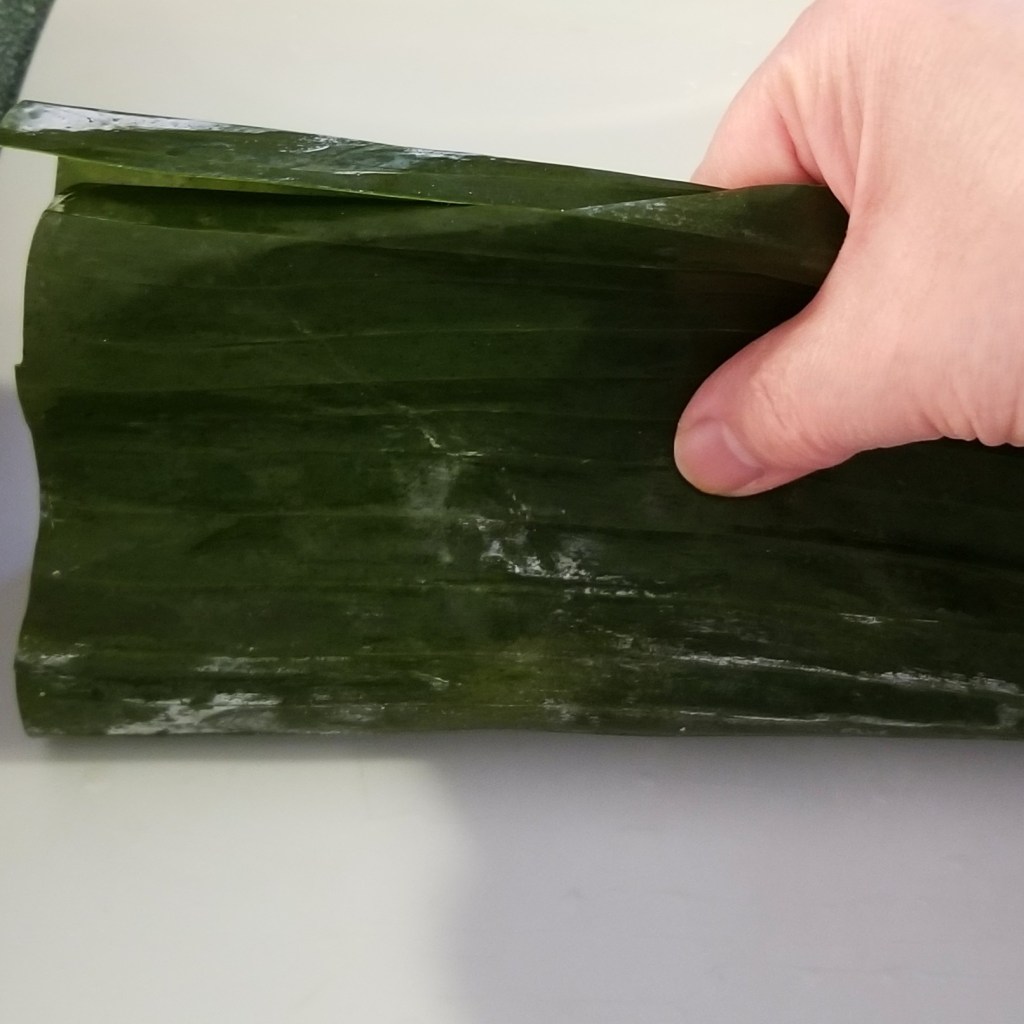
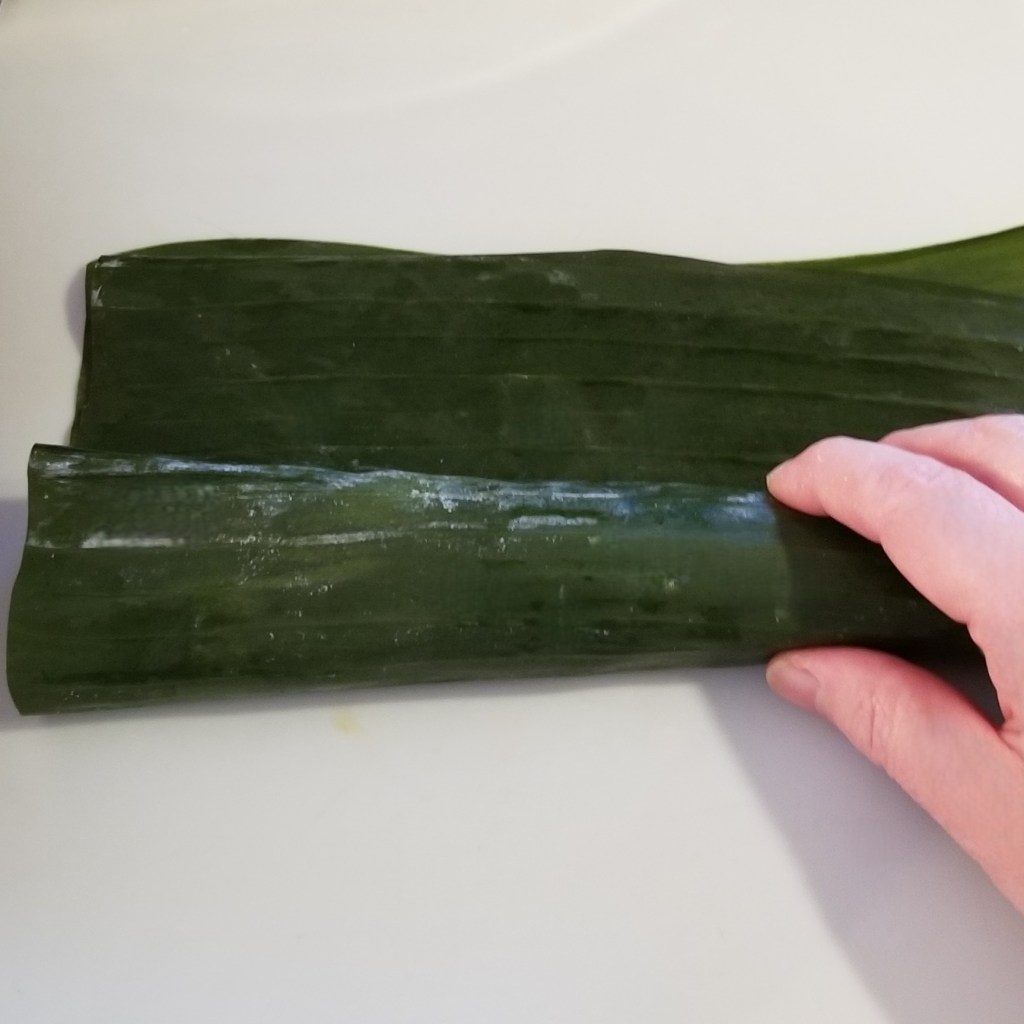
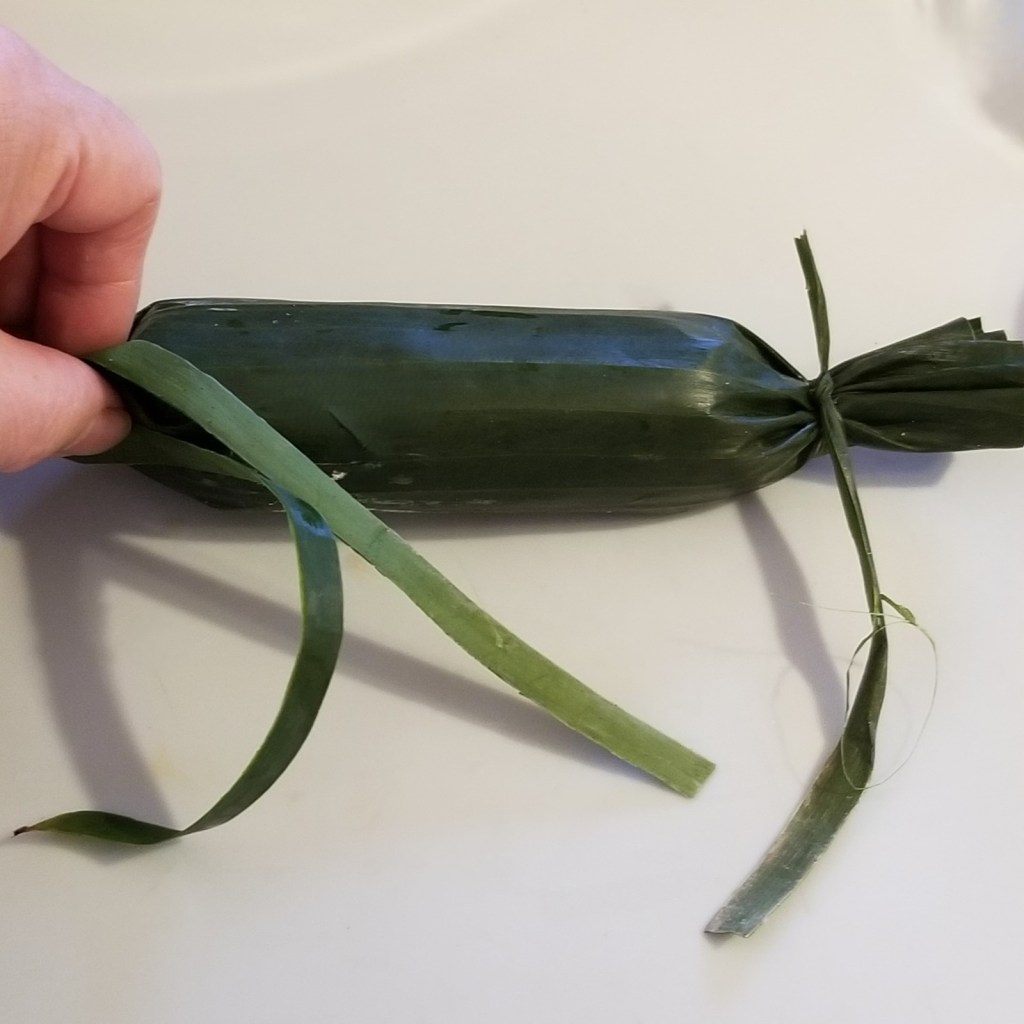
Fold banana leaf in half, covering the dough and filling (photo below, left). Roll the leaf into a cylinder (photo below, centre). Finish by tying each end of the cylinder with thin trimmings of banana leaves (photo below, right):
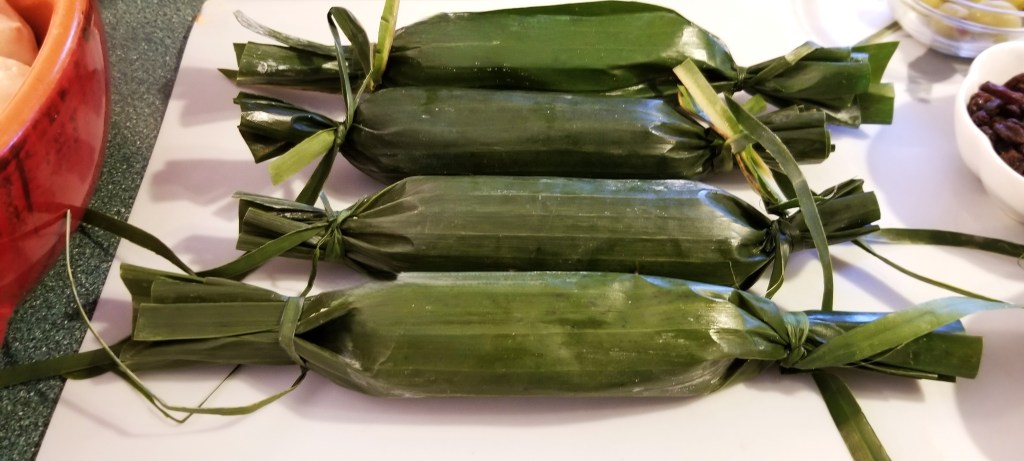
Continue with the rest to make more wraps:
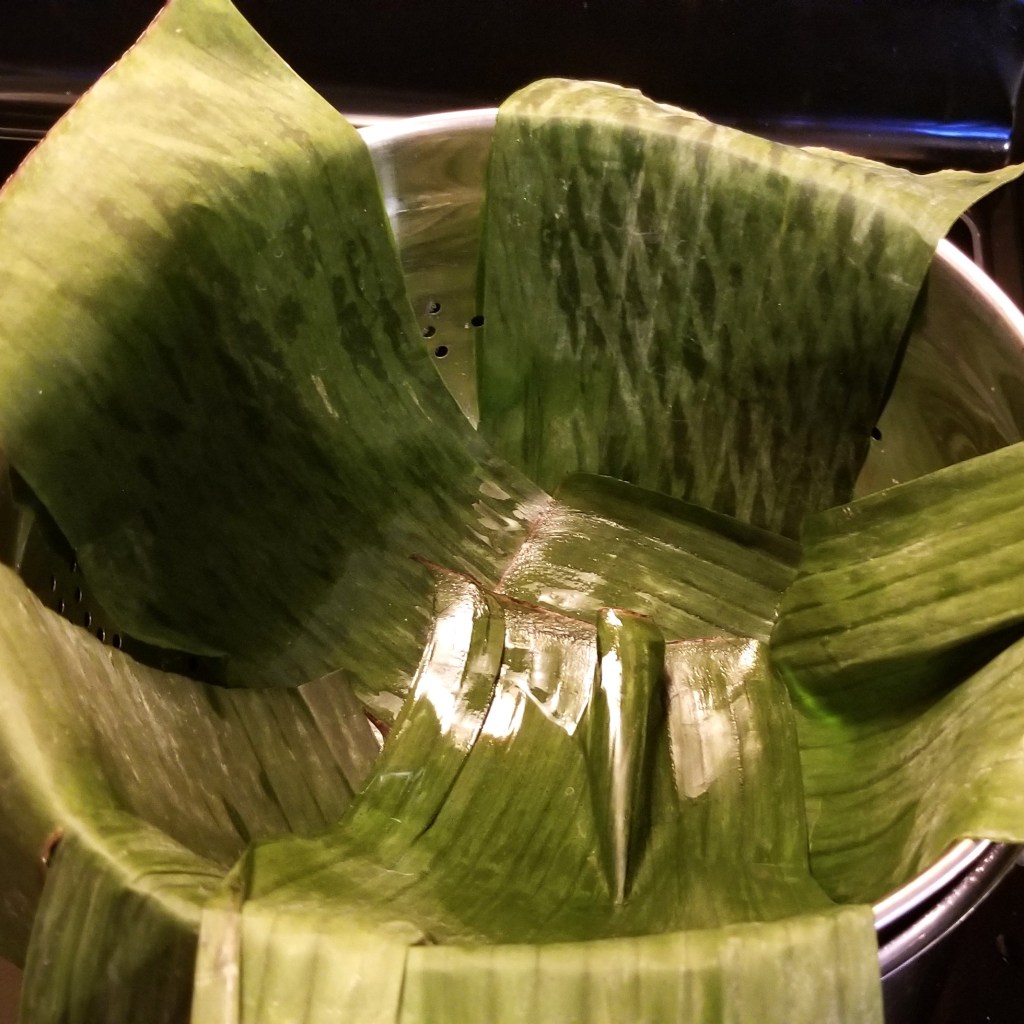
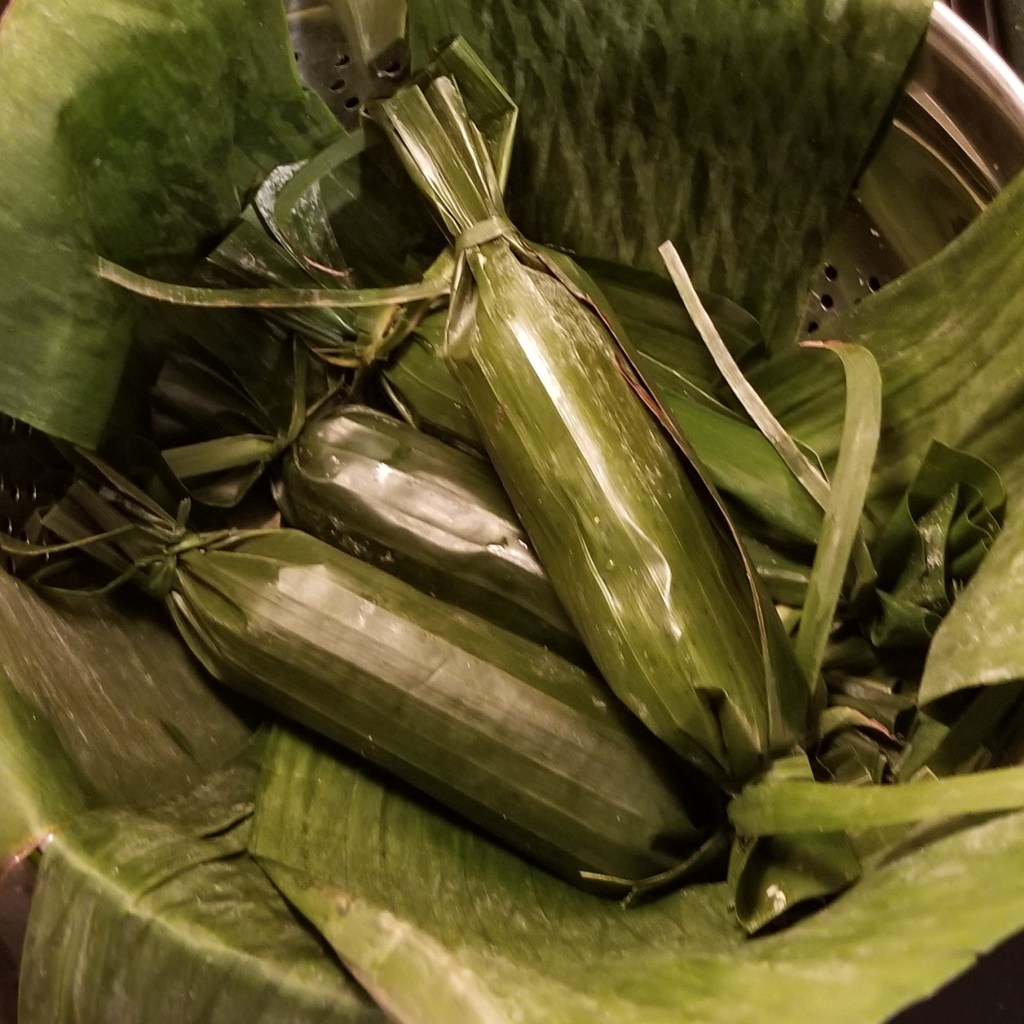
Cook tamales: prepare a steamer basket* by covering the bottom with strips of the leftover banana leaves, folding the ends over the edge of the basket (photo below, left). Place tamales horizontally in the prepared basket, in layers (photo below, right):
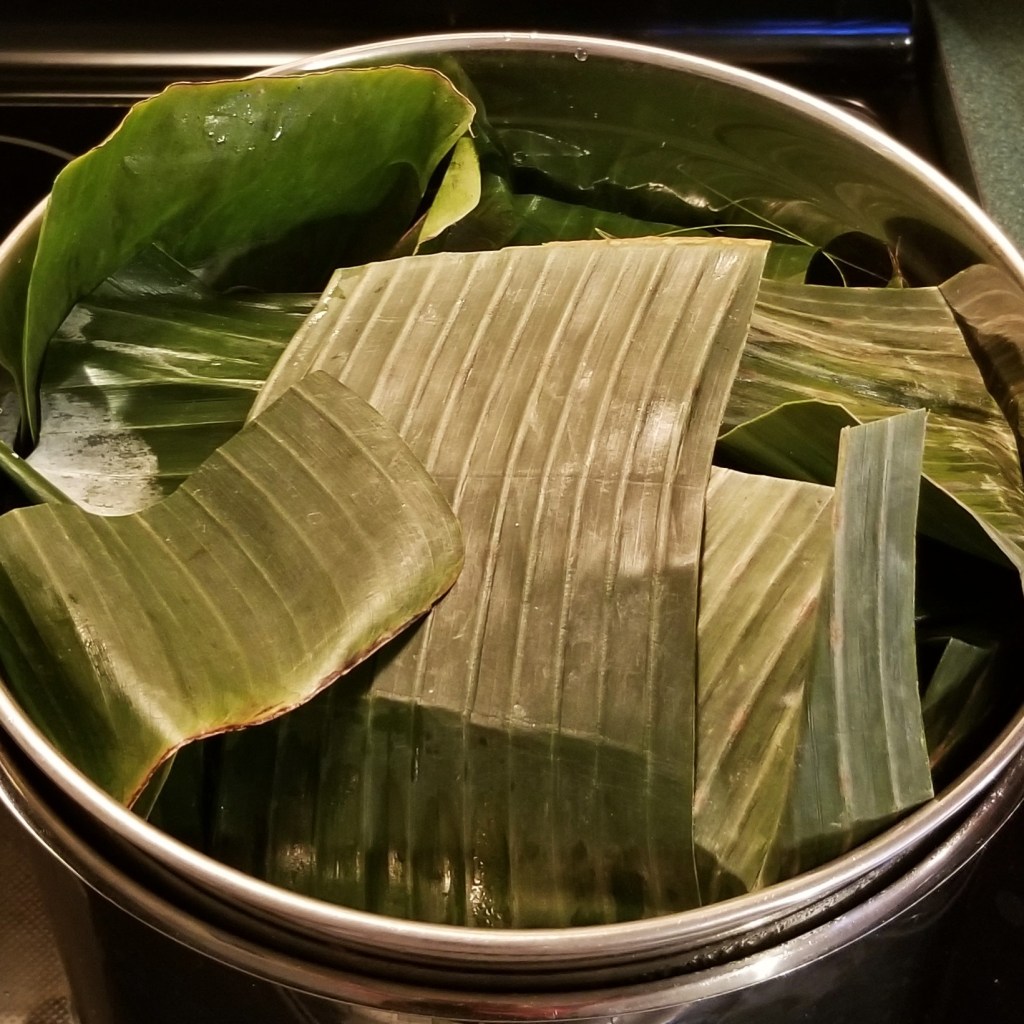
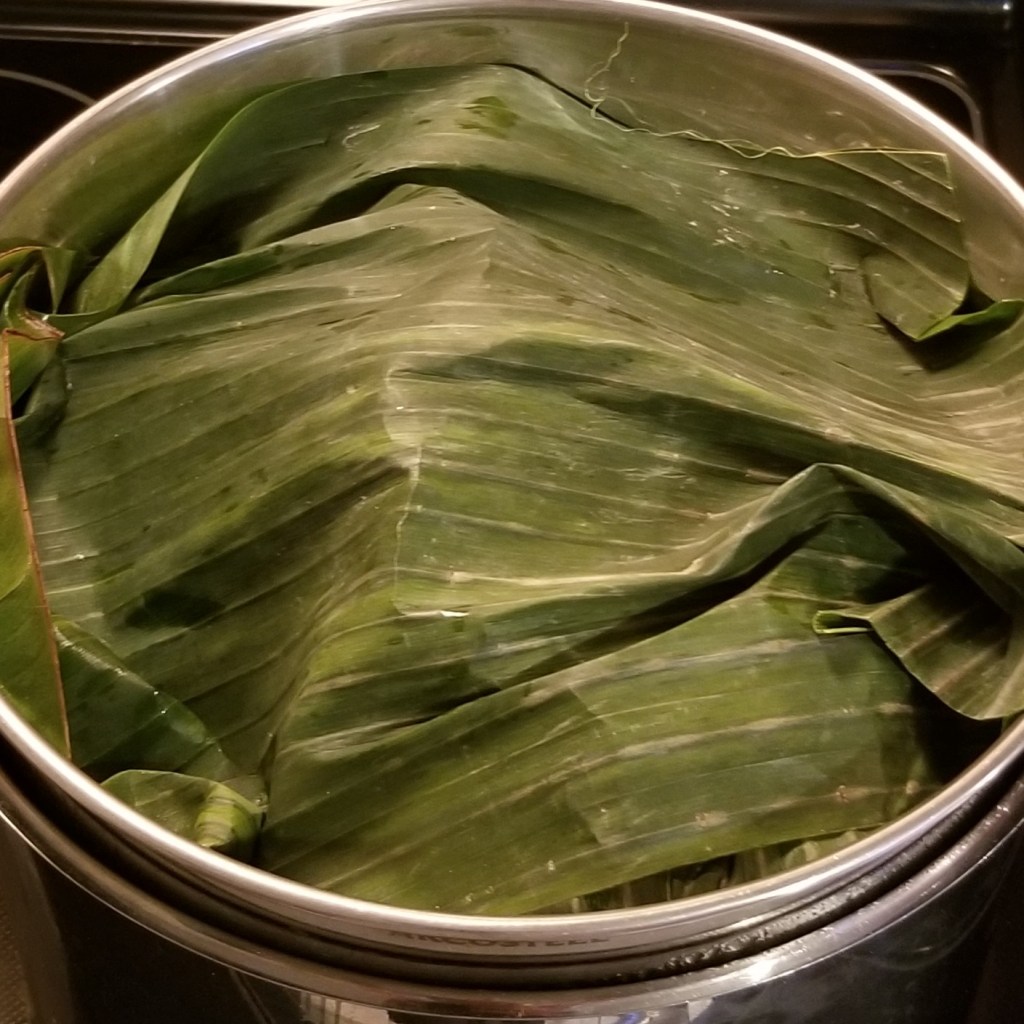
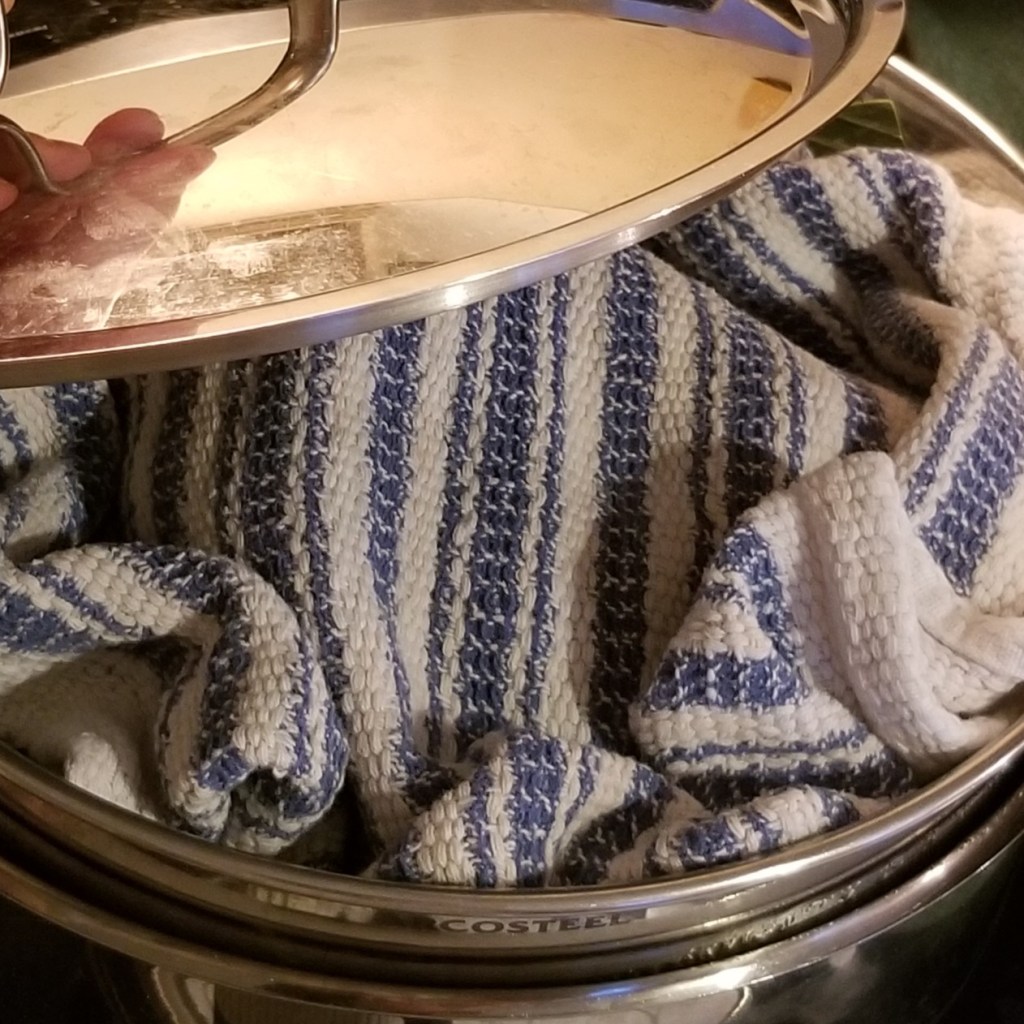
Fold the ends of the banana leaves over the tamales, to cover (photo below, left). Top with more banana leaves, tucking in around the edge of the pot (photo below, centre). Cover with a clean kitchen towel, then with the steamer lid (photo below, right):
Pour water into steamer bottom, and bring to boil over high heat. Place prepared basket on top, then reduce heat to keep a regular rolling boil. For this small batch, steam for one hour, then take one tamal out to check for doneness. The banana leaf should peel easily, and the dough should be shiny and smooth outside. If needed, return the tamal to the basket, and steam in ten-minute intervals, until done. Remove steamer from heat. Transfer tamales to a serving plate:
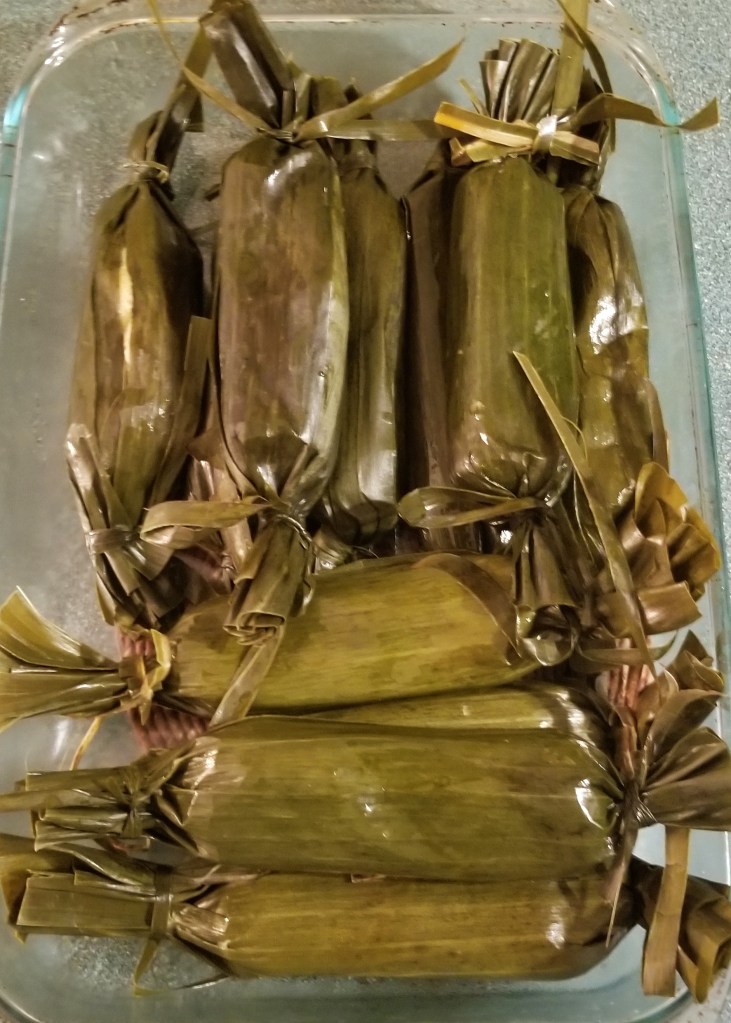
Serve hot with a cup of atole, hot chocolate or coffee from the pot (café de olla):
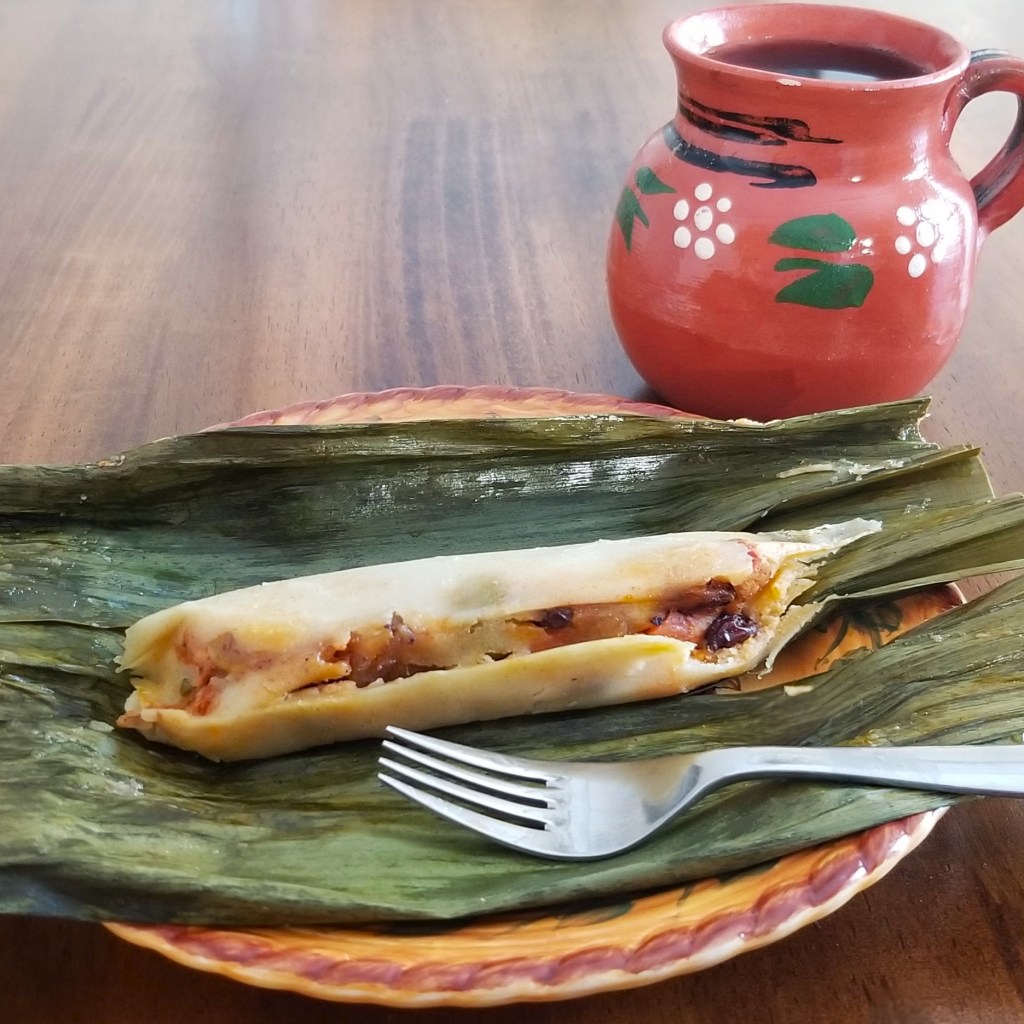
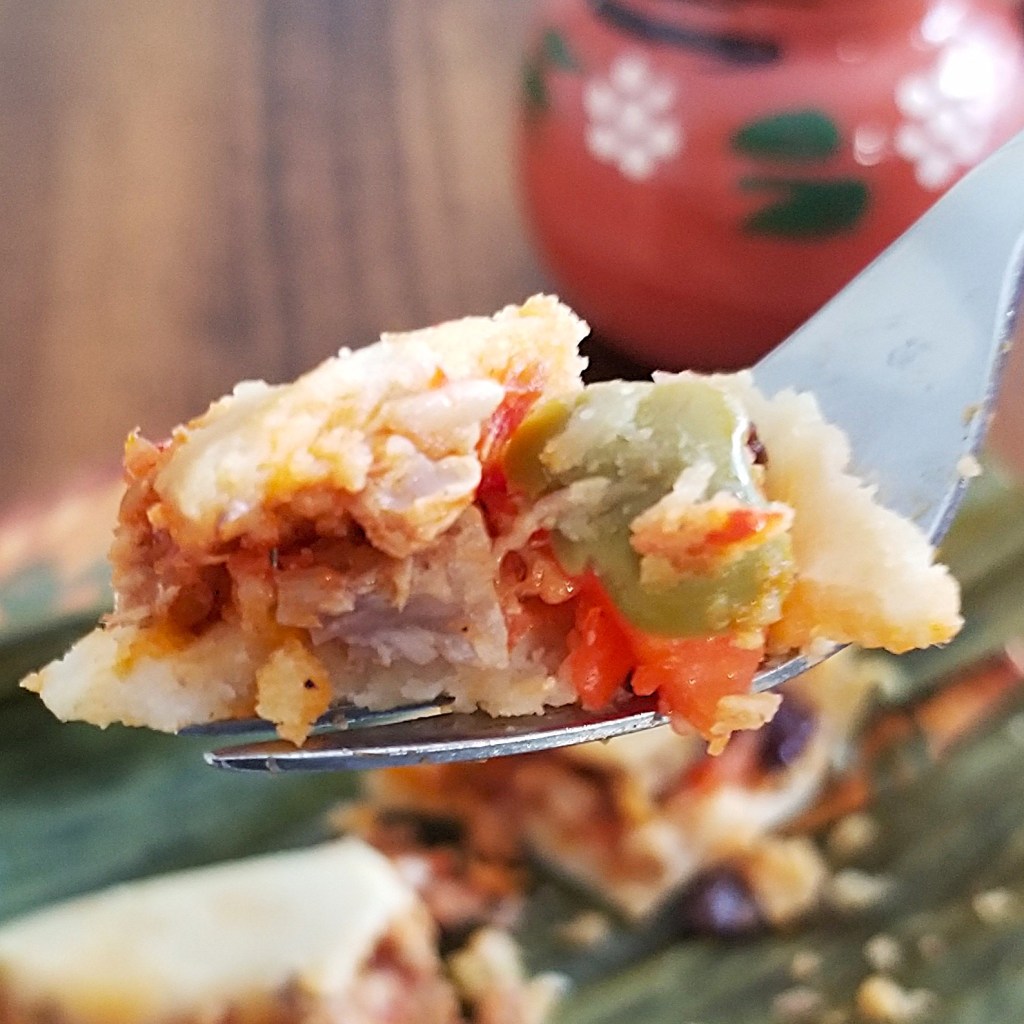
Slice right in the middle to find the green olive surprise:
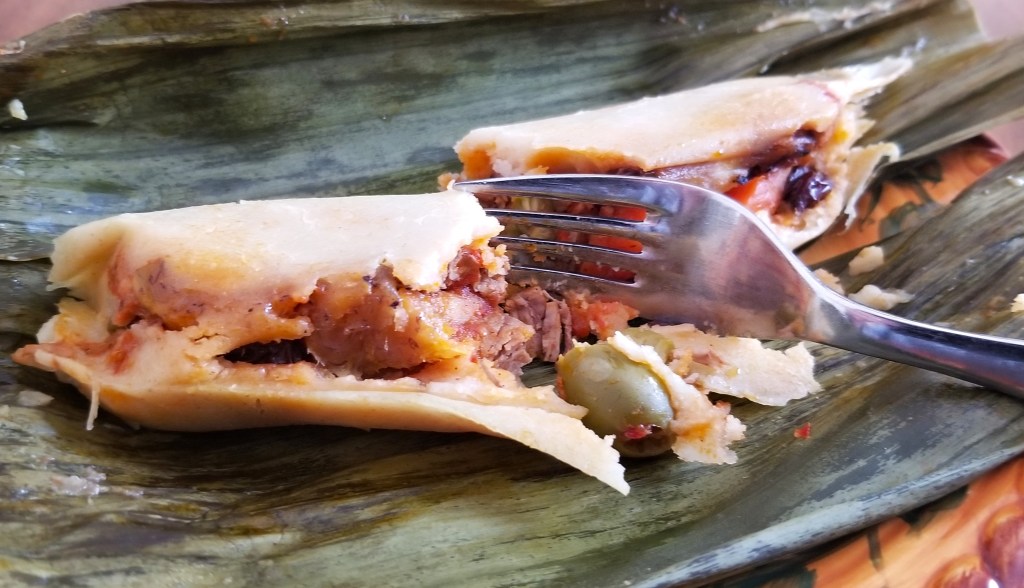
As I mentioned, I prepared a few tamales without plantain and cooked veggies (below, left) and others with them (below, right):
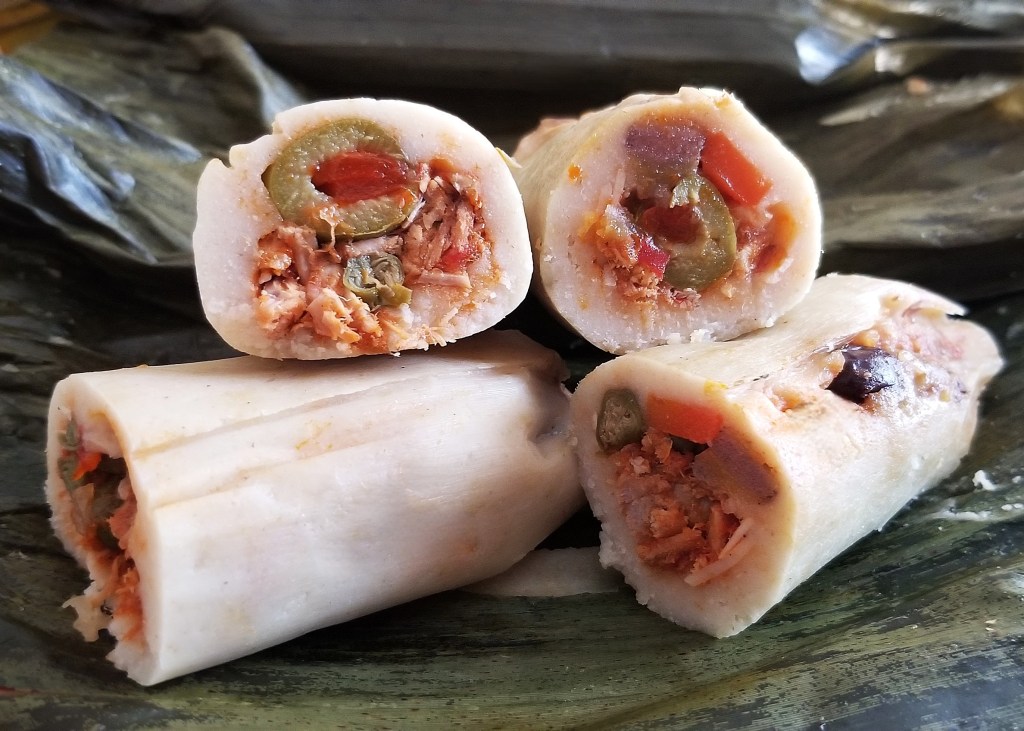
My husband liked the ones with everything, but thought that the capers and green olives did not add anything to the general balance of the filling. I agreed on the capers, but really liked finding the olive, whole, in the middle of the tamales.
Before preparing these tamales de Cambray, I felt a little apprehensive about changing a traditional recipe too much, but all in all, they were all delicious, and the dough and sauce, constants across the recipes, were really tasty. This is a splendiferous treat for family events, but also to celebrate Candlemas, on a day like today, February 2!
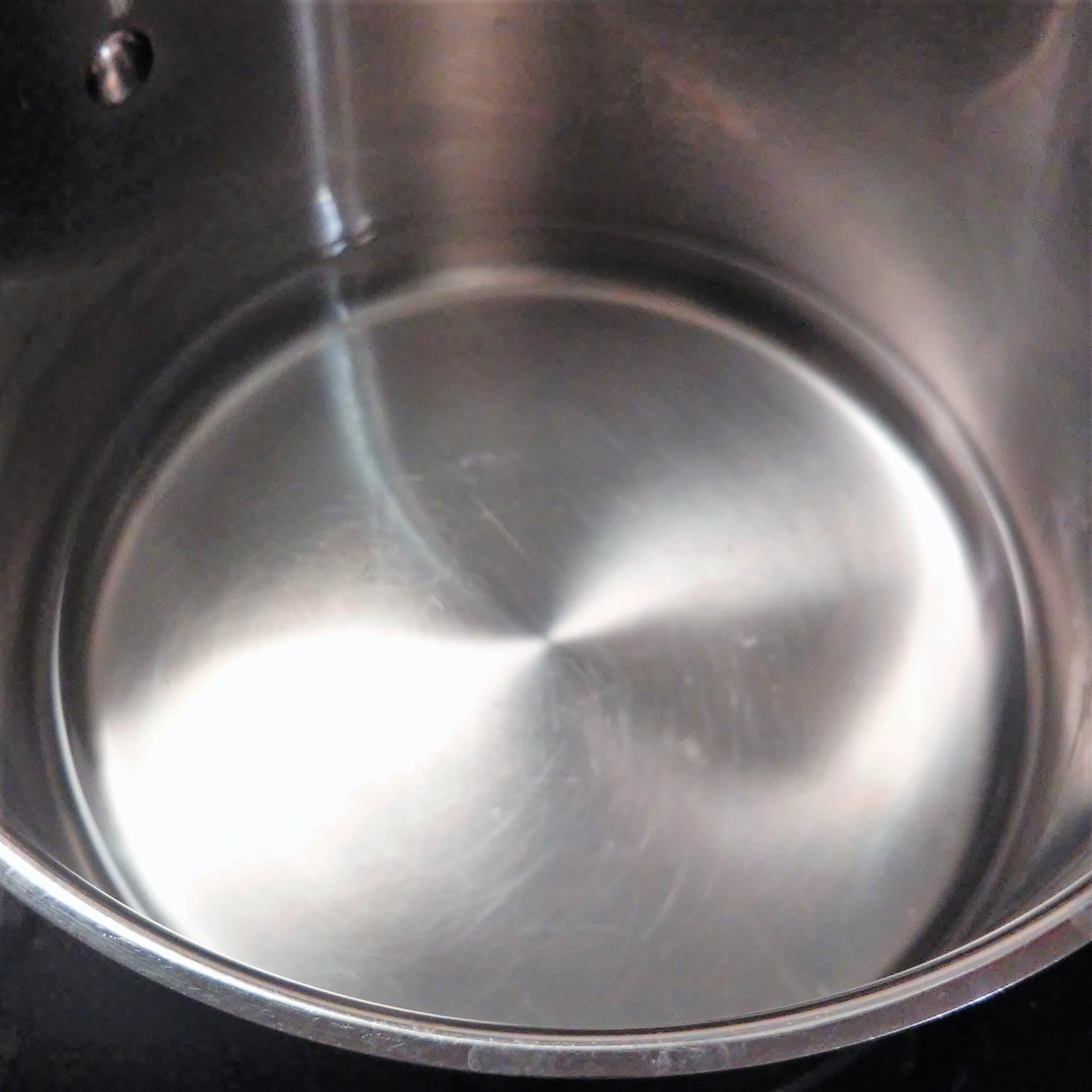
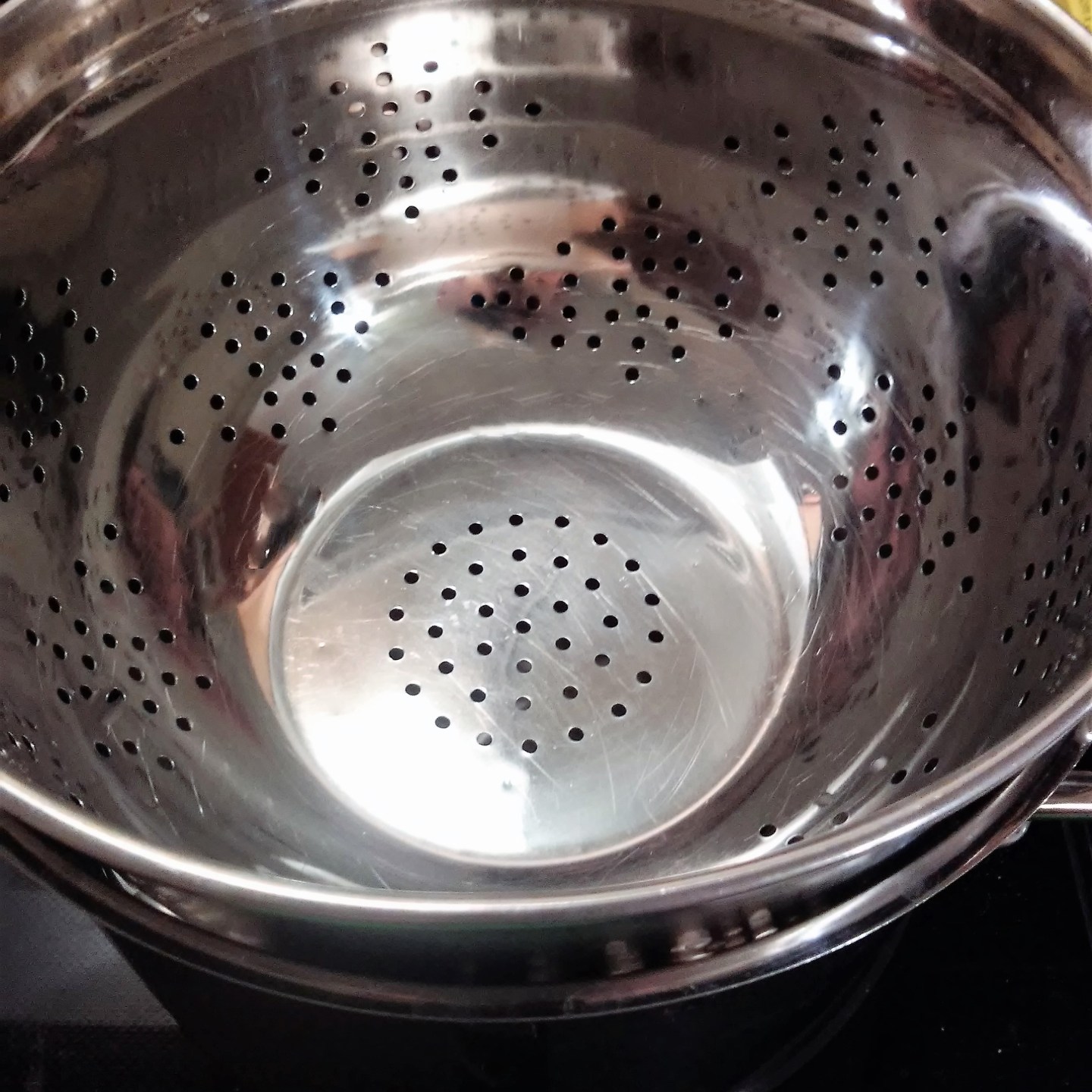
* NOTE about the steamer pot: I do not own a large steamer, so I always use a metal colander as the basket, fitted on top of a large pot. Prepare steaming pot by filling the bottom of a large pot with at least one inch of hot water (photo below, left), then place steamer basket on top, making sure the water does not touch (photo below, right):
For your convenience, click on the images below for products available on Amazon™. DISCLAIMER: Any reviews included in this post are my own, for items I have purchased, not provided by any company; as an Amazon Associates Program affiliate, I might receive a commission for any purchases originated from the links below, at no extra cost to you (thank you to readers who have bought other products starting with a click from my links!):

I am bringing my recipe to Full Plate Thursday #780 with Miz Helen @ Miz Helen’s Country Cottage.
I am sharing my post at Thursday Favourite Things #745, with Bev @ Eclectic Red Barn, Pam @ An Artful Mom, Katherine @ Katherine’s Corner, Amber @ Follow the Yellow Brick Home, and Linda @ Crafts a la Mode.



 My Slice of Mexico
Thanks for another great recipe. Looks like a bit of work, but worth it!
LikeLiked by 1 person
Hope you get to try it!
LikeLiked by 1 person