
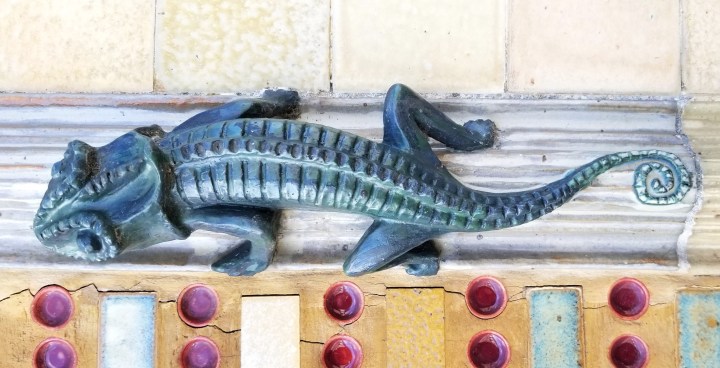
While visiting Beauvais, France, I learned that its official mascot is the salamander; locals told me that the salamander was chosen because of the resilience of this creature, and its ability to regenerate. I discovered many salamander references around the Beauvais downtown area, and even the hotel were I stayed was named after the creature:
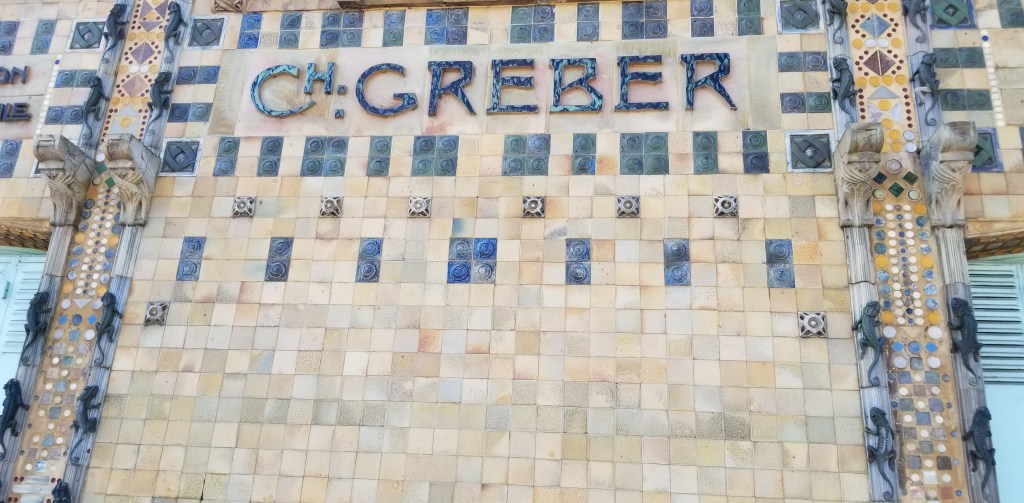
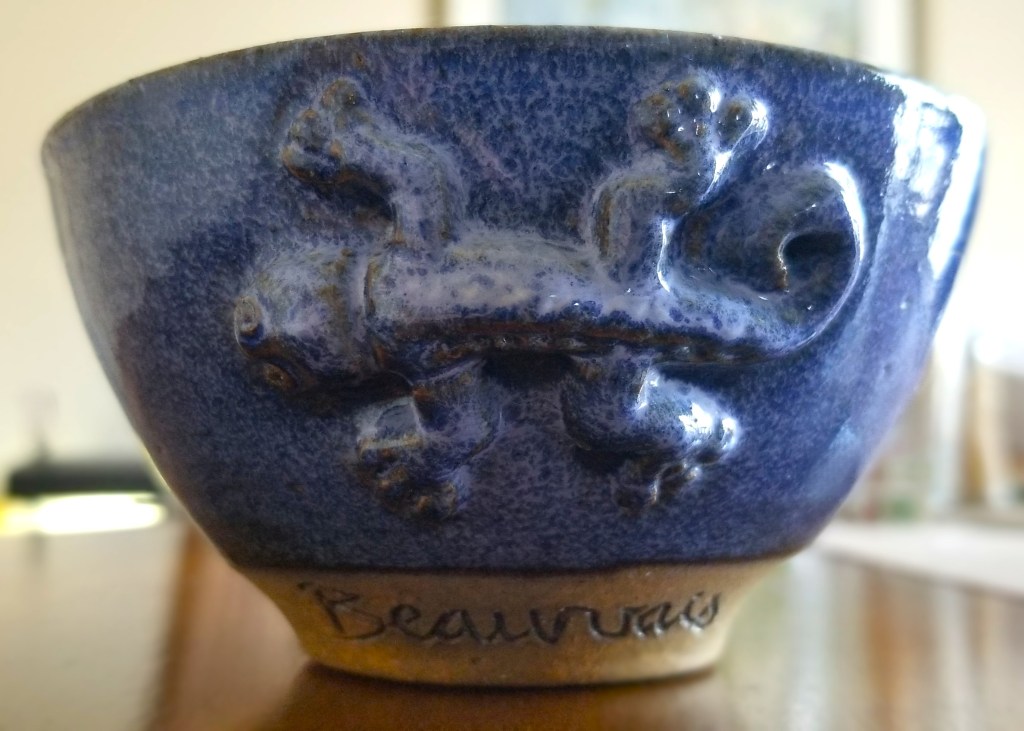
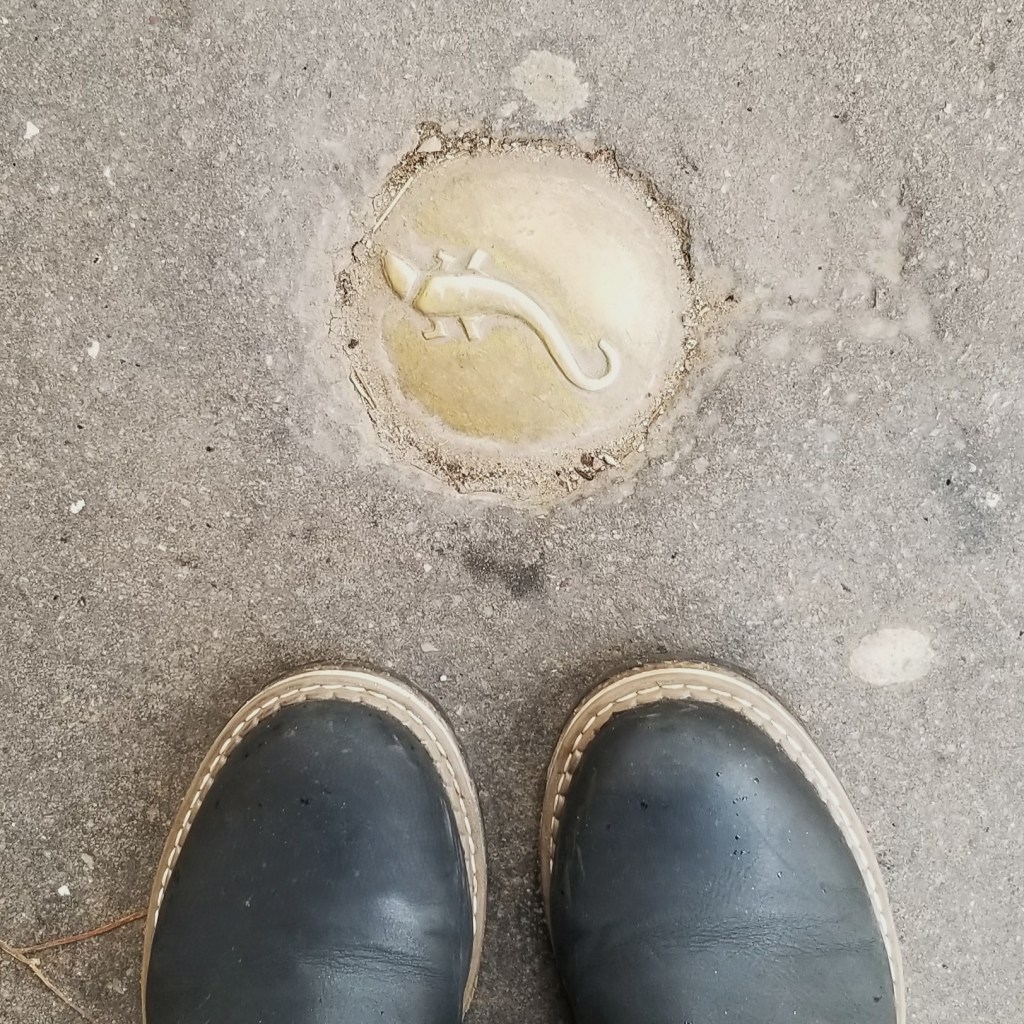
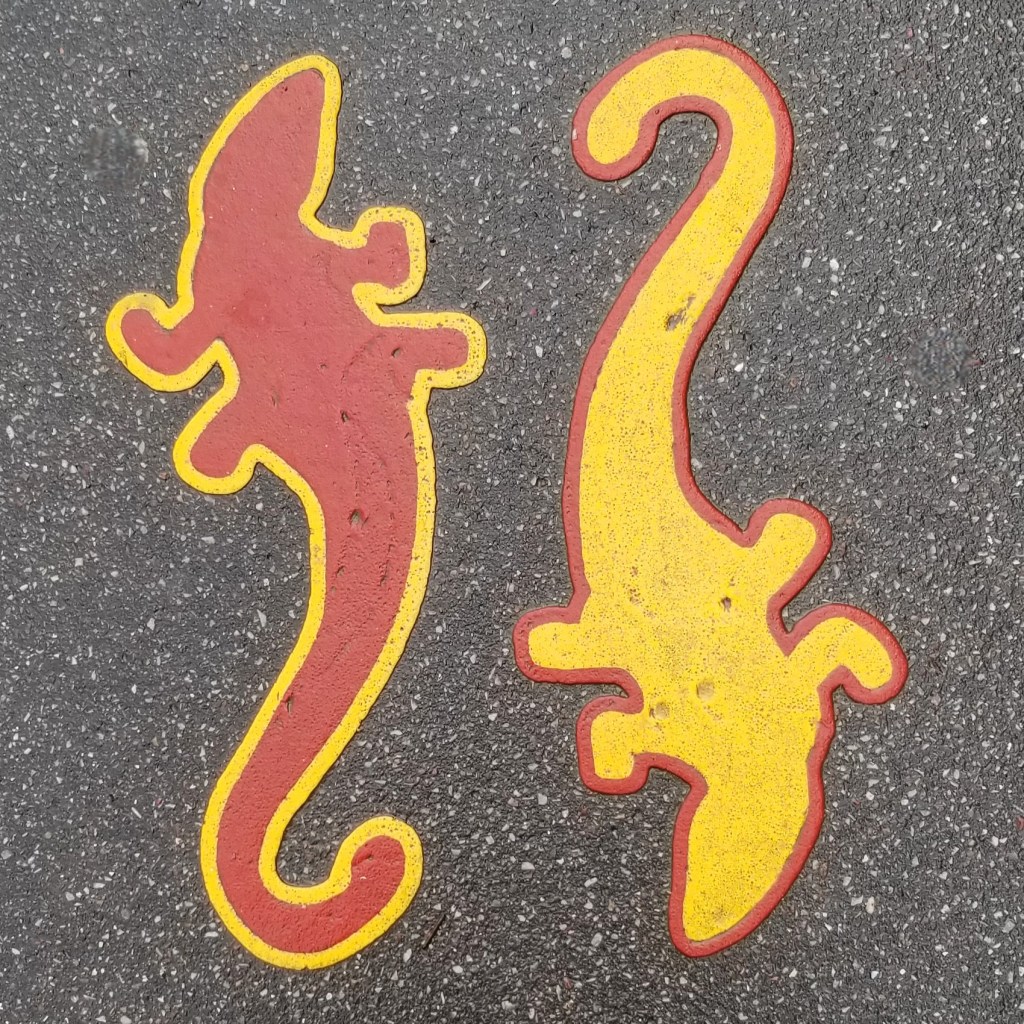

In their scientific classification, salamanders are identified as amphibians forming a group of ten families of the order Urodela, the lone order remaining from the broader order Caudata (which also includes fossil species.) One of their fascinating properties is that they may regenerate lost limbs, as well as some vital organs; instead of forming scar tissue, cells around injuries return to developmental state, then growing tissue as new.
Salamanders live all around the world, although particular families are confined to specific regions, known by their generic name, or other names for specific subfamilies, such as newts, mudpuppies, or the Mexican axolotl. In Europe, there are several types of salamanders, with the most likely associated to the Beauvais mascot being the lizard-looking genus Salamandra. In particular, the fire salamander (Salamandra salamandra) is described as having a slender cylindrical body, short legs, long tail, and skin with markings in different proportions of black, yellow and tones of red and orange:
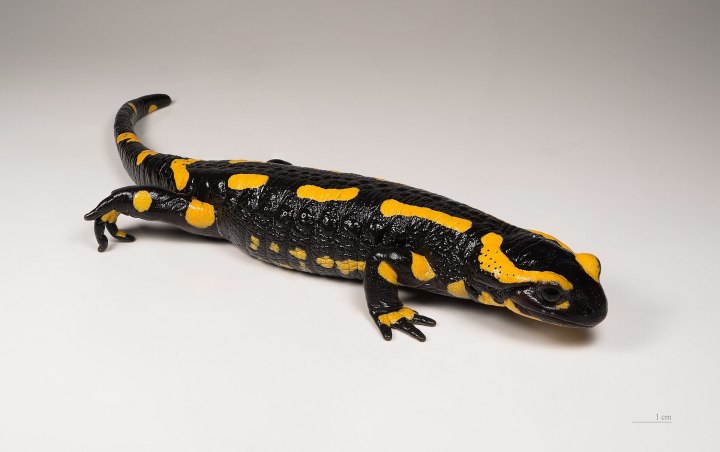
Although the word “fire” in the name probably refers to the coloration tones, the mythical lore of these amphibians is indeed related to fire, in which they are believed to be born from fire, or that they could survive or be reborn from fire. The explanations for these extraordinary attributes are simple: salamanders often nest inside logs, so when the wood was tossed in an open fire, the animal would simply escape, looking as if it had been created in the spot; surviving forest fires is probably due to the salamander’s need for water to maintain their skin moist, so if there were a fire, they would remain inside the body of water, and resurface afterwards. That, in addition to observing salamanders heal without scars and even growing legs or tails almost by command, would be enough to confer them supernatural qualities.
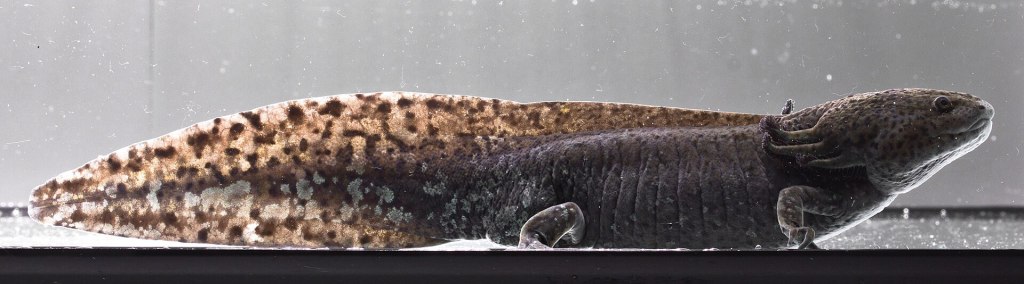
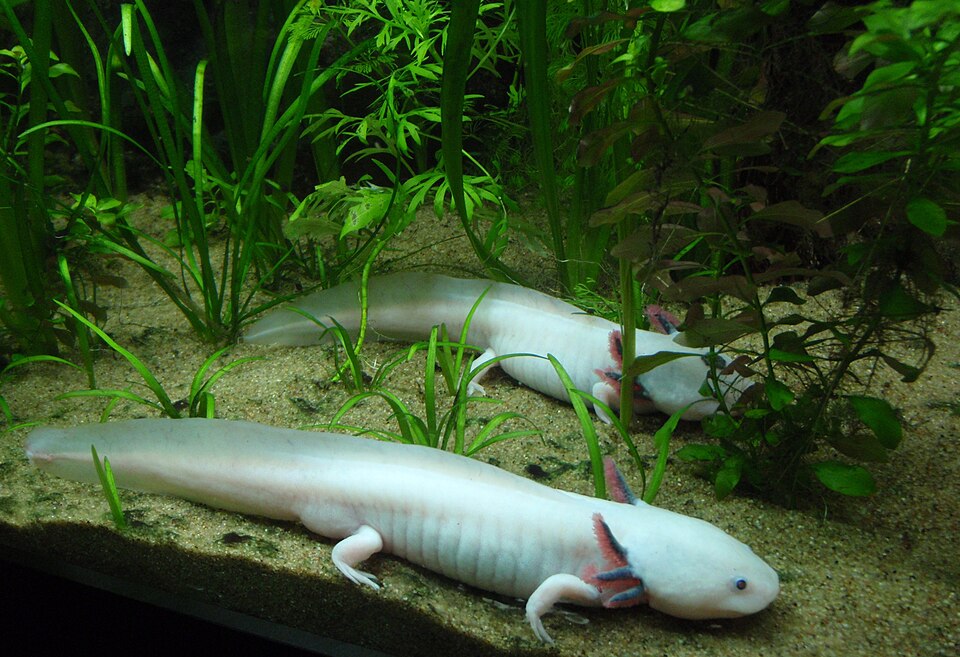
In Mexico, axolotls (In Spanish ajolotes, Ambystoma mexicanum) have a similar mythical lore. The name comes from the Nahuatl language, āxōlōtl, from atl – water, and Xolotl – Aztec deity of fire and lightning. The legend is that the god tried to escape sacrifice by transforming into this animal. These unique salamanders do not undergo a metamorphosis from larval state (a phenomenon called neoteny), but simply grow legs and keep their gills throughout their lives; with these jimmy-rigged looking anatomy, axolotls already seem magical, but they also may survive in fully aquatic mode if needed. The connexion to the god of fire and lightning then probably came from the same observations as the European salamander, that they would resurface after field fires, regenerating their lost limbs without scarring. Axolotls are sometimes called water dogs, since the god Xolotl was often represented as a dog, also giving name to the Mexican dog xoloizcuintli.






Those are some unique characteristics. Don’t we wish we could regrow limbs and heal without scarring. Neat trick!
LikeLike
Yes, salamanders are studied to try to understand the mechanisms of their cells going back to stem stage.
LikeLiked by 1 person
What a great post on Salamanders Irene. I looked after Gus, my son-in-laws axolotl which was so much fun to watch him. Strange creatures indeed.
Thanks for joining in RDP 😀
LikeLike
Wow, I have never seen an axolotl “in person”. Thank you for your comment, and for hosting, Brian!
LikeLiked by 1 person
Meet Gus. He was of an unknown age but very old

LikeLiked by 1 person
What a cutie!
LikeLiked by 1 person
He was good company
LikeLiked by 1 person
really enjoyed your post… france, i had no idea… i have heard i have seen but never knew their rich history and the folklore attached… gods, fire, water, regrowth… simply amazing… you told so well and your photos i was sorry there was an end…. intrigued i will go to the library and see what they have to offer….
LikeLike
I am so glad you enjoyed this post, a couple of my previous posts are about France, too. Thank you so much for your kind comment!
LikeLike
Who would have thought these creepy little creatures would be so popular, especially in France.
LikeLike
Axolotls are almost extinct in the wild, but are very popular pets, and salamanders are very interesting to the medical and scientific communities for their regenerative properties.
LikeLiked by 1 person
You might find the blog below of interest:
What if animals could teach us how to regrow human body parts?
LikeLiked by 1 person
Thank you for the link, it was an interesting article.
LikeLike