March 14 is PI Day (π- Day), a celebration of the mathematical constant π, defined as the ratio of a circle’s circumference to its diameter, which is always equal to an irrational number beginning with the digits 3.14; for this reason, March 14, if written as 3/14, was a good fit for the celebration. In 1988, a physicist named Larry Shaw who worked at the San Francisco Exploratorium, organized the first celebration in record at that location. Staff and visitors walked around in one of the facility’s circular spaces, and because the name “Pi” is a homophone of “pie”, everyone got to share fruit pies. It was not until 2009 when the United States officially designated March 14 as Pi Day, and in 2019, during its general conference, the UNESCO declared March 14, Pi Day, as the “International Day of Mathematics.”
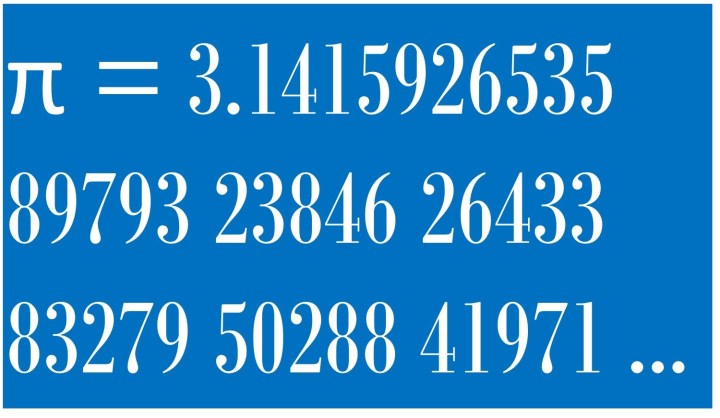
Nowadays, many schools, libraries and Math institutions celebrate Pi Day, by eating pies and other circular treats, as well as holding Math competitions, such as who can recite, by memory, the longest list of π’s significant digits. I only know 3.1415926…, in the image above a few more digits, and although it might sound like fiction, according to the Guinness World Records, “The most decimal places of Pi memorised is 70,000, and was achieved by Rajveer Meena (India) at the VIT University, Vellore, India, on 21 March 2015. Rajveer wore a blindfold throughout the entire recall, which took nearly 10 hours.” To check out the first one million digits of Pi, visit the π Day website.
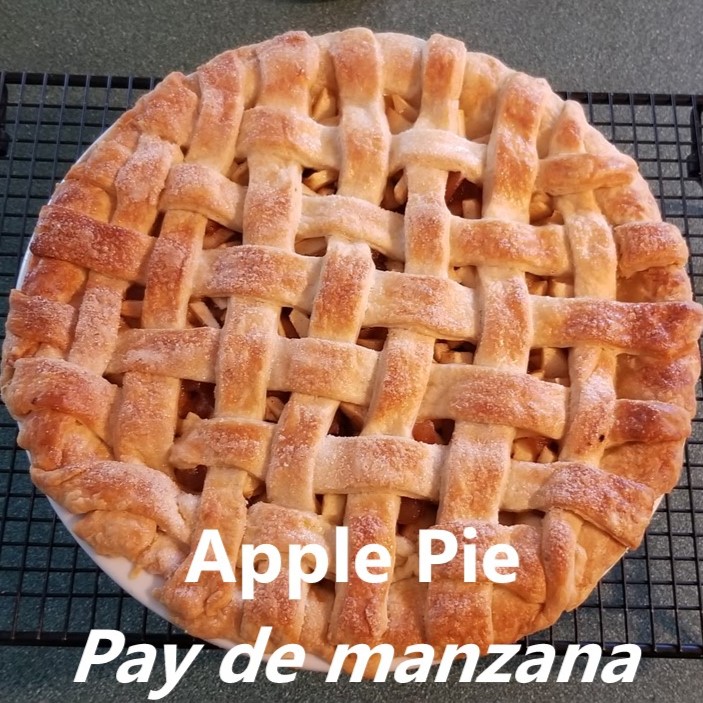
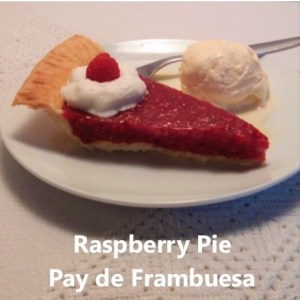
For some of my pie stories and delicious recipes, click on the photos below:

FUN FACTS: And why doesn’t Pi Day work in Spanish as a pastry fest?
Pi Day is recognized in many Spanish speaking countries, including Mexico, because it is an official celebration in the Mathematical world, even though the connection to March 14 is not immediately obvious; since most of these countries write dates starting with the day, March 14 would be 14/3. In addition, the consumption of pies is simply lost in translation, because Pi Day translates as “Día de pi”, where “pi” is pronounced “pee”, and, well, it just does not seem right to follow through with the homophone, lol.
For your convenience, click on the highlighted text below for products available on Amazon™. DISCLAIMER: Any reviews included in this post are my own, for items I have purchased, not provided by any company; as an Amazon Associates Program affiliate, I might receive a commission for any purchases originated from the links below, at no extra cost to you. Thank you to readers who have bought other products starting with a click from my links!







Yesterday my local library had a Pi Day pie sale, savory pies, apple, squash, custard, and some that evaded easy description. Mine is apple with Pie Day on the top in strips of pastry. Yum!
LikeLiked by 1 person
Oh yummy! I am making meat pies this year.
LikeLiked by 1 person