
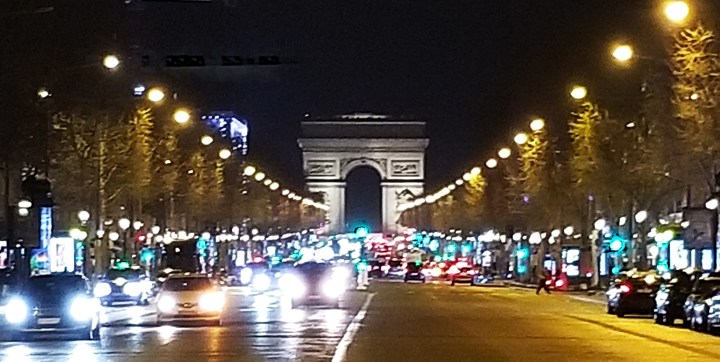
Photo above: Les Champs-Élysées and Arc de Triomphe (Paris, France, 2026)
History Tidbit:
From 1521 until the early 18th century, the Spanish colonial rule in Mexico was very rigid; commerce and immigration were strictly controlled by the Spanish crown. In 1700, the Spanish king Charles II (from the Austrian house of Habsburg), died with no children; in his will, he named his great-nephew Philip of Anjou of the French house of Bourbon, as his successor, crowned as king Philip V of Spain. Because Philip was also grandson of the French king Louis XIV, other European powers felt threatened about a possible coalition between Spain and France. Archduke Charles, from the House of Habsburg (as Charles II had been), felt entitled to the throne, and received support by the Grand Alliance (a Dutch, English and Austrian coalition). The War of the Spanish Succession was fought between 1701 and 1714, ending with King Philip V retaining the throne, but renouncing any claim to the French crown. From then until the early 19th century, Spanish kings from the House of Bourbon, up to Ferdinand VII, were mostly interested in economic profits from the New Spain colonies, while introducing many French practices in education, commerce and more regional independence in terms of governance; the intendancy of Mexico increased its economic production and in turn, Arts, Science and political liberalism developed as a natural consequence, more than an intended benefit for the people.
When Napoleon I invaded Spain in 1808, Mexico rebelled against the French Empire, and this precipitated the onset of the Mexican War of Independence in 1810, which continued until 1821. The young new country was struggling, and was forced to open to European investments. In 1830, Napoleon I was long gone, and the French government was one of the first to recognize Mexico as a country, after which there was considerable French immigration, especially to the states of Veracruz and Puebla. In 1838, due to claims of property damages and economic loss by French businesses, armed forces were sent to Veracruz, which is known as The Pastry War and the First French Intervention. The conflict was settled in 1839 with a peace treaty, with Mexico agreeing to pay 600,000 pesos to the French businesses, and promises of trade expansion with France, which were never fulfilled. After the Reform War (1857-1861), while liberal president Benito Juárez was in power in Mexico, he suspended all payments of foreign debt, and that triggered the Second French Intervention in 1862 by orders of Emperor Napoleon III. Mexican conservatives view this as an opportunity to oust Juárez and his liberal government, and assisted the French during the war.
In my previous post, I shared the history behind the Battle of Puebla (Cinco de Mayo), which took place on May 5, 1862. Although the battle was a victory for the Mexican liberals, the war continued, and one year later, also in Puebla, a decisive battle took place, with the loss or capture of most of the Mexican army, and concluded with the French forces entering Mexico City on June 10, 1863. Mexican conservatives were appointed to form a Junta de Gobierno (Governing Assembly). The Assembly established Mexico as a constitutional monarchy, and recognized the French-supported Archduke Ferdinand Maximilian of Habsburg (from the royal house ruling Spain during colonial times) to be suitable to ascend to the Mexican throne.
During his short reign, Emperor Maximilian I intended to modernize Mexico, and tried to find common ground to unify the country. His somewhat liberal policies cost him the support of Mexican conservatives, and the mere presence of a foreign ruler motivated guerillas and liberal factions to continue fighting for the return of president Juárez. This costly and continuing opposition with no gain for France, made Napoleon III decide the retreat of French forces from Mexico in 1866, abandoning Maximilian. Charlotte went back to France and then went to Italy, to plea with Napoleon III and the Pope, to no avail, then becoming delusional until her death. Maximilian was ultimately captured and executed on June 19, 1867 along with conservative Mexican generals Miguel Miramón and Tomás Mejía.
President Benito Juárez returned to Mexico City, and continued as interim president. In 1867, the next presidential elections had been scheduled, and General Porfirio Díaz, who had been instrumental for the Cinco de Mayo victory and the fight against the French Empire, entered the process as presidential candidate against Juárez. President Benito Juárez won and completed this term, then controversially sought re-election in 1871, which granted him opposition, particularly from General Porfirio Díaz; however, Juárez died of natural causes shortly after winning, on July 18, 1872. His successor, Sebastián Lerdo de Tejada, served as president until the end of this term, but sought re-election in 1876, and was eventually deposed by Díaz, who was elected president in 1877. General Manuel González was elected president for the period 1880-1884, after which Díaz won the 1884 election. In subsequent years, Porfirio Díaz centralized powers, became more authoritarian, and eventually abolished the no re-election laws, staying in power until the onset of the Mexican Revolution in 1910; Díaz was promptly deposed in 1911, left the country, and lived in Paris, France, until his death in 1915.
As Mexican royals from 1864-1867, Maximilian and his wife, empress Charlotte, lived in the National Palace in downtown Mexico City at first, but later on, renovated and moved to Chapultepec castle. This castle was originally built for a viceroy in the 1780s, towards the end of Spanish rule, but was never finished as such, and was abandoned for many years; later on, as of 1833, it served as the home of the military college. Emperor Maximilian ordered the construction of a road to connect his castle and the city centre, modeled after boulevards of Europe, mainly the Champs-Élysées in Paris. The new boulevard was named Paseo de la Emperatriz (“The Empress’ Promenade”) in honor of his wife. The Alameda Central Park, just South East from the Paseo was furnished with gas lamps on wrought iron posts. Following the reestablishment of President Benito Juárez, the boulevard was renamed Paseo de la Reforma, to commemorate the Reform War.
While Porfirio Díaz was in power, a period known as El Porfiriato, he continued the Parisian influence in urban planning, on El Paseo de la Reforma and nearby avenues, such as Juárez Avenue and Republic Avenue, also adding numerous statues and monuments along the way. The construction of the Palacio de Bellas Artes (Fine Arts Palace) next to the Alameda Central Park began in 1904, and although it was not finished until 1934, it is recognized as a legacy from the Porfiriato. He also commissioned the Independence Monument, inaugurated on September 16, 1910, on the 100th anniversary of the onset of Mexico’s War of Independence. His last grand project was to build a new legislative palace, which began in 1910; with just the copula being erected when he was deposed, the site remained unchanged until the 1930s, when it was modified to convert it, ironically, into a monument to commemorate the heroes of the Mexican Revolution.
Below there are several of my photos taken in Mexico City (CDMX, Mexico) in 2019, side by side with some I took in Paris (France) last March of 2026:
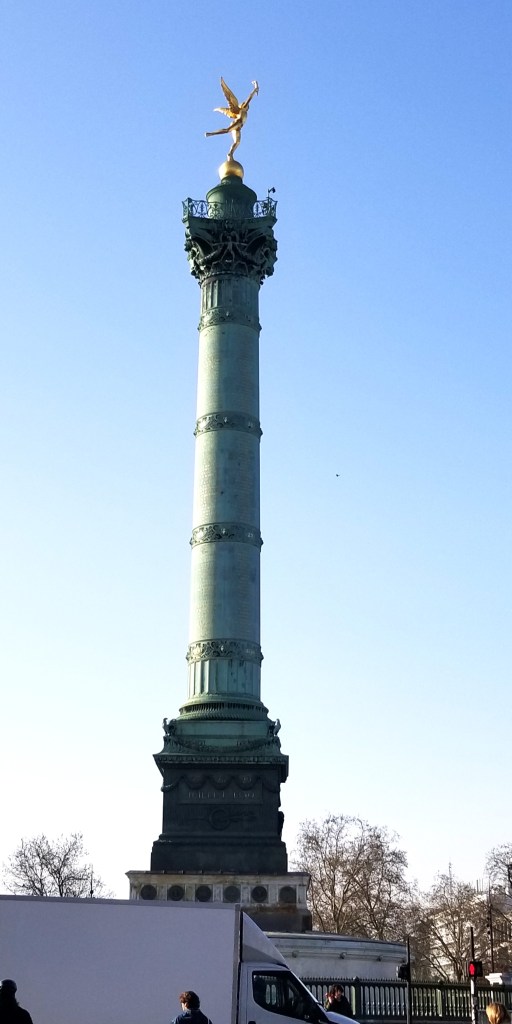
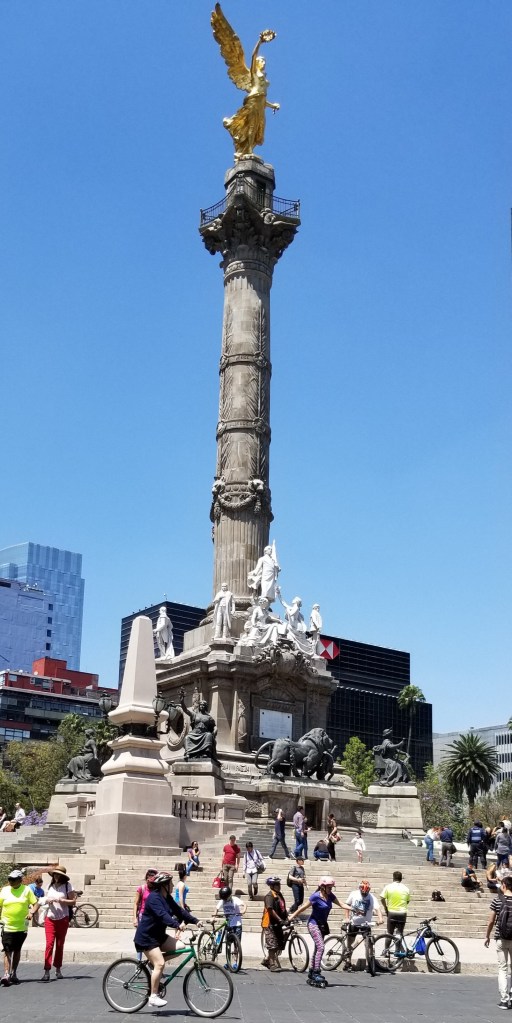
Left: The Colonne de Juillet, built from 1831 to 1840, in the former site of the Bastille prison; remains of 615 victims of the July 1830 Revolution were brought to the column, and later on, remains from 200 from the 1848 Revolution were added. The column is made with white marble, and it is adorned with bronze bas-reliefs. A golden winged statue representing The Spirit of Freedom, stands on one foot at the top, holding the torch of civilization on one hand, and its broken chains on the other. Right: Monumento a la Independencia, built on Paseo de la Reforma, as commissioned by Porfirio Díaz and inaugurated on September 16, 1910, on time for the 100th anniversary of the onset of the Mexican Independence War. The column is made of steel, covered with quarried stone, adorned with garlands. Nike, The Greek Goddess of Victory is depicted at the top as a golden winged creature, holding a laurel crown of victory on one hand, and a broken chain representing freedom, on the other:
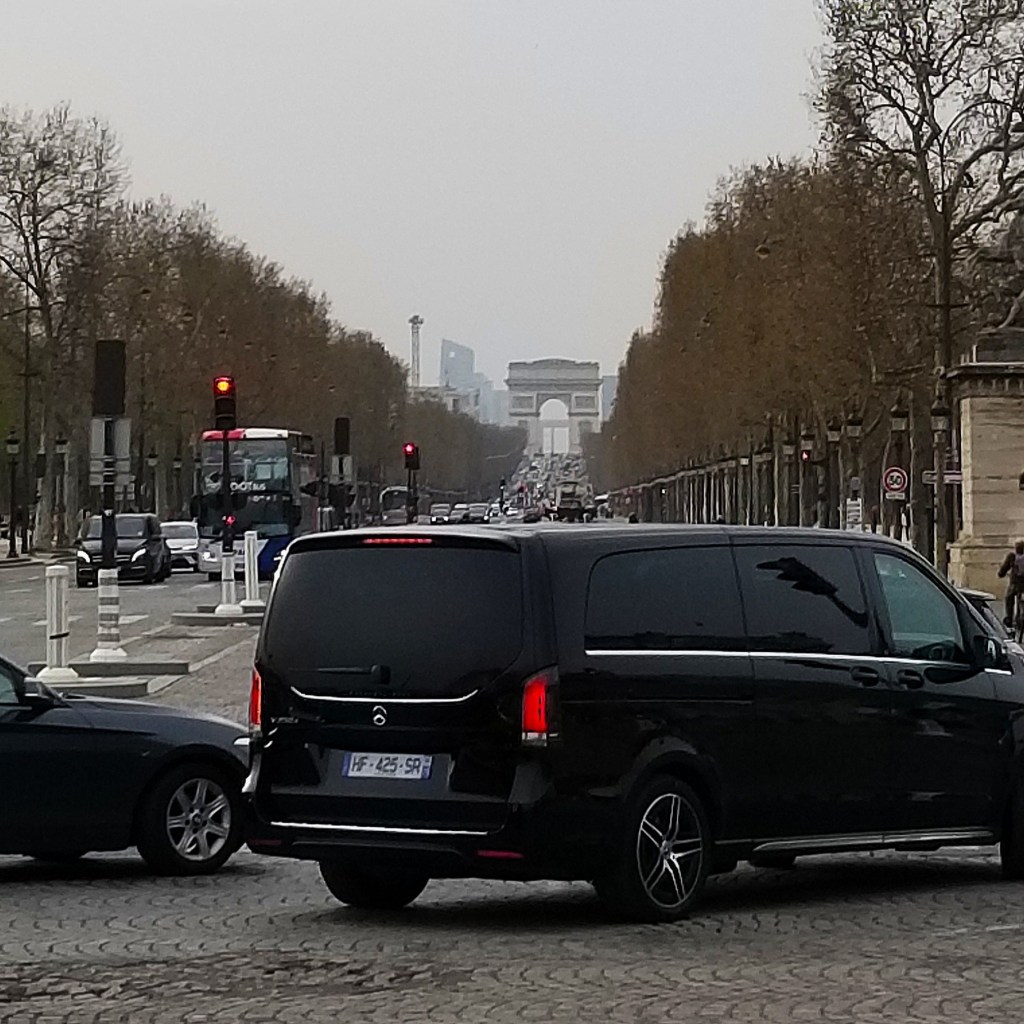
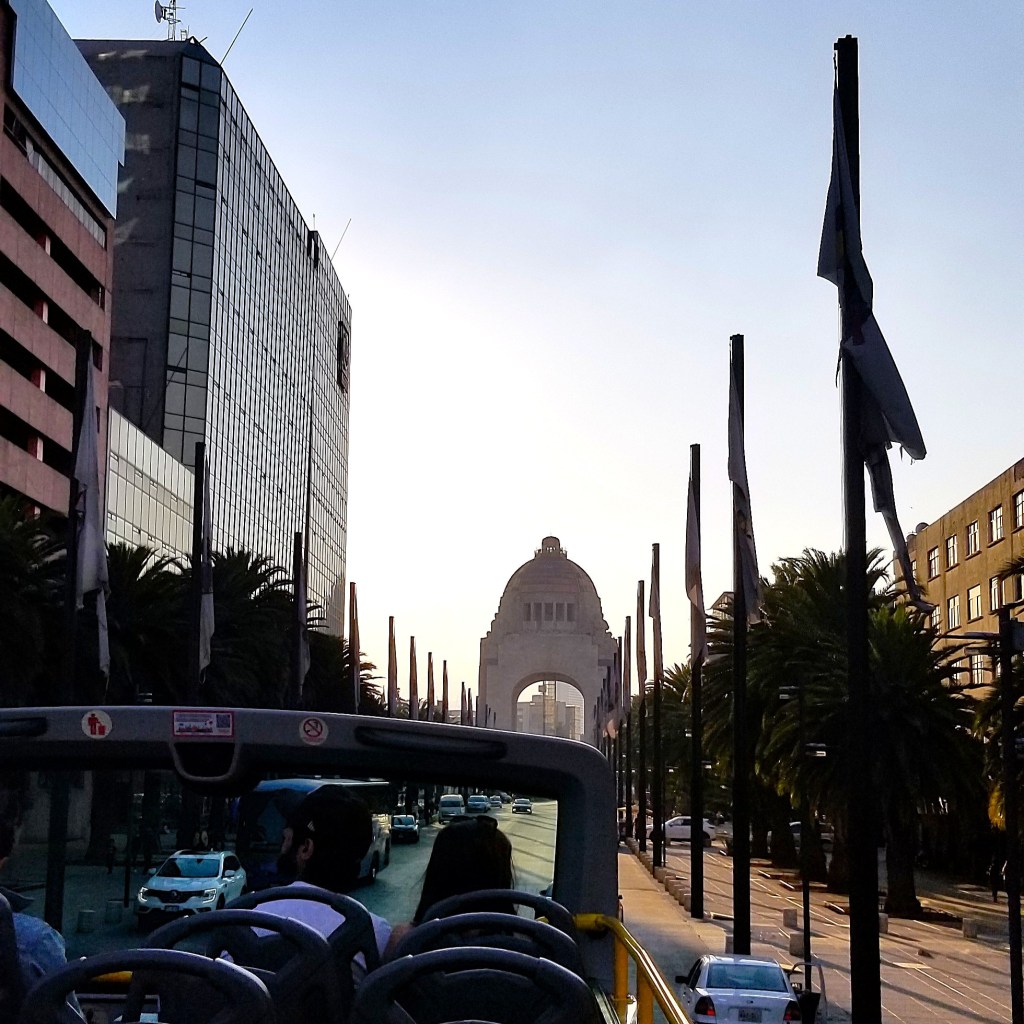
Left: View of the Arc de Triomphe from Les Champs-Élysées, commissioned in 1806, by Emperor Napoleon to celebrate the victory at Austerlitz. The monument was completed in 1836 during the reign of Louis Philippe I. Beneath the Arc is the Tomb of the Unknown Soldier, added later on to honour those lost in World War I. Right: Monumento a la Revolución, as mentioned above, this was Porfirio Díaz’s last grand project to build a new legislative palace, but was interrupted by the onset of the Mexican Revolution War in 1910; with just the copula being erected, the site remained unchanged until the 1930s, when it was modified to convert it, ironically, into a monument to commemorate the heroes of the Mexican Revolution; the monument has a crypt with remains of some of the leaders from that war:
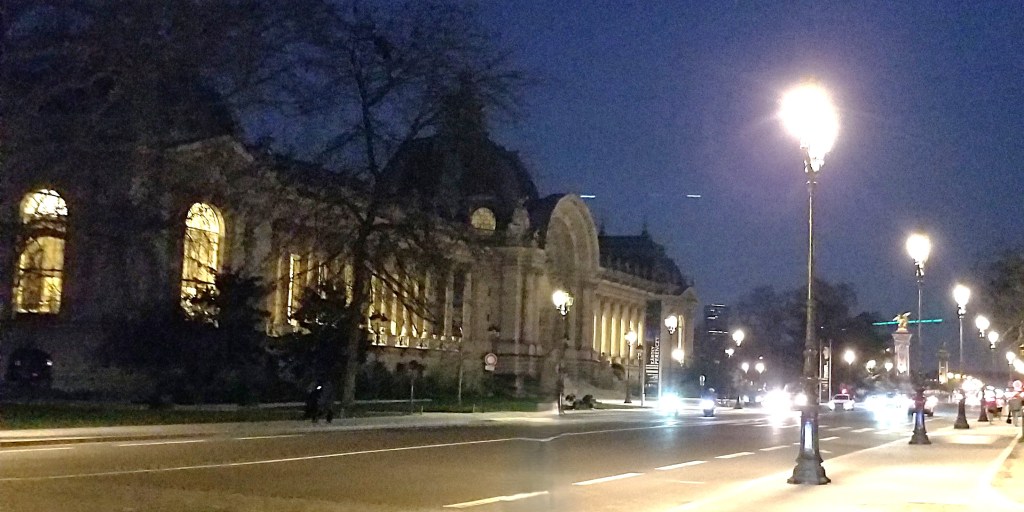
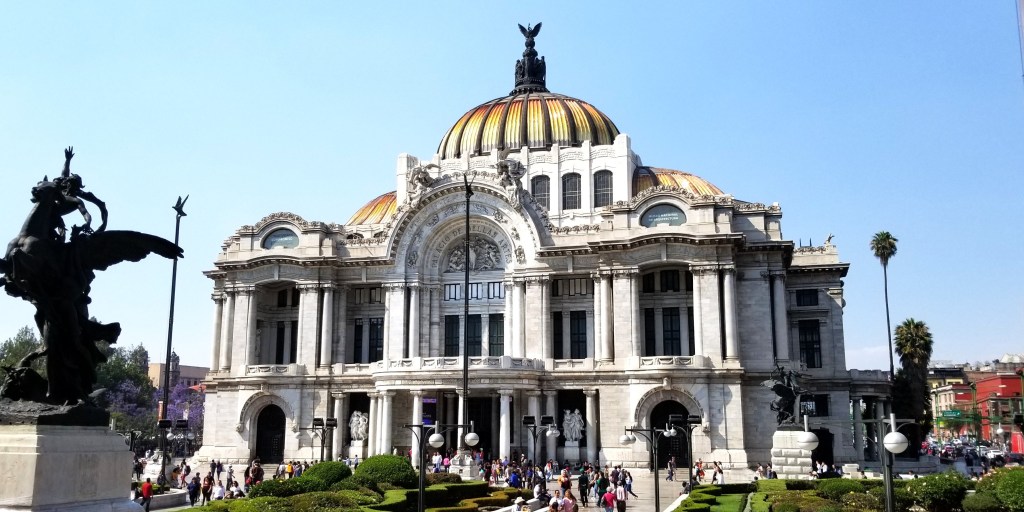
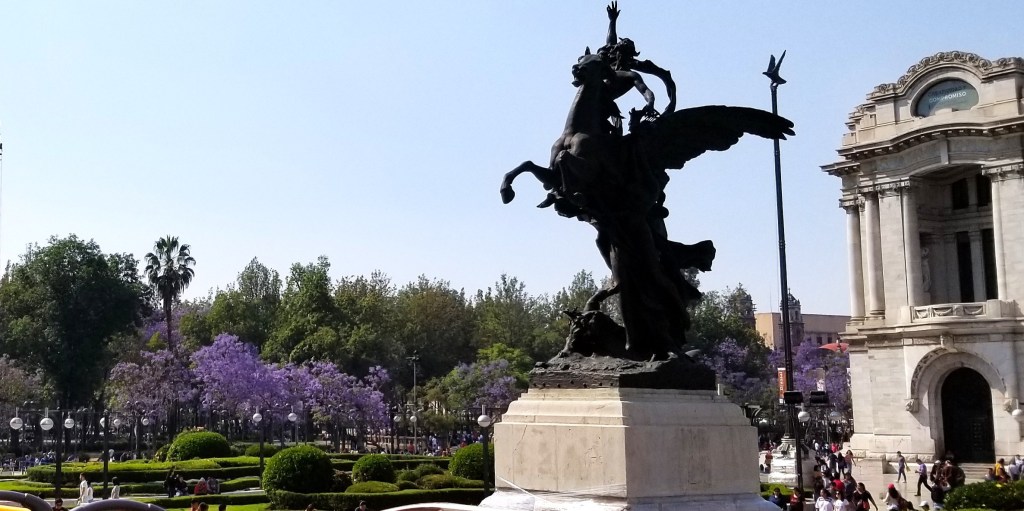
Left: Grand Palais des Champs-Élysées. The building was designed for artistic events, as part of the Universal Exposition in 1900. Construction began in 1896 and was finished on time for the Exposition, on May 1, 1900. It was constructed with iron and steel, and the vaulted roof featured glass, a common feature to provide natural light before electricity. The project suffered structural problems due to shifts in the ground and added supports were only partially successful. Damage once in operation, and unforeseen leakage forced the closure of the facility from 1993 to 2007. From 2021 to 2025 there were major renovations, allowing the venue to host a section of the 2017 Tour de France, and Olympic events in 2024. Right: Palacio de Bellas Artes. Mexico City’s Fine Arts Palace first stone was laid by Porfirio Díaz in 1904, on the site of the former National Theatre, right next to the Alameda Central Park. It was intended to be finished for the celebrations of the 100th Anniversary of the onset of the Mexican independence War, but even by 1913, long passed the deadline and Díaz’s rule, only a basic shell had been built; the initial reason for the delay was due to structural problems, as the heavy structure sank into the subsoil, previously the site of a lake. War and political turmoil caused a complete halt of the project until 1932, and was finally finished in 1934. The Palace features Art Nouveau and Art Deco characteristics, from the initial plan in the early 1900s, and the completion in the 1930s, respectively. Mexican marble was used for the lower structure, and white Italian marble was brought for the façades; it features a glass central roof. Since its opening, the Palace of Fine Arts has hosted music, dance, theatre, opera and literary events, as well as painting, sculpture and photography exhibitions:
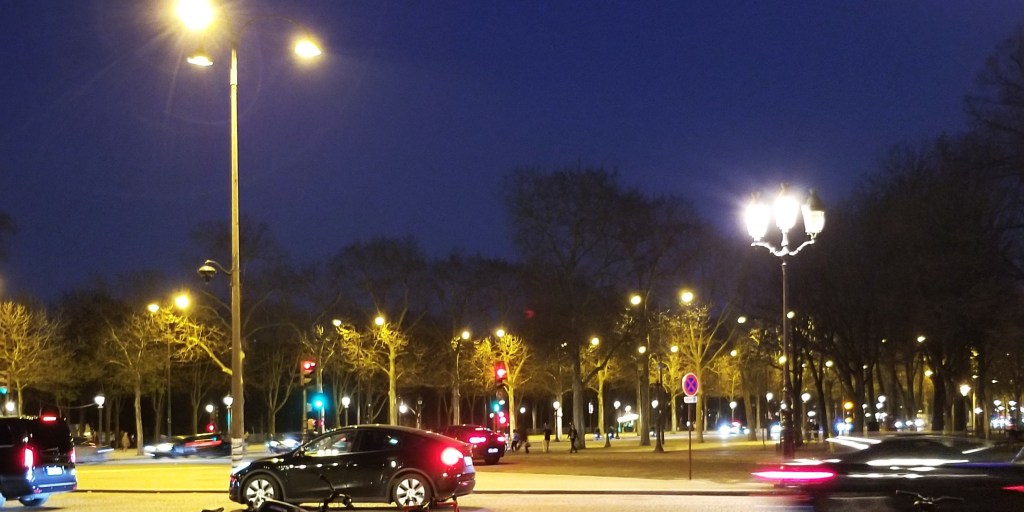
Left: Jardin des Champs-Élysées. The garden was designed in 1667 and has been modified and used for different purposes throughout its history, from an extension of the Jardin des Tulleries next to the palace of the same name, to Russian and Prussian occupation camps, to amusement park, and site for Universal Expositions, including the Grand Palais buildings. Right: Parque de la Alameda Central. This park was established on the site of an Aztec market in 1592, making it the oldest public park of the American continent. One section of the lot was used as a burning place for people convicted of sorcery during the Inquisition; in the 1770s, the Viceroy ordered the removal of this place to be turned into more green space, and until the War of Independence (1810-1821), the park was fenced and was used exclusively by the nobility. After that, the park was used for public celebrations. French design statues and gas lamps were added in the 1860s, replaced by electrical ones in 1892. Nowadays, La Alameda is a green hub for vendors, weekend strolls and cultural outdoor events:
Almost needless to say, Mexican cuisine, already enriched with European influences during the three hundred years of Spanish rule, became more accentuated with French cuisine additions during the reign of Maximilian and Charlotte, and the prolonged presidency of Porfirio Díaz. Below, three examples of French food in Paris which could well be found in Mexico City:
Savoury crêpes – In the photo below, a thin pancake, in this case made of buckwheat (Galette bretonne), filled with sausage, eggs and cheese, enjoyed outdoors at the Place de la Bastille street market (Paris, 2026):
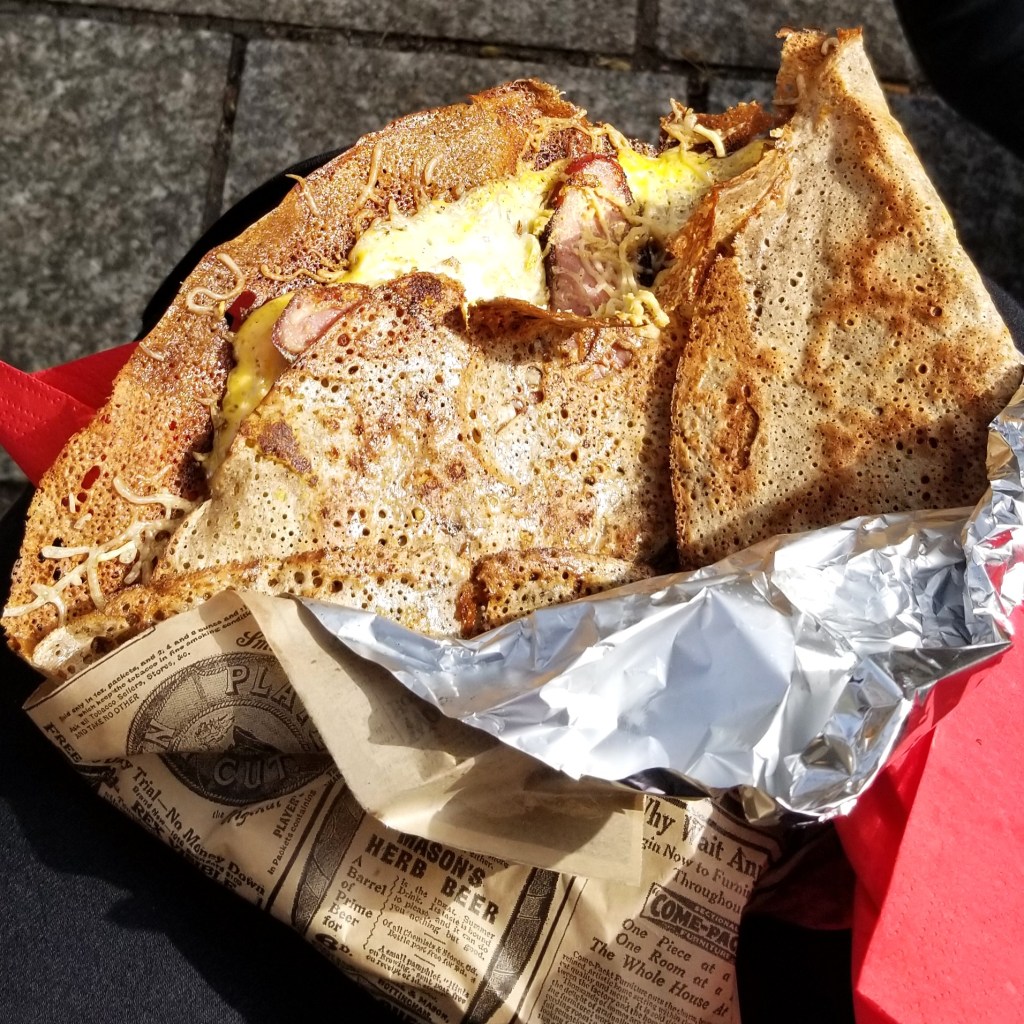
During the reign of Maximilian and Charlotte (1864-1867) many Austrian and French dishes were introduced or consolidated as part of Mexican cuisine for the upper class; the emperors enjoyed traditional European versions, but also experimented with fusion combinations, such as crepas de huitlacoche (corn smut crêpes).
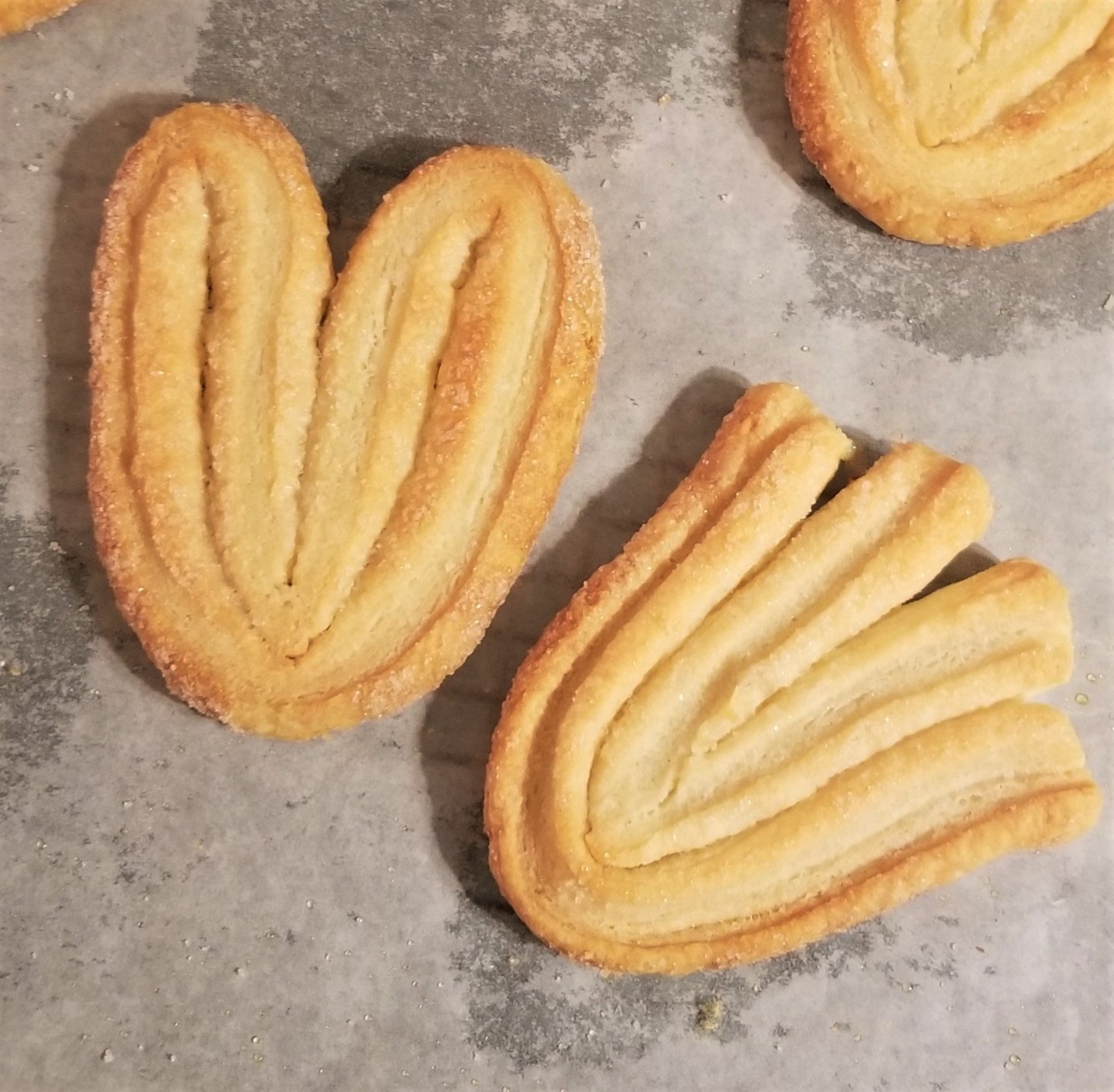
Sweet pastries – In the photo below, puff pastry treats, round and palmiers (PAUL Bakery, Les Tours Gamma, 193 Rue de Bercy, 193 à 197 Bâtiment C, 75012 Paris, France):
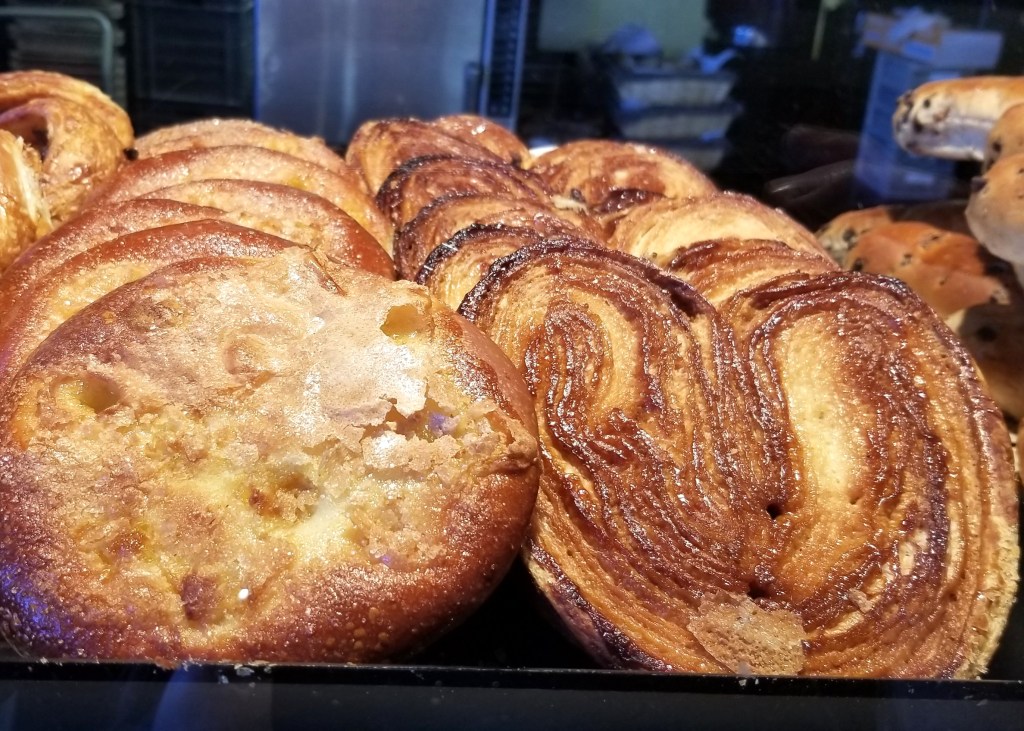
In Mexico, puff pastry palmiers are called orejas – “ears”, because of their shape. I have shared a story and recipe for orejas:
Of Revolution and Bread – Palmier made it to Mexico as orejas during the last years in office of Mexican dictator Porfirio Díaz (rule 1884-1910), who favoured all things European; it is said that Díaz served orejas while entertaining his privileged friends, along with many other European sweets, and among lavish extravagances, while life for the lower classes dictated heavy workloads, until the onset of the Mexican Revolution, on November 20, 1910. This put an end to Díaz’s rule in a matter of months, but the social injustices during those decades had caused so much resentment, that the rebellion then exploded into a cruel civil and guerrilla war that went on for many years. Social changes and industrialization over the following decades were slow, but eventually made pan dulce (sweet bread) more affordable, and orejas in particular, quickly became a popular choice amongst Mexican families.
Creamy Pasta – Photo below: Crozetes au gratin et jambon – Little square shaped pasta traditional in the region of Savoie, in a creamy sauce with ham, and topped with cheese and bread crumbs:

In Mexico, thin noodles from the Middle East (fideos) were brought by the Spaniards sometime during colonial times (1521-1821), but other pasta dishes, such as Creamy Spaghetti – Espagueti con crema (photo below, left), or Cheesy Elbow Pasta – Coditos en salsa de queso (photo below, right), became known during the short rule of Austrian Archduke Maximilian (1864-1867), and more broadly under the long presidency of Porfirio Díaz (1884-1911), who favoured European architecture and cuisines, particularly French. Other than for the shape of the pasta, the French crozetes dish could be identified as one of the Mexican pasta dishes:


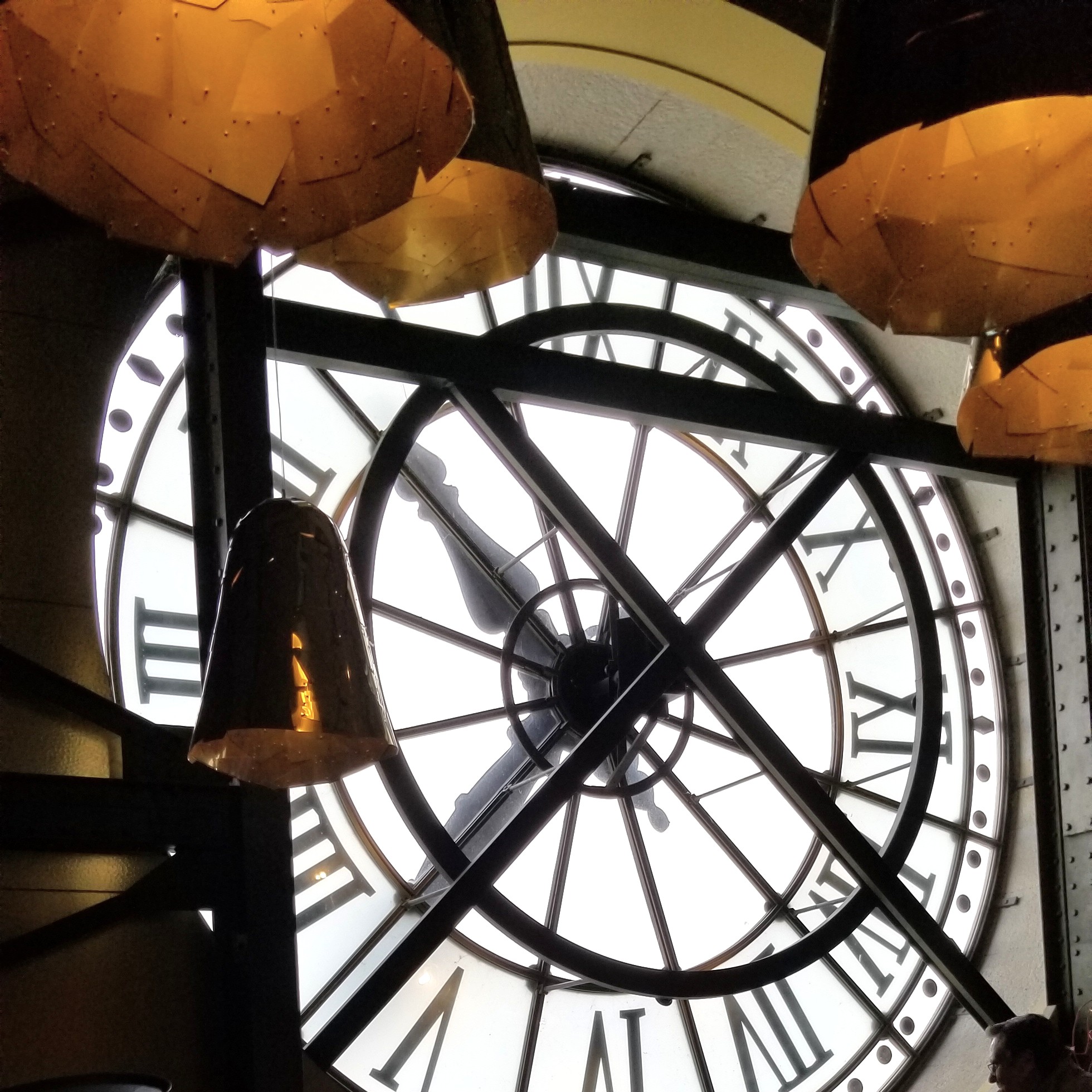
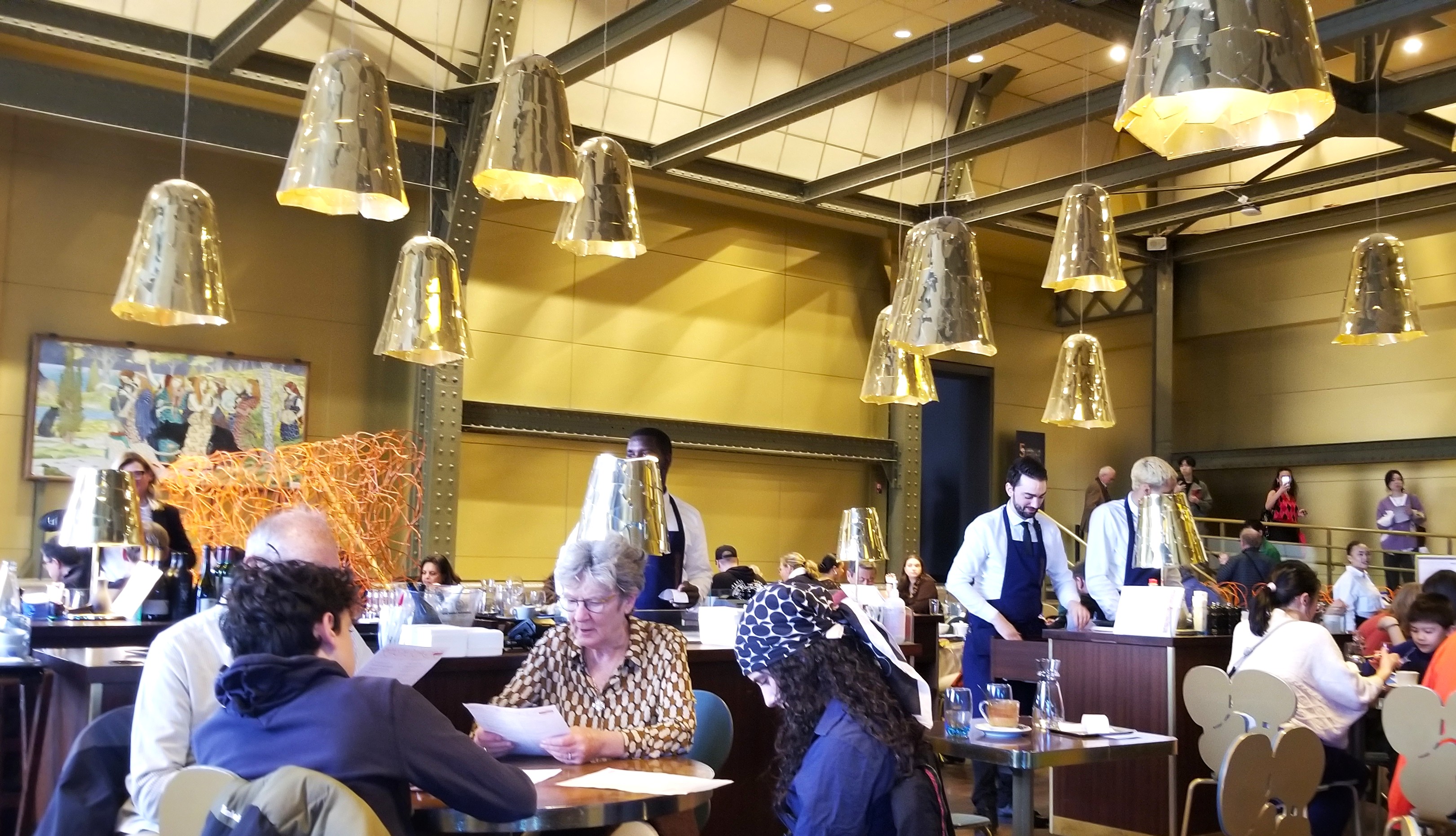
The photo of the crozetes pasta was taken at the Musée D’Orsay‘ s Café Campana. The museum building was originally a railway station (Gare D’Orsay):
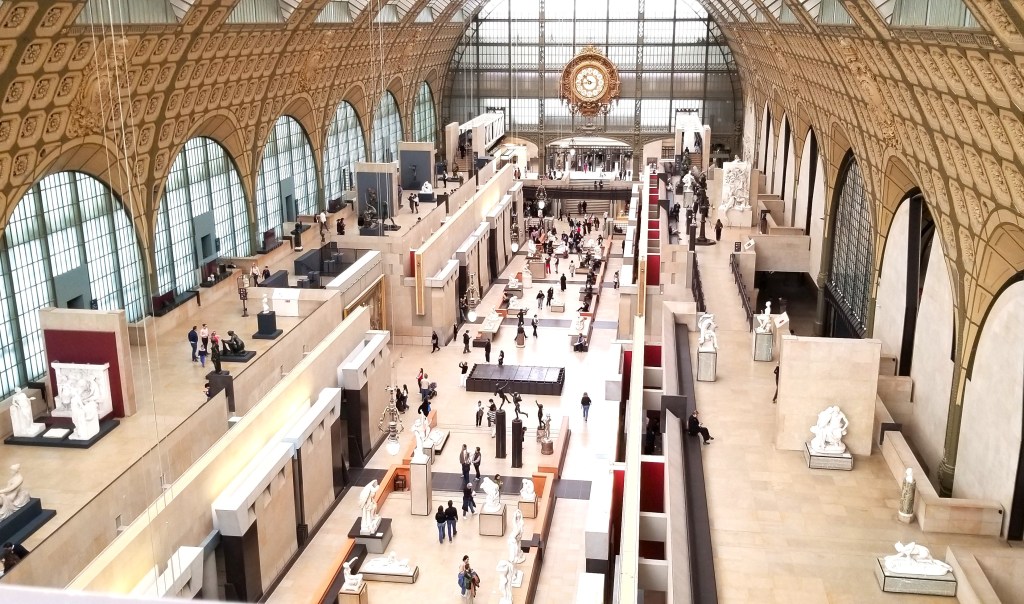
In the 1970s, instead of condemning the building, there was an idea of creating an art museum to bridge the classic collections at the Louvre and the contemporary art at the National Museum of Modern Art. The museum opened its doors for the first time in 1986, featuring thousands of paintings, sculptures, decorative furniture and photographs from the period of 1848 to 1914 (click on images to enlarge, and for captions):
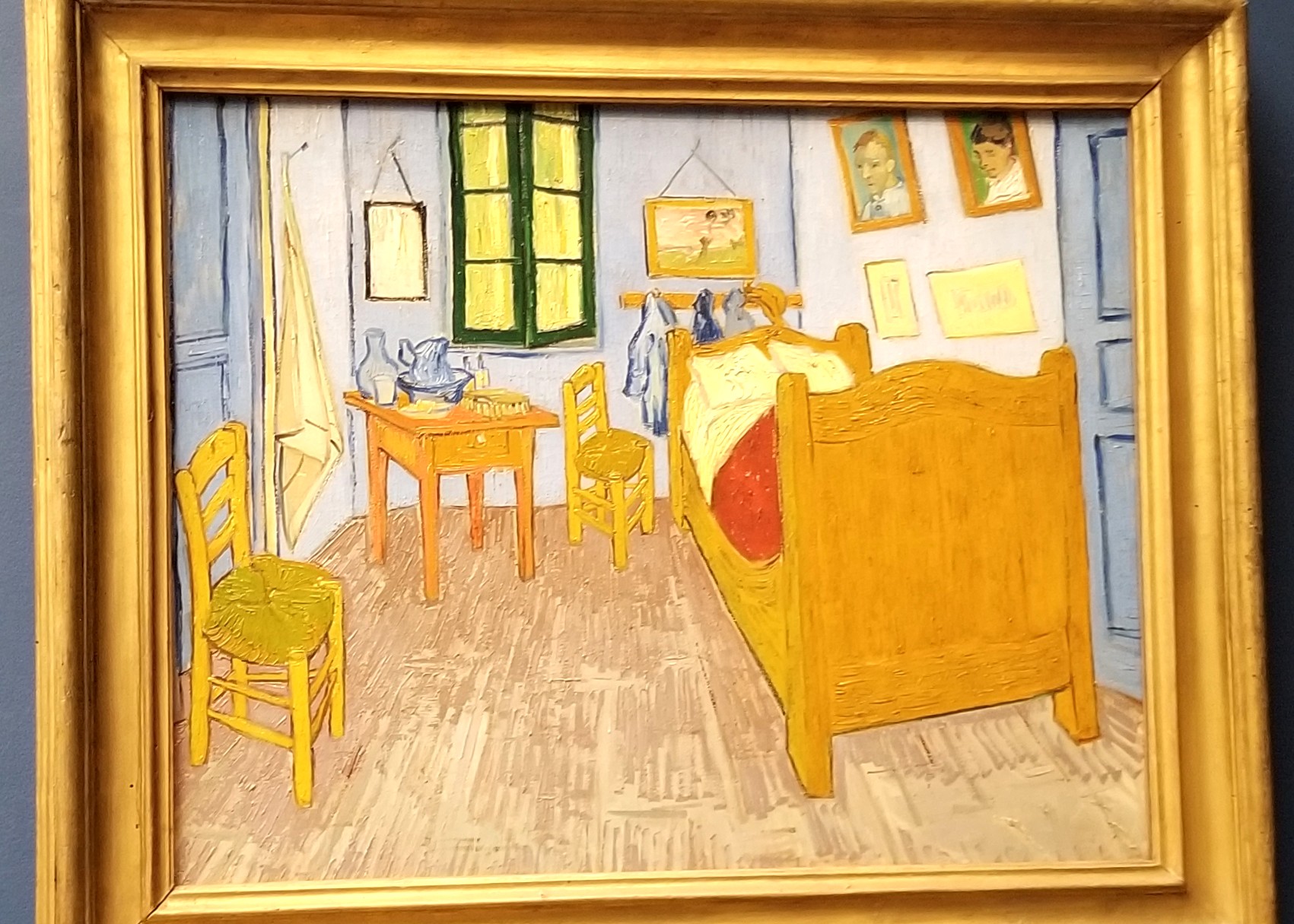
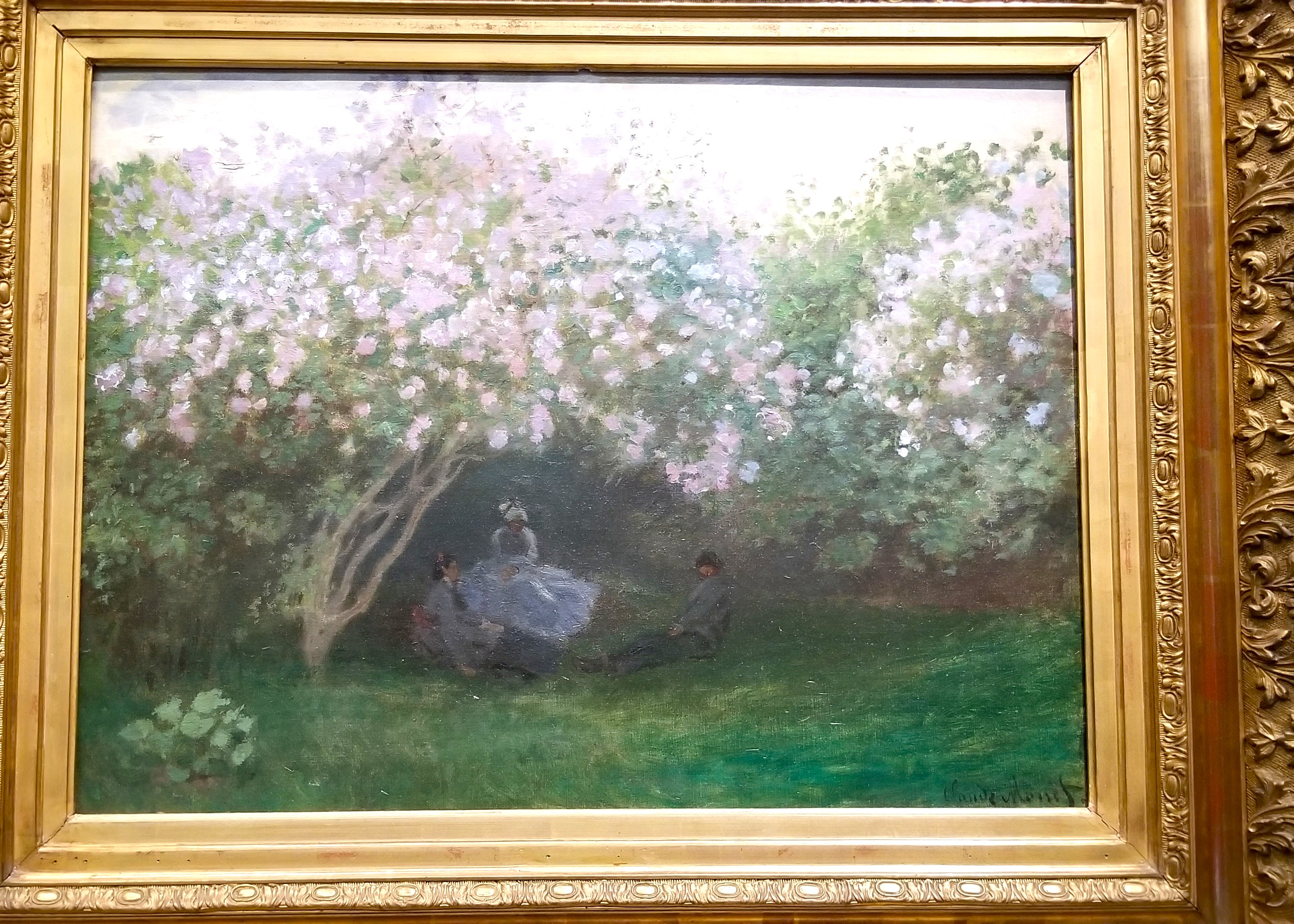
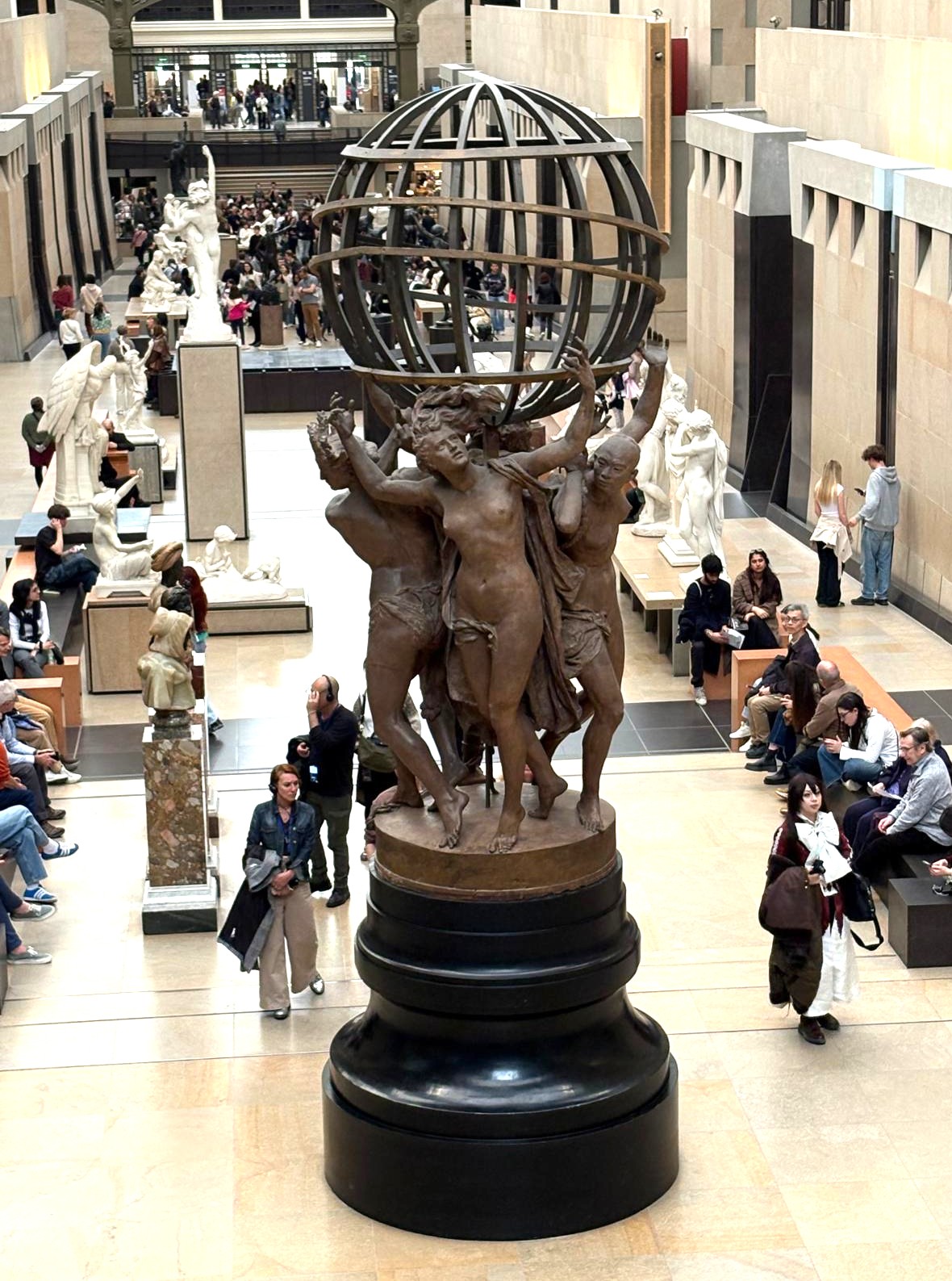
The museum has several restaurants; the Café Campana is named after the designers, the Campana brothers, who envisioned an “Under the Sea” ambiance, with coral shaped ornaments, scaly lamps that seem to float, and a general feeling of being immersed from the glass encased room. It is also conveniently located right at the exit of the Impressionists Hall, separated just by a railing, perfect to give visitors a break, as they emerge from the vast collection completely exhausted and famished, lol:
I am bringing my recipe to Thursday Favourite Things #762 with Pam @ Artful Analog, Katherine @ Katherine’s Corner, Amber @ Follow the Yellow Brick Home.
I am joining Fiesta Friday # 644 with Angie @ Fiesta Friday.







Thanks a million for a wonderful history read on this Sunday morning Down Under . . . a brief scan has led to a big smile > here comes my evening homework. I can see there is quite a lot in Mexican history of which I was unaware . . . good photos! Absolutely love the museum ones as I have not been to the d’Orsay 🙂 !
LikeLike
Thank you so much for your kind comment, Eha, so glad you enjoyed my post! Happy Sunday!
LikeLiked by 1 person