
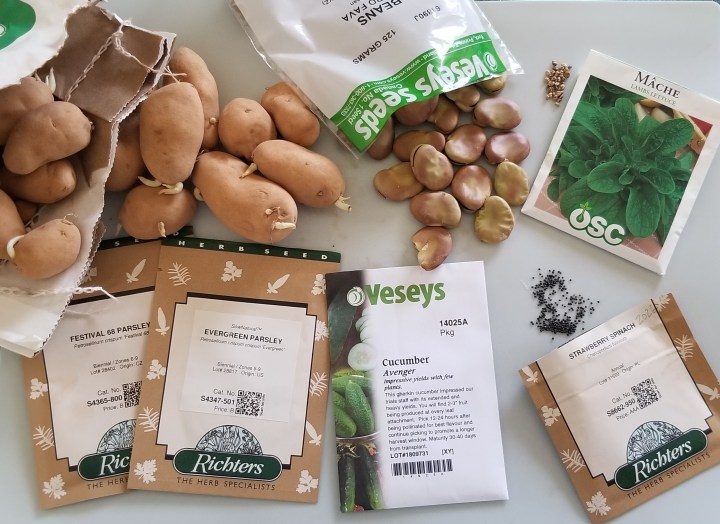
The 2026 growing season in Southern Ontario is going at full blast. I had not had a chance to post about some of the seed I bought in early spring, shown at the top of this post, counter clockwise from top: broad beans, mâche, strawberry spinach, mini cucumbers (gherkins), flat and curly parsley, and fingerling potatoes. By now, the sowing and planting season is mostly done, and I will be reporting on the progress of these crops. In this first part, broad beans, mâche, and strawberry spinach:
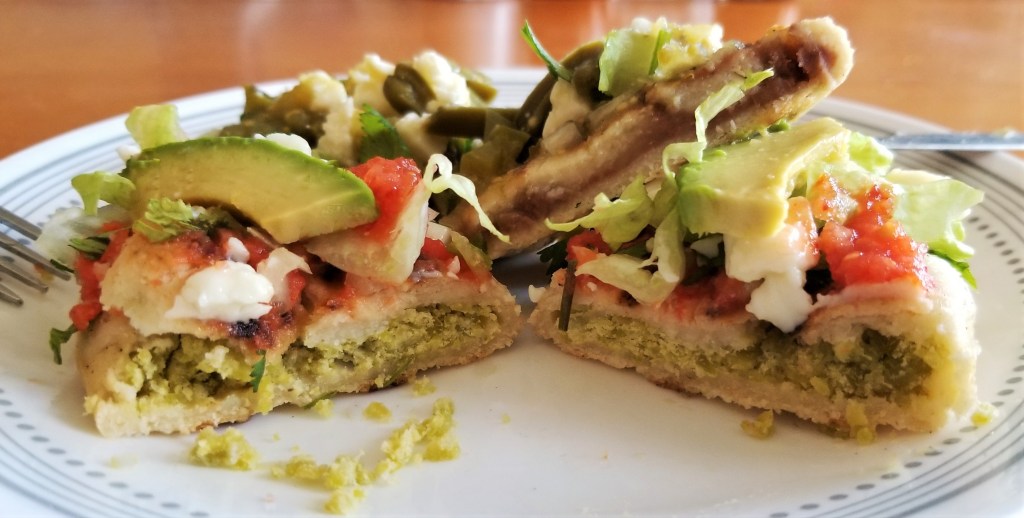
Broad Beans (Vicia faba) – This legume is one of the earliest cultivated plants in the World; originated in North Africa, and all the way to West South Asia; it is believed that it became part of the human diet some 8 000 years ago. The broad bean came to the American continent with European settlers in the 16th century. Its name translates to spanish directly as “frijol ancho”, but it is called haba in Mexico, and in other parts of Latin America it might be called faba, habera, habita, habones, fabolines, or jaba, to name a few. Broad beans have become part of culinary traditions in this region, in dishes from soups, to crunchy snacks, to fillings for patties and other preparations, as is the case of the Mexican tlacoyo, a corn dough (masa) preparation, shaped by hand into elongated patties, stuffed and then grilled over a brazier:
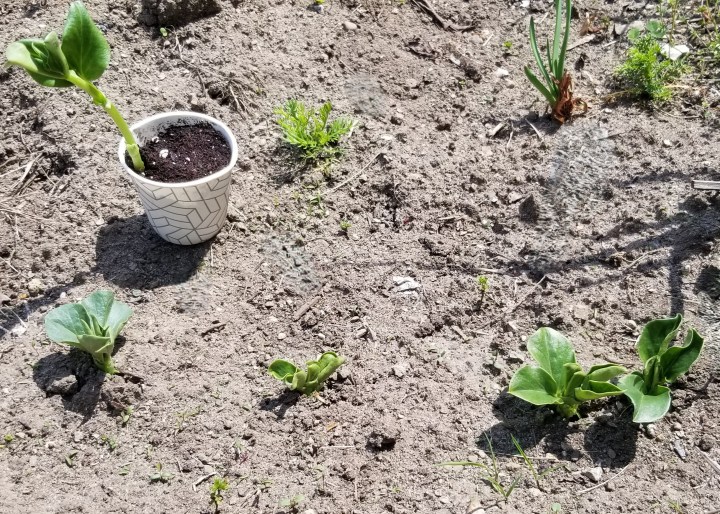
In my garden, this is the first year I’ve tried growing broad beans; I received the seed in April, and was ready to start the crop. The first note to make is that their sprouting period can be very long, and at some point, I even thought the seed was not fertile. I sowed a couple of beans in paper cups indoors, and only one sprouted after over one week. Then, when it was ready to be transferred to the soil, the seed sowed directly a couple of weeks prior, started to sprout and soon caught up with the sprout in the cup:
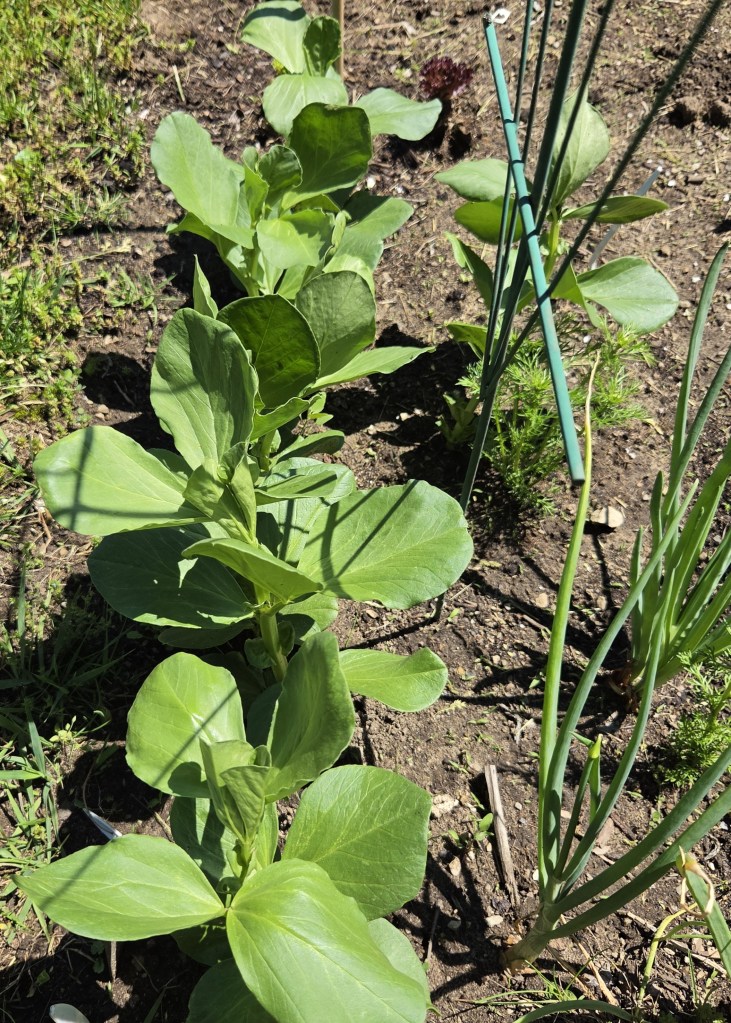
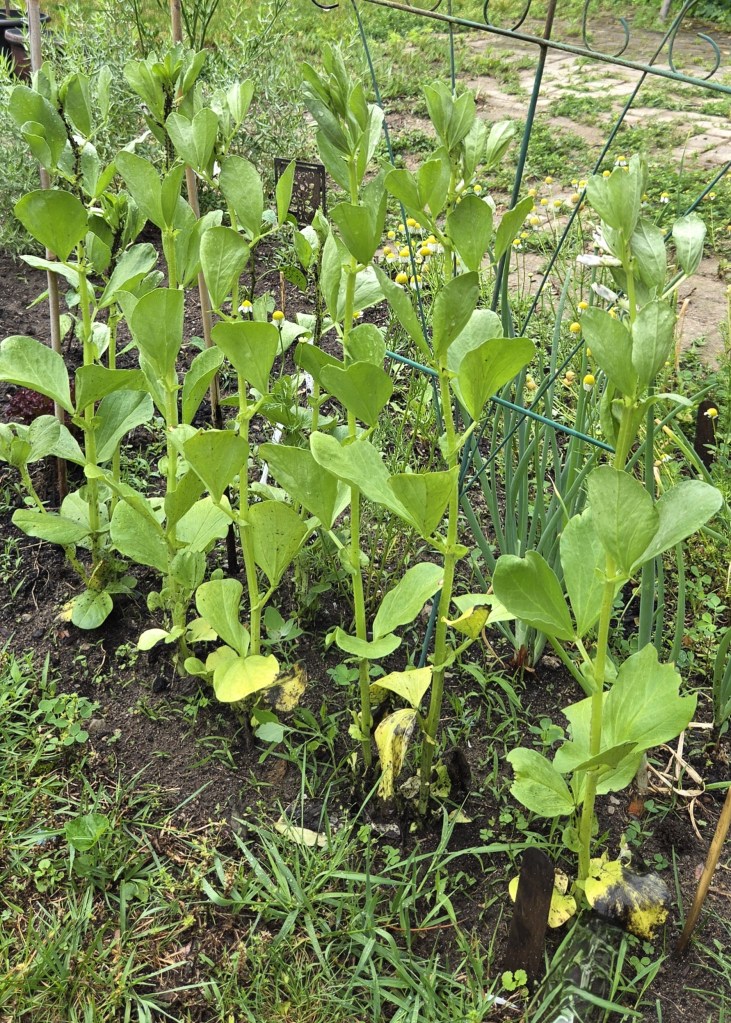
We enjoyed a relatively cool spring, the perfect weather for broad bean plants, so all the plants were growing strong, and fast:

Then, as the weather became hotter, and the plants had begun to bloom, black masses could be seen at the top of all plants, which I thought could be mould, but once inspected closely, turned out to be an infestation of black bean aphids (Aphis fabae), and ants “farming” them for the sweet liquid they excrete, called “honeydew”:
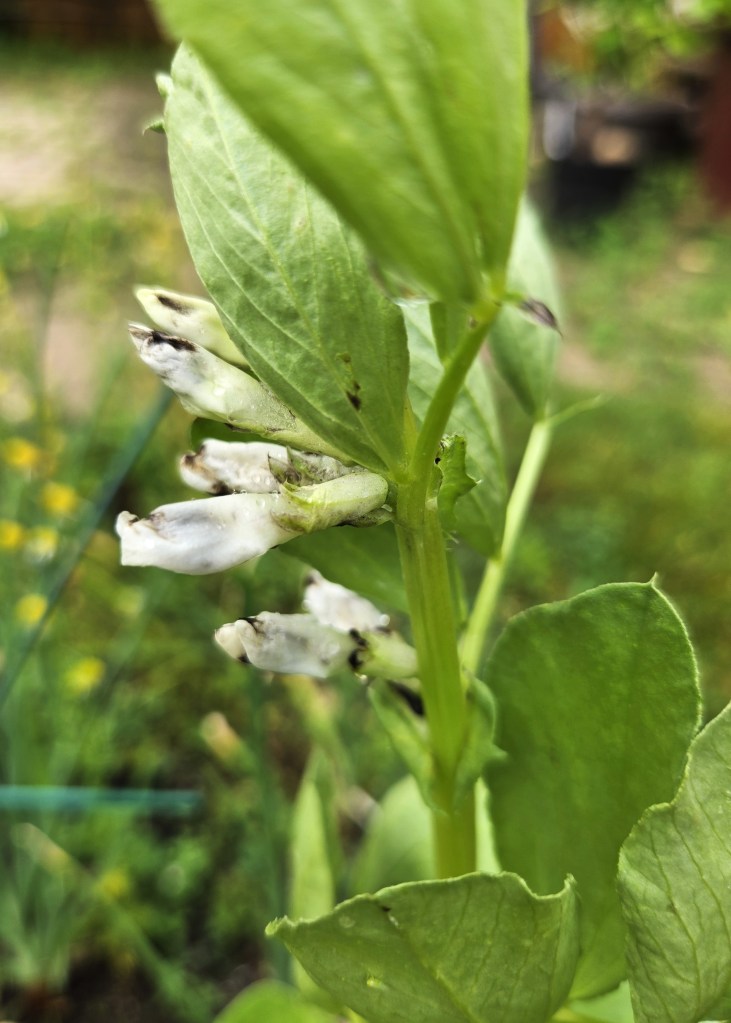

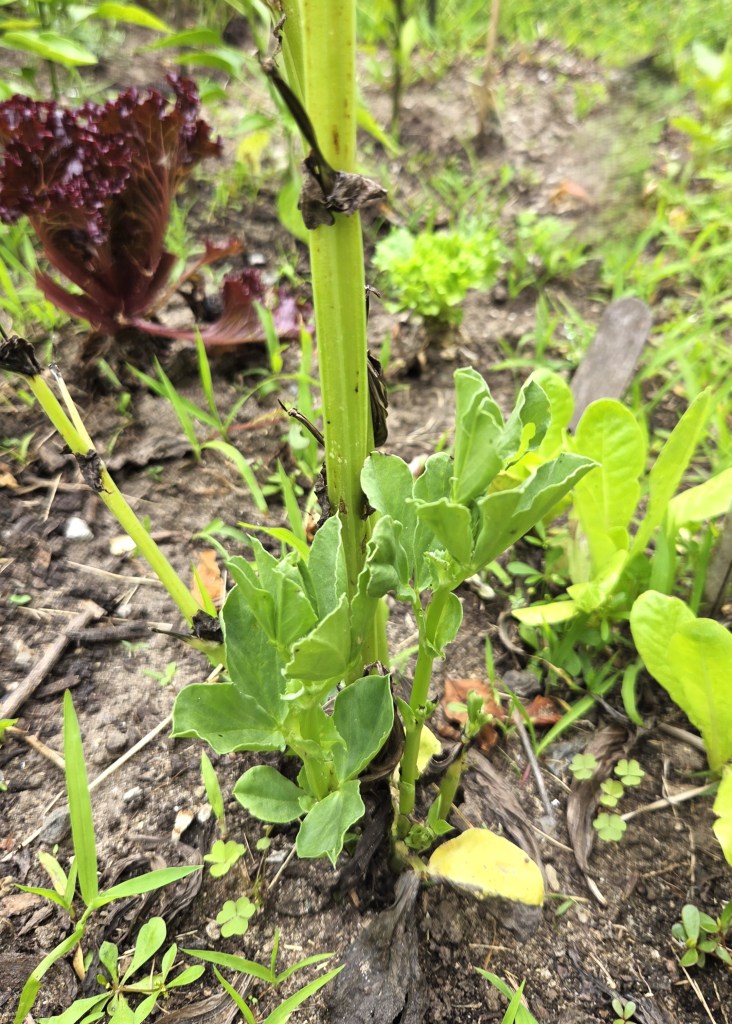
The recommended treatment is to use a jet of water to remove the aphids, and prevent the ants from bringing them back. For more serious stages of infestation, as in my case, spraying the tops with a soapy solution is supposed to take control of the pest. I applied both treatments, but the plants were too damaged by then, so the stems basically died, and some new growth started to appear from the bottom (photo below, left). Current condition: the weather is very hot, so the plants will likely not thrive, and I can see some aphids coming back (photo below, right):
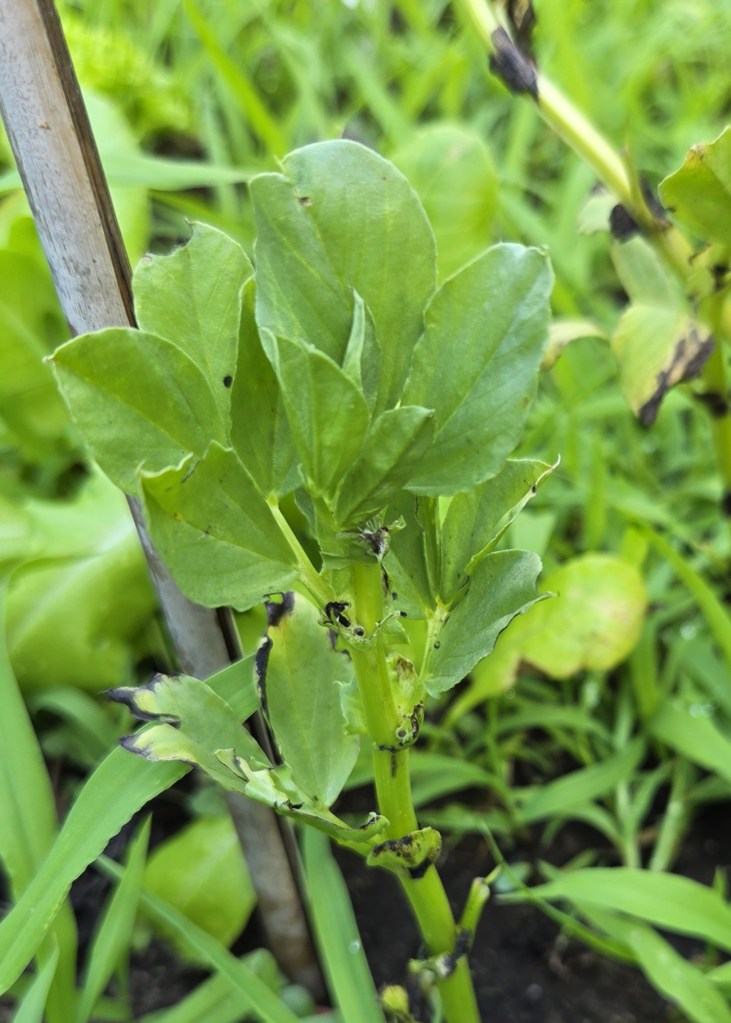
At this point, I will monitor for a few days; if lady bugs and other aphid predators come to the rescue, then I will let the plants finish their cycle, but if not, I will just pull them to prevent the aphid population to explode again. Maybe next year I will be prepared to spot the aphids at an earlier stage.
Mâche (aka corn salad or lamb’s lettuce, Valeriana locusta) – I first learned about this vegetable about eight years ago, while reading my copy of “The Year-Round Vegetable Gardener” (Niki Jabbour, 2011, 2016, Storey Publishing). I was attracted to this crop because it is cold tolerant so the seed may be sowed both in early spring and late summer, and apparently hardy enough that it might survive a few frosty days if planted in the fall. I cultivated the pretty and tasty green rosettes, which grew to about three inches in diameter; after a couple of years, I moved on to try other crops and forgot all about them. Then, this year, since I was going to France in late winter time, I asked my daughter (who did a one-year internship in France) what produce to try at that time of year, and she said her favourite was mâche. I went looking for it, and this is what I found at the supermarket:
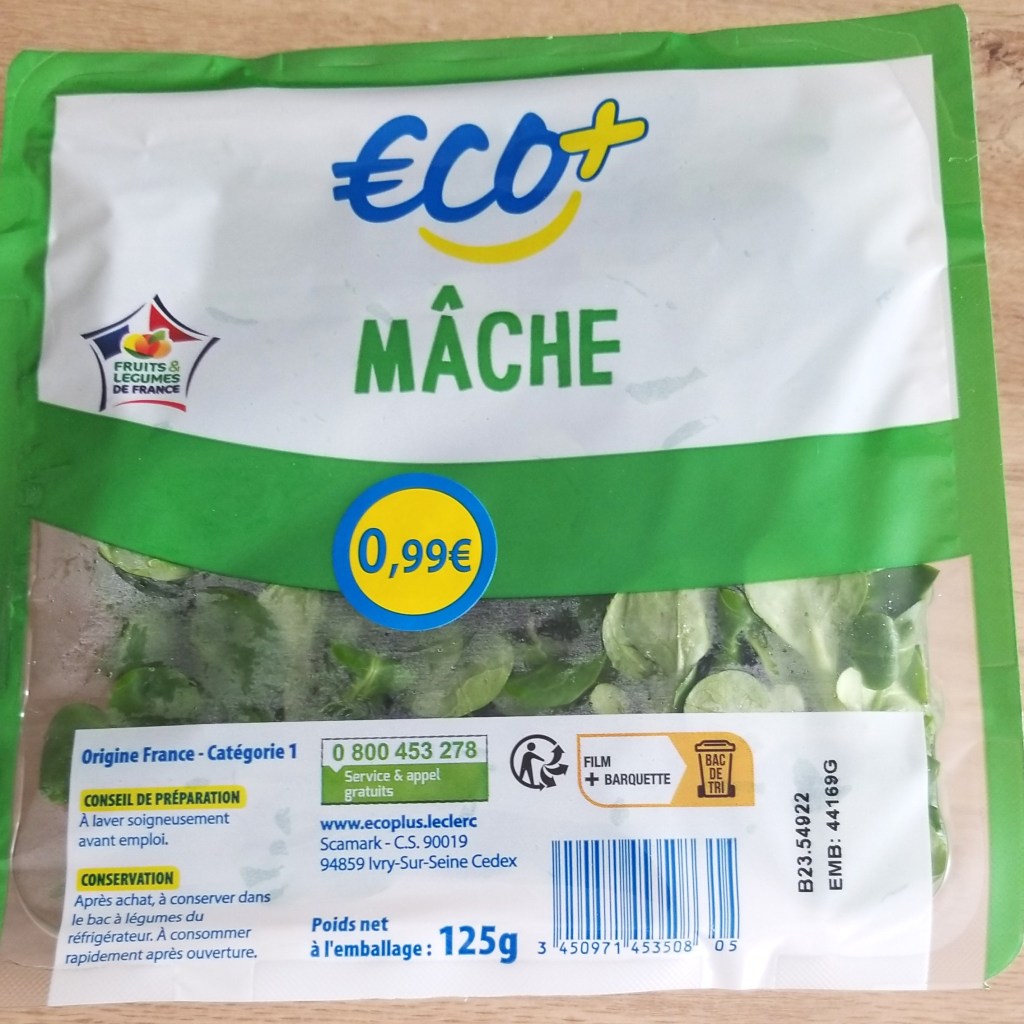

I had forgotten how delicious and crunchy these greens are! Of course, once back home, I looked for any leftover mâche seed; it proved to be too old, and did not sprout, so I ended up ordering a new packet; I started some seed directly outside, in a cool spot that gets shade in the afternoon, and some under grow lights indoors, to have more control over humidity and temperature (one seed marked with a blue arrow):

I only got a few sprouts in the box, which took close to three weeks, and then grew slowly:

Once they developed true leaves, I transplanted to the soil in the same spot where I had direct-sowed the seed. Currently, the rosettes are starting to develop, and are at about one inch across (photo below, left) and it looks like I got one more sprout from direct sowing (photo below, right):
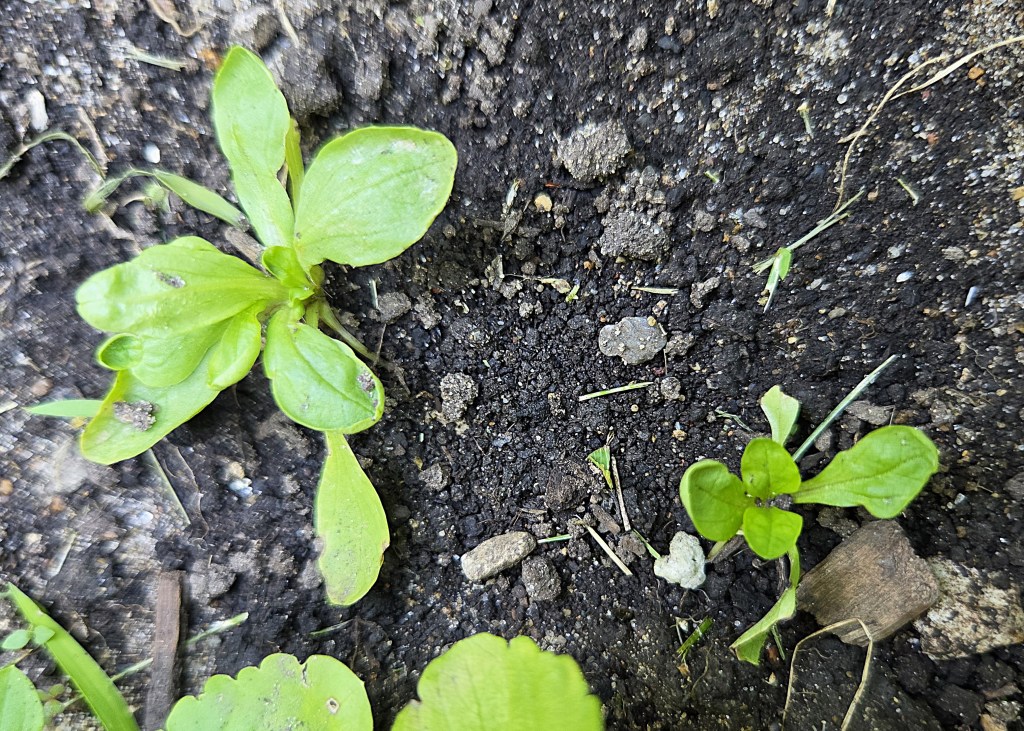
Hopefully I will get at least a handful of greens, and I will start a late summer batch to see if germination has a better timing then.
Strawberry Spinach (Chenopodium foliosum) – These seeds were the classic impulse-buy that get picked while browsing a seed catalogue, in this case Richters Seed:
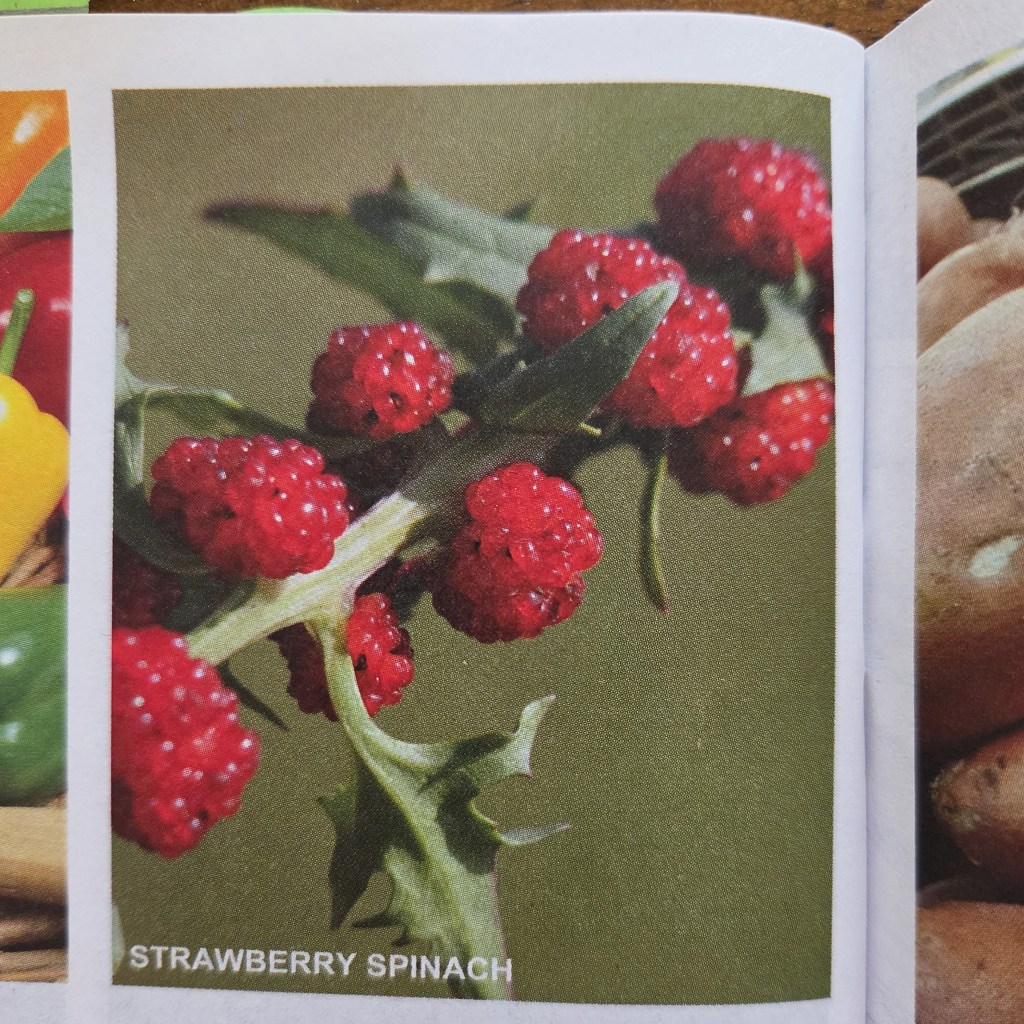
Does it not look so interesting? This plant is not a strawberry, and only a distant cousin of spinach, but receives this name because the leaves are edible and taste similar to spinach, and for having the unique characteristic of producing a berry-like red fruit later in the season. The directions were simple: sow directly in spring, fast germination, grows to a height of up to 16-20 inches (40-50 cm). Whenever I try a new-to-me seed, I like to sprout a batch indoors to see how long it takes, and how the sprouts look like. These seeds indeed sprouted quickly, within four days, and started growing well by a South-facing window (photo below, left). The did look a lot like regular spinach, just not as dark. I transplanted the seedlings to the ground, and sowed some seed directly in the same area (photo below, right):

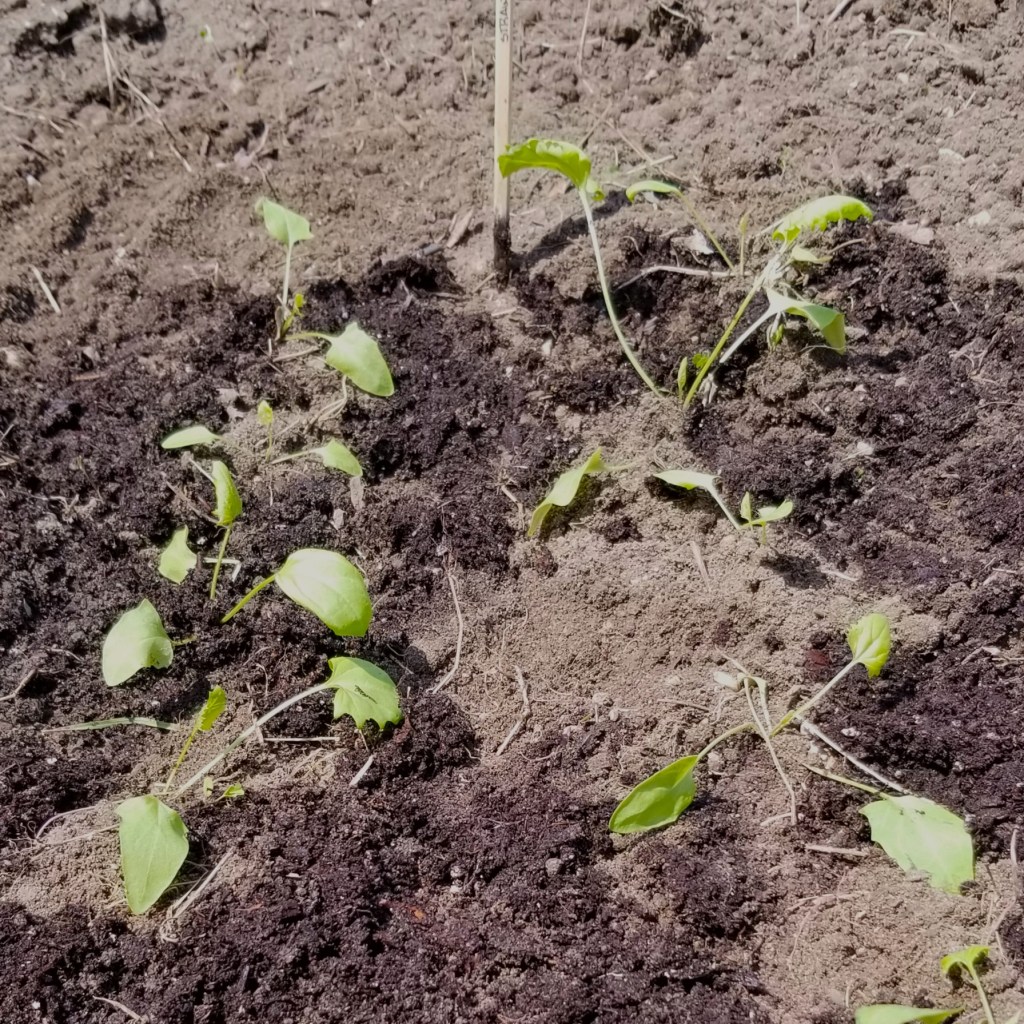
Only a couple of the seeds sowed directly sprouted. The seedlings were growing fine for a few days, getting a brighter shade of green (photo below, left, two small direct-sowed), but then we got a heat wave and now they are growing very slowly, and some leaves have a slight tint of pink (photo below, right):
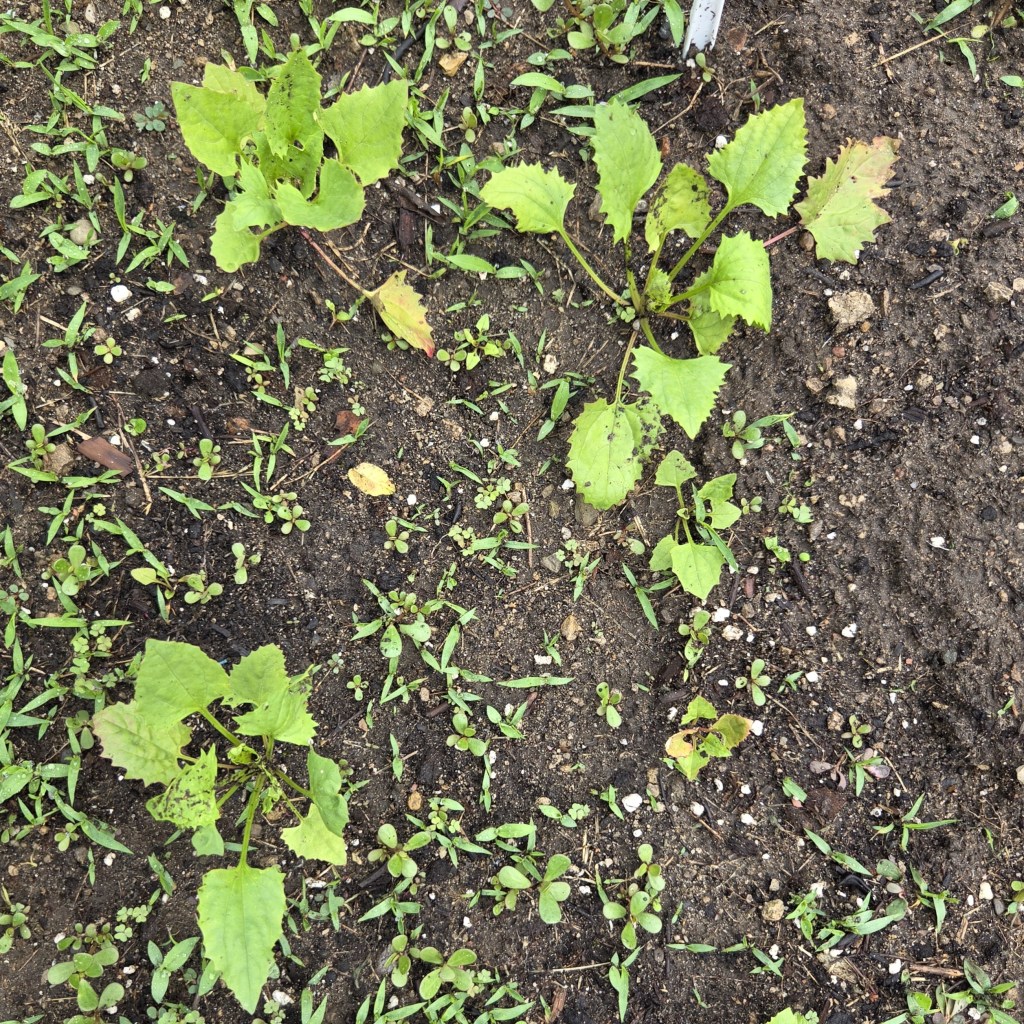
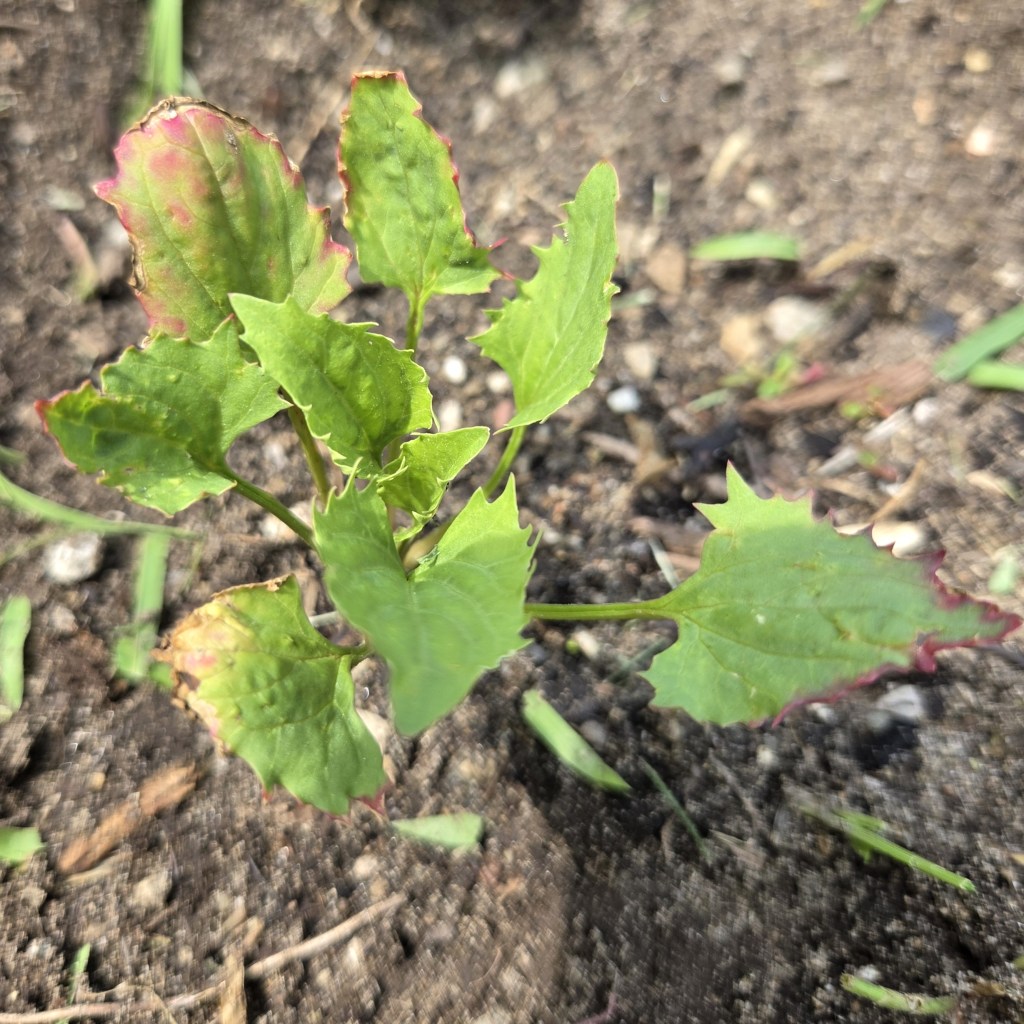
I cannot imagine the plants growing to 40 cm tall, nor producing fruit, really, but they are alive and even if slowly, still growing, so we will see what happens. It is always fun to try new crops.
In my next post, the second part: mini cucumbers, parsley and fingerling potatoes.
For your convenience, click on the image or text below for products available on Amazon™. DISCLAIMER: Any reviews included in this post are my own, for items I have purchased, not provided by any company; as an Amazon Associates Program affiliate, I might receive a commission for any purchases originated from the links below, at no extra cost to you (thank you to readers who have bought other products starting with a click from my links!):

I am sharing my post at Thursday Favourite Things #768, with Katherine @ Katherine’s Corner, Pam @ Artful Analog, Amber @ Follow the Yellow Brick Home, and Esme @ Esme Salon.
I am bringing my dishes to Full Plate Thursday #803 with Miz Helen @ Miz Helen’s Country Cottage.
I am joining (along with the next post) Six on Saturday for July 18, 2026 hosted by Jim Stephens @ Garden Ruminations.






 My Slice of Mexico
Thank you so much for visiting, linking up at TFT 768. See you on Thursday again.
You’re one of the featured posts this coming Thursday.
LikeLiked by 1 person