
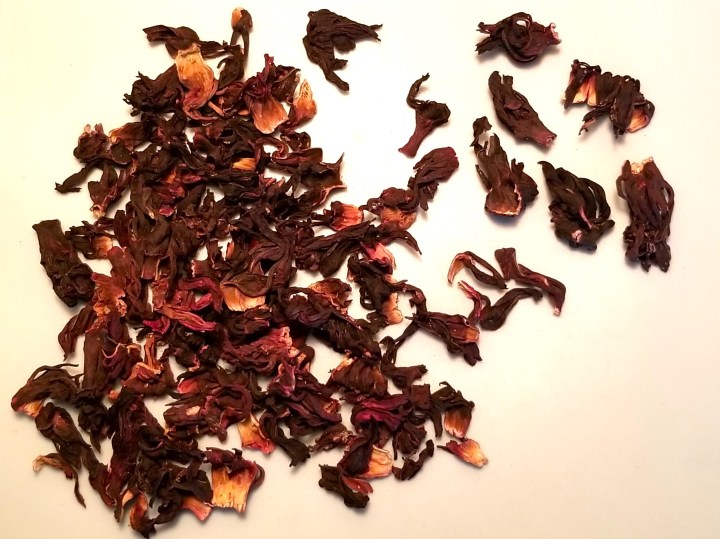
Click here to go to printable recipe: Hibiscus Refreshing Beverage – Agua de Jamaica
Hibiscus is a genus of plants, well known as ornamentals, as well as for some of the species being used for industrial and culinary applications. In previous posts, I have mentioned a particular species, Hibiscus sabdariffa, known as flor de Jamaica in Mexico, as an ingredient in cold beverages and other preparations, such as ponche navideño (Christmas punch), and chamoy (plum-based sauce), but never as a feature; I thought it was time to dedicate more attention to this interesting edible.
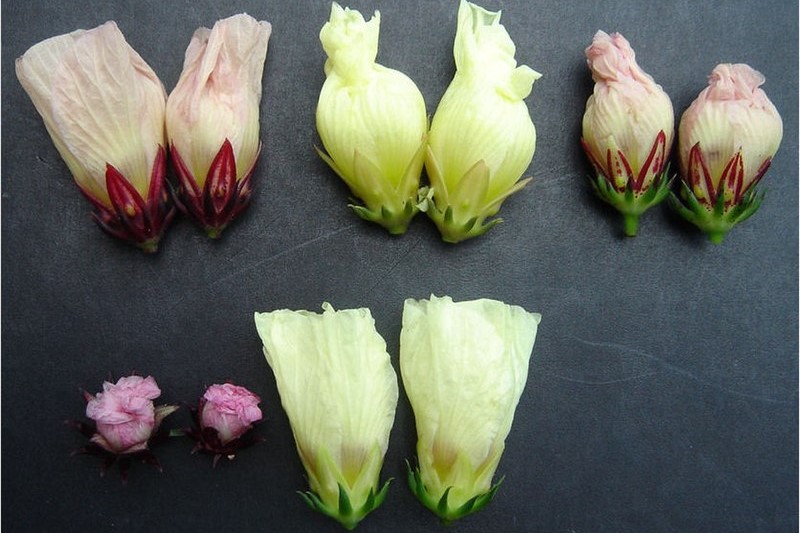
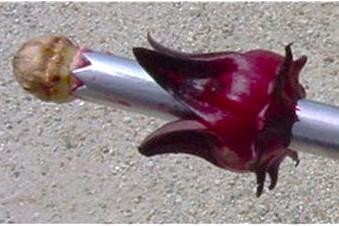
Although most species of the genus are identified as non-toxic, there are only a handful used for consumption, and H. sabdariffa is the most common around the world. Several parts of the plant are used for varied applications, for example, its fibres and colorant in textiles, or leaves and seeds in pharmaceutical and cosmetic products. For culinary applications, hibiscus leaves are used in salads and stews, and the red “flowers” are used for infusions, both hot and cold, and may also appear in sauces and preserves. H. sabdariffa came to Mexico through trading routes from Asia during Spanish colonial times, and also from African slave settlements in the Caribbean, specifically from the island of Jamaica, hence the name. As for the “flower” part, I write it in quotation marks because botanically speaking, these red items are really fruit, formed from a modified calyx, which closes around the seed pod after the petals have dried out. Some common names in English, such as roselle, are used to describe H. sabdariffa, but I will stick to the well-established names of flor de Jamaica in Spanish, and simply “hibiscus” in English, referring to this species unless otherwise specified, to avoid further confusion. In the photo below, left, several variations of hibiscus flowers; notice particularly the red calices on the top, left. As mentioned above, once the petals are gone, the calyx closes around the seed pod in the middle, to form a fruit. After harvesting, the mature calices are de-cored (photo below, right):
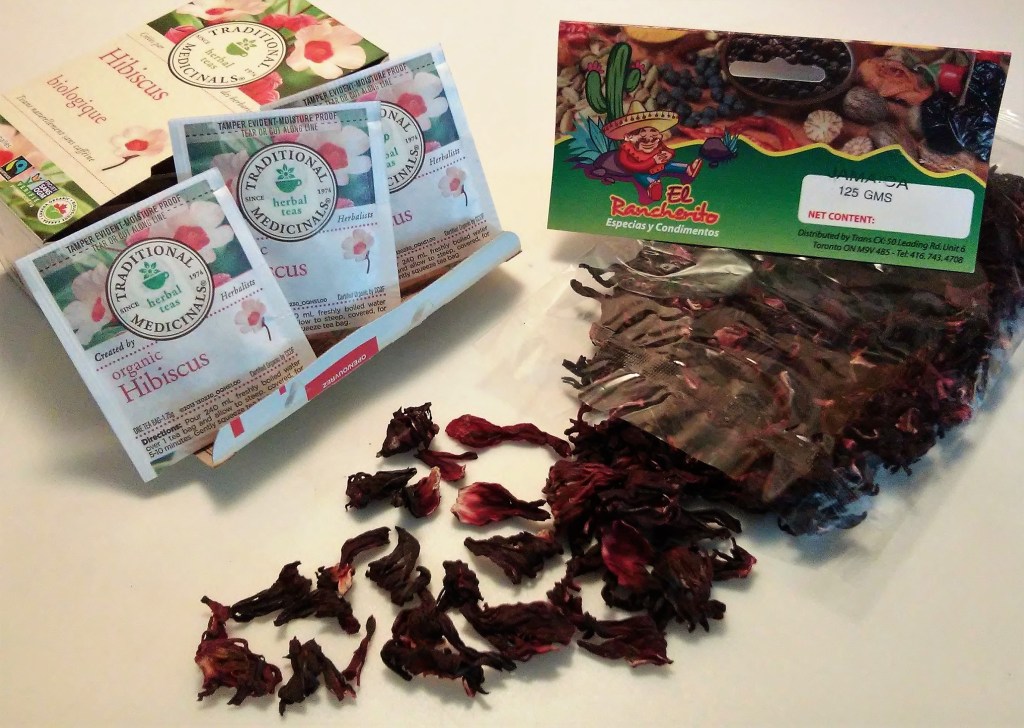
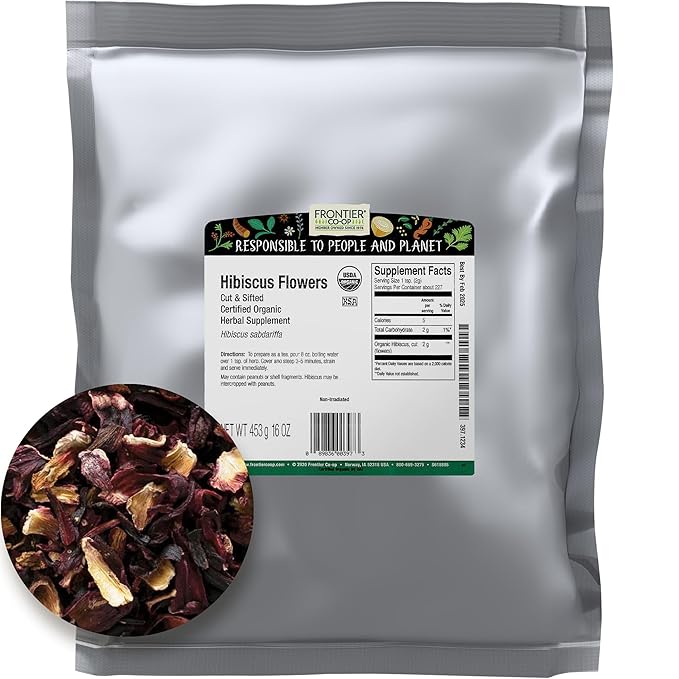
The hollowed calices are then dried. In Mexico, many markets offer dried flor de Jamaica in bulk, or may be found packaged at supermarkets. In Canada, the US and other countries, it is possible to find hibiscus in individual packets, for infusions (photo below, left), the calices may be purchased online, and some Hispanic grocers might carry them, too; I found some at a Hispanic grocery store in Toronto, ON (right):
In Mexico, flor de Jamaica has always been one of the traditional flavours of aguas frescas (refreshing beverages).
Hibiscus Refreshing Beverage – Agua de Jamaica
Printable recipe: Hibiscus Refreshing Beverage – Agua de Jamaica
Ingredients
1 cup dry flor de Jamaica (hibiscus)
½ cup granulated sugar, or to taste
Water, as needed
Ice cubes, to serve
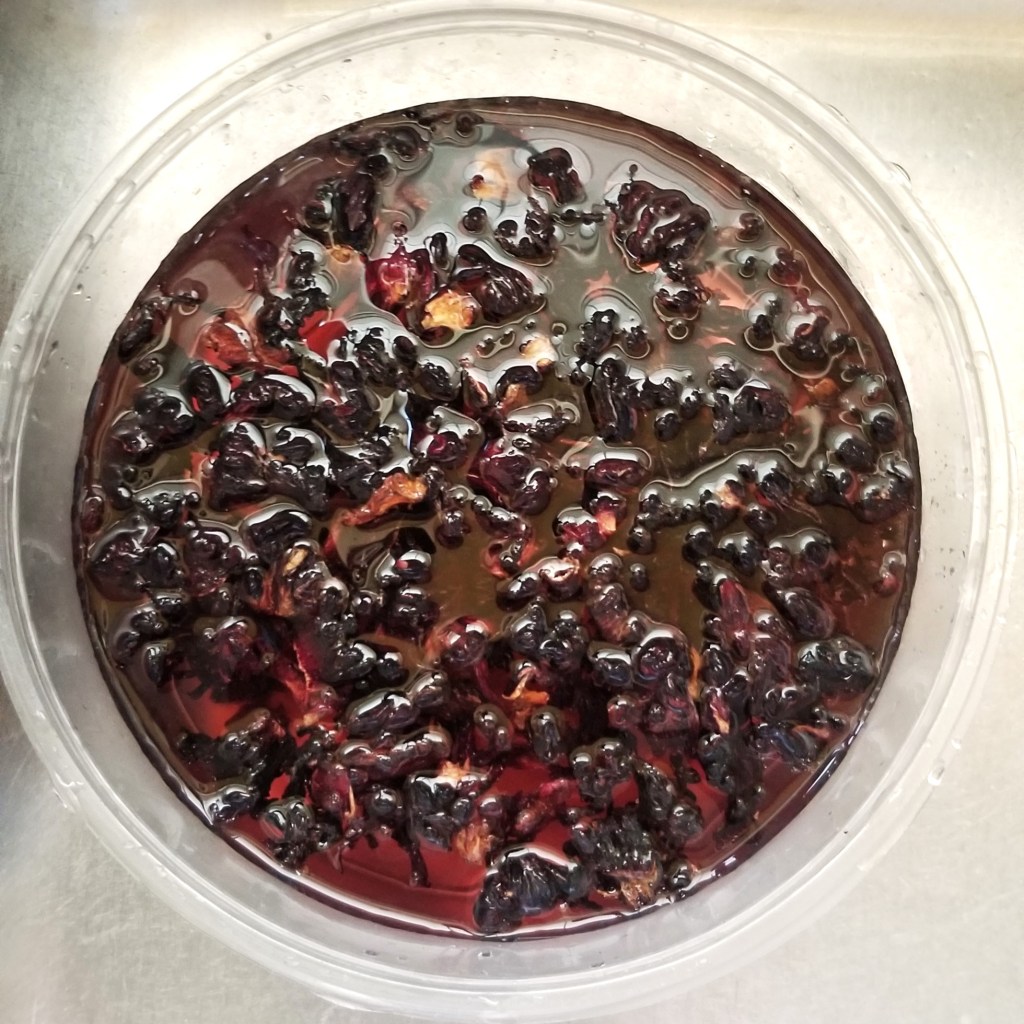
Thoroughly rinse hibiscus in a large bowl with cold water:
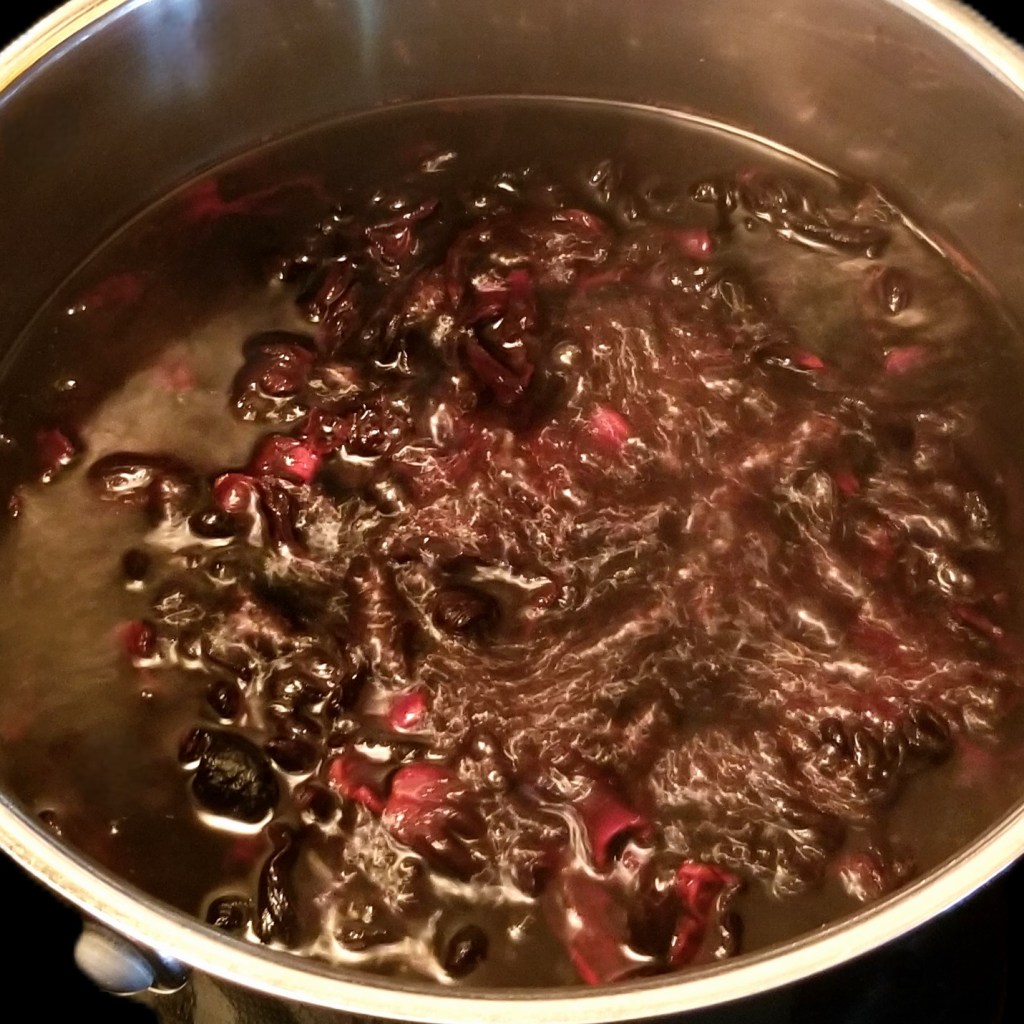
Drain and discard water, then transfer washed hibiscus to a pot; add four cups of clean water, and bring to boil over high heat:
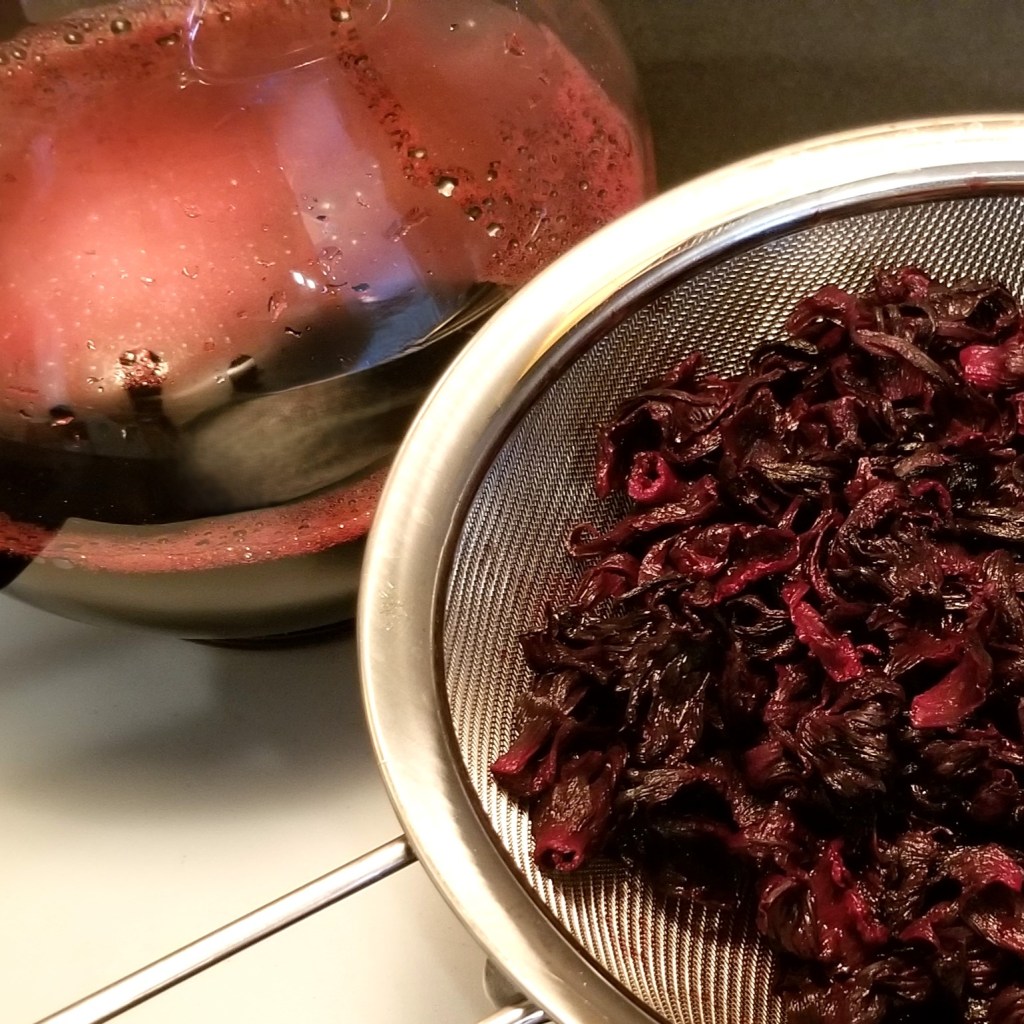
Continue boiling for five minutes, then remove from heat and allow to cool down to room temperature. Pour into a large pitcher, through a colander:
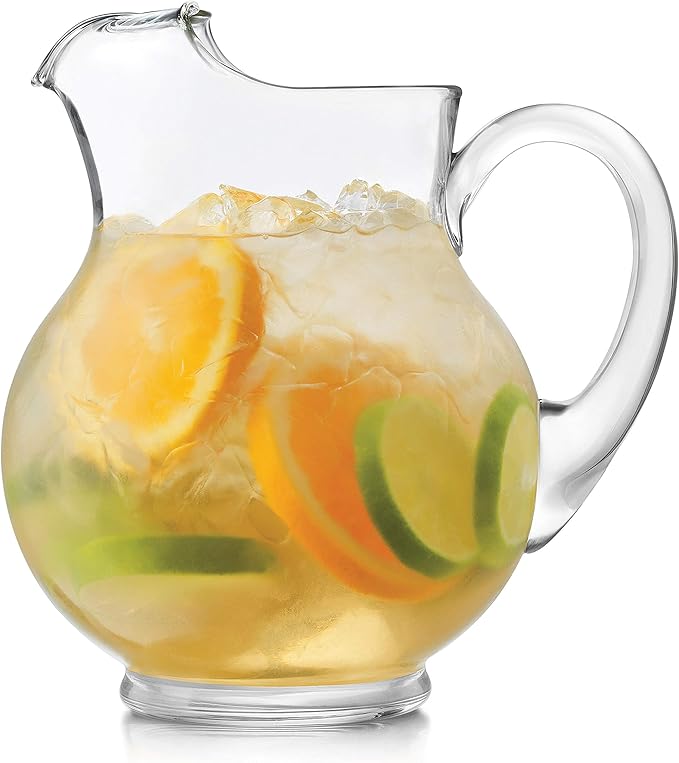
Add sugar to the pitcher, and mix until dissolved. Add more clean water, to complete about ten cups, and mix. Store in the fridge and/or serve with ice cubes:
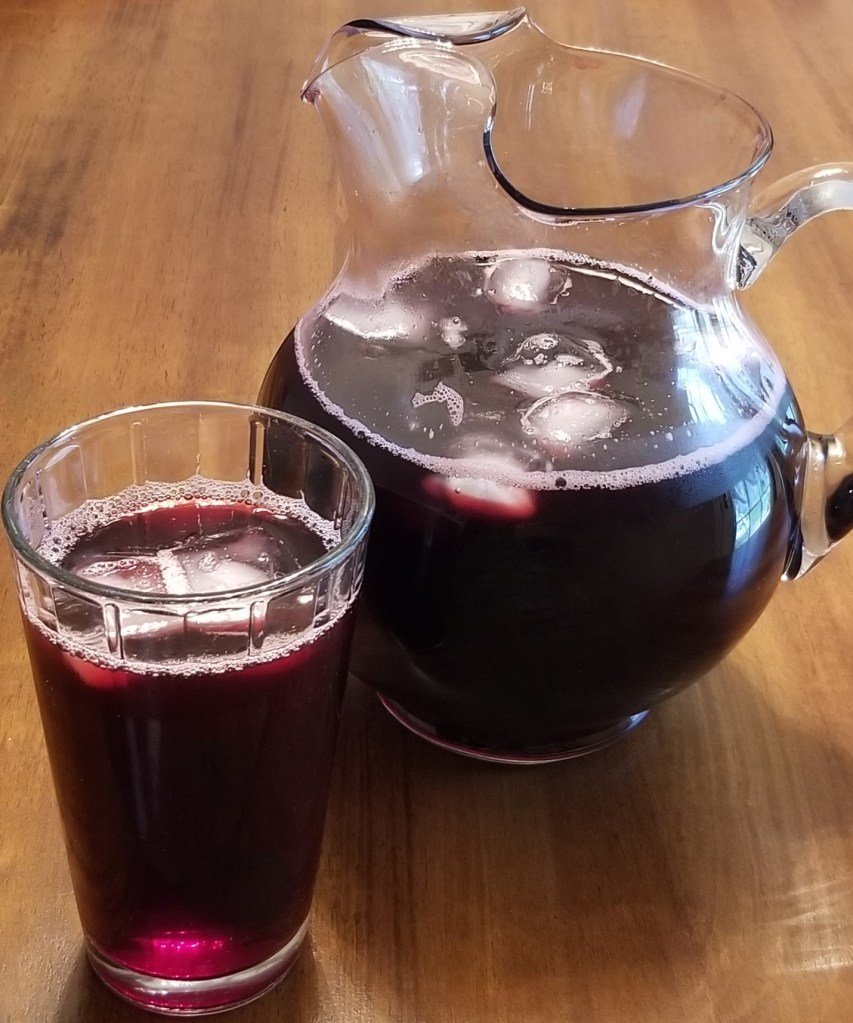
This is a really refreshing beverage, with a nice perfume and a sour flavour, softened by the sugar, with notes resembling cranberry. Agua de Jamaica is frequently offered at gatherings with a Mexican menu, both at home or served by the waitstaff at an event or restaurant; it is great on its own, but a pony of vodka may be added for an extra punch, catering to the grownup taste.
In Mexico, the leftover calices are often discarded, but in recent decades, they have become a popular ingredient in savoury dishes, particularly for vegetarian preparations, such as stews, fried snacks, and tacos. Stay tuned for a hibiscus taco recipe, in my next post.
For your convenience, click on the highlighted text below for products available on Amazon™. DISCLAIMER: Any reviews included in this post are my own, for items I have purchased, not provided by any company. As an Amazon Associates Program affiliate, I might receive a commission for any purchases originated from the links below, at no extra cost to you. Thank you to readers who have bought any other products starting with a click from my links!


 My Slice of Mexico
I never thought this out in detail. Thanks for the interesting information on where and how we get things like the hibiscus that is our tea.
LikeLiked by 1 person