
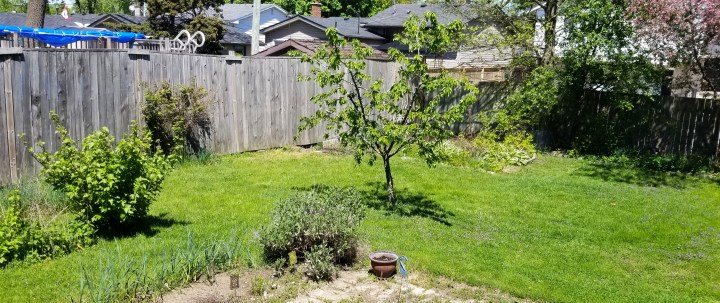
Here in Southern Ontario, crocuses, daffodils and tulips have gone through their orderly parade of colours, and now more seasonal spring temperatures are turning everything green outdoors, including my backyard, as seen in the photo above.
A lot is happening in terms of seedling growing, seed sowing and planting in my garden:
1) It would be idealistic to think that temperatures for the summer crops are here to stay, and evenings are still too cold for my tomato, pepper, tomatillo and herb seedlings. However, they are all lined-up, still in their pots, to be placed outside for a few hours during the day:
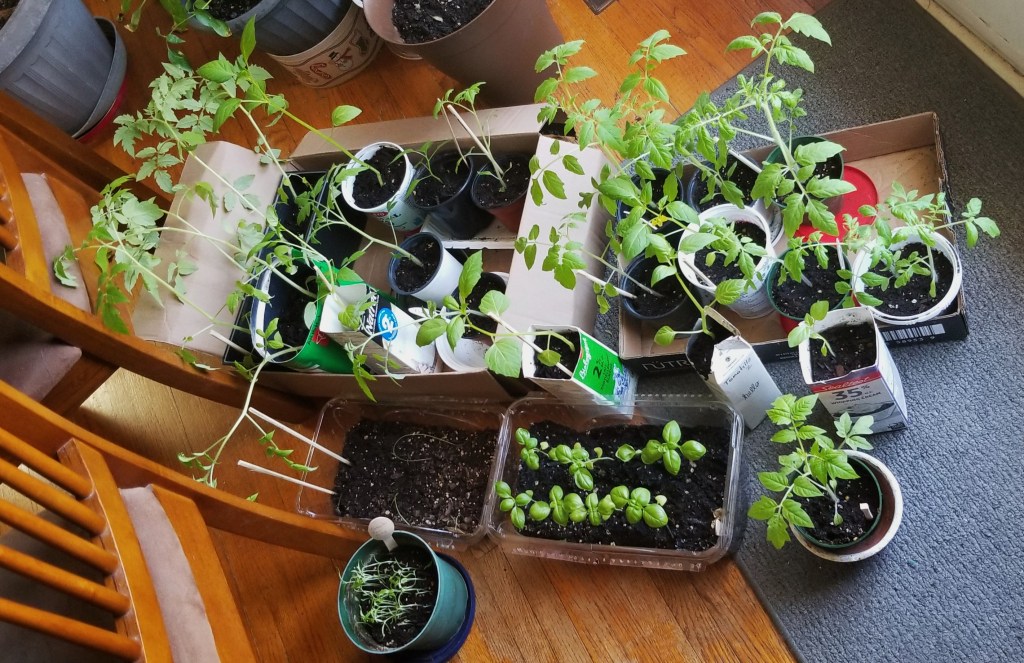
I just received a spring plant order from Richters Herbs, located in Goodwood, Ontario (how cute is that place name for a gardening company?)
2) I need to fill a neglected patch at the back of the backyard, preferably with sturdy, tall, and low maintenance plants, so I ordered two sea buckthorns, one male and one female. Sea buckthorn (Hippophae rhamnoides) is a flowering plant that produces small berries, native to cold regions of Europe and Asia, from Sweden to Germany, also growing in the UK, China, even in the Himalayan region, and including India, Nepal, Bhutan, and Pakistan (gardening zones 3 to 7.) Sea buckthorn is hardy and grows well in a variety of terrains, and its roots interact with Nitrogen fixing bacteria, which helps to enrich otherwise infertile soils. The bushes may grow up to 4 m (13 ft) tall, but tolerate pruning and trimming to more manageable heights. The fruit is edible, mostly used for sauces and jams, containing vitamin A, C, E, K, and B12. I was curious to try them also because in Mexico, orange hawthorns (Crataegus mexicana), a distant relative from the same order (Rosales) are used in jellies and Christmas punch, so sea buckthorns might be a decent substitute.
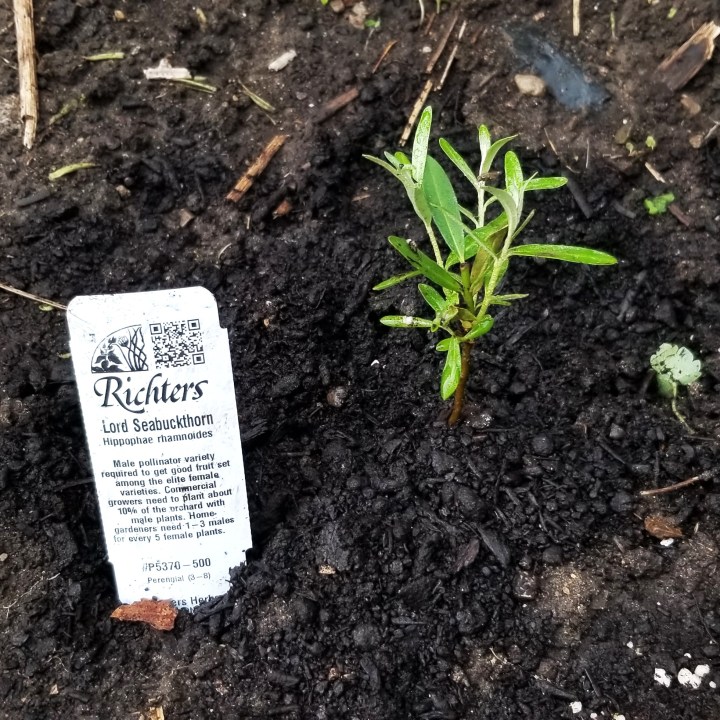
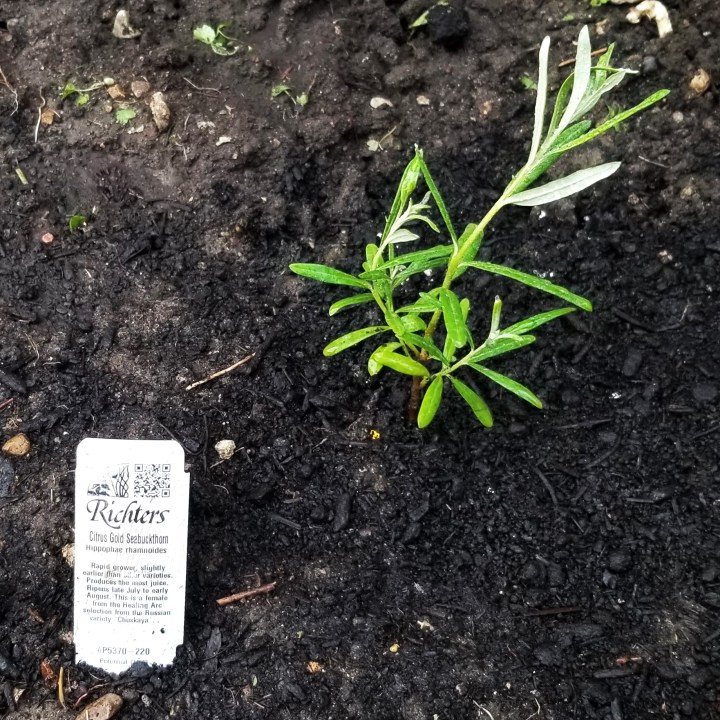
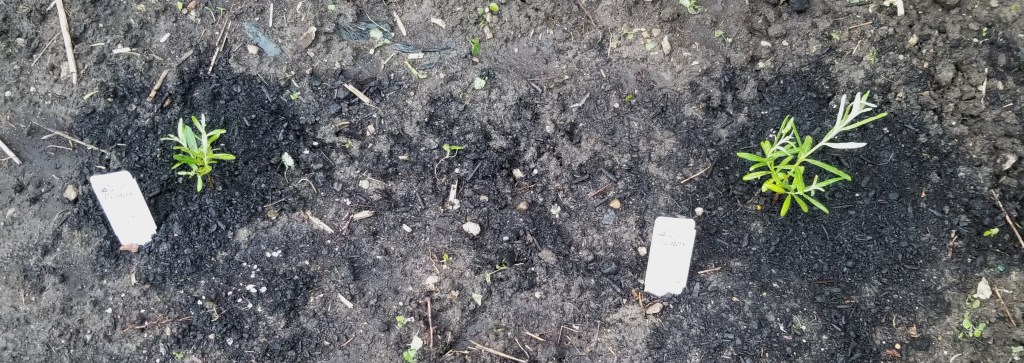
I cleared the mentioned neglected area, and added some compost to the spots where I transplanted the sea buckthorn seedlings. The male is the pollinator, from the variety “Lord” (photo below, left), and the female will produce the berries, in this case oval and orange, from the variety “Citrus Gold” (photo below, right):
They tolerate dry and cold conditions, but require full sun to thrive. I placed them facing South just in front of my North fence. They are tiny now, but they could quickly grow and widen, so a separation of 3-4 ft (90 to 120 cm) is recommended:
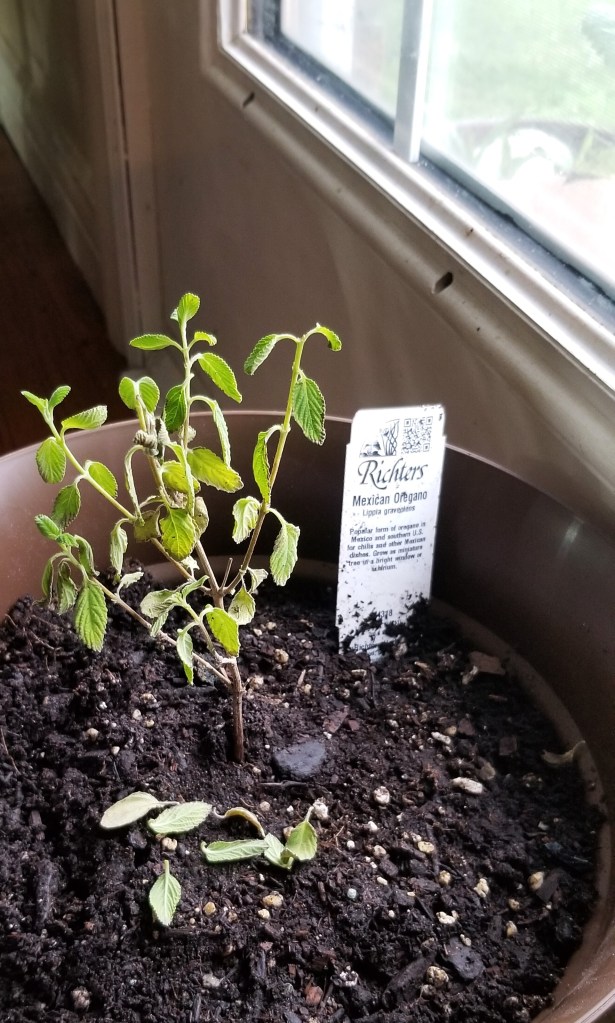
3) I also ordered another new-to-me plant, Mexican oregano (Lippia Graveolens); it is named after the Mediterranean herb, but they are very different plants, with a more citrusy and fresh flavour profile than Greek or Italian oreganos. Unlike Mediterranean oregano, Mexican oregano will not survive low temperatures, so my seedling came looking very stressed and is losing leaves; I transplanted it to a pot, and I will keep it indoors by a south-facing window until the weather gets really nice and warm, hopefully it will recover:
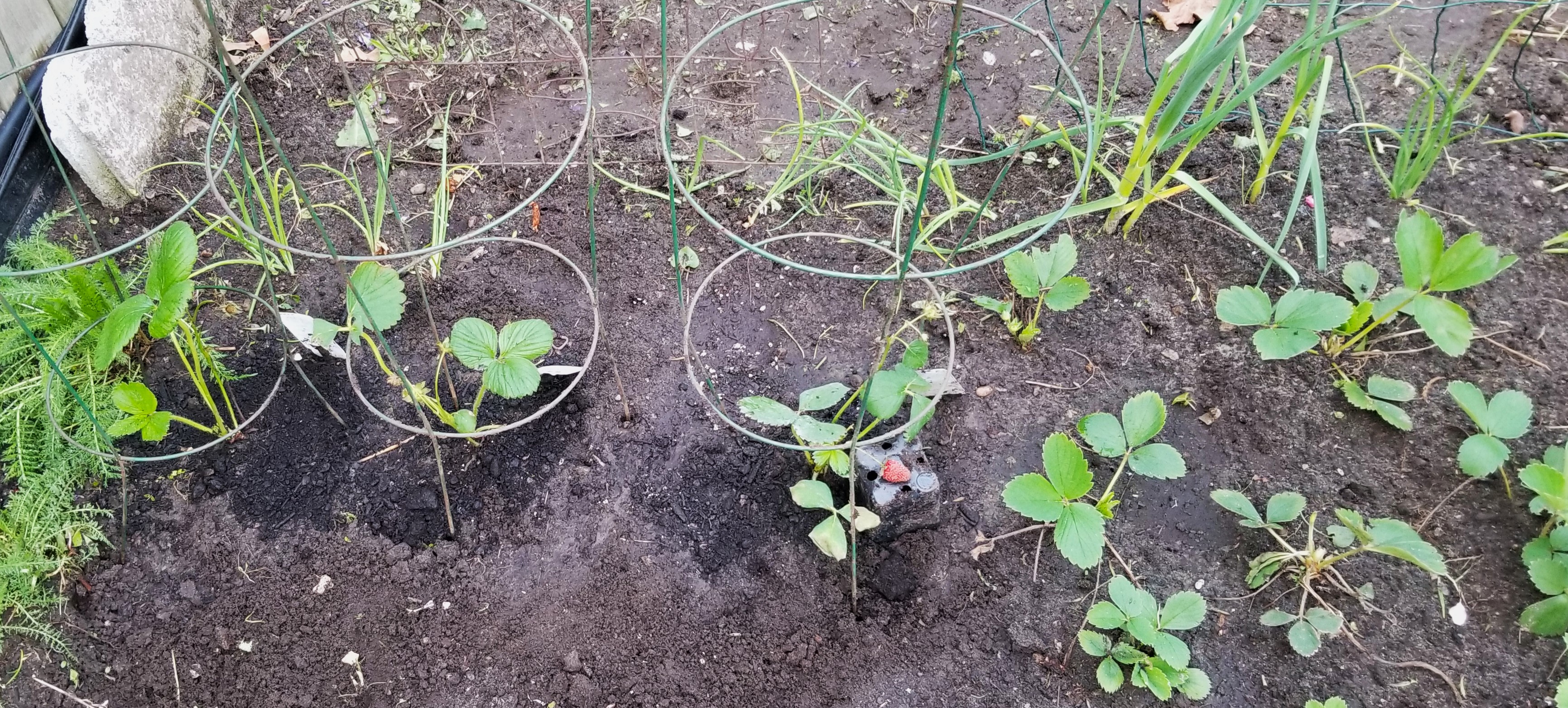
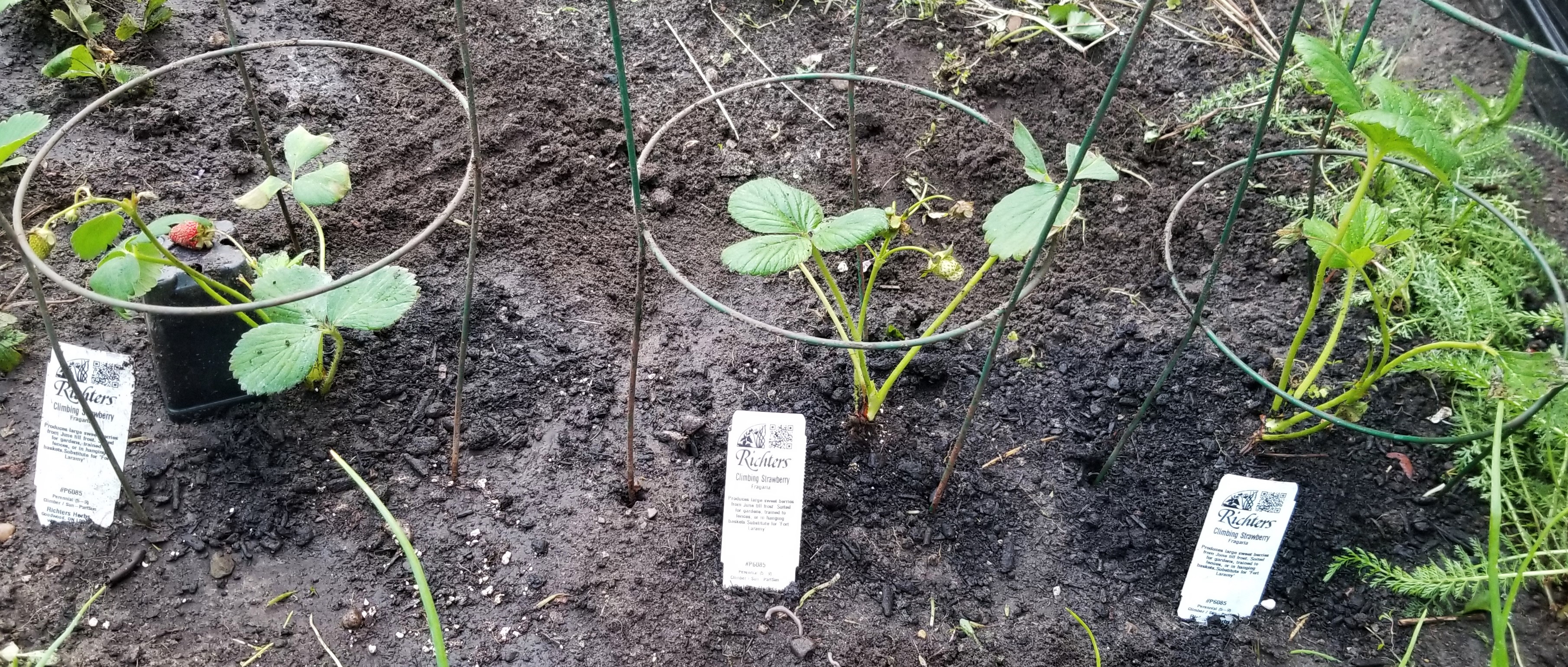
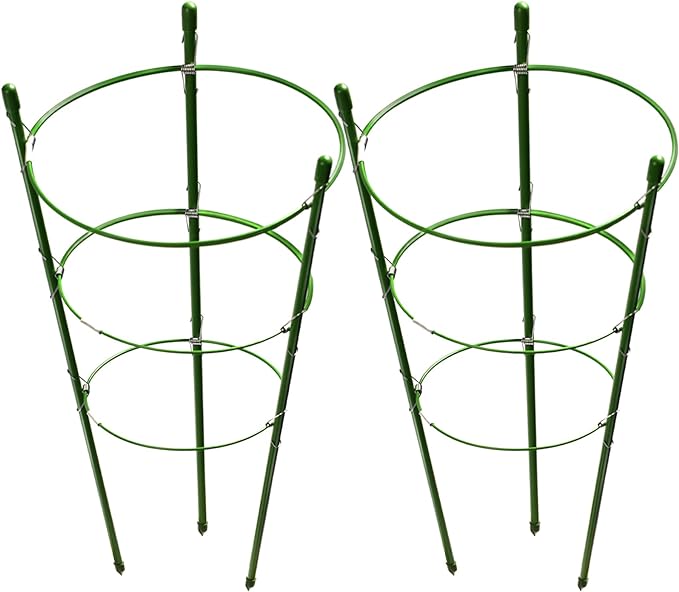
4) The last type of plants I received was strawberries. Although I still have strawberry plants propagated from when I did a large planting a few years ago, I wanted to refresh my crop and try a staple variety. I got three plants of the climbing, day-neutral Fragaria “Albion”, which are described as producing “large sweet berries from June until frost.” I placed them in my strawberry patch, but I provided some support for them, since they are climbers:
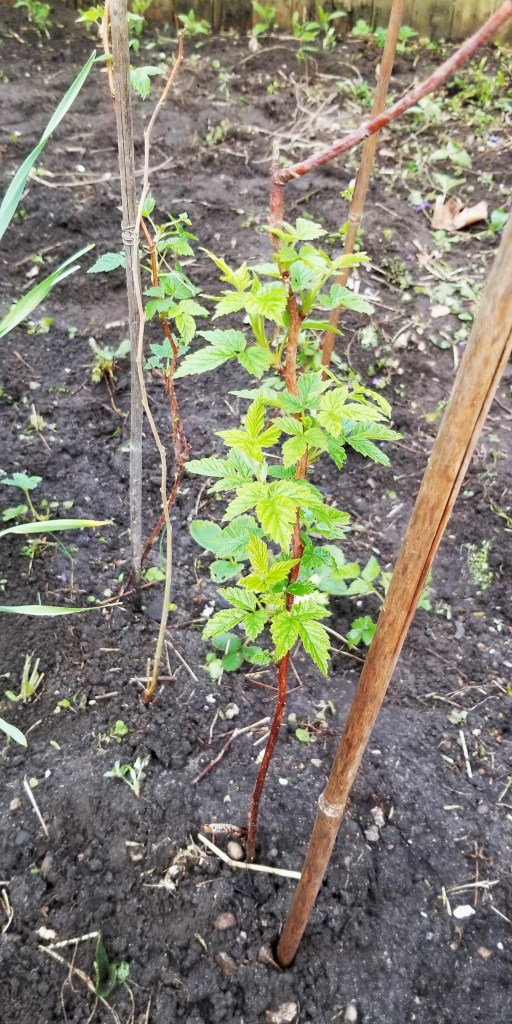
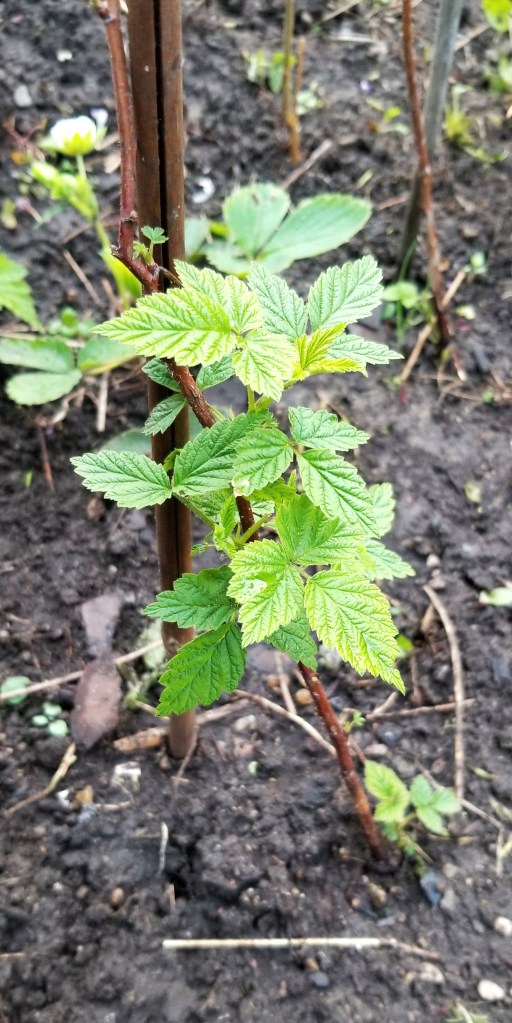
5) While clearing the neglected area for the sea buckthorns, I also rescued some raspberry canes, which had been almost swallowed by weeds. I added compost around them, and will be monitoring, hopefully I will be able to build a healthy crop again:
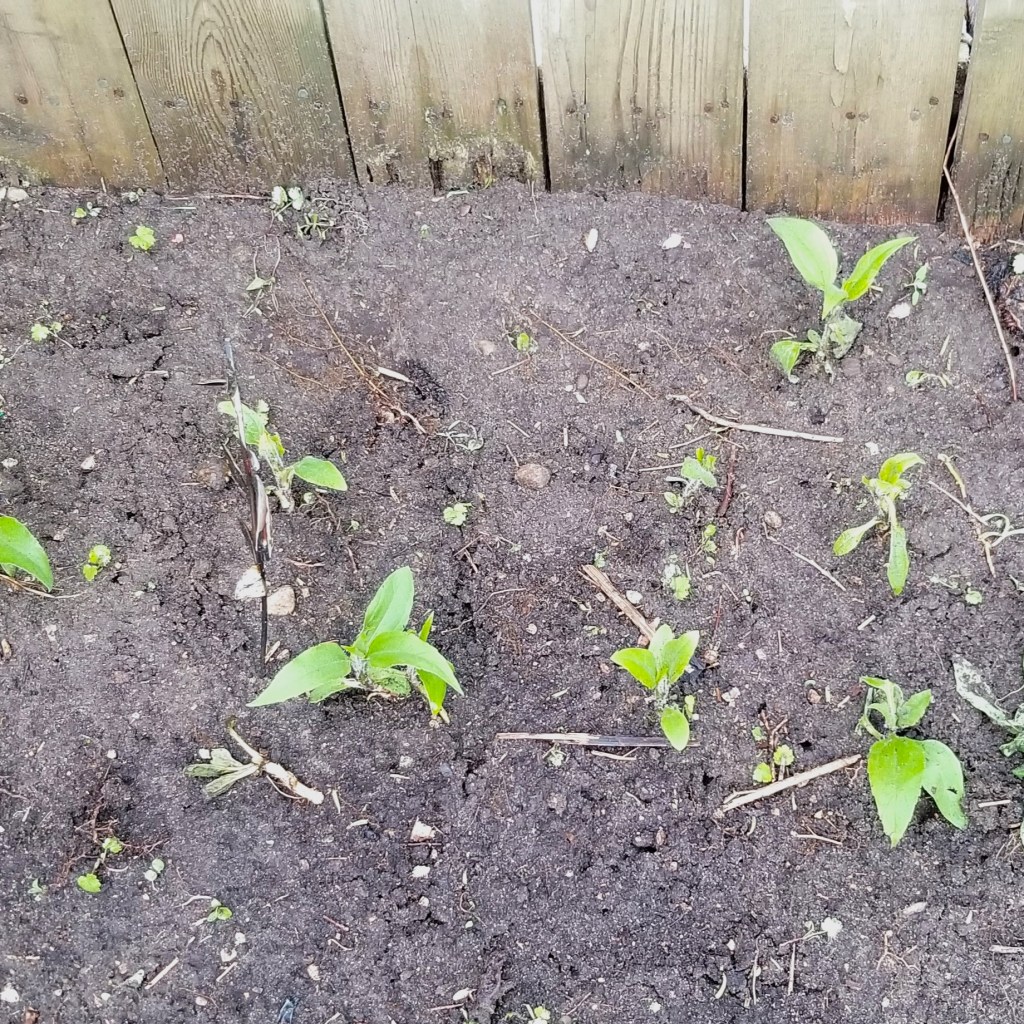
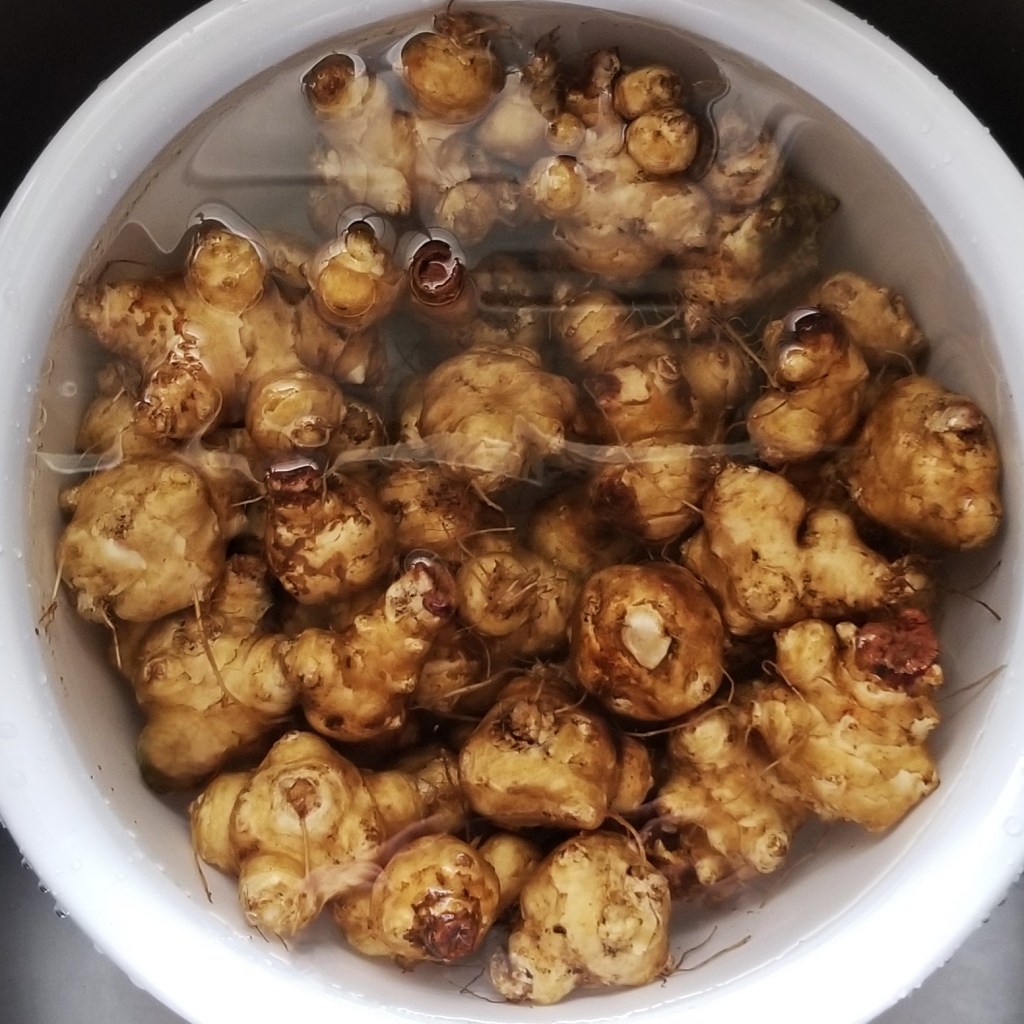
6) I finally got to check the sunchokes, which are at their best when harvested in the fall after a frost, but hey, better late than never. Most of them had already sprouted, so got replanted (photo below, left), and I gave some to my dear friend Margaret. I still harvested a fair amount for the kitchen (photo below, right):
HAPPY GARDENING!




 My Slice of Mexico
It’s always interesting to read your updates on the garden. Our conditions are so different, but still similar in many ways. Down here in Massachusetts, i’ve finally won a battle to keep the darn sun chokes confined to one area to the garden. For a few years they seemed to run wild!
Best luck on a great spring of gardening.
LikeLike
Hi, Lou; yes, those sunchokes need to be kept confined for sure. Same best wishes to you for a fun and productive growing season!
LikeLiked by 1 person