
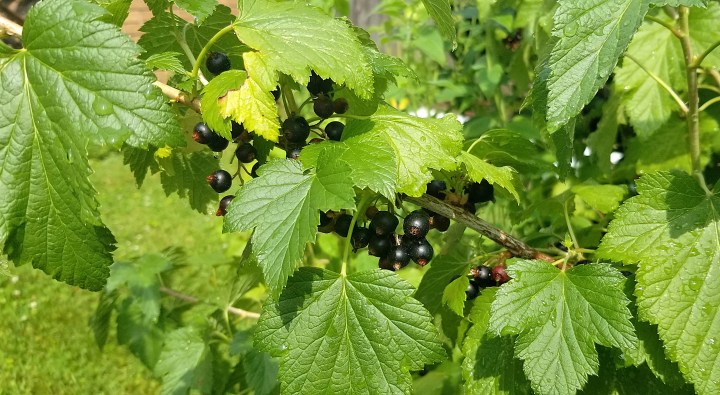
The season for what we generically call “berries”* is starting in my garden; although some of the plants are new to me and too young to produce fruit this year, and others are recovering from past neglect, I am including them all on the list:
1) Black Currants (Ribes nigrum) – The berries mature at slightly different times along each branch, so I harvest the ripe ones as they turn almost black on the branches (photo at the top of this post). Currants are hardy plants, and I have had a healthy one and nice crops every year for almost a decade now, after a good friend gifted me a cutting from her plants. The cutting grew from one to four feet, and has expanded in width as well; a couple of years ago, I propagated a few cuttings for my friends, and kept one, now growing to the left of the original one (both seen in the photo, below):
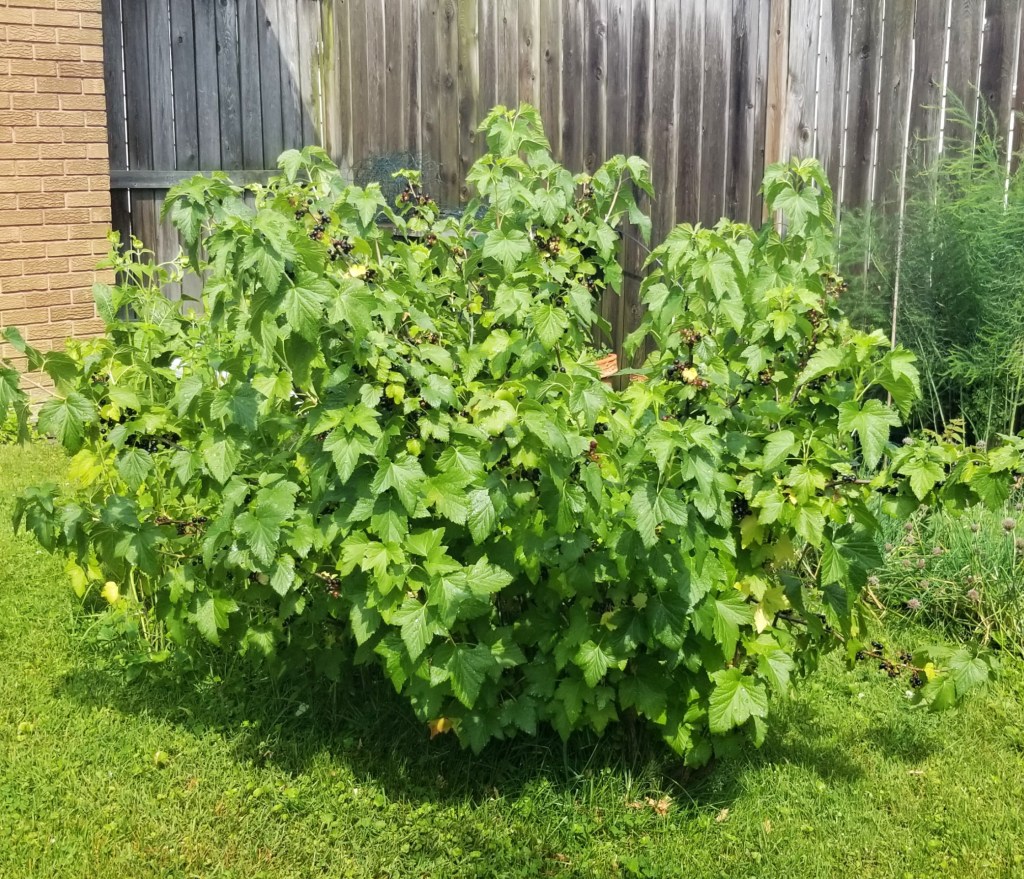
I usually wash and freeze the fruit, and cook and bottle jam in the fall, once temperatures go down.
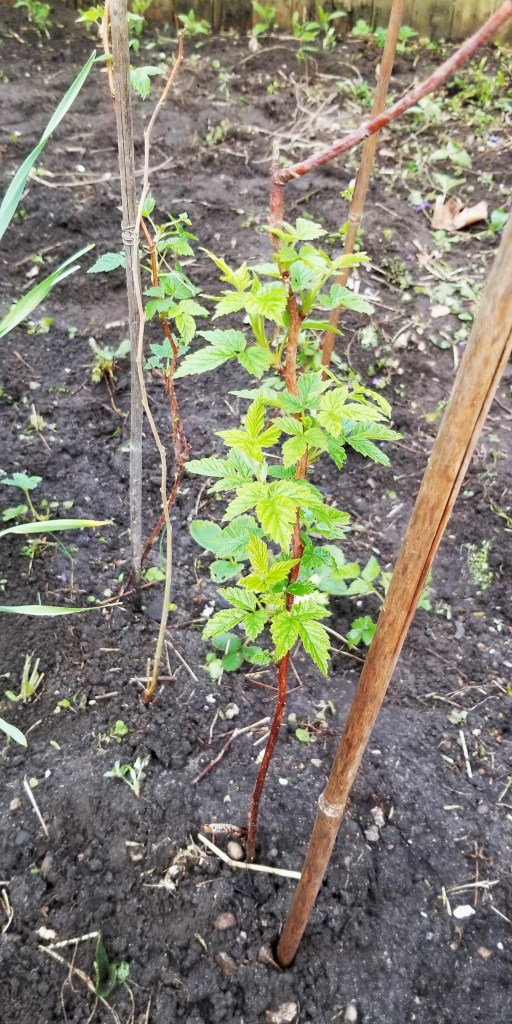
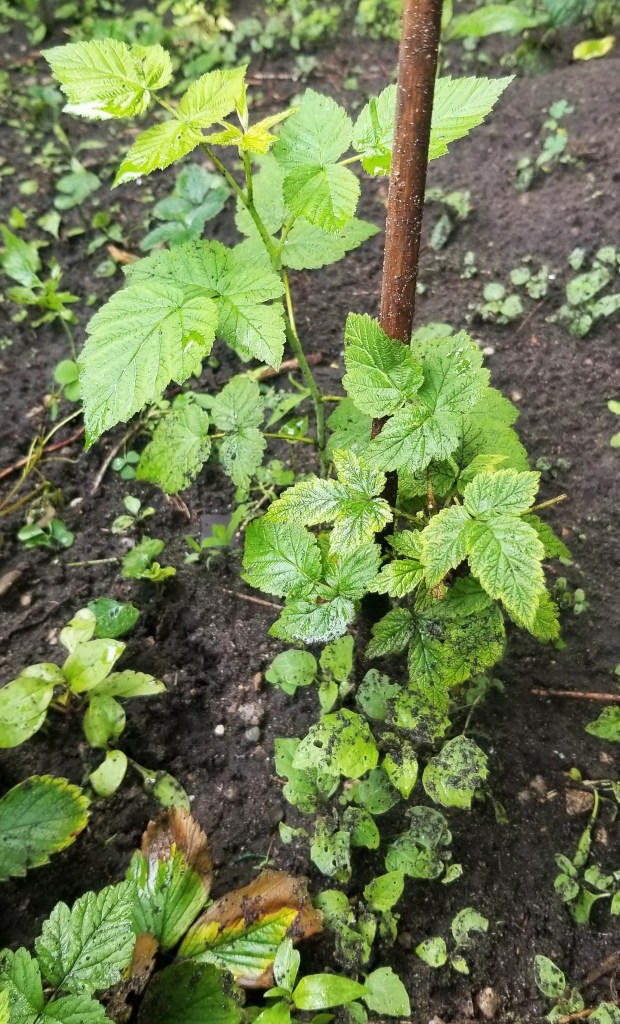
2) Raspberries (Rubus idaeus) – I mentioned that my neglected raspberry canes are in recovery this season, so I am not expecting fruit, but the leaves are looking stronger and promising for future crops (photo below, left, a month ago, and right, this week):
3) New plantings – The seedlings and small plants I bought this spring are still alive, but a bit on a tightrope right now, developing new growth, but looking stressed:
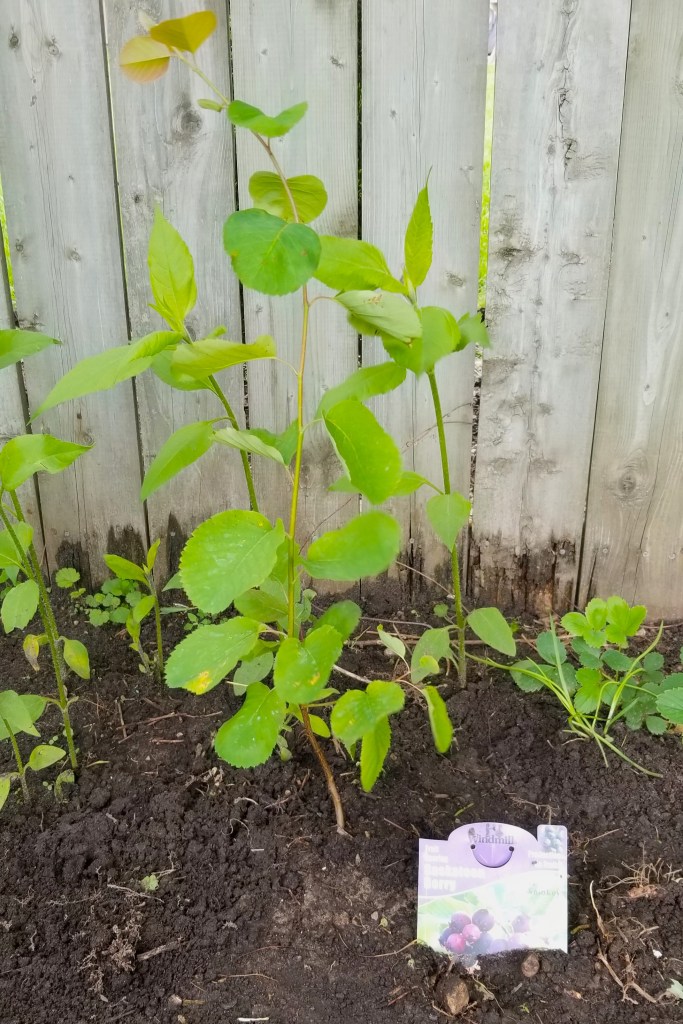
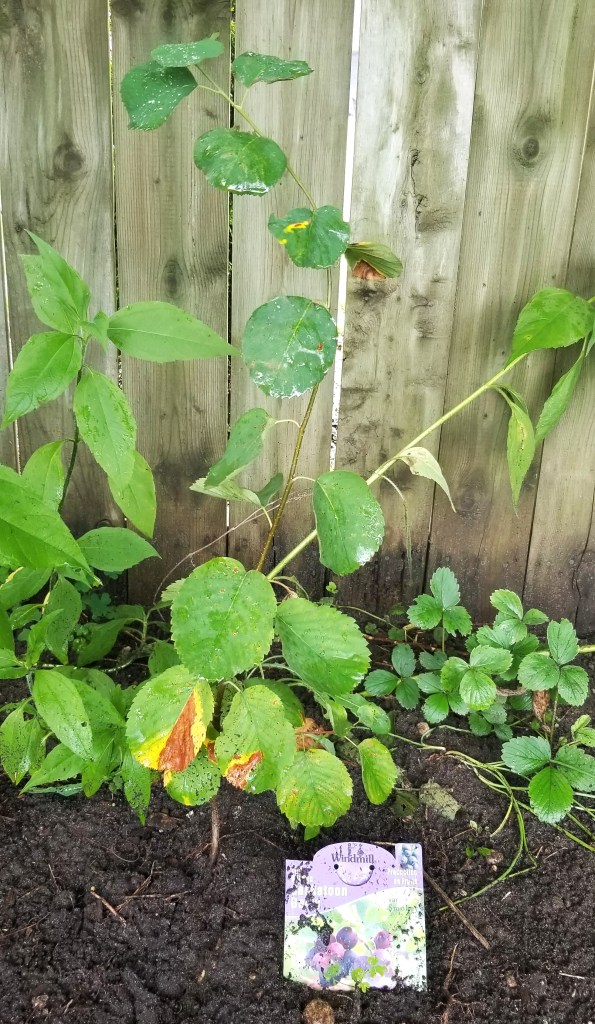
Saskatoon Berry (Amelanchier alnifolia) photo below, left last month, and photo below, right, this week:
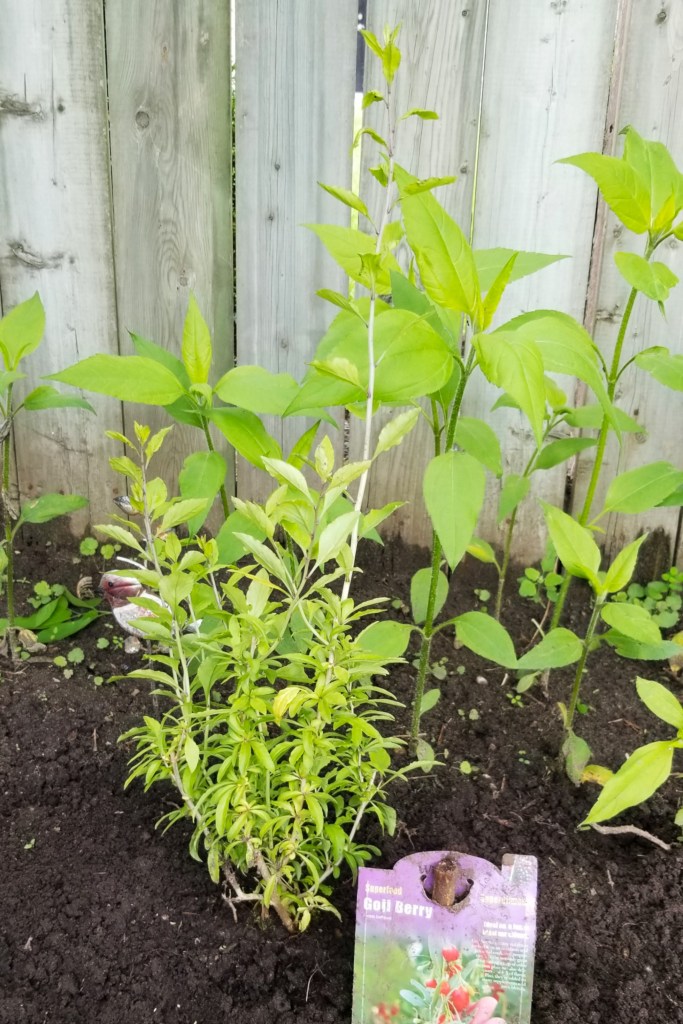
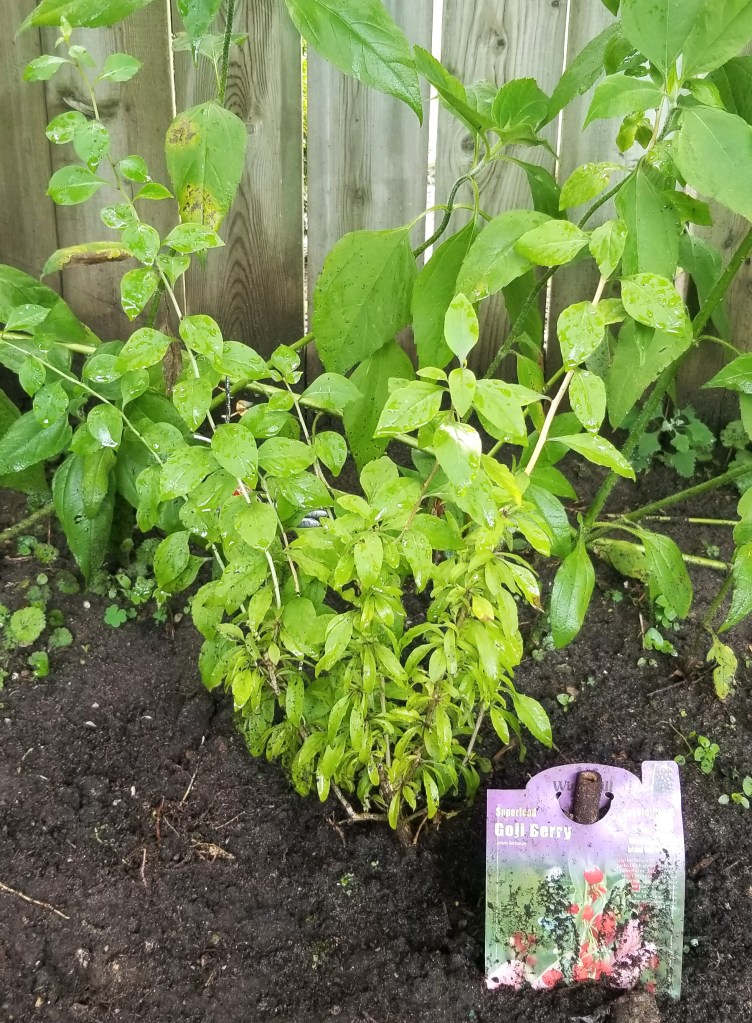
Goji Berry (Lycium barbarum), photo below, left last month, and right, this week:
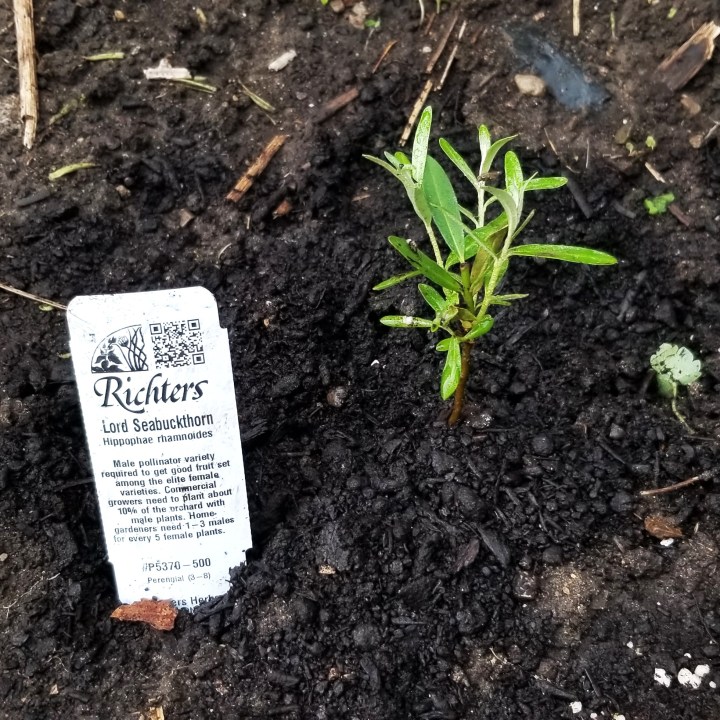
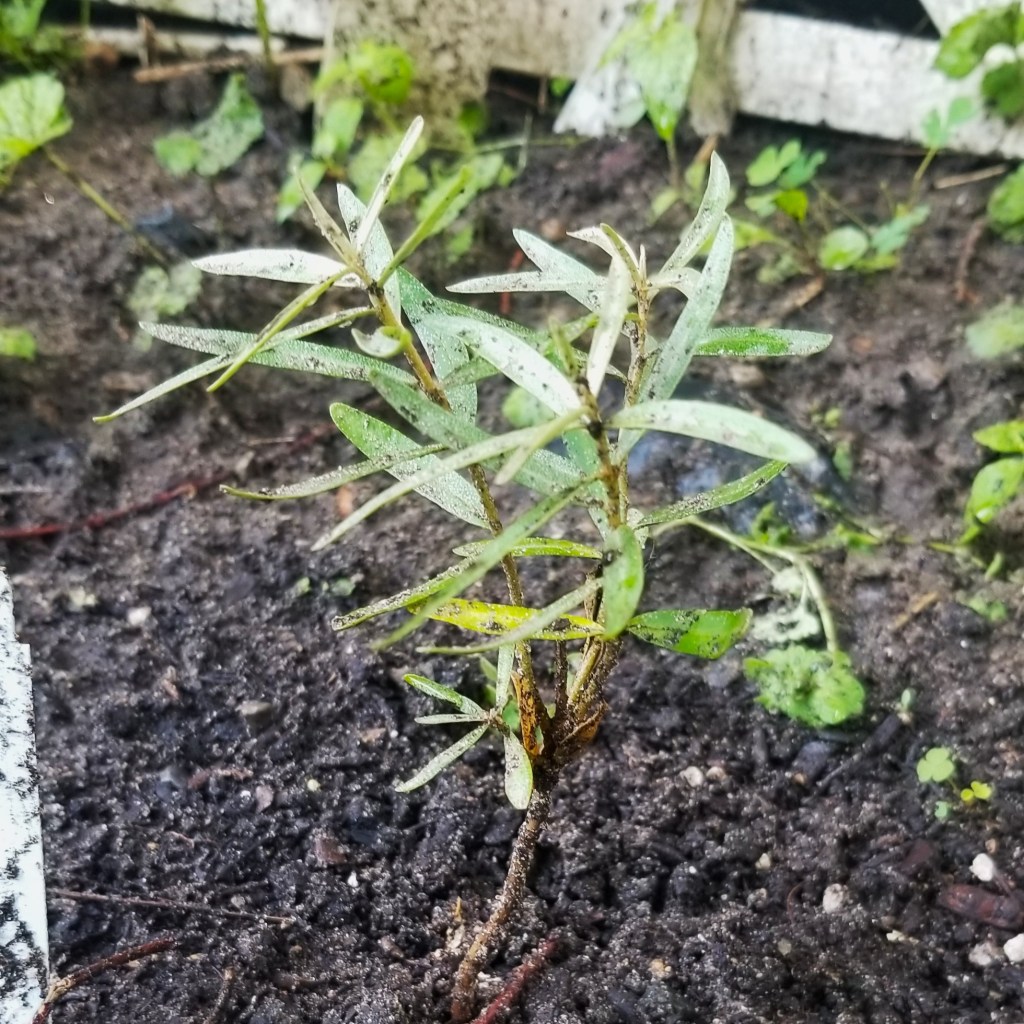
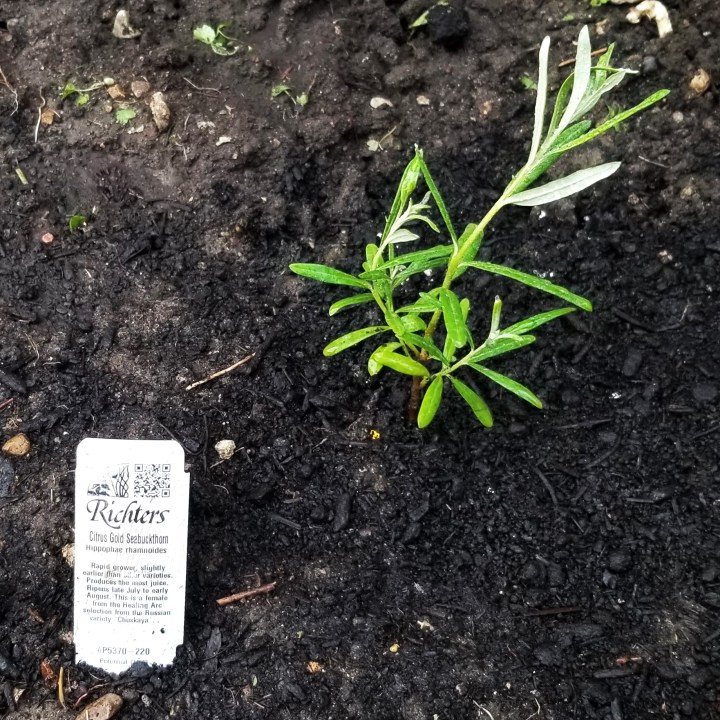
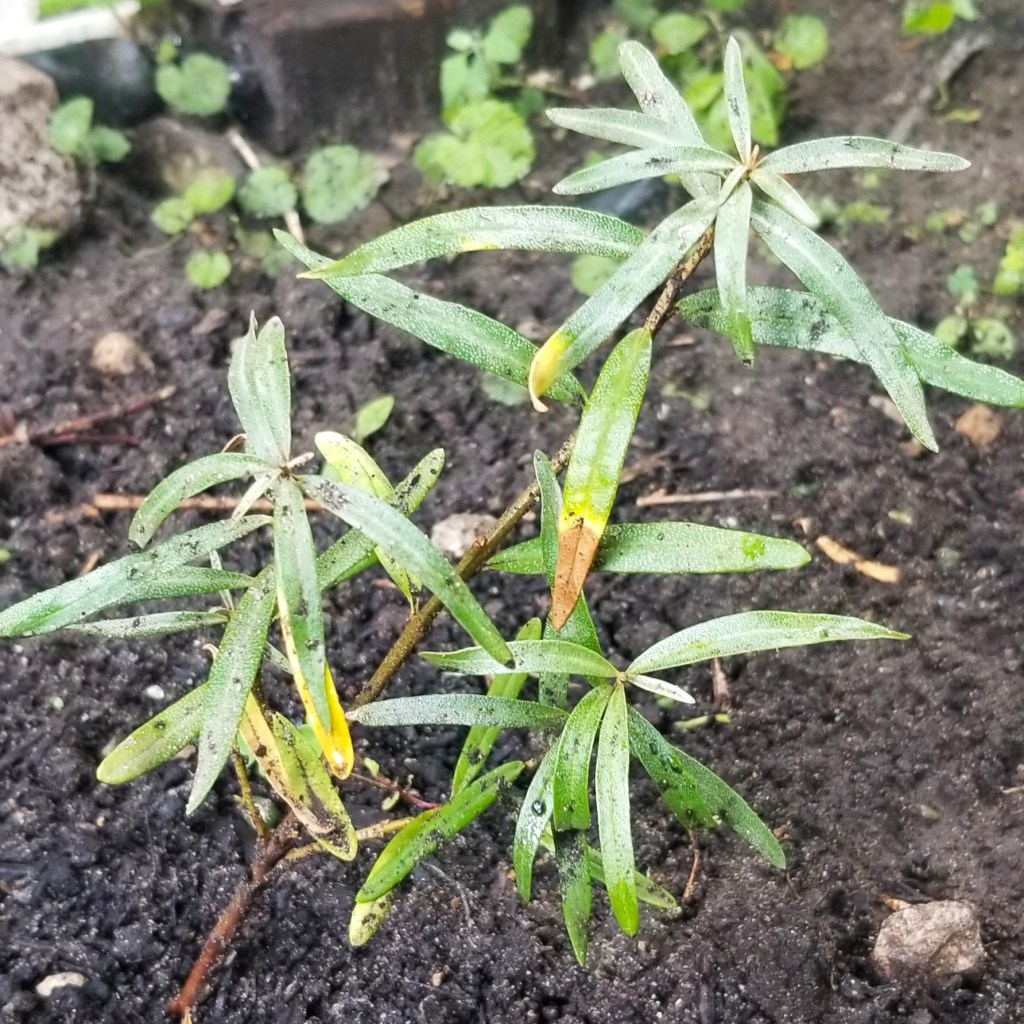
And Sea Buckthorn ((Hippophae rhamnoides), the male (photos below, left a month ago and second this week) and female Citrus Gold (photos below, third a month ago and right, this week):
Hopefully with more sun and warmer weather they will recover and continue getting established.
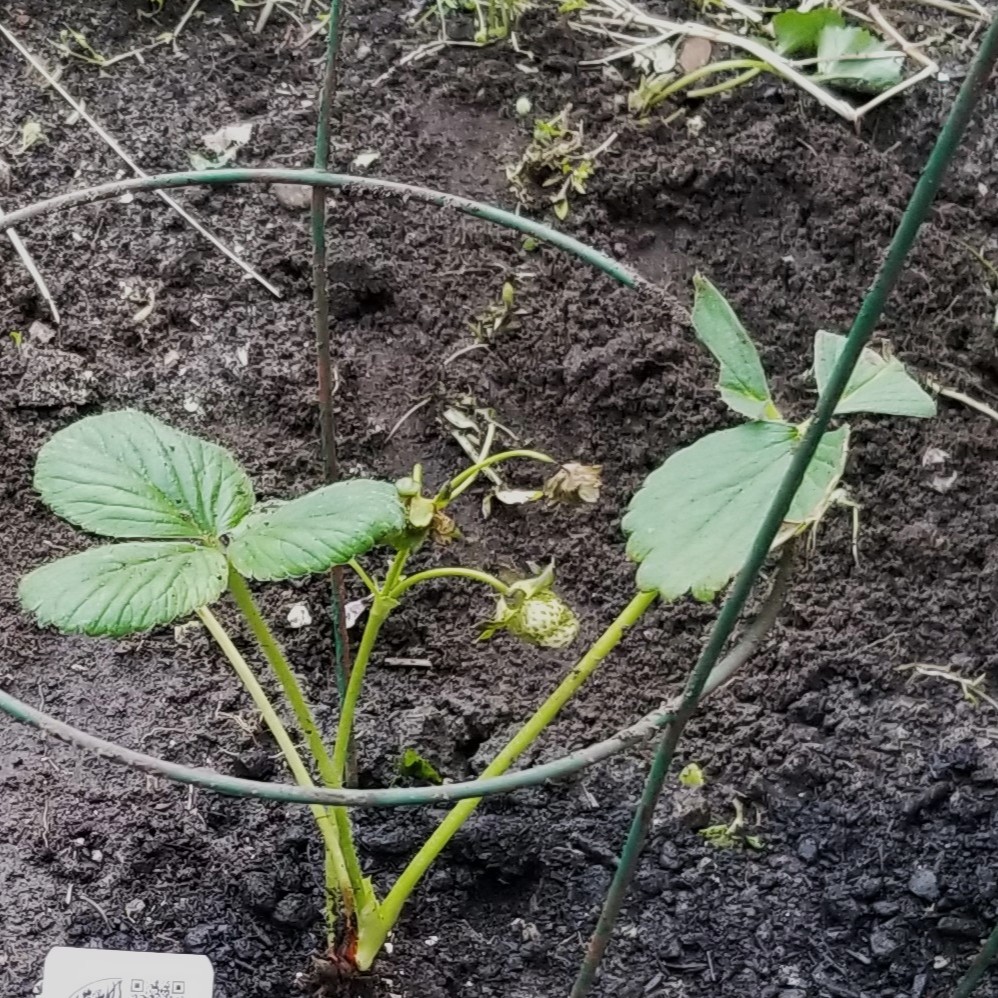
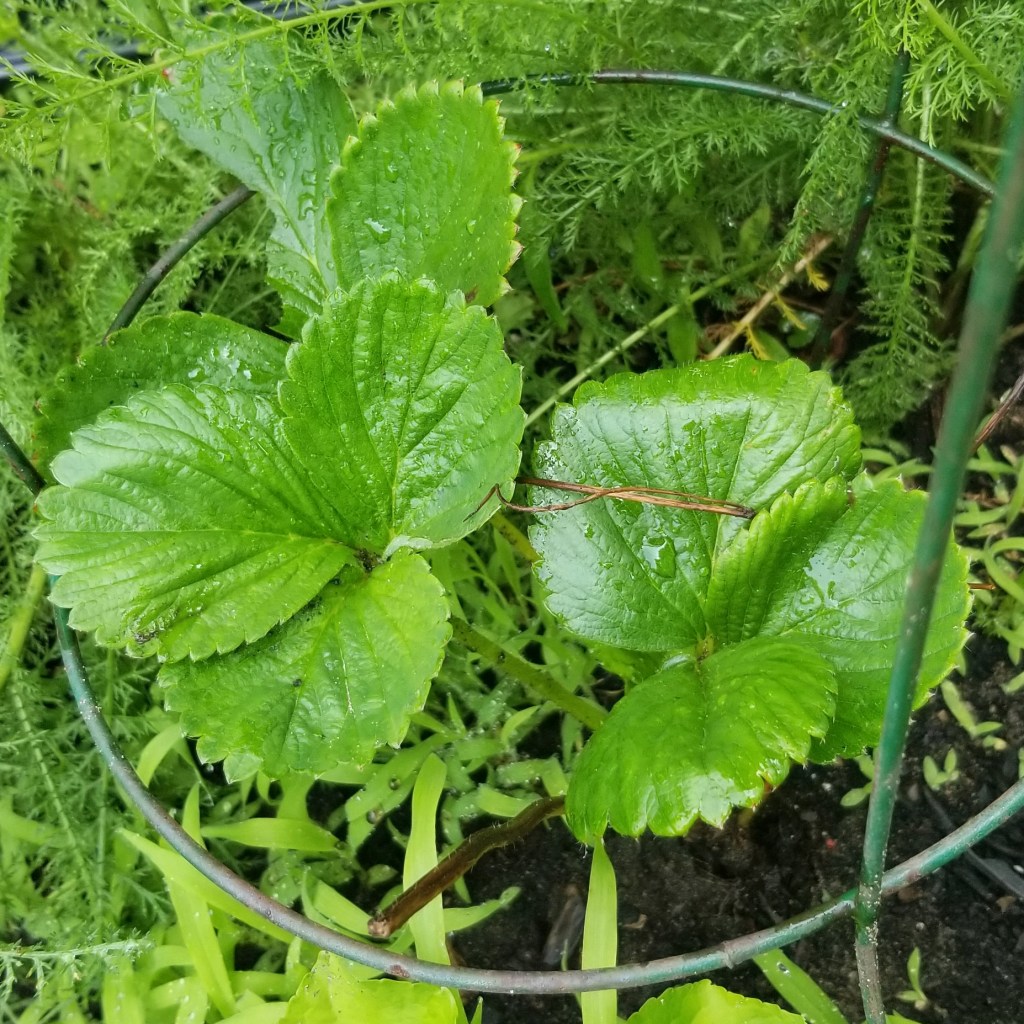
4) Strawberries (Fragaria sp.) – In spite of their name, botanically speaking not berries but aggregate fruits, my new climbing Albion plants came with a small fruit, and now are green and healthy, but not a trace of flowers yet (photo below, left a month ago, and right, this week):
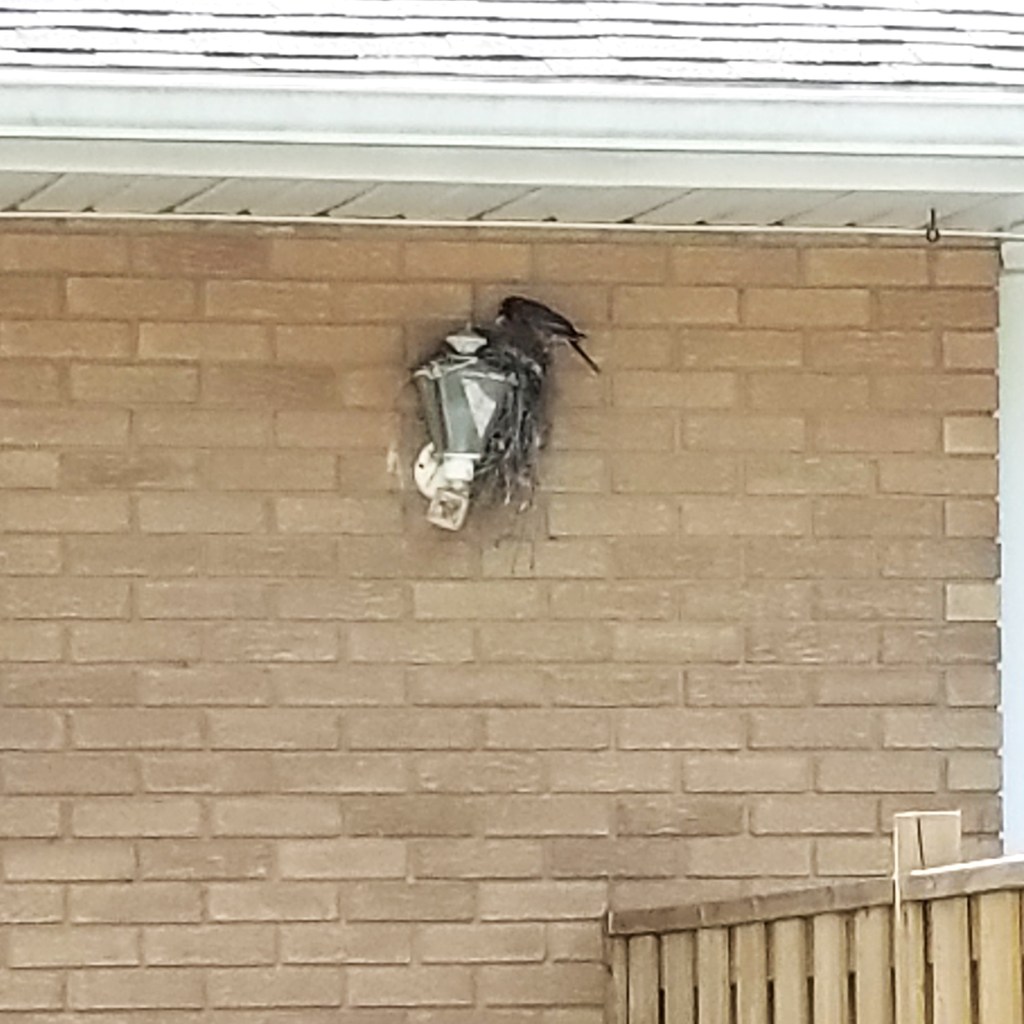
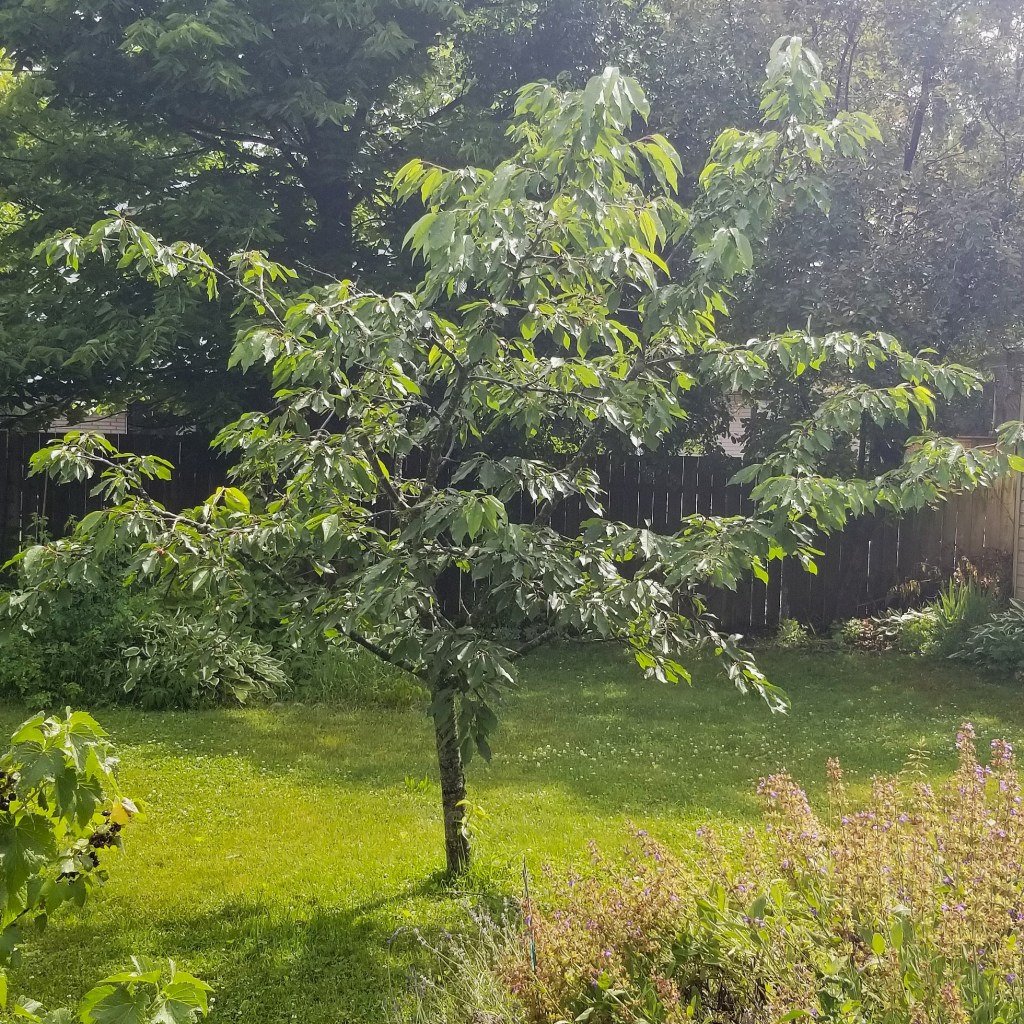
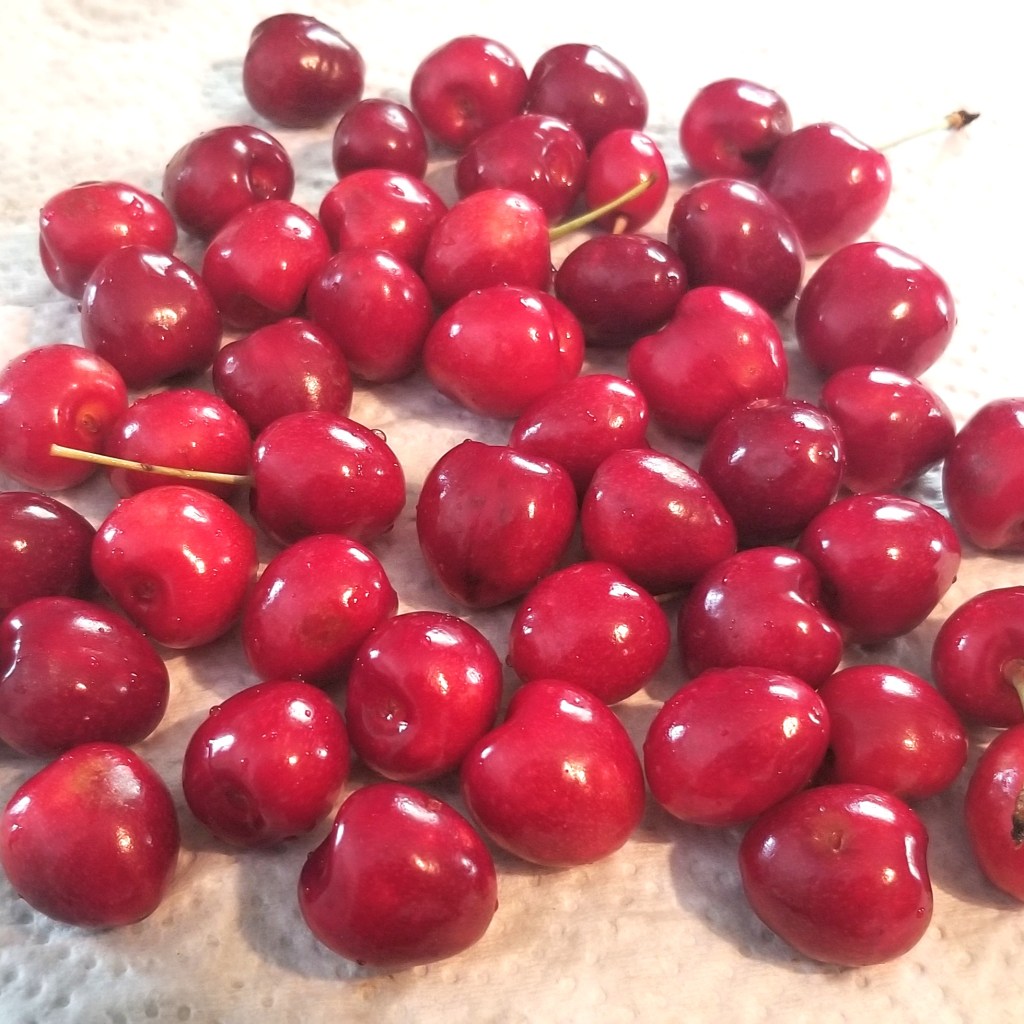
5) Cherries (Prunus sp.) – My tree of the Stella variety is often featured on this blog; it has been in my garden for twelve years now, with a couple of late frosts that almost kill it over the years. This year I had a very decent crop, but the birds and other Fauna also appreciate good quality fruit, especially a fierce pair of robins lifeguarding their nest nearby (photo below, left); the tree was completely depleted of the red drupes in no time (photo below, right):
I managed to harvest just a handful; I understand the animals’ greed, though, they are delicious:
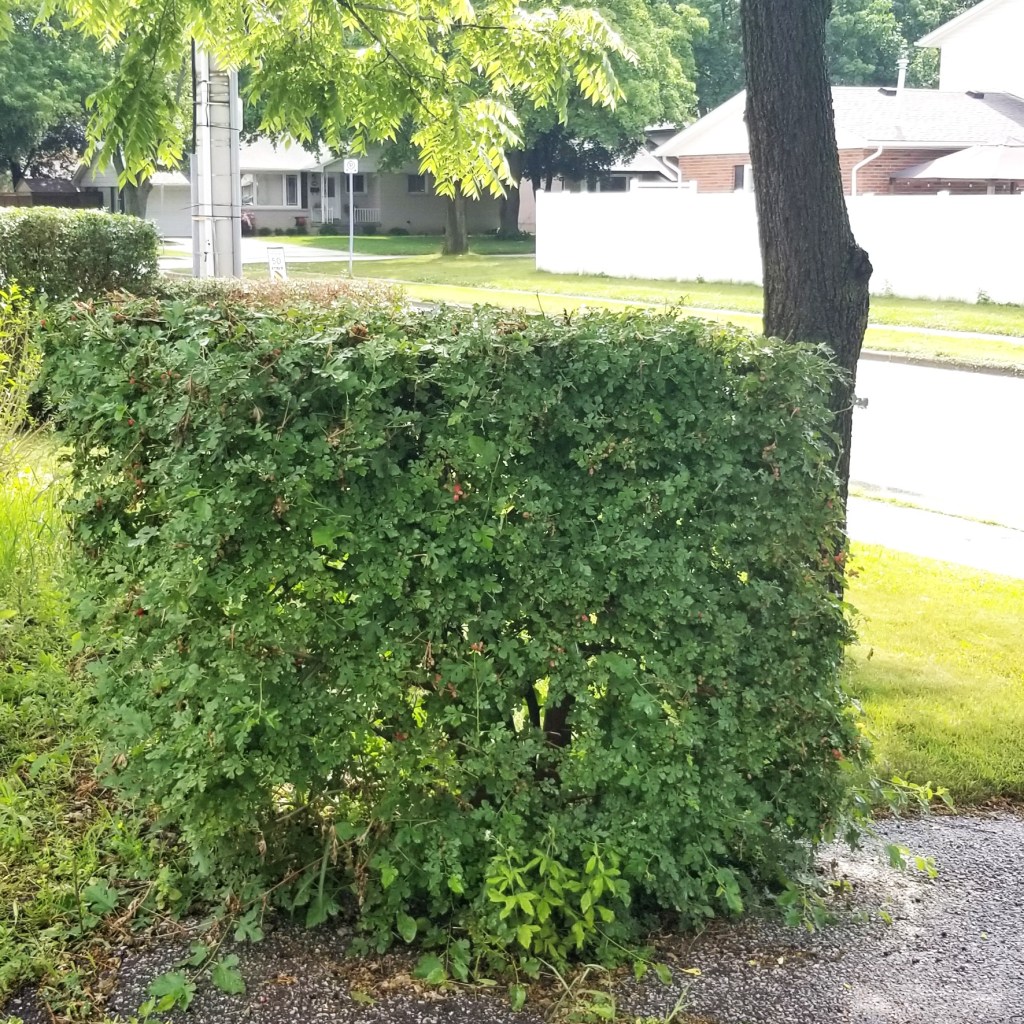
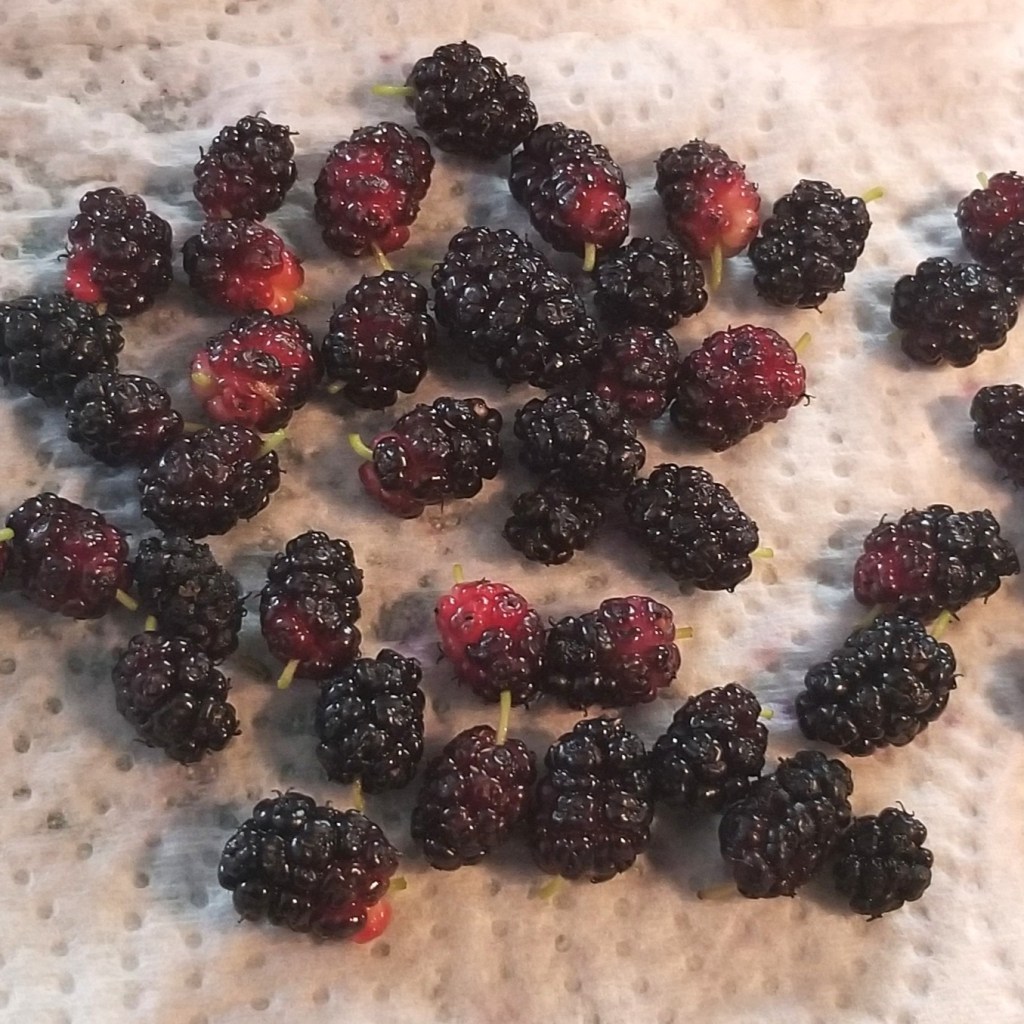
6) Mulberry (Morus sp.) – I did a quick search on this website, and I am a little surprised that I had not mentioned my mulberry plant until now. although the children’s song talks about a “mulberry bush”, these plants can grow up to 21 m (70 ft). The flowers grow in clusters, and each cluster produces one fruit, or more precisely, an aggregate that resembles an elongated blackberry:

This mulberry just sprouted next to our garage many years ago, and because it is so close to the structure, we trim it twice or three times a year to keep it manageable as a bush (just like the song, lol, photo below, left). The fruit is harvested when it has completely or almost completely turned black, sweet and loaded with antioxidants (photo below, right):
* FUN FACT: Botanically speaking with precision, the type of fruit called berries are characterized as a single fruit with several seeds; some examples are squash, tomatoes, goji, currants and blueberries. In spite of their names, strawberries and raspberries are not true berries, but aggregate fruits, other examples being mulberries and blackberries. “Stone” fruits, fleshy and with just one seed, are called drupes, and some examples are cherries, sea buckthorn, olives, and peaches. Finally, pomes have an edible layer under a smooth skin, and a central core with several seeds, such as apples, and Saskatoon berries.
I am joining Six on Saturday for June 21, 2025, hosted by Jim Stephens @ Garden Ruminations.
For your convenience, click on the images below for products available on Amazon™. DISCLAIMER: Any reviews included in this post are my own, for items I have purchased, not provided by any company; as an Amazon Associates Program affiliate, I might receive a commission for any purchases originated from the links below, at no extra cost to you (thank you to all who have bought other products starting with a click from my links!):




 My Slice of Mexico
A lovely garden. By the way normally the birds and I share the cherry tree, but like yours, they picked it clean this year!
LikeLiked by 1 person
Those greedy creatures, but who can blame them?
LikeLike
The cherrie were so very sweet this year.
LikeLiked by 1 person
Seabuck thorn and Saskatoon berries are new to me. I’ll look out for them.
LikeLike
Yes, to me as well. I saw the sea buckthorn on a British show a couple of years ago, and tried the Saskatoon ones at a church function just this year, so I got curious. Hopefully my plants will survive.
LikeLiked by 1 person
How wonderful, Irene! I love mulberries.
LikeLike
Thank you, Punam, yes, they’re a special gift from nature!
LikeLiked by 1 person
Indeed! You are welcome, Irene.
LikeLiked by 1 person
Loved looking around your garden, especially at the berries I do not know so well and have not grown myself! My big love from childhood days in northern Europe were the black currents 🙂 ! There were the common reds, the less grown and delicate whites and the larger blacks with the stronger taste . . . I remember most of us standing near the berry bushes just ‘stuffing’ our mouths and oft ending up with a tummy-ache 🙂 !
LikeLiked by 1 person
Growing up in Mexico, I thought currant was a made up flavour, so now that I know it’s a real fruit, I treasure my plant 😄
LikeLiked by 1 person
The cherries look delicious
LikeLiked by 1 person
‘Albion’ is the strawberry variety I am growing and I can tell you that it will be worth the wait, mine produced huge and very tasty fruits, having been planted last autumn. I’m very taken with your mulberry bush, I would never have suspected it could be grown like that and still crop.
LikeLiked by 1 person
Great to know, I will be patient with my strawberries! That mulberry “bush” has us all amazed, so resilient and giving. The fruit is perhaps smaller than what you would expect from a tree, but still impressive. Thank you for your comment and for hosting, Jim!
LikeLike