
The last of the nice weather – here in Southern Ontario – must be used wisely, letting the last crops mature for as long as possible, but being careful to harvest, bring indoors, or replant at the right times, before the first hard frost arrives, kissing surfaces and soil with its chilly touch. Here are six crops that were wrapped up in my backyard this month:
1 – Eddo (Colocasia antiquorum or C. esculenta, var.) is a close relative of taro (C. esculenta), so close, that many botanists consider it a variety, not a separate species. Taro is originally from South Asia, and eddo is native to China and Japan (where it is called satoimo). Back in the spring, I shared a photo of a couple of eddo underground swollen stems, as an example of edible corms:
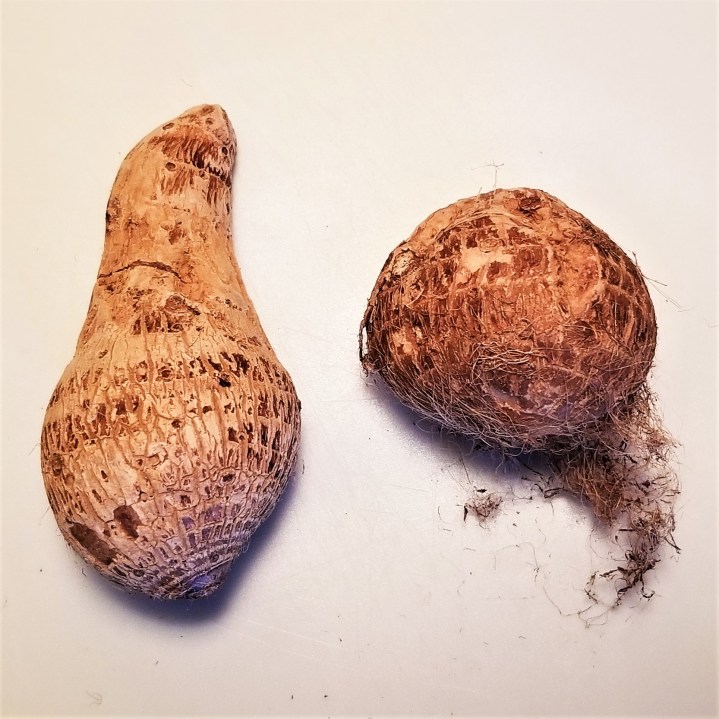
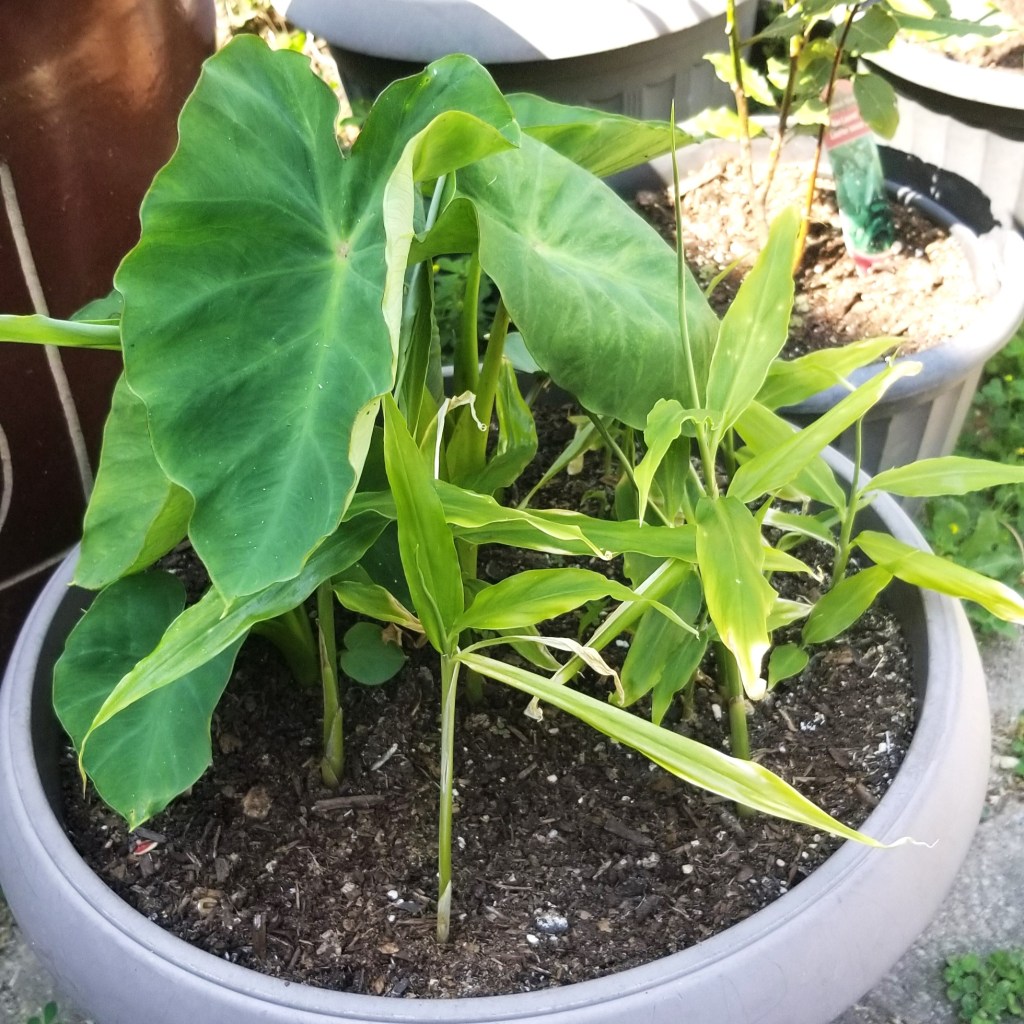
Since I only had those two corms, instead of trying to cook them, I just buried them in one of the pots I had indoors, with some ginger. I forgot about them, and to my surprise, they sprouted a couple of weeks later! Once the weather was consistently warm, I moved the pot outside (June 3, photo below, left). A couple of weeks later, the eddo plants were terrorizing the ginger shoots, taking over the whole pot (June 20, photo below, right):
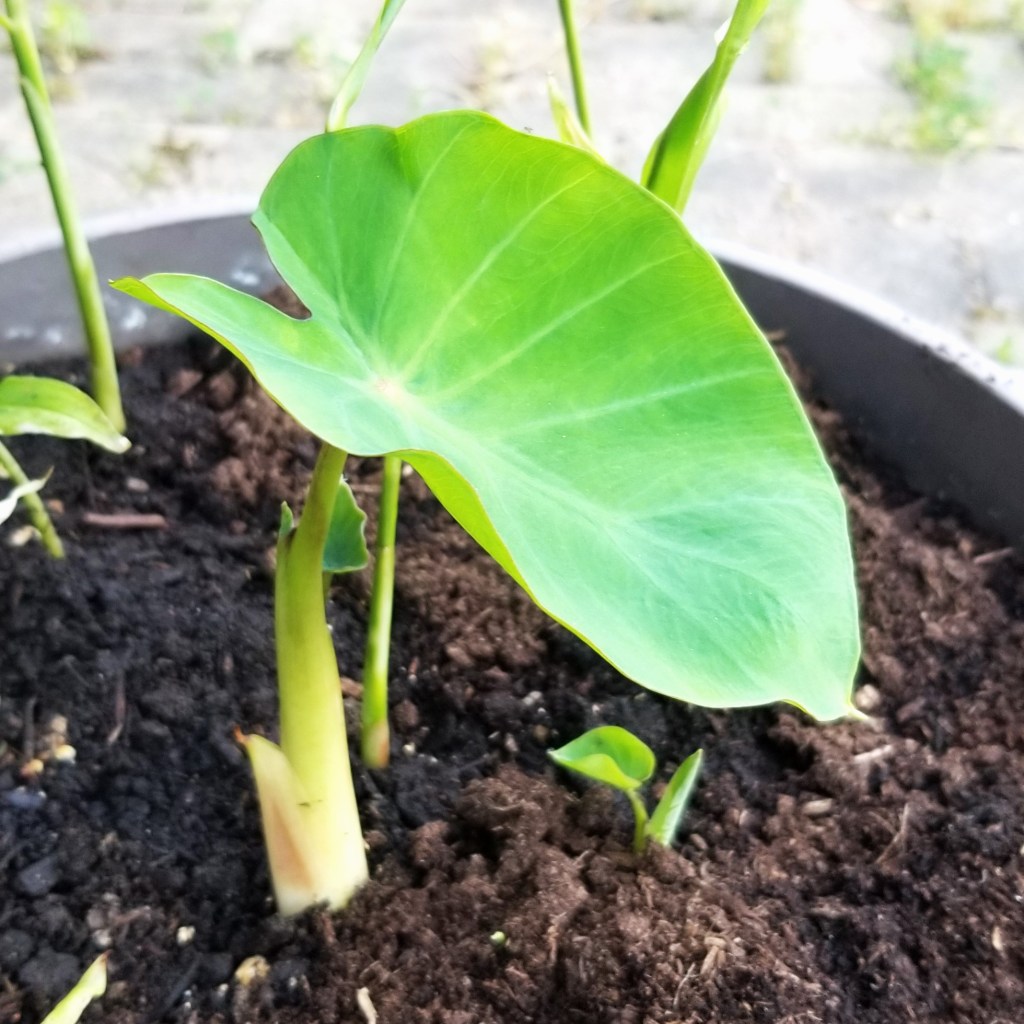
I transplanted the eddo plants to a garden bed, and they tripled their size in a month (July 20, photo below, left), and they continued growing throughout the summer (September 1, photo below, right):
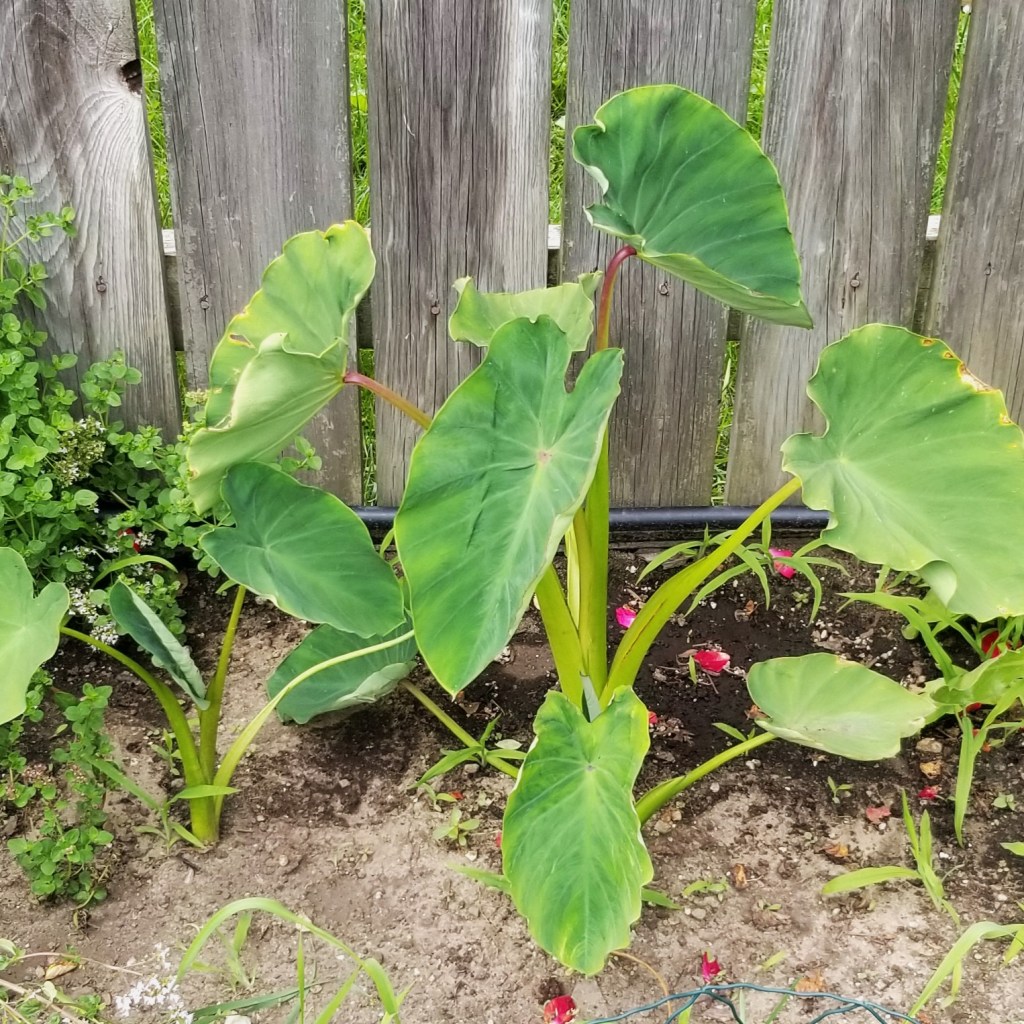
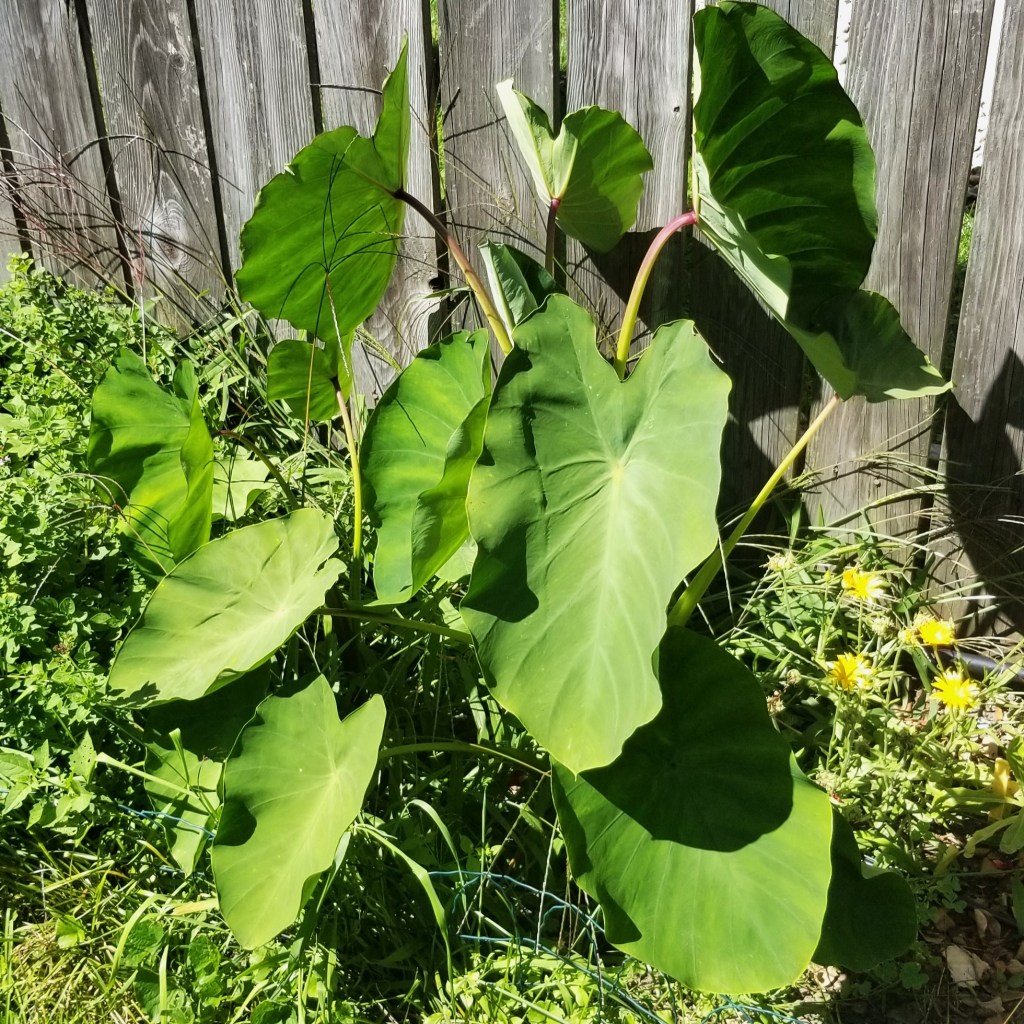
Since eddo thrives in tropical climates, the leaves started to turn pale and yellow, as the weather changed this fall (October 18, photo below), indicating it was time to harvest:
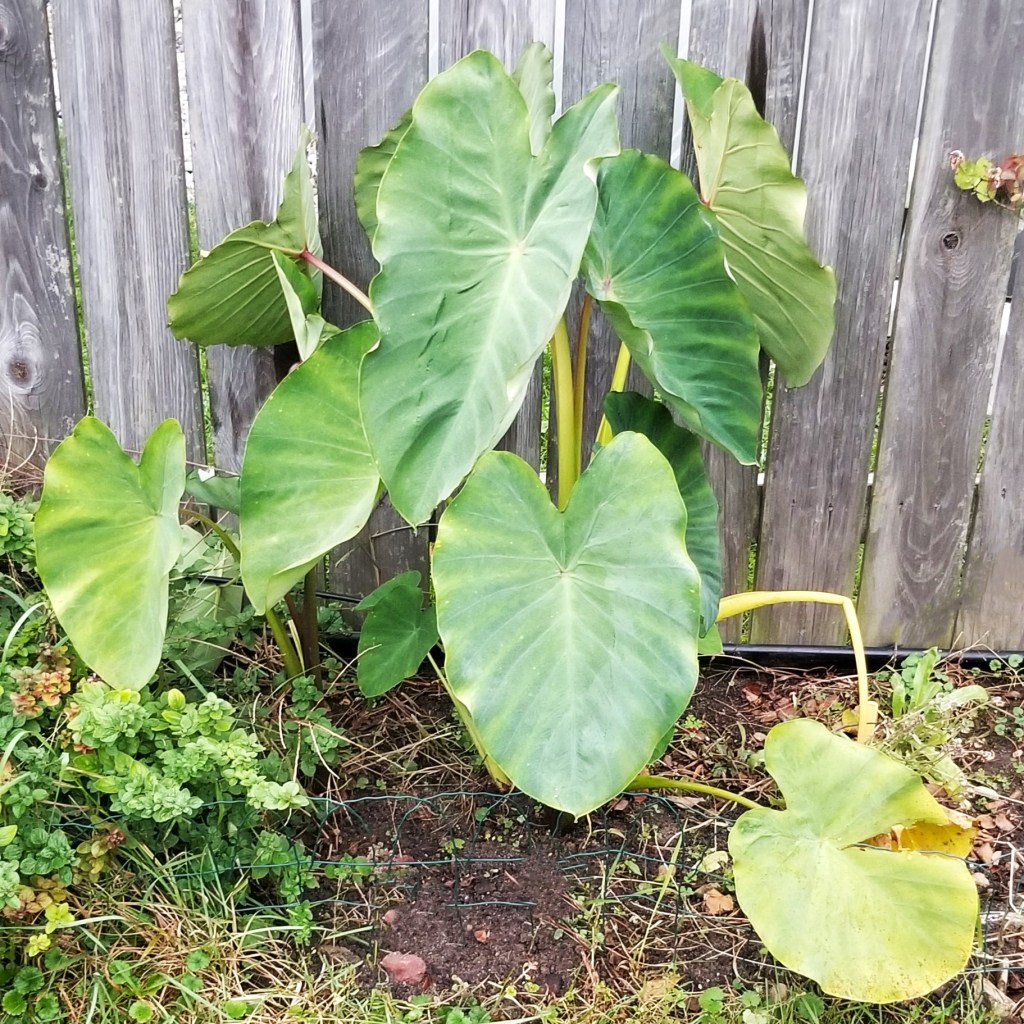
I dug out the entire plants; although, when thoroughly boiled, the tops are food grade, used for wrapping food, I just cut them off for composting:
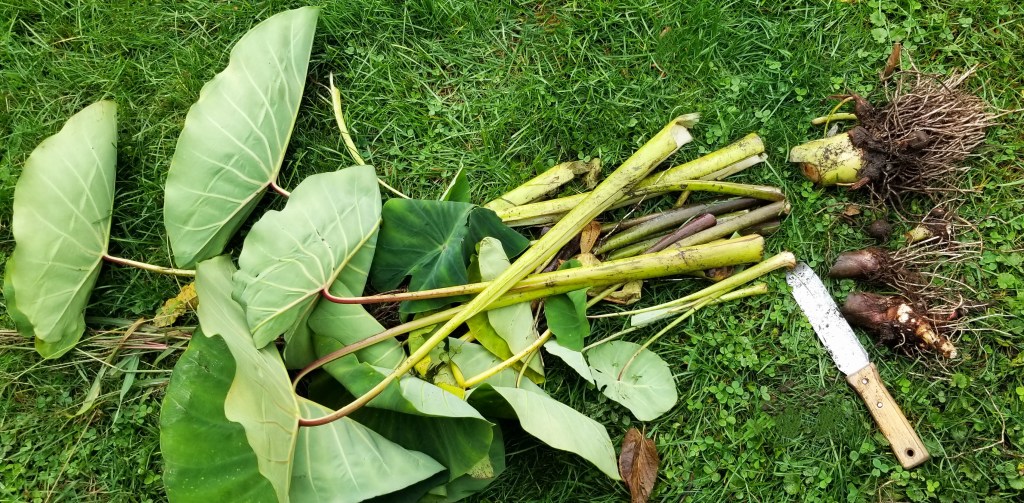
I saved the underground parts, a lot more mass than the two small corms I sowed in the spring:
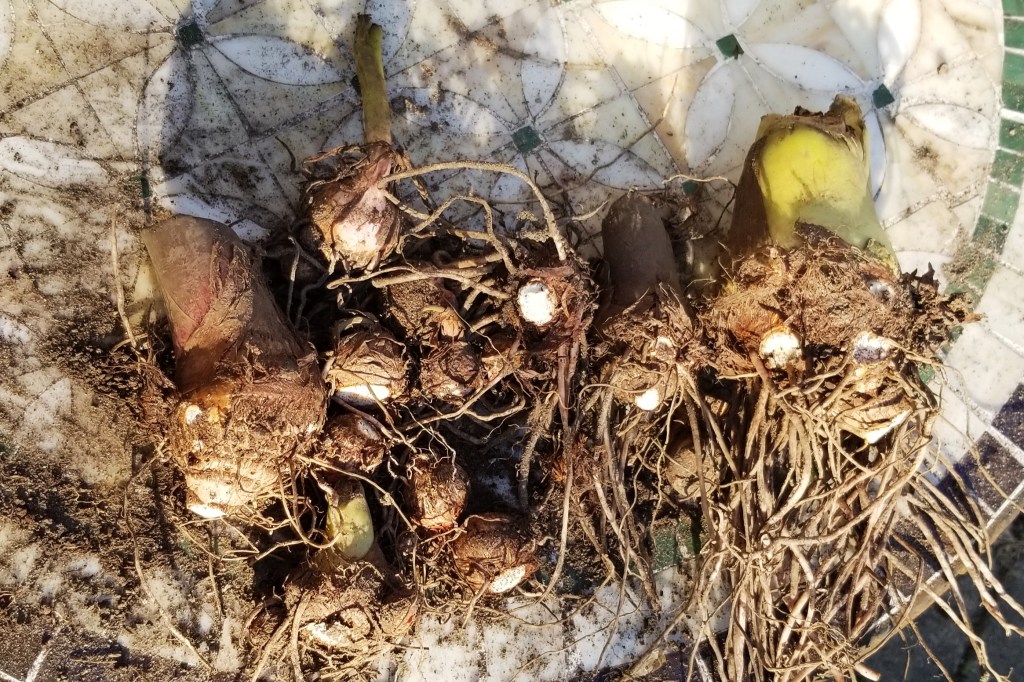
Once all the roots and hairy fibre were removed, I identified three good-sized corms, and several smaller growths, called cormels:
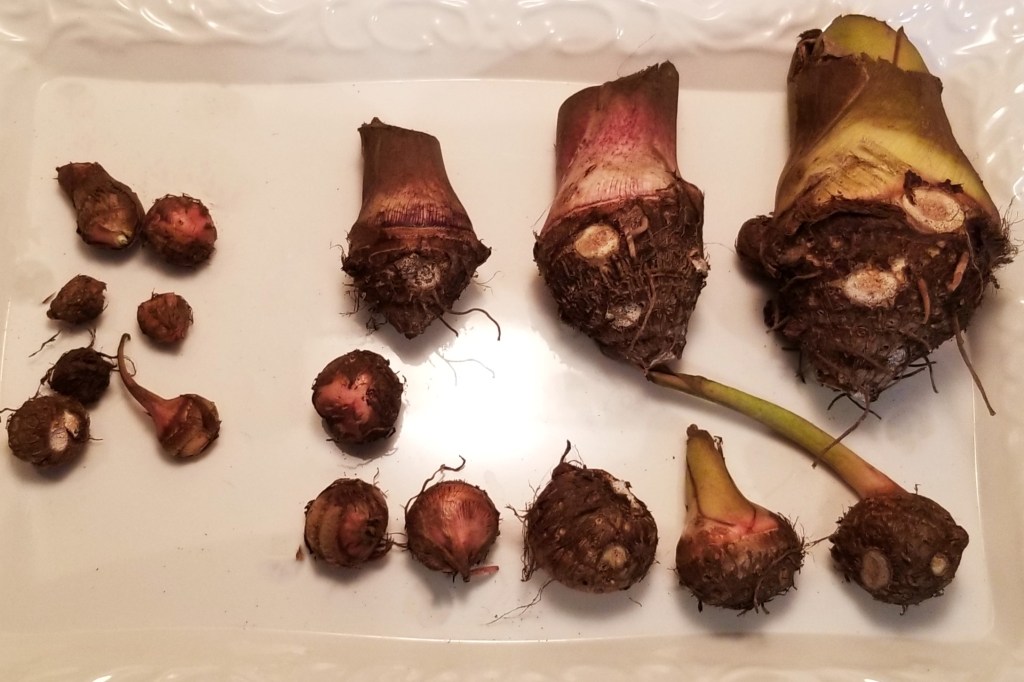
I think I might save the smallest cormels in the basement, for re-planting next spring (or indoors), and cook the rest of my harvest. They must be peeled, preferably using gloves, and cooked separately before adding to dishes, since they contain toxic oxalates when raw.
Taro has become a popular ingredient worldwide, found in anything from stews and baked goods, to smoothies and chips, and there are many traditional Japanese dishes with eddo (satoimo, 里芋). There is another related corm called malanga (Xanthosoma sagittifolium), native to the South American rainforest, and used extensively in Brazil, the Caribbean, and now also cultivated in many other countries; it is sometimes found in the Yucatan peninsula in Mexico with the name of macal, but it is not very well known in the rest of the country. if I were to use my eddo in Mexican recipes, I could try to adapt a recipe for macal, or I think they would go well in a stew, such as Puchero Tabasqueño or Manchamanteles.
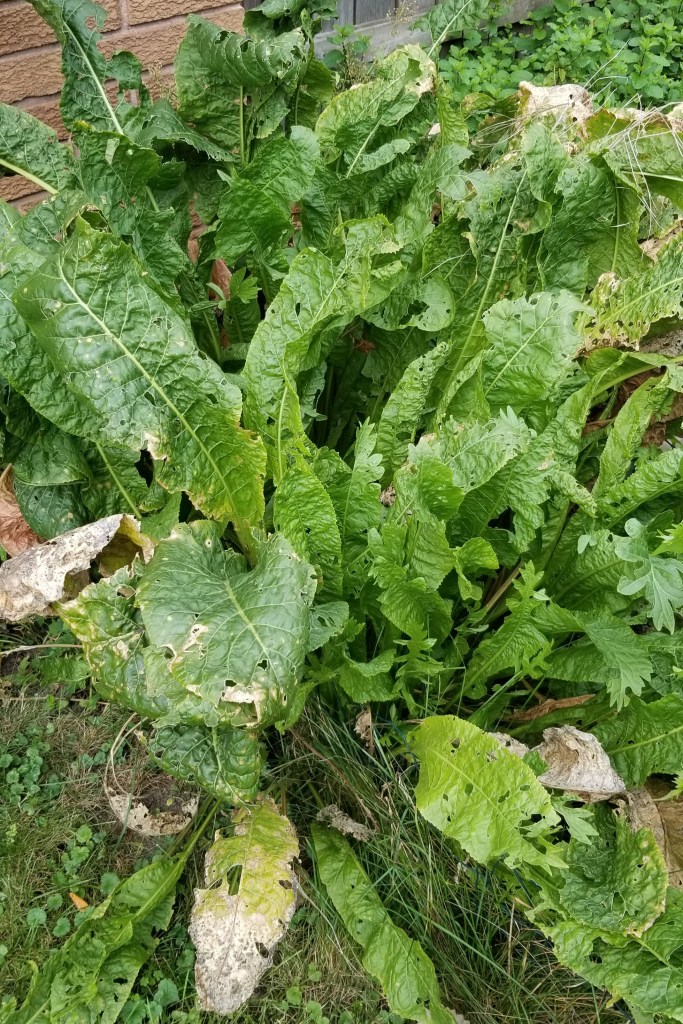
2 – Horseradish (Armoracia rusticana) is another vegetable that is not used in Mexican cuisine; I have posted photos of their pretty flowers before, which are edible, as well as the leaves, and of course, the roots. The giant leaves were being eaten by bugs and starting to wilt (photo below, left). The roots have to be removed from the soil before it freezes, or early in the spring, every year, otherwise they become too deep to dig, and too tough to eat. I dug all the plants out of the bed, composted the tops, and replanted a few of the smaller pieces of root, for next year’s crop. The rest is shown in the photo below, right:

These pieces may be kept in the garage or basement for months until ready to use, or washed and dried, in the fridge.
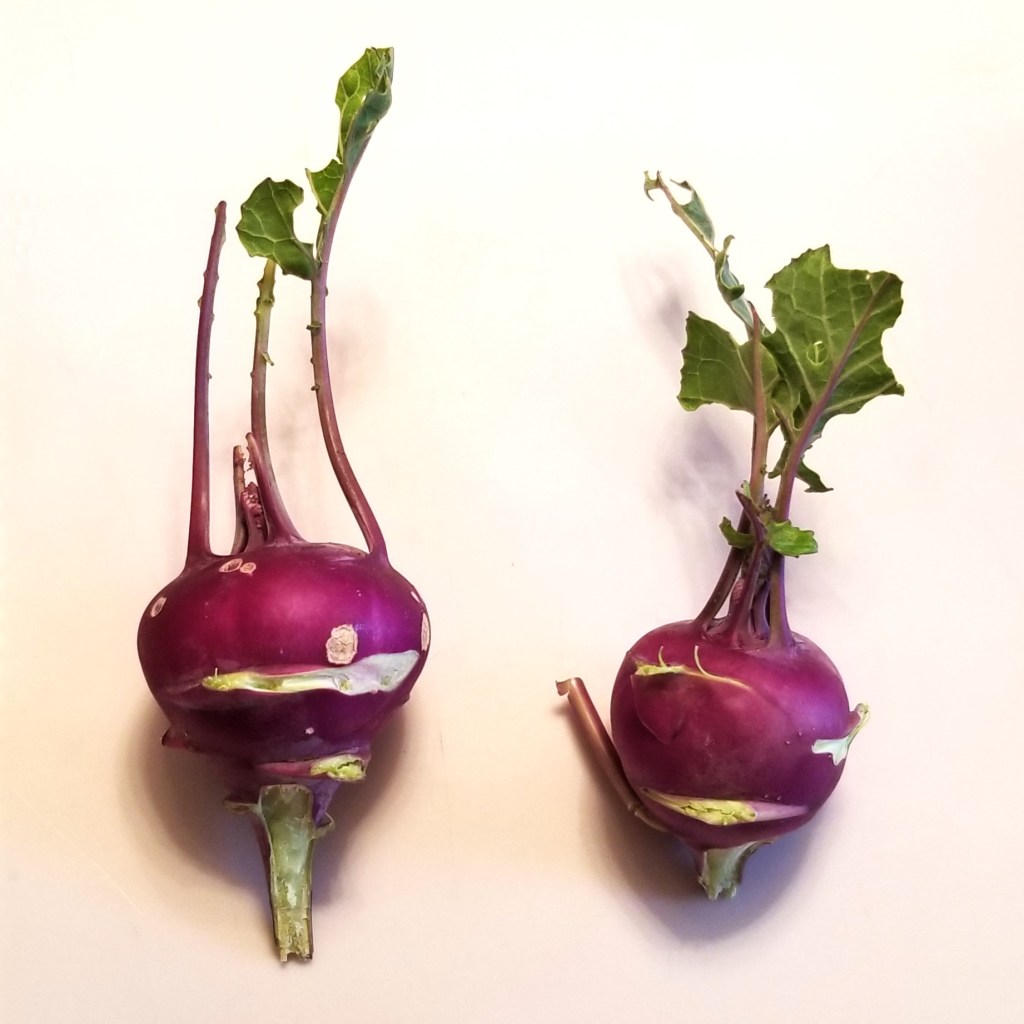
3 – Kohlrabi (Brassica oleracea, Gongylodes gp) has been a regular crop in my backyard since 2020, but this year I tried growing them late in the season for a fall harvest. I have mentioned that after I harvest my garlic crop in mid July, I like to use the spot for fast-growing crops that do not need a lot of heat; this year I tried winter radishes (mini purple already harvested, and daikon, see next item) and kohlrabi, as seen sprouting (July 25, photo below, left), and reaching maturity (October 13, photo centre and October 18, right):
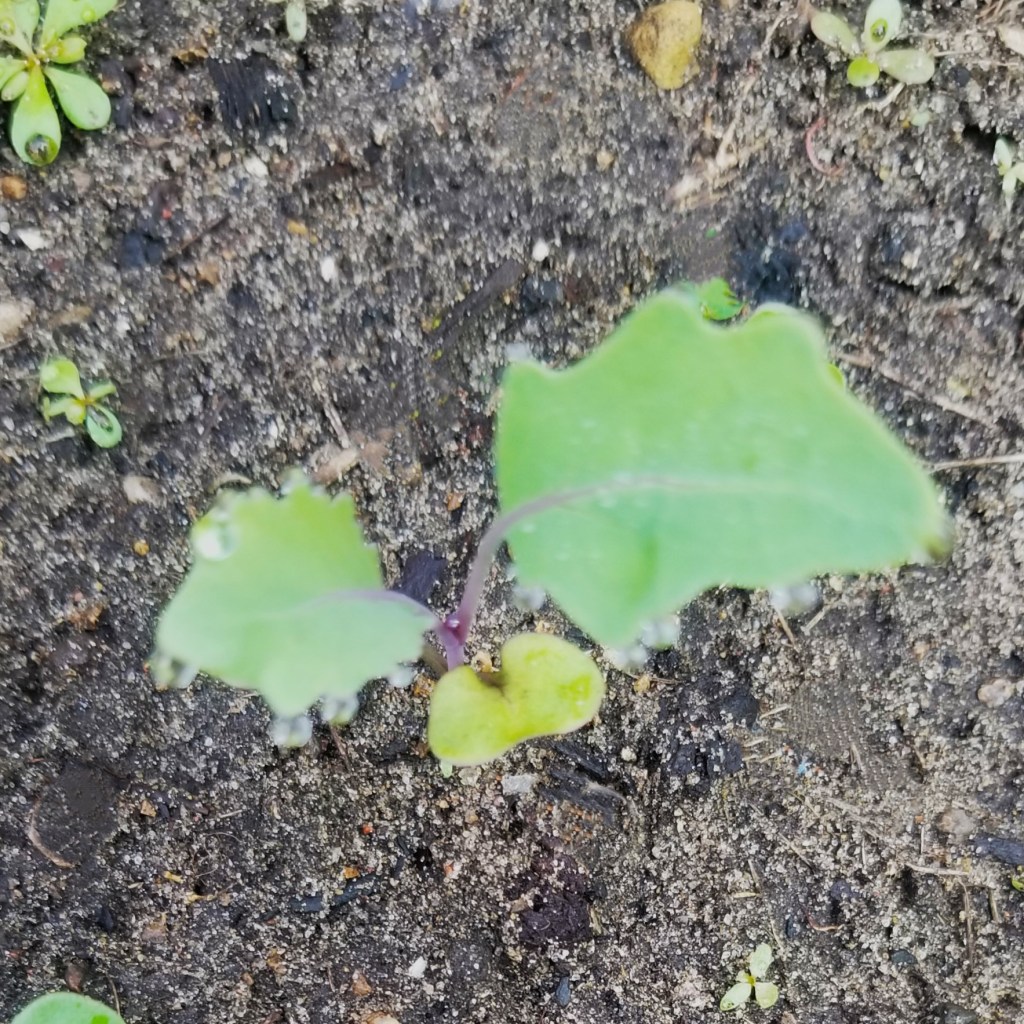
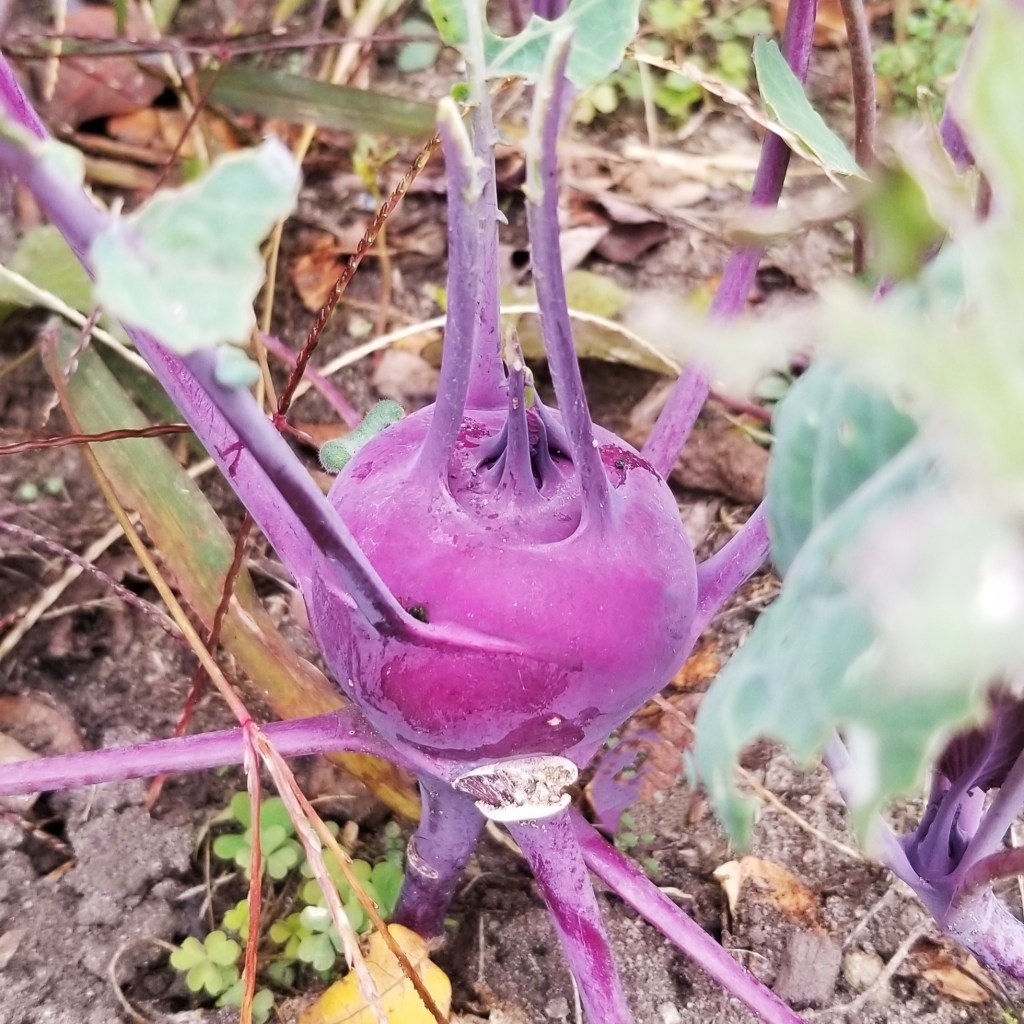
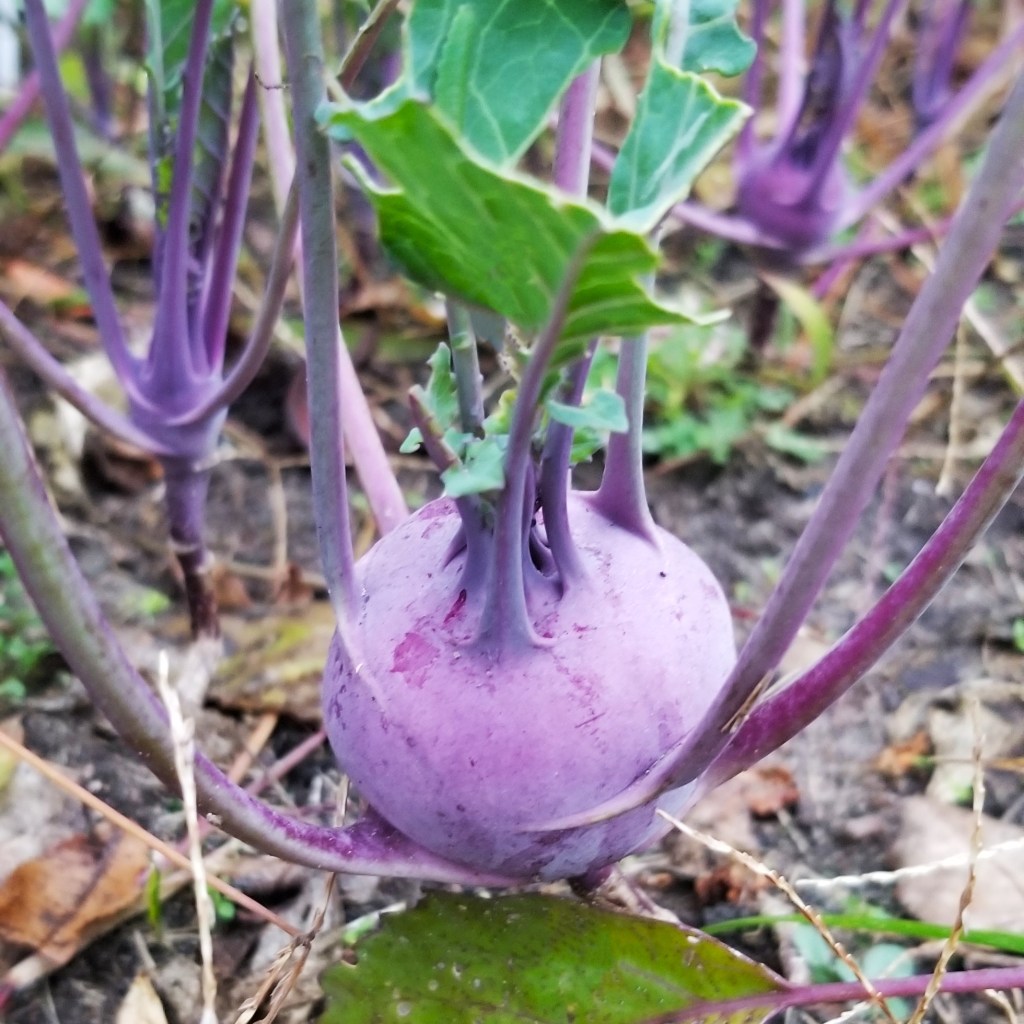
So this worked relatively well, although the vegetables (swollen stems) were a little smaller than when grown in the spring, and lacked uniformity, with a few developing very slowly, as seen in the background in the photo above, right; they will need to be harvested as that before winter comes. In addition to eating them raw as a snack or in salads, they are delicious for example in patties, or stews, such as Campeche style with saffron rice.
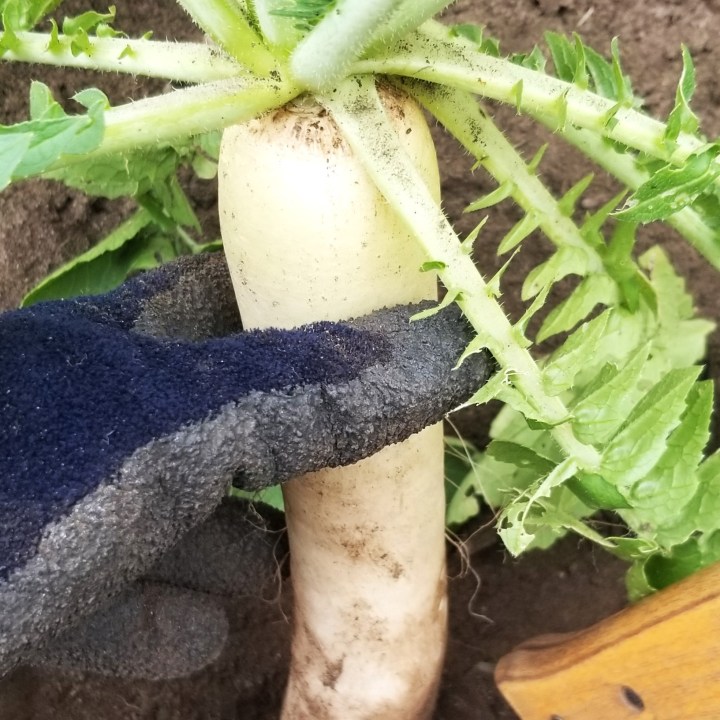
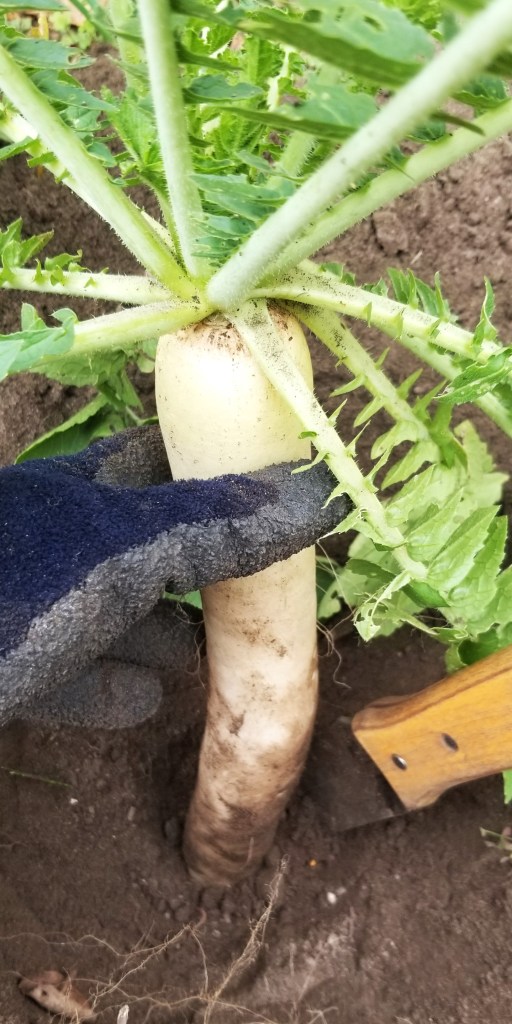
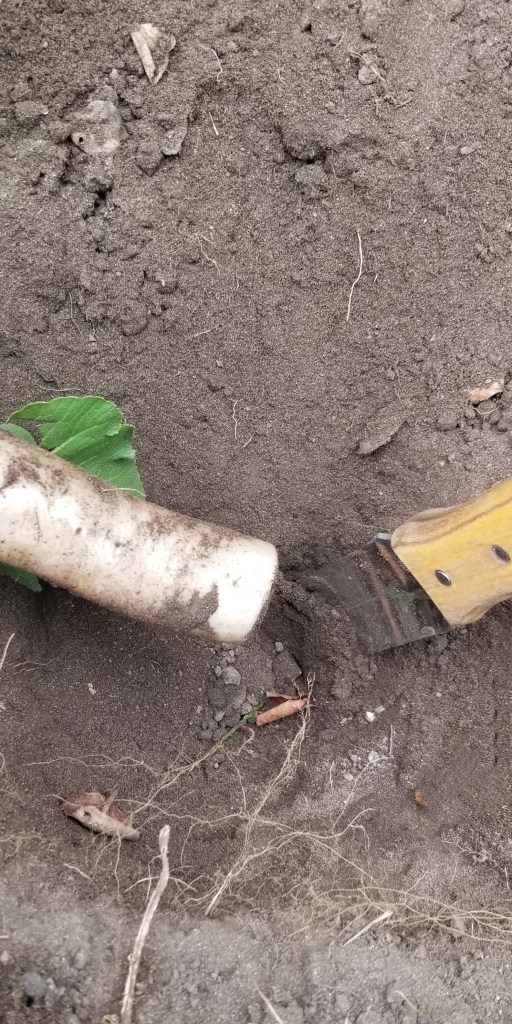
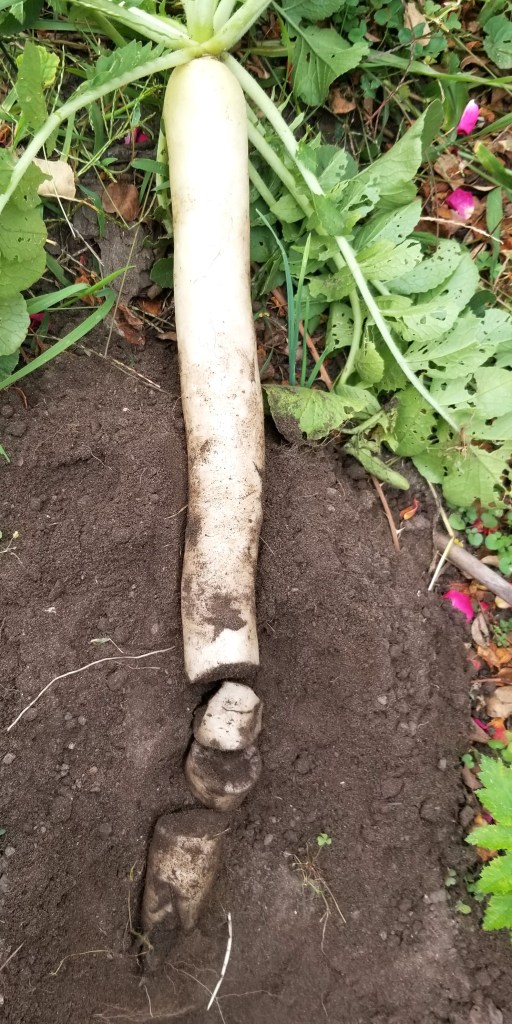
4 – Daikon, white winter radishes (Raphanus sativus var. longipinnatus) always grow better in my garden when I start the seed in late summer, for a fall harvest, developing into very long roots, as seen at the top of this post, and below, left. To harvest, I was digging around the radish as deep as I could, trying to expose the whole root; this one was so long, it broke before I could uncover the tip (photo below, centre). When I finally dug out the rest, there was about an extra three inches (photo below, right):
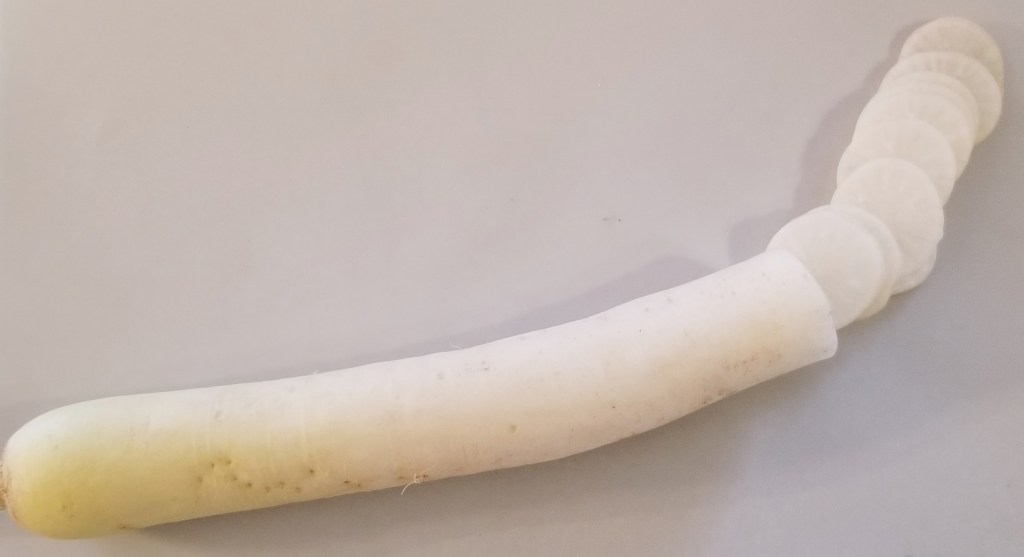
in Asia, daikon is often used in stews and stir-fries, or pickled. Daikon is a very crispy and mild, yet flavourful, variety of radish; it is also delicious thinly sliced and eaten raw:
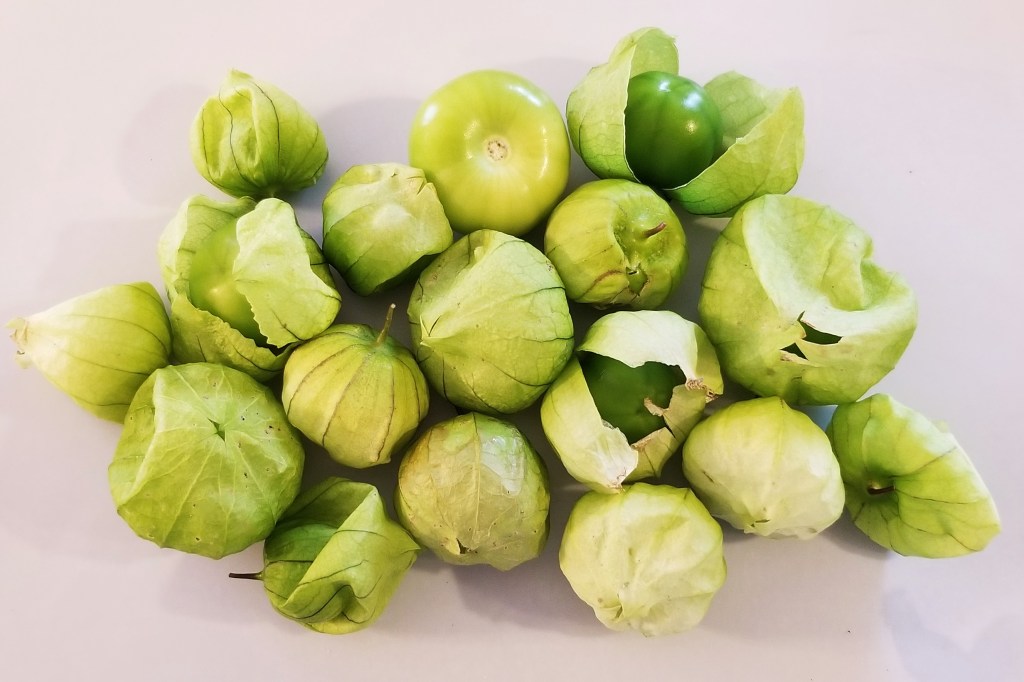
5 – Tomatillos (Physalis ixocarpa) are sometimes confused with green (unripe) tomatoes (Solanum lycopersicum); although belonging to the same botanical family (Solanaceae), they are completely different species. I always start tomatillo seeds indoors at the same time as tomato seeds, but they always grow slower, and produce their fruit later in the season so, while the tomato plants were pulled last month, there were still a few tomatillos on the plants as of last week:
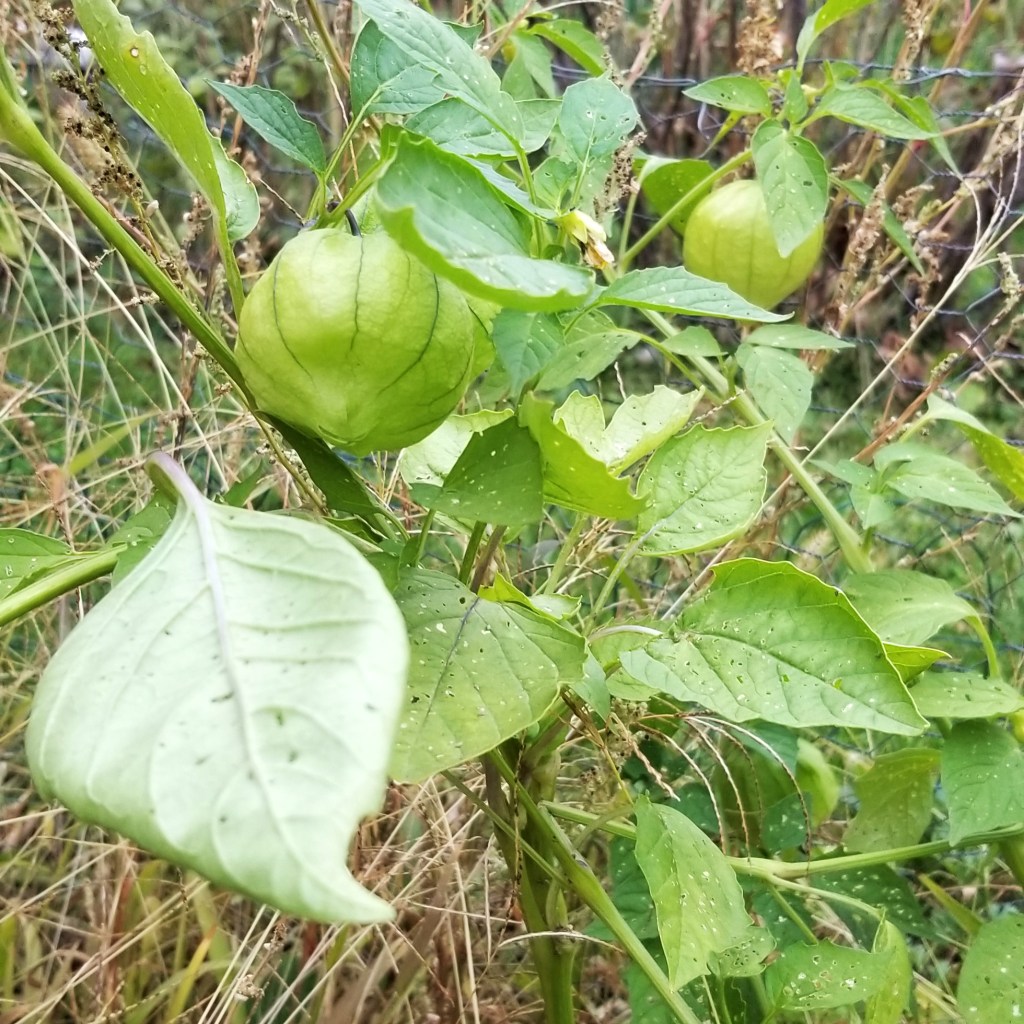
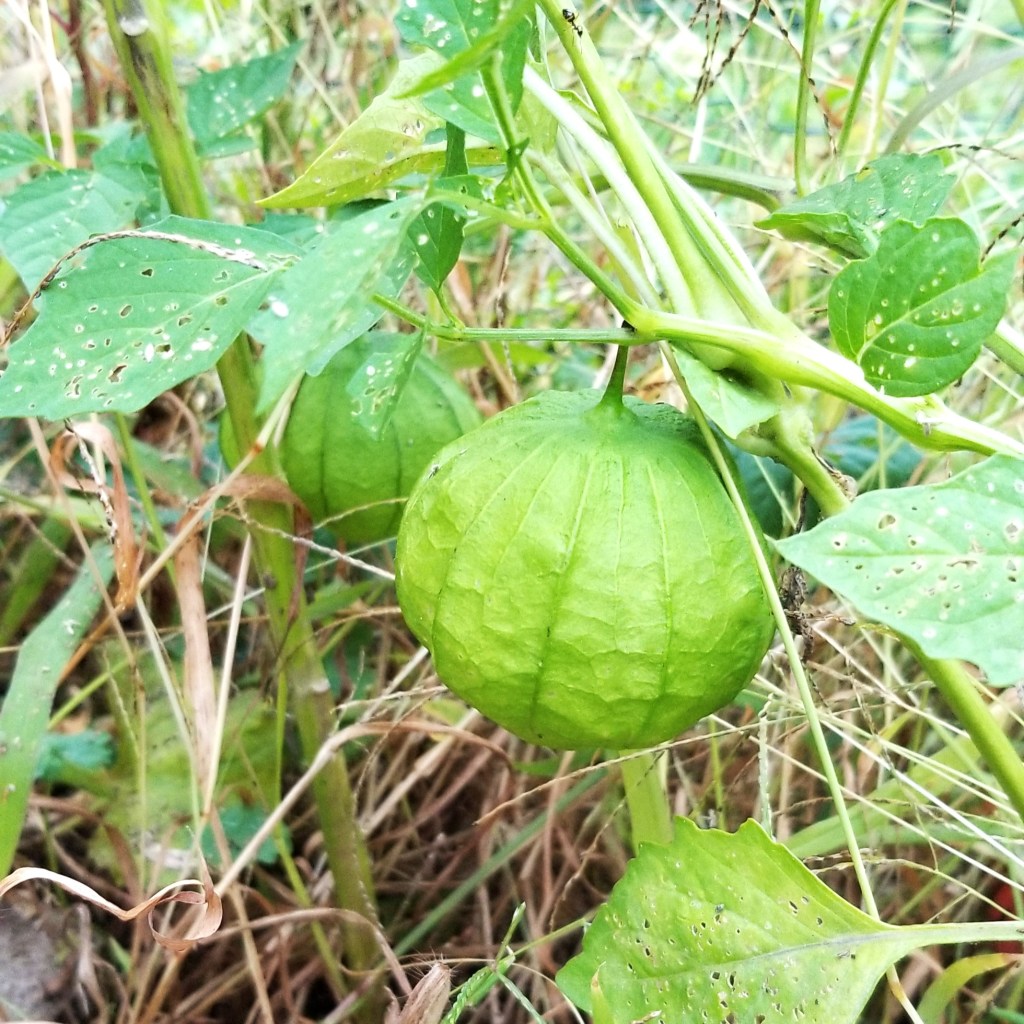
I finally pulled the plants for composting, and harvested the last tomatillos of this season:
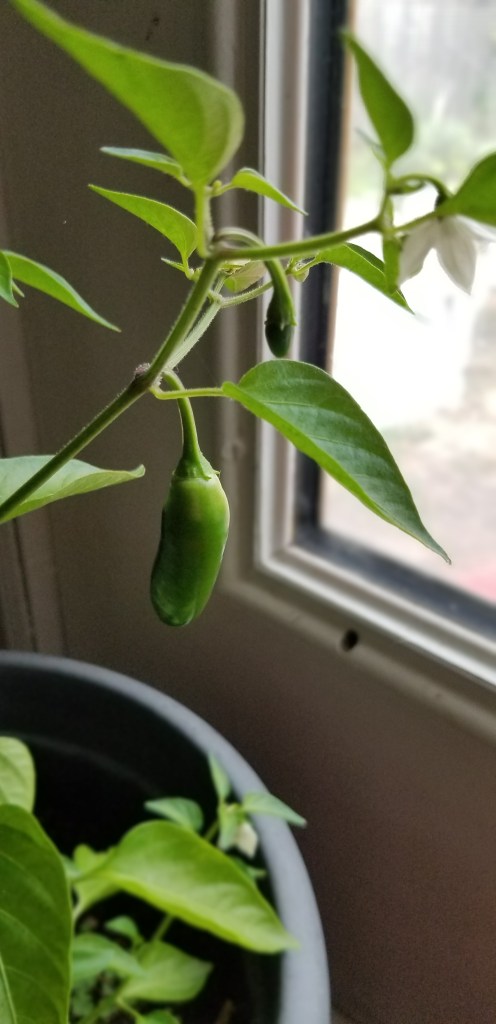
6 – All my peppers (chiles, Capsicum annuum) were harvested, and the plants pulled several weeks ago, but I kept two plants of serrano, growing in a pot, and just brought it indoors to keep the serrano pepper plants alive over the winter season:
I am joining Six on Saturday for October 28, 2023, hosted by Jim Stephens @ Garden Ruminations.
I am sharing these pics at Cee’s Flower of the Day (FOTD) Challenge for October 28, 2023.
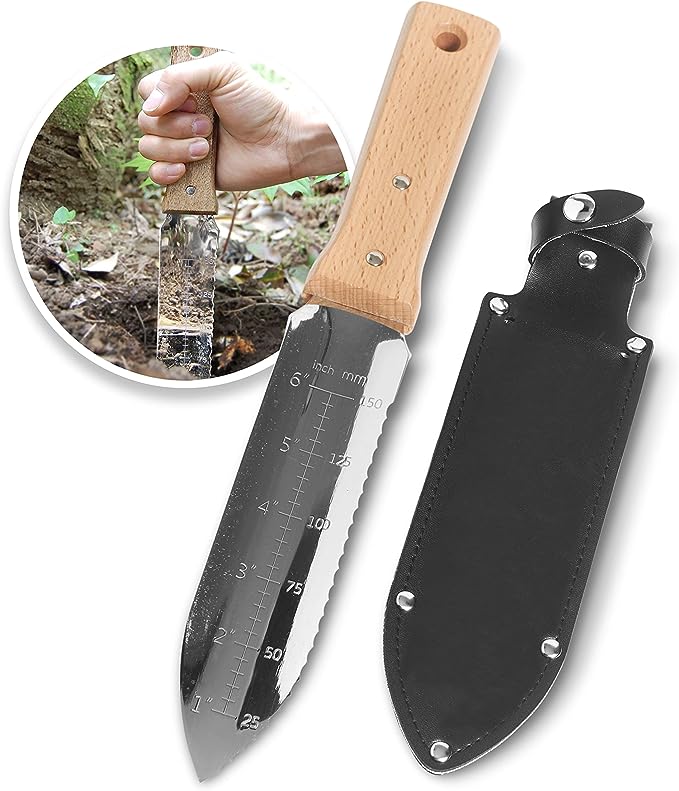
For your convenience, click on the highlighted text below for products available on Amazon™. DISCLAIMER: Any reviews included in this post are my own, for items I have purchased, not provided by any company; as an Amazon Associates Program affiliate, I might receive a commission for any purchases originated from the links below, at no extra cost to you. Thank you to readers who have bought other products starting with a click from my links!






 My Slice of Mexico
I enjoyed this post.. came in at the right time… thanks…
LikeLiked by 1 person
Glad you liked it!
LikeLike
My grandfather grew horseradish in Manitoba every year. It was harvested in the fall. He hung it to dry and it was used with beets to make a special dish at Easter.
LikeLiked by 1 person
Yummy!
LikeLike
I have never grown daikon to full size, but live to grow daikon sprouts for my salad! Lovely images of unusual vegetables! Thanks!
LikeLiked by 1 person
I can’t believe you grew eddo in your garden! 😀 You have inspired me to ransack the Asian grocery store next spring and try the same thing. My parents will be so surprised hahaha. That is a super impressive daikon as well — I am going to have to give them a try next year, as per your instructions. I never liked it much in soup, because of the texture, but your idea about eating it raw sounds really yummy.
LikeLiked by 1 person
Thank you, Angela, happy gardening!
LikeLiked by 1 person