In Christianity, November 1 is the day of celebration of the feast of All Saints, first recorded during the time of Pope Gregory III (731–741 AD). In 837 AD, Pope Gregory IV ordered its general observance as the religious feast of All Saints’ Day. Odilo, the fifth Abbot of Cluny, in France, assigned November 2 as All Souls’ Day in 998 AD, a day specific for remembering and praying for those who had passed away but were still in the process of purification; this observance gradually spread throughout the Catholic Church towards the end of the 10th century. In England, All Saints’ Day became known as All Hallows-mas during the Middle Ages; people prepared for their celebration with a vigil the night before, that is, All Hallows’ Eve. The three days all together, were sometimes referred to as All-hallow-tide.
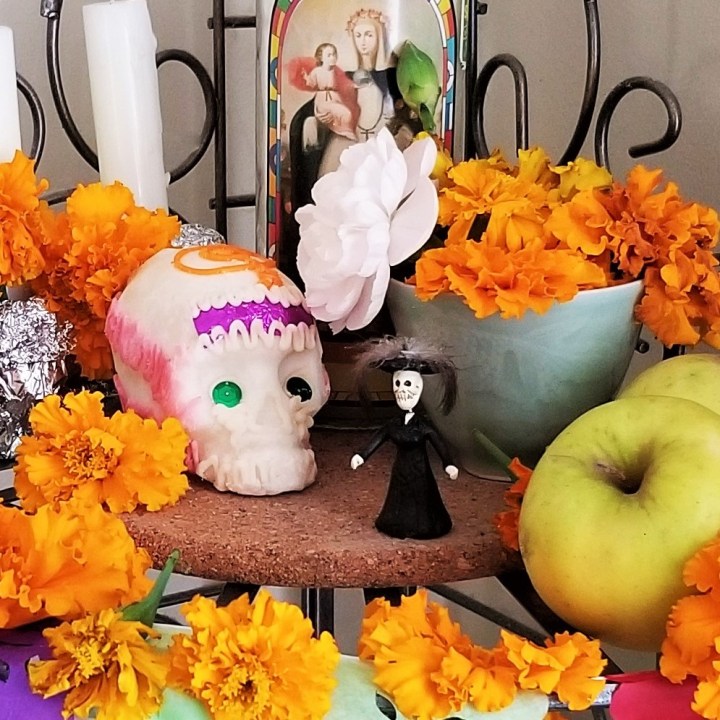
As I had mentioned in previous posts, with the arrival of the Catholic church to Mexico and Central America, not long after the Spanish conquest (1520s), pre-Hispanic Mexica (Aztec) summer rituals and offerings for the dead were moved to the fall, and incorporated into the Christian All-hallow-tide. Nowadays, offerings for El día de los fieles difuntos, or Día de muertos (Day of the Faithful Departed, or Day of the Dead) are prepared on the night of October 31, to represent the journey of the roving souls starting that night (Hallows’ Eve); commending themselves to the guidance of all saints and martyrs in heaven (All Saints’ Day November 1); to finally – and hopefully – reaching the blessed place (All Souls’ Day, Day of the Dead, November 2). Food is a way to connect with the innocent souls (children) and faithful departed (adults), by sharing a meal in the cemetery, by their tombs, or at home, presented as part of the offering:
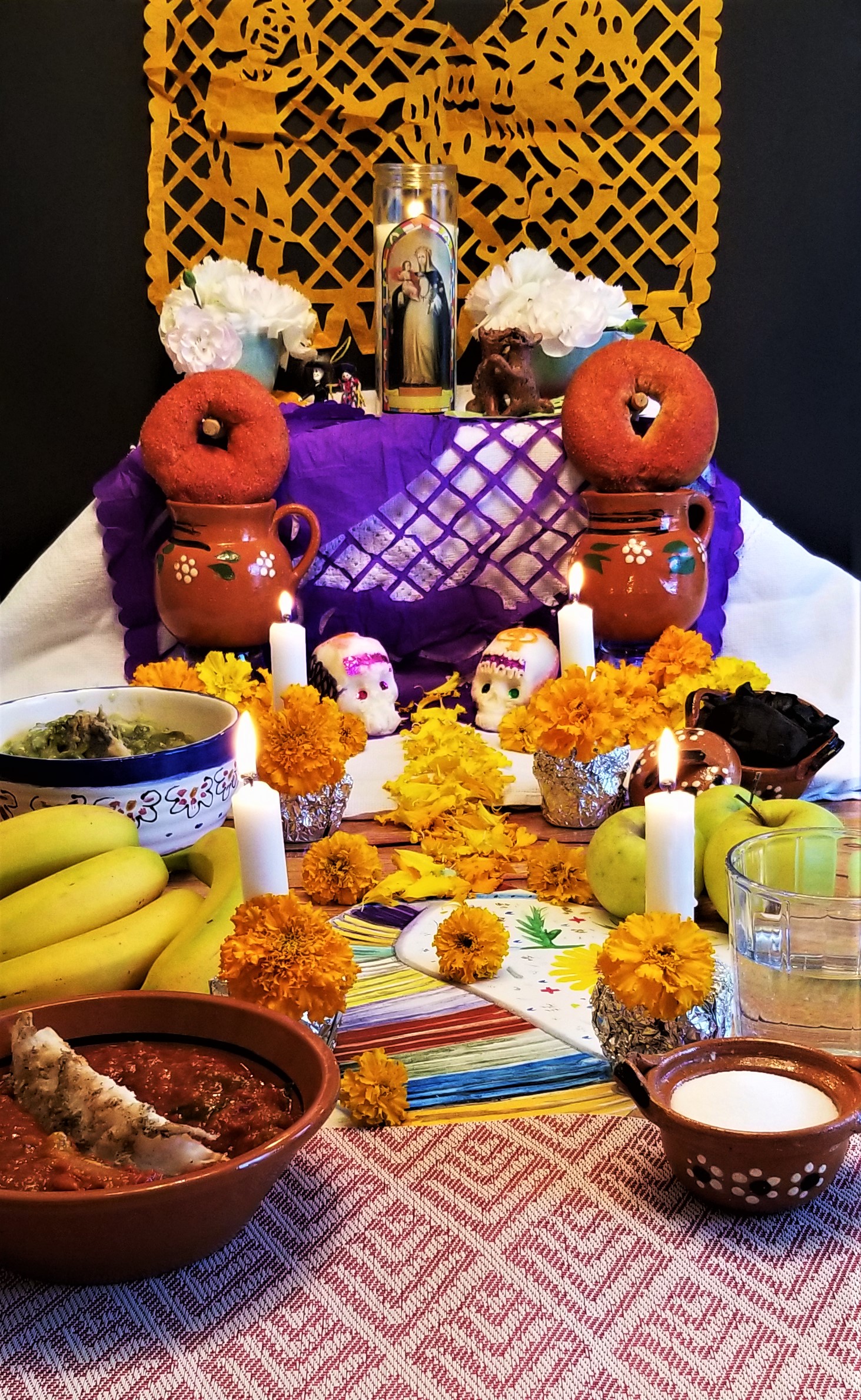
The food may include favourite dishes of the departed (in the photo above, red and green mixmole), fruit, both fresh, or cooked, such as Calabaza en tacha (pumpkin in syrup), and probably the best known, sweet breads, traditionally eaten on November 2. There are many different types of these sweet breads; here are four examples that I have shared over the years (click on highlighted text for full stories and recipes):
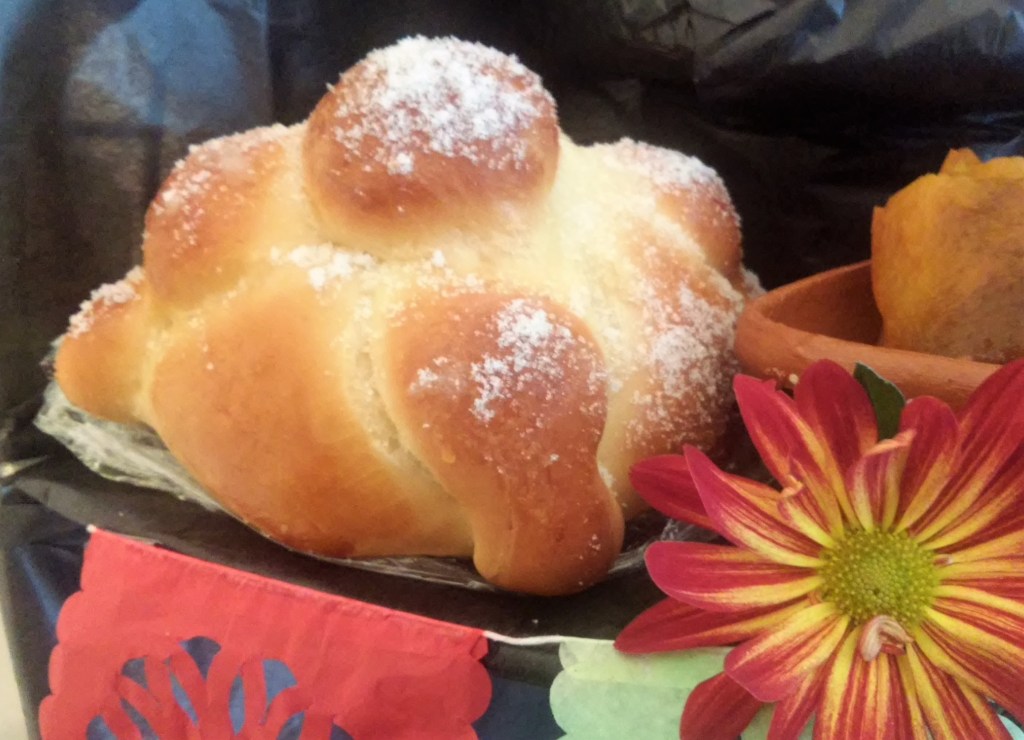
Pan de muerto (literally, bread of the dead) is fashioned in a round shape which may represent the natural and endless cycle of life and death, and decorated with small pieces of the same dough to symbolize bones and tears:
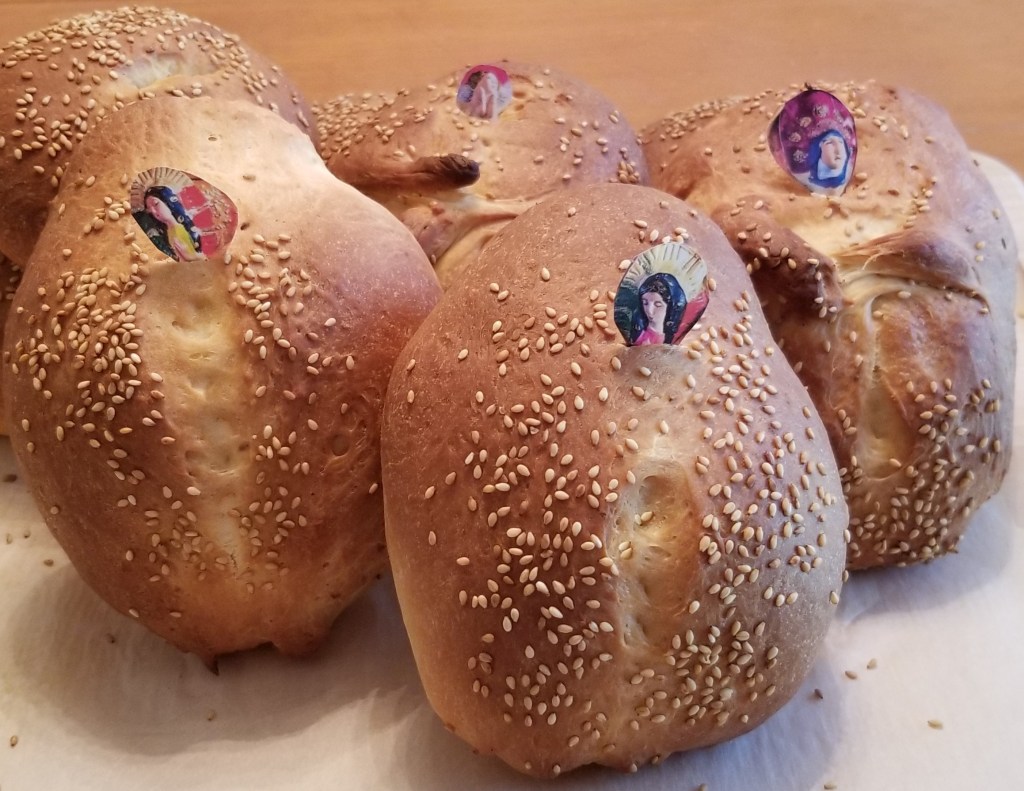
Pan de yema (Yolk Bread) is very traditional in the Mexican state of Oaxaca, baked all year round, but prepared in a very special way at the peak of the Day of the Dead celebrations, in human shapes, and often decorated with caritas (little faces) called alfeñiques, a form of folk art on their own, originated in Italy and brought to Mexico by the Spaniards. Many are made with sugar, but the ones for this bread are made with lard and flour. I could not make authentic alfeñiques, so I printed a photo from an article in México Desconocido, cut the faces out, and placed them on my bread after baking:
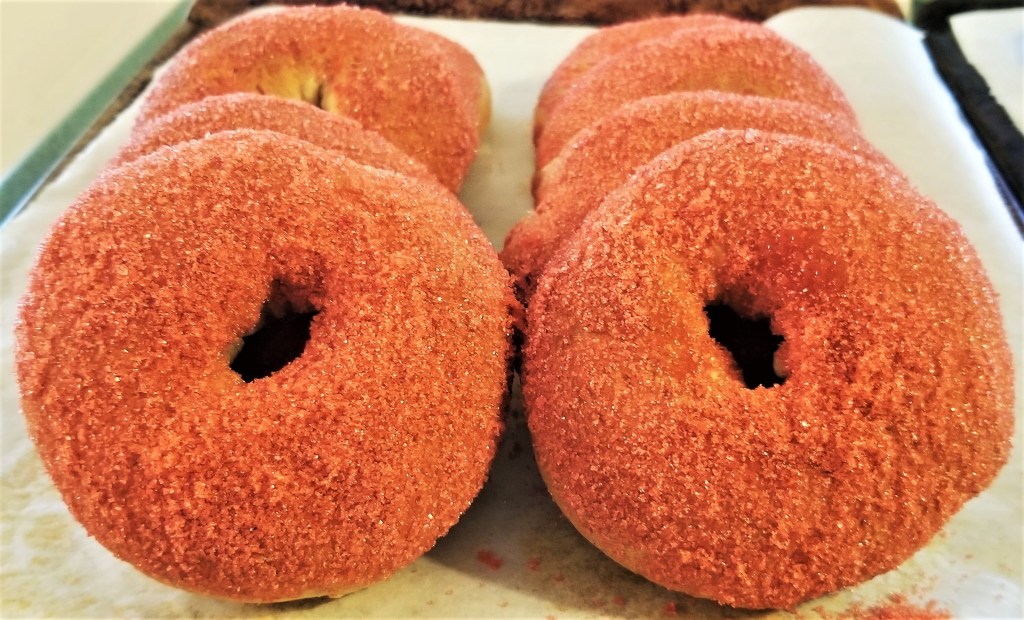
Golletes are a less-known, but very traditional, Day of the Dead bread, prepared mainly in Central Mexico. Golletes have a more compacted crumb compared to the previous two types; they are shaped as rings, and coated with granulated sugar coloured in a bright shade of pink:
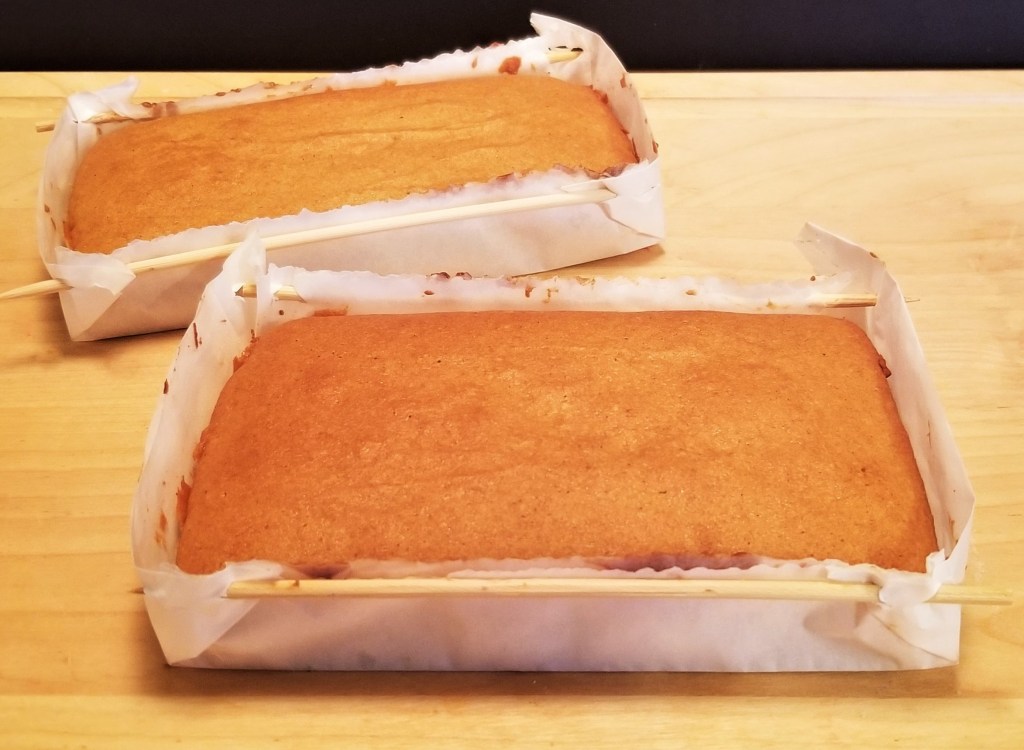
Pan de cajita (little box bread) is a cherished old-fashioned bread from the Mexican state of Guerrero, available any time, but particularly ubiquitous around the Day of the Dead; it is a nice quick bread made with rice flour, and other wholesome ingredients, baked in handmade paper boxes (hence the name):


 My Slice of Mexico
Beautiful altar and food offerings. ¡Feliz día de muertos!
LikeLiked by 1 person
¡Gracias, Rebecca!
LikeLiked by 1 person