
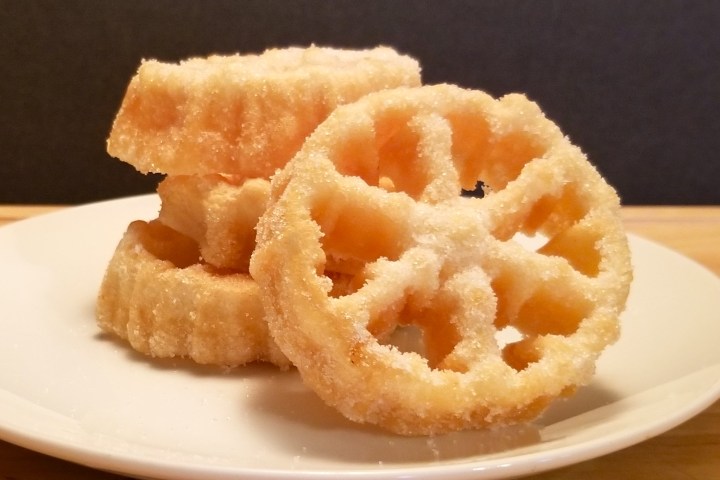
Click here to go to printable recipe: Moulded Fried Pastries – Buñuelos de molde
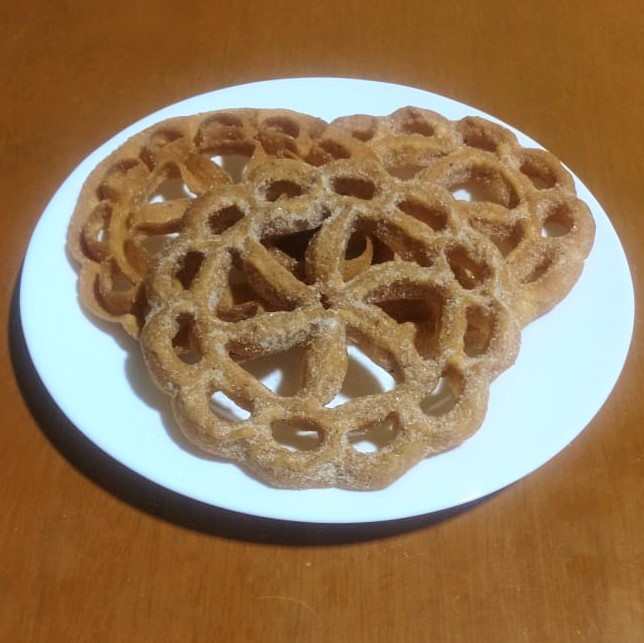
Buñuelos are a type of fried pastry that came to Mexico from Spain, where the Moorish had consumed them at least since the 11th Century. Originally, these treats were shaped as balls that expanded and became hollow inside due to the heat in the hot oil bath, for which they are known as buñuelos de viento (wind buñuelos). Other shapes were developed later on, such as rings, flat discs (very popular during Christmas time, click here for my recipe), and the intricate-shaped buñuelos de molde (from a mould). For this type of pastry, a metal mould is dipped in a lose batter; the batter coats the mould and gets released from it when immersed in hot oil, rendering a pretty shape. In Mexico, buñuelos de molde are often handmade in small batches (photo below, left), but are also available in packages at convenience stores and supermarkets (photo below, right):

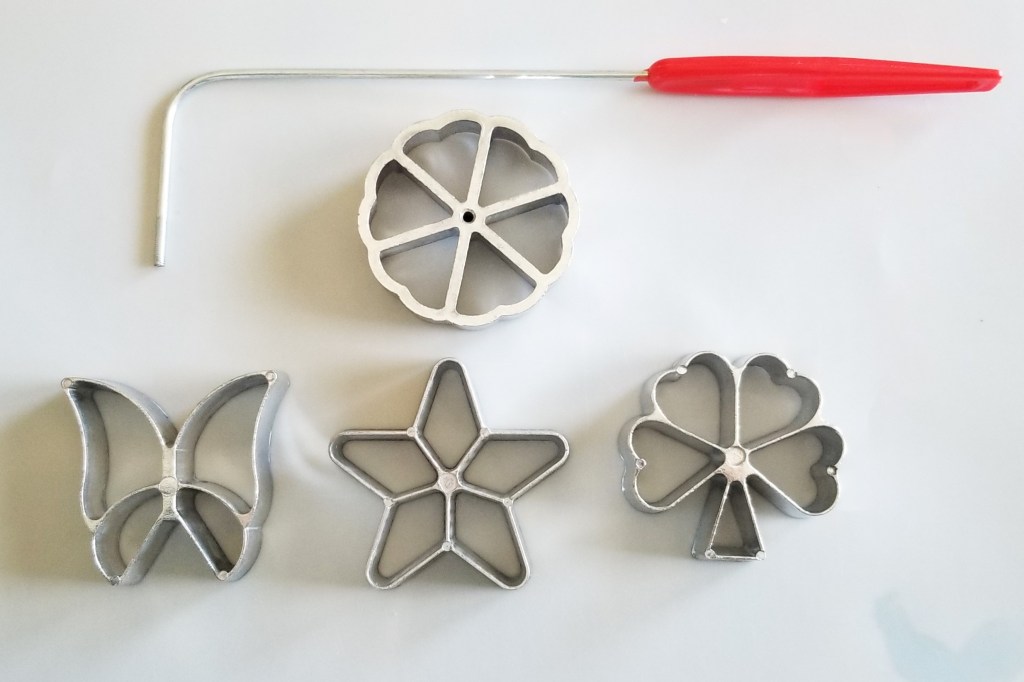
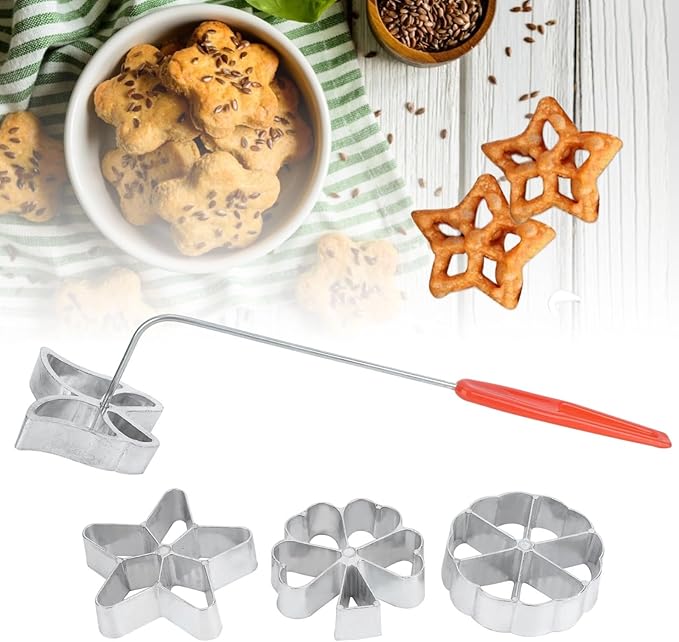
Making them at home is easy, but having the mould is of course a requirement. I got a whole set of moulds, that includes the classic wheel shape, as well as a butterfly, a star and a lucky shamrock:
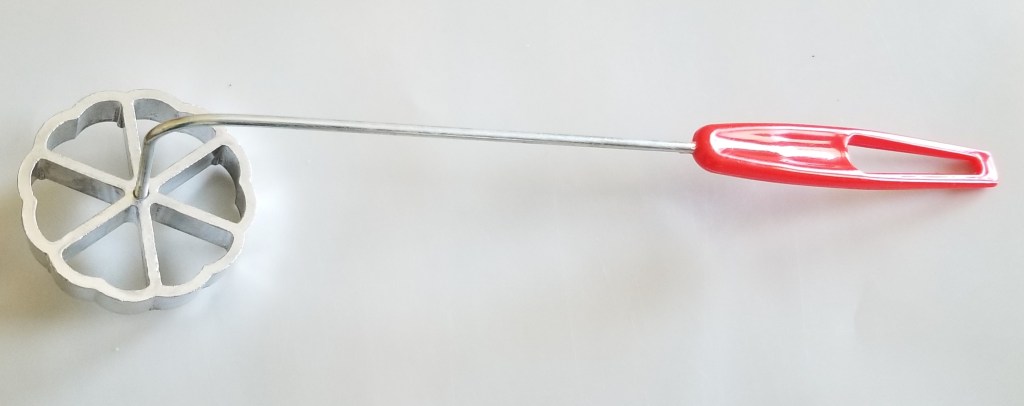
For this post I chose the classic wheel, but I can imagine the other shapes being cute for special holidays, such as the butterfly for Easter, the star for Christmas, and the shamrock for St. Patrick’s Day. To get the chosen mould ready, wash and dry, and screw to the handle:

Moulded Fried Pastries – Buñuelos de molde
Printable recipe: Moulded Fried Pastries – Buñuelos de molde
Ingredients
1 egg
1 tsp vanilla
¾ cup milk
1 tbsp granulated sugar, plus more for coating
Pinch salt
1 cup flour
¼ cup water
Oil for deep frying
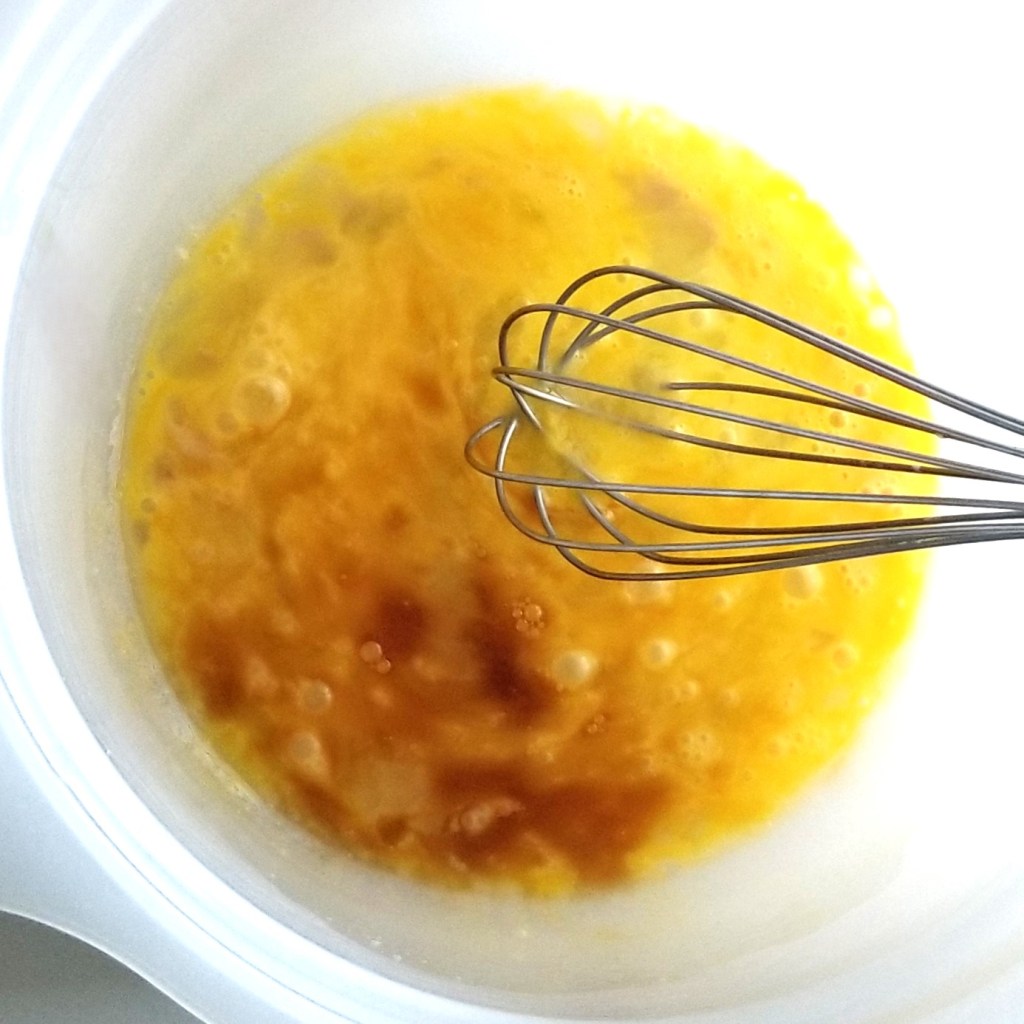
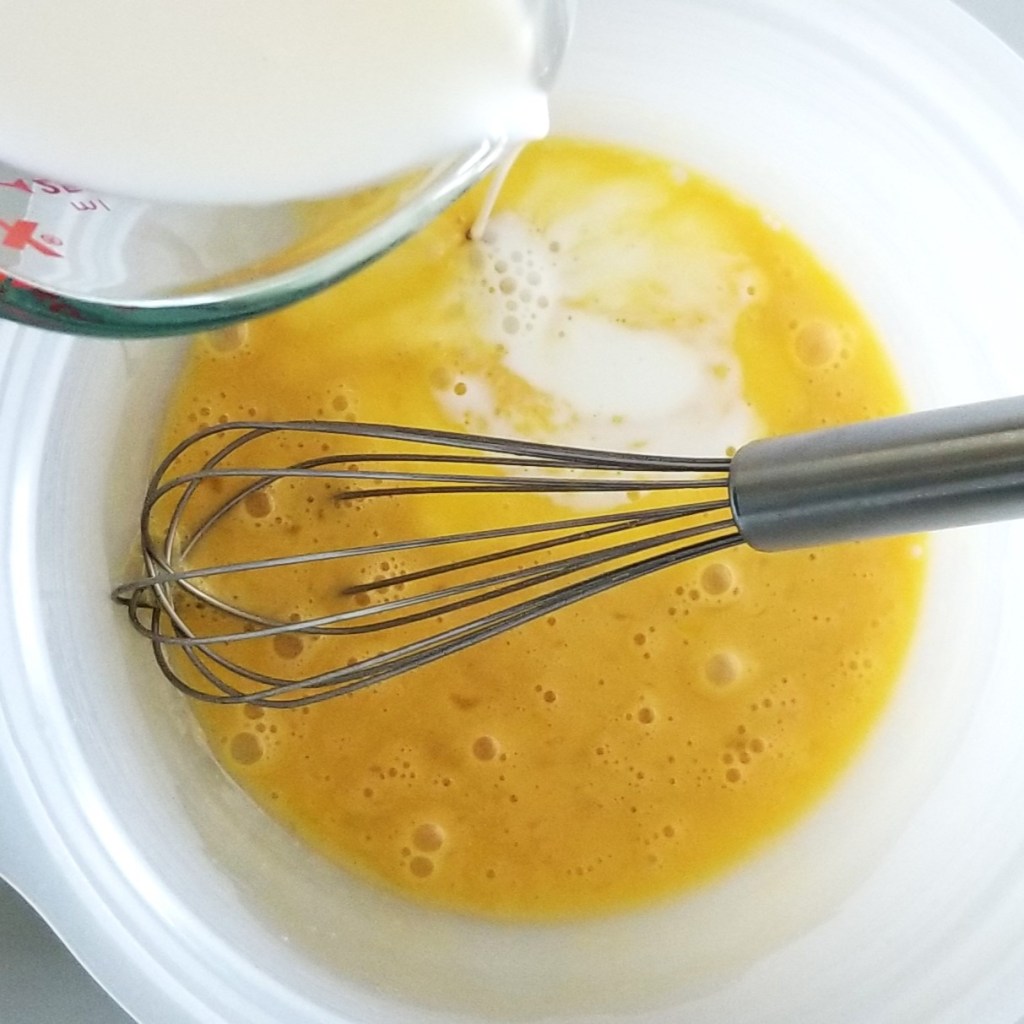
Beat egg and vanilla in a mixing bowl (photo below, left). Pour in milk, and continue beating, to incorporate (photo below, right):
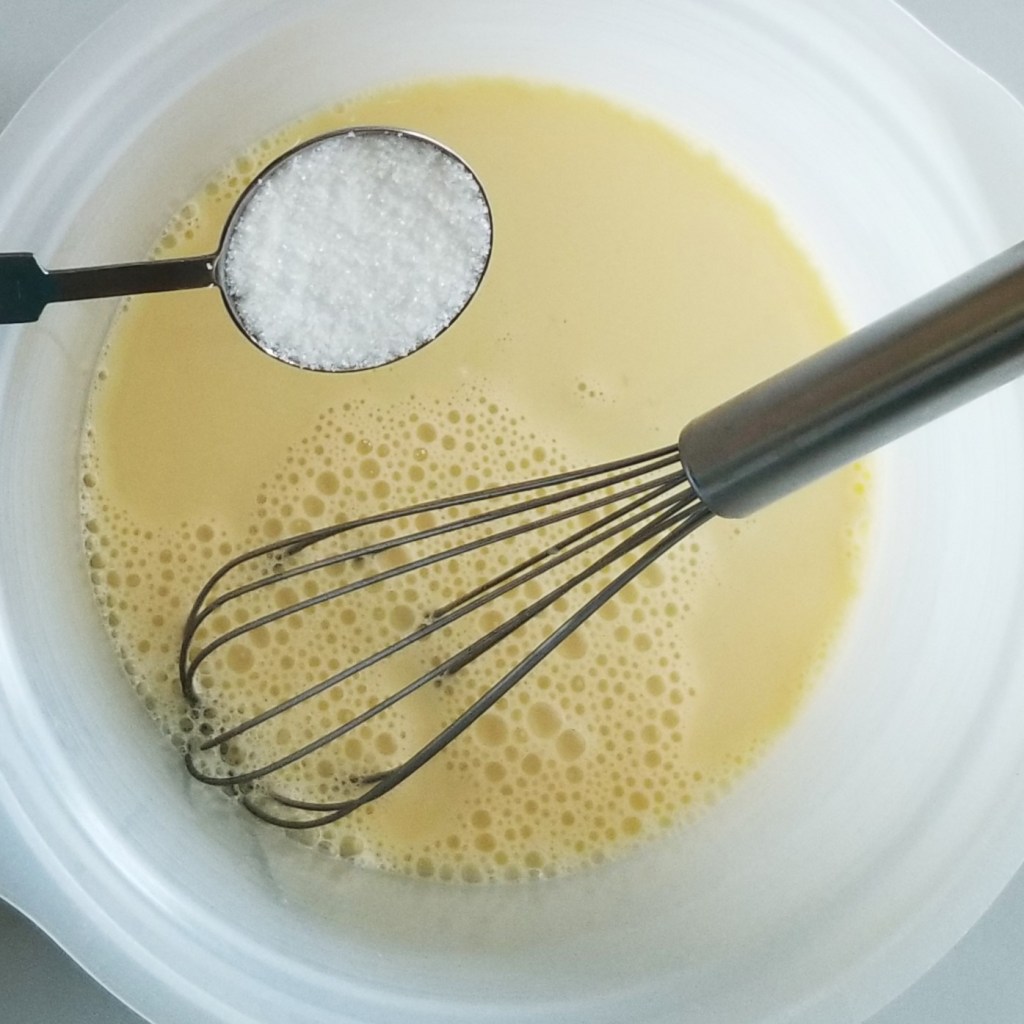
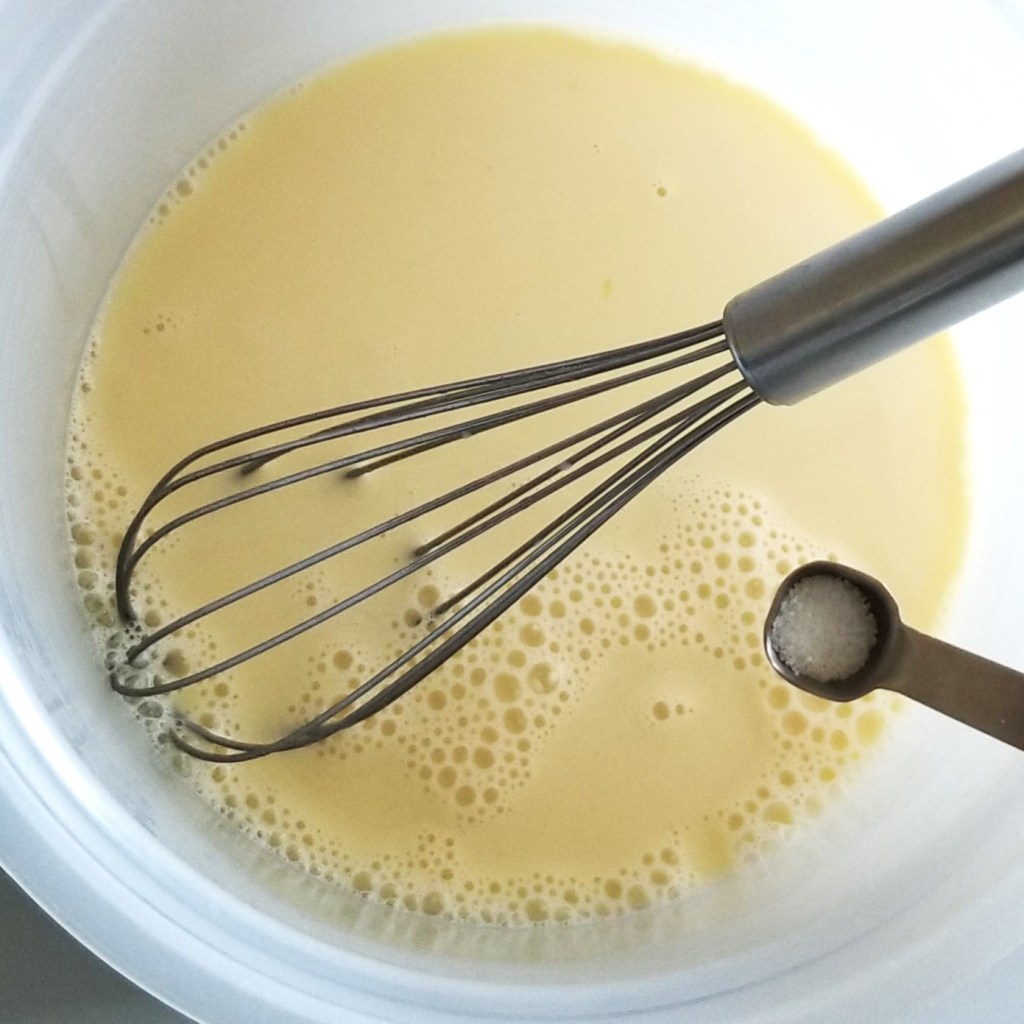
Add one tablespoon of sugar (photo below, left), and a pinch of salt, about one eighth of a teaspoon (photo below, right):
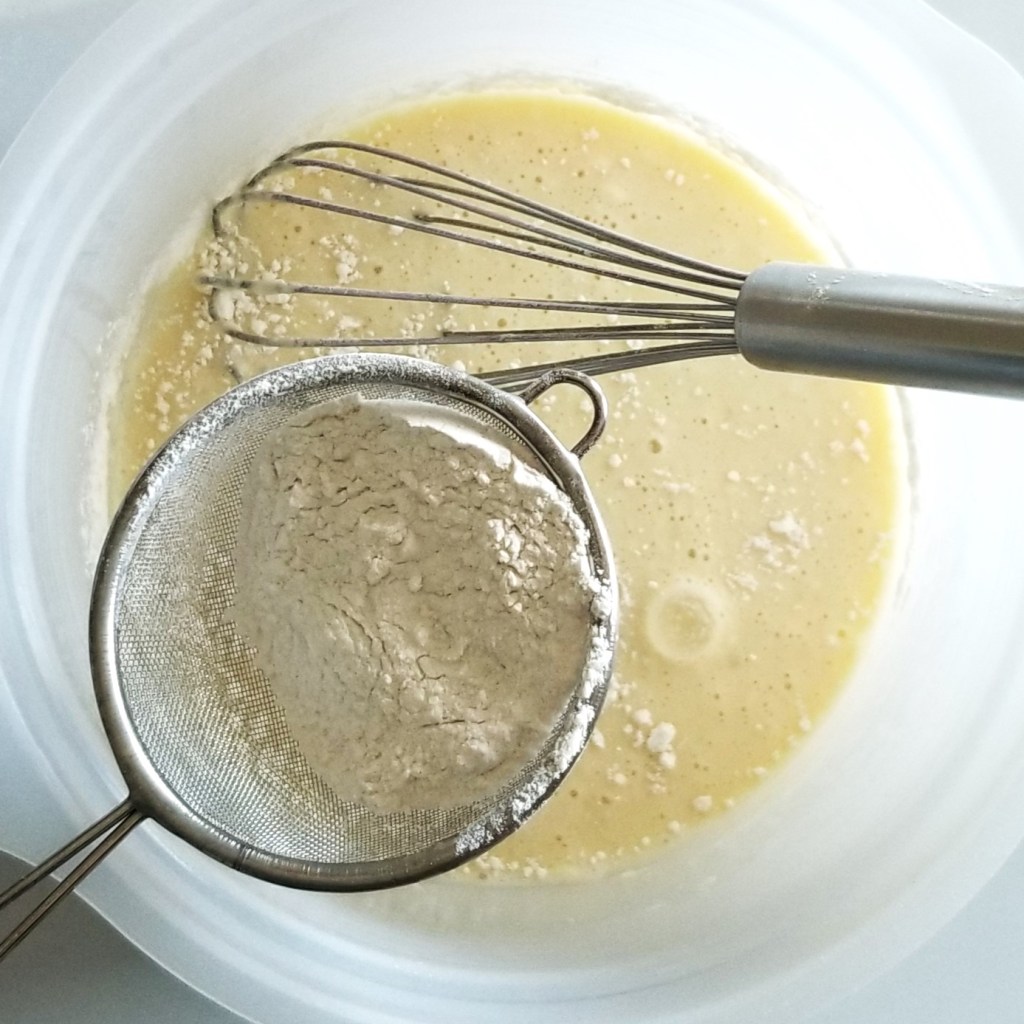
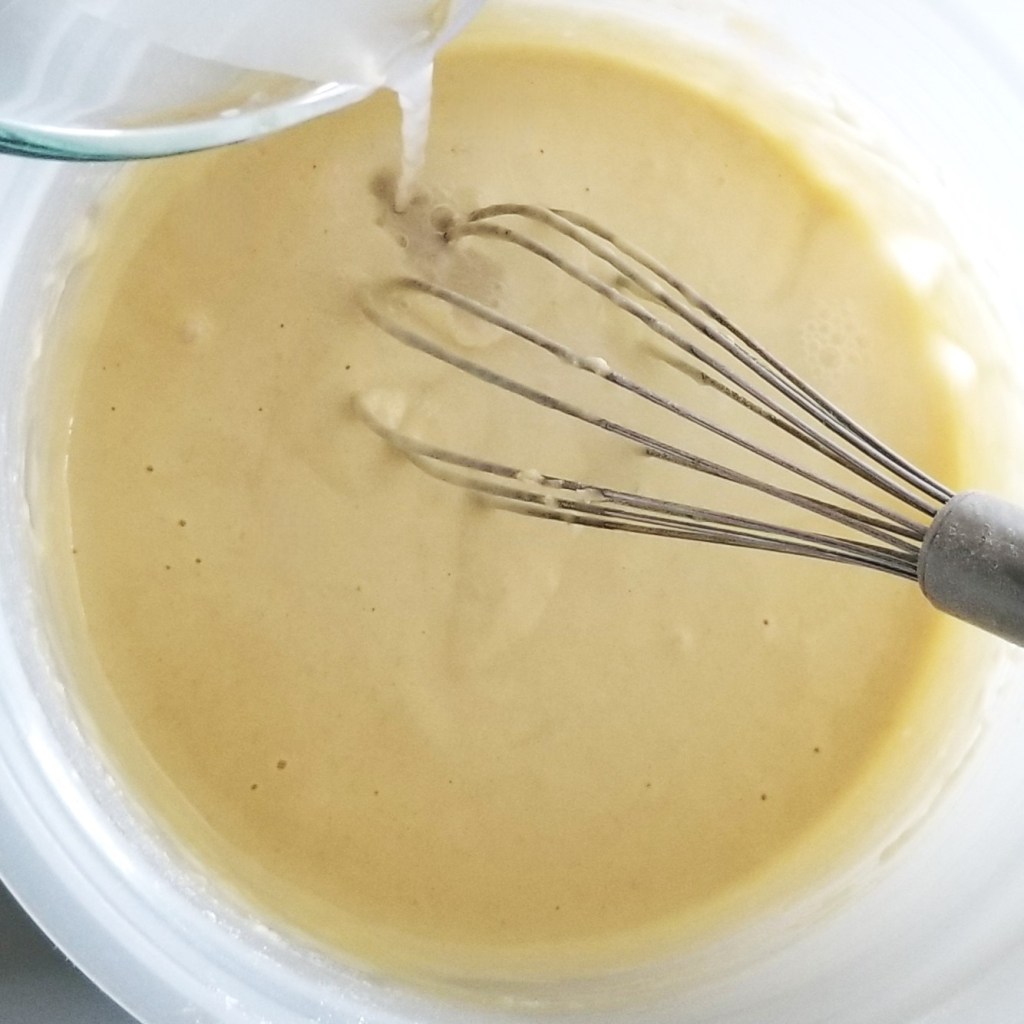
Continue beating, until the sugar and salt have dissolved, then sift flour in, and mix gently (photo below, left). Finally, pour in water (I used the same measuring cup as the milk, to collect any left behind, photo below, right):
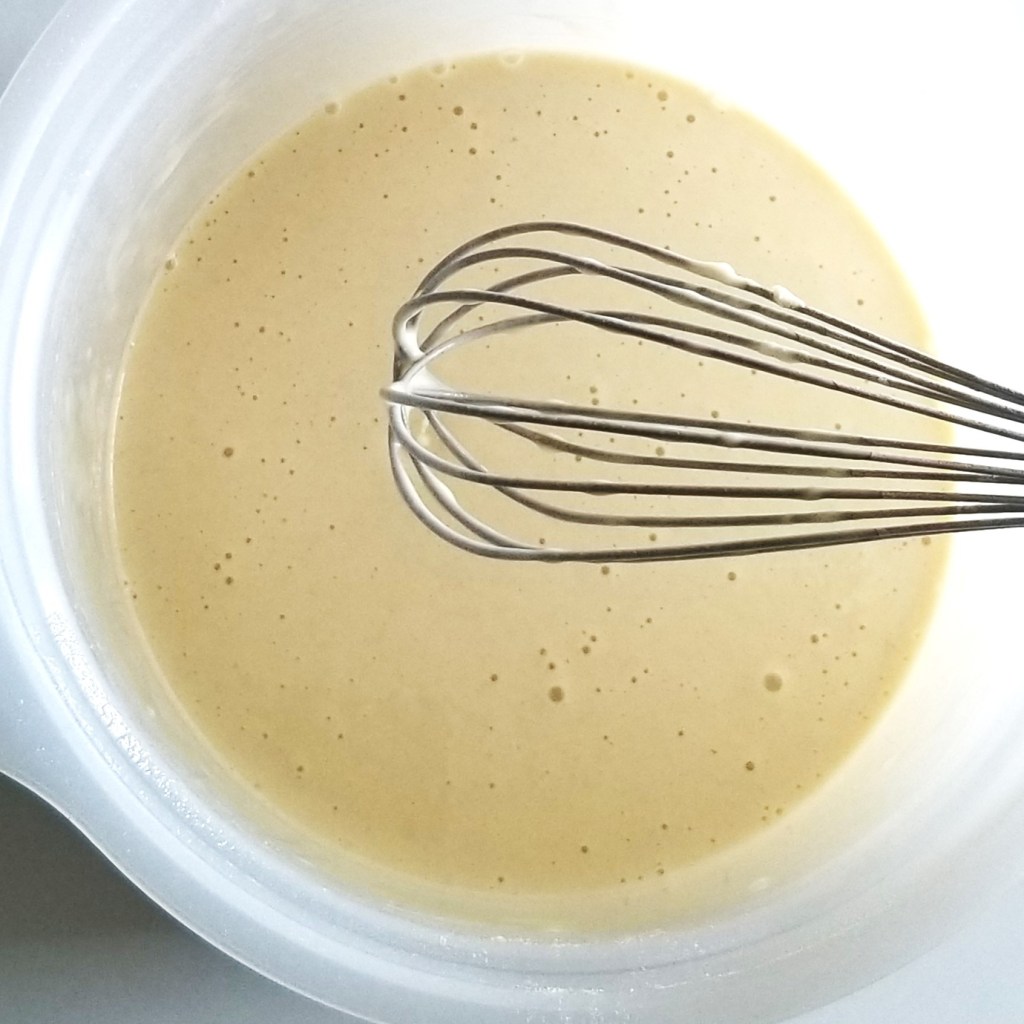
Continue mixing until a very smooth and light batter is achieved; when the beater is dipped in, it should get a very thin coating of batter on:
Prepare a small bowl with granulated sugar. Prepare a tray with brown paper and/or paper towels, to catch any excess oil from fried pastries. Set bowl and tray near the stove.
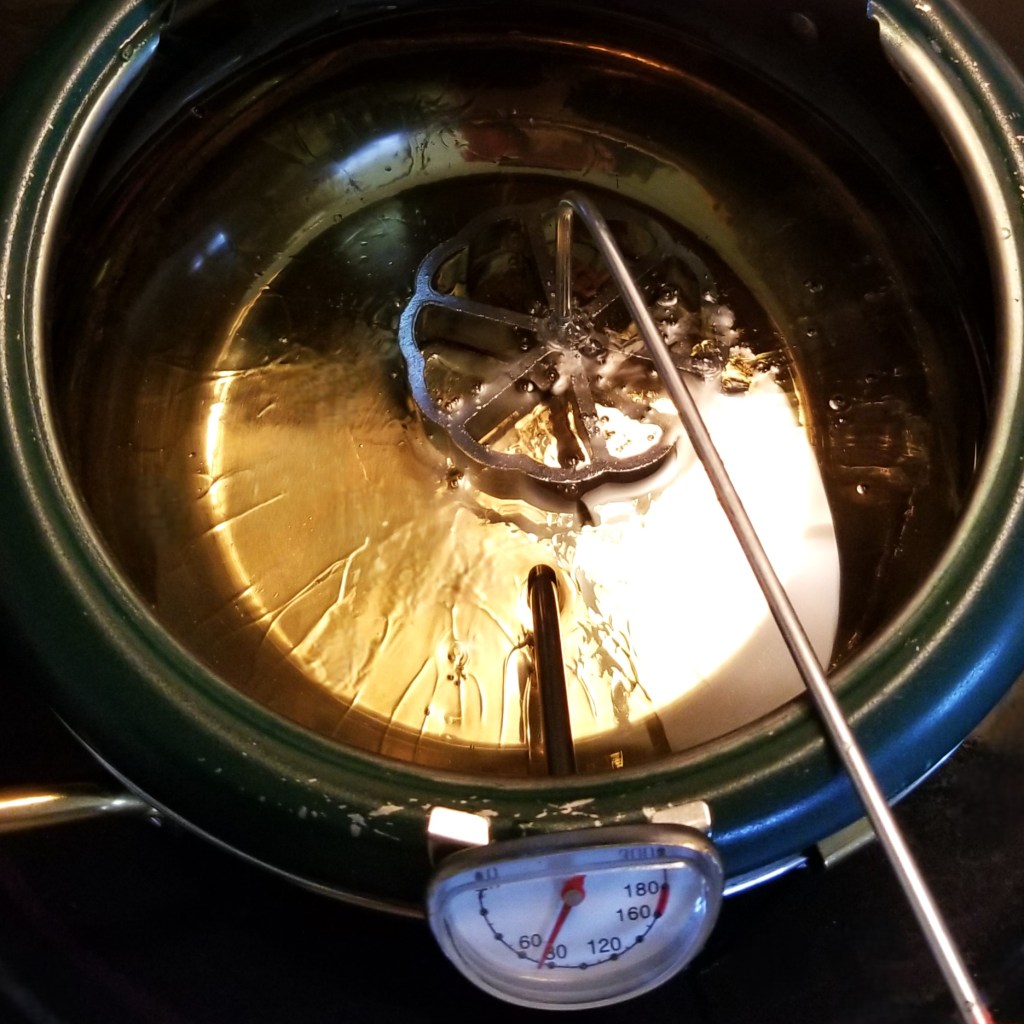
Pour enough oil in a small pot for deep frying, then warm up over high heat; insert the mould in the oil, so it gets hot and lightly greased (photo below, left). Pour some of the batter in a shallow bowl, and set next to the pot and paper towels (photo below, right):
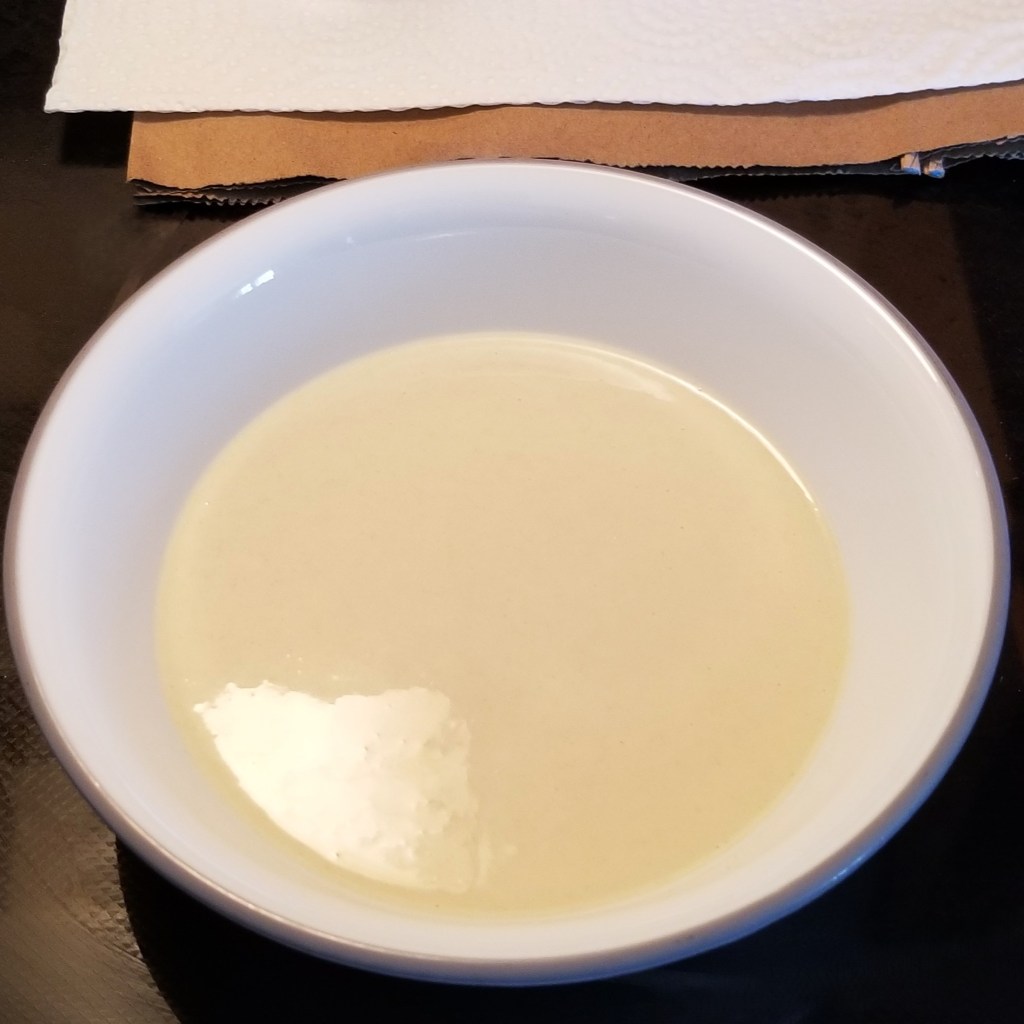
Once the oil starts to ripple (about 350-375°F or 180-190°C), carefully lift the mould by the handle, and gently shake it a couple times to remove excess oil, dip the mould in the batter in the shallow bowl, making sure the batter does not coat over the top of the mould (photo below, left). Lift the mould, and allow extra batter to drip off the mould; it should be coated with a thin layer of batter (photo below, right):
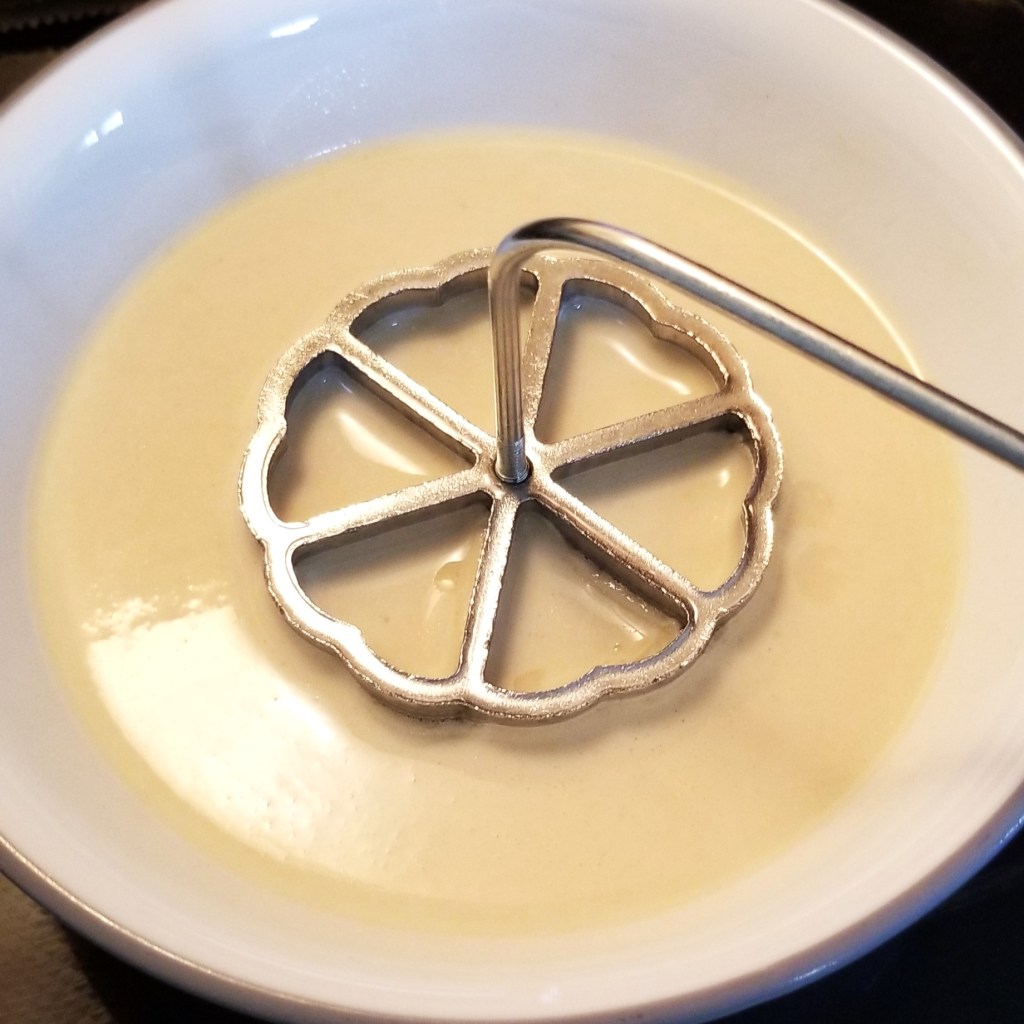
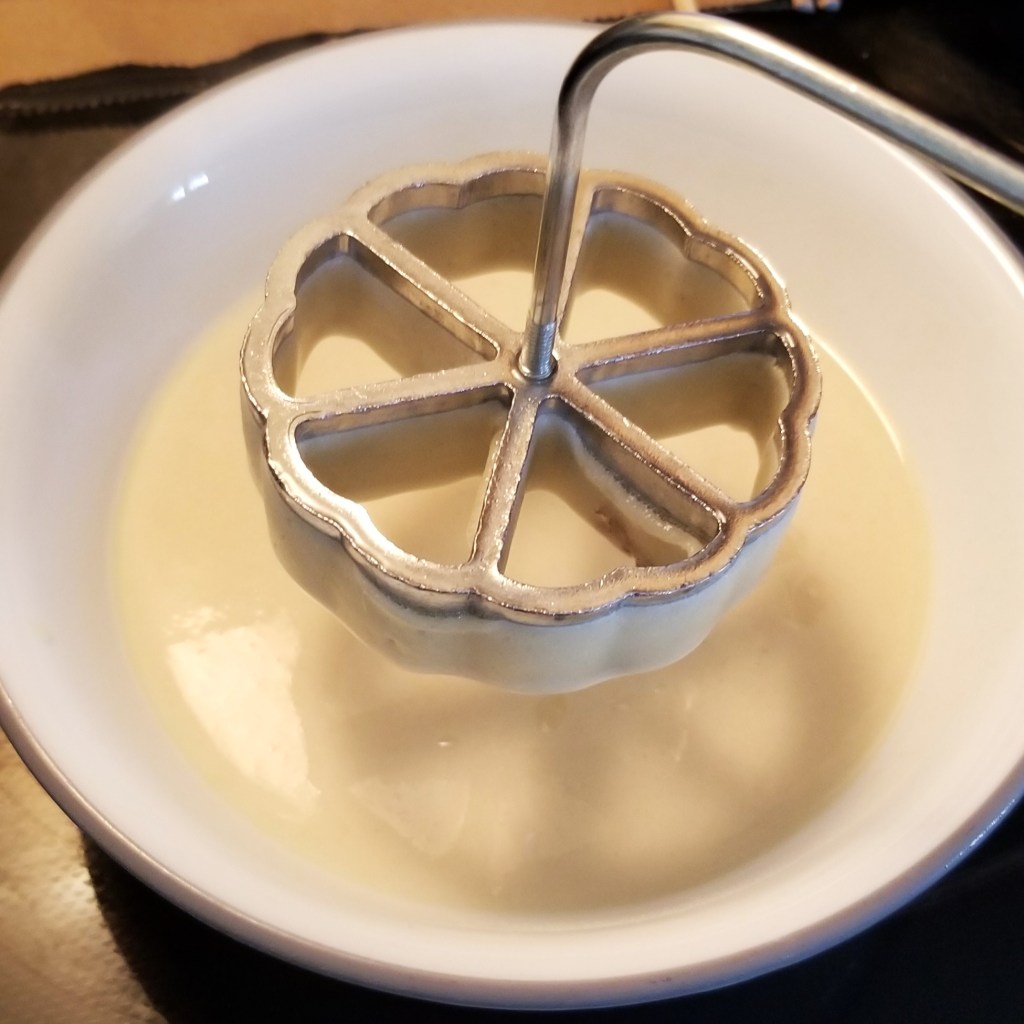
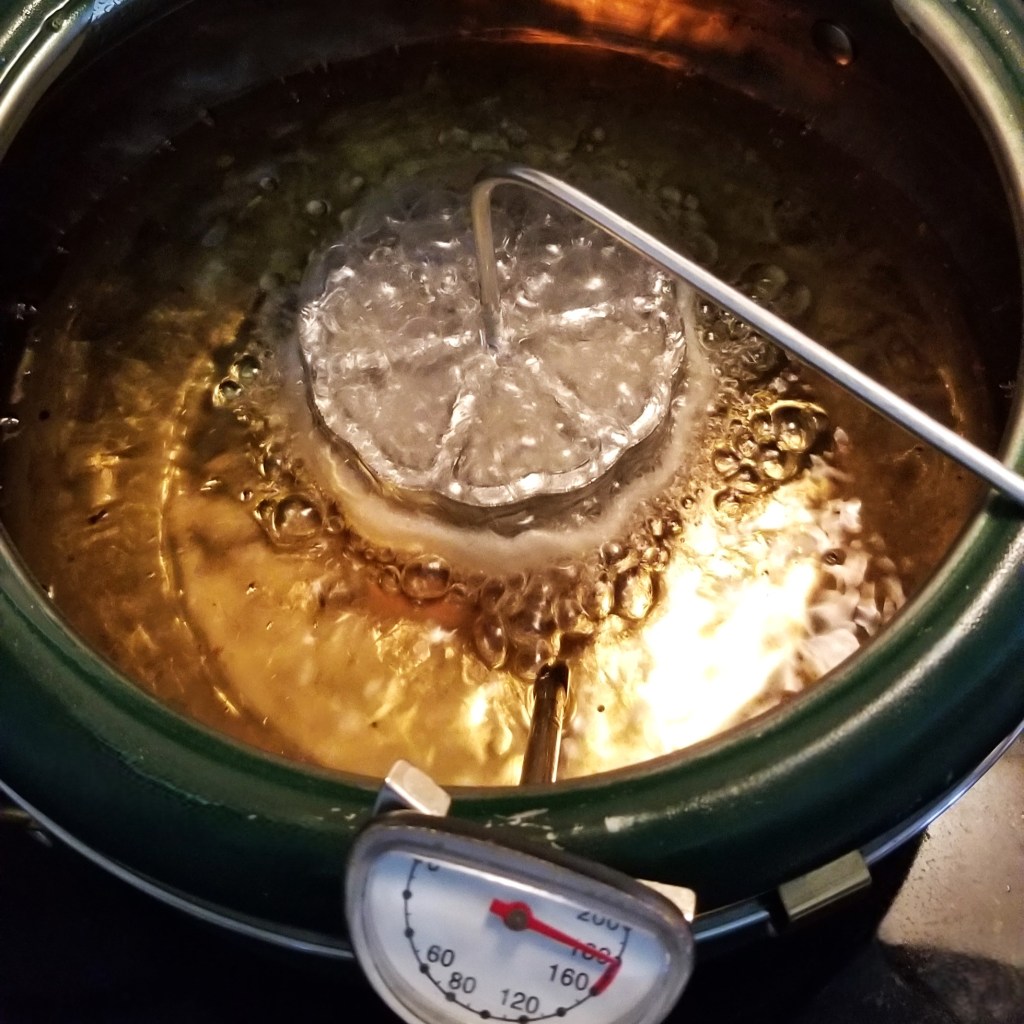
Place the mould in the hot oil, completely immersing the batter, but keeping it from touching the bottom of the pot; the batter will immediately bubble and start loosening up from the mould (photo below, left). Once it starts to change colour, lift the mould, jiggling a little, to free it from the batter (photo below, right):
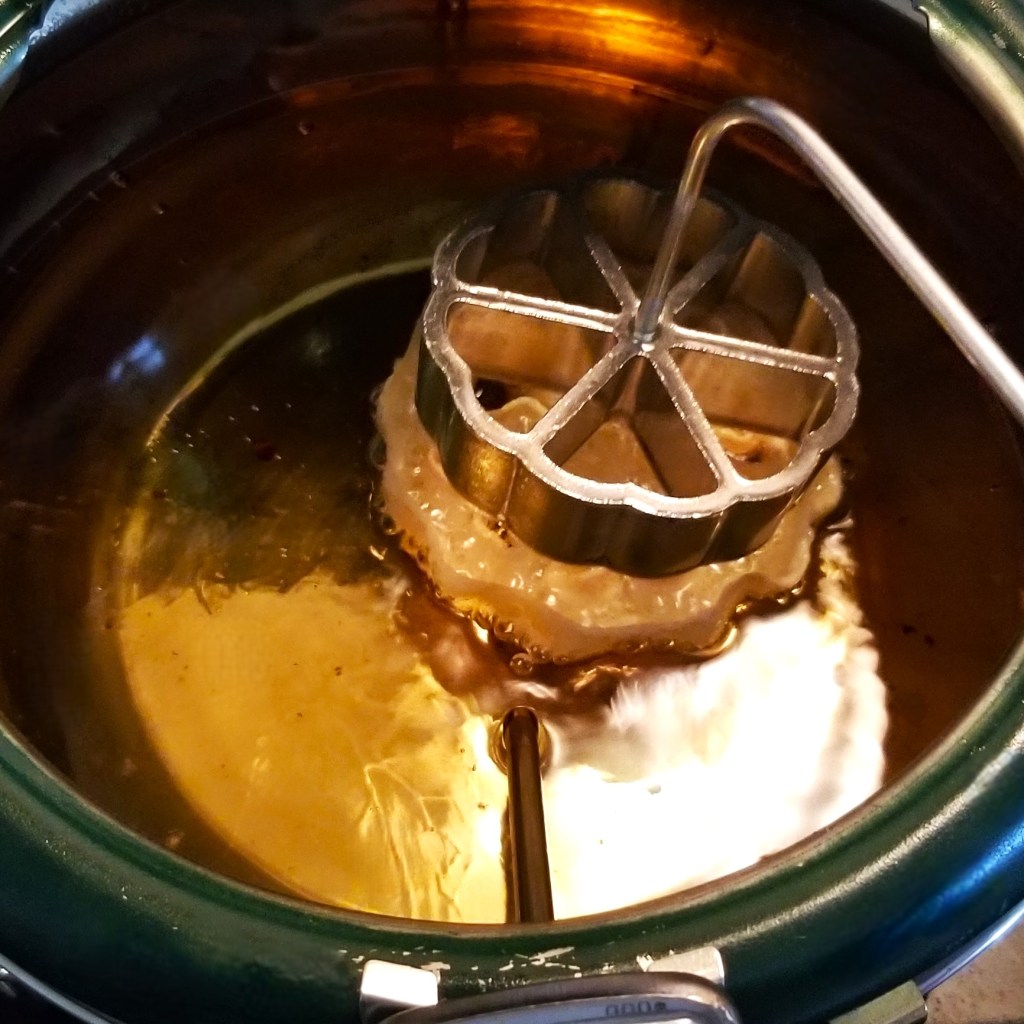
Place the mould back in the oil, to keep it hot, and flip the pastry after a few seconds, to brown on both sides (photo below, left). Remove pastry with a fork, or tongs (photo below, right):
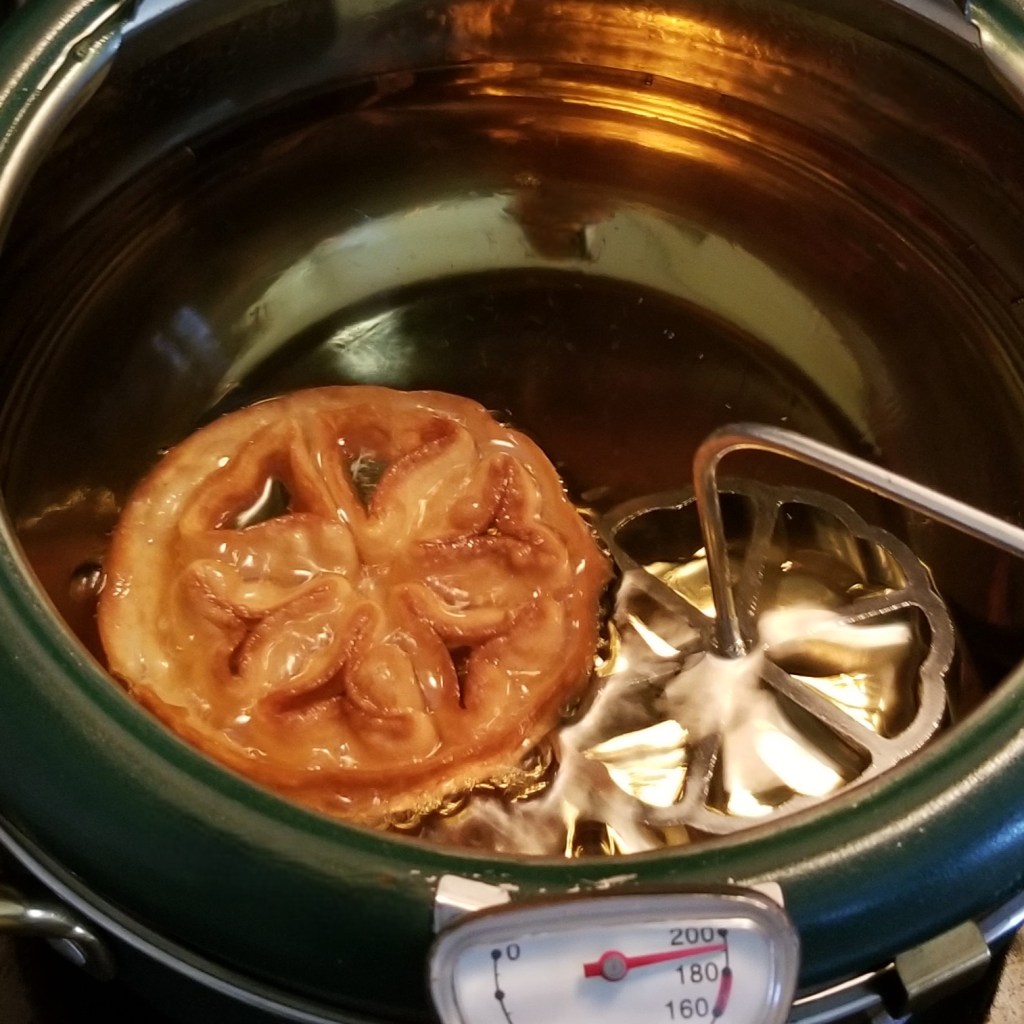
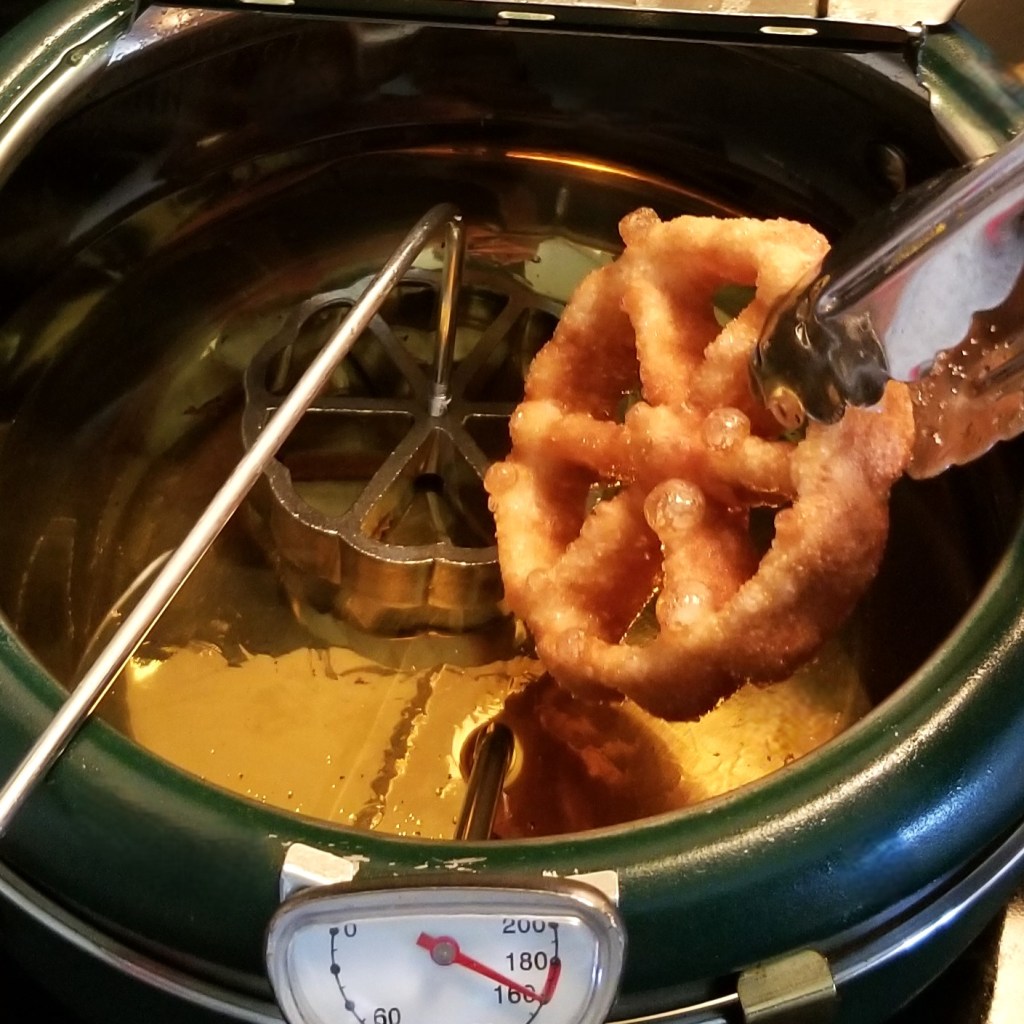
Transfer buñuelo to the paper towels, to drain excess oil (photo below, left), and then transfer to the bowl with sugar, to coat (photo below, right):
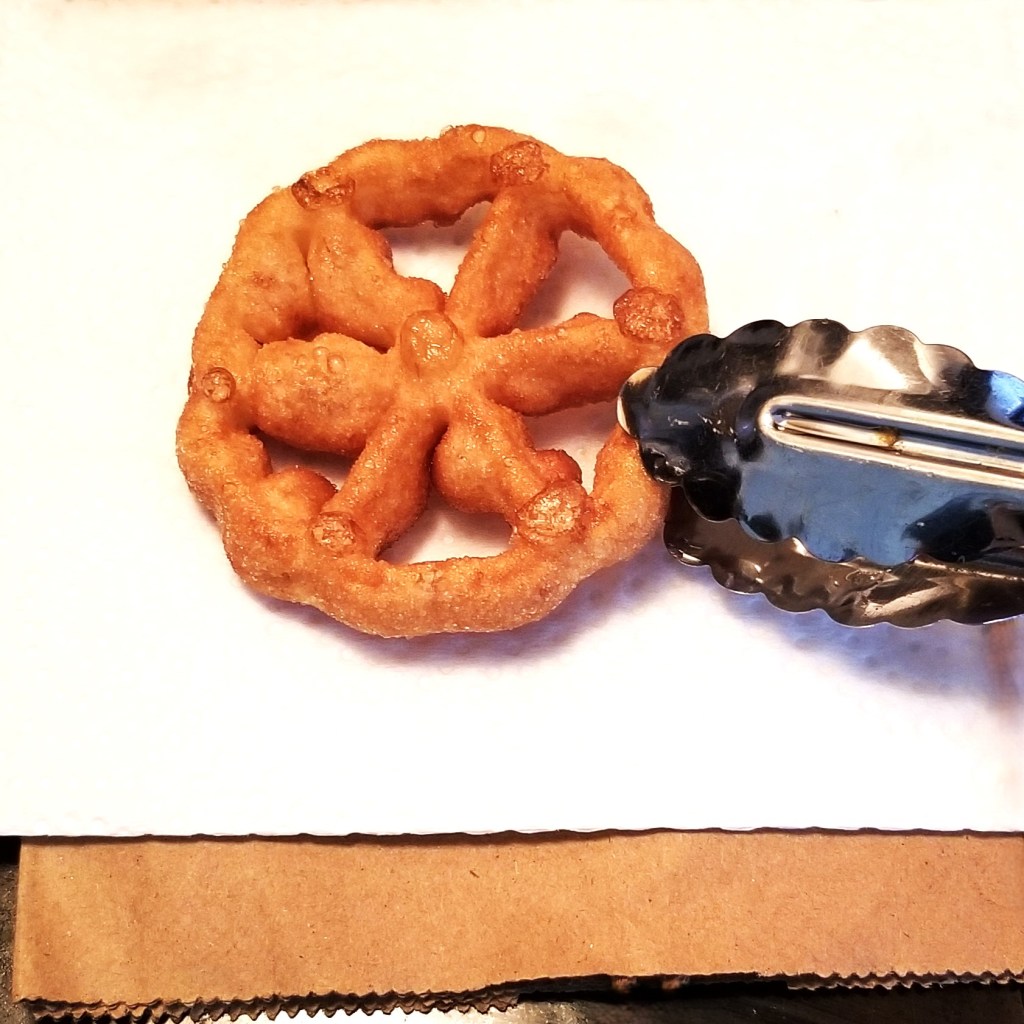
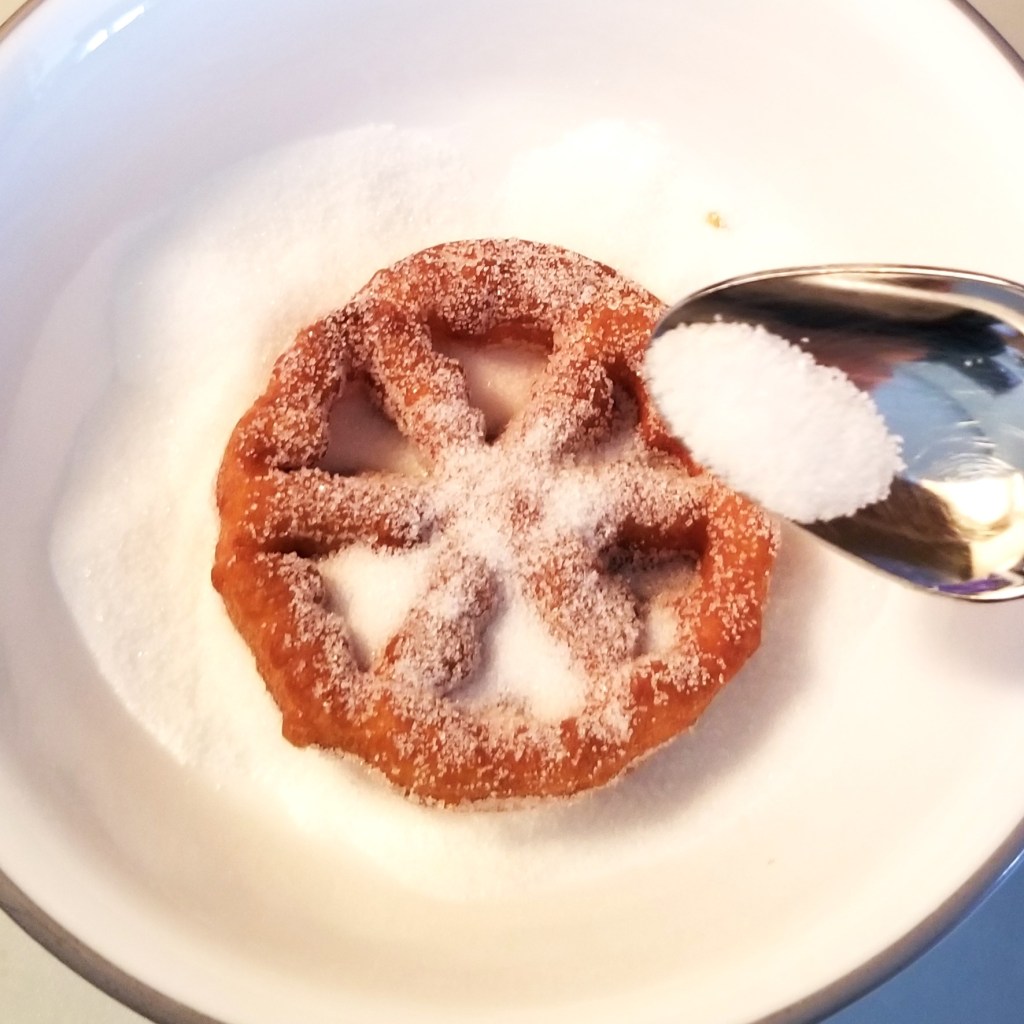
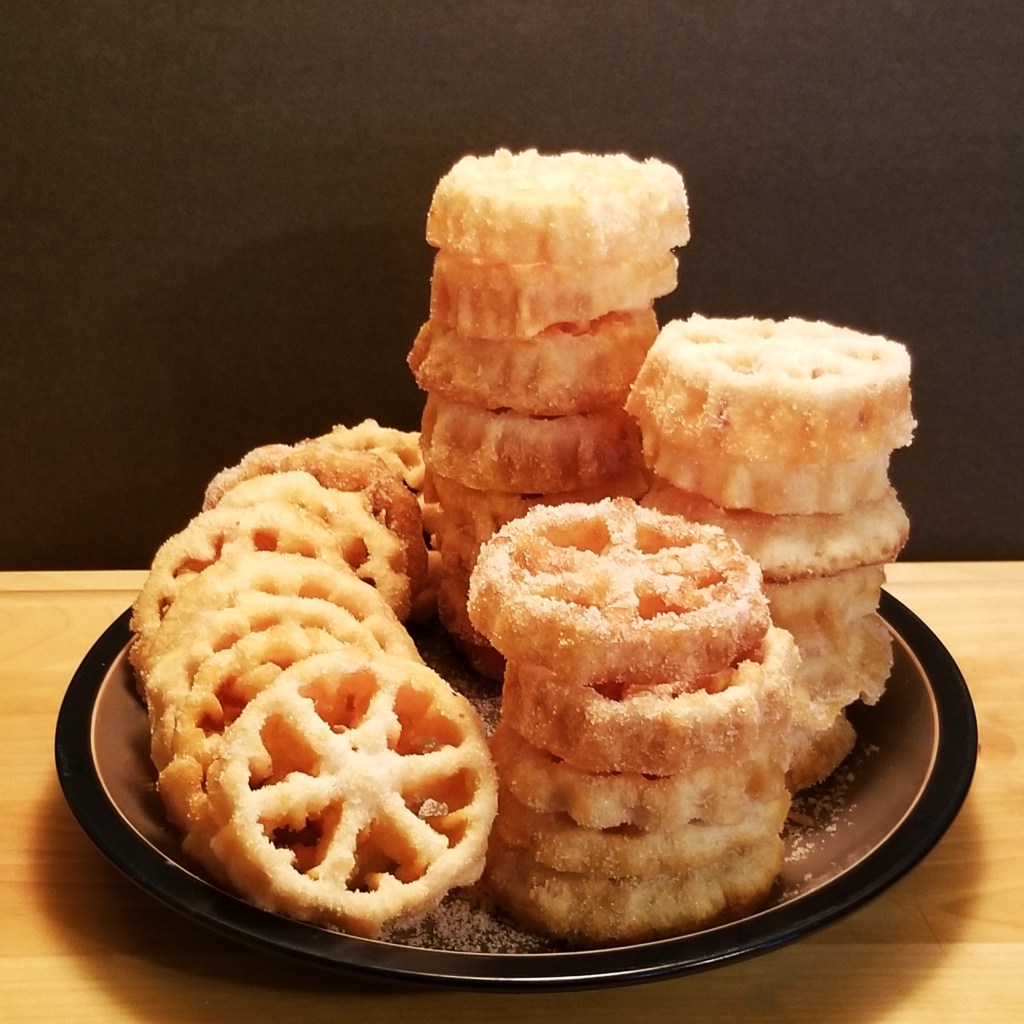
Allow the oil in the pot to get hot again, and repeat with the rest of the batter, pouring more in the shallow bowl, as needed. Makes about three dozen small buñuelos:
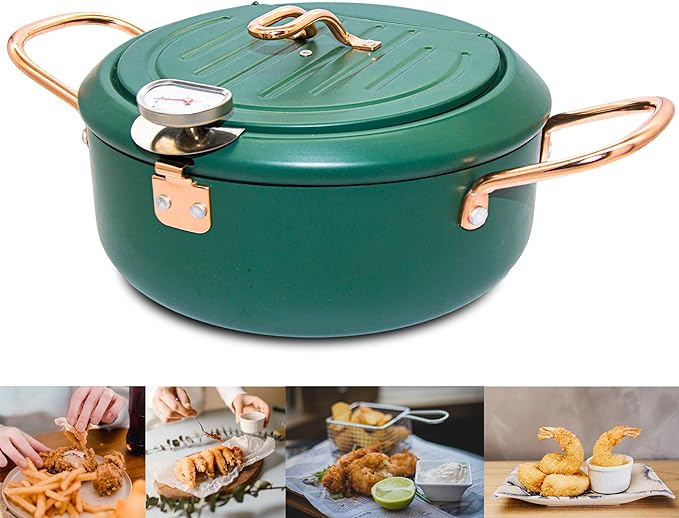
As I mentioned in previous posts, it is a good strategy to deep fry in a small pot, to save oil and prevent spills; moreover, my daughter gave me a pot especially designed for deep frying that comes with its own thermometer, which is inserted through the upper lip of the pot, so it is in the right position for accurate readings. It also has a lid, and when opened, a draining grid may be placed there to remove excess oil from the food. The green enamel is very pretty, but might chip where the lid touches; I did not mind, but there is also an option with a stainless steel finish.
For your convenience, click on the highlighted text below for products available on Amazon™. DISCLAIMER: Any reviews included in this post are my own, for items I have purchased, not provided by any company; as an Amazon Associates Program affiliate, I might receive a commission for any purchases originated from the links below, at no extra cost to you. Thank you to readers who have bought any other products starting with a click from my links!
I am sharing my recipe at Full Plate Thursday #717 with Miz Helen @ Miz Helen’s Country Cottage.
I am bringing my recipe to Thursday Favourite Things #683 with Katherine @ Katherine’s Corner, Bev @ Eclectic Red Barn, Pam @ An Artful Mom, Amber @ Follow the Yellow Brick Home, and Linda @ Crafts a la Mode.
I am joining Fiesta Friday #560 with Angie @ Fiesta Friday.




 My Slice of Mexico
Yum
LikeLiked by 1 person
I have recollections of these from New York. I don’t remember ever seing them here in New England though.
LikeLiked by 1 person
Yes, they are a very Hispanic treat.
LikeLiked by 1 person