
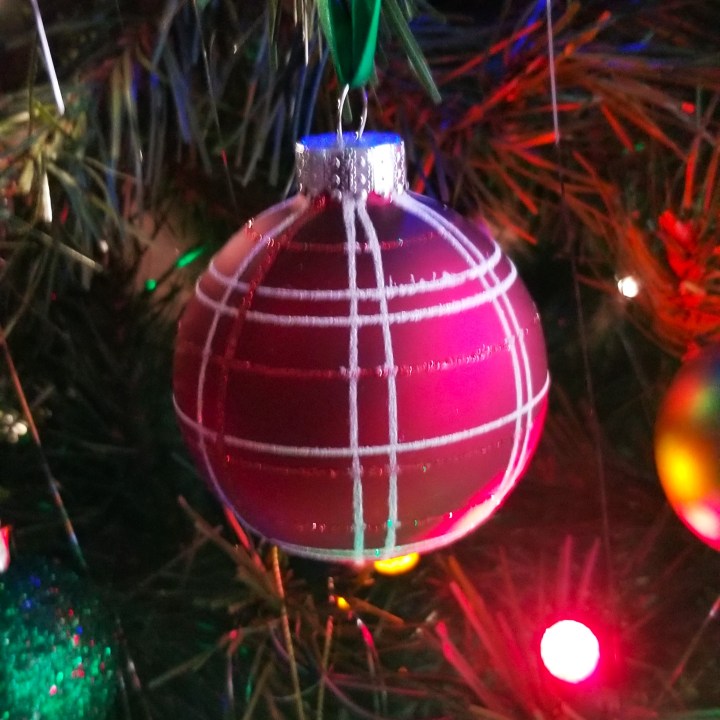
As we approach the winter solstice in the Northern hemisphere, mittens and scarves are worn to hang the holiday lights outside the house, and indoors, the Christmas tree has appeared, with presents underneath and all. My daughters and I take turns choosing a theme for our Christmas décor and menu, and this year it was my turn. I decided to go for a retro 1970s theme, which was easy to plan, since I grew up in that decade!
The tree is decorated with necklaces of multicoloured lights, glass and glittery ornaments, mostly spheres (photo at the top of this post), a few elongated shapes, as well as the occasional pine cone or bird figurine. The 70s look gets more defined with the liberal use of tinsel, and a flashing star at the top:
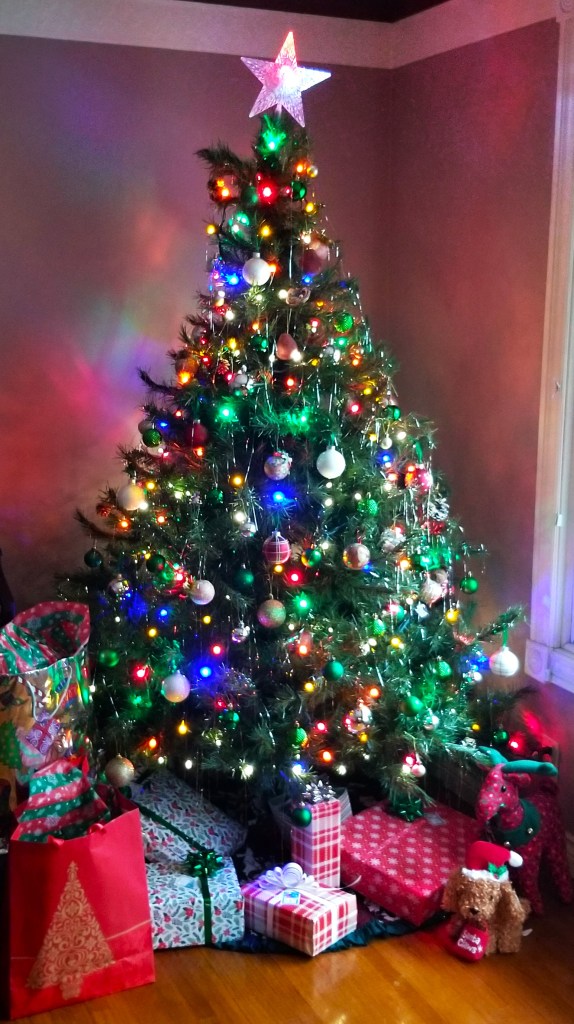
As seen above, I have wrapped all my presents the old-fashioned way, mostly in boxes, with red, green and white paper and adorned with ribbons and handmade bows.
As for the menu, it could be very traditional (check out my Mexico City Christmas menu from last year, which has not changed much since the 70s) or include more modern selections. In the 70s, pretty and colourful food, with lots of sweet and cheesy accents were the norm: Deviled eggs and other appetizers; some sort of creamy soup; a sweet salad (apple salad, Ambrosia, etc.); baked main dish, either fish, pork, or both; baked pasta, such as lasagna or spaghetti with cream; fruitcake, and for the truly Mexican touch, buñuelos, and ponche.
The following is a good example of what my family could have enjoyed for our Christmas Eve Menu in the mid 1970s (click on titles or photos, for stories and recipes):
A 1970s Christmas Menu in Mexico City
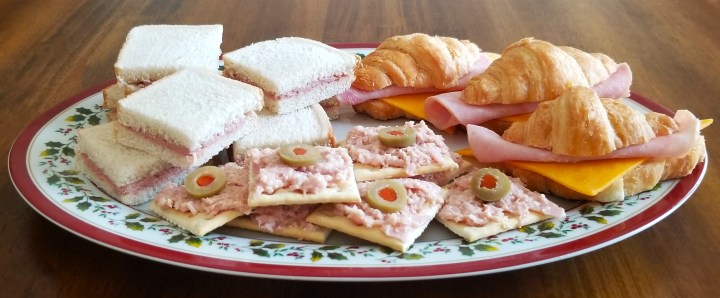
Appetizer Tray (Bocadillos)
Liver Sausage (Liverwurst) on White Bread (Sandwichitos de paté), Deviled Ham on Soda Crackers (Galletas saladas con jamón endiablado), and Ham and Cheese Crescent Rolls (Cuernitos con jamón y queso):
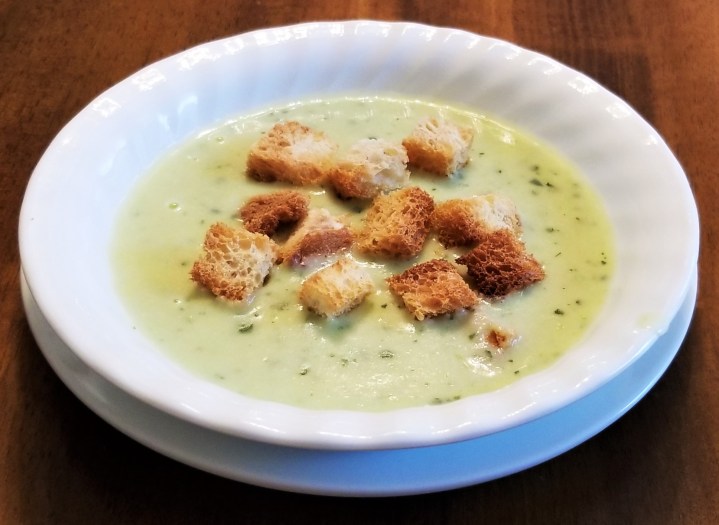
Cream of zucchini (Crema de calabacita)
My mom’s favourite, and she always followed the old-fashioned way to make a creamy soup, using a flour and butter roux as thickener, and milk instead of cream:
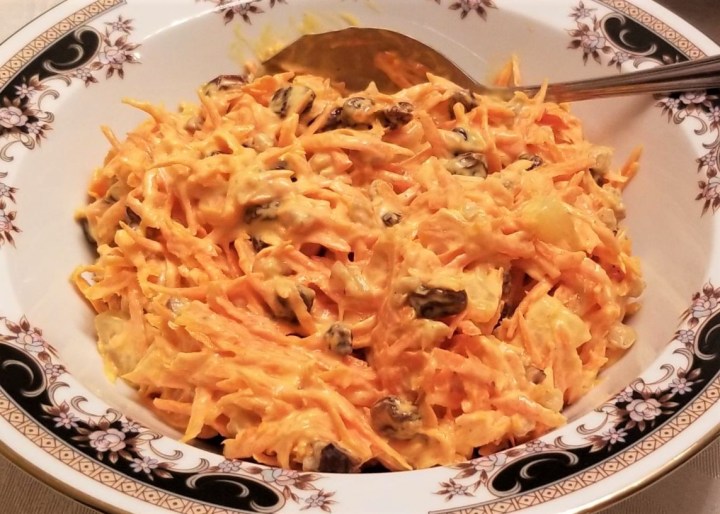
Sweet Carrot Salad (Ensalada dulce de zanahoria)
This salad takes advantage of the natural sweetness of carrots, but also the addition of pineapple and raisins:
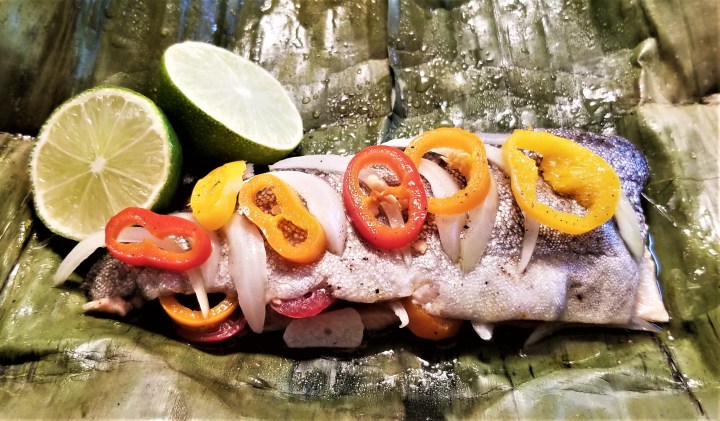
Malinalco Style Stuffed Trout
(Trucha rellena estilo Malinalco)
One Christmas, my mom baked a whole red snapper, stuffed with citrus slices and other veggies. This recipe for stuffed trout is equally delicious:
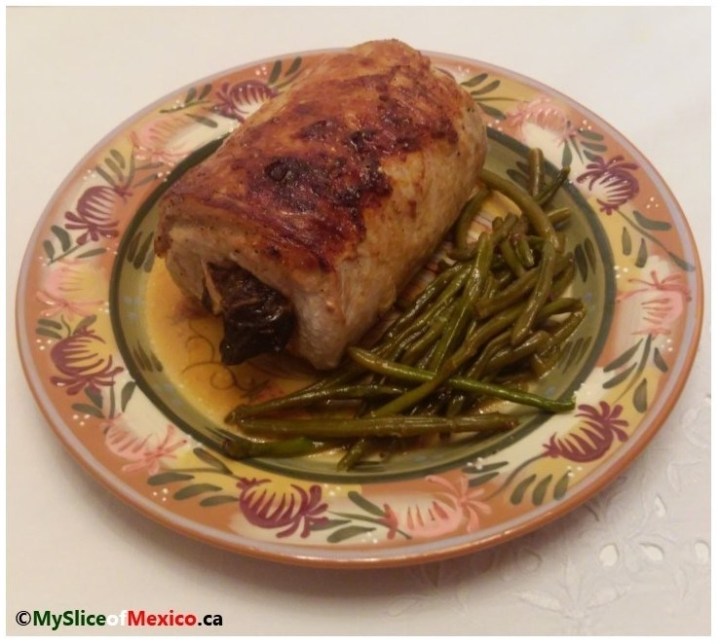
Stuffed Pork Roast (Lomo de puerco relleno)
Pork loin centre roast is an incredibly friendly cut of meat; it needs minimum trimming, and with its mild, yet rich natural flavour, it gets only better when seasoned in any way, in this case, with prunes and an orange reduction:
Cheesy Elbow Pasta (Coditos en salsa de queso)
This dish hardly needs an introduction; baked pastas became known in Mexico during the Second French Intervention under the short rule of Austrian Archduke Maximilian (1864-1867), and more broadly under the long presidency of Porfirio Díaz (1884-1911), who favoured European architecture and cuisines, particularly Italian or French. Since then and especially in the 1970s, this dish, AKA macaroni cheese, Mac ‘n’ Cheese, or “Coditos en salsa de queso” continued to be comfort food that may be a weekday meal on its own, or a side dish as part of a special dinner:

Alcohol-Free Fruitcake (Pastel de frutas sin alcohol)
The classic aged Christmas fruitcake gets its dark colour and moist texture from brushing or pouring rum or brandy all around the baked cake every day, for about one month. On the other hand, this fruitcake is light both in colour and texture, there is no waiting time after baking, and it is completely alcohol-free. My mom used to make both the aged and the alcohol-free fruitcakes, and I like them almost equally, but in terms of convenience and pleasing a broader crowd, the alcohol-free is the winner, especially when kids might want to score a slice:

Fried Pastries with Raw Sugar Syrup
(Buñuelos con miel de piloncillo)
This type of buñuelo is called “de rodilla” – “on the knee” because they are often shaped by covering one’s knees with a towel and pulling a portion of dough placed on the towel with the hands, using the knee as a working surface, until the dough becomes almost see-through; a bowl turned upside down may serve the same purpose. My mom never made these buñuelos at home, but they are very popular in Mexico City, sold outside churches and at outdoor markets during the Christmas season, and I make them occasionally here in Canada:

Mexican Christmas Punch (Ponche navideño)
In Mexico, the most popular hot beverage to enjoy during this season is indubitably ponche navideño, flavoured with seasonal fruit and spices, and sweetened with piloncillo (raw brown sugar):

As every year, I would like to take this opportunity to wish everyone who kindly stops by my blog, and their loved ones, all the best for this holiday season.
Whether celebrating Christmas, Hanukkah, or Kwanzaa,
already celebrated a major holiday, or observe none,
please receive my most sincere wishes for joy, love, health,
and especially hope for peace around the world!
I am joining Fiesta Friday #568 with Angie @ Fiesta Friday, this week co-hosting with Jhuls @ The Not So Creative Cook.





Dear Irene, what a lovely spread you are planning! Love the Christmas tree.
Merry Christmas to you and your loved ones. Happy holidays.
LikeLike
Thank you, Punam, Hugs and best wishes to you and your family, too!
LikeLiked by 1 person
You are so welcome, Irene. Thanks a lot and hugs back at you. ❤️
LikeLiked by 1 person
Your menu looks/sounds delicious, Irene! Merry Christmas to you and your family.🎄
LikeLike
Thank you, Lois, Merry Christmas!
LikeLiked by 1 person
Pretty tree! Merry Christmas and happy feasting.
LikeLike
Thank you, Rebecca, all the best to you and your loved ones, Merry Christmas!
LikeLiked by 1 person
Thanks for some good ideas for Christmas Eve. The trout looks delicious. Merry Christmas to you and yours.
LikeLike
Thank you, Alice, Merry Christmas!
LikeLiked by 1 person
All my very best wishes for a very Merry Christmas and a Happy New Year, Irene.
LikeLike
Thank you, Fandango, I wish the very same for you, Merry Christmas!
LikeLiked by 1 person
The 70s will always hold a very special place in my heart, too. Have a festive and happy holiday season, Irene. The family (and friends) will surely relish all your delightful dishes.
LikeLike
Thank you, Eilene, all the best for you and your loved ones, too!
LikeLiked by 1 person
Happy solstice and Christmas and everything else.
LikeLike
Likewise, Marleen, thank you!
LikeLike
Best wishes for a Merry Christmas!
LikeLike
Thank you, Lou, Merry Christmas!
LikeLiked by 1 person
I’m loving the alcohol-free take on fruitcake! Wishing you a lovely holiday, Irene.
Thanks for sharing and for joining Fiesta Friday party!
LikeLiked by 1 person
Thank you, Jhuls, Happy Holidays!
LikeLike