
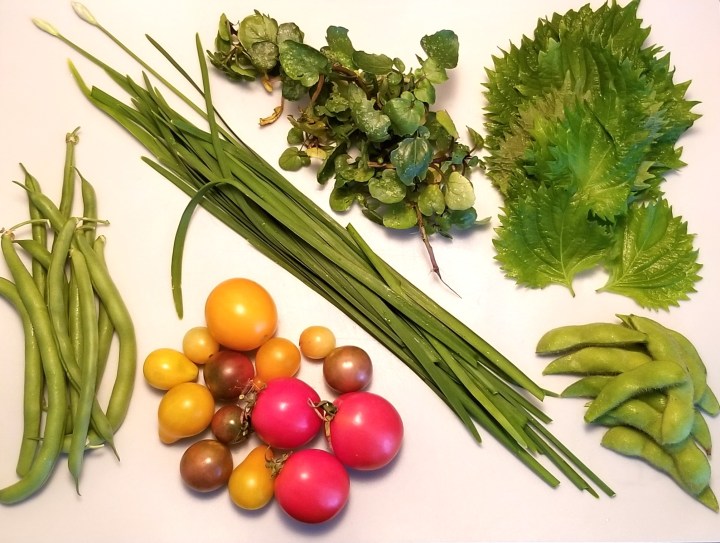
It has been an extremely hot month of August in Southern Ontario, and just this week, we got some rain and a break with more agreeable temperatures. Bugs (pests, defenders, and pollinators) are thriving, and I have been harvesting smaller amounts of produce and herbs compared to other years, but the plants themselves have grown very healthy. Here are six for this week:
1 – Beans (Phaseolus vulgaris)
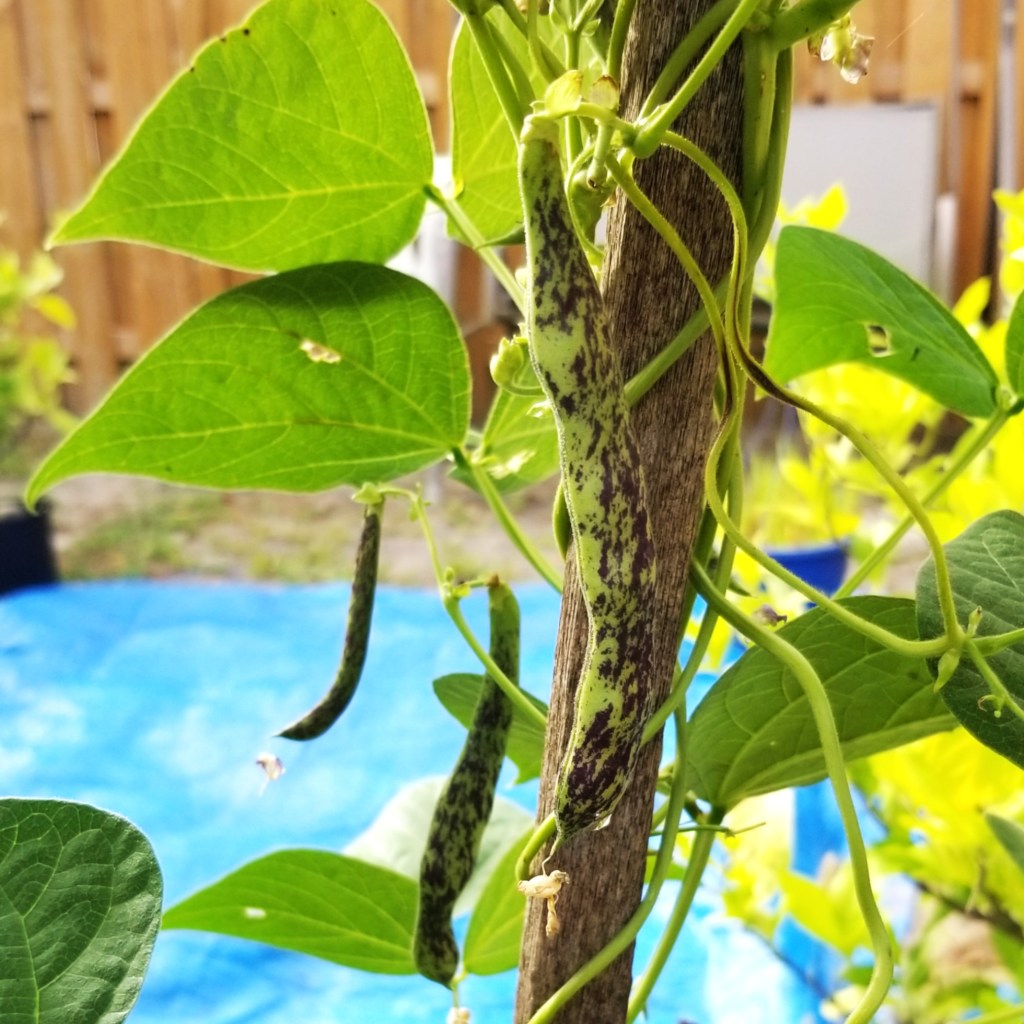
For an update from last week’s garden pictures, the dragon tongue beans continue to thrive, growing much taller than the average for this variety, which is supposed to have a bush form, but actually climbing like a vine:

Last week the vines were showing off many pretty pinkish flowers and a few young pods, and now, the flowers are fading, the pods are getting bigger, wider, flatter, and turning speckled:

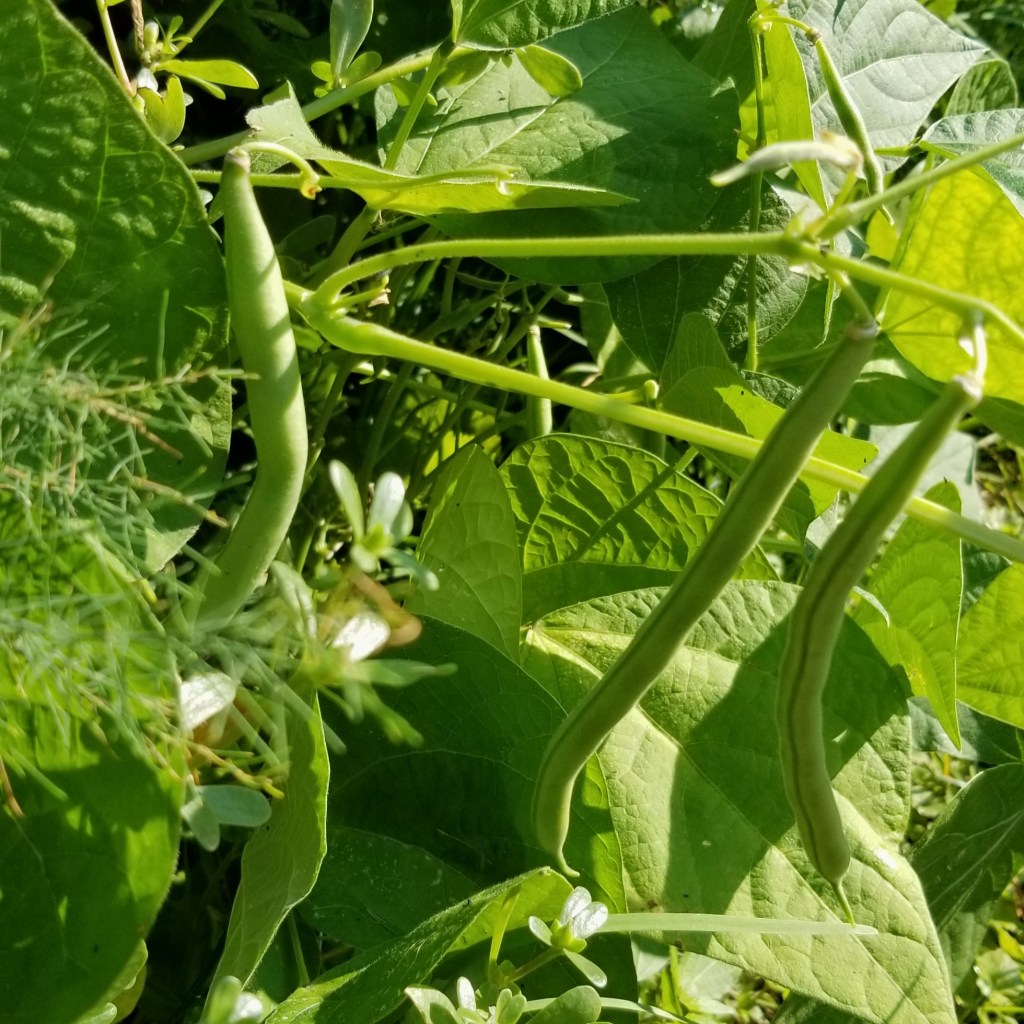
I am also growing green beans, and although they have been attacked by Japanese beetles, they are otherwise healthy and growing long:
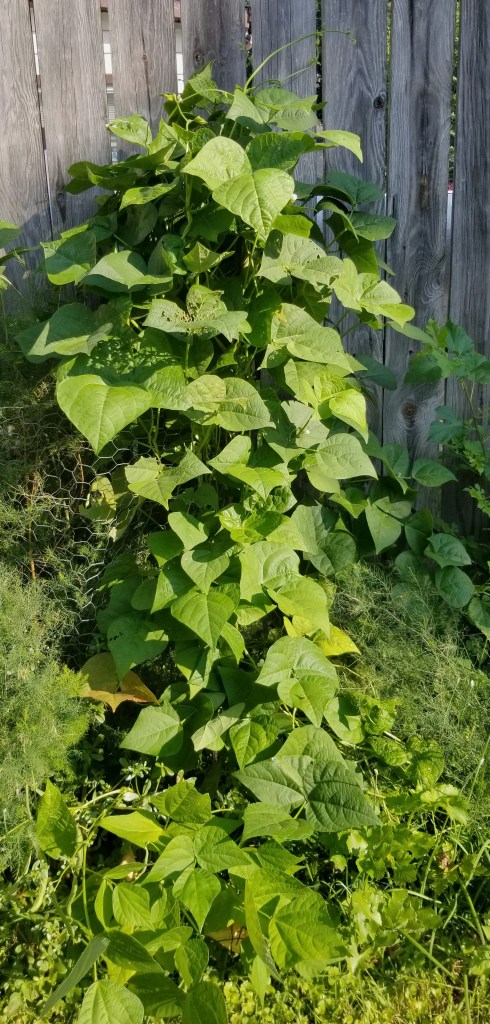
Pods and flowers are everywhere along the vines:

2 – Garlic Chives (Allium tuberosum)
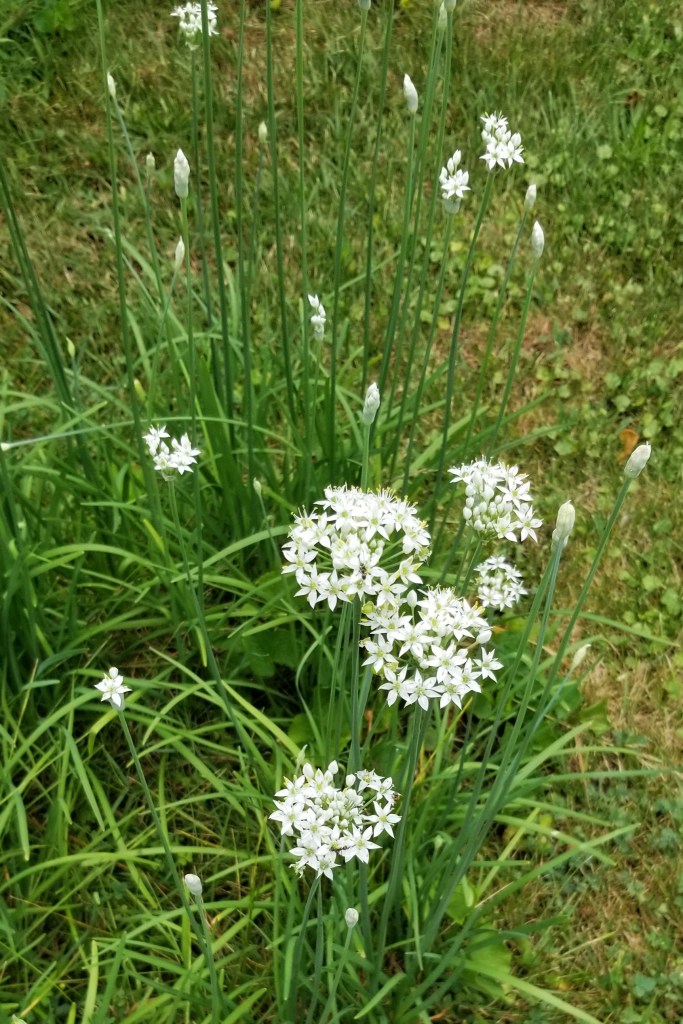
This herb from the onion family is originally from Asia, but grows well in almost any region nowadays, and in North America it might be considered an invasive species, since it survives freezing temperatures and proliferates by its abundant seed, as well as by multiplying of its narrow bulbs. The leaves are flat and taste like scallions but with a characteristic garlic-like note, hence the name. Garlic chive plants bloom in late summer, as shown below:
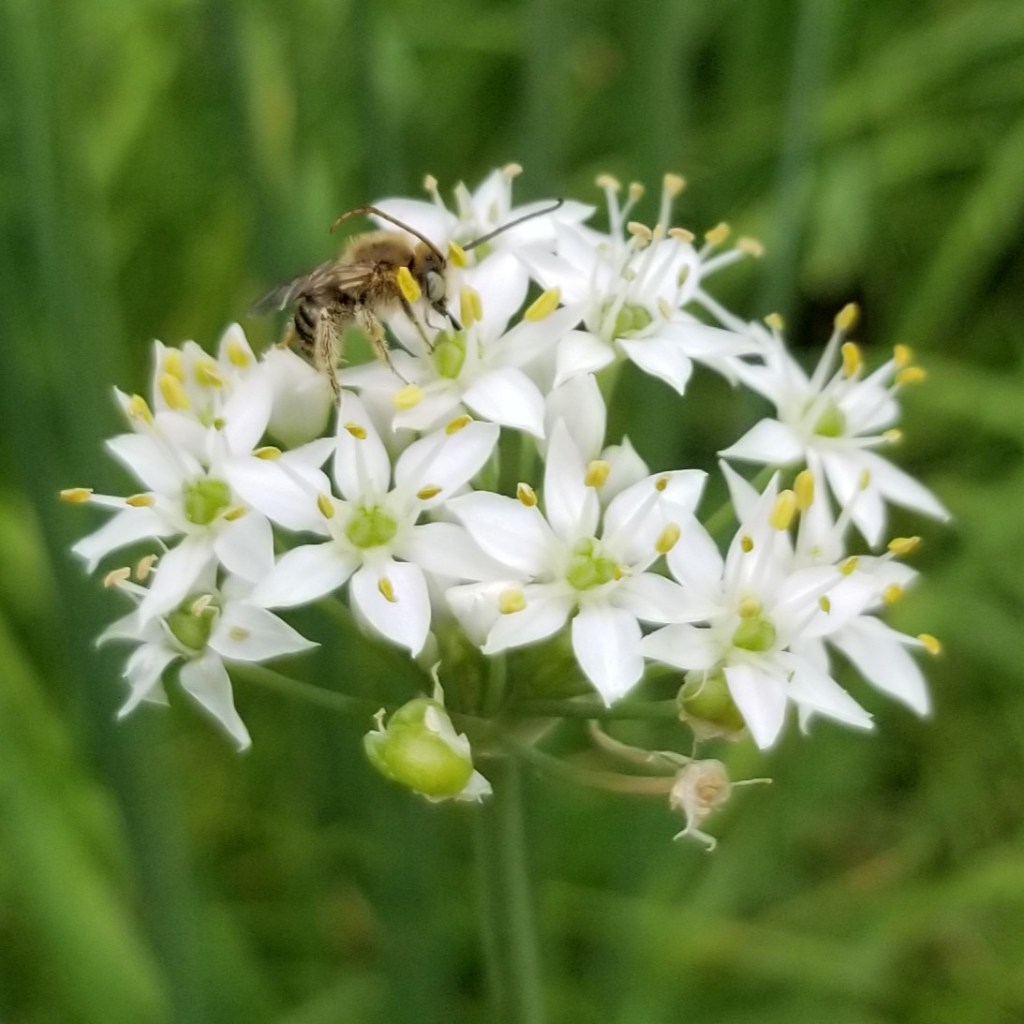
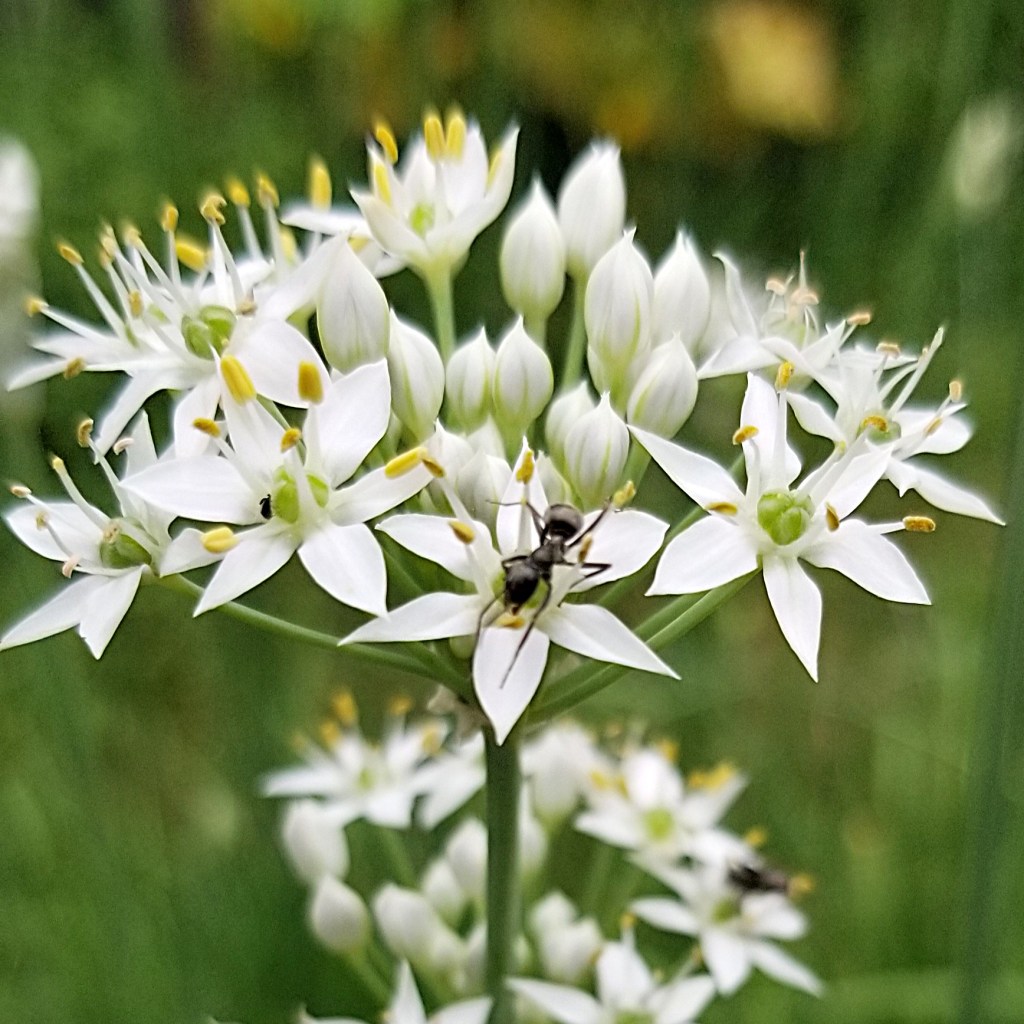
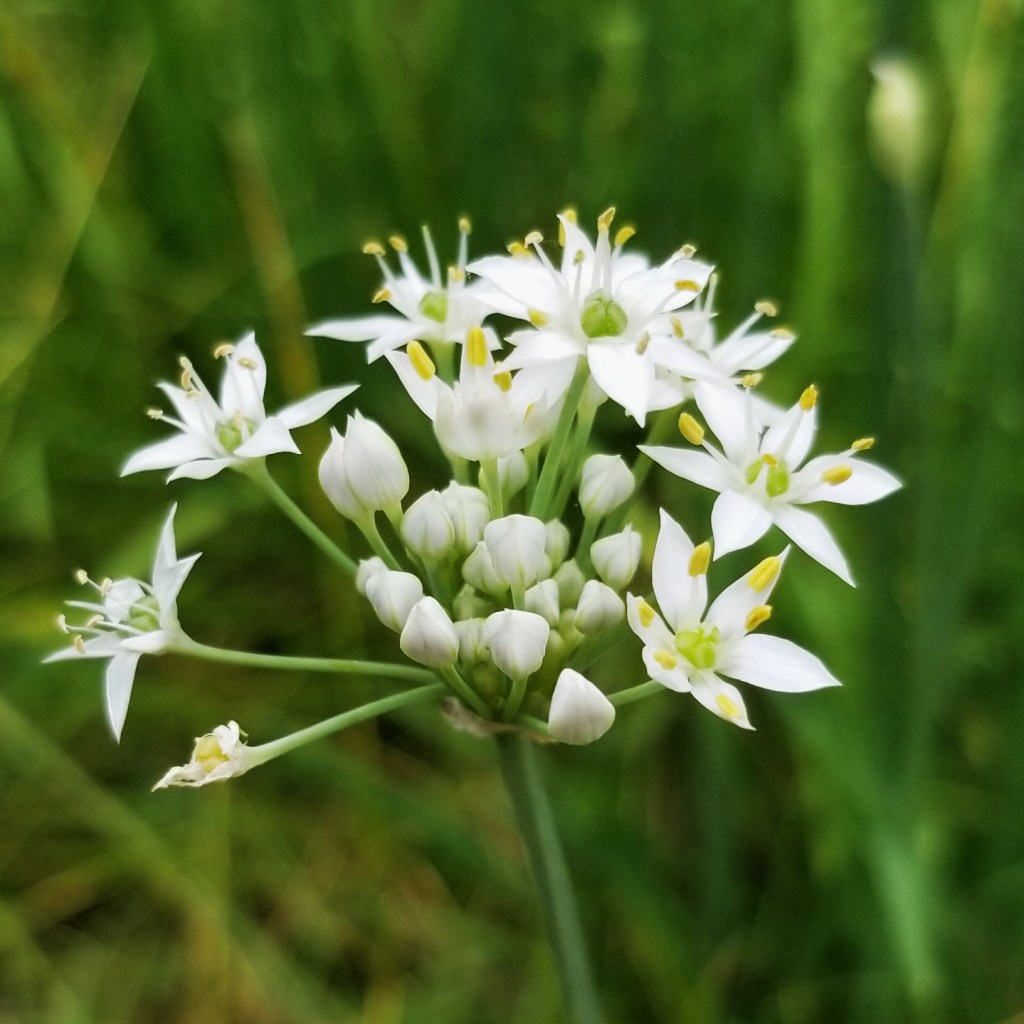
The flowers are white, tiny and very pretty, growing in round clumps. They are an important source of nourishment for pollinators; it was rather hard to find a clump without a dinner guest on, as seen below, from left, with a bee, and ant and at least another two insects, and finally, a clear clump of buds and flowers:
3 – Watercress (Nasturtium officinale)
As I have mentioned before, I am growing watercress from seed for the first time in my garden. The seed was sprouted indoors, then transplanted to a patch in my backyard, next to where rain water washes away. I have been also watering and flooding the patch, to try and recreate the natural growing conditions of wild watercress, by river streams or ponds.
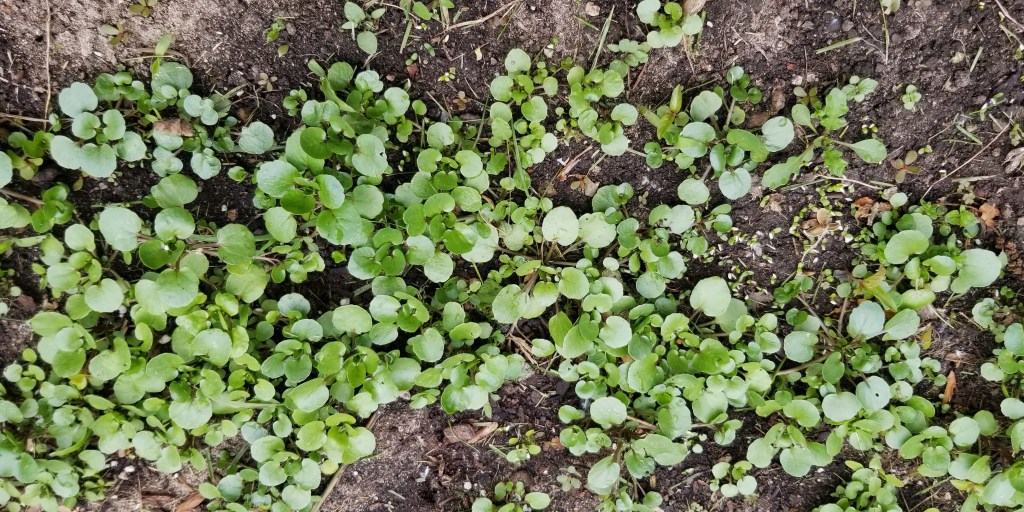
By early June, the little sprouts had grown considerably:
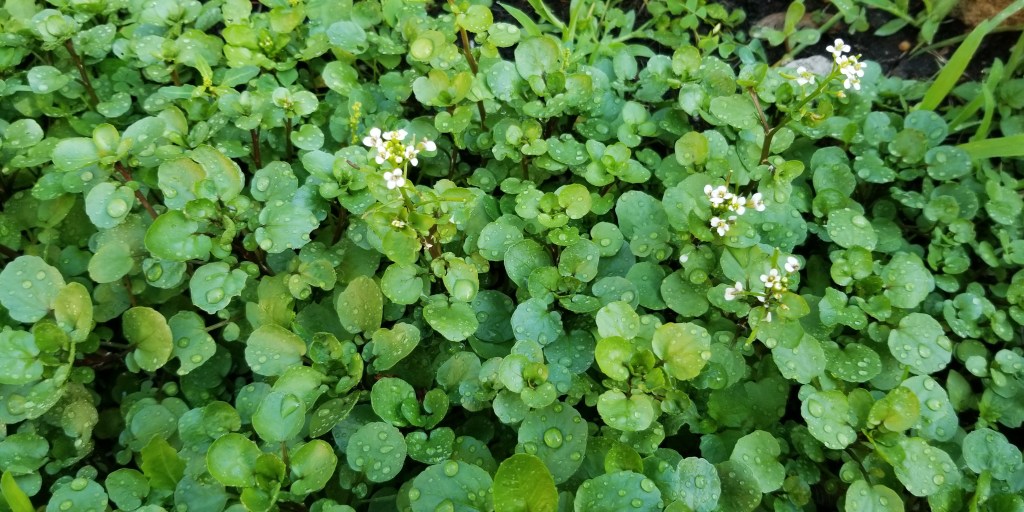
By late June, there was some blooming, and the leaves were almost ready for harvest:
The harvest continued throughout late July:
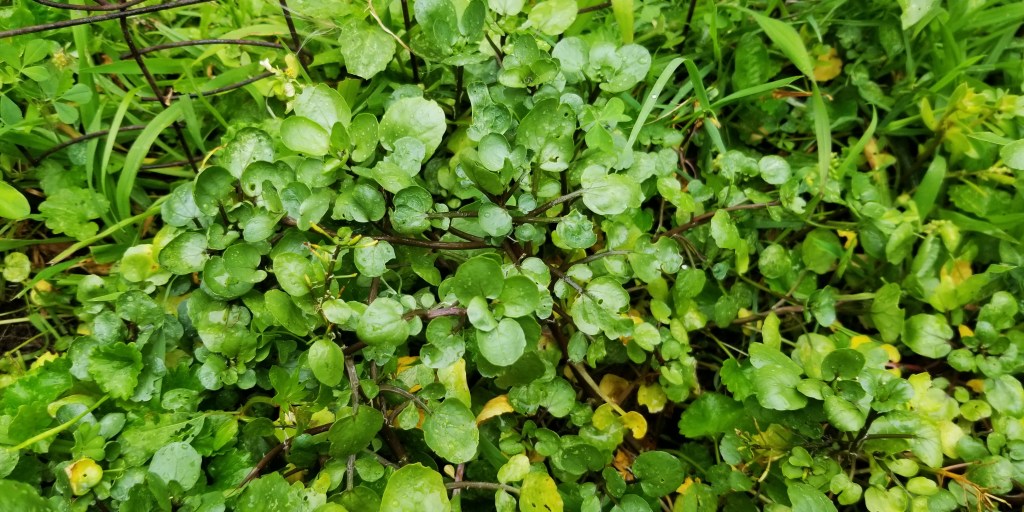
Despite the tougher look of the stems, the flavour was still fresh and not bitter, and I was still harvesting until last week.
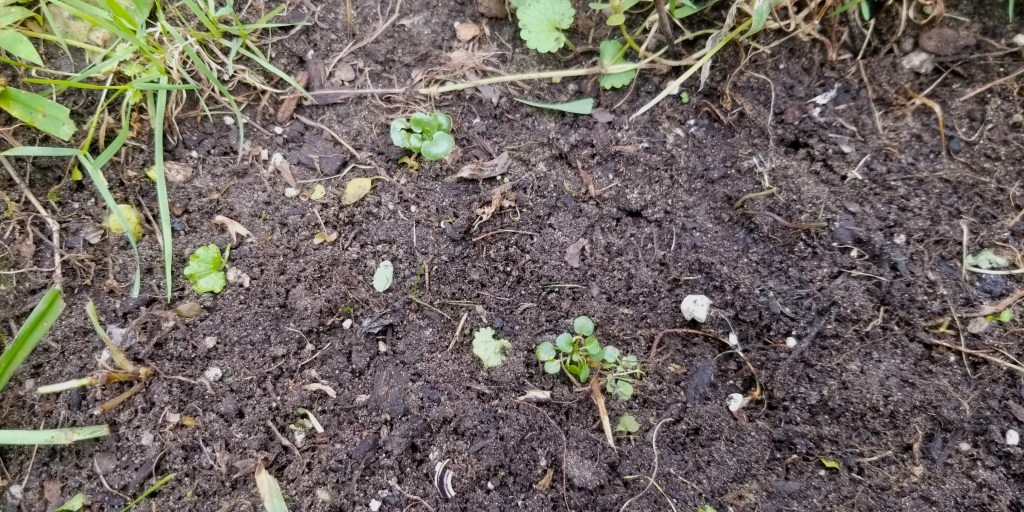
Eventually, the patch got overtaken by weeds, so I pulled everything. A few watercress sprouts are already growing, probably from seed from the flowers, and hopefully they will survive the winter:
4 – Green Perilla (Perilla frutescens var. crispa)
I have shared photos of both my green perilla and red perilla, and although hard to grow at first, once established in the garden, they self-seed and come back year after year, resilient as most plants from the mint family. The green perilla always seems to grow stronger, and propagates easily:
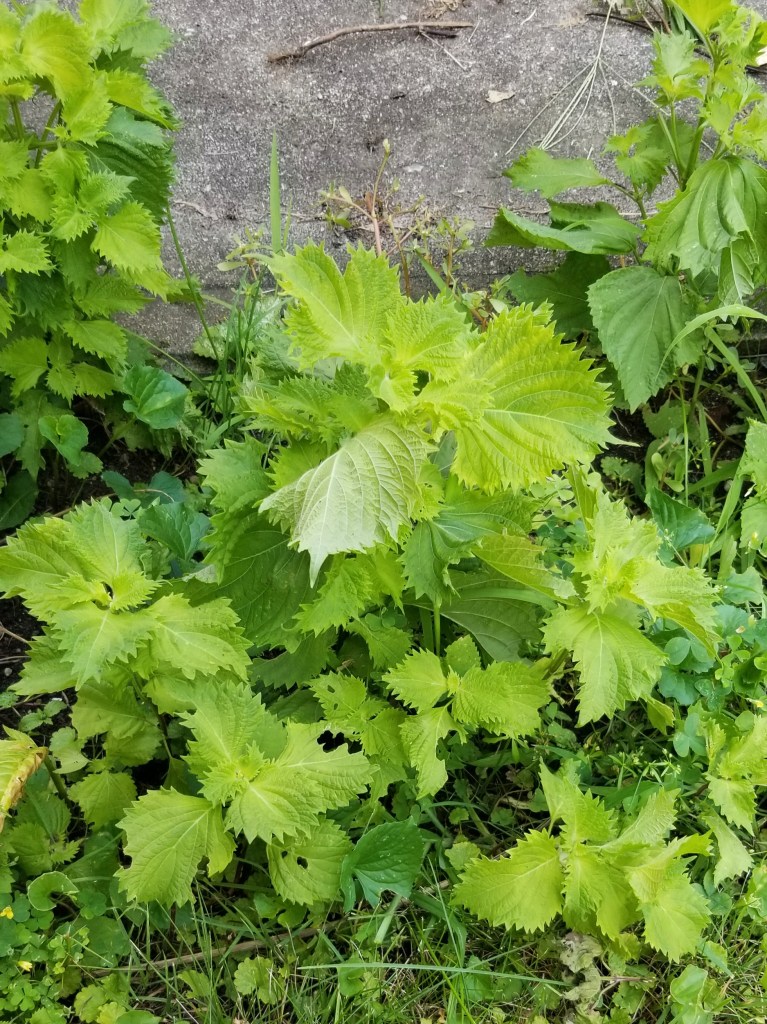
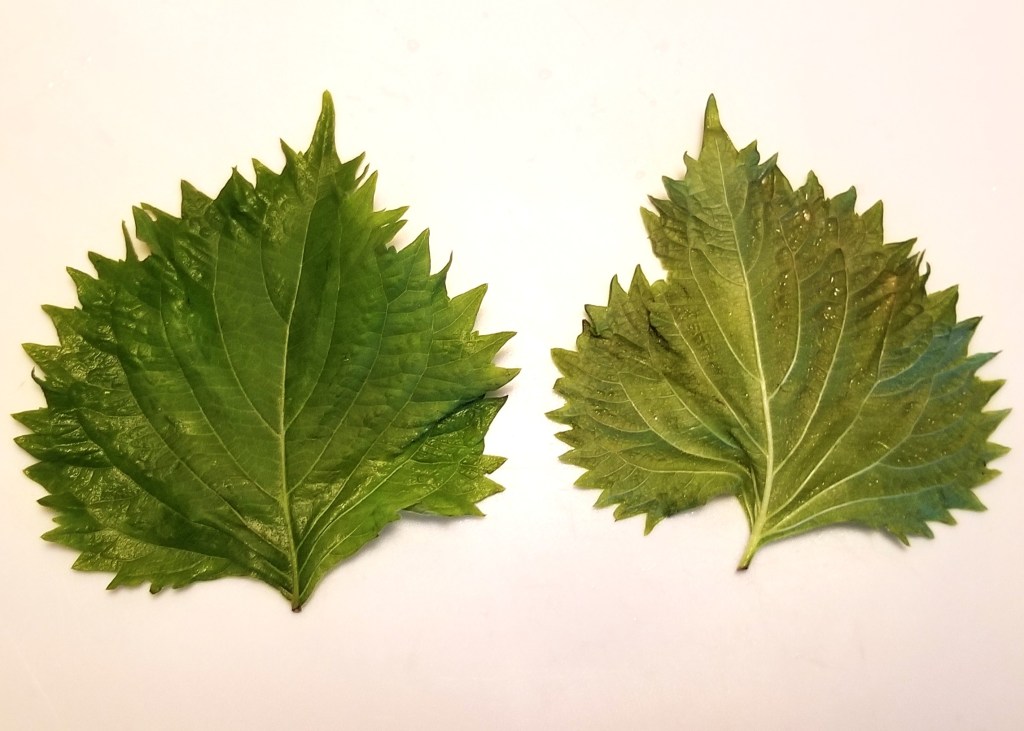
This plant is known as Ao Shiso in Japan, and it is used extensively in its cuisine. Those green plastic leaves often found in sushi boxes are a substitute for fresh green perilla leaves, which are also served along raw fish (sashimi), because of their freshening scent and flavour, and as a digestive aid:
5 -Edamame (Glycine max)
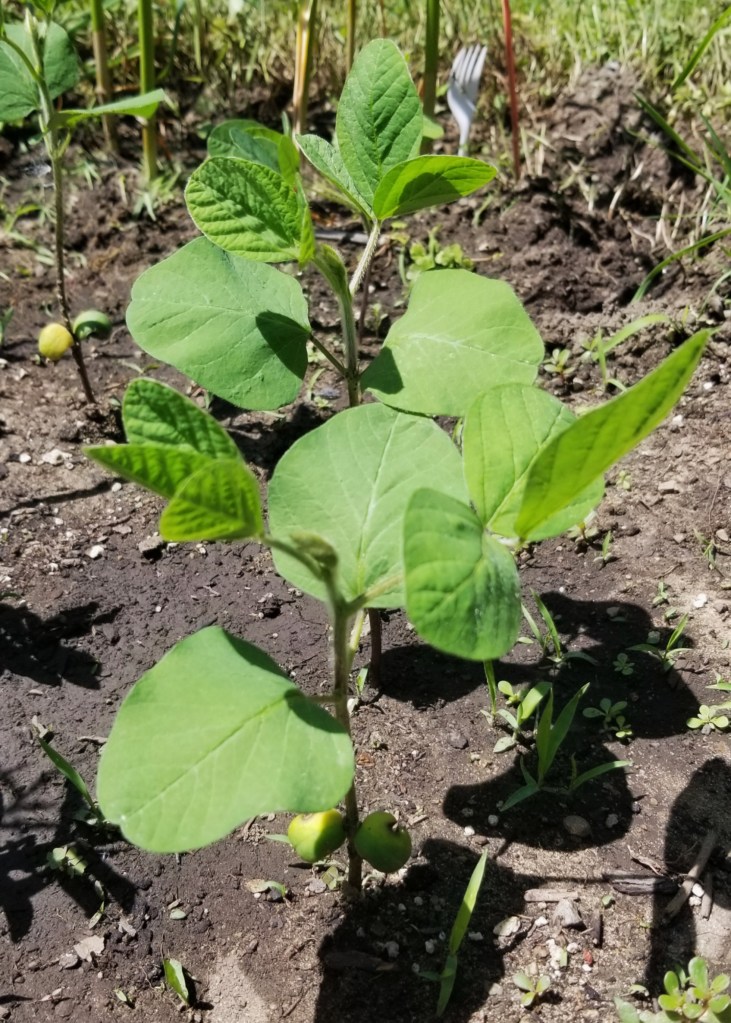
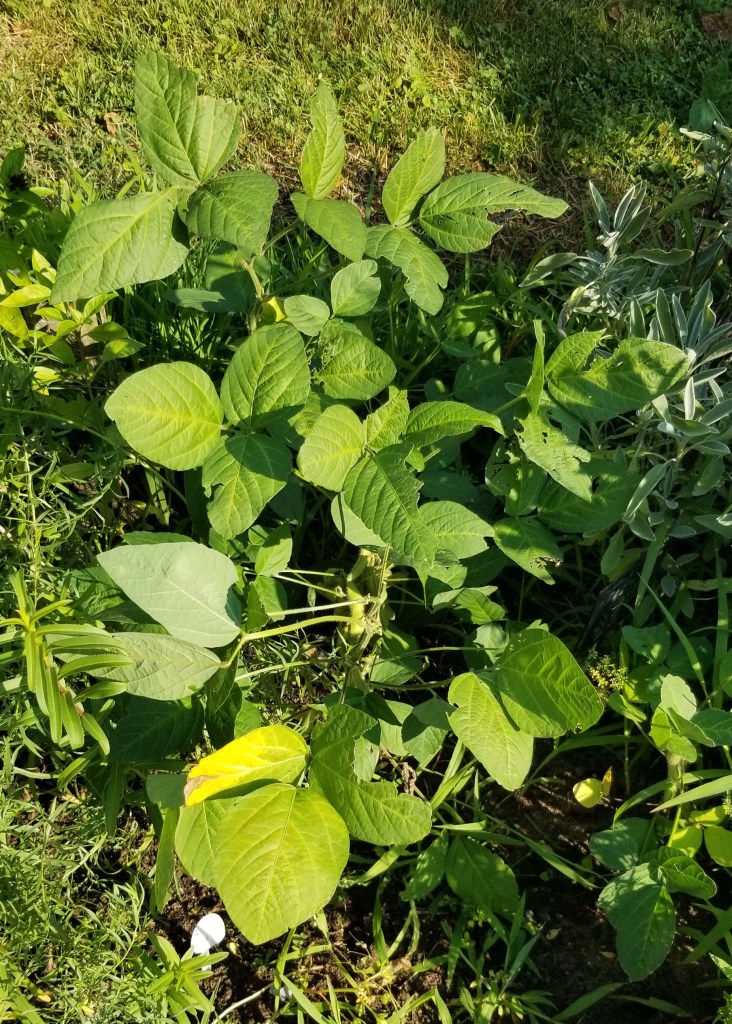
These green soy beans originated in Japan; I grow them in my backyard almost every year, but because they were unknown outside of Asia until a few decades ago, I do not have any posts dedicated to them on my blog. I got a new packet this year, and they are growing very well, as can be seen below, left, plants in late June had healthy greenery, and by mid August, in the photo below, right, are heavy with fuzzy pods, ready for the harvest:
The pods grow in clusters, so they are easy to harvest, all at once:
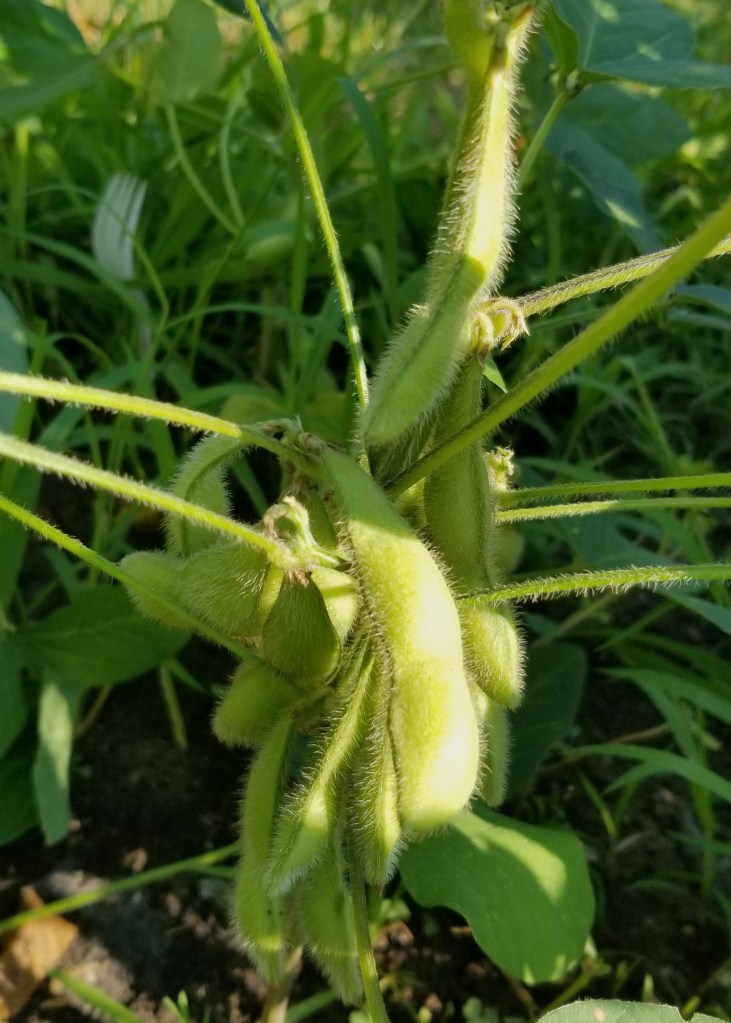
Just from three plants, I got a tray full of pods:
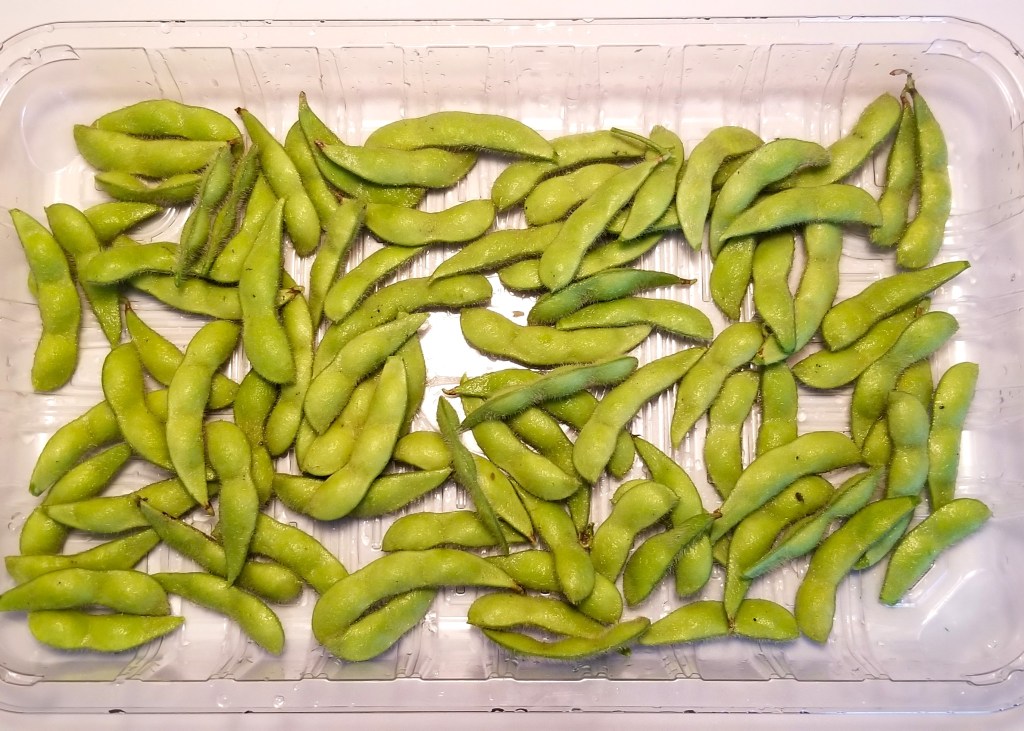
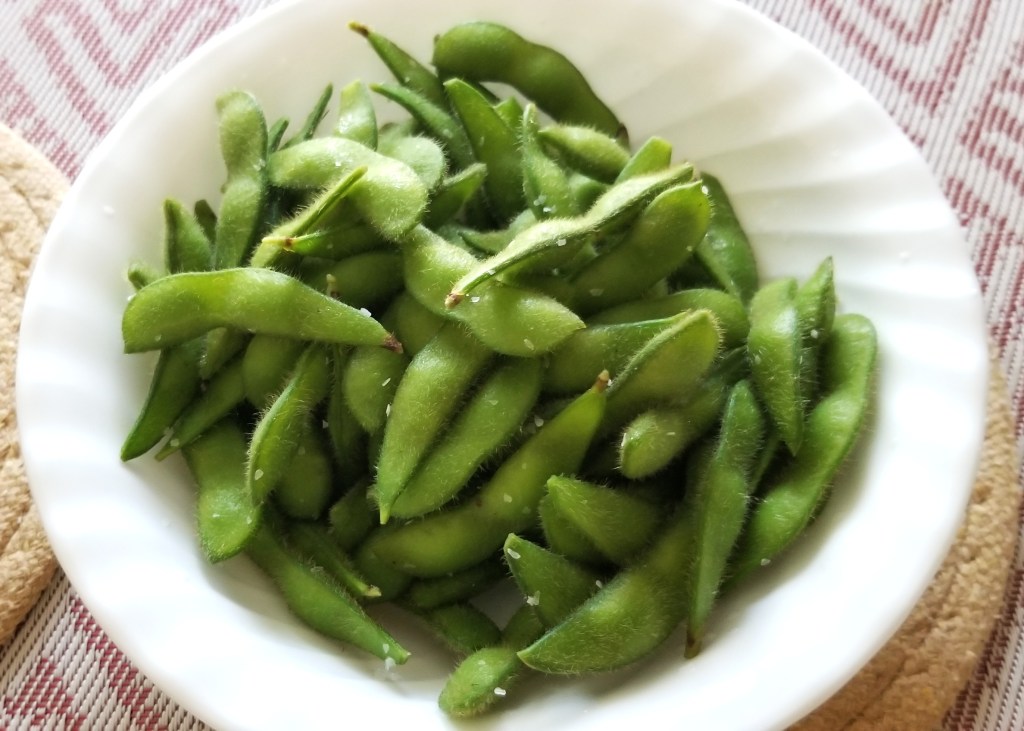
I still have another two plants with pods, and I might try something different with those, but for this batch, I just washed them, boiled them just until they turned bright green, and then served with a sprinkle of coarse salt:
6 – Cherry Tomatoes (Lycopersicon esculentum var. cerasiforme)
A variety of tomatoes, characterized by their small size, they can be found in round, elongated, and pear-like shapes and many different colours, from yellow, to red, brown and even purple. In my garden this year, I have yellow pear, black cherry, golden cherry, and regular red:
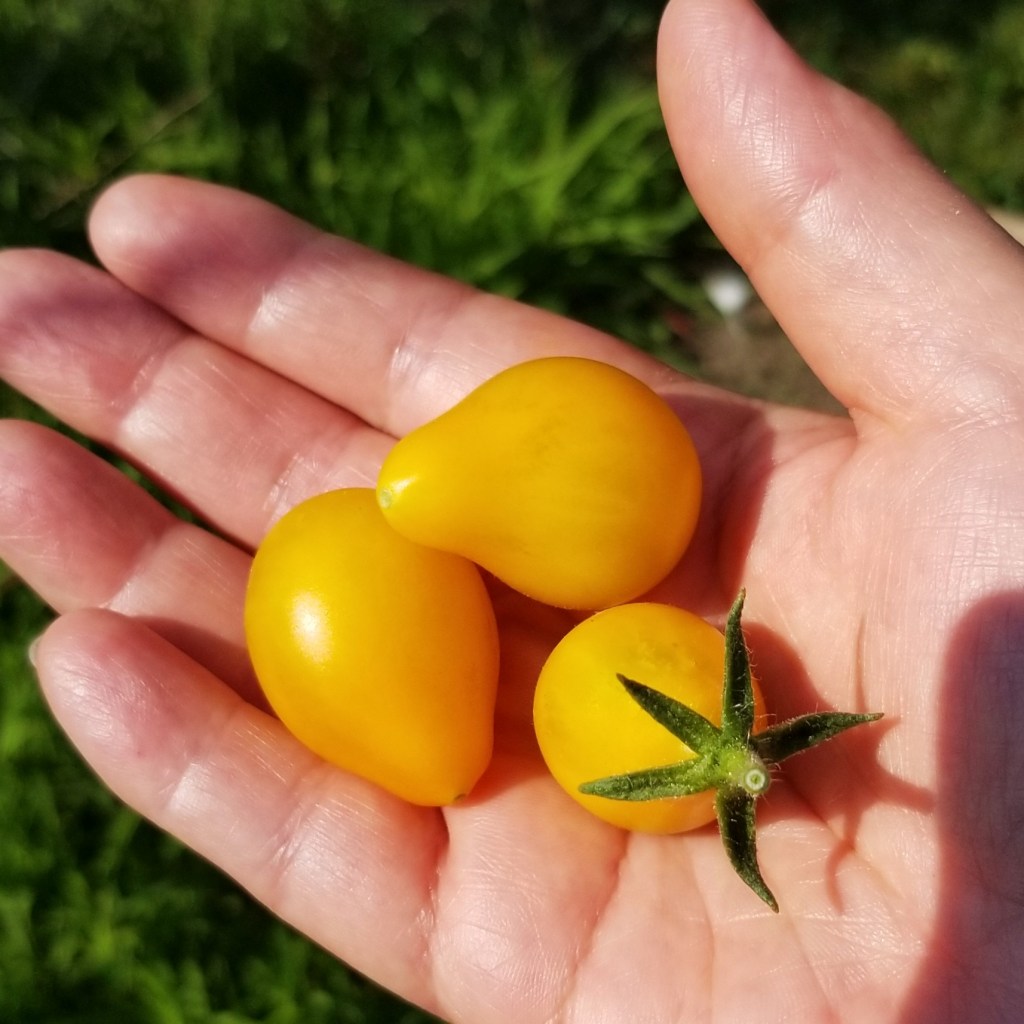
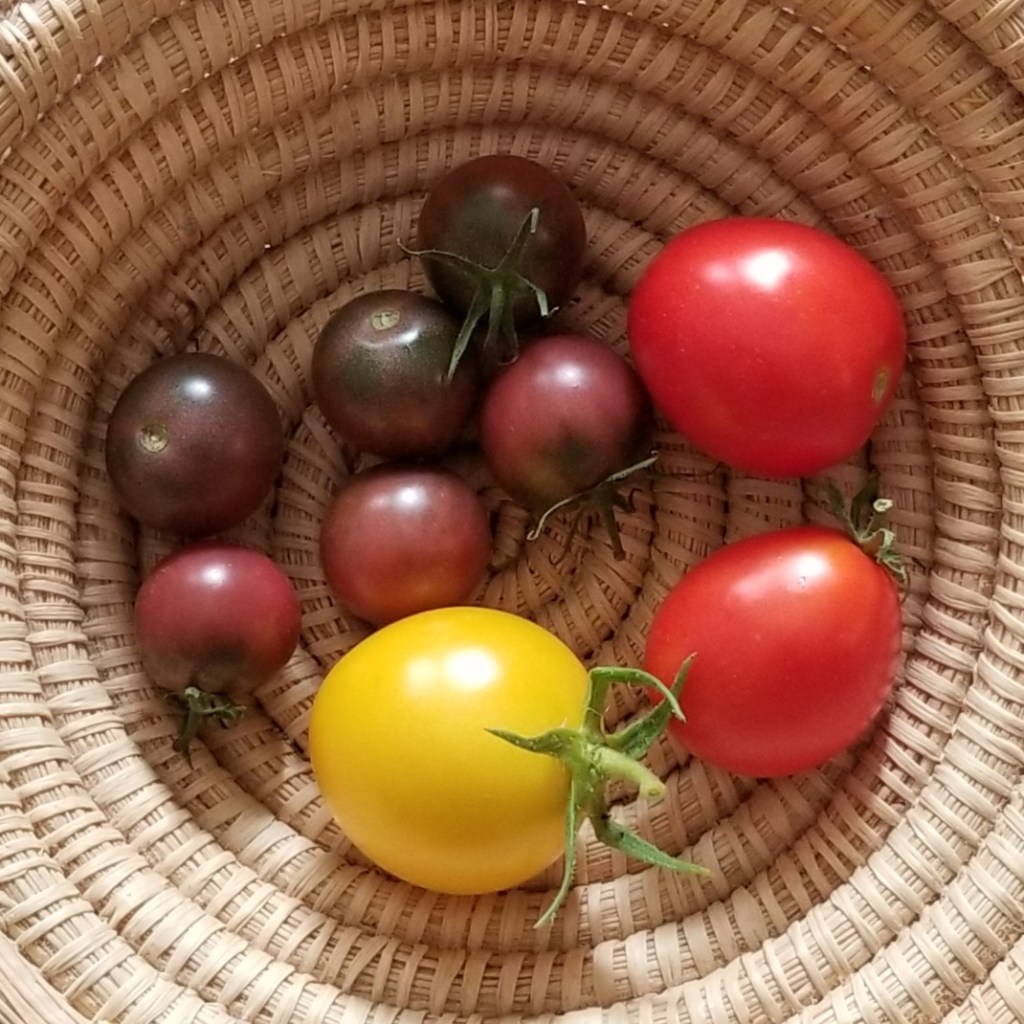
They have been producing a handful of fruit for a couple of weeks now, and although they are starting to look tired, there are still quite a few tomatoes ripening on the vines:
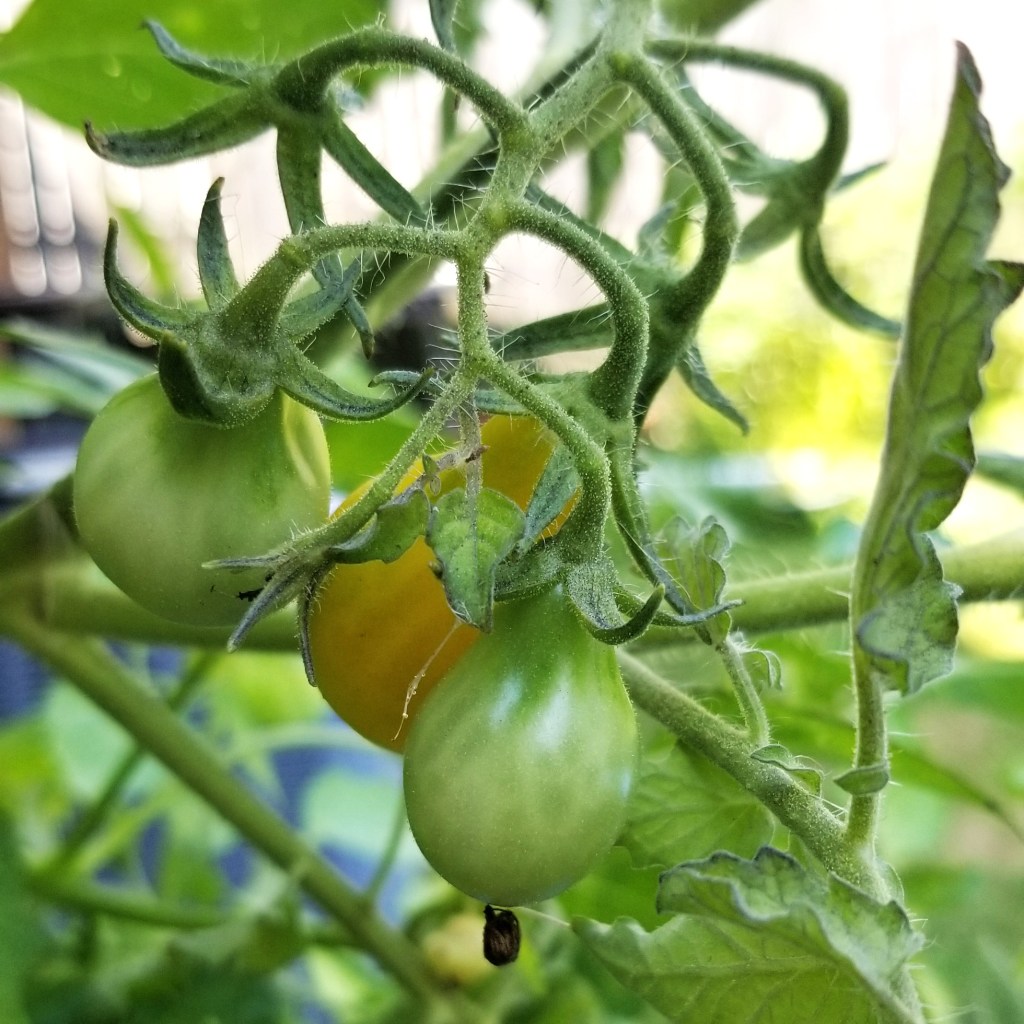
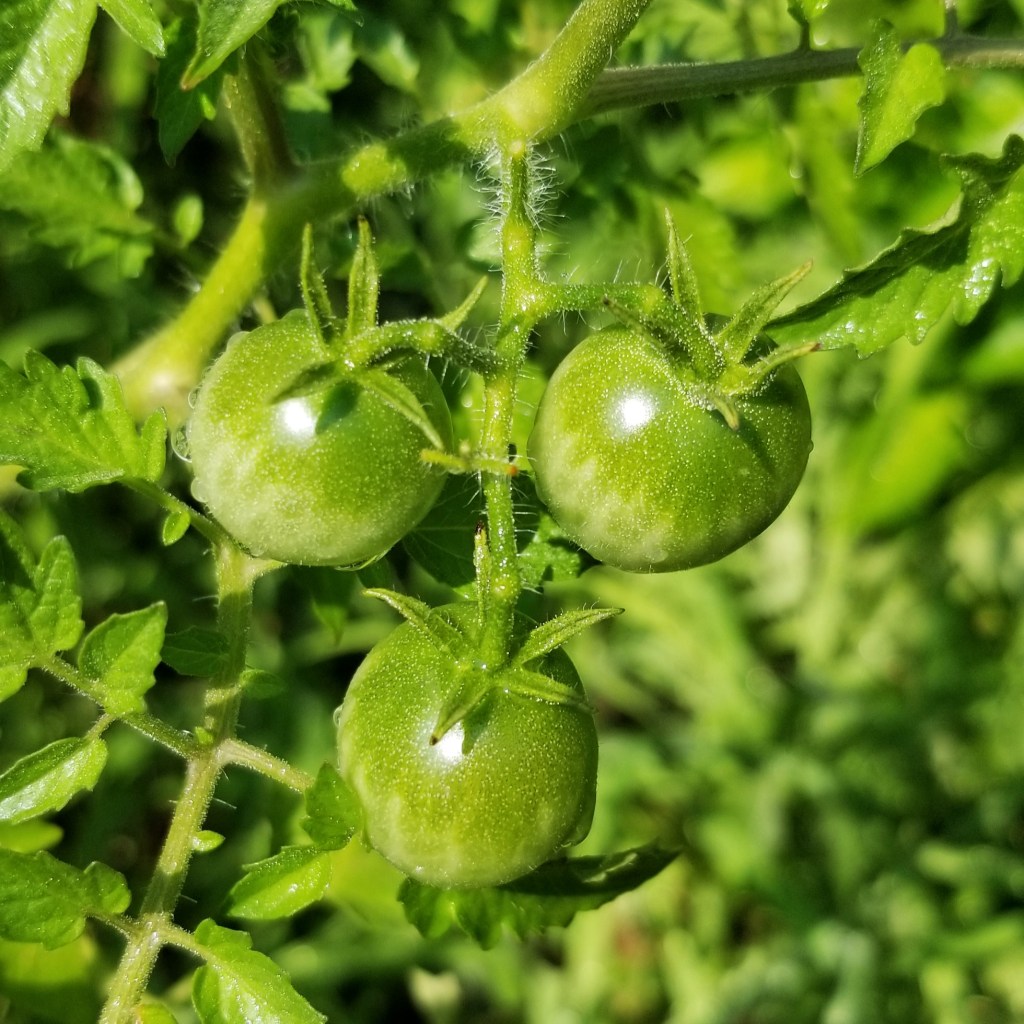
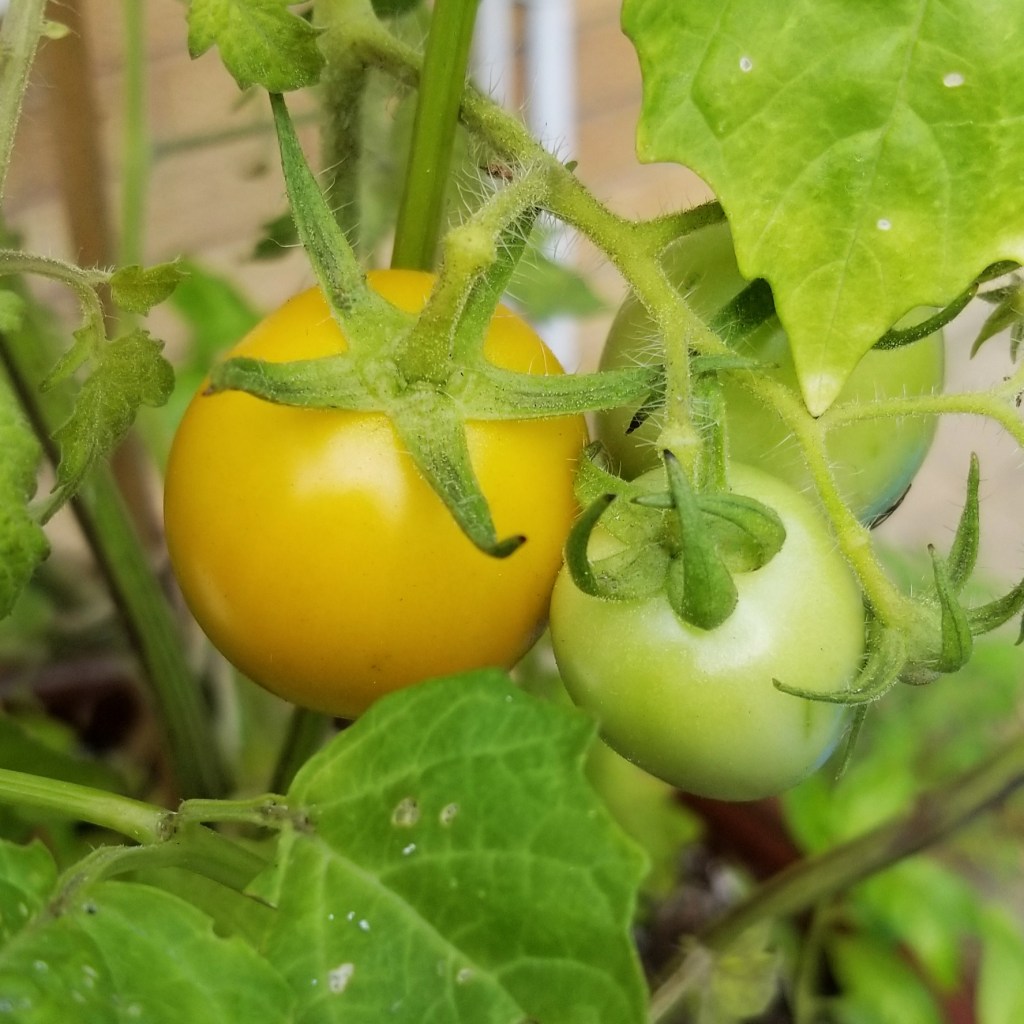
I have clipped the tips of all the plants, to stop further growth and promote ripening of the crops, as the end of the season approaches.
I am joining Six on Saturday for August 23, 2025, hosted by Jim Stephens @ Garden Ruminations.
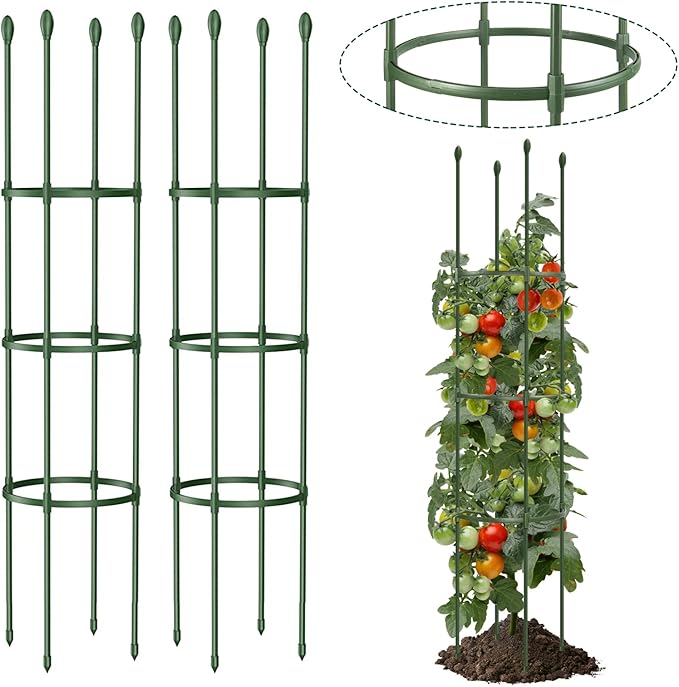
For your convenience, click on the images or text below for a few garden supplies: trellis, gloves and labels, available on Amazon™. DISCLAIMER: Any reviews included in this post are my own, for items I have purchased, not provided by any company; as an Amazon Associates Program affiliate, I might receive a commission for any purchases originated from the links below, at no extra cost to you (thank you to all who have bought other products starting with a click from my links!):







 My Slice of Mexico
I enjoyed your garden update and lovely photos. You’re giving me gardening ideas for next year. The edamame are interesting looking.
LikeLiked by 1 person
Awesome, Lisa!
LikeLiked by 1 person
Garlic chives can be very invasive here in the Southeast if you let it go to seed.
LikeLike
Yes, I have them growing in a confined bed, and still, they have managed to “jump” to another three beds!
LikeLike
Brilliant! I love watercress and miss living in an area where I know a place I could harvest a bit. I may try next year!.
LikeLiked by 1 person
It’s relatively easy as long as you keep them wet, and you know they are not contaminated 👍
LikeLike
A wonderful reminder of what a little love in the garden can produce – am just establishing a herb garden on a studio-attached patio > garlic chives will feature big 🙂 !
LikeLiked by 1 person
Happy gardening, Eha!
LikeLiked by 1 person
I always enjoy seeing what you grow and harvest each year. The watercress was quite interesting.
LikeLike
Thank you, Eilene! The watercress worked well, it will be also interesting to see if it self seeds.
LikeLiked by 1 person
Quite a variety of cherry tomatoes in your harvest
LikeLiked by 1 person