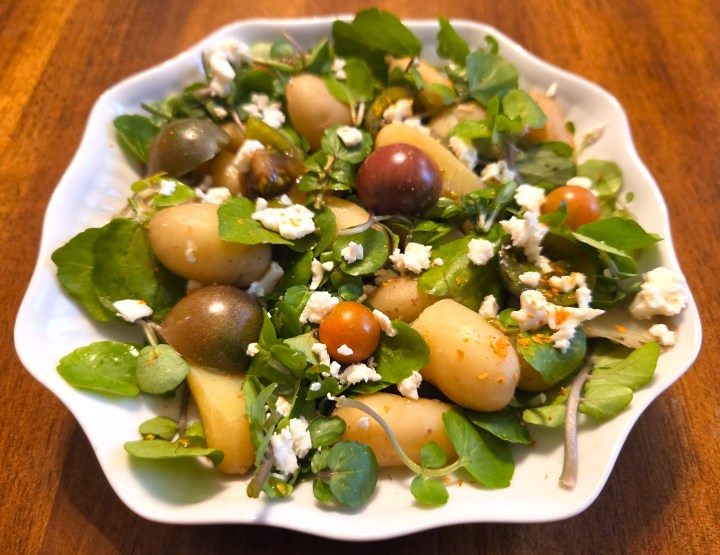
First attempt in September 2025 – I shared a recipe for a salad featuring my garden watercress and cherry tomatoes, with the addition of store-bought mini potatoes:
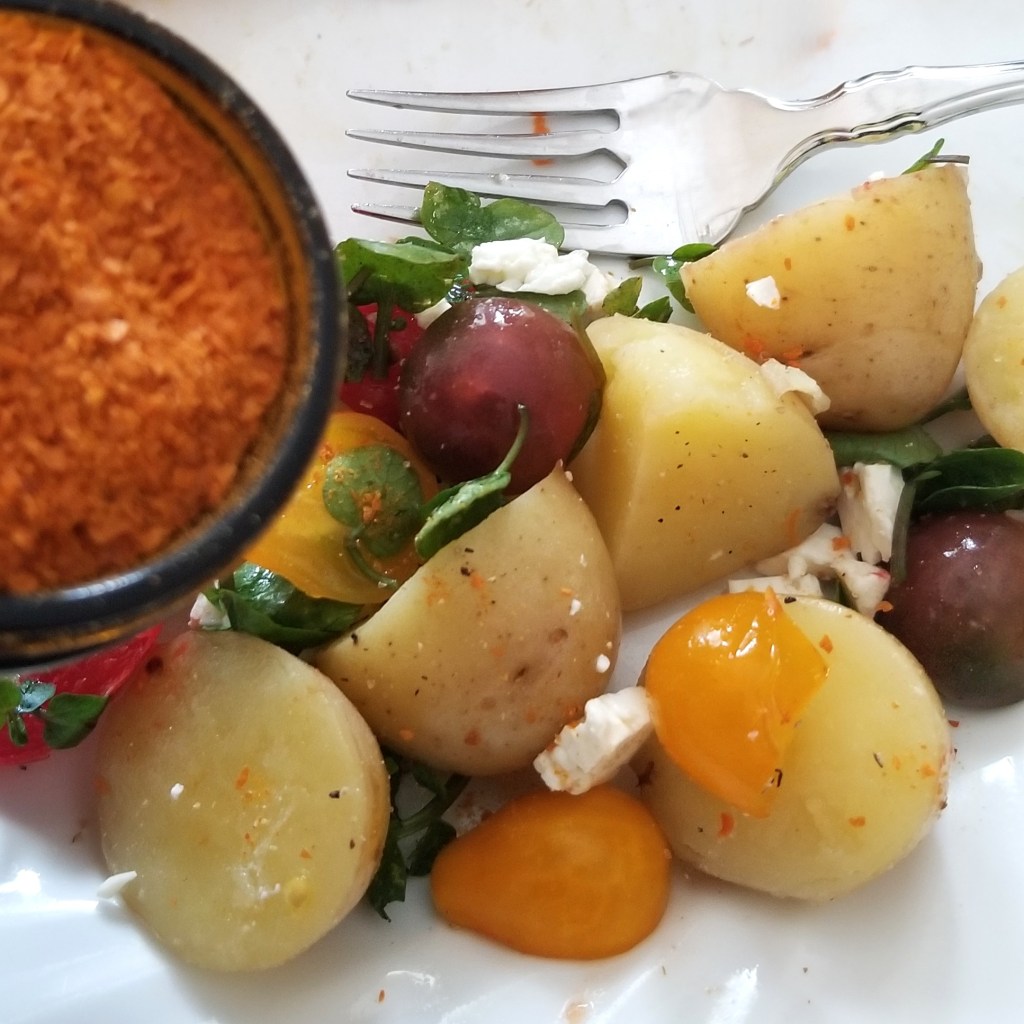
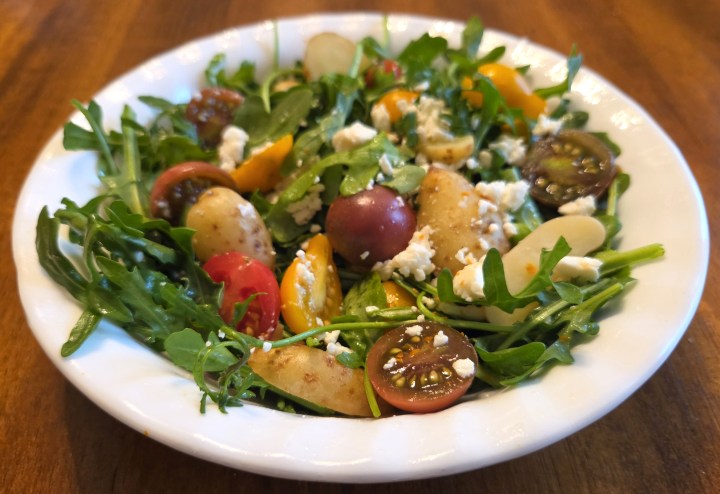
Second attempt in September 2026 – The salad was such a big hit, that this year I tried growing my own mini potatoes to have a full garden-to-table dish. As I shared in a recent post, I did try growing La Ratte fingerling potatoes, with good harvests in late August and September. The watercress crop was also great, but this year was a little earlier than last year, peaking early in the summer, while the cherry tomatoes were slow to ripen, so by the time I had a good amount of tomatoes and potatoes, the watercress seemed to be mostly done. I made another version of my salad, this time with garden potatoes and tomatoes, but with store-bought arugula:
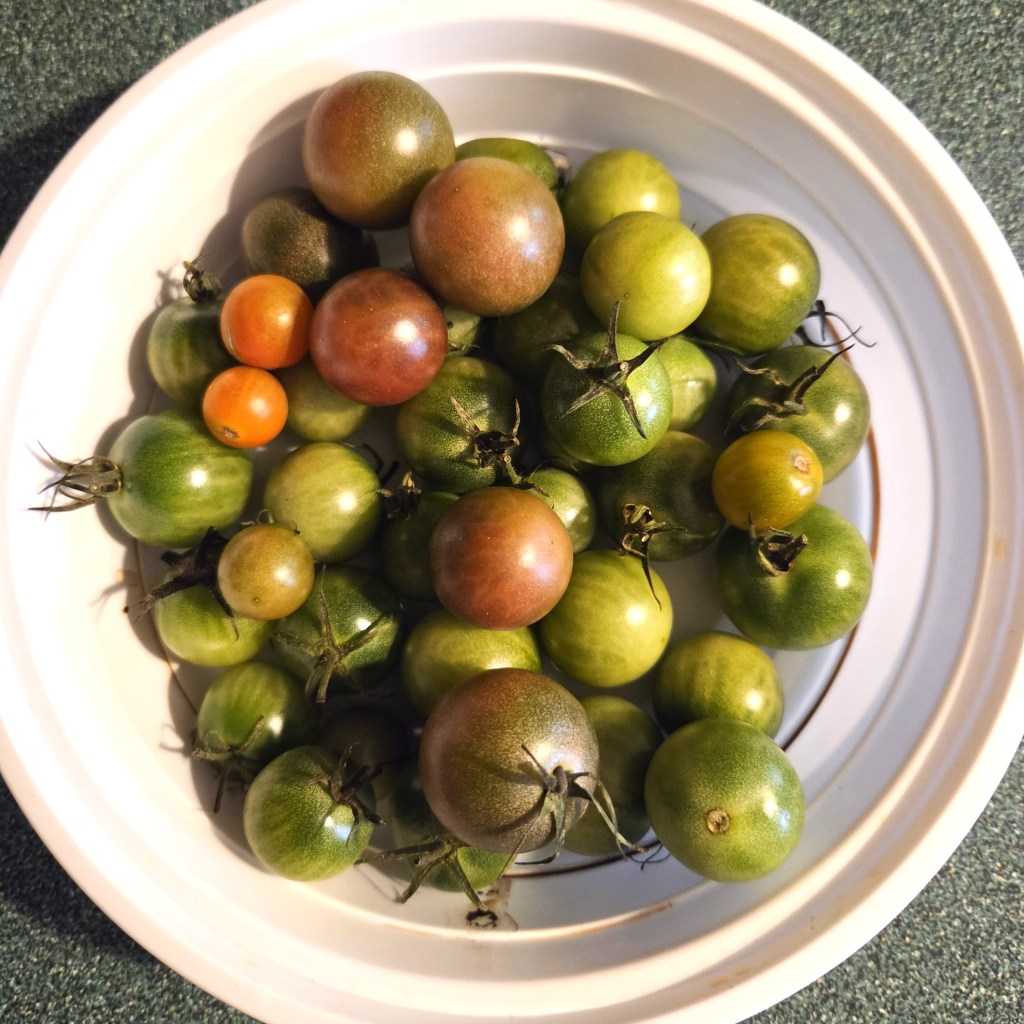
Third attempt in November 2026 – I pulled all my tomato plants, and as I mentioned, they were slow to grow this year, so I managed to harvest a few in different stages of maturity:
And just as I was wrapping up my garden for the cold season, I inspected the pots where I grew fingerling potatoes and watercress, and to my complete surprise, once the weather had turned cooler, some potato plants and watercress sprouts had resumed growing.
The potato stems were dead (photo below, left) but after digging, beautiful new fingerling potatoes were uncovered (photo, below, right):
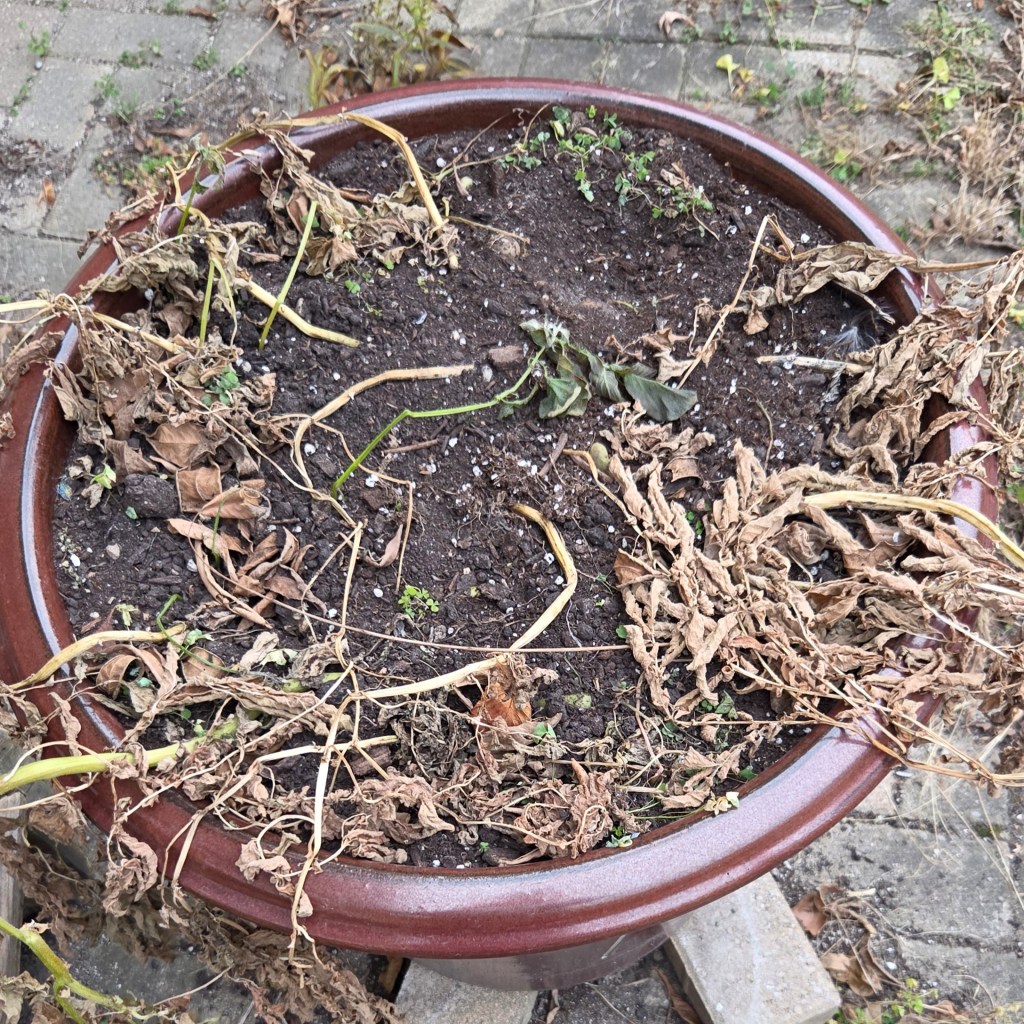
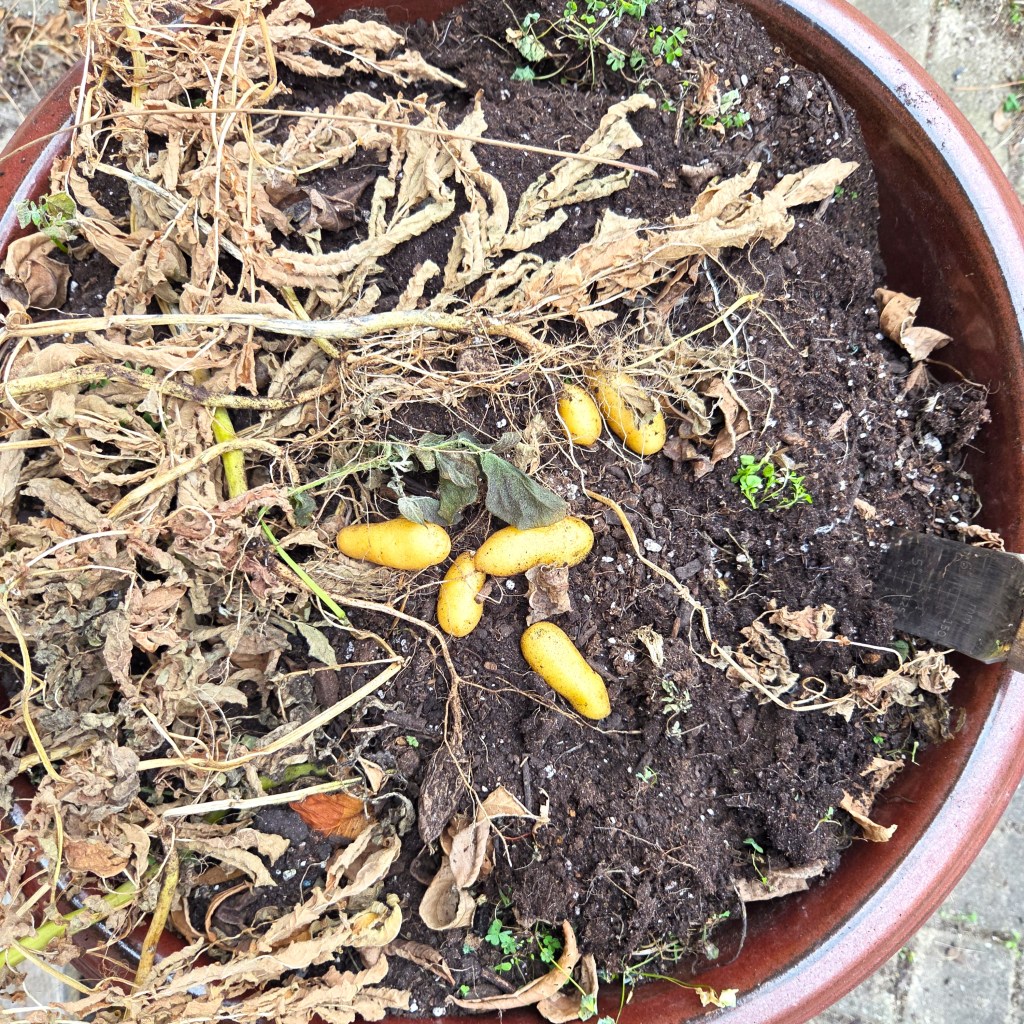
I harvested over one pound (540g) of fingerlings:

As for the watercress, being a resilient cold-weather plant, I was able to harvest a small but strong bunch:

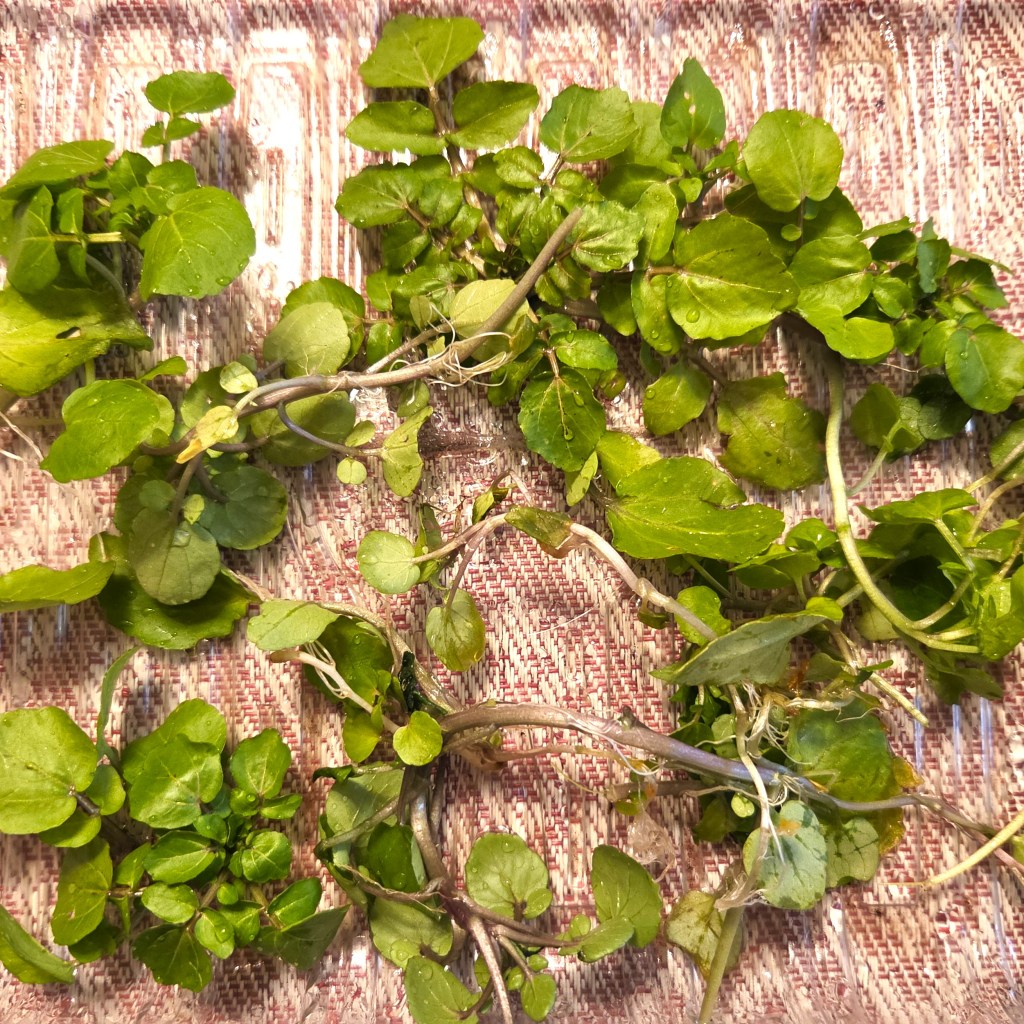
Of course, this unexpected bounty ended up in the third and – finally – fully successful garden salad, with all three crops from my backyard: cherry tomatoes, fingerling potatoes and watercress!
Other crops worth mentioning from my fall wrap-up are as follows:
Raspberries – I got new canes in the spring (photo below, left from May 2026), and they produced a small harvest throughout the summer. Now the canes are full-grown and wilting (photo below, right):


I hope that the plants will get more established, and that second-year canes will produce a larger crop next year.
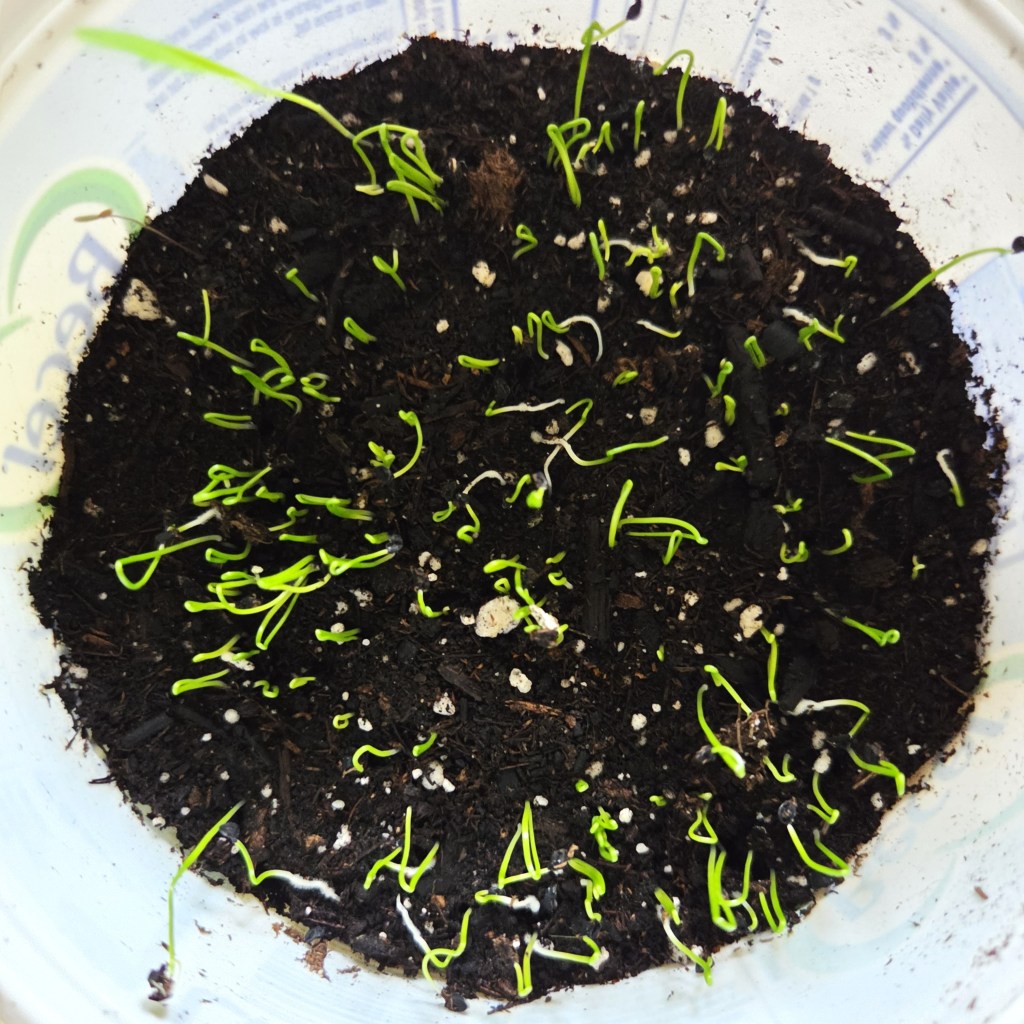
Leeks – I started a container indoors with seed, which sprouted well (photo below, left), and continued growing outdoors (photo below, right):
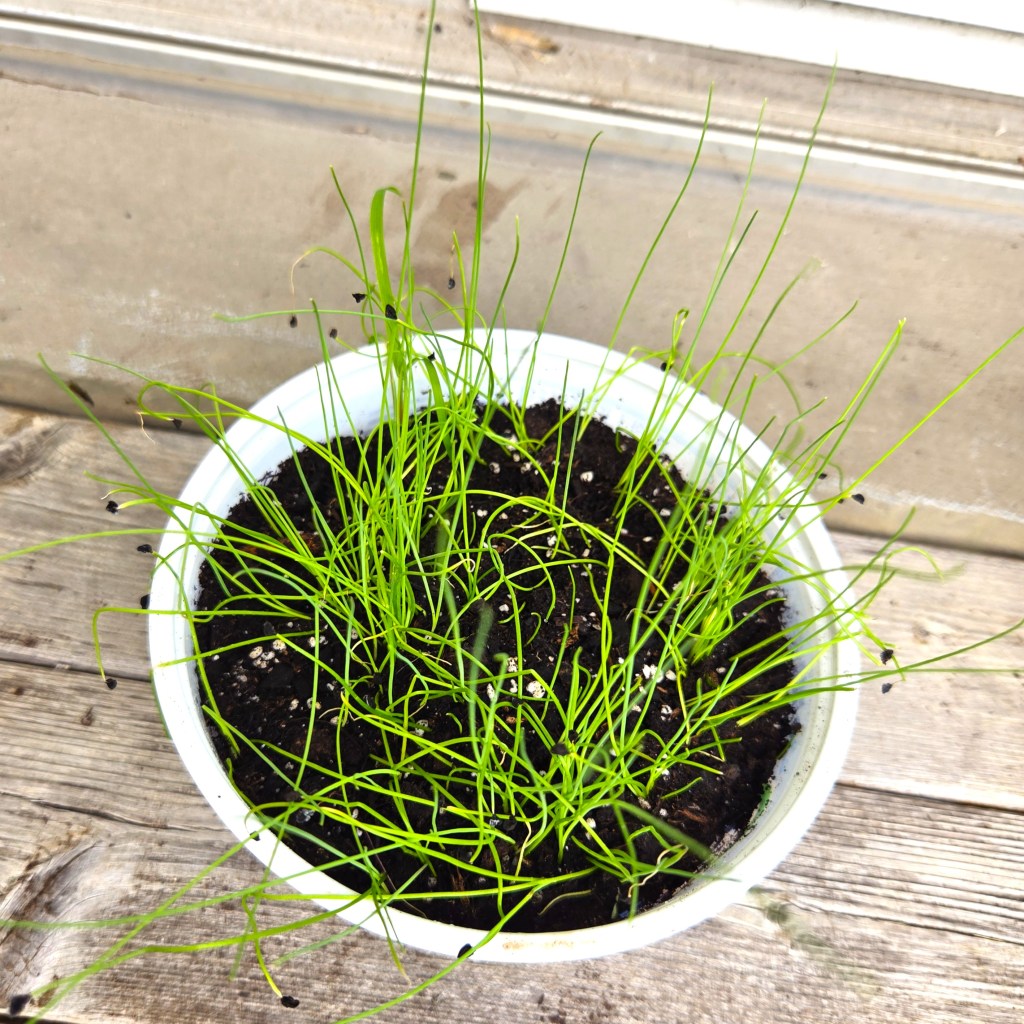
A few weeks later, the seedlings were transplanted to a garden bed (photo below, left). They really grew slowly throughout the summer and early fall. They still look very small (photo below, right):


I probably will have to pull them soon, as a hard frost is now imminent in my gardening zone.
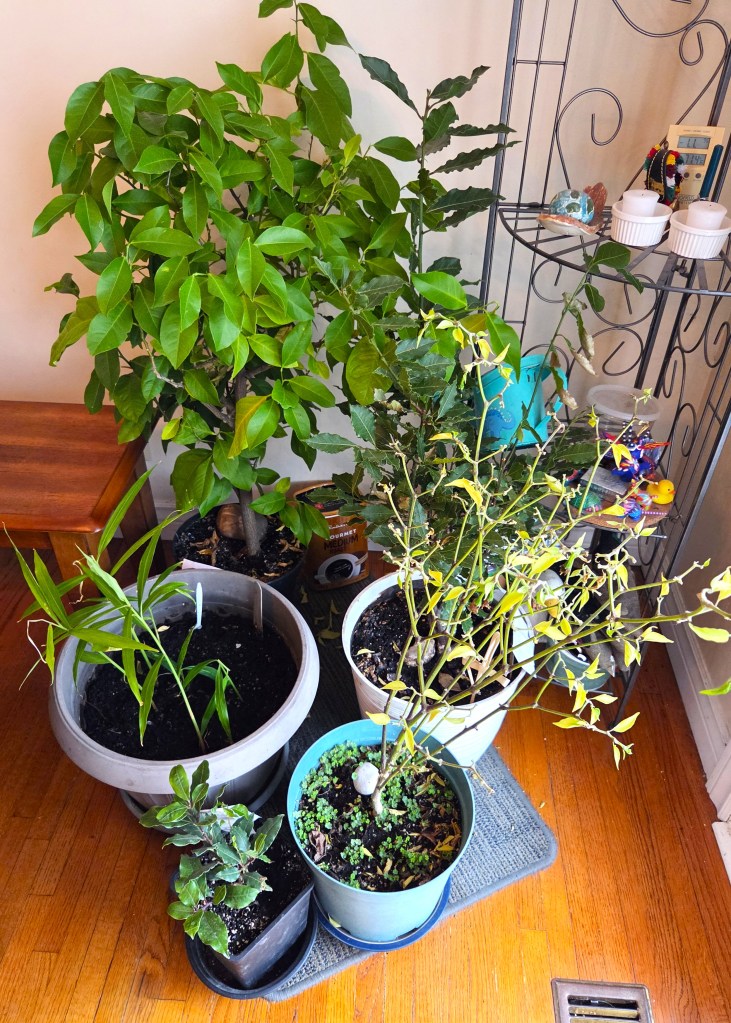
Ginger – Finally, I brought in some plants, to over-winter indoors, by a window with good natural light exposure (photo below, left, clockwise from top: lemon, bay leaf, serrano pepper, small bay leaf and ginger). I just harvested a good batch of young, pinkish ginger root from its pot, which will go in the freezer to be used during the winter months (photo below, right):