
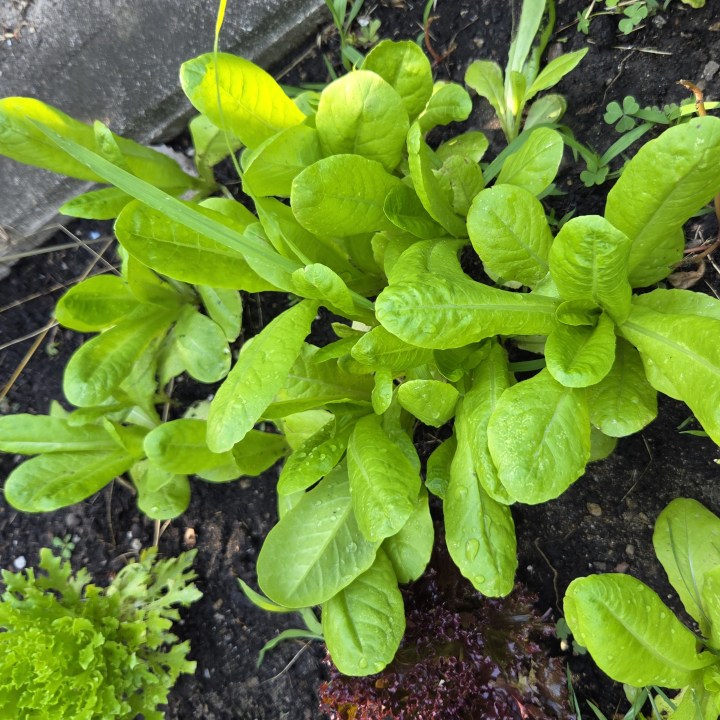
Here are a few of my crops this month:
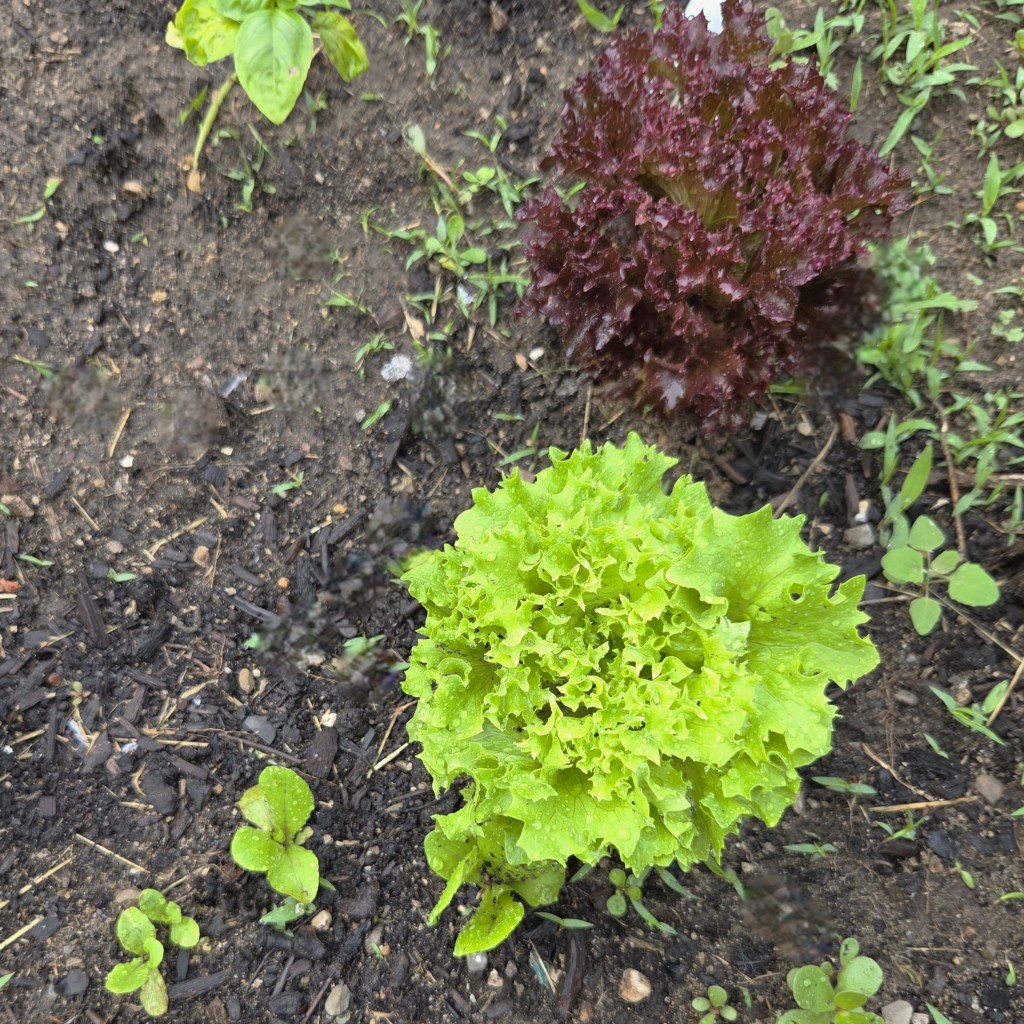
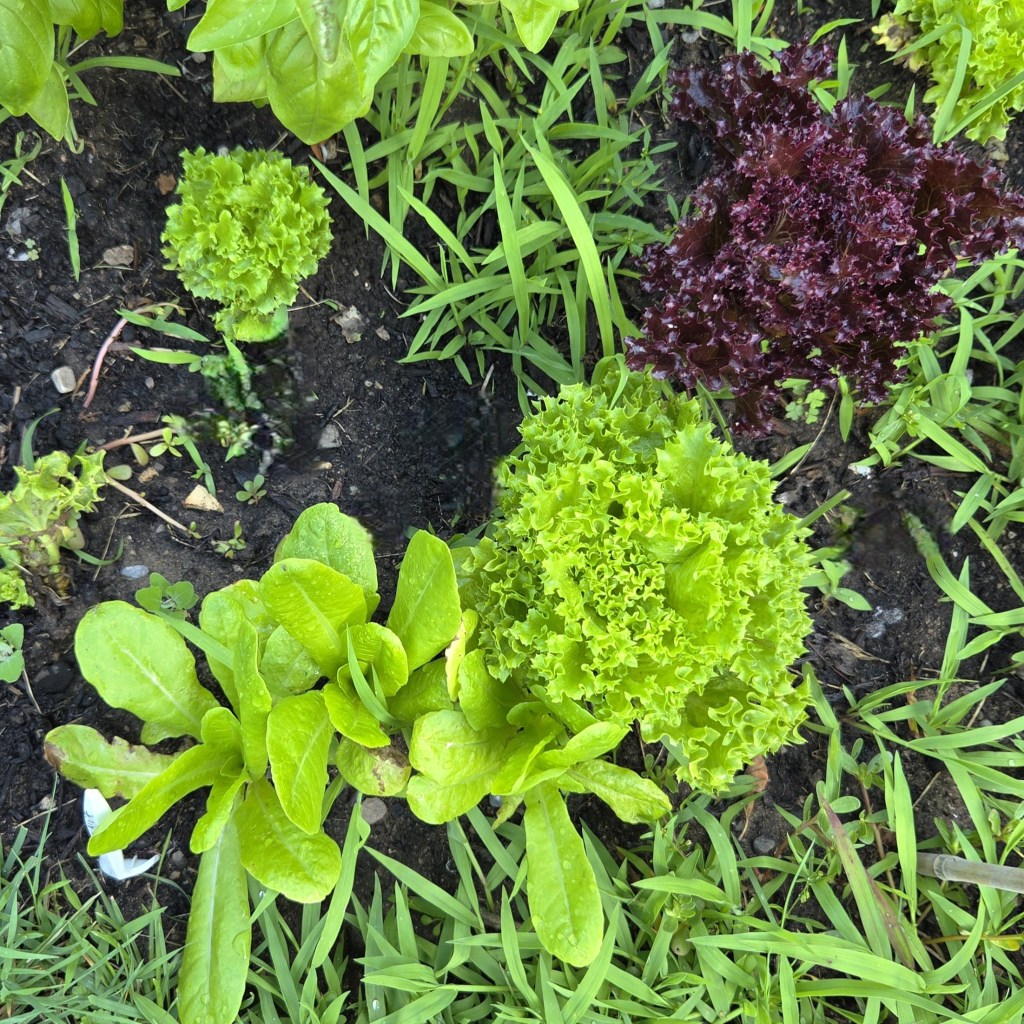
Lettuce (Lactuca sativa) is a favourite in my backyard. I usually sow seed in early spring, and start harvesting leaves a few weeks later, until the hot weather arrives in June, and the plants start to bolt. However, this year, I got Little Gem Romaine from OSC, and their description of the variety sounded promising for a longer growing season: “… nicely heat tolerant. An ideal variety for successive sowings from spring through fall …” It is the end of August, and I am still getting delicious and crisp romaine, as seen in the photo at the top of this post. To supplement with more greens for my salad, I have been buying loose leaf lettuce, freshly sourced from Alberta, and sold with the roots intact; after trimming the tops, I replanted a few roots next to my romaine sprouts. A couple of weeks later, the roots had developed new tops (photo below, left); I started harvesting the outer leaves, and when the Little Gem romaine caught up, the store-bought roots were still growing nice tops (photo below, right):
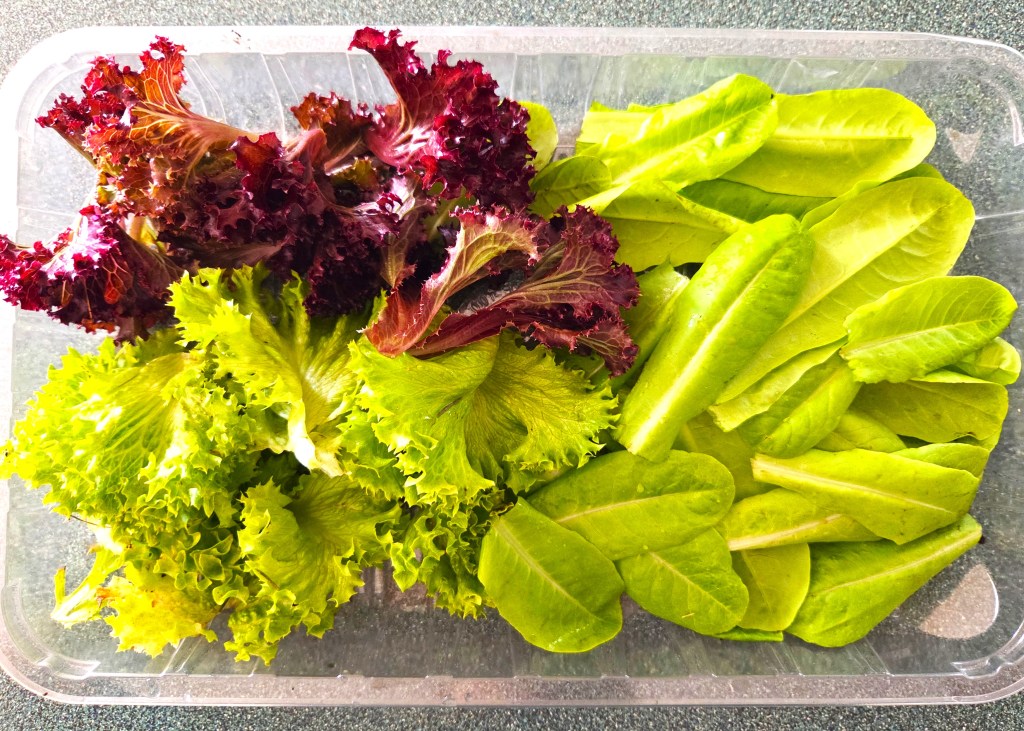
The photo below is from a harvest last month:
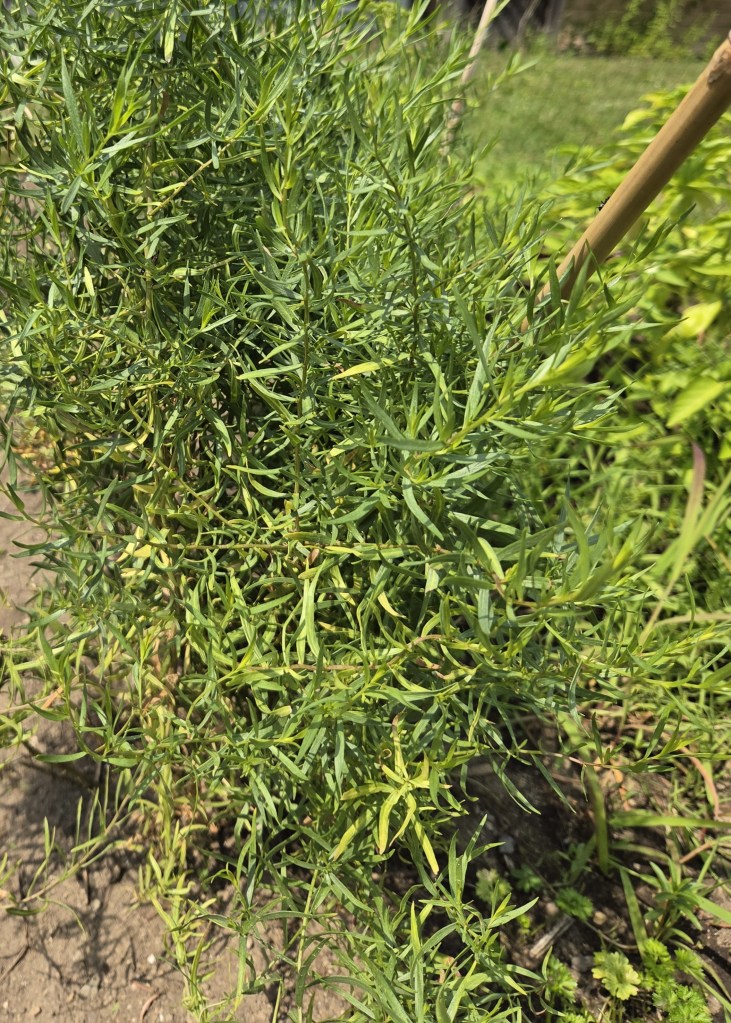
French Tarragon (Artemisia dracunculus var sativa) is a hardy perennial plant, and although not used in Mexican cuisine, I have mentioned that Mexican tarragon (Targetes lucida), a plant from the marigold family, has some similarities in flavour to French tarragon, so I like to have French tarragon in my garden because it comes back year after year, while the Mexican plant dies in cold weather. My French tarragon plant is growing particularly strong this year:
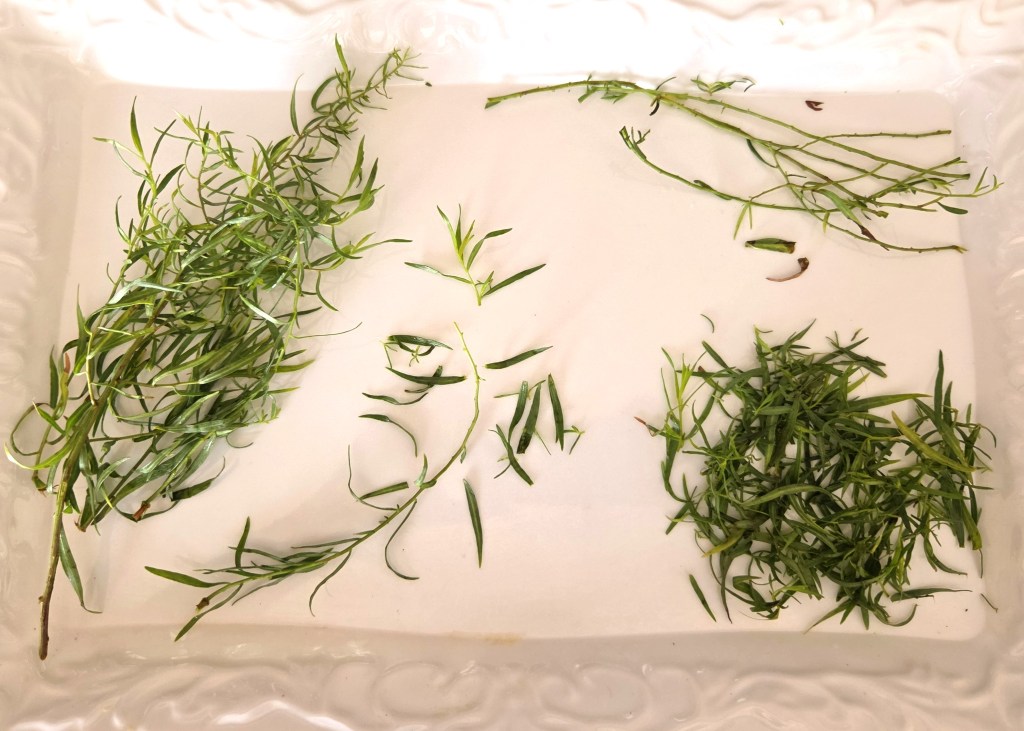
I harvested a good amount, and decided to try freezing some, to have a winter supply. After washing the stems, I removed all the leaves and reserved, discarding the bare stems (photo below, left). The leaves were then spread on a tray (photo below, right):
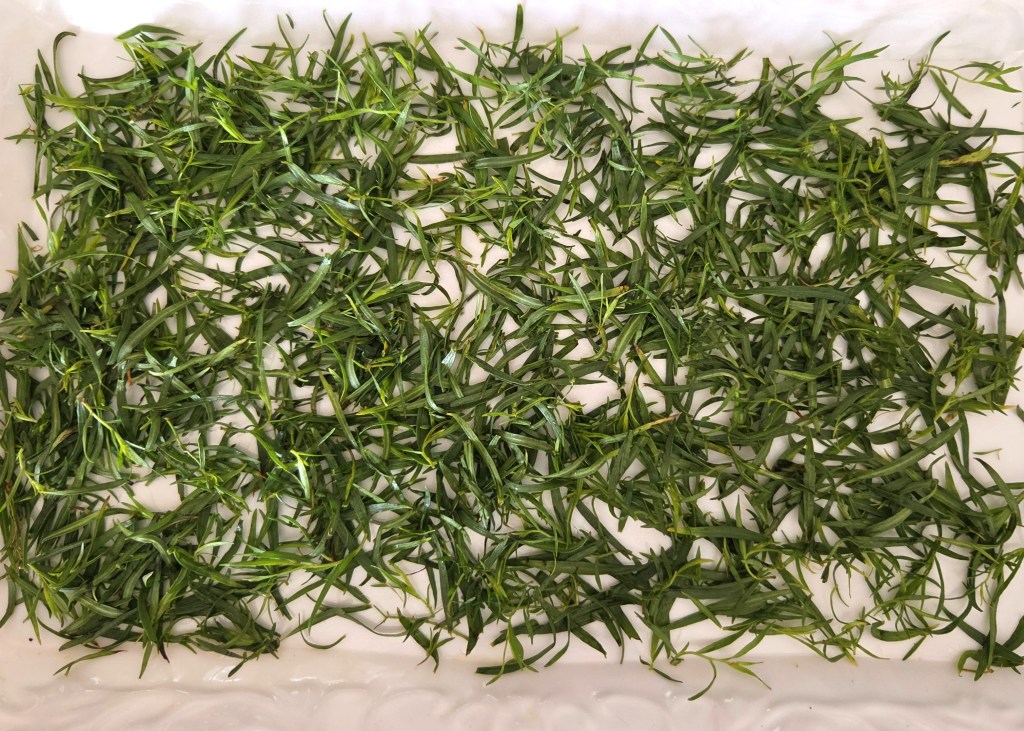
After placing the tray in the freezer for a few hours, the leaves may be packed in a sealed container or bag, and used directly in stews or soups, as needed.
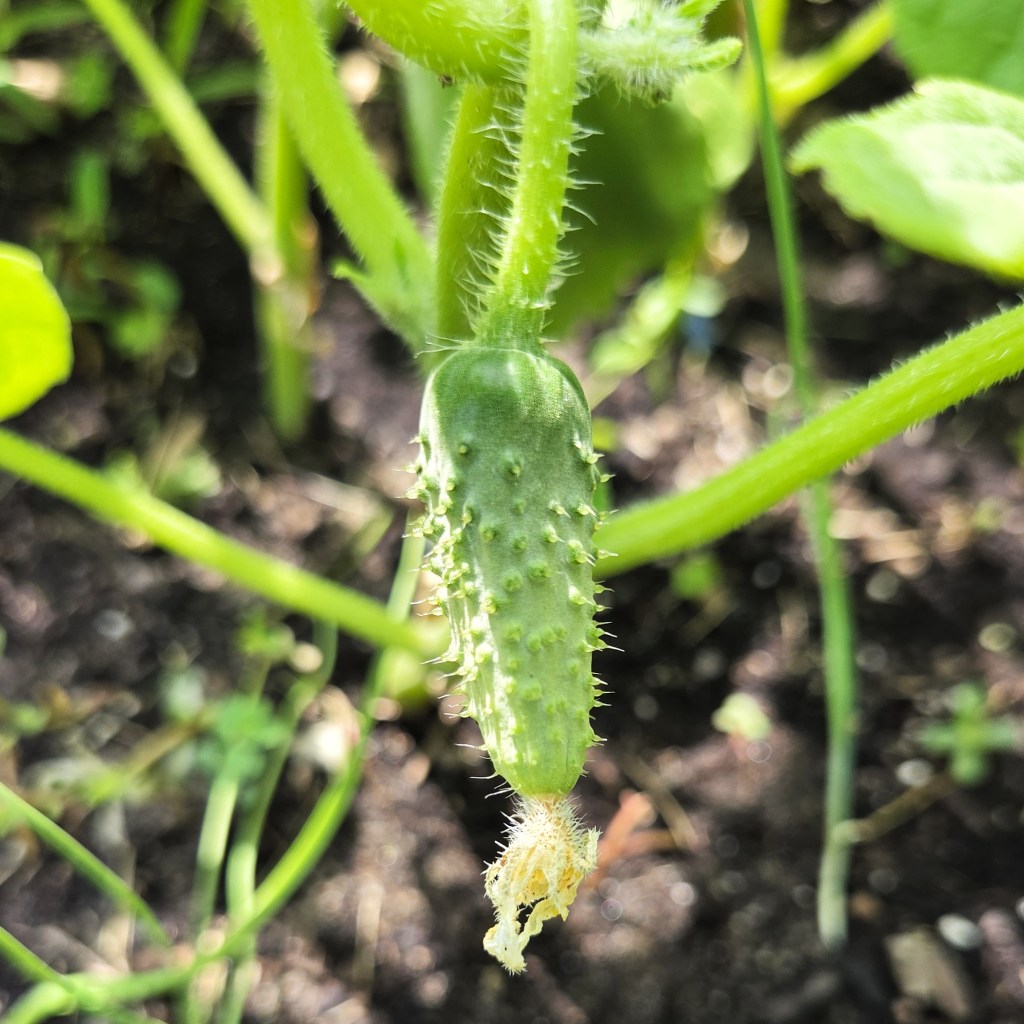
An update on my gherkin cucumbers (Cucumis sativus): As I reported last month, little fruit was growing (photo below, left), and after a week, I harvested my first gherkins. By early August, the plants were loaded with flowers and fruits at different stages of growth (photo below, right):
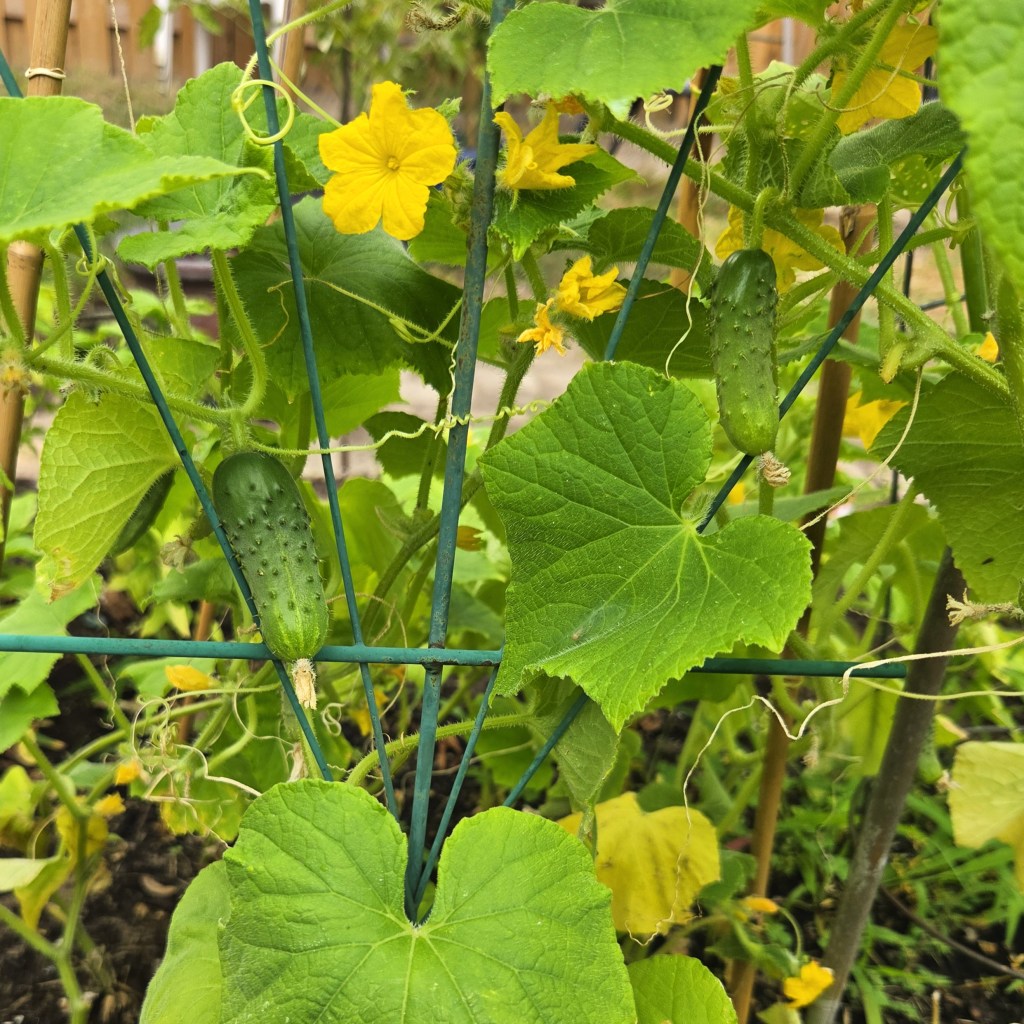
The little cucumbers were crisp and juicy, but I was wondering how big they could grow; the seed packet description suggested a length between two and three inches for best flavour and texture. I harvested cucumbers with different sizes, to test this statement:
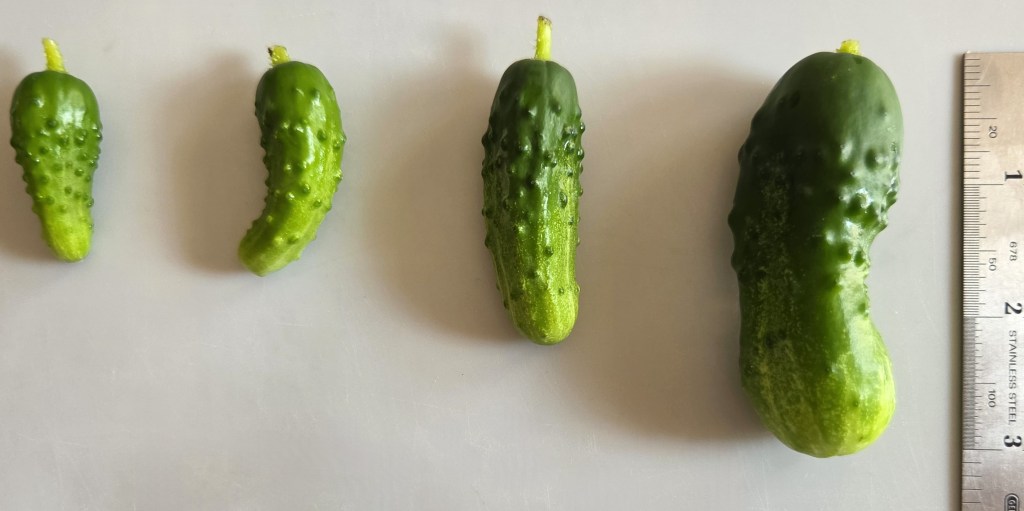
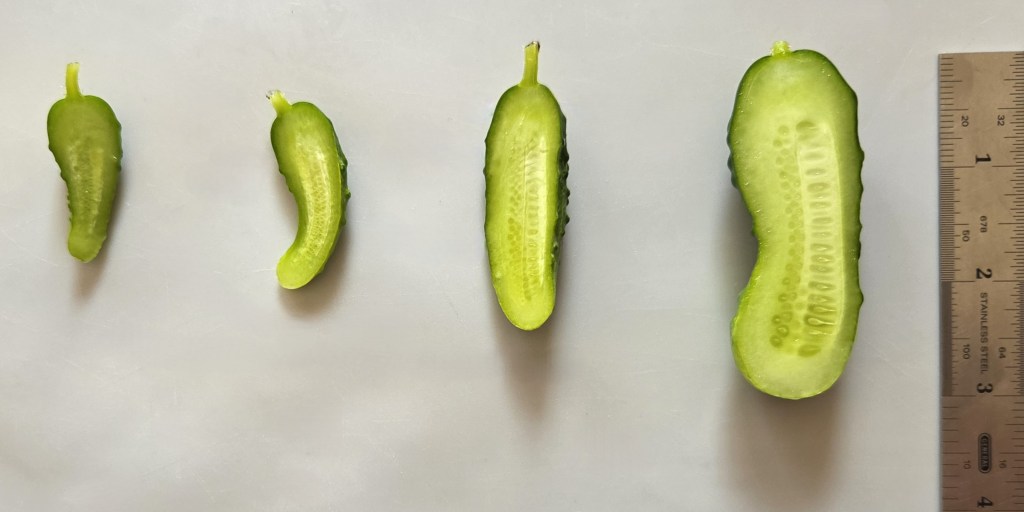
The two on the left were too small, and their flavour not well developed; even their texture was a little rubbery. The third was right within the recommended size range, and was crisp and really tasty. Finally, the one on the right was just a tad over three inches, and although still very nice, was not as good as the previous. After that, I have tried to harvest within the recommended size range.
An update on Strawberry Spinach (Chenopodium foliosum): This plant is not a strawberry, and not a sibling but only a distant cousin of spinach, but receives this name because the leaves are edible and taste similar to spinach, and for having the unique characteristic of producing a berry-like red fruit later in the season. I started seed indoors in very early spring, then transplanted to the ground and they seemed to be doing fine, but a couple of heat waves hindered their growth and last month I was wondering if they would even survive. Only three plants remained, but did not grow very tall (only to five or six inches) and of those, only one started to develop fruit (photo below, left). Last week, the fruit had turned red, showing its characteristic black speckles from the seed (photo below, right):
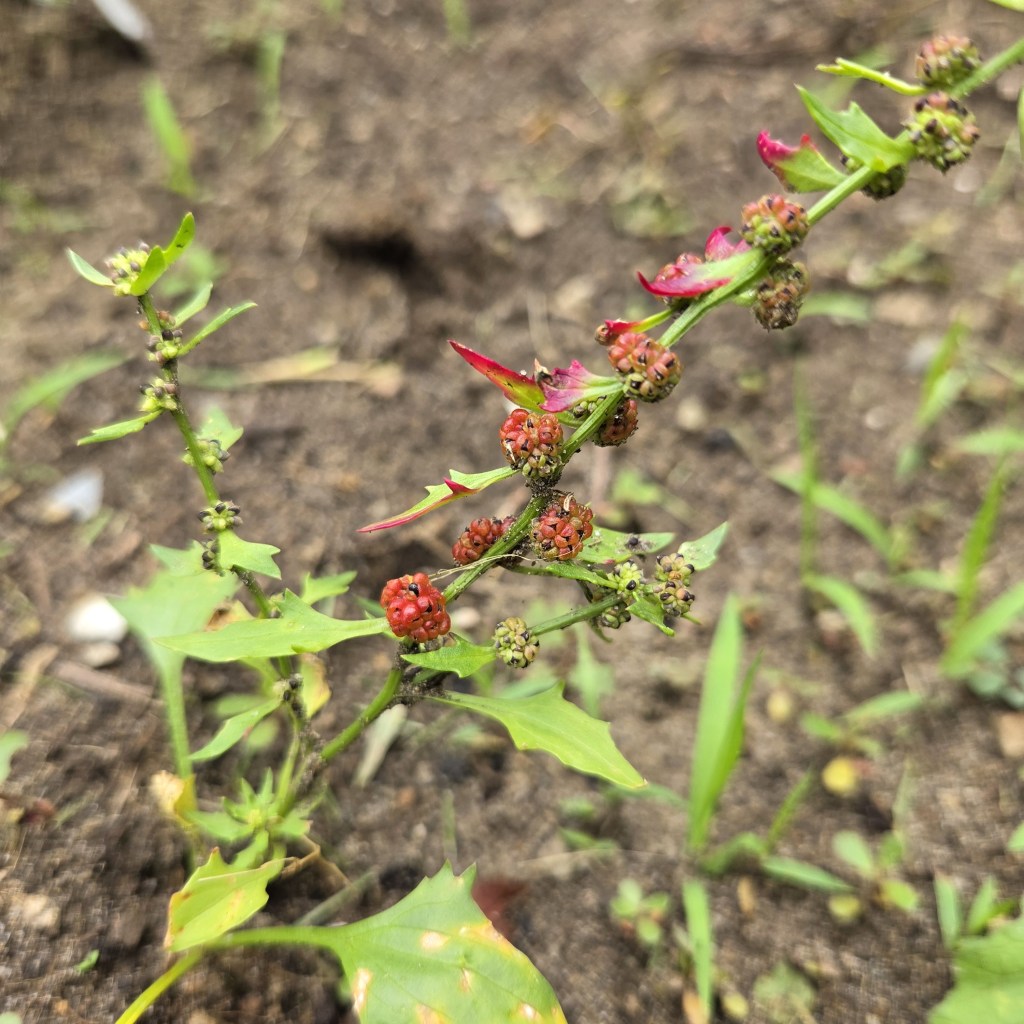
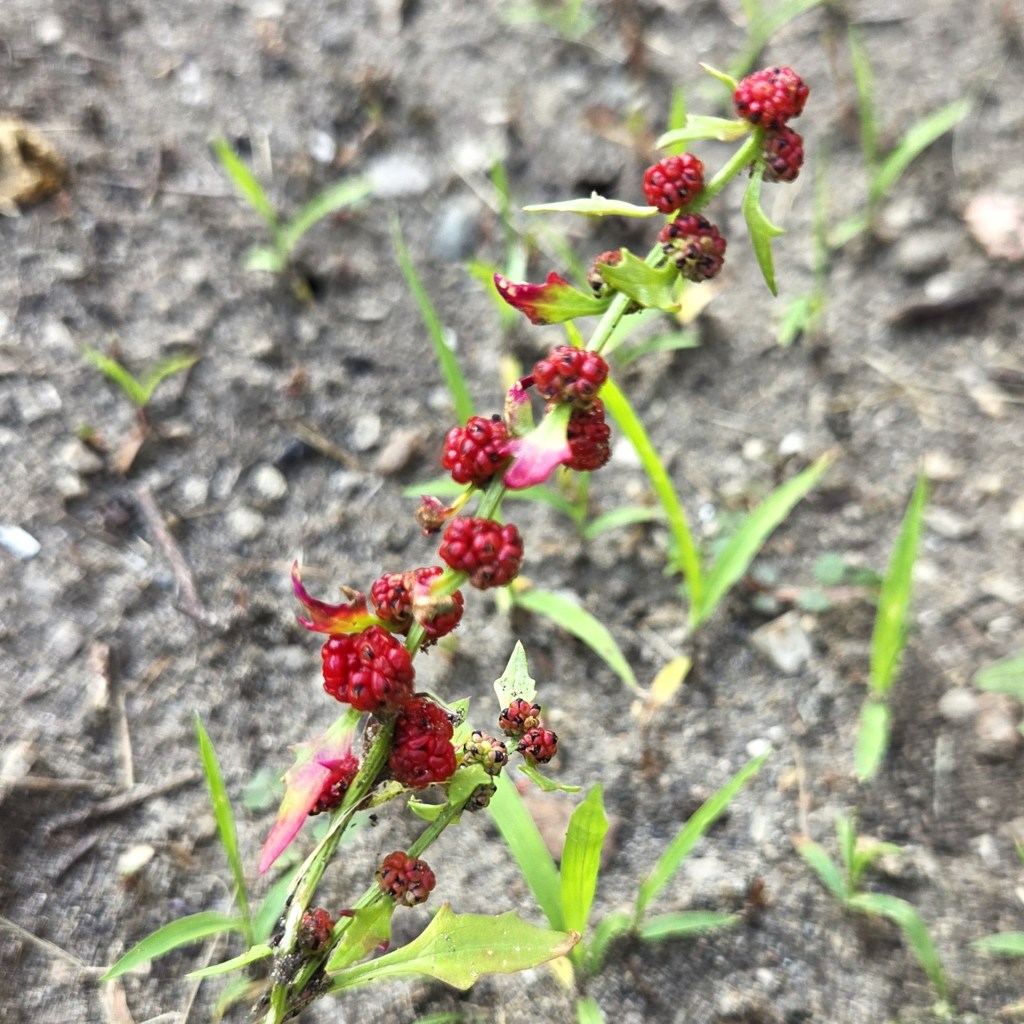
The description of the plant is that it grows to 16 to 20 inches (40-50 cm) tall, and that the fruit is the size and shape of a small raspberry. So, my crop is definitely underwhelming, even if interpreting the word “small” liberally:
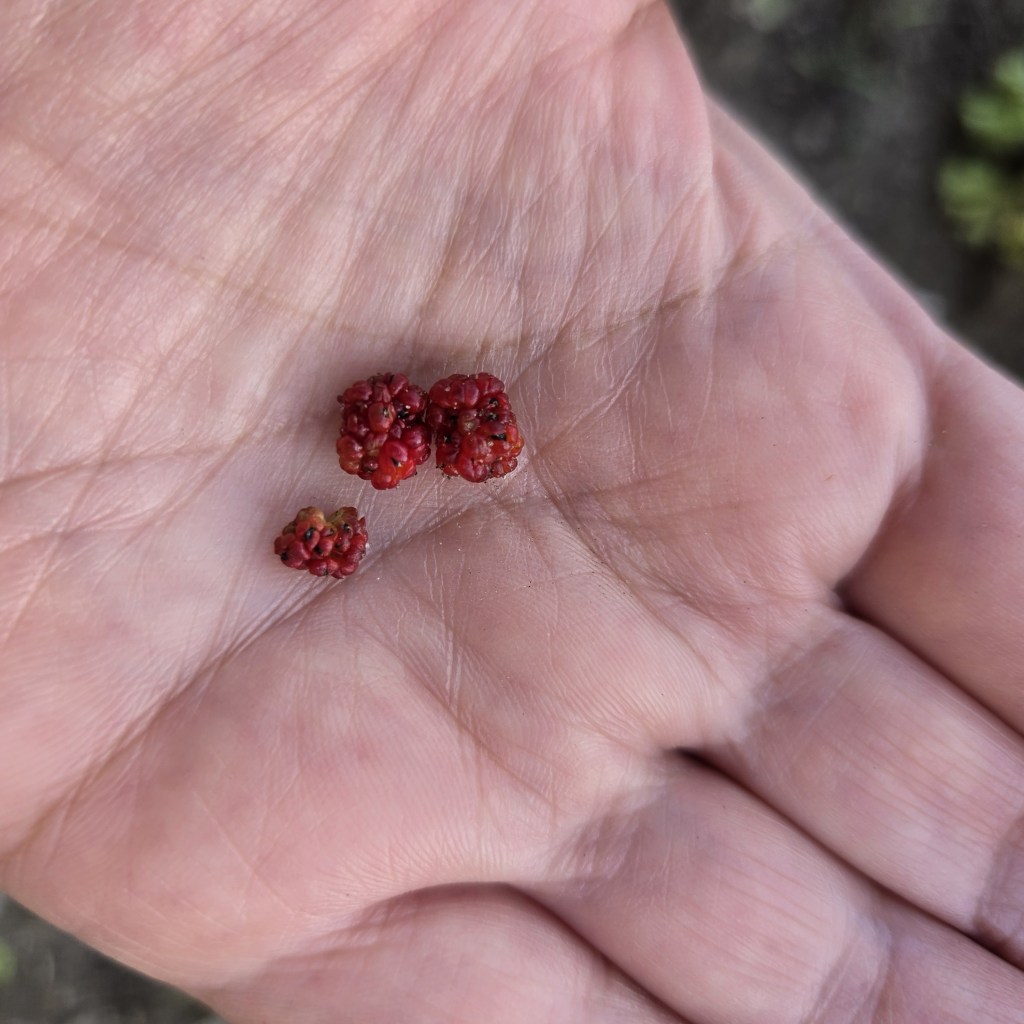
After the fact, I found out that strawberry spinach does not tolerate transplanting very well, so it is better to direct seed in early spring; in addition, to keep them healthy and prevent premature bolting, it is recommended to water generously and consistently. Not all is lost; I also read that they easily self-seed, so I am just going to leave the rest of the berries on the plant, and see if they will come back next spring, sprouting naturally in the ground on their own time, and will also make sure to provide not just misty conditions, but close to gallons of water, to keep them growing.
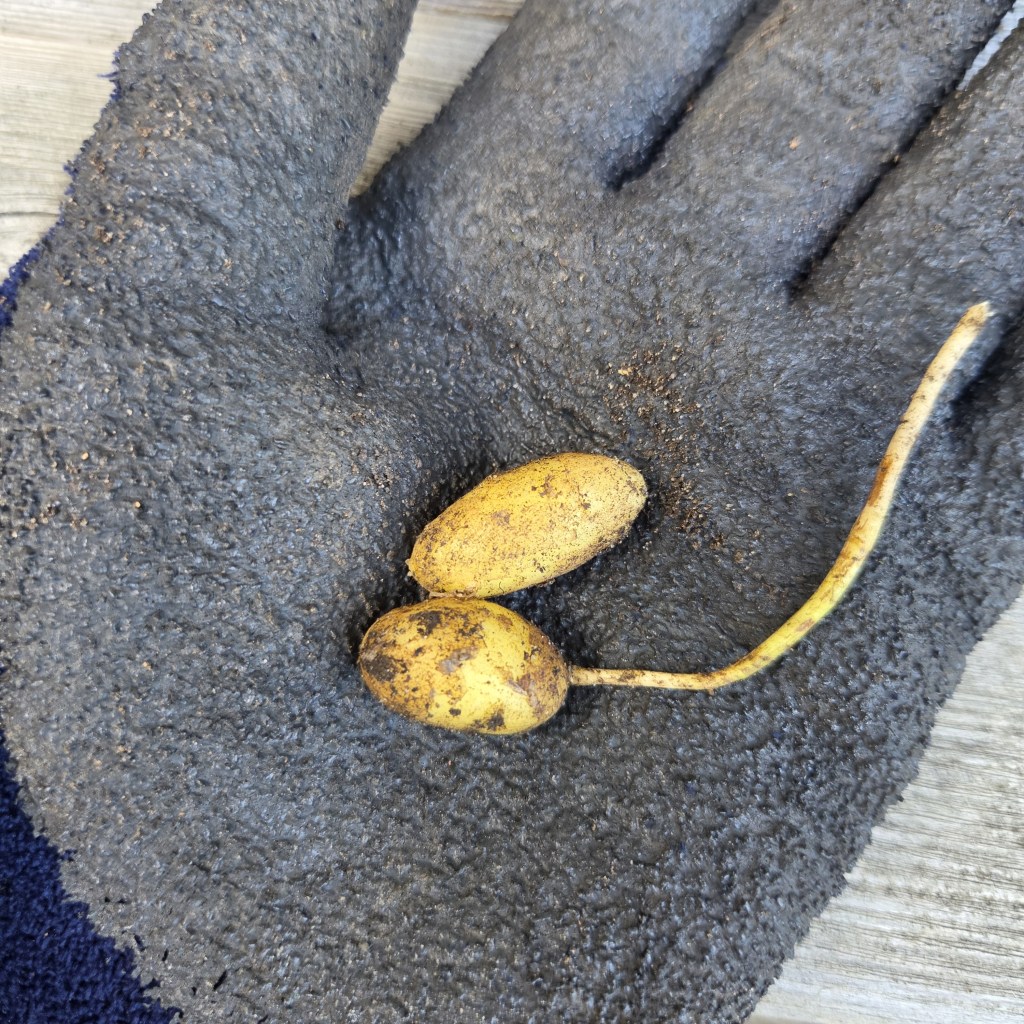
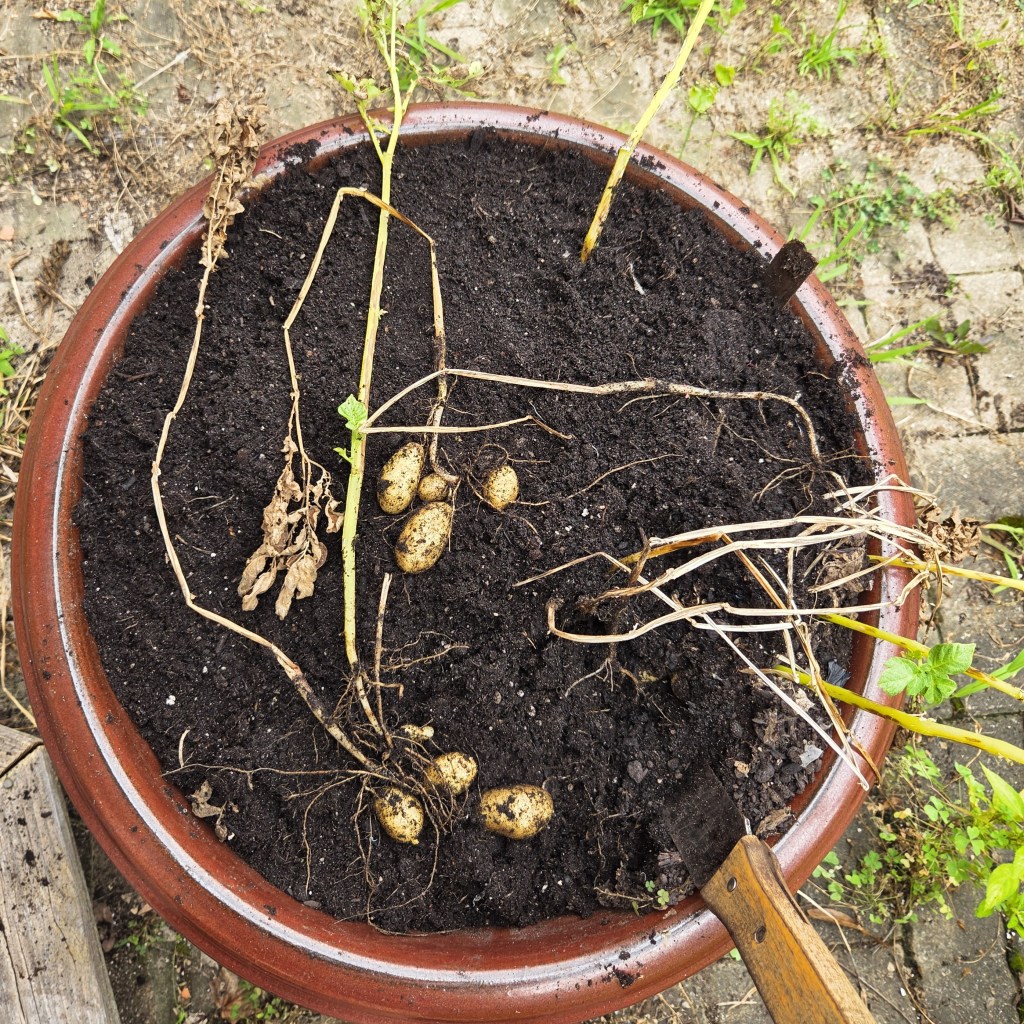
An update on fingerling potatoes (Solanum tuberosum, var. La Ratte) – I planted fingerling seed potatoes in a large pot and in the ground. Last month, the tops in the pot were starting to wilt, so I dug a couple of potatoes, to see how they were growing; although healthy, they were still very tiny (photo below, left). Exactly a month later, the tops were completely dead, and so I dug some more potatoes, which were the right size for harvest (photo below, right):
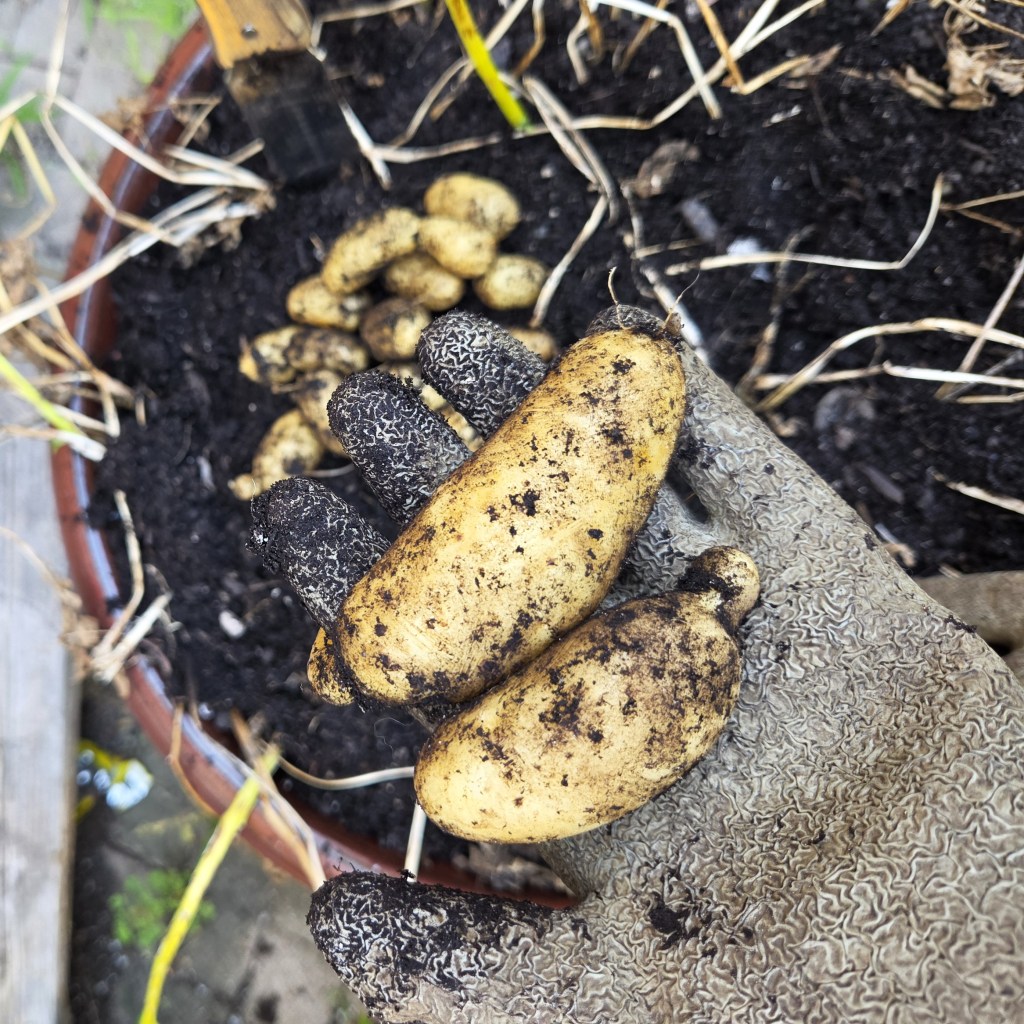
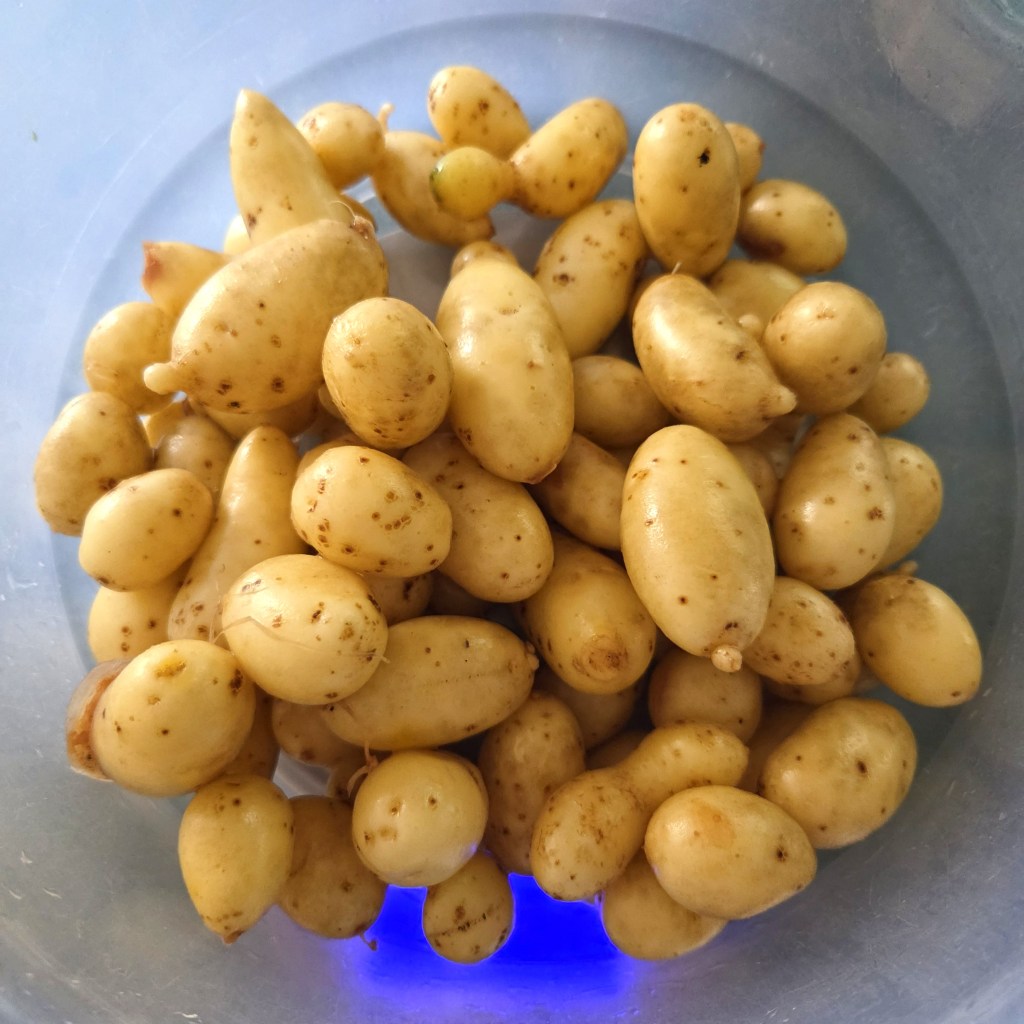
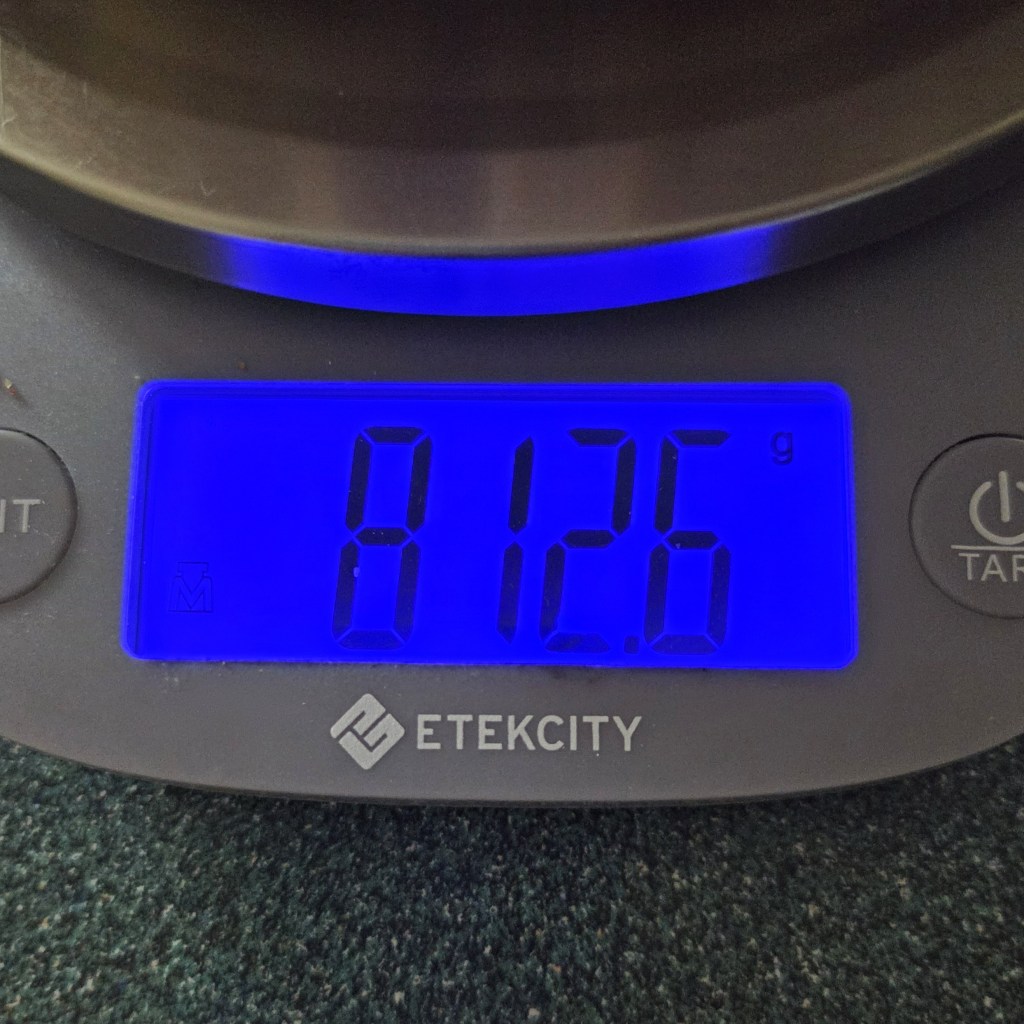
I pulled all the plants in the pot (photo below, left), and after washing the harvest (photo below, centre), the total collected was a little over one and a half pounds (812.6 g, photo below, right):
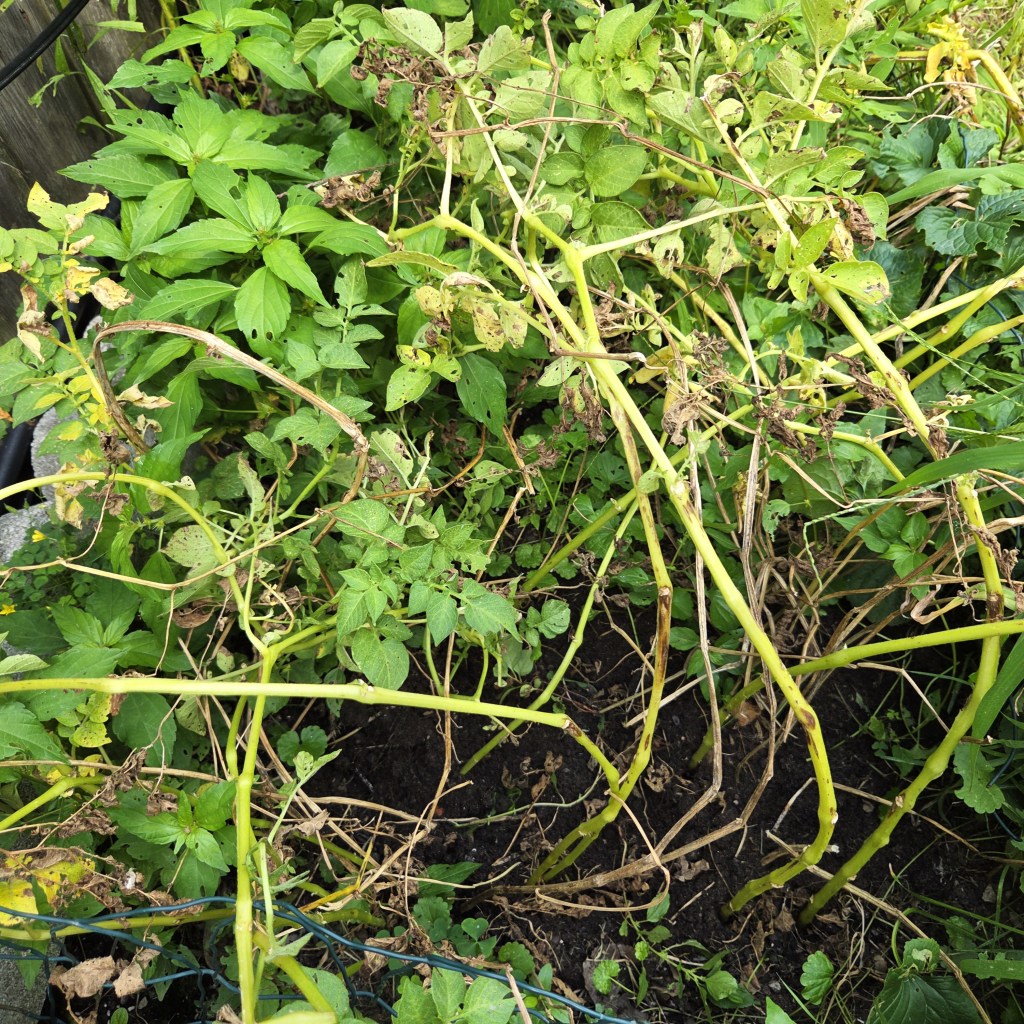
The plants in the ground are wilting, but still have some green left (photo below), so I will wait a week or two before harvesting that crop:
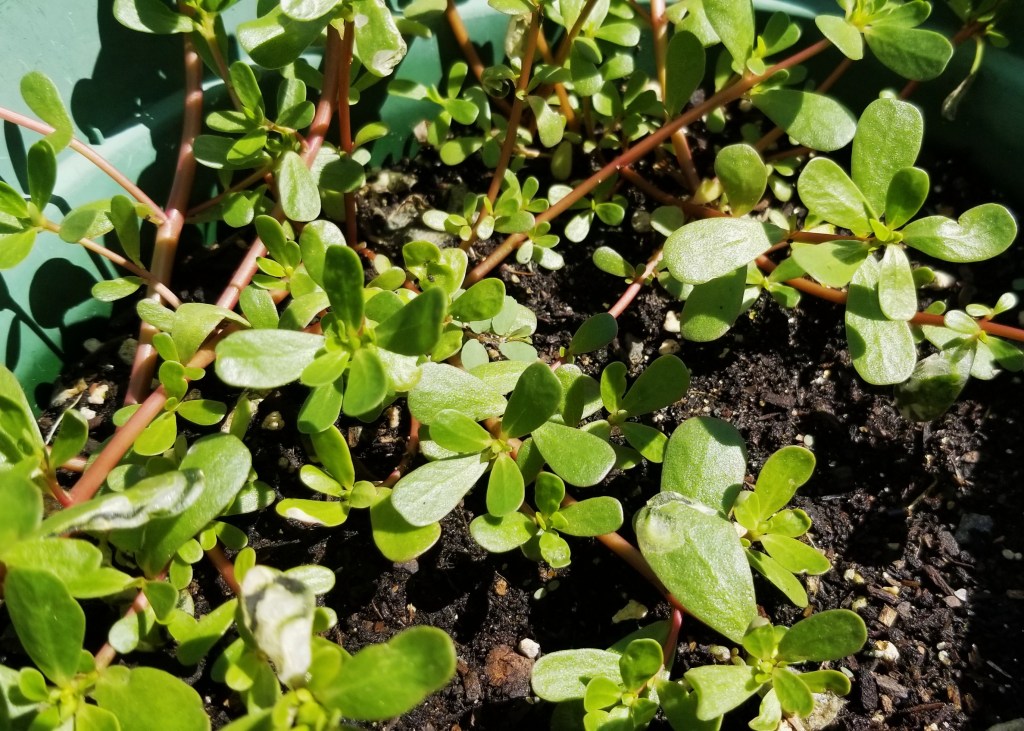
Purslane (Portulaca oleracea) – I have mentioned this edible weed, commenting that in Mexico, it is known as verdolaga, an established kitchen ingredient. The volunteers in the beds have been harvested or taken over by other weeds by now, but some of the larger pots still have a good supply left:
I usually pull the whole plants, because they are invasive, then trim the roots and thoroughly wash the tops:
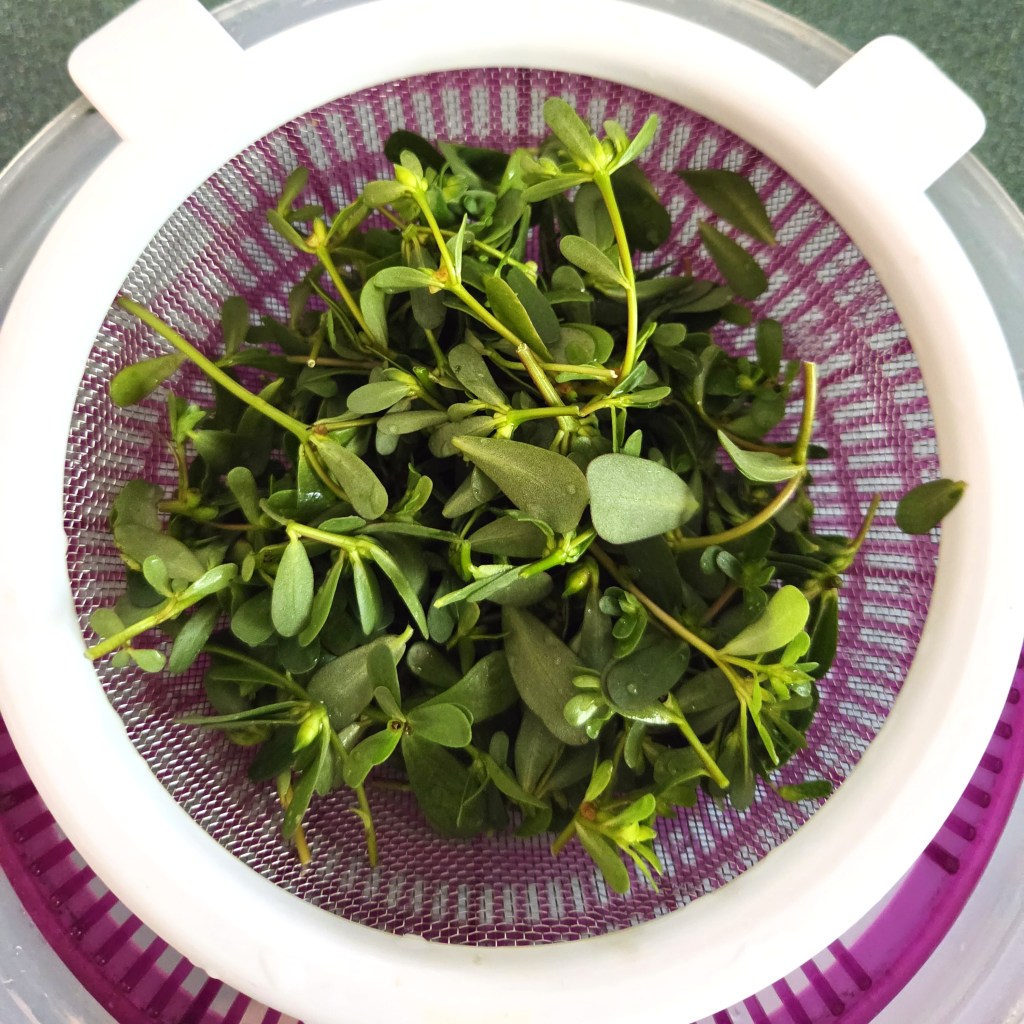
They may be eaten raw, but because of their high oxalate content, it is better to cook them; they are delicious prepared either with meat, or other vegetables.

I am joining Six on Saturday for August 29, 2026, hosted by Jim Stephens @ Garden Ruminations.







I sure enjoyed the photos and descriptions of your garden vegetables. A wonderful variety you have, and pretty good luck raising them. 🙂
LikeLiked by 1 person
Thank you!
LikeLiked by 1 person
Irene, what a lovely walk through your garden. I appreciate the details of each crop. You harvested beautiful food. I’ve never tried to grow potatoes but looking at yours I may try them in a container. They want a fortune for them in stores now! Pickles, lettuce, tarragon, oh my! I’ve bought lettuce with the base still on them before but never thought of replanting it. Thanks for the idea! Happy gardening, my friend.
LikeLike
Hi, dear Lisa! Thank you for your lovely comment. The potatoes were fun and easy; I will report later whether the container or the ground was better. Hope you have success with the lettuce, happy gardening too, friend!
LikeLiked by 1 person
You’re welcome. Oh, I missed the part where you tried potatoes both ways. Will be looking forward to hearing results. I tried some carrots from free seeds from library. Only planted a few and not in a spot that helped them grow (they were shadowed by birdhouse gourds) but I pulled one the other day and ate it and was surprised by how sweet it was. Will plant them again for sure.
LikeLike
Yummy!
LikeLiked by 1 person
Irene, I so enjoyed this walk through your lovely garden ! Great going.
LikeLike
Awesome, thank you, Punam!
LikeLiked by 1 person
My pleasure, Irene.
LikeLiked by 1 person
A great selection of edible plants! I need to make more of an effort with different types of lettuce because I eat loads of it. The kind of harvest you describe sounds absolutely amazing.
LikeLiked by 1 person
Yes, it is fun to try different varieties, colours, etc. Happy gardening, Kathrin!
LikeLiked by 1 person
It’s good that you are growing your own lettuce, especially during these difficult times when it’s hard to find lettuce in the market that hasn’t been recalled. In the U.S. we have had many recalls on lettuce, I might just start growing my own.
LikeLike
Yes, it really is worrisome.
Like