
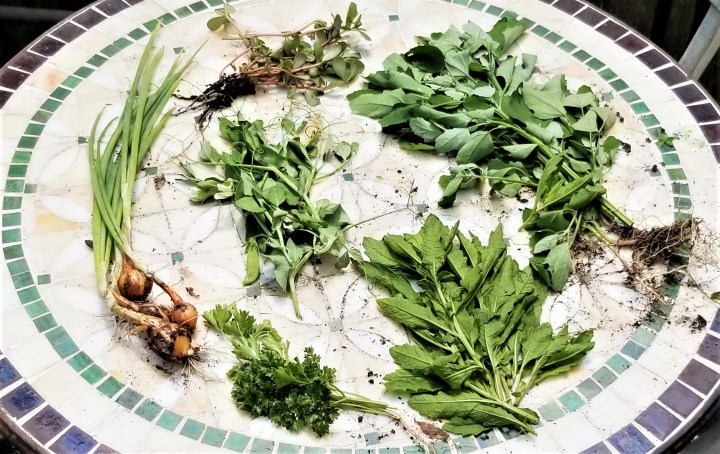
After a very dry spell, we are getting drenched in a lot of rain and the occasional thunderstorm here in Southern Ontario. It is amazing how the backyard turned bright green overnight, and a few crops were begging to be harvested, both cultivated and volunteers (aka weeds), as seen in the photo above.
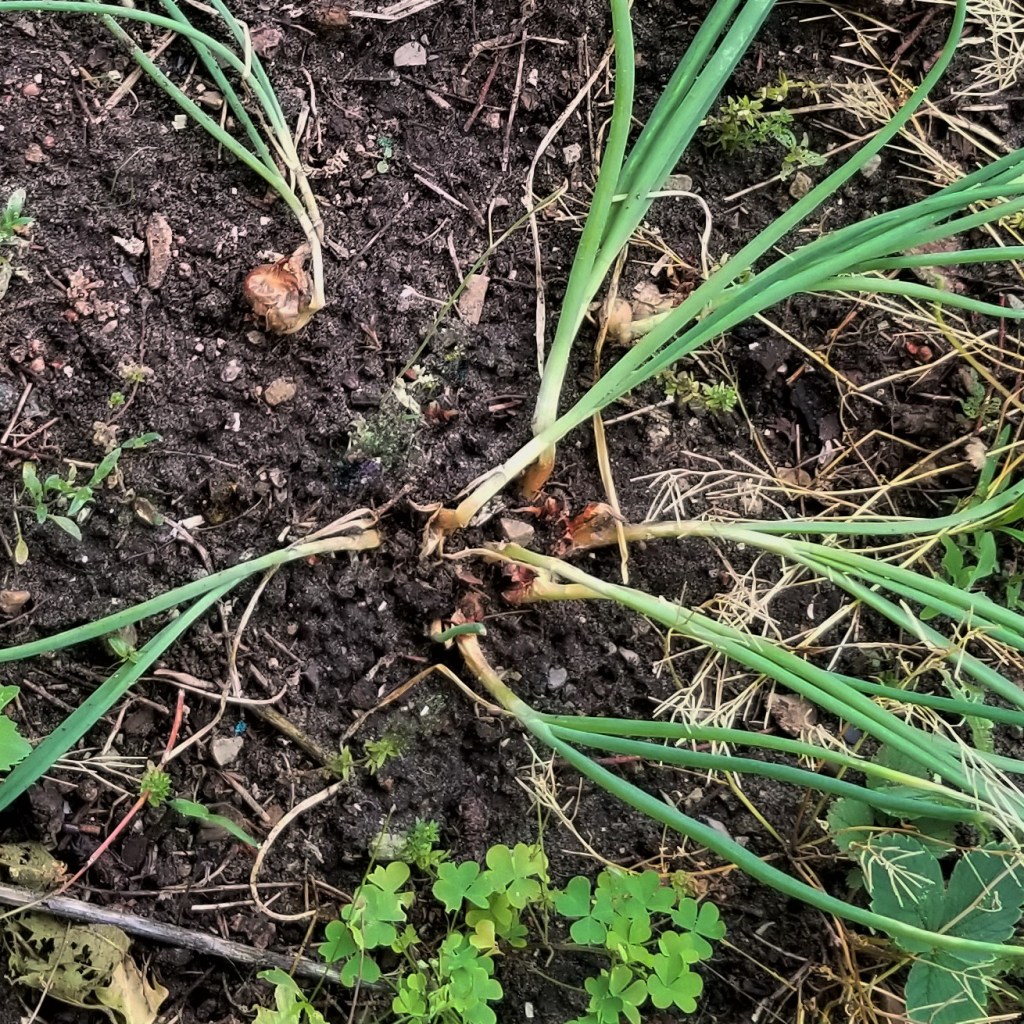
Multiplier onions (Allium cepa, var. aggregatum), also known as knob onions, and cebollitas de rabo, in Mexico, may be harvested while green and eaten in salads, stir-fried, or grilled with serranos toreados; they may also be left in the ground a little longer, to dry and use as pearl onions to roast, or in stews. Leaving a few in the soil to overwinter, or re-planting in the spring, ensures a harvest for the summer:
Purslane (Portulaca oleracea), a succulent weed, usually starts sprouting in my garden at the end of May, but this year there was none to be found; however, as soon as the rain came, so did hundreds of purslane sprouts (photo below, left), and just a few days later, plants of respectable size were ready to harvest (photo below, right):

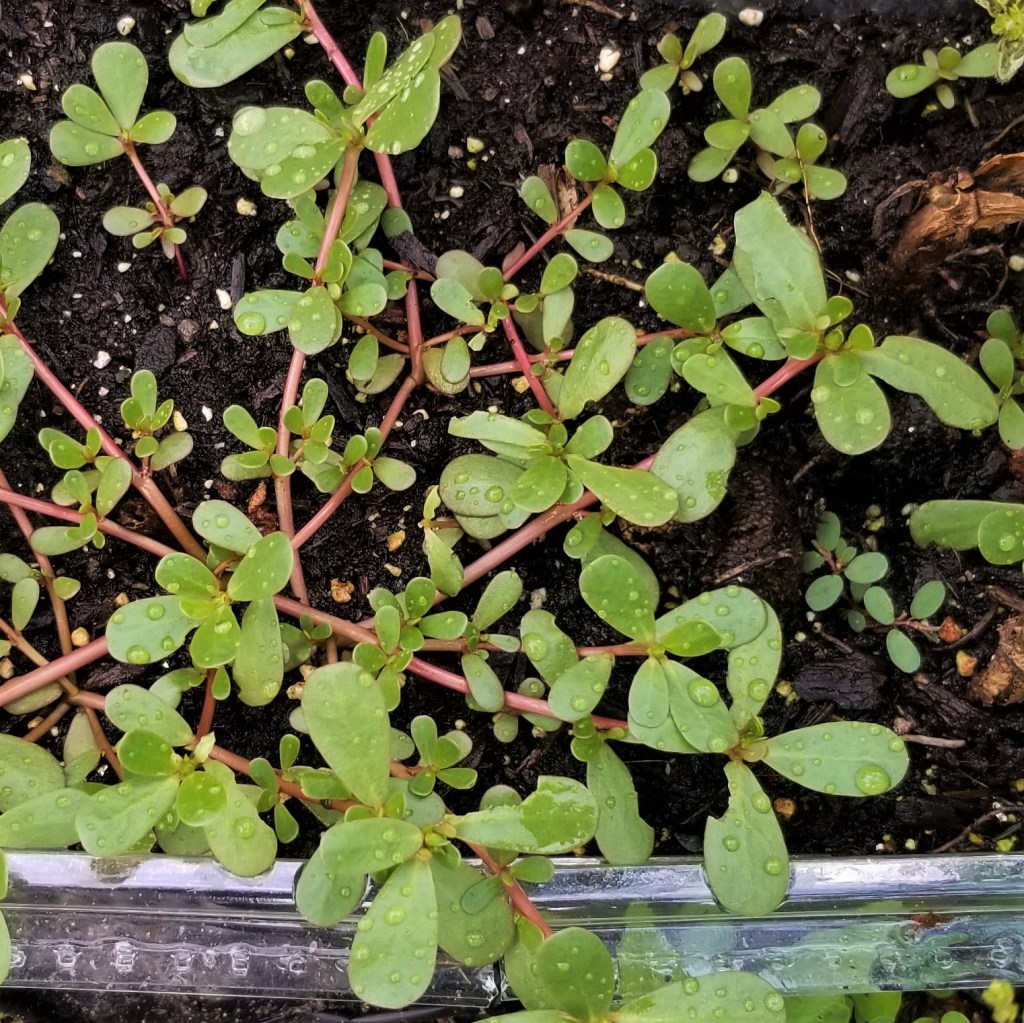
As with any foraging crop, it is imperative to identify purslane without even a scintilla of doubt, since there are look-alikes that are not edible, such as spotted spurge (Euphorbia maculata); for information on how to identify and cultivate purslane, click here.
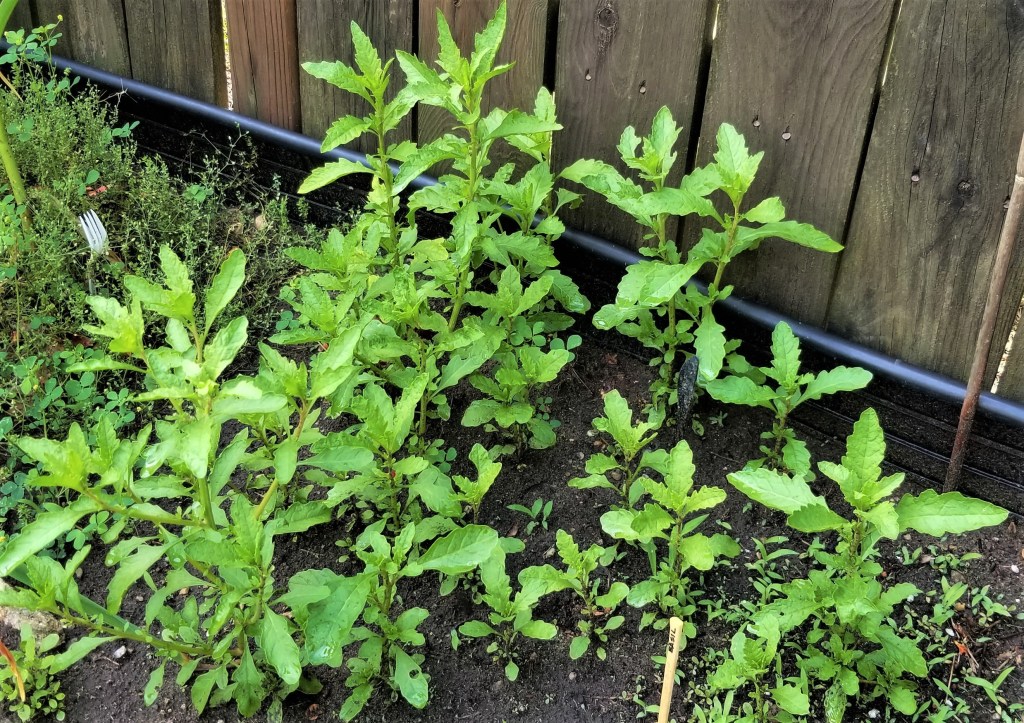
Lamb’s quarters (Chenopodium album) are also known as white goosefoot and, generically with other species of the same genus, wild spinach. In Spanish, it has many names, such as cenizo, quinhuilla, bledo; in Mexico, also generically, is simply called “quelite de cocina” – “kitchen potherb.” This is another type of weed that grows profusely in my garden:
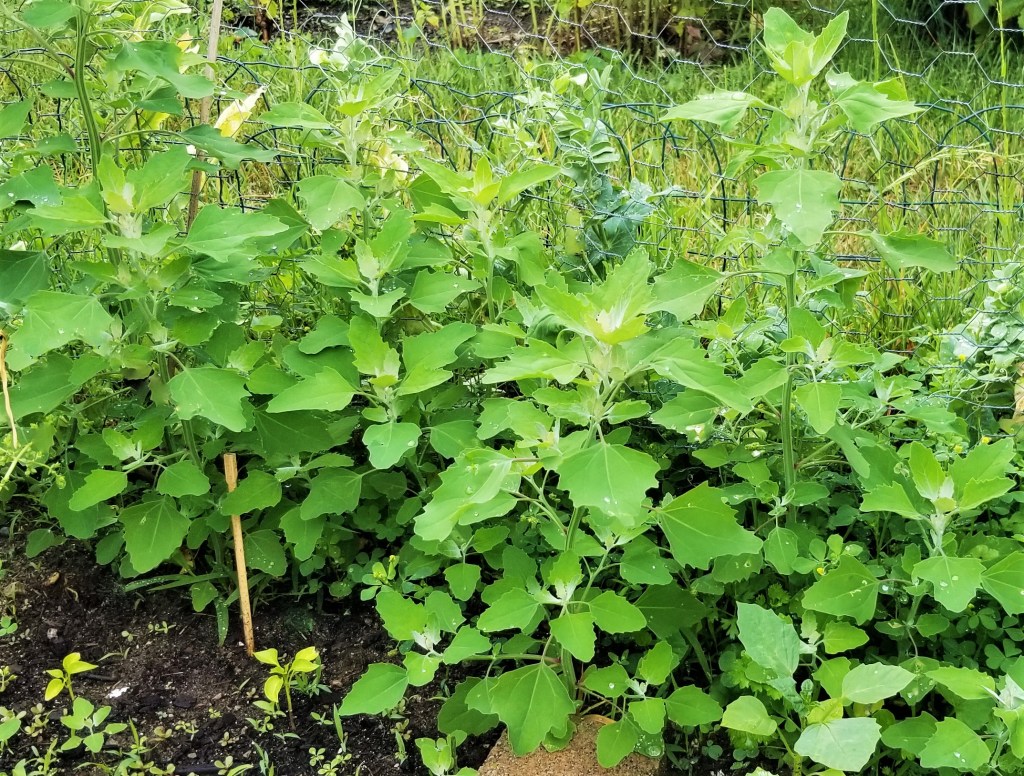
Lamb’s quarters have the advantage of not having any poisonous look-alikes; they are high in vitamins, such as A and C, also containing riboflavin, niacin, potassium, calcium, and manganese.
Epazote (Dysphania ambrosioides) was already growing fast, as I mentioned last month. Now, many plants are tall, and need a good trim to avoid premature bolting:
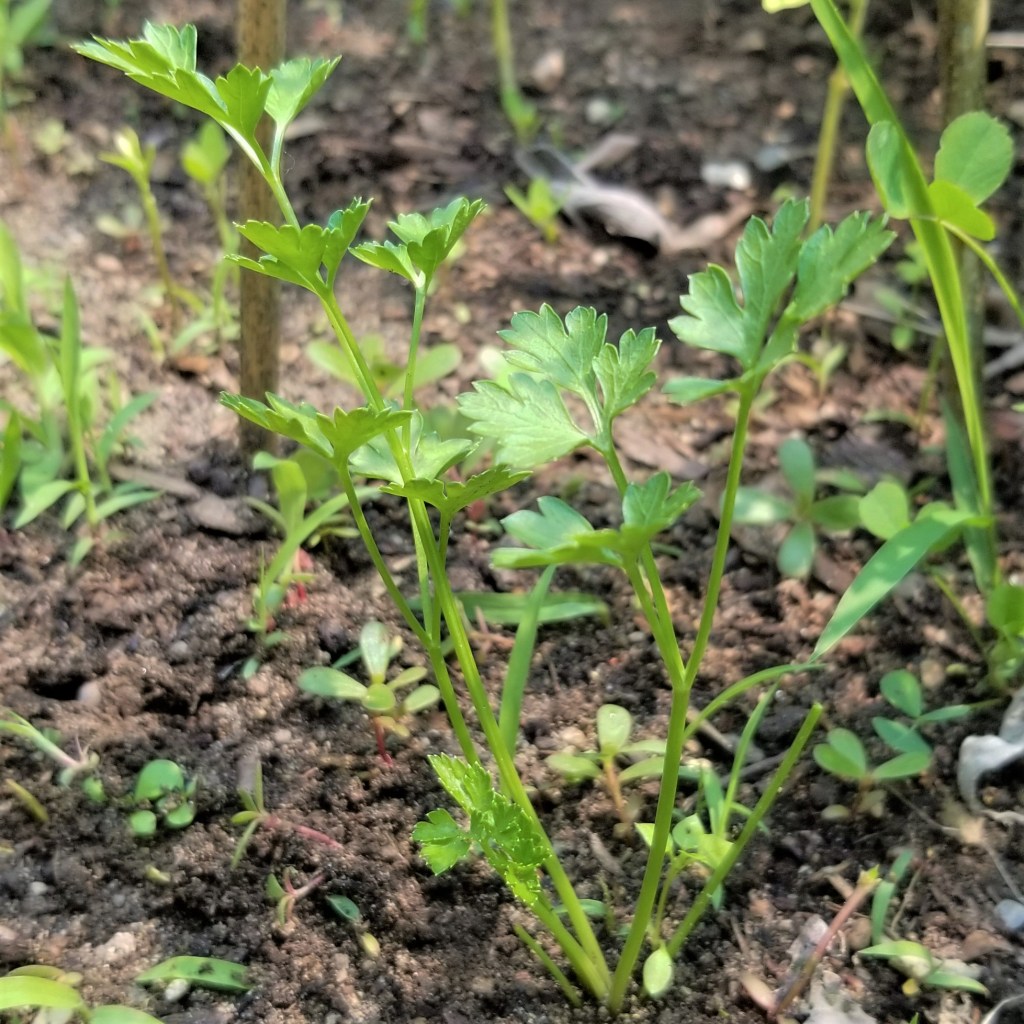
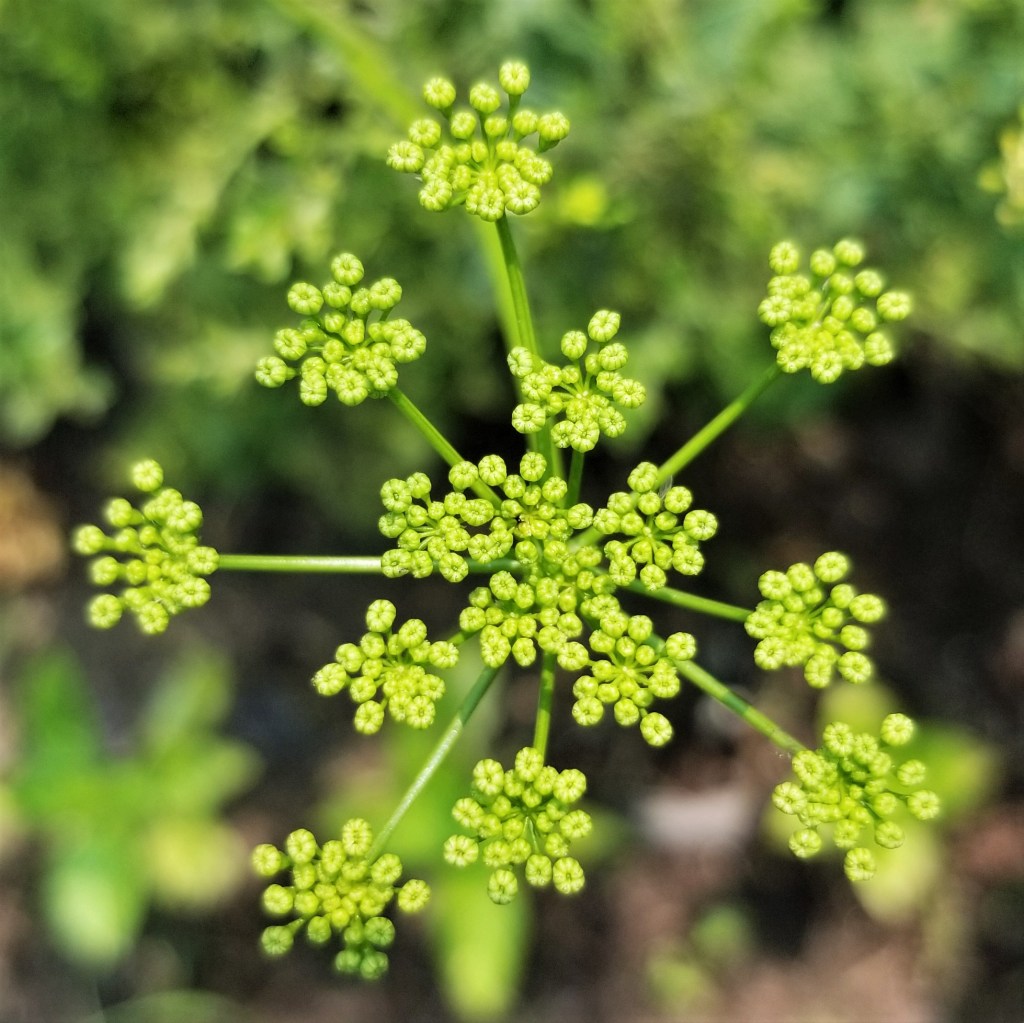
Parsley(Petroselinum crispum) does not get used as frequently as cilantro in Mexican cuisine, but it is an important ingredient in very traditional recipes such as Bacalao (cod stew), or pescadillas (crispy fish tacos). It is a biennial plant, and easily self-seeds, so needs very little care. In the photo below, left, a first year plant, and right, a close-up of a second year plant’s flowering stem (umbel):
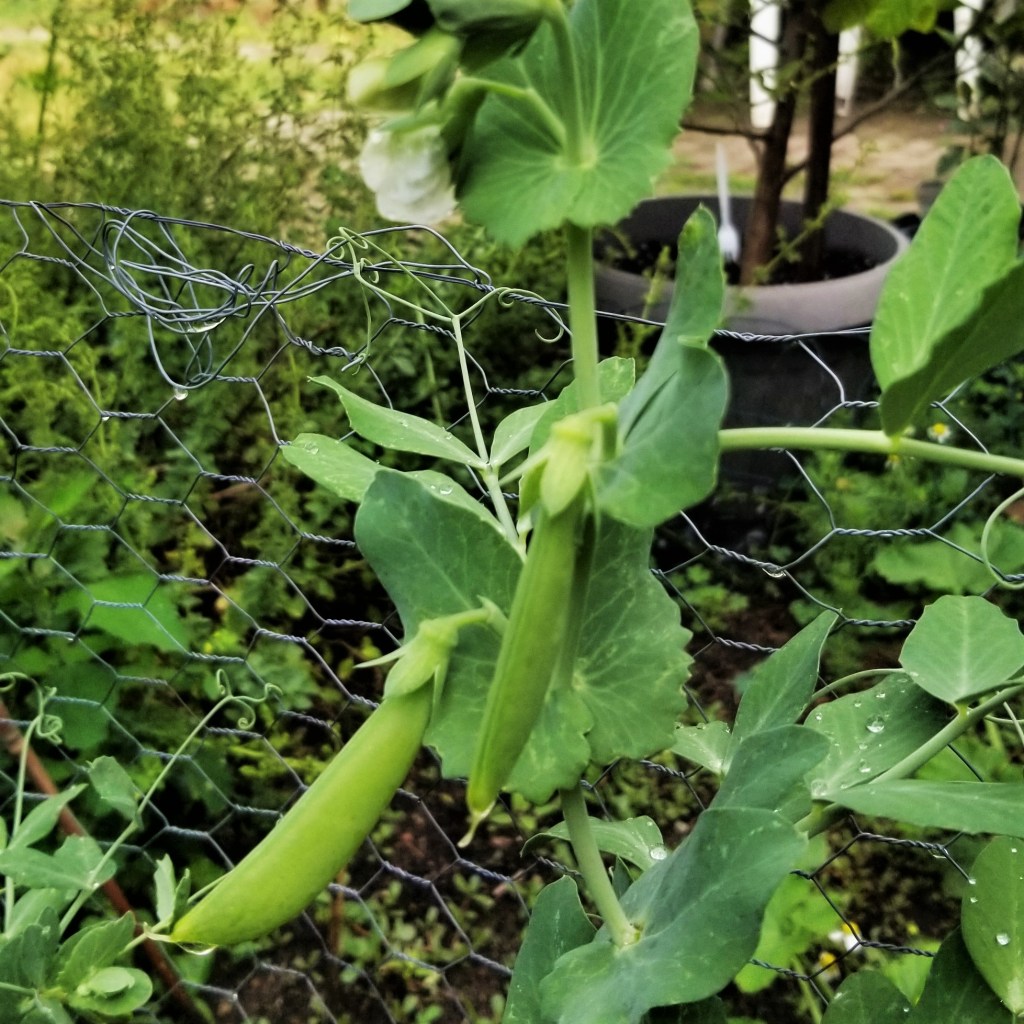
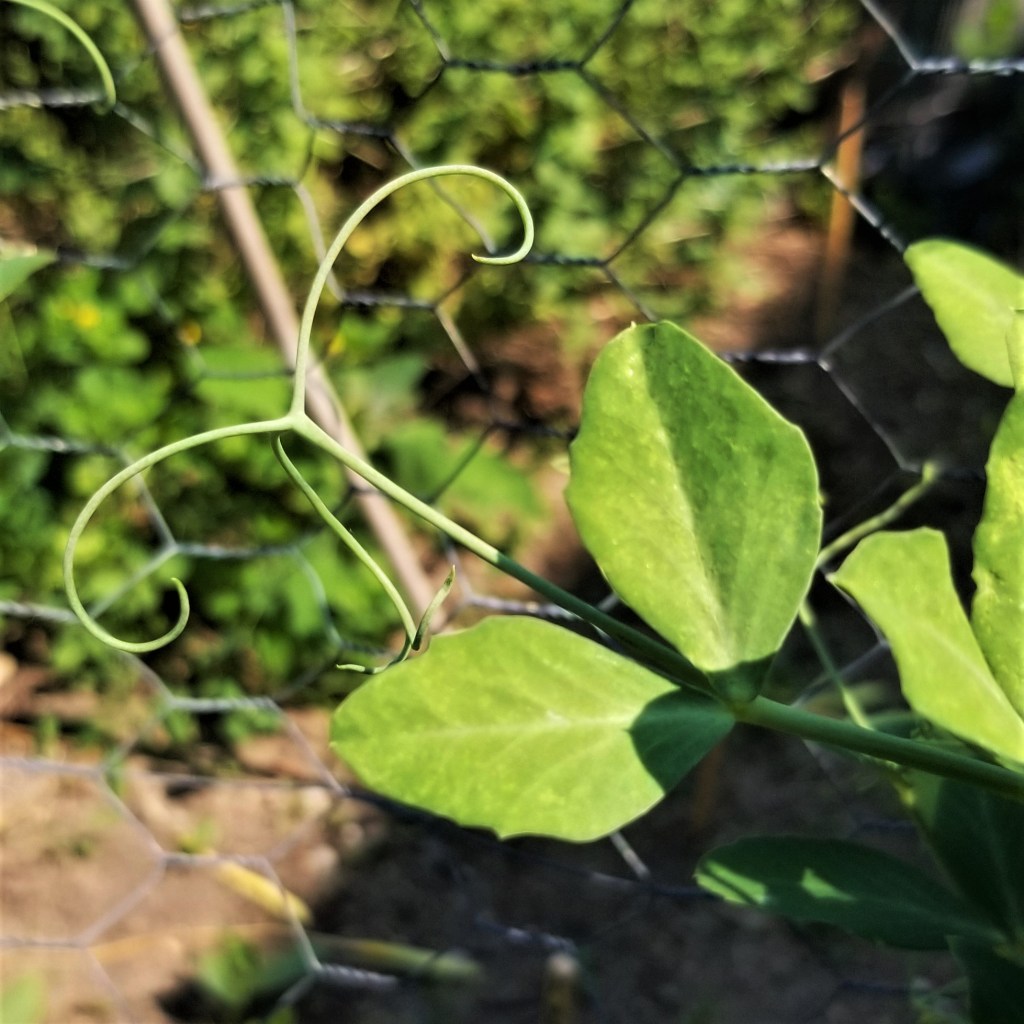
The Peas (Pisum sativum) are almost done growing their crunchy pods now (photo below, left), and in the summer heat, the plants will start to dry soon, so it is time to cut them down; they will leave behind nutrient nodules in the soil, making room for a healthy start for a summer crop. The vines are also edible, and the tops are still green and tender (photo below, right):
Once washed, with roots and bruised parts removed, the onion bulbs and all the greens may be chopped for cooking:
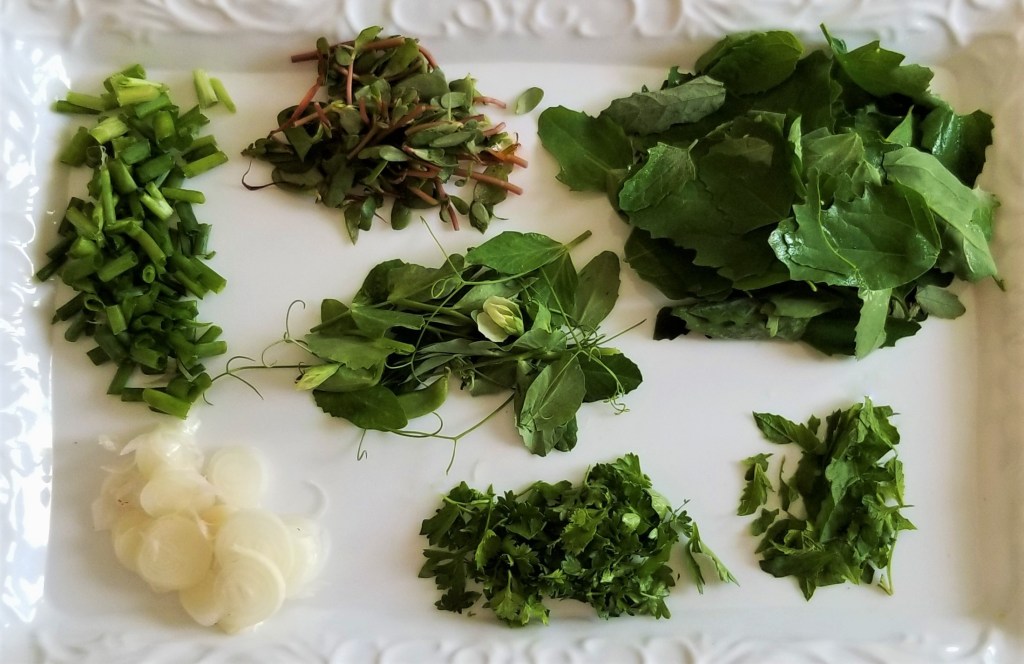
All these greens may be eaten raw, steamed, or as I prepared this batch, sautéed with a little oil, just until wilted, and seasoned with salt and black pepper:

I like to serve them as a side with meat, or use as a filling or topping for Mexican antojitos (little cravings, snacks); for some examples and recipes, click on highlighted text for quesadillas, tacos, or tostadas.
I am joining Cee’s Flower of the Day (FOTD) Challenge for July 8, 2023. Cee is sharing a photo of flowers on her succulent; maybe my purslane will bloom soon, too.
I am sharing this post at Six on Saturday for July 8, 2023, hosted by Jim Stephens @ Garden Ruminations.





 My Slice of Mexico
I love this! Gardening with my grandson, and we’re going to harvest purslane this week!
LikeLike
Thank you, Victoria! How do you eat purslane? Gardening with kids is so much fun!
LikeLiked by 1 person
Hola, Irene, since we are growing different lettuces, we will harvest the purslane, wash it and put it in our salads. We planted peas very late, and have a lot of flowers, and it’s great to learn (from your informative post!) that if we don’t get pea pods, we can eat the vines!
LikeLike
Sounds like a solid plan, happy gardening!
LikeLike
I love that you’re showing forageable plants! One of the first things I did upon moving in was to identify all the wild edibles growing in the area so that we had extra options for the table. The end result looks very tasty ^_^
LikeLiked by 1 person
A wonderful informative post Irene 🙂
LikeLiked by 1 person
I used some fresh epazote today, but yours looks even better! If you can grow it in Ontario, I’m sure I could grow it here, in Mississippi!
LikeLike
If you can grow mint, you can grow epazote, I hope you get to try.
LikeLiked by 1 person