

Go to printable recipe: Rice Mish Mash – Arroz a la tumbada
History Tidbit: Yanga, Veracruz – A Maroon Town
Black History Month takes place during February; initiated in the USA, now it is also proudly celebrated in Canada, with the theme “Black Legacy and Leadership” for 2025. In Mexico, the African influence in its History is incredibly vast and important, considered as “the third root” of national and racial heritage, after Native and European roots. In past years, I have mentioned black leaders and their legacy in Mexico, such as Juan Garrido, or Vicente Guerrero; another important figure was Gaspar Yanga (Nyanga).
One of the first routes for kidnapped African nationals into the Spanish colonies in Mexico was through the Transatlantic Trade, which transported sugar, coffee, and other commodities from there to Europe; wine, textiles and weapons were taken from Europe to Africa, and finally, enslaved people came mainly from West Africa to the American continent. Portuguese merchants were already trafficking people from Africa into Cabo Verde and Madeira as early as the 1480s; Spaniards introduced African slaves to the Caribbean in the early stages of their conquests, in the 1500s, and then brought them to Mexico through the Port of Veracruz. The Portuguese continued to dominate the slave trade for decades after that, establishing the largest ports in Brazil, Cuba, and in Mexico, also in Veracruz. By the mid 1600s, the port of Veracruz alone housed over 5,000 black and Afromestizos, labouring at the docks, an on sugar plantations and cattle ranches inland. Also from the early stages of the slave trade in the Americas, Marronage, the flight of enslaved people, was present; escaped slaves were called maroons (cimarrones), and some managed to establish fortified settlements called palenques (palisades).
Nyanga was born in 1545 in West Africa (contended where exactly, most likely Gabon, Ghana or Nigeria); he was captured and sold in Veracruz as a slave, baptized Catholic as Gaspar, and later known as Gaspar Yanga. Slave revolts were increasing in Veracruz in the 1560s, proving formative for Gaspar Yanga, who became a leader of one, escaping slavery and establishing a palenque in the mountainous jungle near Córdoba, Veracruz, around 1570. His community managed to survive for almost four decades, establishing farming of sweet potatoes and other roots, and cattle herding; however, they continued helping slaves to escape from Spanish plantations, also raiding and causing disturbances along the Royal Road (Camino Real) between Mexico City and Veracruz. In 1609, Luis de Velasco, the 2nd Viceroy of the New Spain unsuccessfully ordered Yanga’s arrest and the dissolution of his settlement, and confrontations continued until an agreement was reached in 1618, granting Yanga and his community autonomy and land, and in return, they would stop raiding the roads and Spanish properties, and liberating more slaves, and also pledged to defend the colonies against foreign attacks. The settlement was named San Lorenzo de los Negros, and in 1932, was renamed as the township of Yanga.
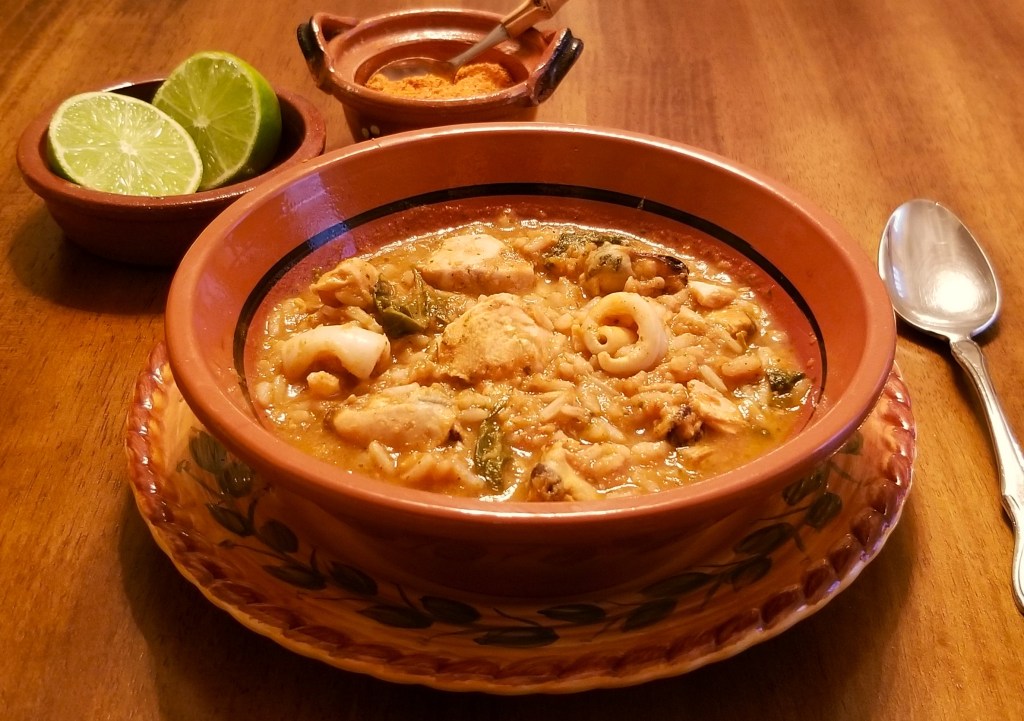
Of course food is always part of History, and West African ingredients and recipes have become part of the regional cuisine in Yanga , and of all of the modern state of Veracruz. In particular, one-pot rice and seafood dishes are traditional in West Africa, for example Thieboudienne, a mix of rice and fish, cooked in a tomato and hot pepper sauce (these vegetables being an evidence of culinary exchange with the New World). It is believed that Thieboudienne gave origin to other dishes in Africa, such as Jollof, and in the American continent, a famous rice dish from Louisiana, with a clear European and African influence, called Jambalaya (likely from the Provençal word jambalaia, a mish-mash or a mix-up). Along those lines, in Veracruz, something made “a la tumbada” is done dilly-dally, carelessly, or in a “mish-mash”, term that gives name to this dish, a mish-mash of rice and seafood in a tomato-based sauce.
Rice Mish-Mash – Arroz a la tumbada
Printable recipe: Rice Mish Mash – Arroz a la tumbada
Ingredients (for four to six portions)
2/3 lb (300 g) fish (halibut, cod, mahi-mahi)
Seafood, one or more, as available, such as: 20 small shrimp, 3 calamari tubes,
2 cups cooked and shelled mussels, and/or even 1 can clams
1 cup long grain rice
3 tomatoes; washed
½ onion; peeled
2 cloves garlic; peeled
1-2 red jalapeño or comapeño peppers, optional; washed
1 sprig celery; washed
1 small bunch cilantro; washed
1 tbsp fresh epazote leaves (if available, or omit); washed
¼ cup tomato paste
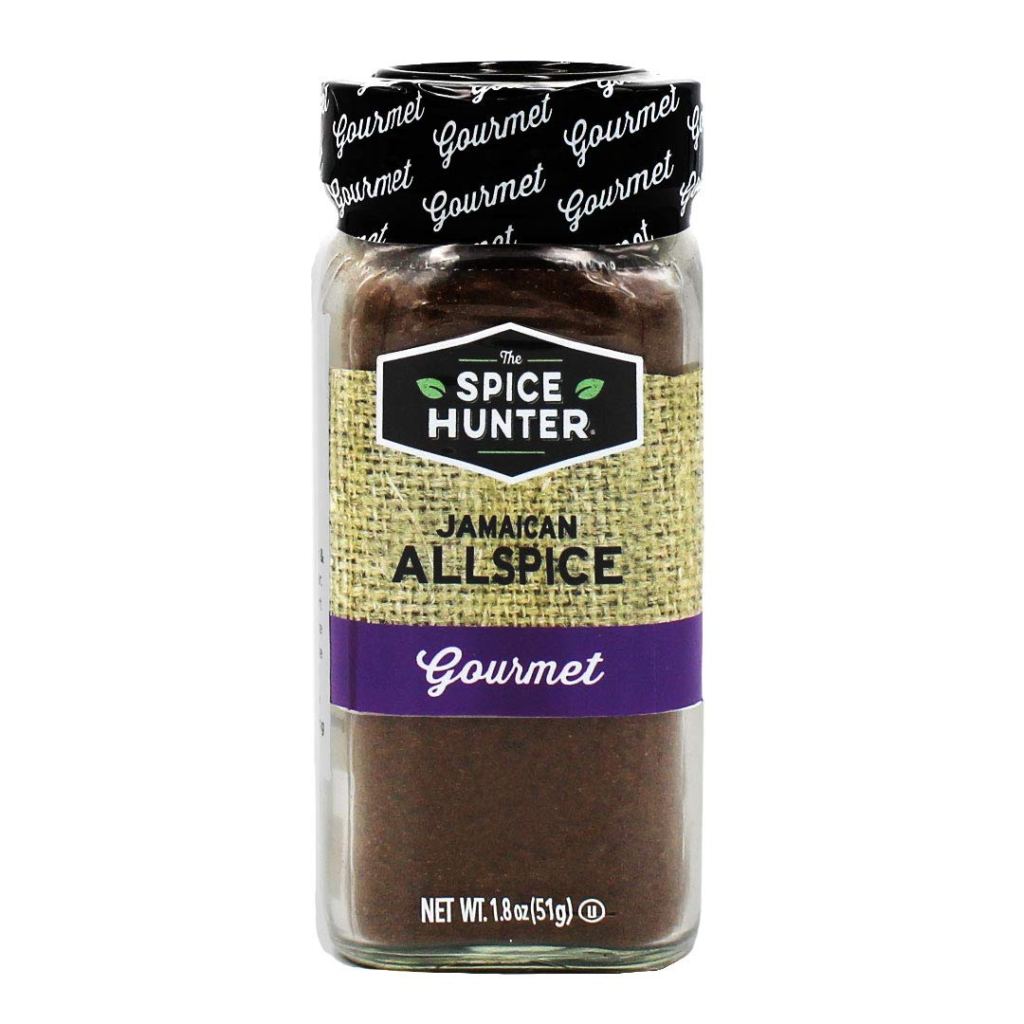
½ tsp ground all-spice
1 bay leaf
2 tbsp oil
Salt and black pepper, to taste
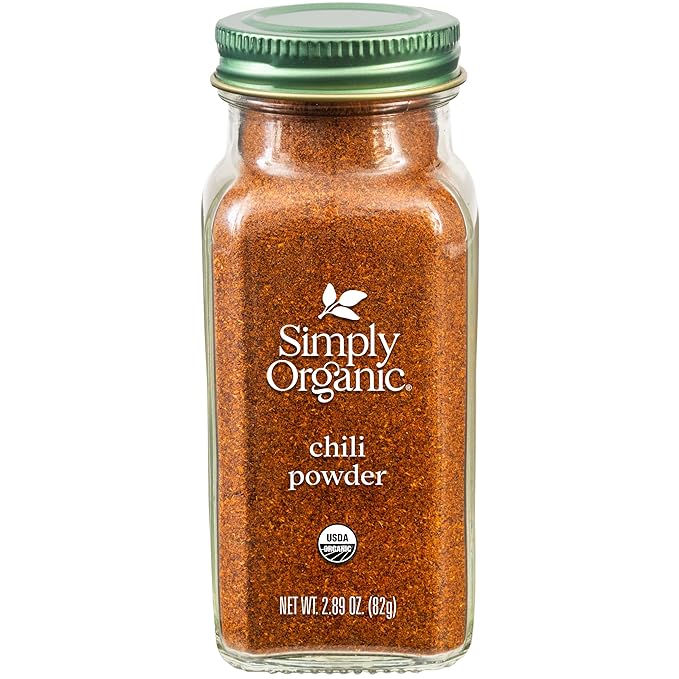
To serve: chili powder, limes
Long grain rice is a common variety, as shown:
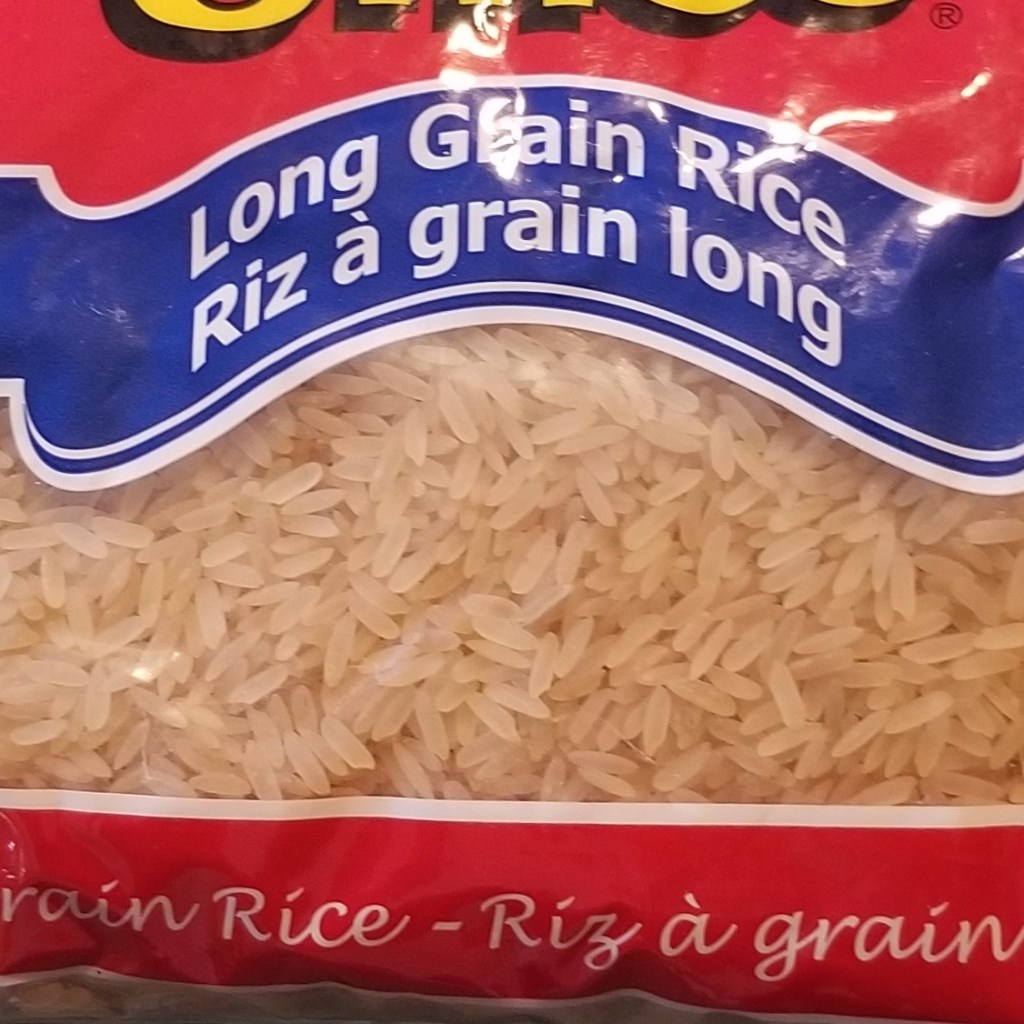
Measure one cup into a large bowl, wash with cold water a couple of times, discarding turbid water and any brush or particles. Drain into a colander and allow to dry. Reserve.
If using fish with bones, separate from fish, and add to a pot; if using shrimp, peel and devein, add shells to the pot, and discarding black veins. Add celery, a couple of layers of onion, bay leaf, and half a teaspoon of salt to the pot, then add three cups of water. Place on the stove over high heat, and bring to boil:
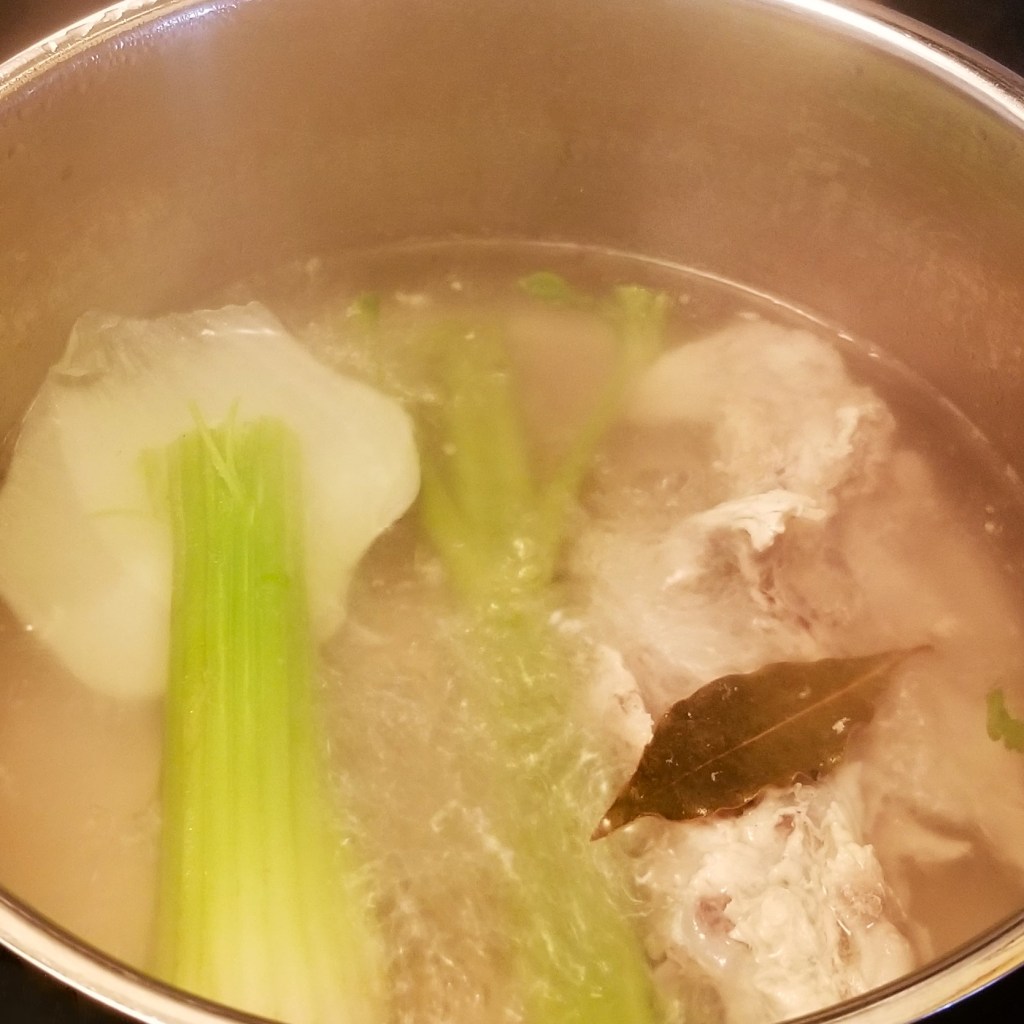
Reduce heat to medium, and cook for ten minutes. Remove from heat, then strain through a mesh. Discard solids and reserve broth. NOTE: If there are no bones or shells, simply omit, and make the broth vegetarian.
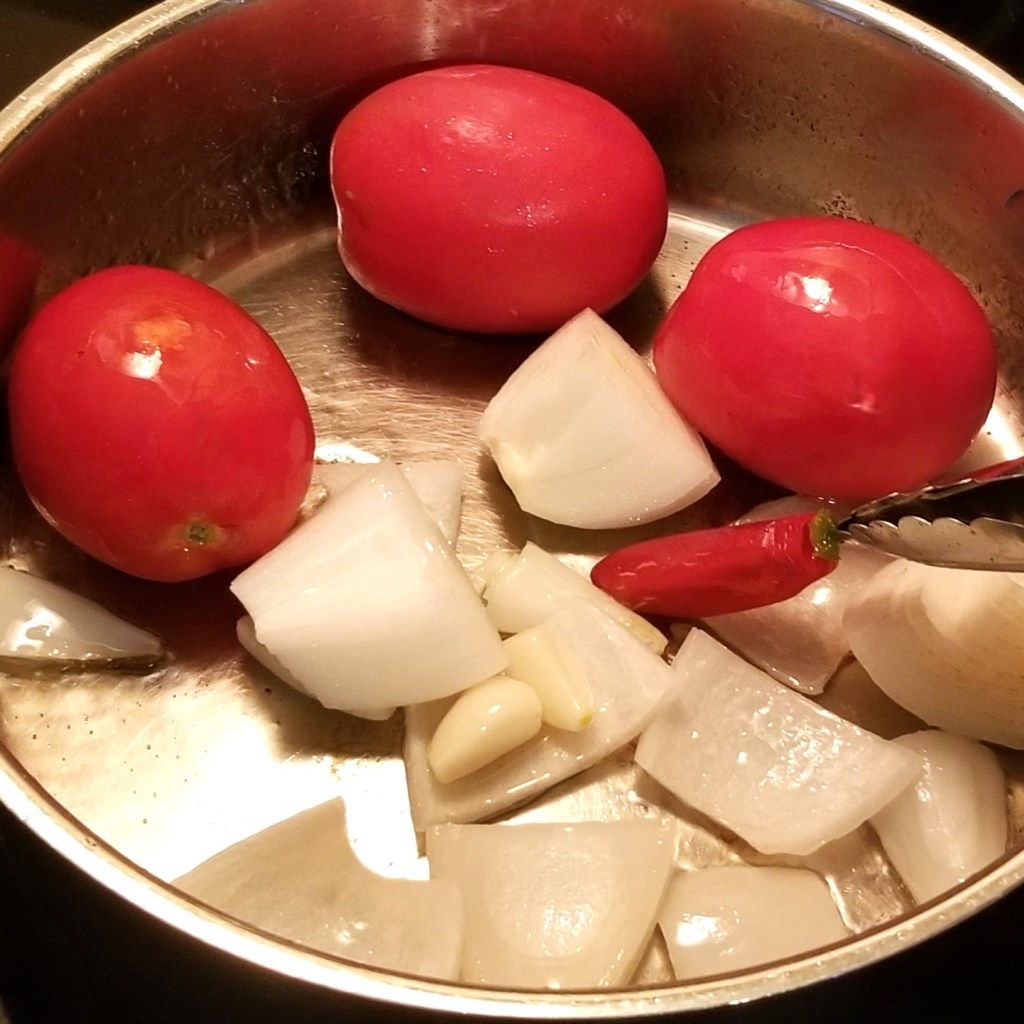
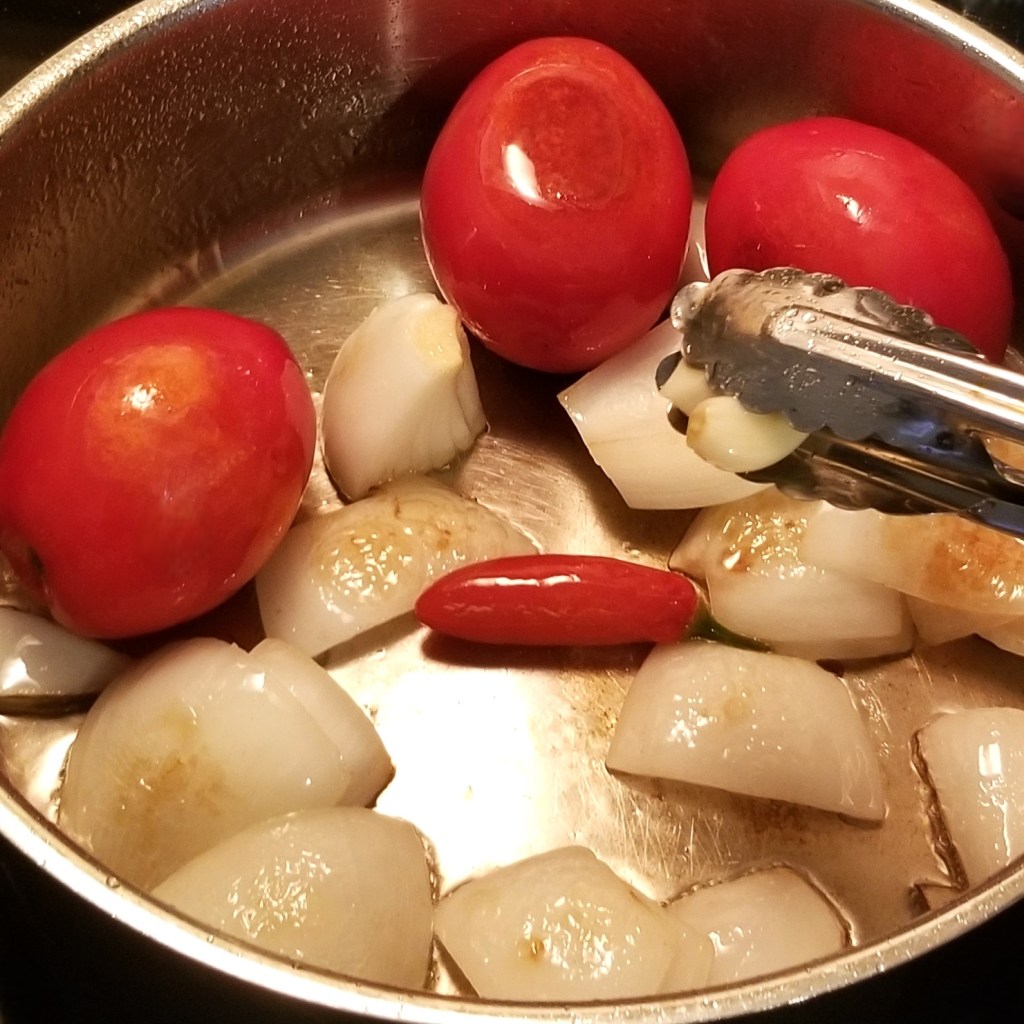
Warm up oil in a large pot over medium heat; add tomatoes, rest of the onion, garlic cloves, and if using, hot peppers (I used one red jalapeño, photo below, left). sauté until veggies start to brown, careful to remove garlic first, to avoid burning (photo below, right):
Transfer veggies to a blender jar, reserving the flavoured oil in the pot. Add half a cup of reserved broth, tomato paste, and all-spice (photo below, left). Give it a few pulses, then add cilantro (photo below, centre). Continue processing for another half a minute (photo below, right):
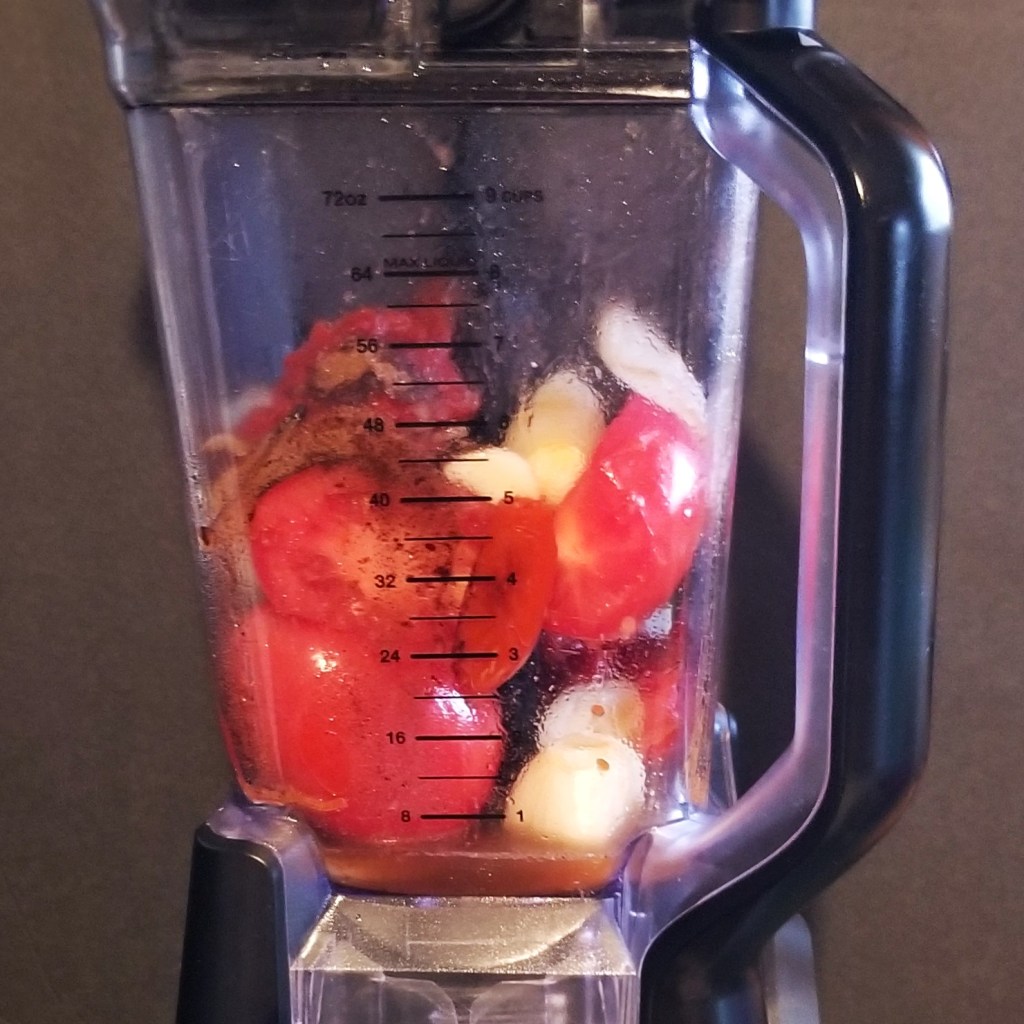
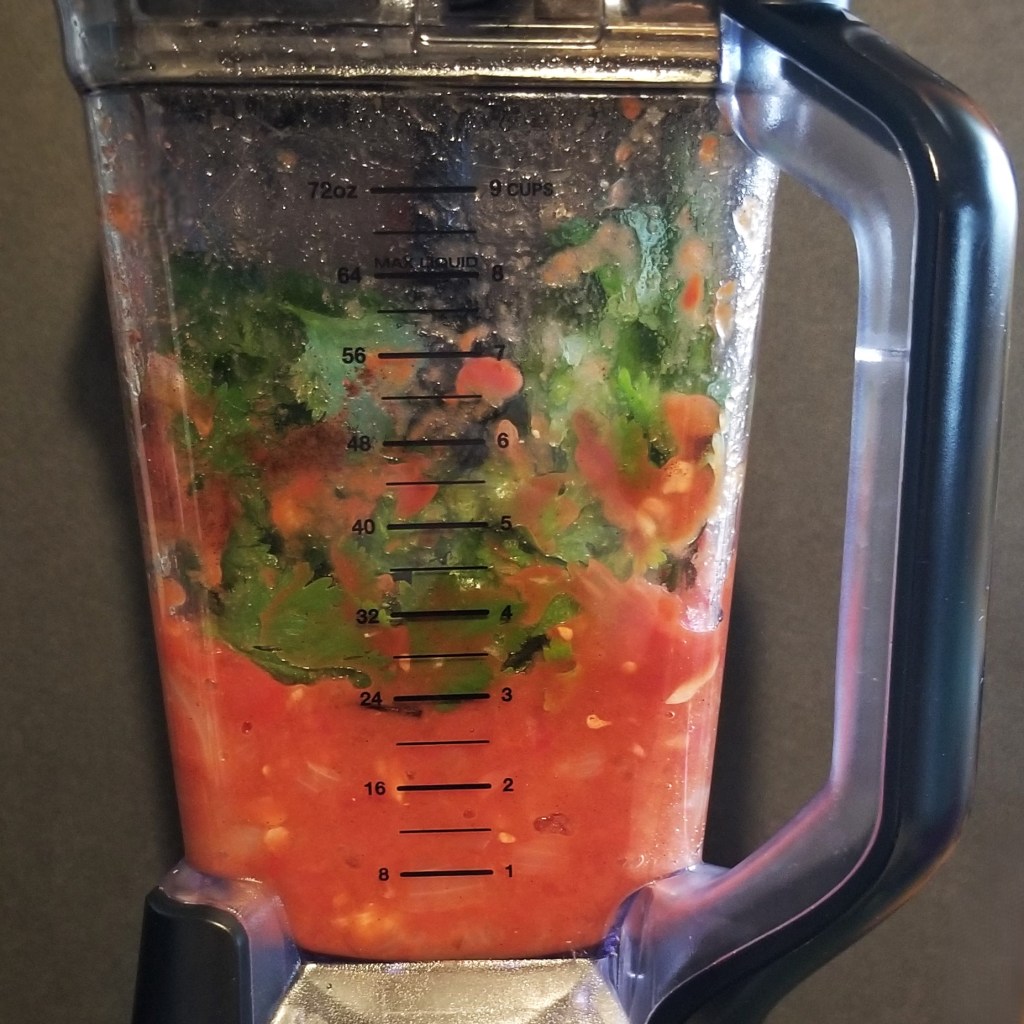
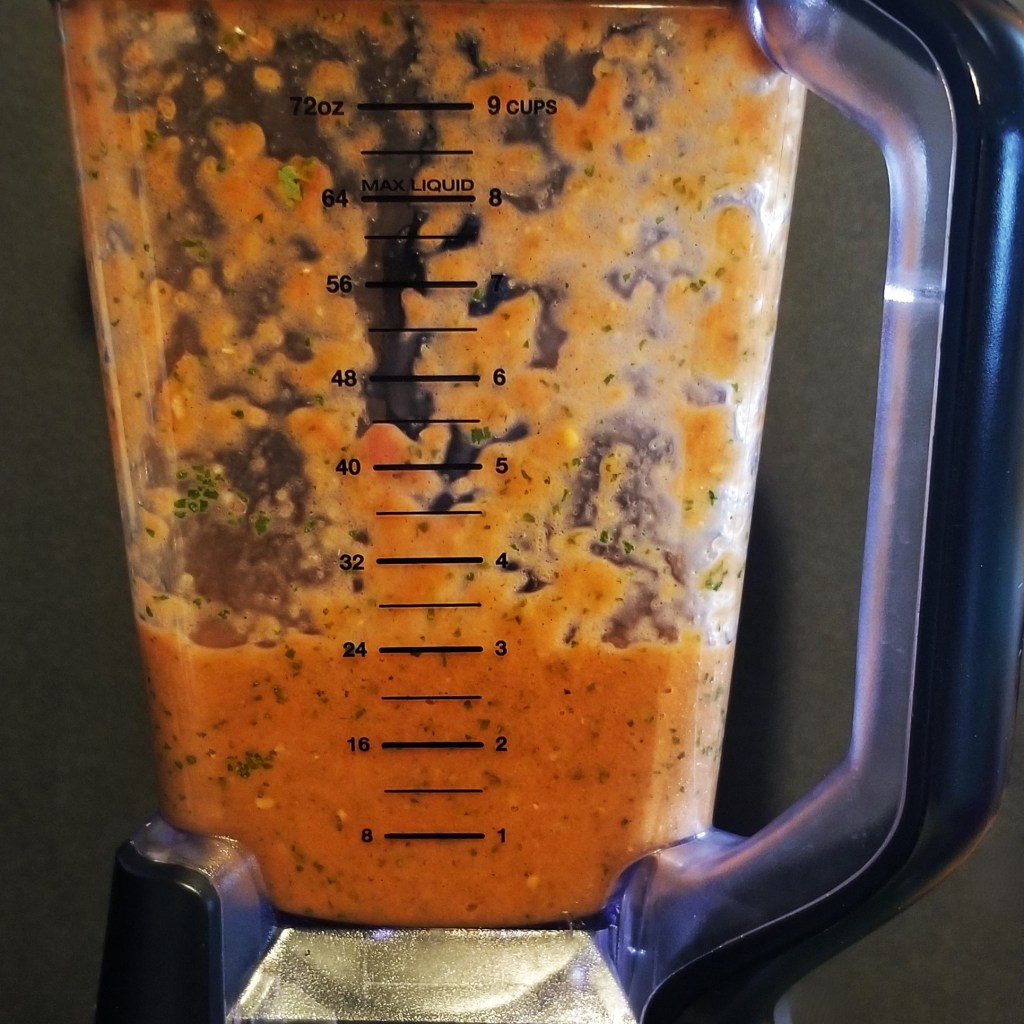
Reserve.
Return reserved pot with oil to the stove over medium heat. Add rice, stirring to coat with the oil (photo below, left). Cook for three to five more minutes, stirring, until the rice turns slightly golden brown, then add reserved tomato sauce (phot below, right):
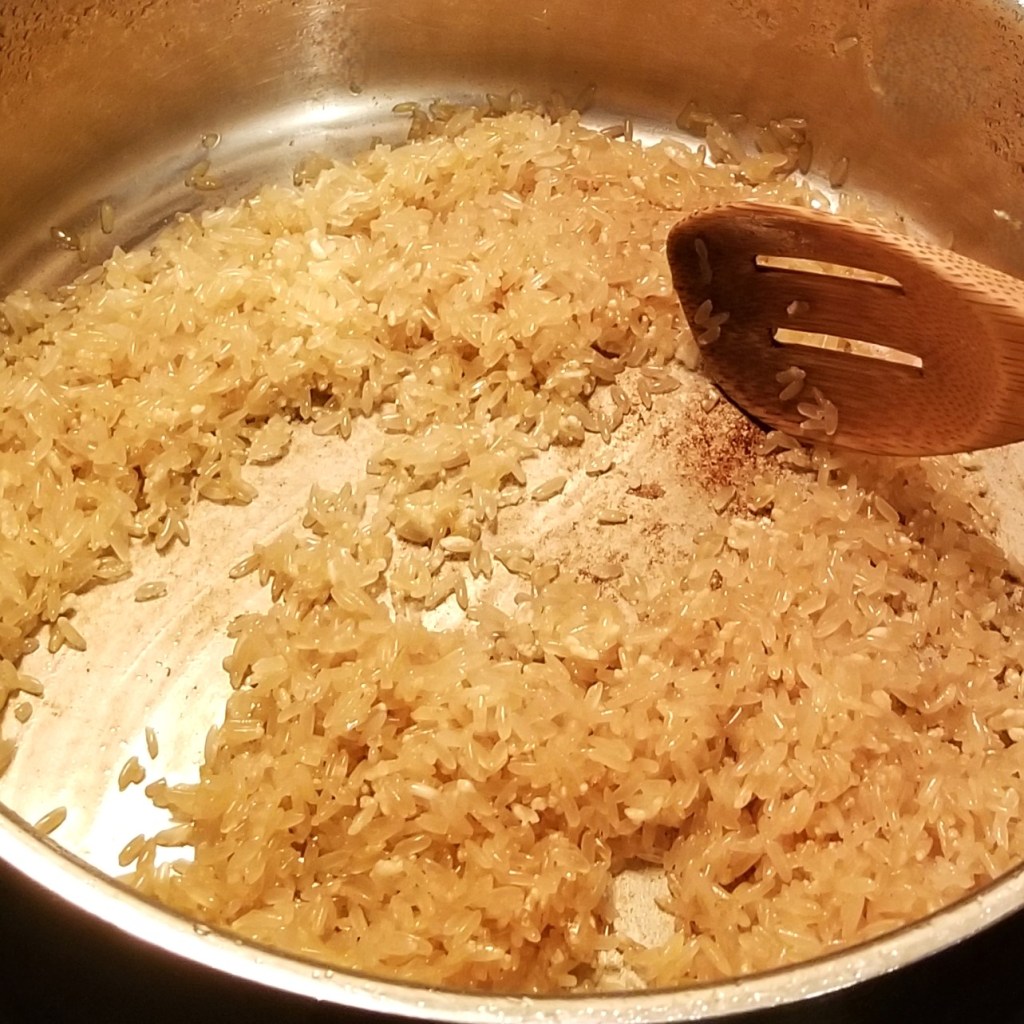
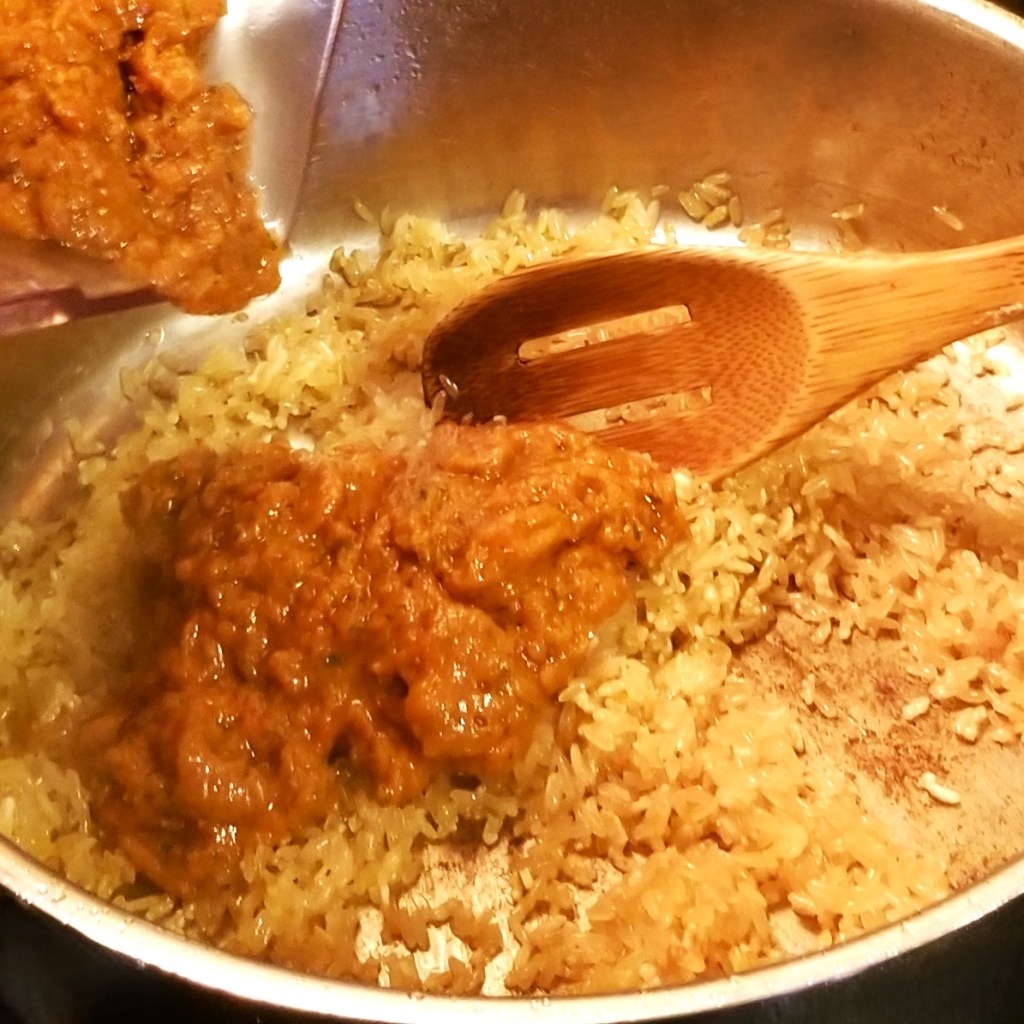
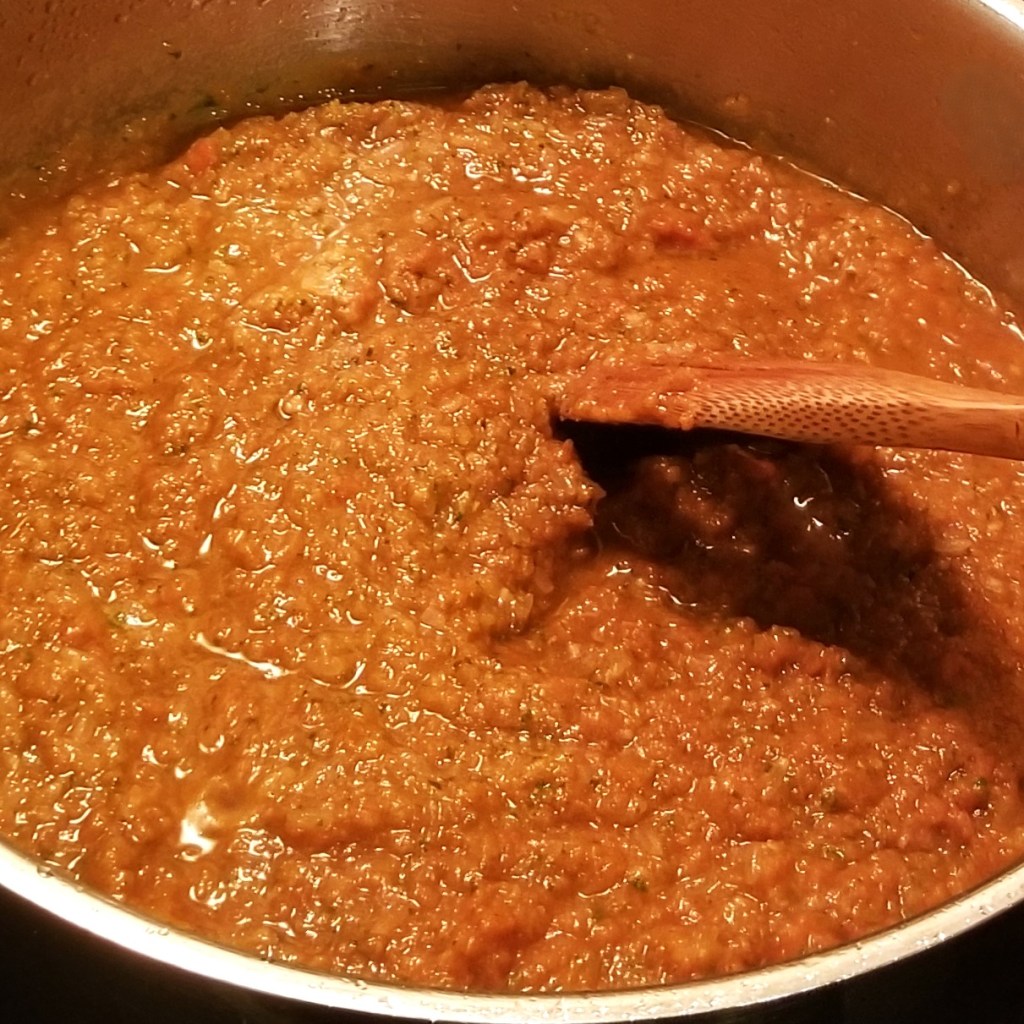
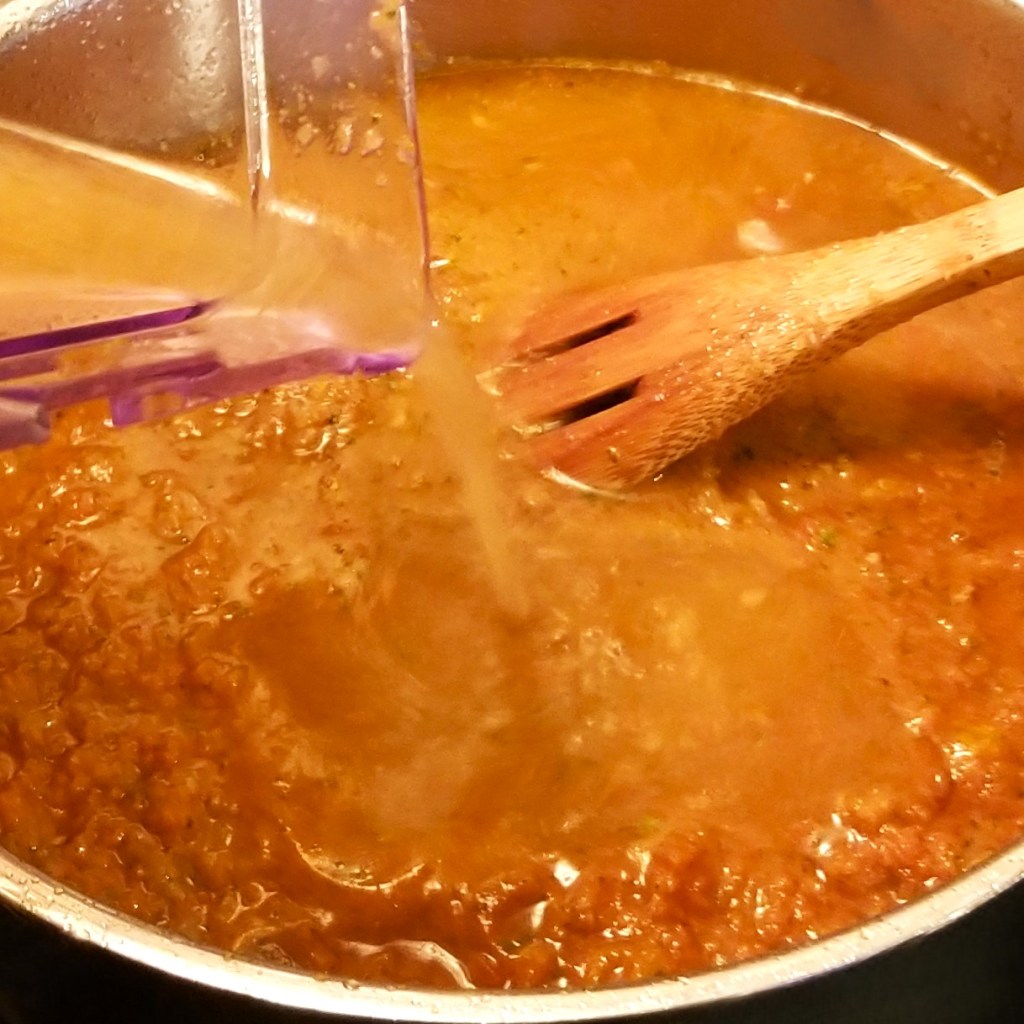
Continue cooking and stirring, to mix rice and sauce (photo below, left). After one or two minutes, pour two cups of broth in the blender jar, to collect any remaining sauce, then add to the pot (photo below, right):
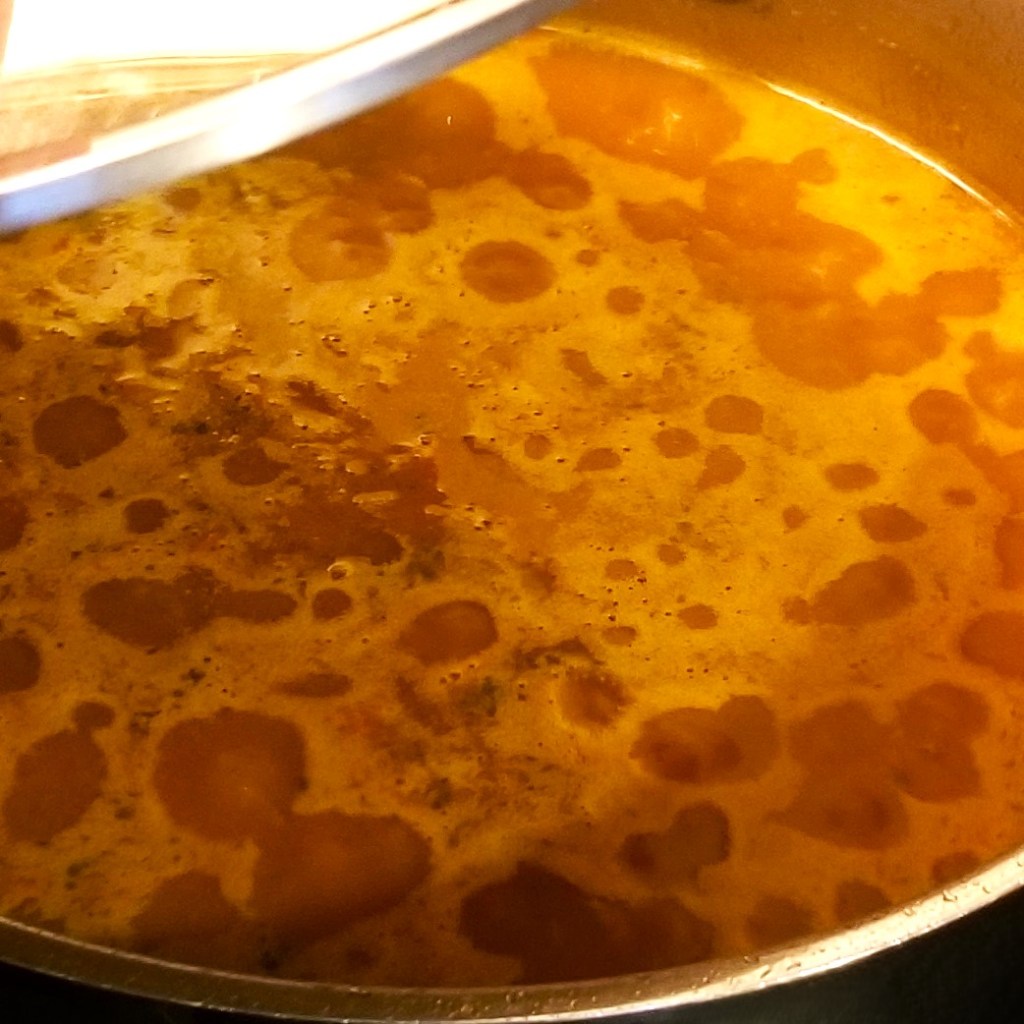
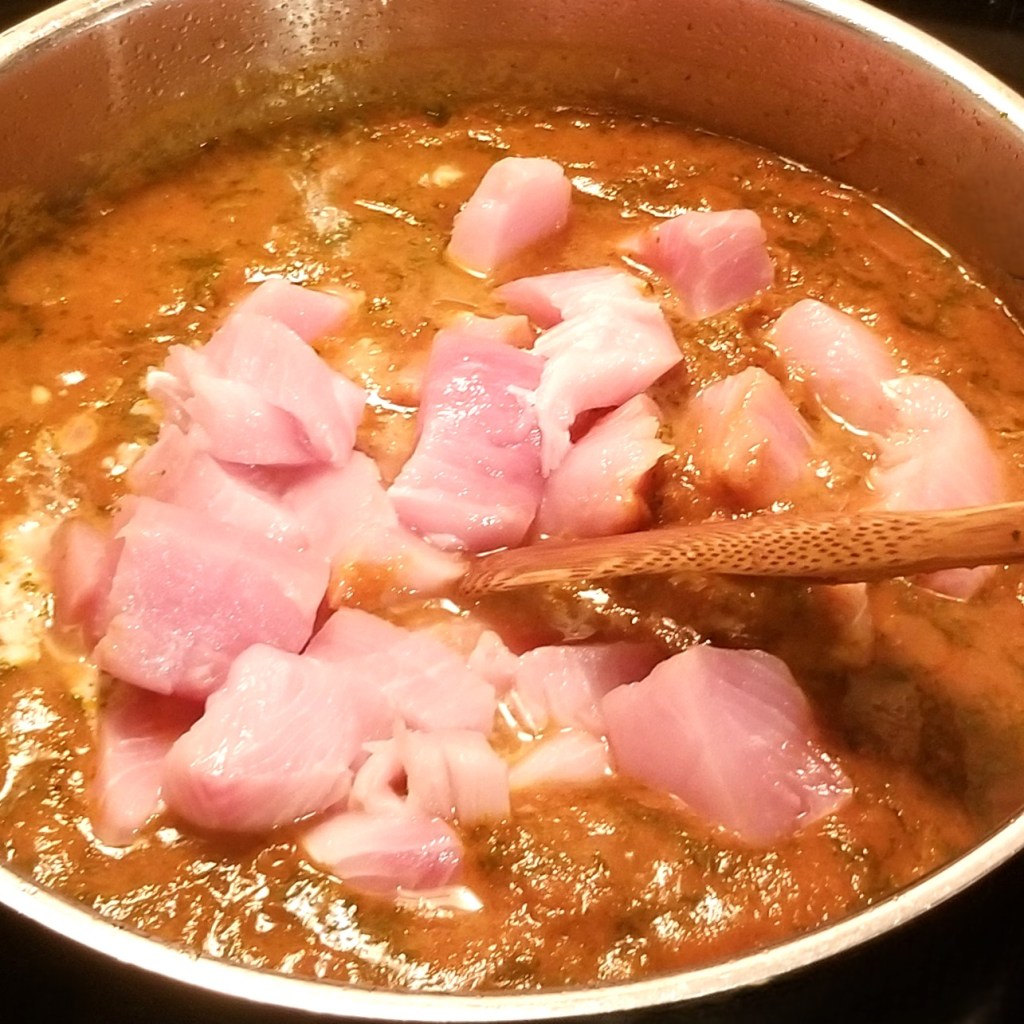
Bring to boil, then reduce heat to a simmer, and cover pot (photo below, left). Allow to simmer for fifteen minutes. Uncover and add deboned fish, cut up into chunks (photo below, right):
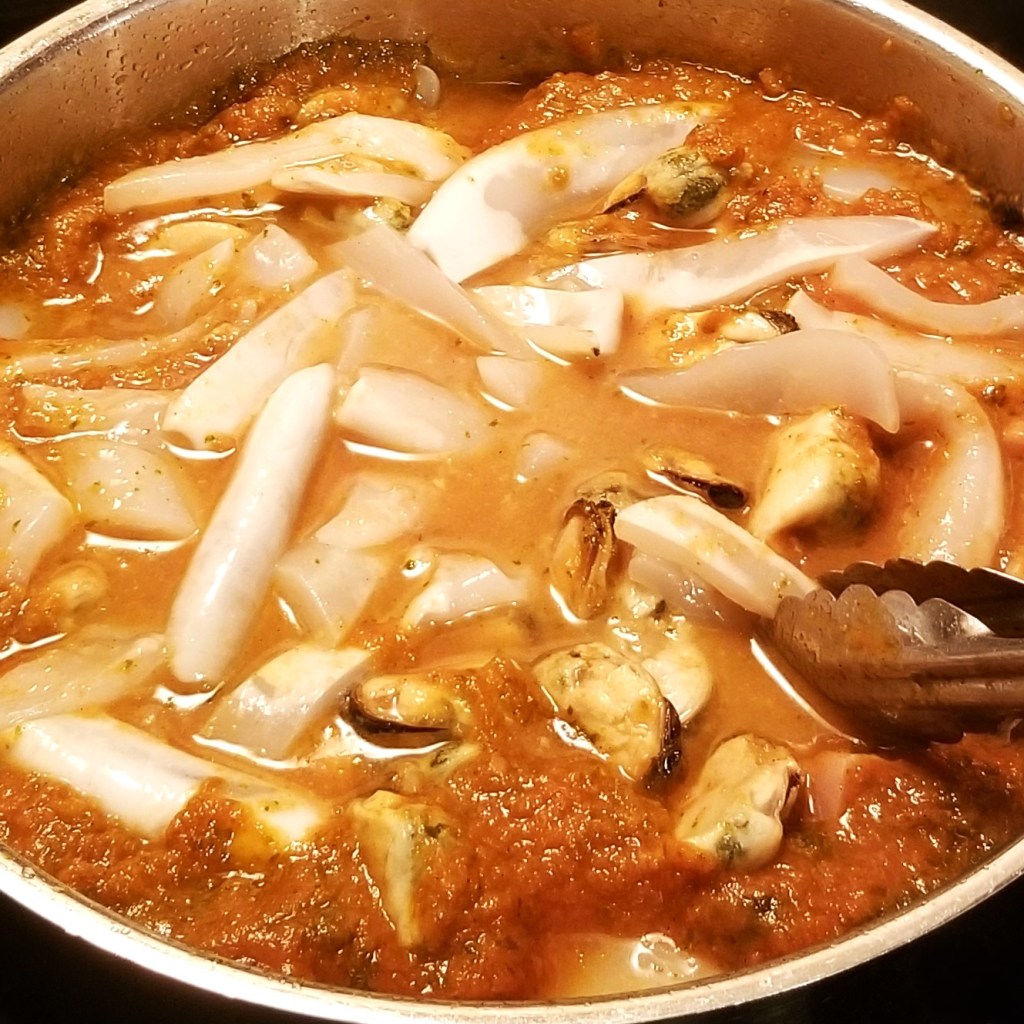
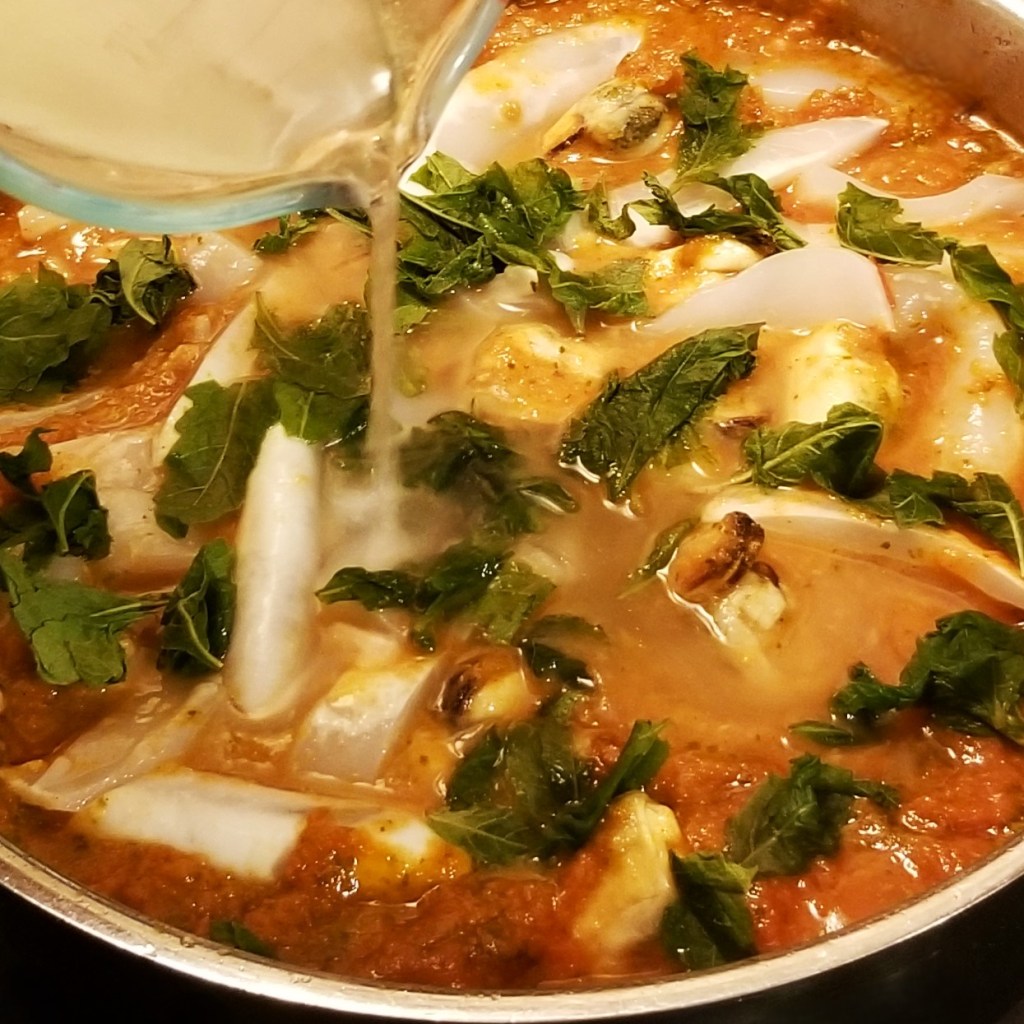
Continue cooking for a couple of minutes, then tuck in the seafood of choice (I had cooked and shelled mussels, and squid tubes, cut into strips, photo below, left). Continue cooking for a few minutes, until rice is tender and seafood is cooked. Add any broth remaining, and epazote leaves (if using, photo below, right):
Bring to boil again, adjust seasoning with salt and pepper, as needed, mixing to incorporate. Turn off heat, and allow to rest for five to ten minutes, to integrate all flavours:
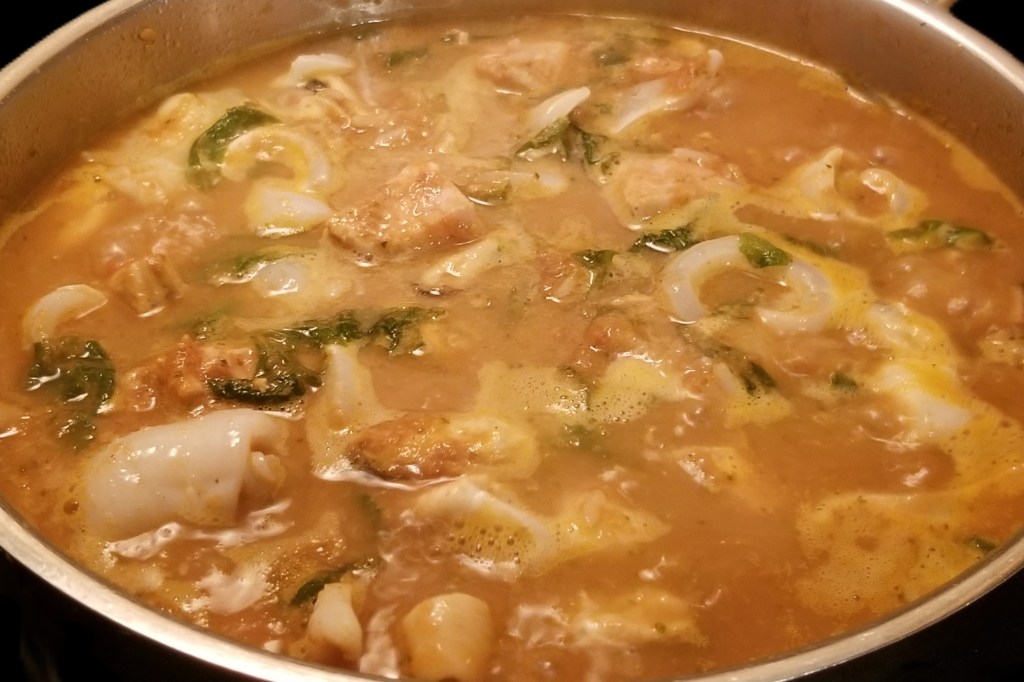
Depending on taste, the more it is left to rest, the more broth gets absorbed.
Serve hot in bowls, with lime and chili powder on the side:
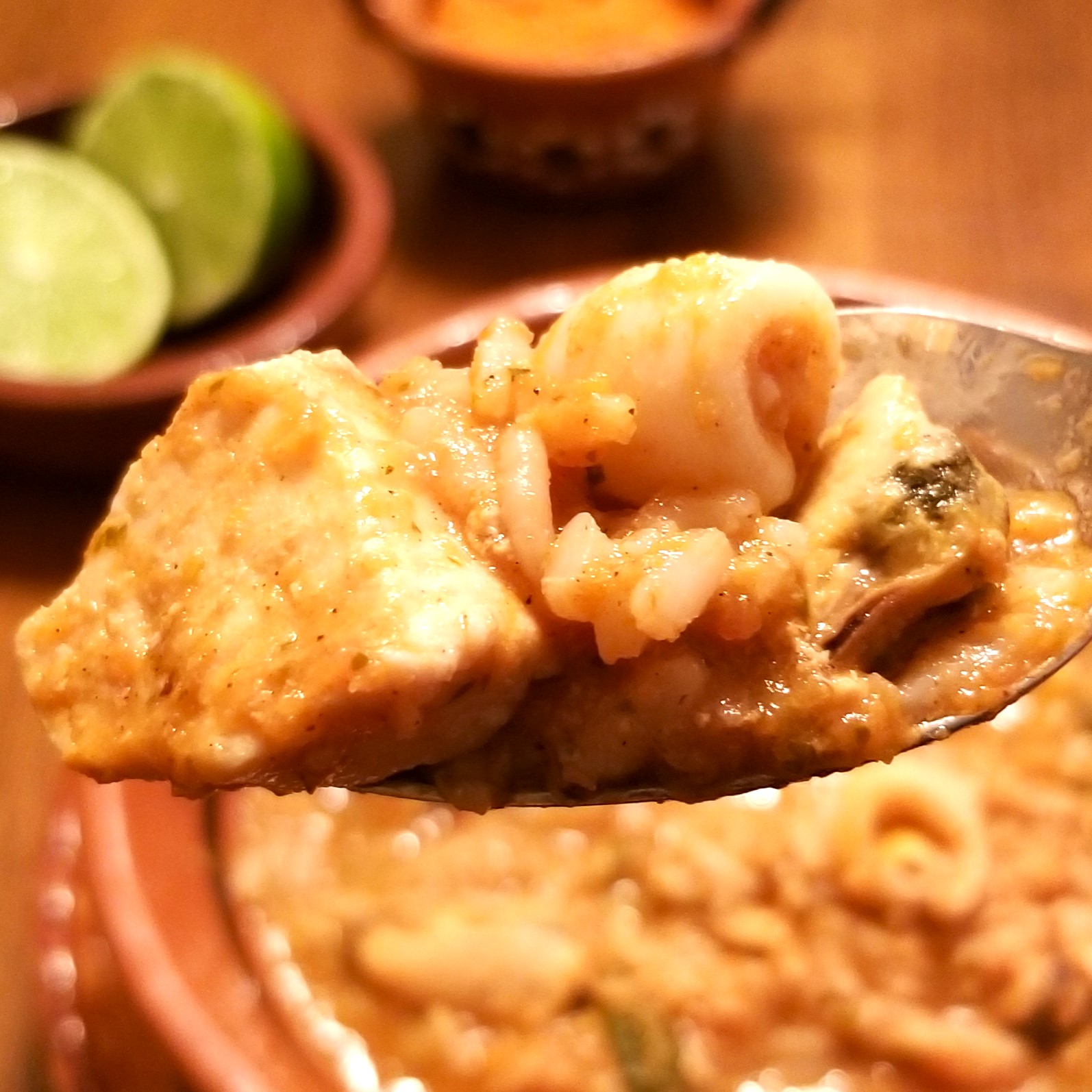
Makes for a delicious and satisfying meal, bite by bite:
FUN FACT: On Sunday February 9, 2025, the Kansas City Chiefs and the Philadelphia Eagles play for the Super Bowl, the professional American football championship, this year at the New Orleans, LA Superdome. Popular choices to eat while watching the game are finger foods such as wings and hotdogs, as well as one-bowl dishes, such as nachos or chili. For this year, I can see a nice pot of arroz a la tumbada amongst them, as a homage both to Black History Month, and the dish’s connection to the hosting city’s jambalaya.
For your convenience, click on the highlighted text below for products available on Amazon™. DISCLAIMER: Any reviews included in this post are my own, for items I have purchased, not provided by any company; as an Amazon Associates Program affiliate, I might receive a commission for any purchases originated from the links below, at no extra cost to you. Thank you to readers who have bought other products starting with a click from my links!
I am bringing my recipe to Full Plate Thursday #732 with Miz Helen @ Miz Helen’s Country Cottage.
I am sharing my post at Thursday Favourite Things #696, with Bev @ Eclectic Red Barn, Pam @ An Artful Mom, Katherine @ Katherine’s Corner, Amber @ Follow the Yellow Brick Home, and Linda @ Crafts a la Mode.
I am joining Fiesta Friday #575 with Angie @ Fiesta Friday.



 My Slice of Mexico
Another very informative post, Irene. I’ve shared a copy of your recipe with my son who does most of the cooking in my house. Thank you.
LikeLiked by 1 person
Thank you, Tracy, Let me know if he gets to try it!
LikeLiked by 1 person
I will.
LikeLiked by 1 person
today I will cook “arroz a la tumbada”. Saludos hermanita querida!
LikeLiked by 1 person
Platícame qué tal te quedó 💕
LikeLike
Looks delicious. This is another one I need to try. Thanks
LikeLiked by 1 person
Thank you, Alice, I hope you will like it!
LikeLike
Looks yummy. Just bought some haddock filets. Might buy some shrimp to go with it and make this recipe.
LikeLike
Let me know how it turned out!
LikeLiked by 1 person