
Click here to go to printable recipe: Huasteca Corn Patties – Bocoles
As I have mentioned before, La Huasteca is a region delimited by the Gulf of Mexico and Mexico’s Eastern mountain ranges, defined not only by the geographical area that indigenous Huastec groups dominated in pre-Hispanic times, but by the plenitude of their cultural heritage. It includes parts of several Mexican states: The Southern zone of Tamaulipas, Eastern San Luis Potosi, and Northern regions in Veracruz, Queretaro, Hidalgo, and Puebla. Some of their dishes are unique to a particular state, such as Carne a la Tampiqueña (Tampico Style Steak) from Tamaulipas, or Puerco en Pipián Rosado (Pork in Blushed Seed Sauce) from Hidalgo.
Bocoles are a type of patties, made with corn dough (masa de nixtamal) which are very traditional in all of the Huasteca. The word bocol comes from the Tének language (Huasteco), an ancient form of Mayan; a similar word in this language is bakan (corn tortilla), another round corn dough preparation. In the North-eastern part of the state of Hidalgo, right at the border with the state of Veracruz, the city of Huejutla de Reyes, sometimes called “the heart of the Huasteca“, is well known for the preservation of its indigenous languages, and the cultural and culinary legacies of its people; the recipe I am sharing was inspired by one of their basic versions of bocoles.
Huasteca Corn Patties – Bocoles
Printable recipe: Huasteca Corn Patties – Bocoles
Ingredients (for one dozen)
Dough
2 cups nixtamalized corn flour (such as Maseca™ or Bob’s Red Mill™)
1 ½ cups water, as needed
¼ cup lard (or oil, for vegetarian)
1 tsp salt, or to taste
Fillings
Bean Filling (for 6)
1 cup cooked black beans; drained (click here for homemade de la olla, or from can)
¼ cup cilantro; washed, and chopped
Cheese Filling (for 6)
1 cup unripened cheese, such as Mexican añejo, or light feta; crumbled
2 guajillo peppers; wiped clean (or 2 tbsp ground guajillo from jar)
Salsas
Green salsa (click here for homemade charred tomatillo, or from jar)
Red guajillo salsa
2 tomatoes; washed
¼ white onion; ends removed, peeled, layers separated
3 guajillo peppers; wiped clean
3-4 chiles de árbol, to taste, or omit for mild
1 clove garlic; peeled
½ tsp salt, or to taste
1 cup water; freshly boiled
1 tbsp oil, plus more for greasing griddle
Toppings and extras (optional)
White onion; peeled, and chopped
Cilantro; washed, and chopped
Avocados; washed
Grilled meat, chorizo, etc.
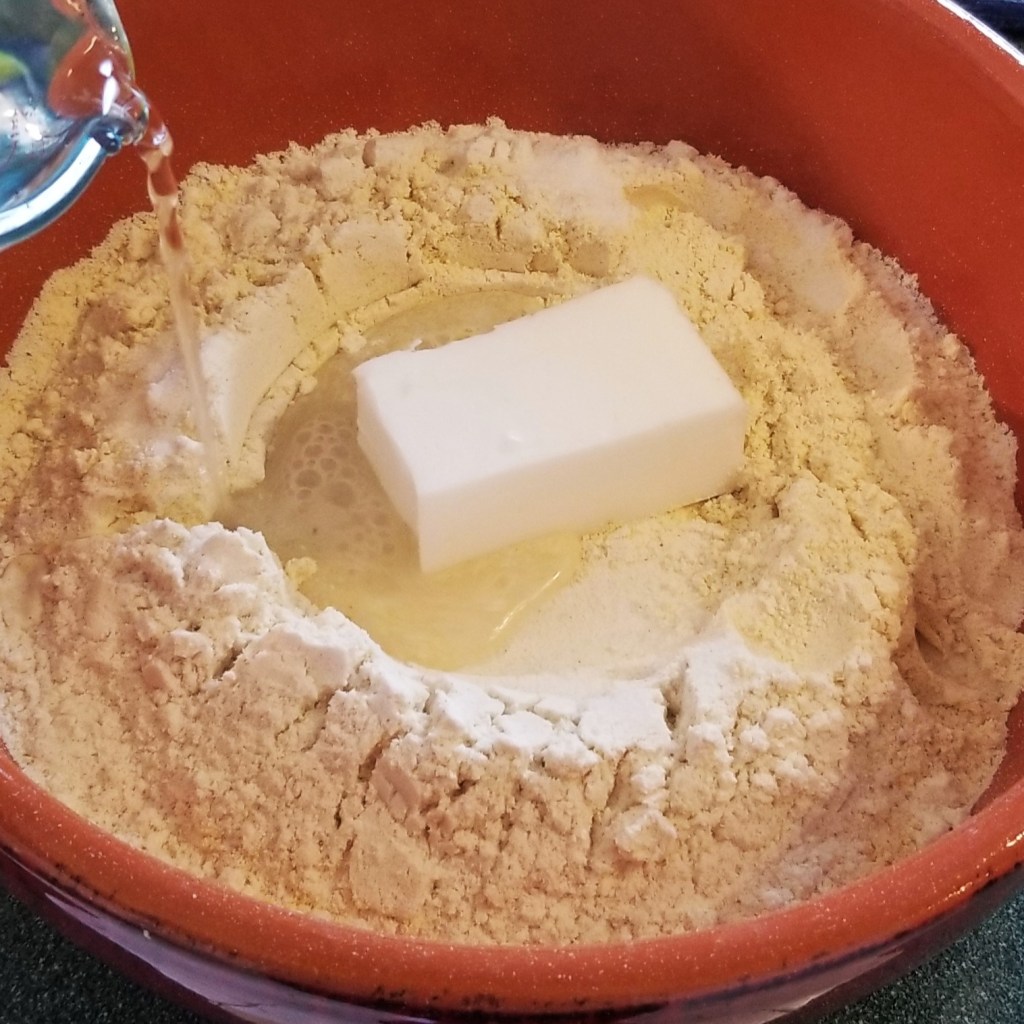
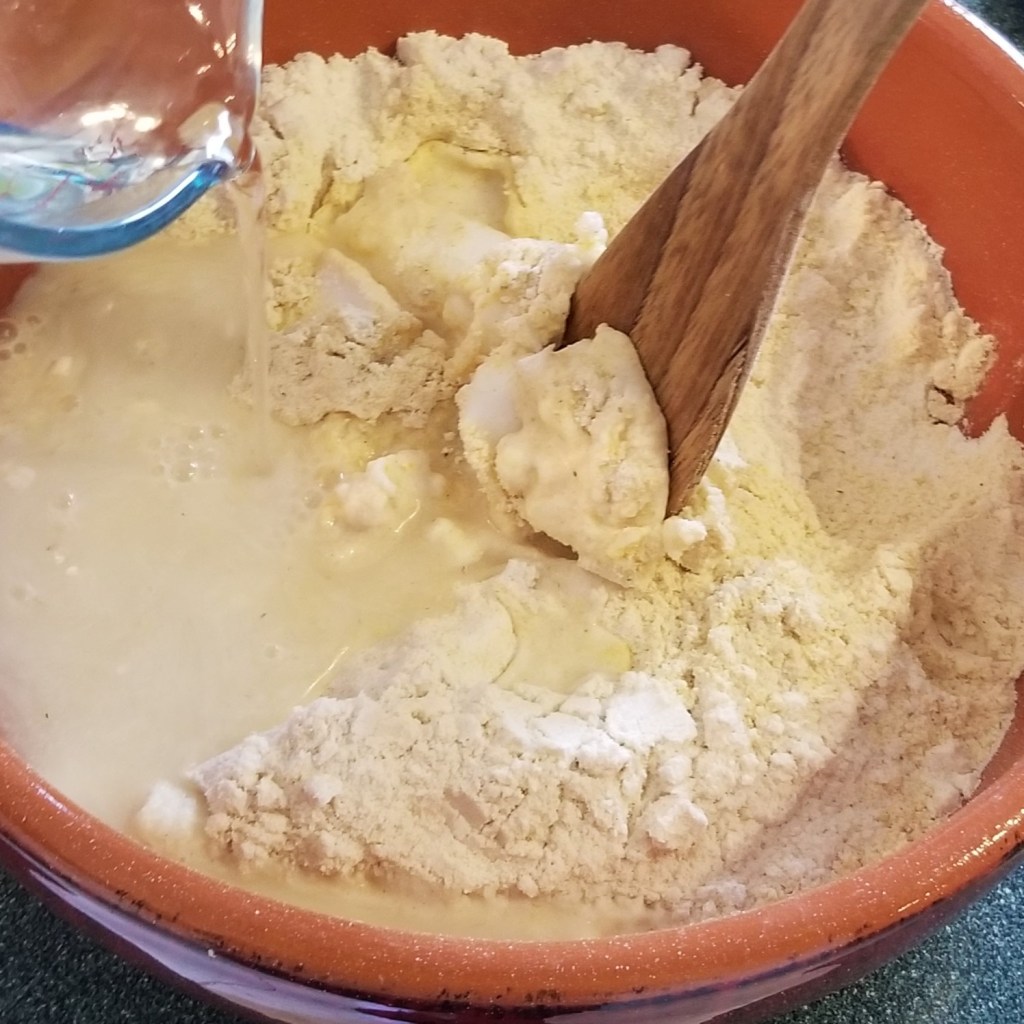
Prepare dough: Place nixtamalized corn flour in a bowl, sprinkling salt on top; open a well in the middle, to add lard (or oil), and half a cup of water (photo below, left). Break up lard, mixing with the other ingredients, gradually adding more water (photo below, right):
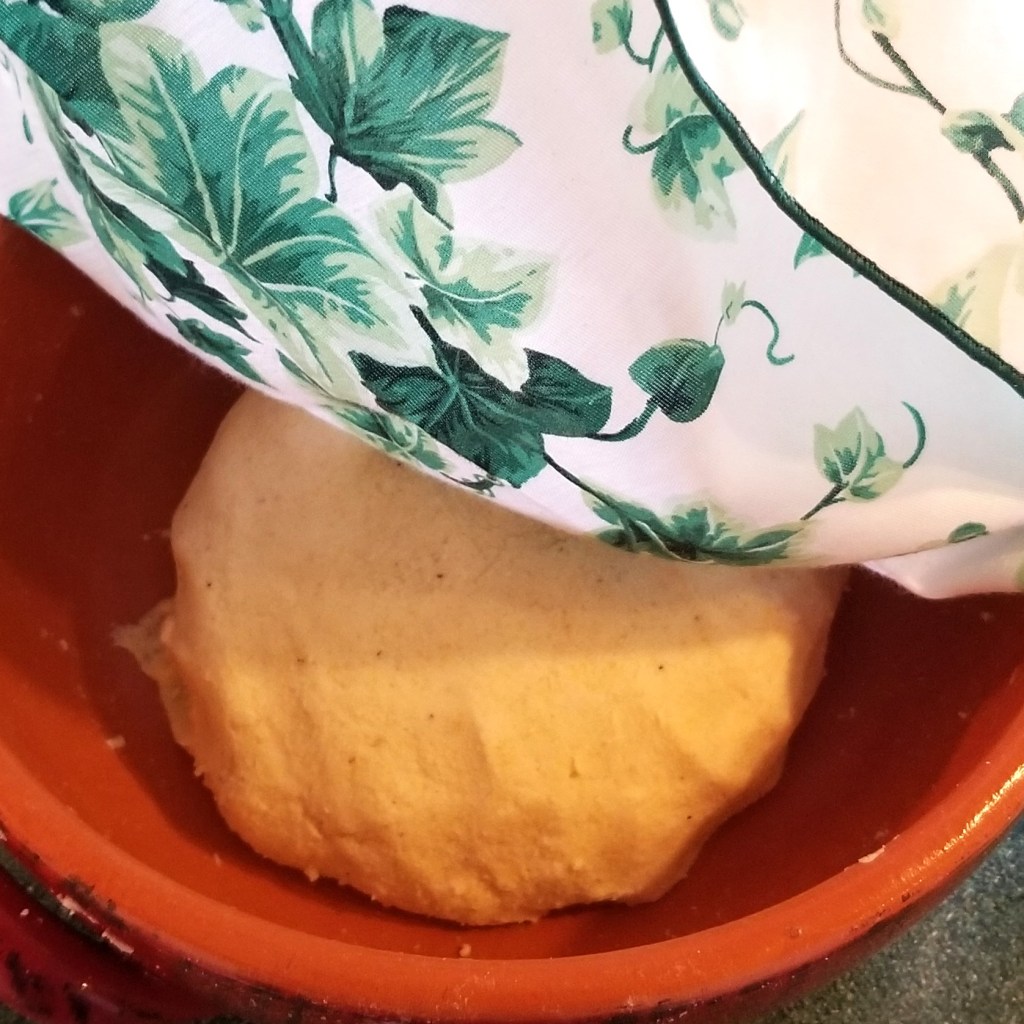
Continue kneading by hand, adding enough water to completely hydrate the flour (1¼ to 1 ½ cups, total), and form into a ball of soft dough (photo below, left). Allow to rest for 20 to 30 minutes, covered with a clean kitchen towel (photo below, right):

Prepare salsas: Prepare green salsa following the link to my Charred Green Sauce. Reserve. For the red guajillo salsa, place tomatoes, onion, chiles de árbol (if using) and all five guajillo peppers on a lightly greased comal (Mexican flat griddle) or skillet (photo below, left). Turn peppers every few seconds, and remove as soon as they are roasted, to avoid burning (photo below, right):
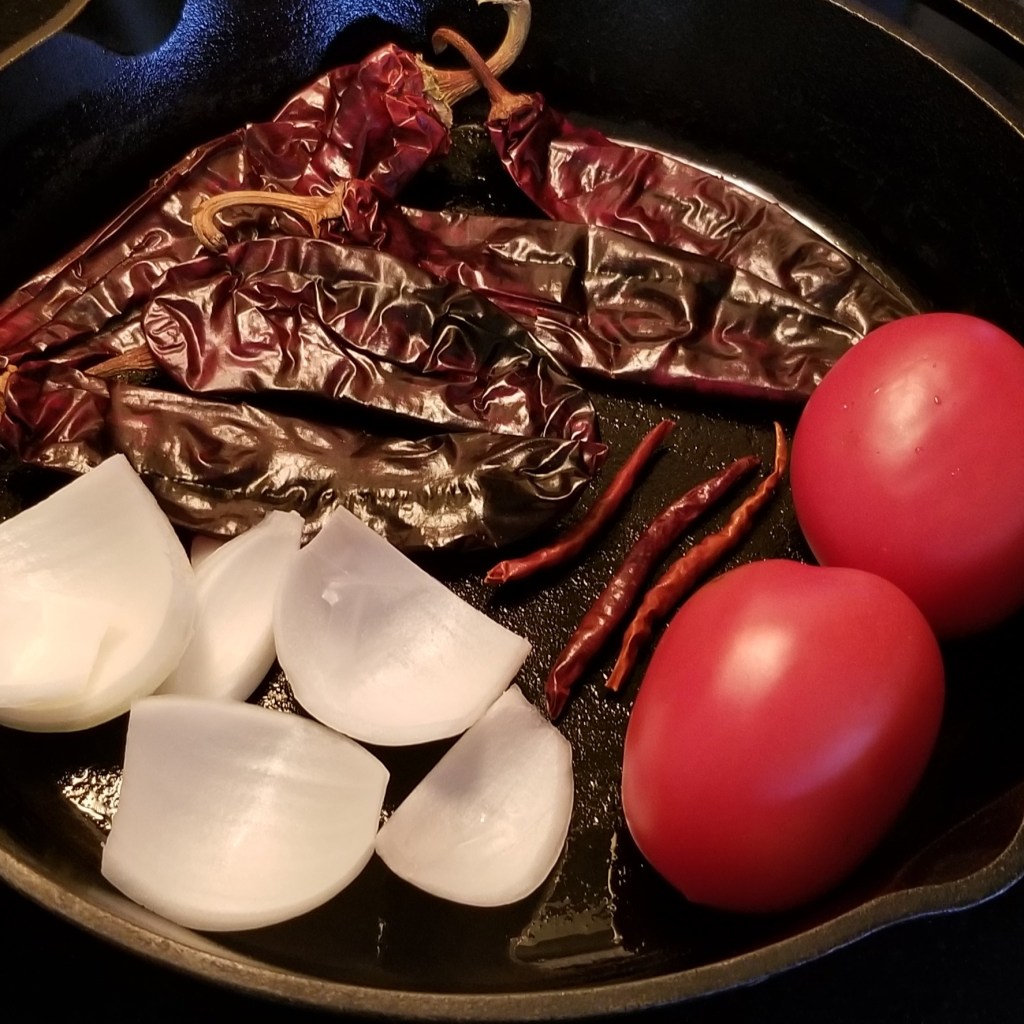

Reserve two of the guajillo peppers for cheese filling.
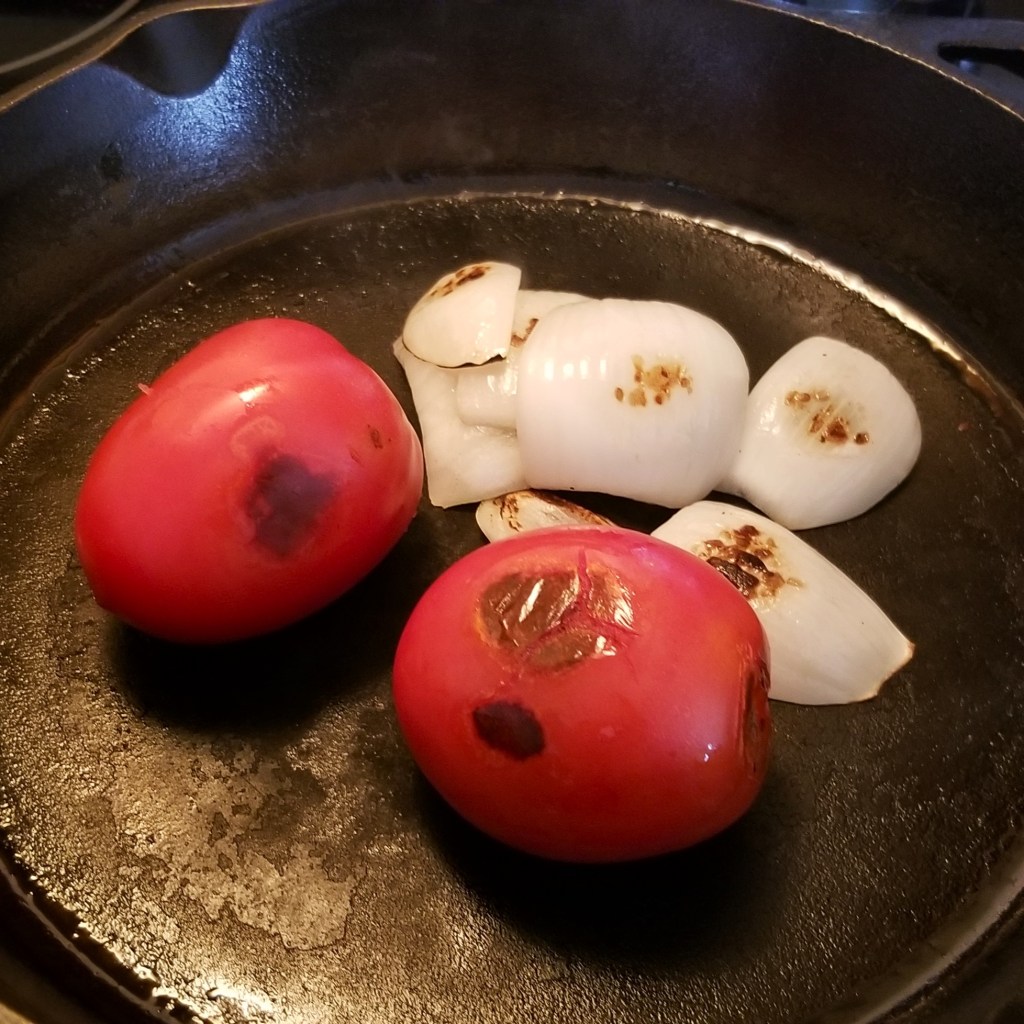
Place the other three guajillo peppers and the chiles de árbol in the freshly boiled water (photo below, left); remove pot from heat, and allow peppers to soak for a few minutes. Meanwhile, continue roasting tomatoes and onions, turning to char all around (photo below, right):

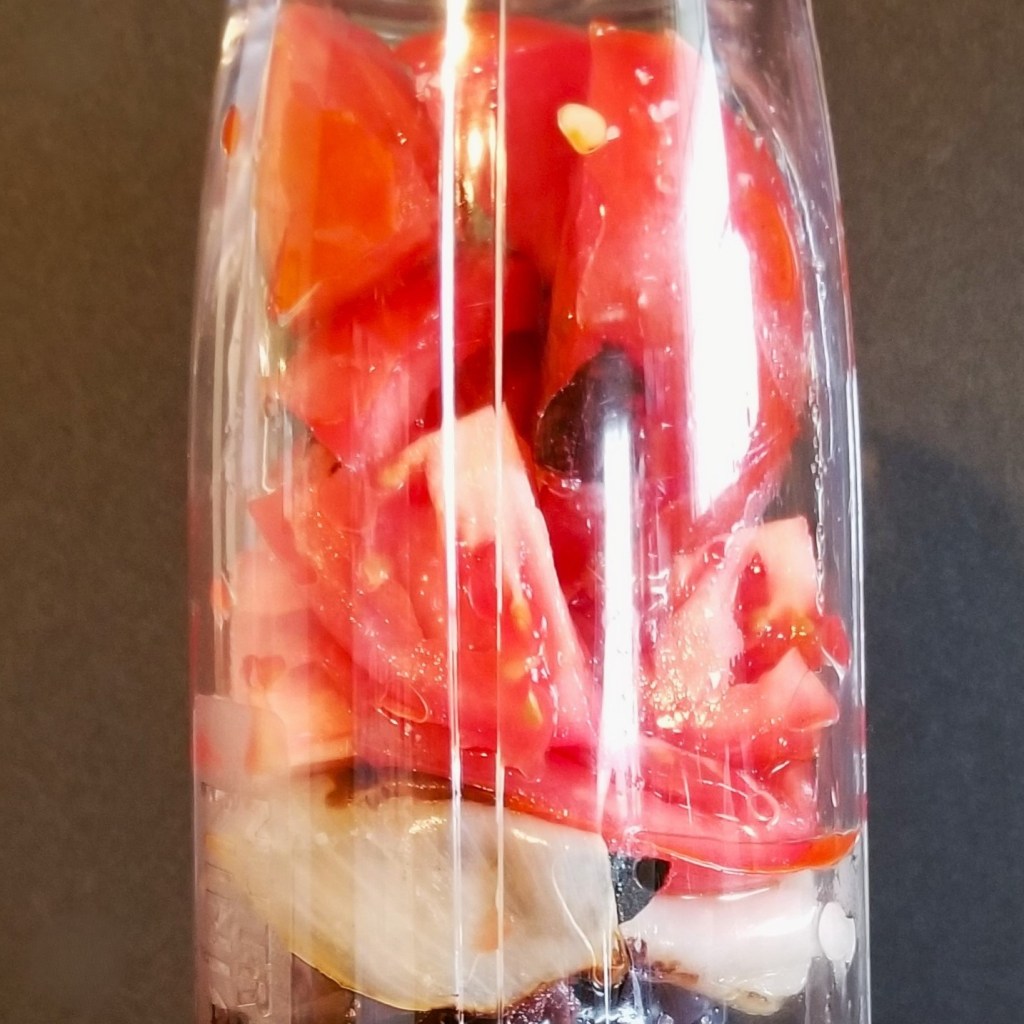
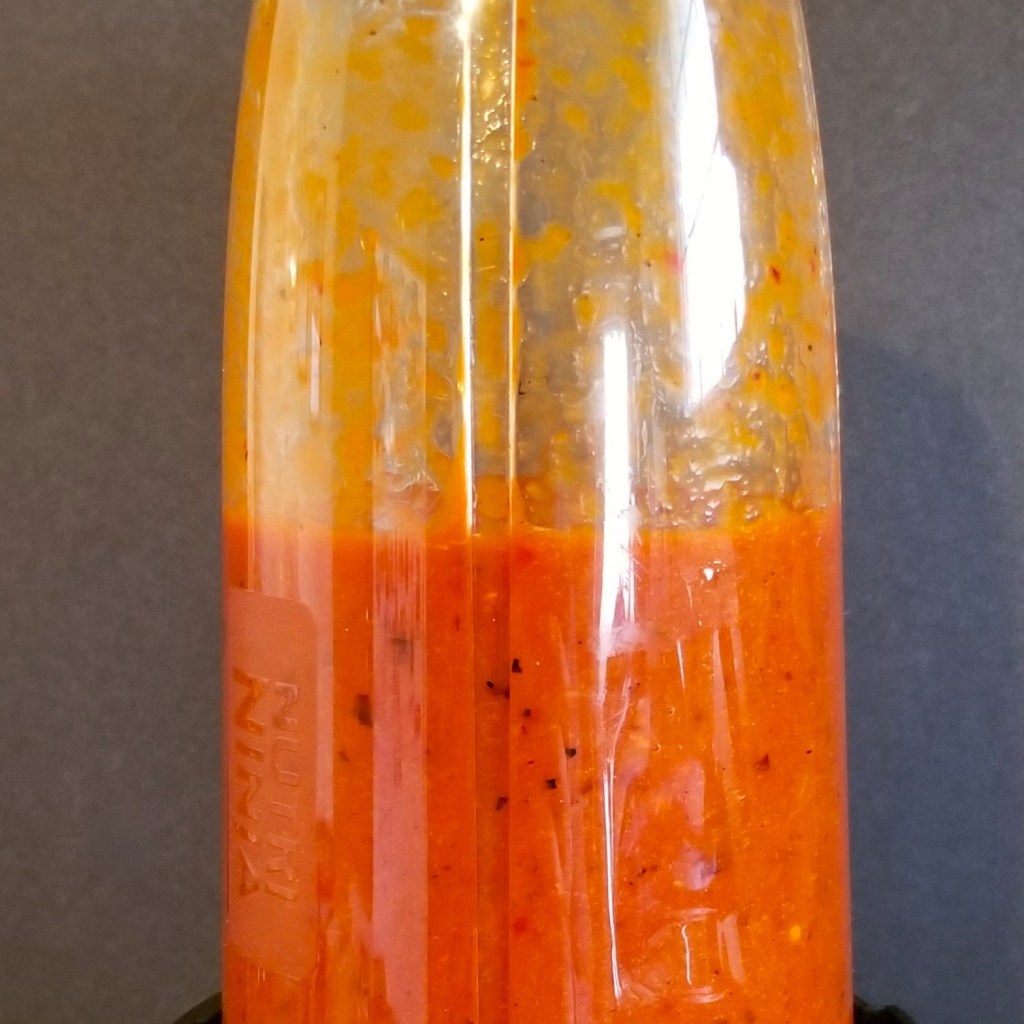
Remove stems from peppers and chiles, and transfer to a blender jar, along with their soaking water; remove stem spots from tomatoes, and cut up into quarters, then add to the blender jar; add roasted onions, garlic clove, and salt (photo below, left); process until smooth (photo below, right):
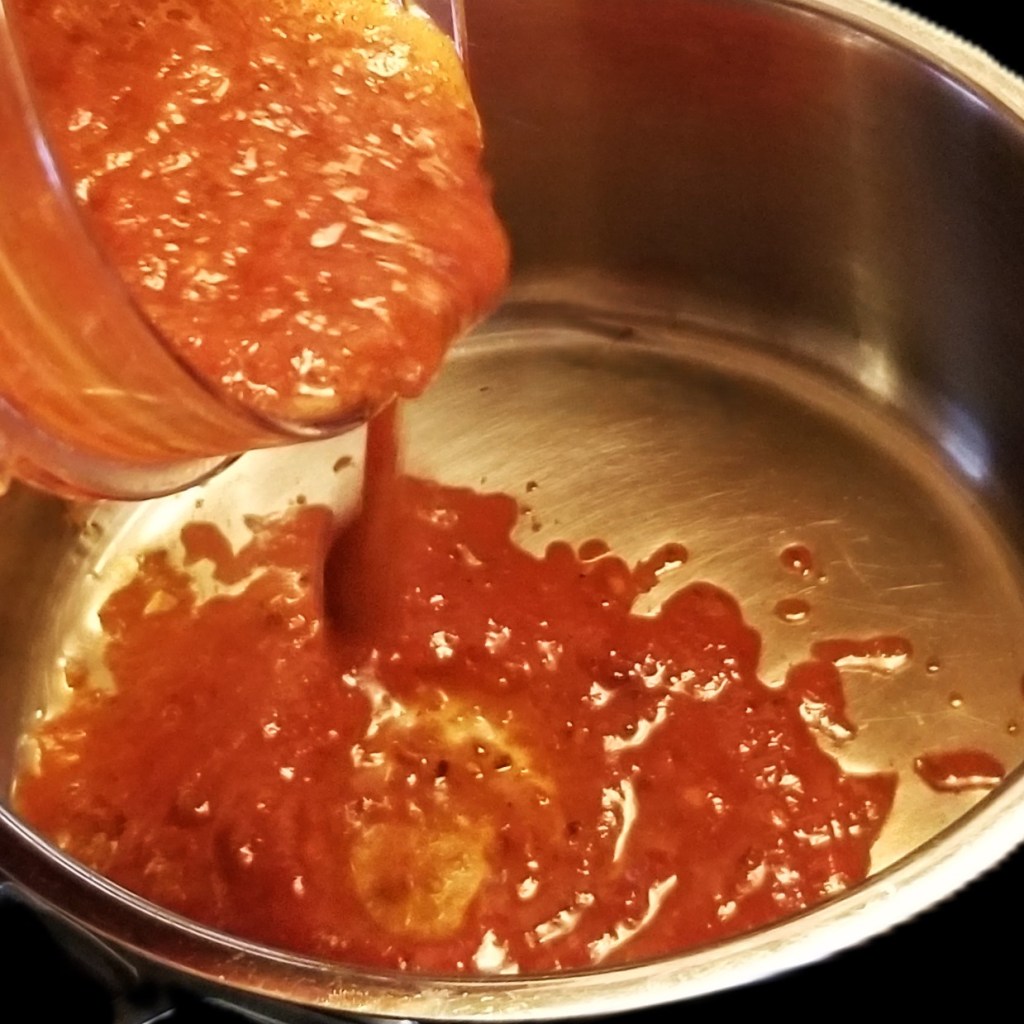
Warm up one tablespoon of oil in a pan over medium heat, then pour in sauce from the blender jar (photo below, left); cook for 10 to 15 minutes, stirring occasionally, until all flavours have melded, and salsa has thickened (photo below, right):

Reserve.
Prepare dough with fillings:
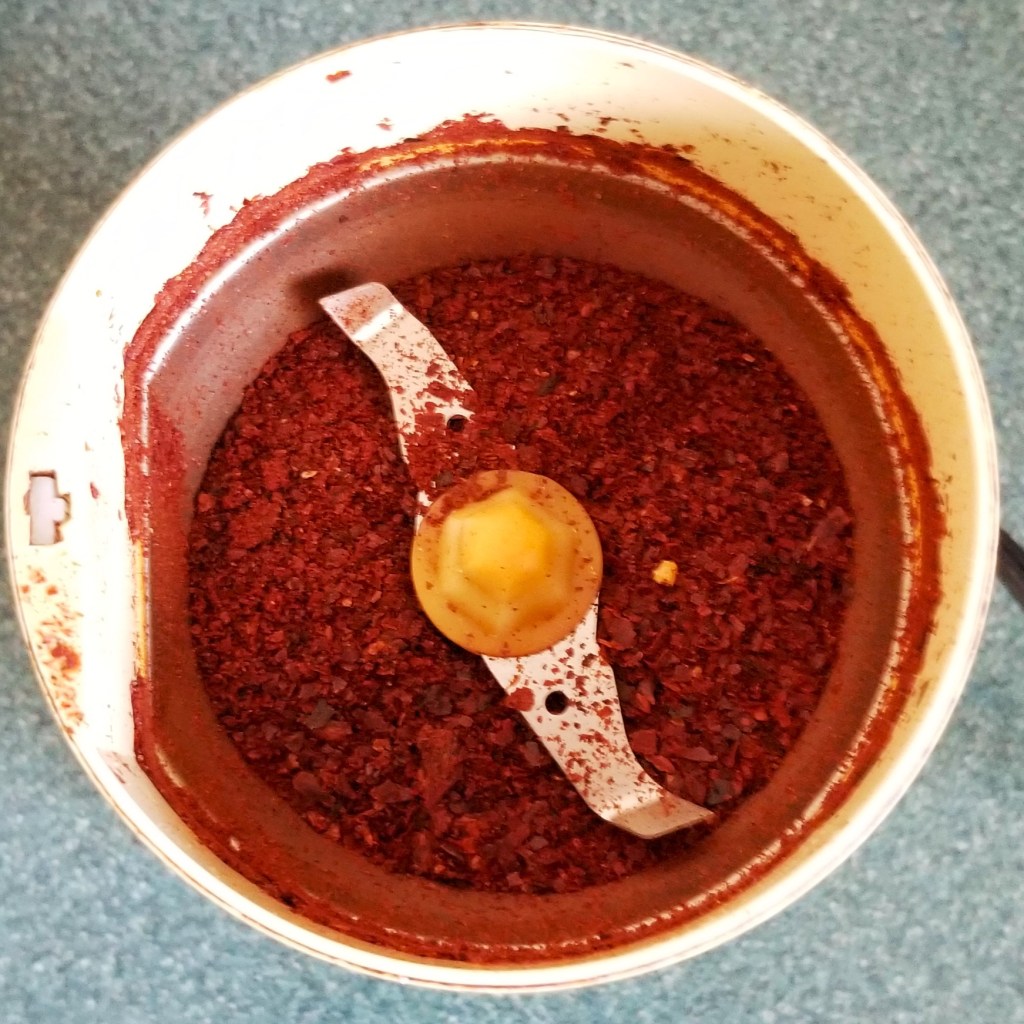
Cheese feeling: remove and discard stems from the two reserved roasted guajillo peppers, cut peppers into pieces and place in a spice grinder (I dedicate my old coffee grinder to spices, photo below, left). Pulse until ground to a powder (photo below, right):

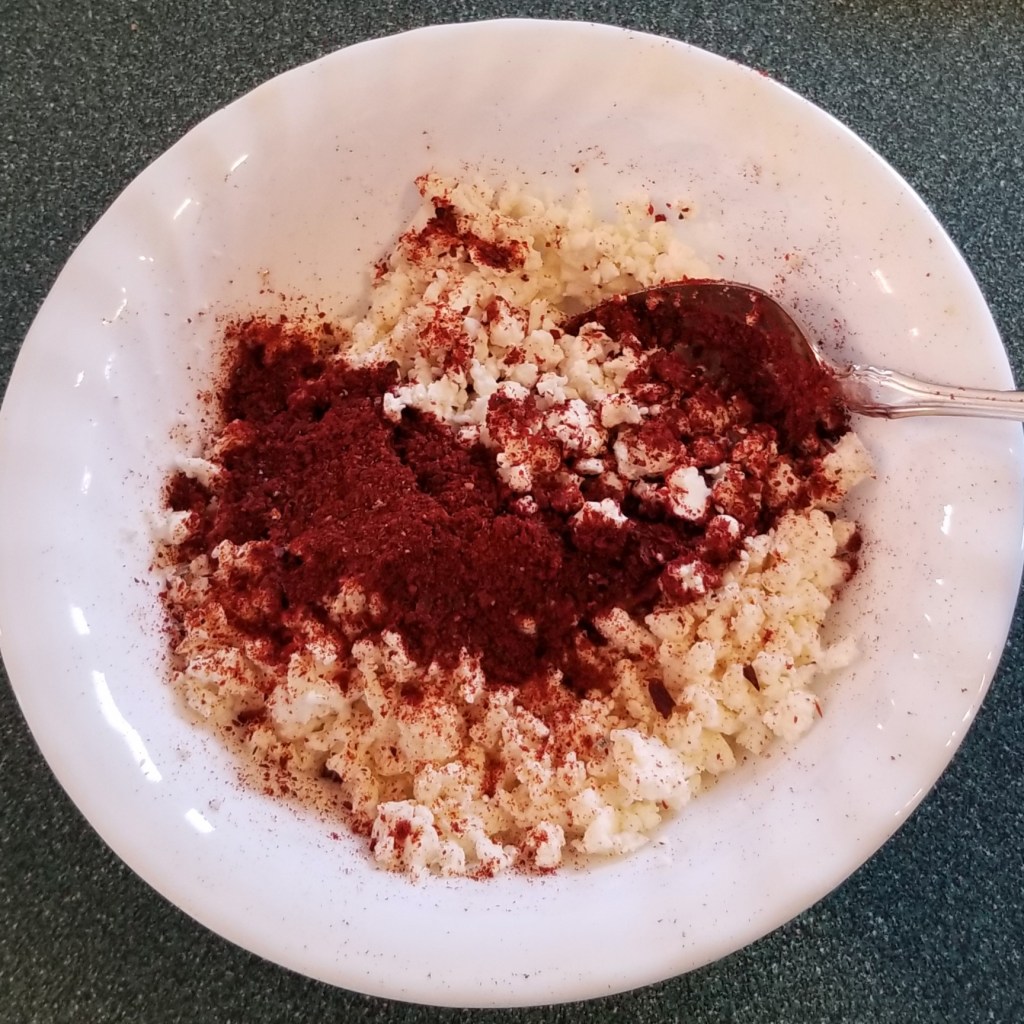
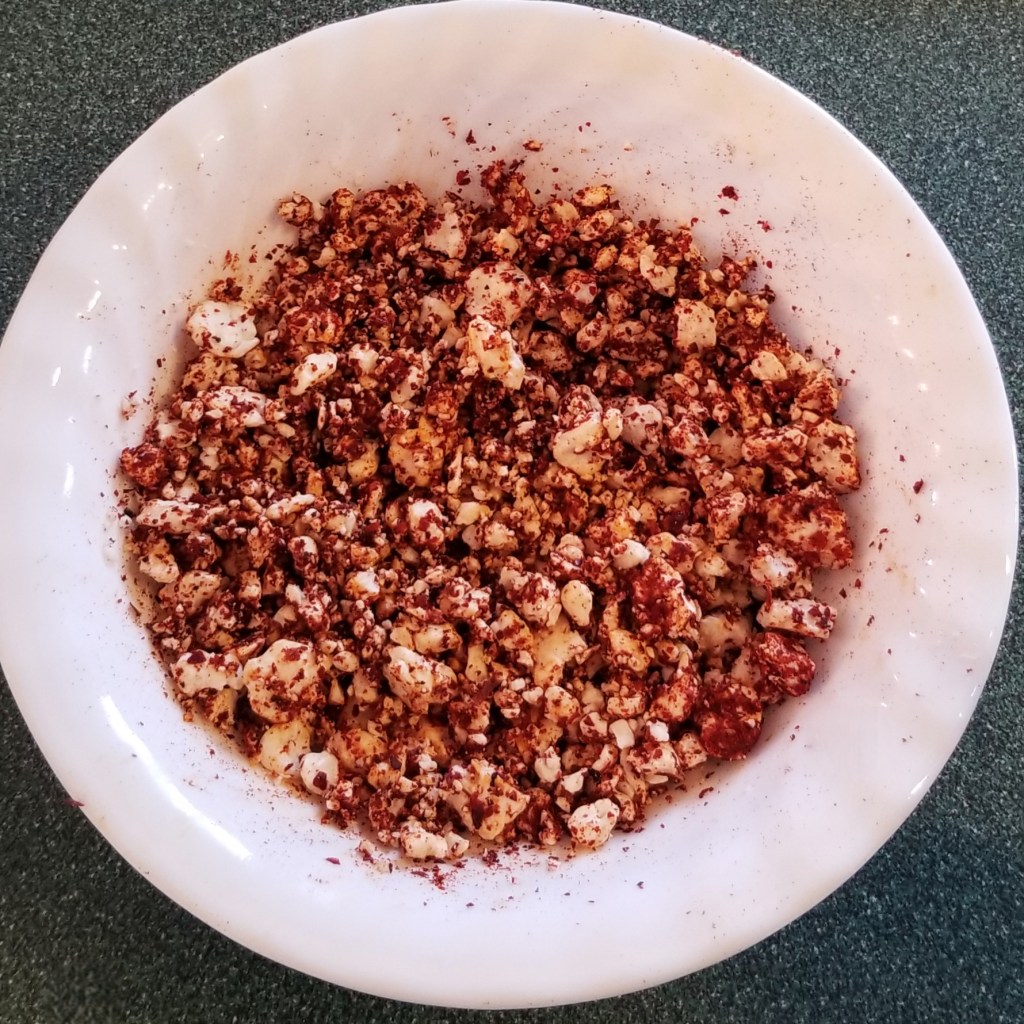
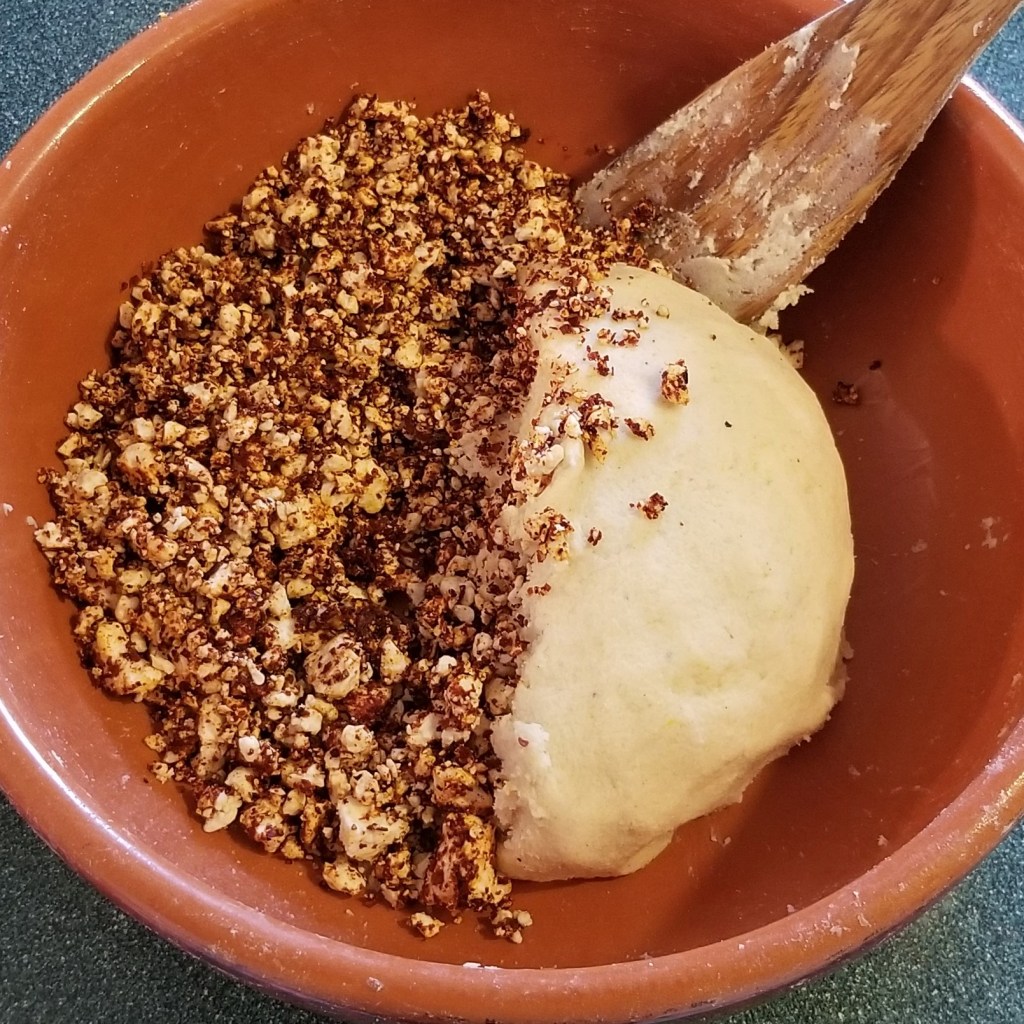
Place crumbled cheese in a bowl, and add guajillo powder (photo below, left), mixing together (photo below, right):
Uncover corn dough, and divide in half.
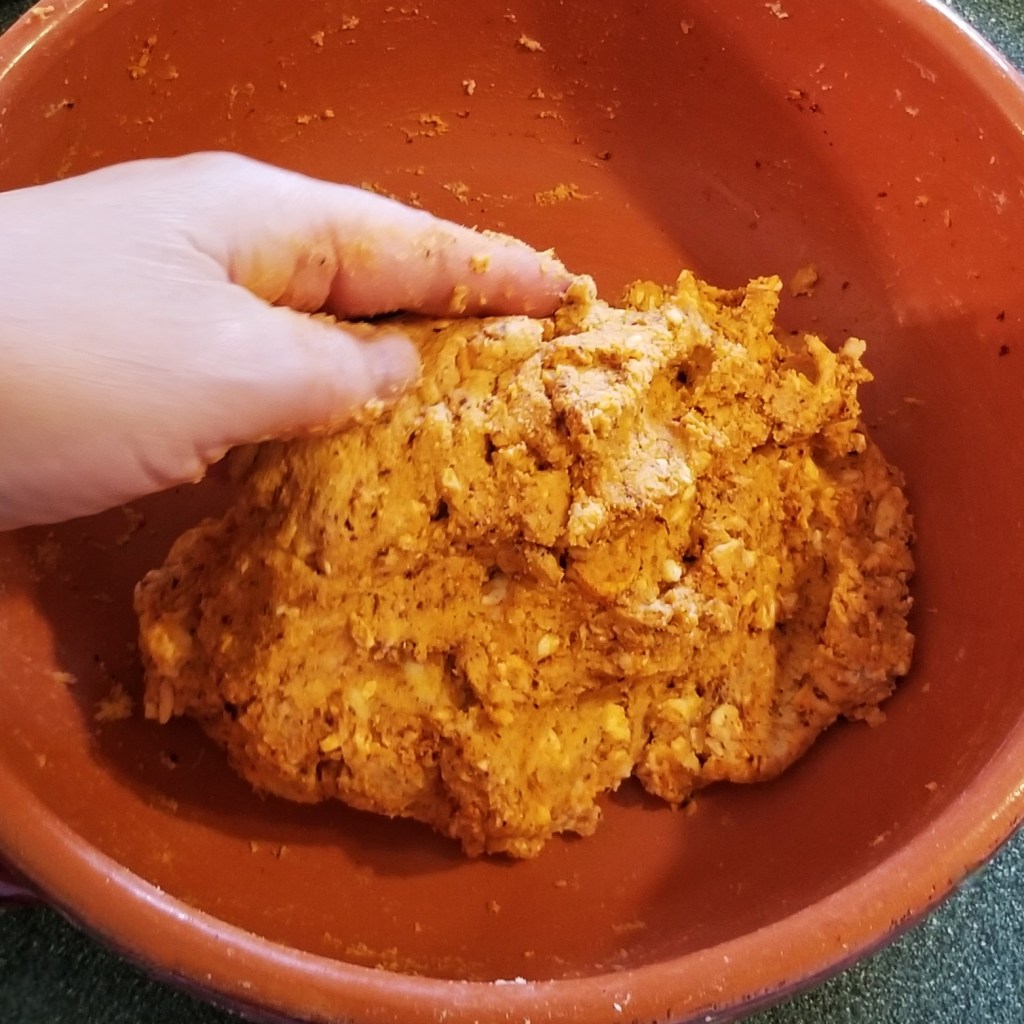
Place the cheese mixture in a bowl with one half of the dough, and incorporate with a spatula (photo below, left); knead lightly by hand until uniform (photo below, right):
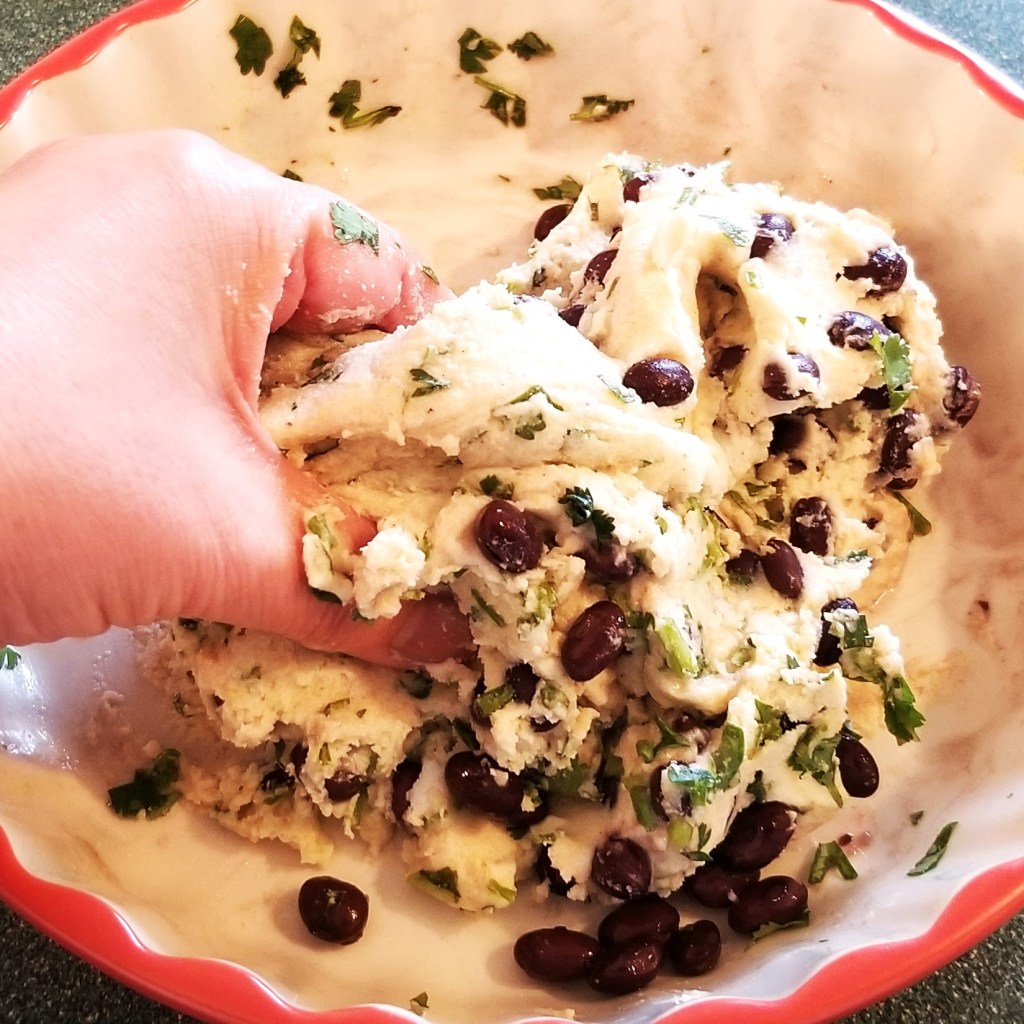
Bean filling: place beans and cilantro in another bowl with the other half of the dough (photo below, left). Incorporate with a spatula, then knead lightly, as with the other filling (photo below, right):

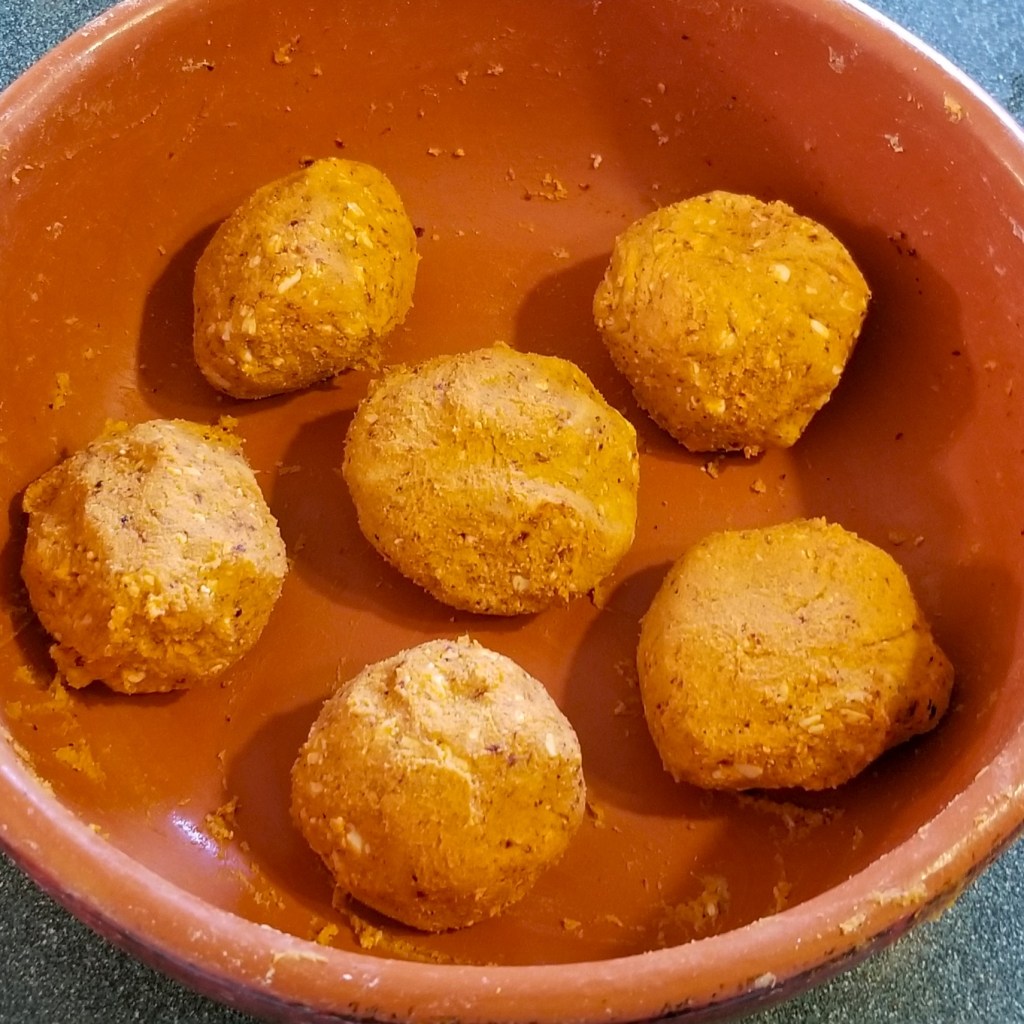
Cook bocoles: Place a comal (Mexican flat griddle) or an iron skillet over medium heat, then reduce heat to low. Divide each dough into six portions, forming individual balls:

Working with one ball of dough at a time, pat back and forth between hands, to flatten into a disk:
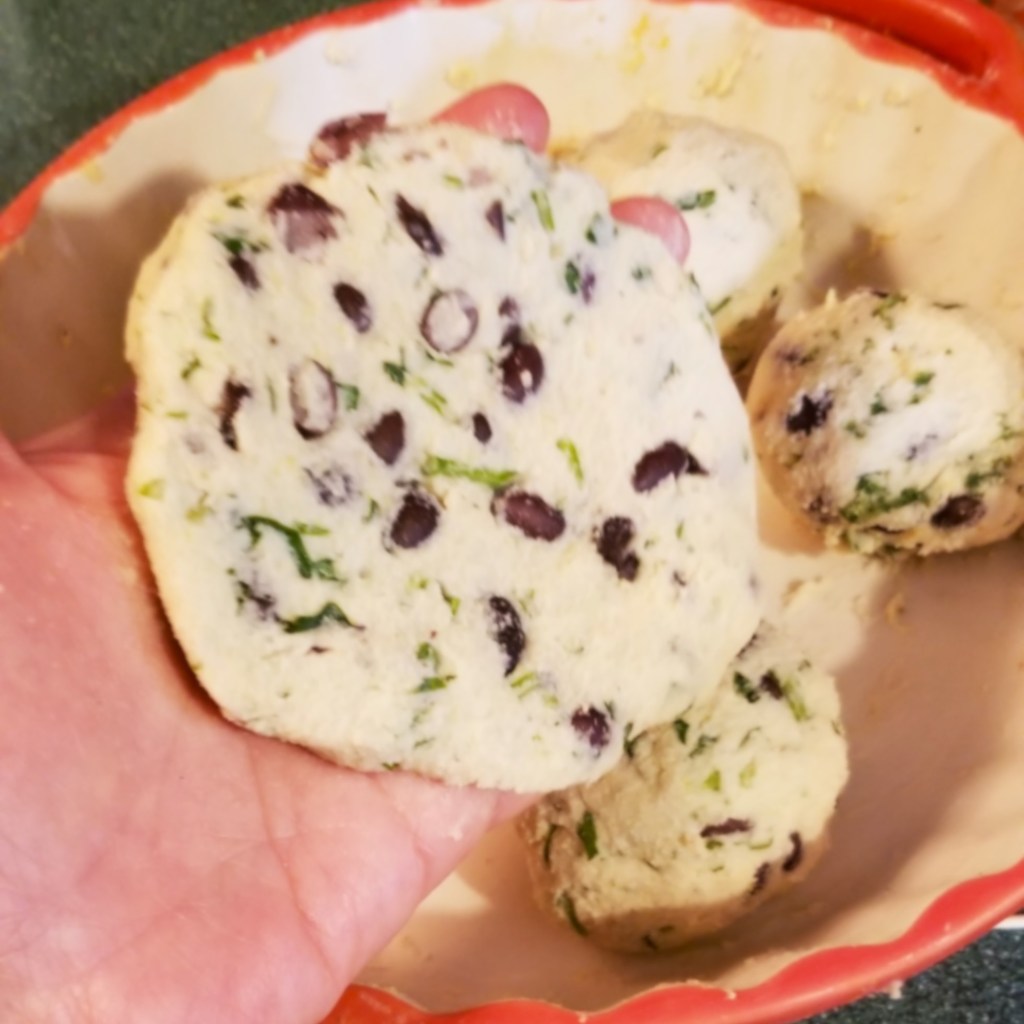
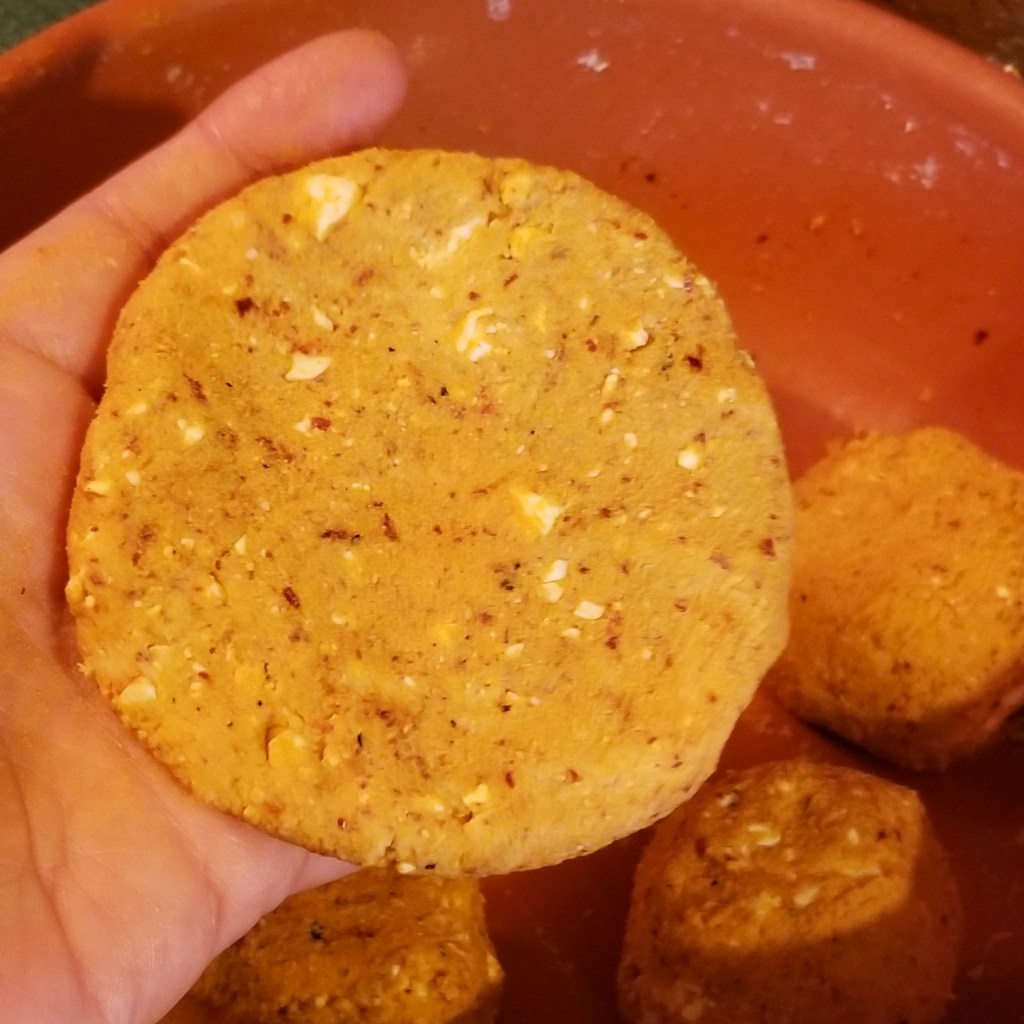
Gently drop patty on hot comal or skillet, then continue with more dough portions (photo below, left). Allow patties to cook until bottom is dry and starting to brown, then flip (photo below, right):
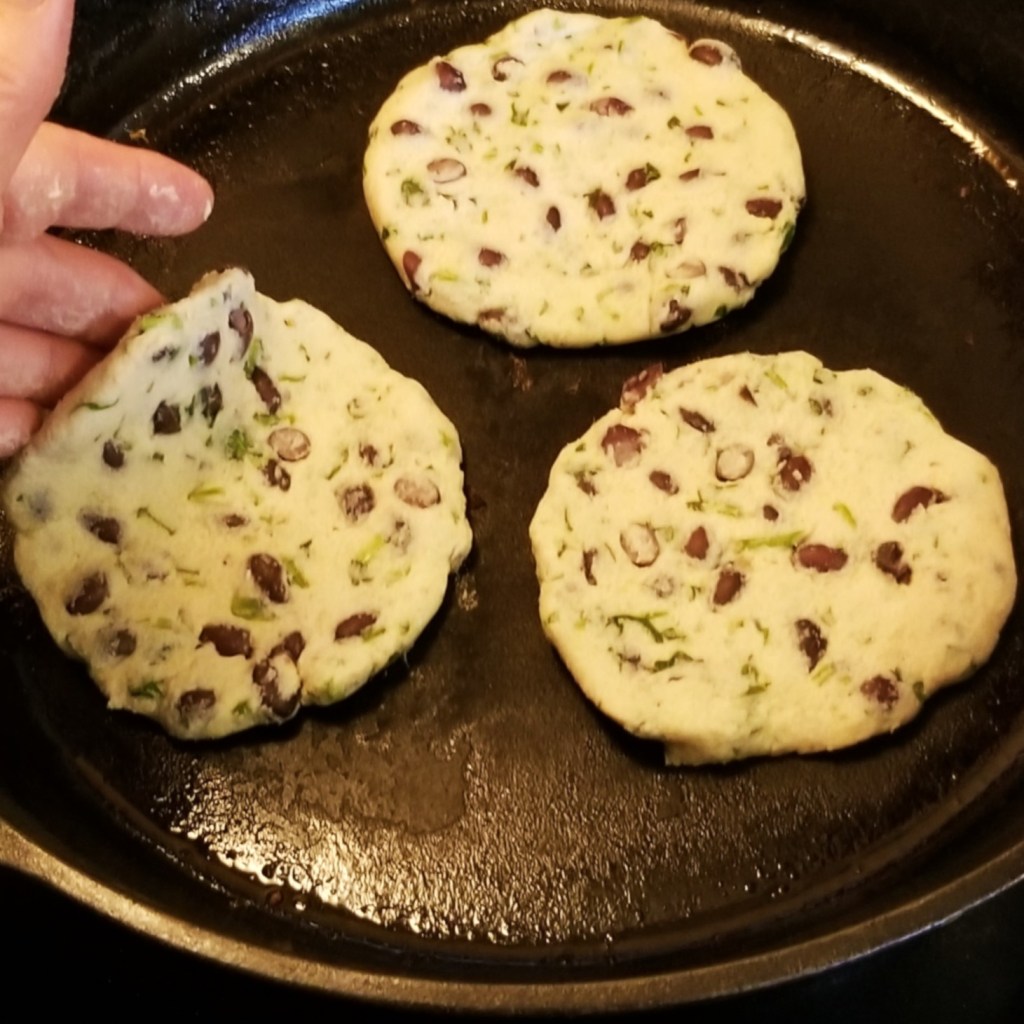
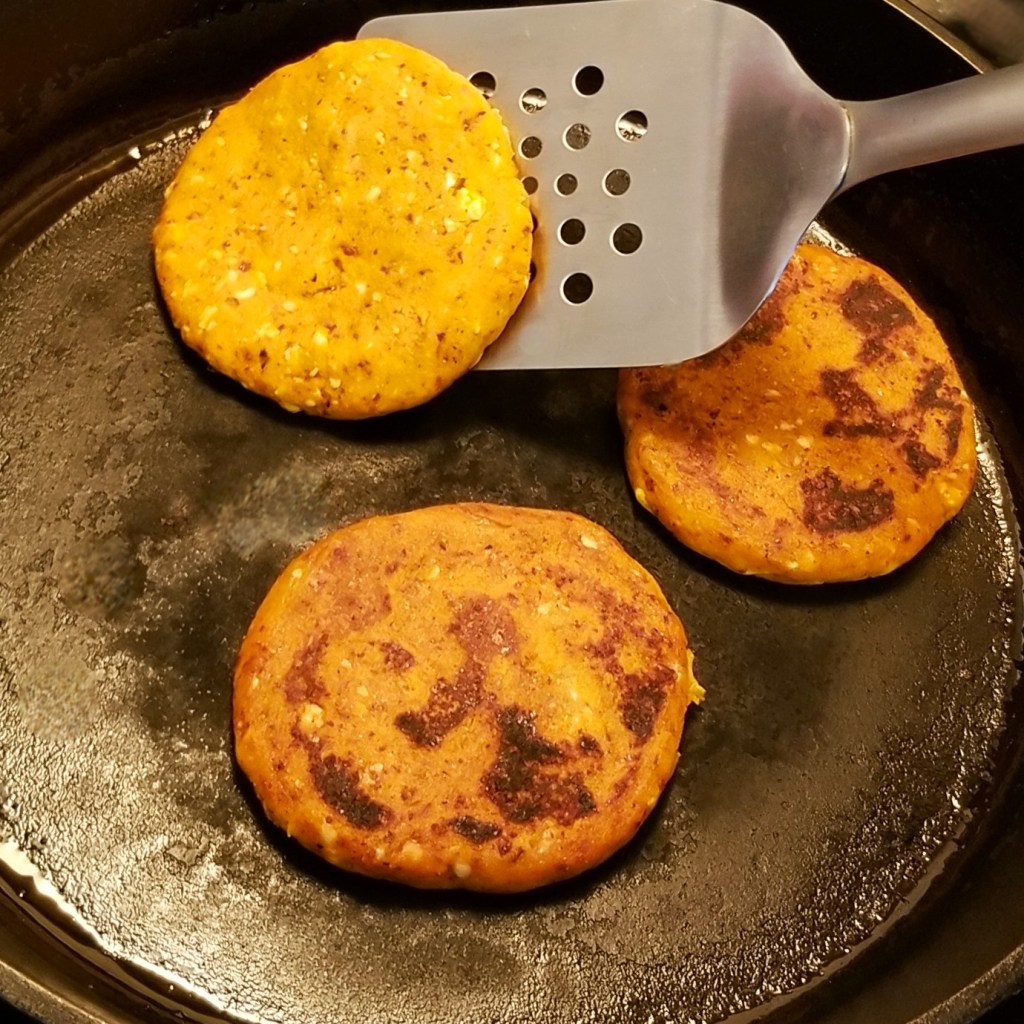
Continue for about ten minutes, flipping and rotating the patties until fully cooked. It is important to be patient and keep the heat low, so the patties do not burn, brown uniformly, and are fully cooked inside. Transfer to a plate and cover, to keep warm. Repeat with more patties until all are cooked.
Slice and peel avocados right before serving.
Offer hot bocoles with chopped onion and cilantro, salsas, and sliced avocado on the side:
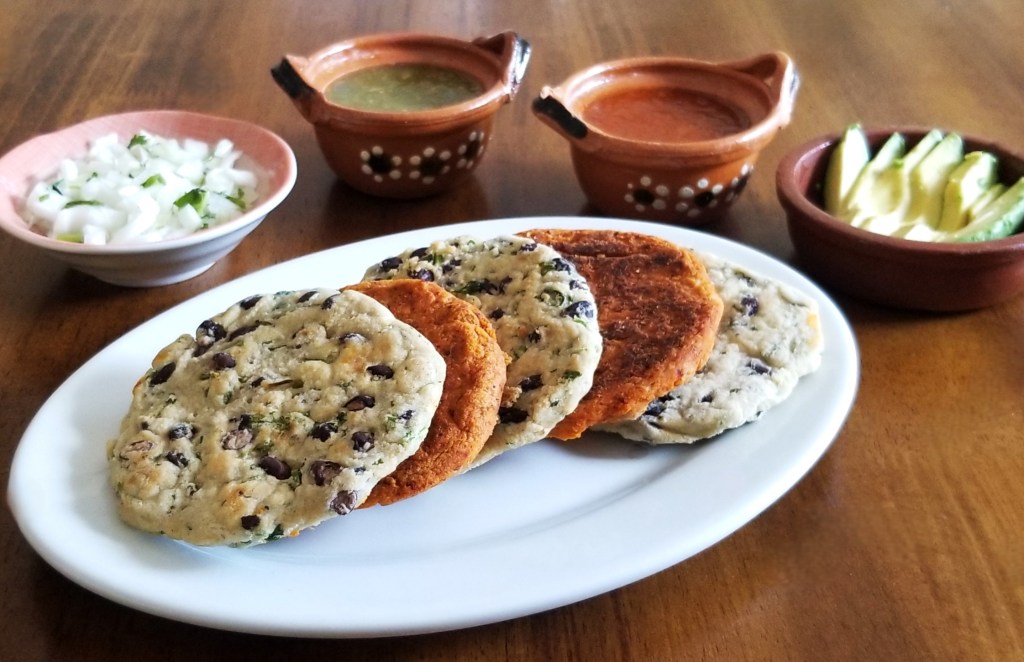
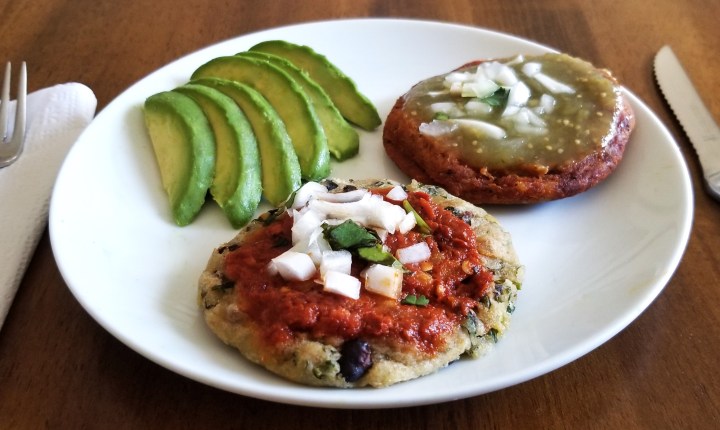
Each person may prepare their plate, to taste. At the top of this post, and below, a plate with one bean bocol with red sauce and one cheese bocol with green sauce, both topped with onions and cilantro, and some avocado slices on the side:
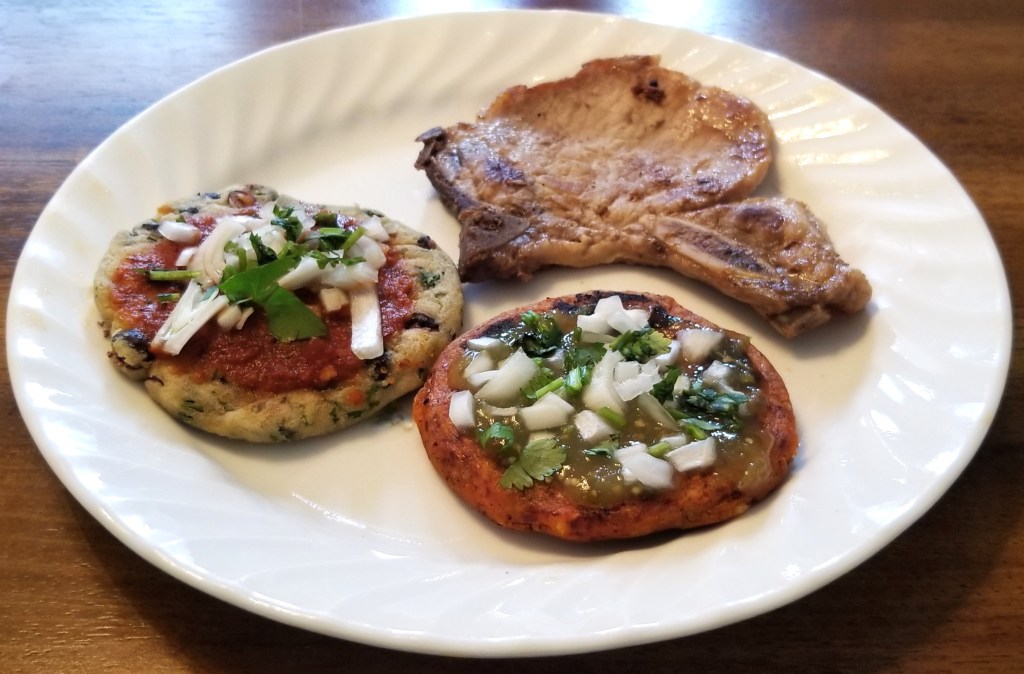
In La Huasteca, people eat bocoles for breakfast or brunch with a cup of coffee, but nowadays they are also served as a full lunch or dinner, with extra toppings, such as chorizo or chicharrón prensado, or for example, as shown below, with a pork chop:
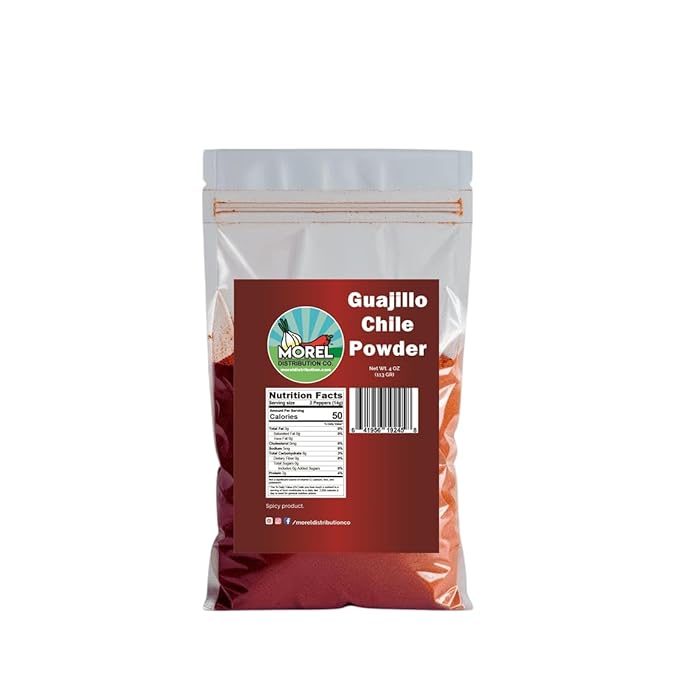
For your convenience, click on the picture or highlighted text below for products available on Amazon™. DISCLAIMER: Any reviews included in this post are my own, for items I have purchased, not provided by any company; as an Amazon Associates Program affiliate, I might receive a commission for any purchases originated from the links below, at no extra cost to you. Thank you to readers who have bought other products starting with a click from my links!

I am bringing my recipe to Full Plate Thursday #740 with Miz Helen @ Miz Helen’s Country Cottage.
I am sharing my post at Thursday Favourite Things #704, with Bev @ Eclectic Red Barn, Pam @ An Artful Mom, Katherine @ Katherine’s Corner, Amber @ Follow the Yellow Brick Home, and Linda @ Crafts a la Mode.
I am joining Fiesta Friday #583 with Angie @ Fiesta Friday.



 My Slice of Mexico
I love the language lesson and the cultural information that accompanies the recipes.
LikeLiked by 1 person
Thank you, so glad you enjoy them, Lou! Yes, I feel this way the food becomes satisfying at different levels 😊
LikeLiked by 1 person
Oh my that looks yummy!
LikeLiked by 1 person
It is! 😋
LikeLiked by 1 person
What fun! Shall definitely copy! Born in NE Europe and still oft used to Scandi-type food I would definitely love these for breakfast as I am so used to open sandwiches at the time – love the onions and coriander on top — thank you!
LikeLike
Oh yeah, I guess they are like corn- based open faced sandwiches, enjoy!!
LikeLiked by 1 person
Exactly! Am just reposting your whole blog to friends – do not know your email as would normally send a courtesy copy 🙂 !
LikeLike
You may send me an email from the “contact” tab, thank you!
LikeLike