Click here to go to links for Cinco de Mayo menu suggestions and recipes.
La fecha es cinco de Mayo de 1862 – The date is May fifth, 1862.
Between December of 1861 and January of 1862, the Spanish, British and French governments had form a tripartite alliance to demand debt payment from the Mexican government of Benito Juárez, and had landed troops in the Mexican port of Veracruz. Meanwhile, the American Civil War was taking its toll, and the Hispanic and anti-slavery groups in the Southern American states were particularly vulnerable. Napoleon III of France wanted to invade Mexico and aid the Confederates win the American Civil War.
The tripartite alliance fell apart by early April 1862, when it became clear the French wanted to impose harsh demands on Mexico to provoke a war. Napoleon III wanted to take Mexico City and set up a government under his power. The British and Spanish parts settled their differences with Mexico, and their armies left, but the French marched towards Mexico City through the state of Puebla. General Ignacio Zaragoza, a young commander of the Mexican army, had retreated to the city of Puebla from Acultzingo. The city was heavily fortified, with the forts of Loreto and Guadalupe on opposite hilltops to the North. On May 5, the French army entered the battlefield from there, finding themselves surrounded by Mexican troops on either side; in a matter of hours, over 400 French soldiers had been killed, and they were forced to retreat.
The Battle of Puebla was an inspirational event for Mexico, after its own Reform war and previous defeats against the French. President Juárez and his allies recognized the importance of the victory in Puebla as a boost to the morale of the Mexican troops; just a few days after the battle, he declared Cinco de Mayo a holiday.
Mexican historians (such as Justo Sierra, in his “Evolución Política del Pueblo Mexicano”) and American sources (such as the Loyal Legion Historical Journal) agree that if this battle had been lost, the French forces would have occupied Mexico City shortly after, then being in a strategic and advantageous position to aid the American Confederate artillery with French weapons and ammunition; this would have possibly ” … set the stage for the victory needed by the Confederate States of America to gain diplomatic recognition by the European Powers and the military support that this implied.” The defeat brought hope to the pro-Union Hispanic communities in the United States, especially in California. Celebrations of Cinco de Mayo in the US are documented from as early as 1863. By the time the French had regrouped, eventually taking Mexico after the Second Battle of Puebla a little over a year later, on 17 May 1863, the American Union had built a strong army, though, and defeated the Confederates at the Battle of Gettysburg, just 14 months after the battle of Puebla.
In Canada, Cinco de Mayo is mostly promoted by bars and Mexican restaurants, but I think that it is fair to say that the devastation left by the American Civil war, and the victory of the Mexican army against a European power (the last European invasion to the Americas), probably served as a cautionary tale, deeming further armed hostilities impractical, and setting the tone for the mostly peaceful process of unification of the remaining North American British colonies, starting in 1864, and leading to the formation of the Dominion of Canada, a federation of self-governing British colonies, on July 1st, 1867.
In Mexico, May fifth is still commemorated as the victory of the Battle of Puebla, but in the United States and other countries, Cinco de Mayo has become a day to celebrate Hispanic pride. Mexican and Tex-Mex dishes and cocktails are always part of the celebrations.
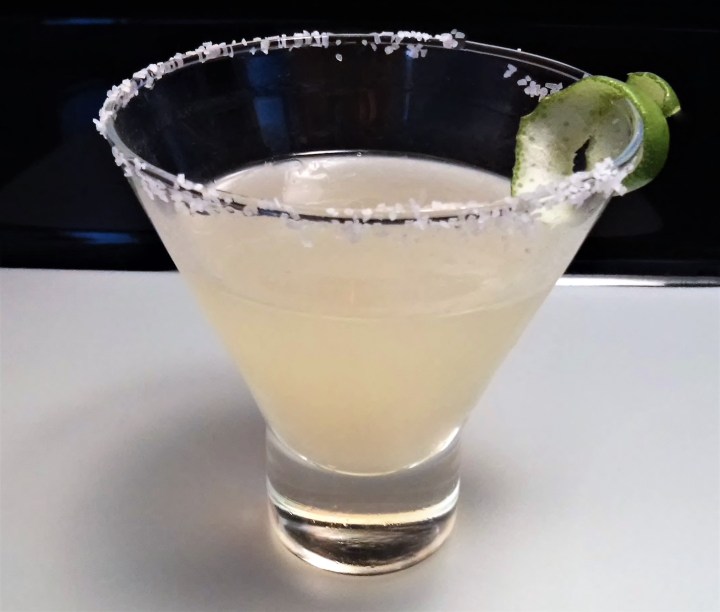
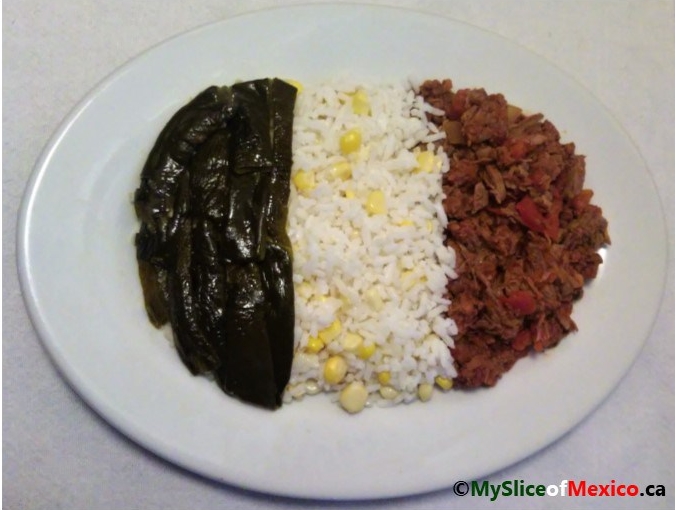
For some menu suggestions for this Cinco de Mayo, check out these posts (click on images or highlighted text for full stories and recipes):





 My Slice of Mexico
That’s a piece of history I did not know, thanks!
LikeLike
Thank you for reading, and for your kind comment, Alice!
LikeLiked by 1 person