
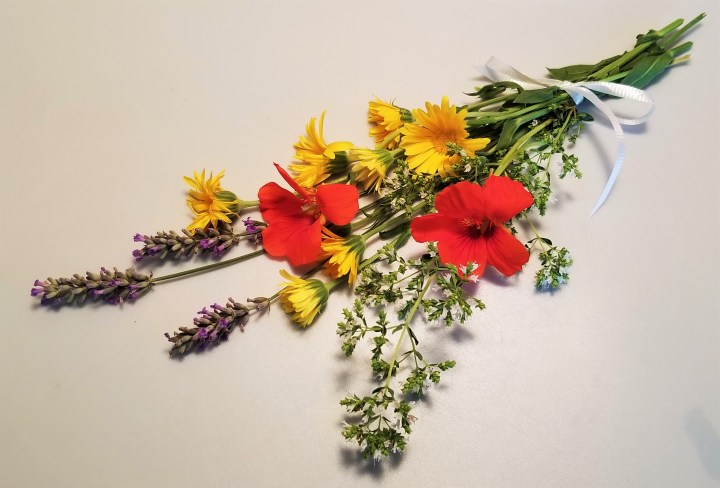
The bouquet pictured above is not only pulchritudinous, but also edible; it is not made of cut-up fruit, like the ones people send or gratefully receive as get-well-soon gifts, but of blooms from my backyard.
Counter-clockwise from left:
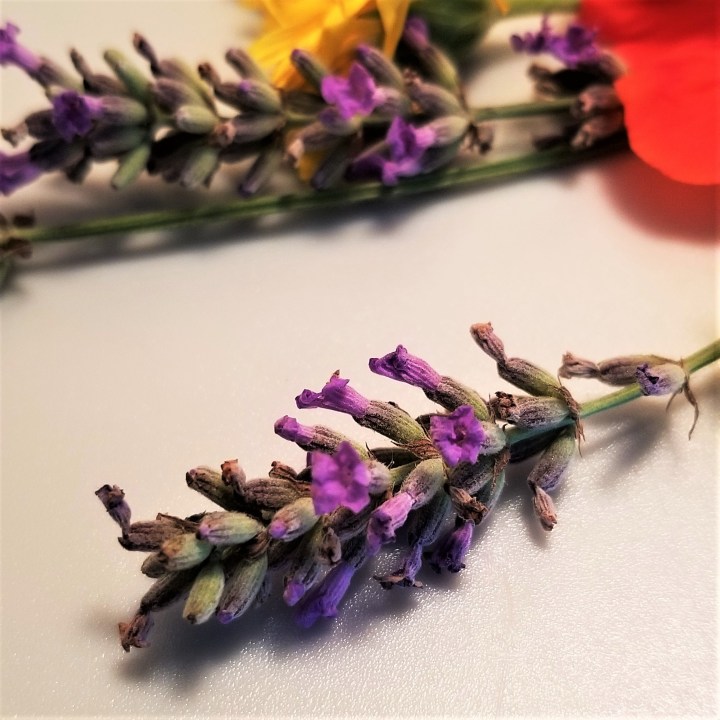
Lavender – the common name of a genus of at least 47 species of flowering plants, part of the mint family. One of the frequently found in herbal gardens is English lavender; with an unmistakeable scent used in aromatherapy and to freshen up linens, it is also helpful in the kitchen for tea, and as a spice in salads and baked goods:
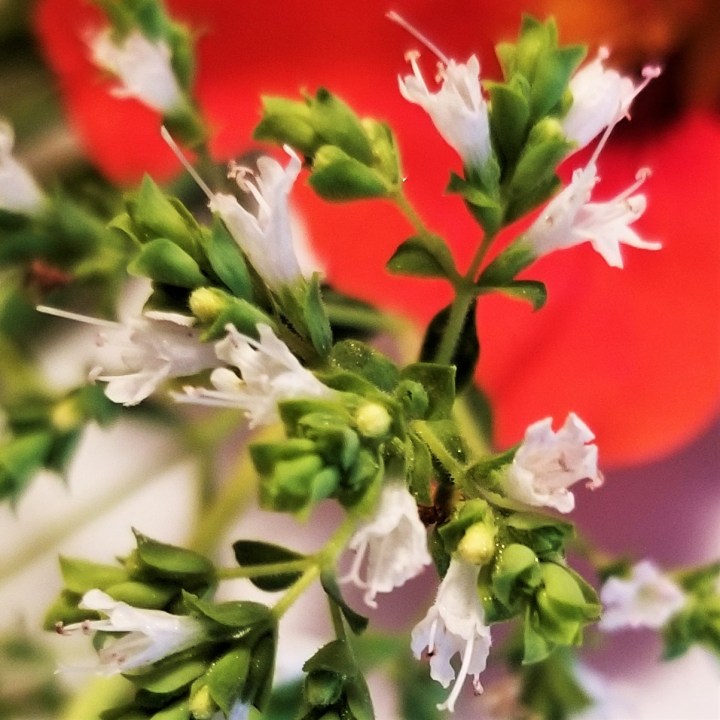
Oregano – an ubiquitous herb in many cuisines, including Mexican. Although the best time to harvest the leaves for the kitchen is just before the plant goes to bloom, it was captured from a different angle in the photo below, for the beauty of its tiny flowers:
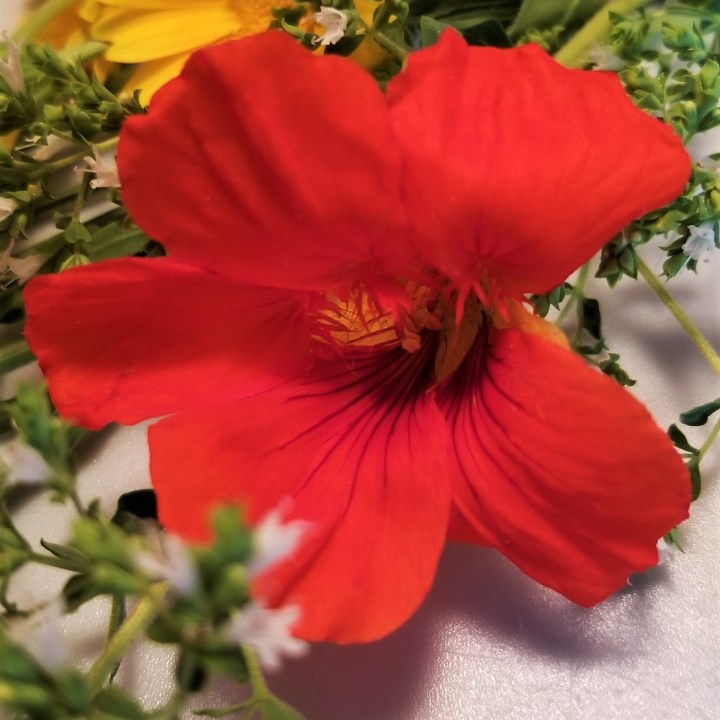
Nasturtium – botanically speaking, has around 80 different species of annuals and perennials. T. majus is one of the most common species in the garden, and it is also 100% edible, from seed to flowers, which are great as a pop of colour in salads, while imparting a peppery taste. In Spanish it is called mastuerzo (twister, for its pungency) or capuchina (for the shape of the flower reminiscent of a monk’s pious cap). The one featured here is a variety new to my garden this year:
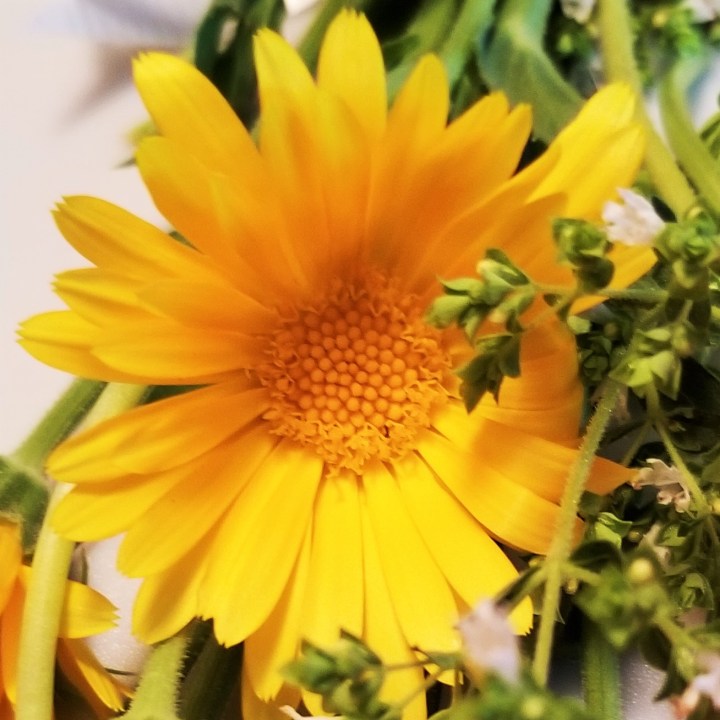
Calendula – Last but not least, the humble pot marigold, recognized for its anti-fungal and anti-bacterial properties, it is also used in the kitchen to add colour to salads, for tea, and its petals are sometimes used instead of saffron:
All facts are from Wikipedia
I am joining Cee’s Fun Foto Challenge (CFFC) Topic of the Week: close-Up of Flowers





So beautiful! Love edible flowers, they add so much color and flavor. A shame they’re not easy to get.
LikeLike
True; I guess I am lucky I can grow them.
LikeLiked by 1 person
Definitely! 🙂
LikeLiked by 1 person
I grow lots of lavender and Calendula in my garden and on my allotment. 🙂
LikeLike
I remember your garden photos, really beautiful!
LikeLiked by 1 person
Thank you. Well remembered. 🙂
LikeLiked by 1 person
beautiful photos and interesting information.
LikeLike
Thank you!
LikeLiked by 1 person
very welcome. 🙂
LikeLiked by 1 person
I should use my lavender for something, now that you mention it. My favorite edible flowers are chives.
LikeLike
Oh yes, chives are beautiful in quiche and salads, but I would not use them in bouquets because they do have a strong scent.
LikeLiked by 1 person
What a beautiful bouquet and your close up photos are wonderful. 😀
LikeLike
Thanks, Cee!
LikeLike
What a wonderfully apt word for my 59th birthday, she said humbly…😄 Love the look and taste of nasturtiums.
LikeLiked by 1 person