

Click here to go to printable recipe: Malanga Cake Torta de Macal
Click here to go to printable directions: How to prep eddo (satoimo)
In a recent post, I shared photos of my backyard eddo plants (Colocasia antiquorum or C. esculenta, var.), which are valued for their edible leaves and corms (underground swollen stems); eddo is known as satoimo in Japan, and in English also as Japanese taro, since it is a close relative, sometimes considered a variety, of the better known taro(C. esculenta). I also mentioned a similar underground vegetable called malanga (Xanthosoma sagittifolium). Eddo (satoimo) and taro are originally from Asia, so they are not used in traditional Mexican cuisine, but malanga is native to the South American rainforest; malanga extended its range to Central America and the Yucatan peninsula in Mexico, and is nowadays grown in many other countries around the world. Malanga is also known as yautía, tannia, new cocoyam, quiscamote, tiquisque, and in the Yucatan peninsula, macal. One recipe for macal from that region is torta de macal, a sweet creamy cake; since I had some eddo (satoimo) from my garden, I simply used them instead of macal, and I imagine taro would work well, too.
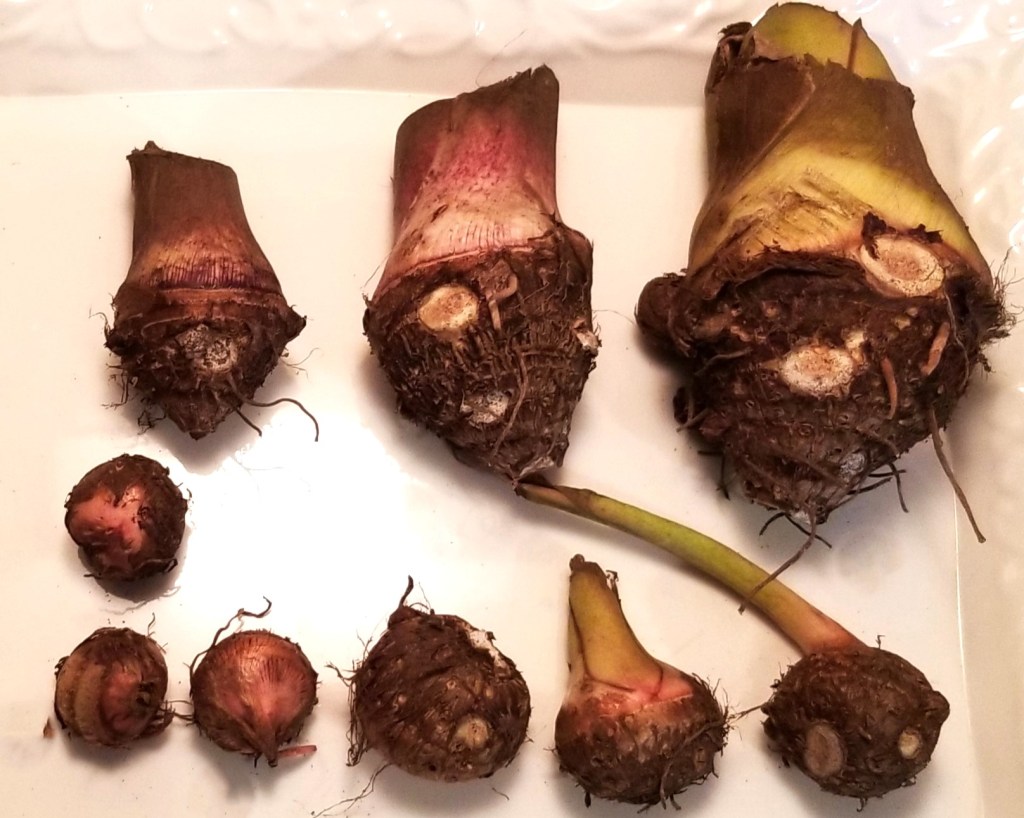
These are the eddo (satoimo) from my garden:
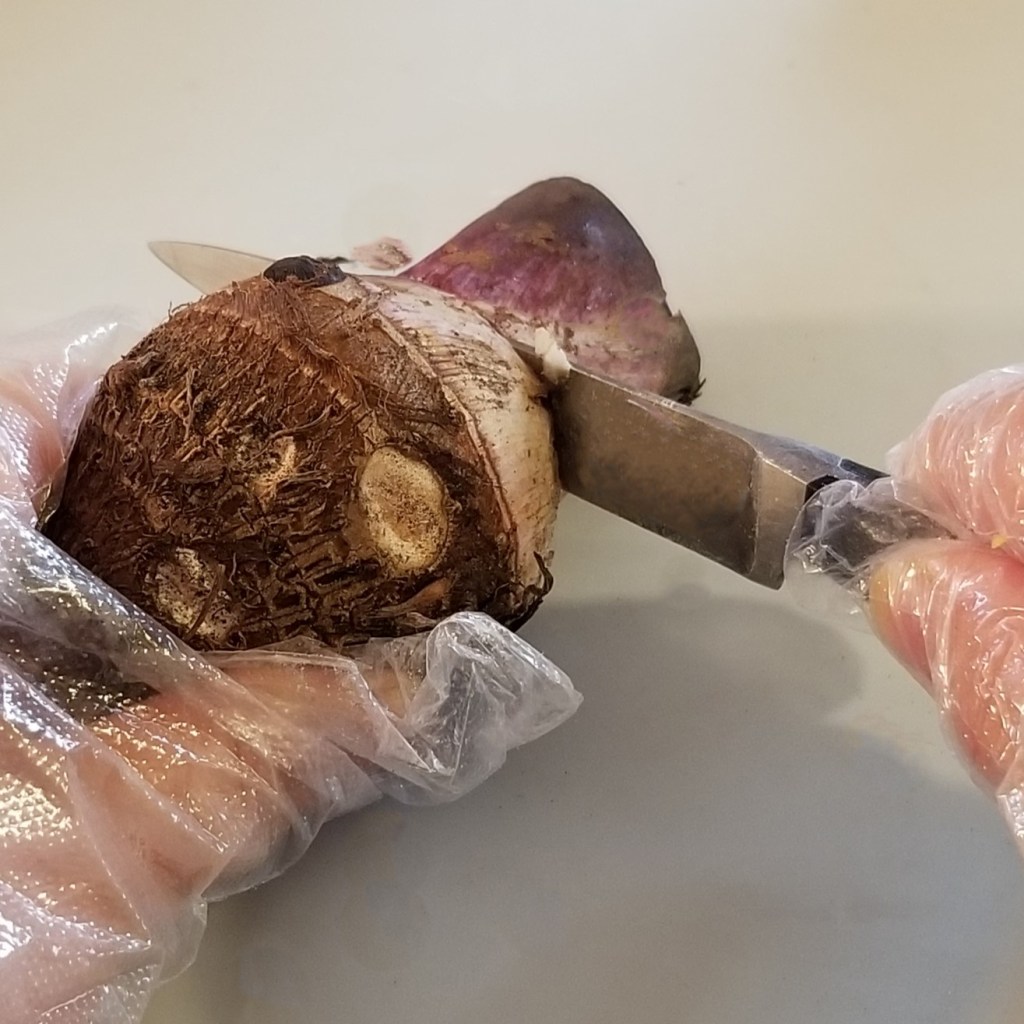
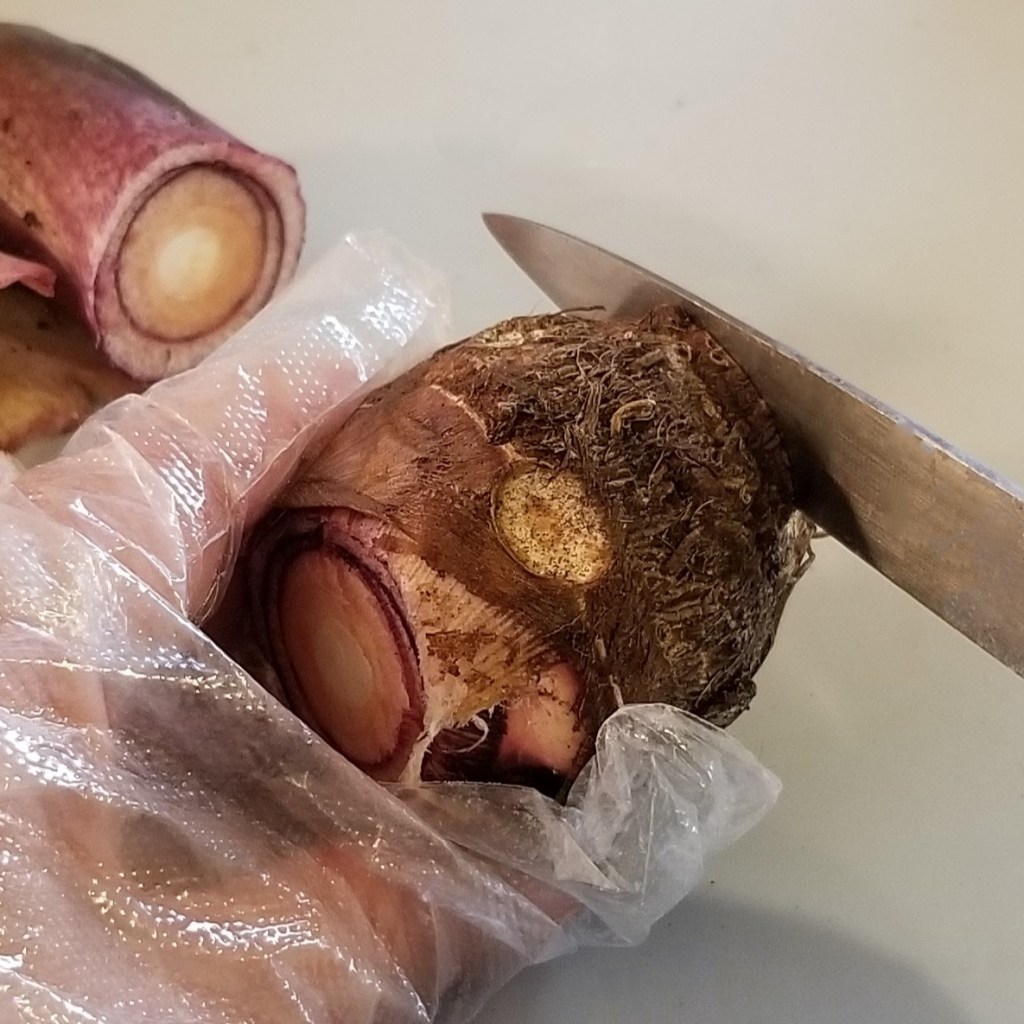
Wash thoroughly, and pat dry. Some people might be extra sensitive to oxalates, so wearing food-grade gloves is recommended. Working with one piece at a time, and using a sharp paring knife, trim the stem end (photo below, left), turn and trim the bottom end (photo below, centre), for a round shape with flat ends (photo below, right):
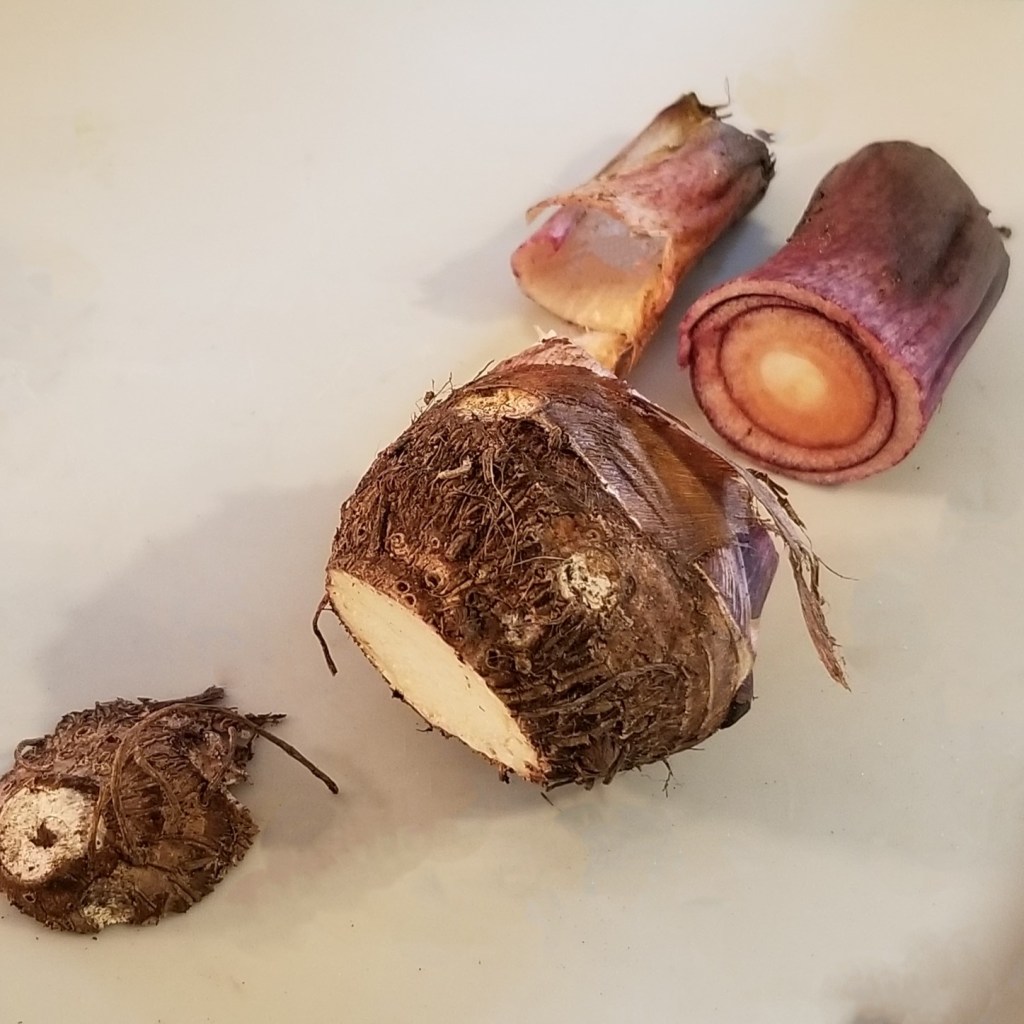
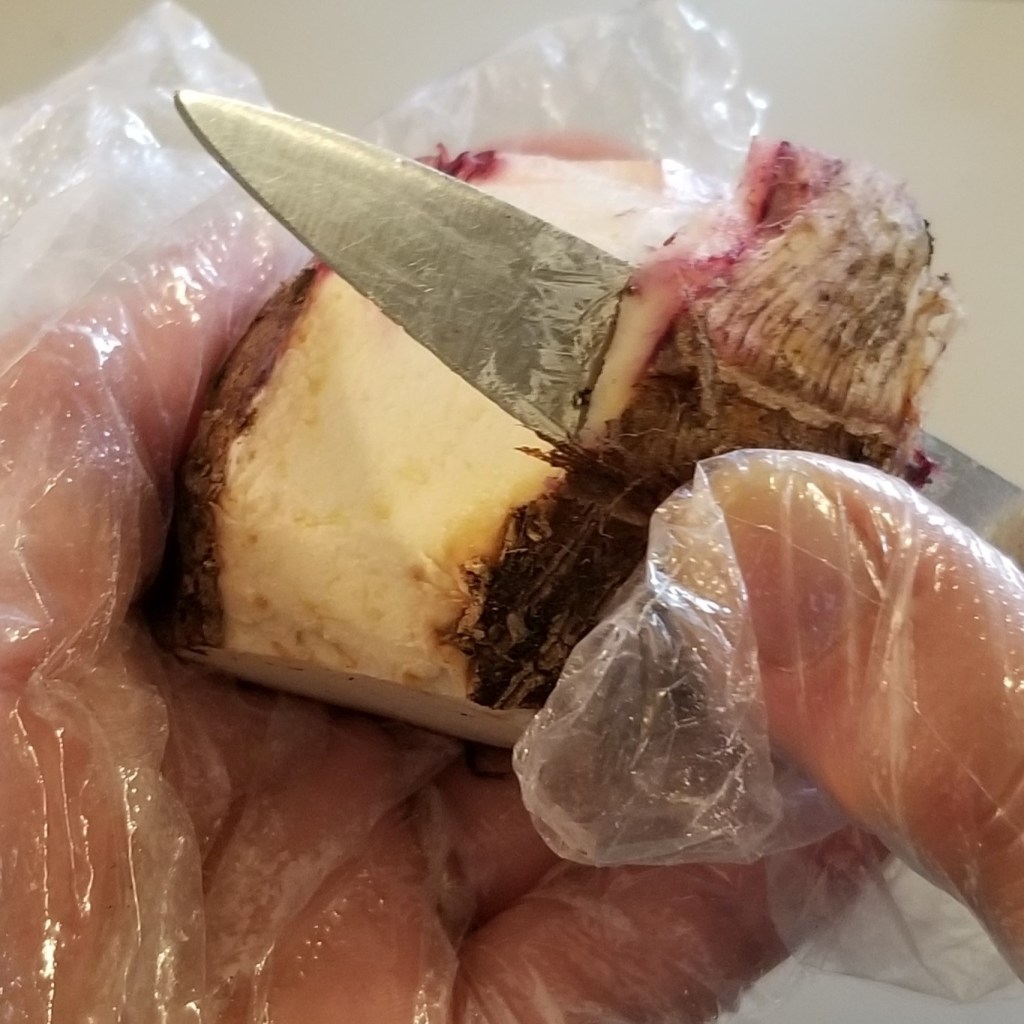
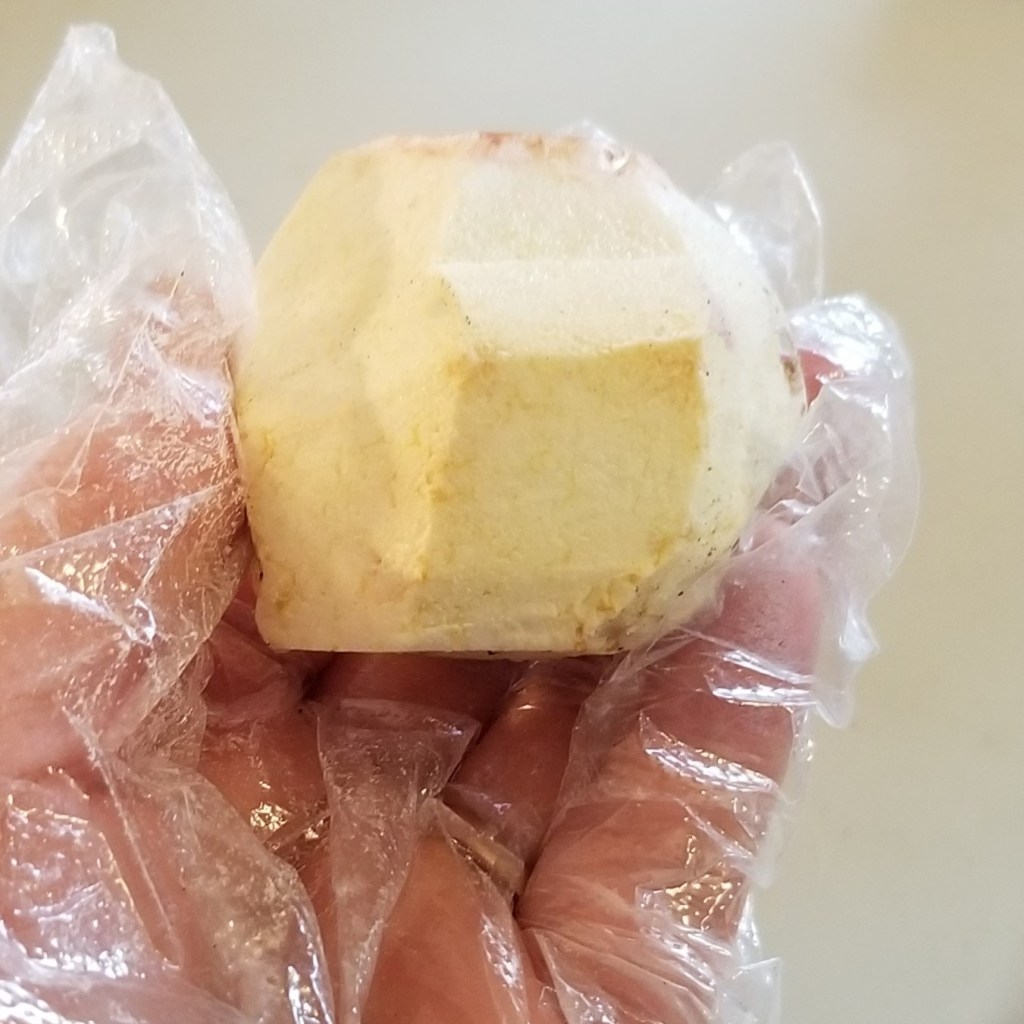
Discard ends, then, holding the round corm in one hand, very carefully peel, removing a band of skin from one end to the other, rotating and repeating (photo below, left). The fully peeled corm will have a polyhedral shape (photo below, right):
Repeat with the rest of the corms:
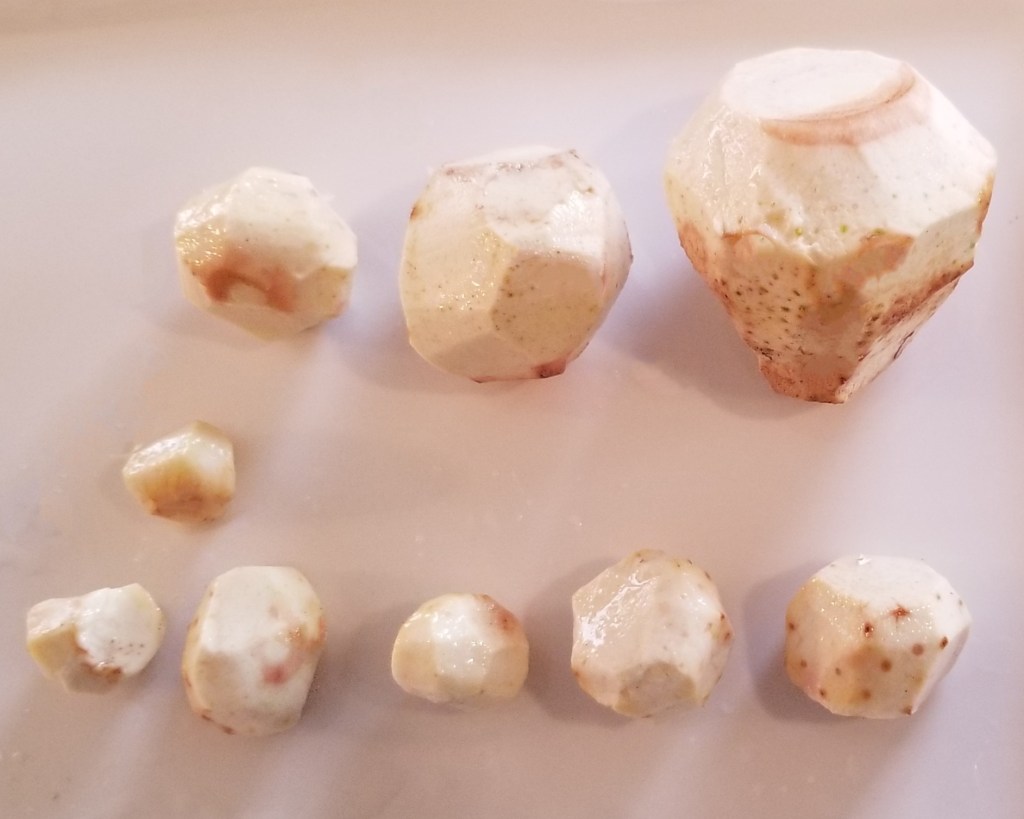
In Japan, satoimo are often cooked whole in savoury dishes, so the peeled corms are rubbed with salt before cooking, to remove sliminess, but for sweet applications, rinse the corms under running water instead.
Malanga, taro, and eddo (satoimo) all contain toxic oxalates in their leaves and corms, which must be eliminated before eating. Oxalates are water soluble, so boiling and rinsing is a good cooking method. For this recipe, the cooked corms will be mashed, so first cut the raw corms into chunks, for shorter cooking time:

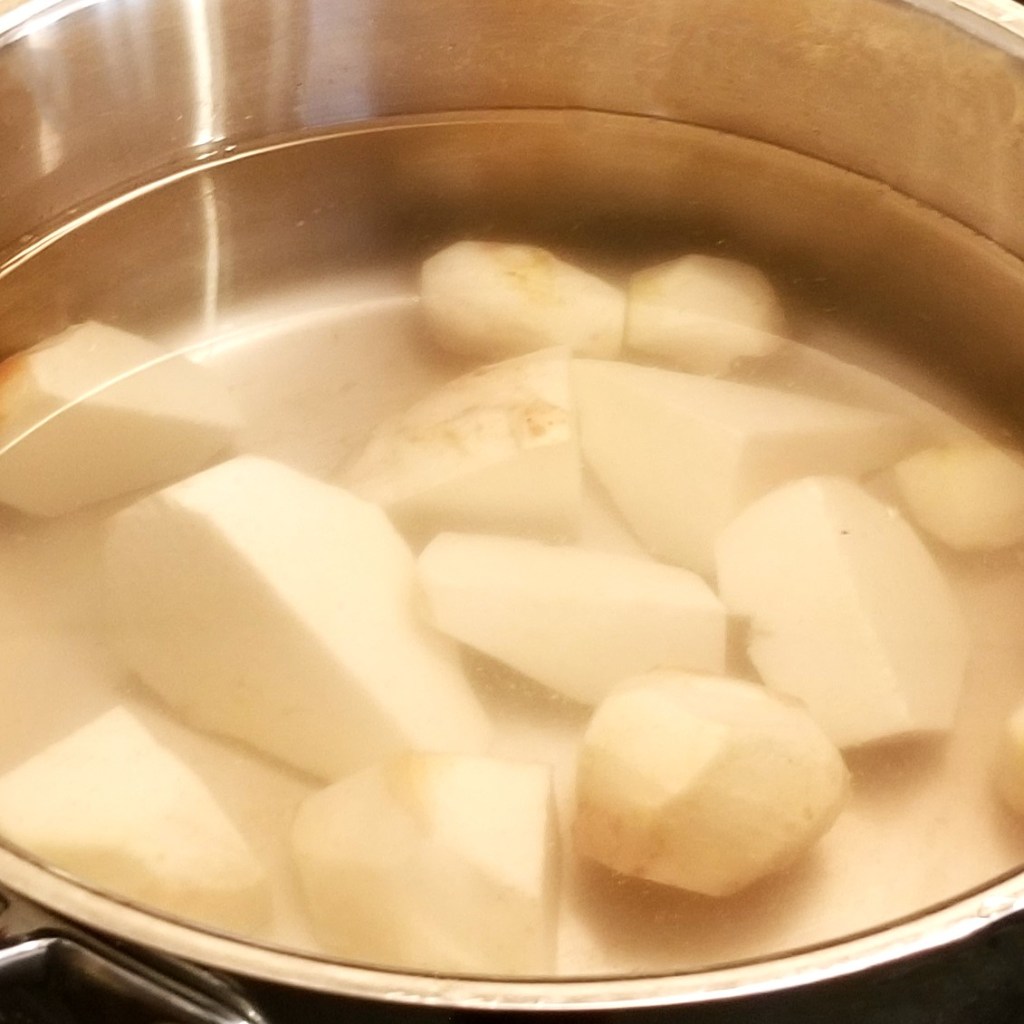
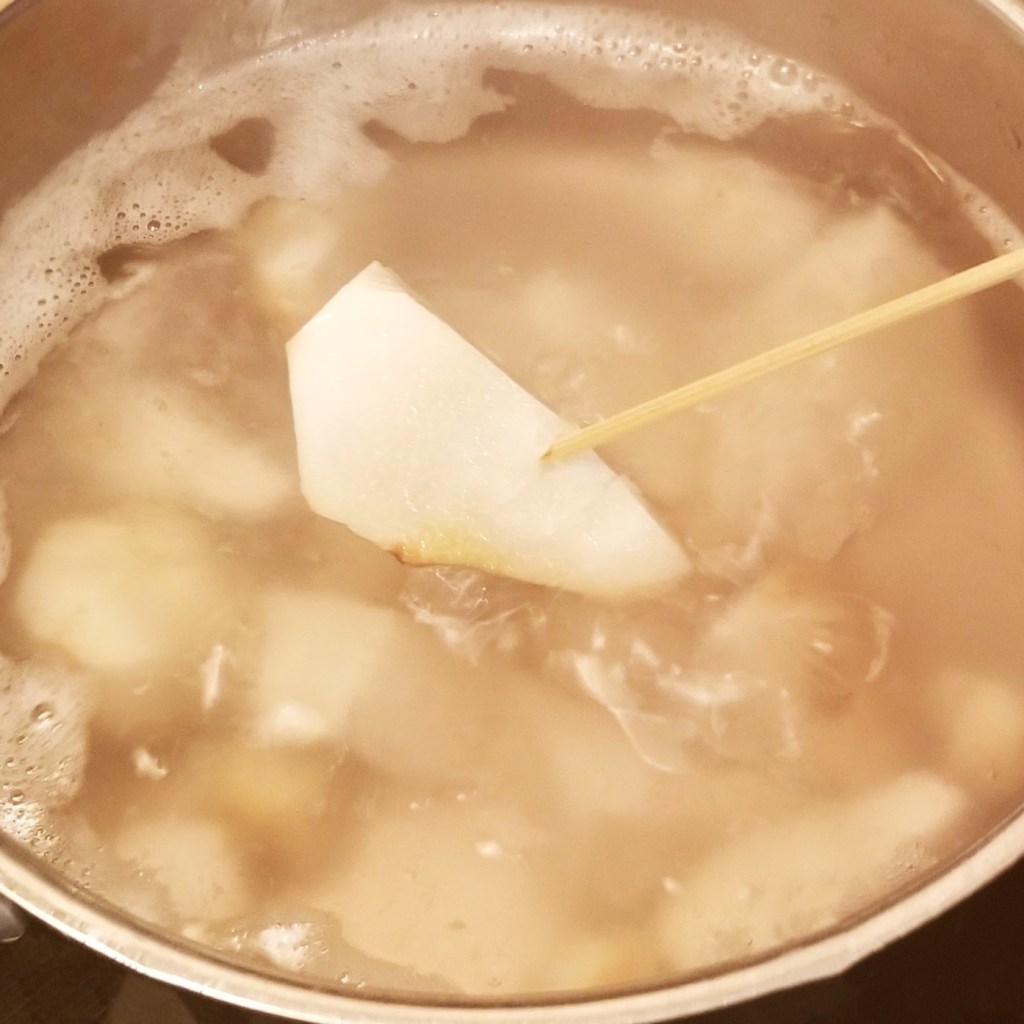
Place the chunks in a pot with water over high heat (photo below, left). Bring water to boil, reduce to medium heat, and cook for between ten to twenty minutes, until the largest chunk is tender, easily pierced with a fork or skewer (photo below, right):
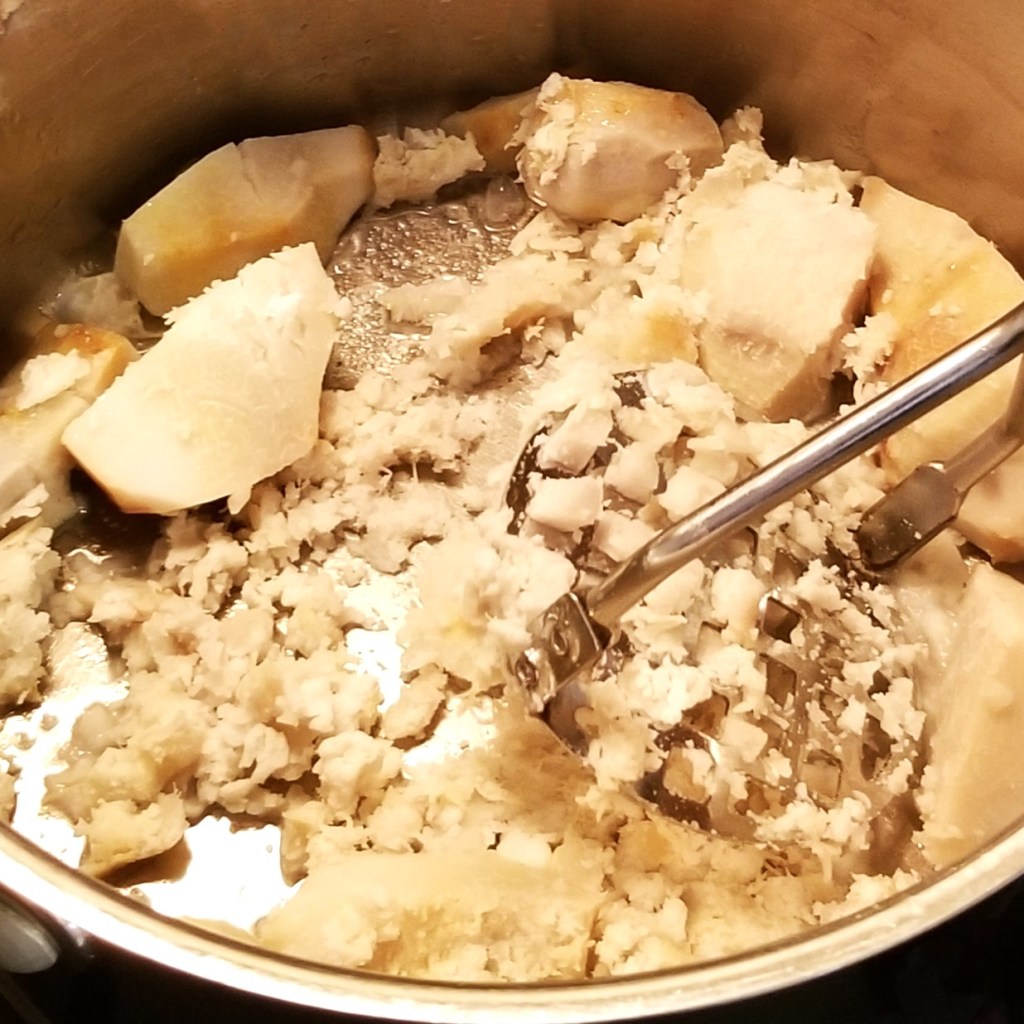
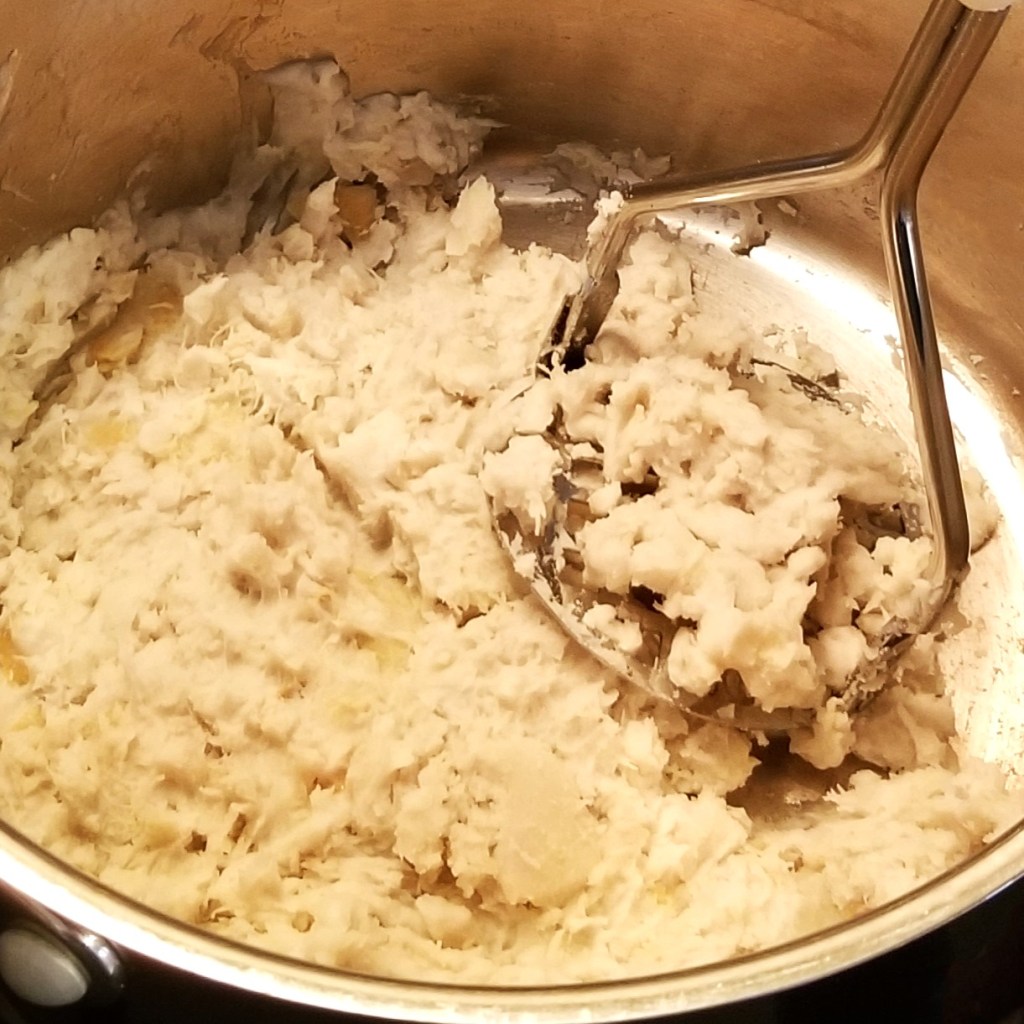
Remove from heat, discard cooking water, then rinse with tap water and drain two or three times, to discard oxalates. Press cooked corms with a fork or potato masher (photo below, left) until reduced to a smooth paste (photo below, right):
The recipe also calls for nata, which in Mexico refers specifically to clotted cream, an unprocessed fatty product skimmed from the top of whole milk. I used sour cream instead, and other options could be mascarpone cheese, or crème fraîche. All these dairy products have different degrees of processing, acidity, and flavour profiles, between them, and when compared to Mexican nata, but work well enough as substitutions in baked goods.
Malanga Cake – Torta de macal
Printable directions: How to prep eddo (satoimo)
Printable recipe: Malanga Cake Torta de Macal
Ingredients
1 lb (454 g) malanga corms (yautía, macal), if not available, use eddo (satoimo), or taro
prepared into a mash (printable directions for eddo, above)
1/2 cup butter; at room temperature
1/3 cup Mexican nata (clotted cream); if not available, use mascarpone cheese,
or crème fraîche, or sour cream
1/2 cup sugar
2 eggs; beaten in a small bowl
1/3 cup evaporated milk
1/3 cup raisins
1 tbsp ground cinnamon, or to taste
1 tsp oil, for greasing mould
Grease an 8×8 inch (20×20 cm) baking dish with the oil; reserve. Preheat oven to 350ºF (180ºC).
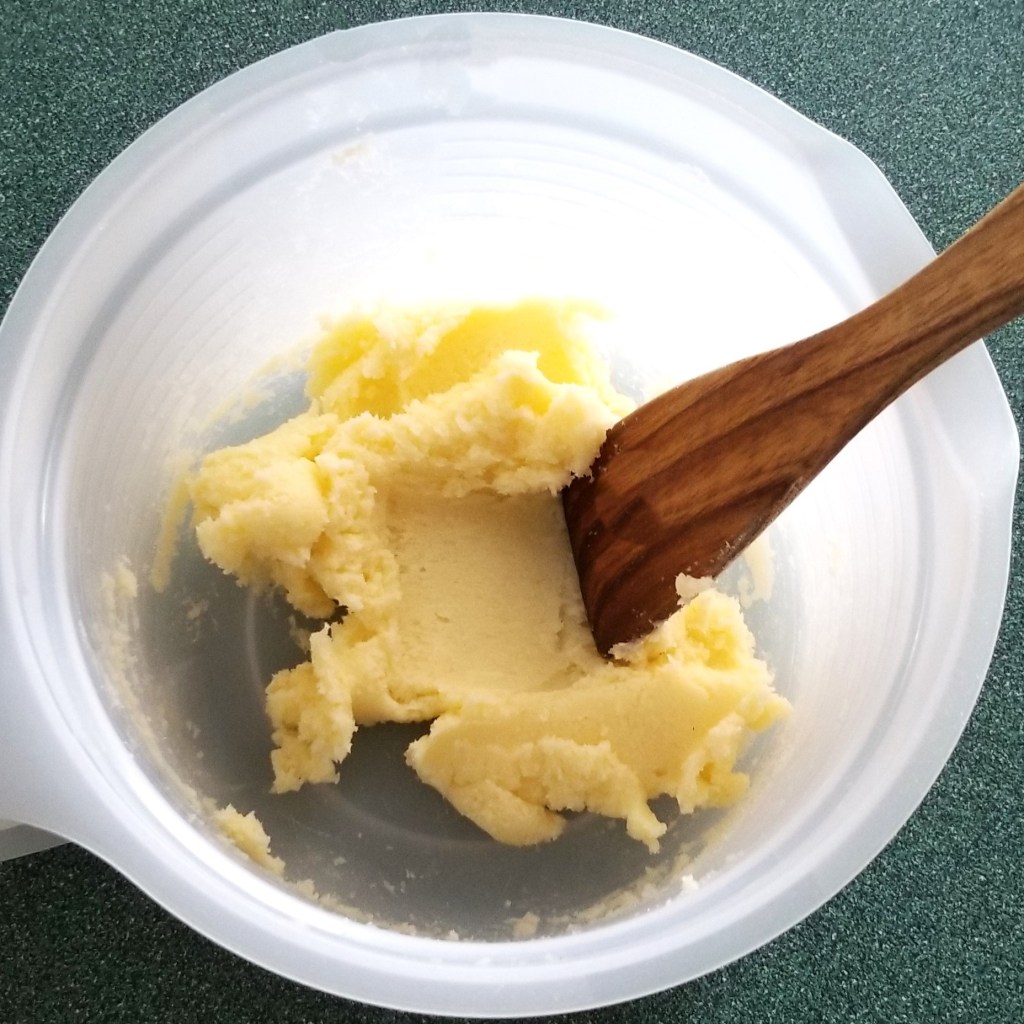
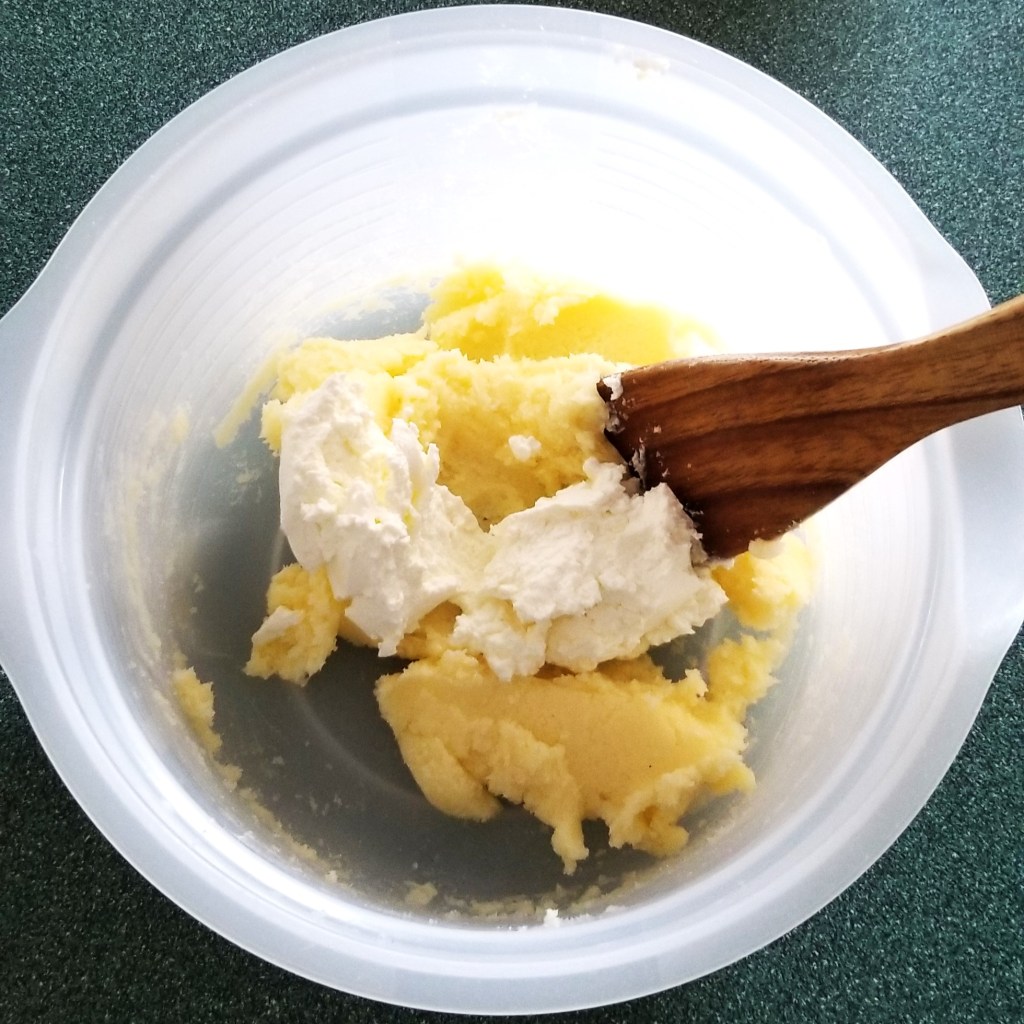
Beat butter and sugar in a mixing bowl, until sugar dissolves, and mixture is light and creamy (photo below, left). Incorporate cream (photo below, right):
Slowly pour in eggs, while mixing (photo below, left). Add mash and mix vigorously, pouring in evaporated milk gradually (photo below, right):
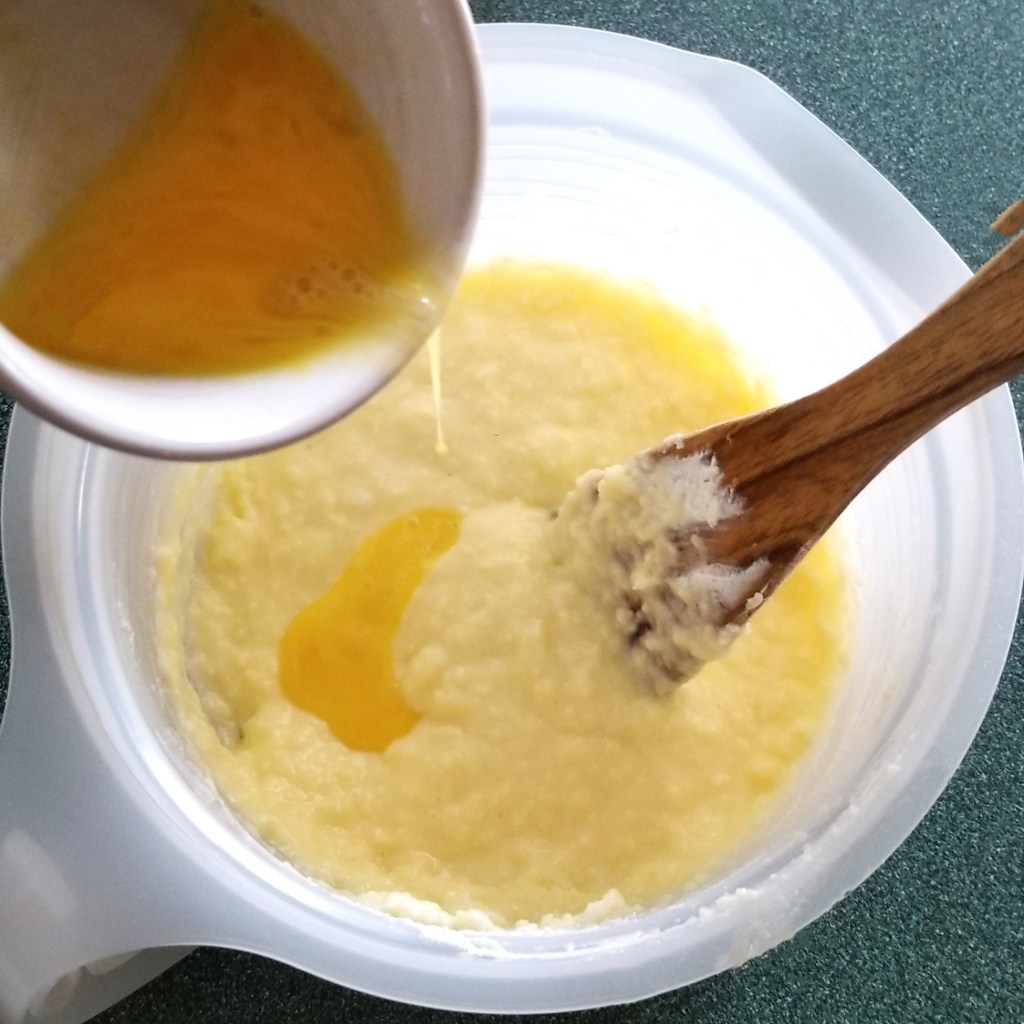
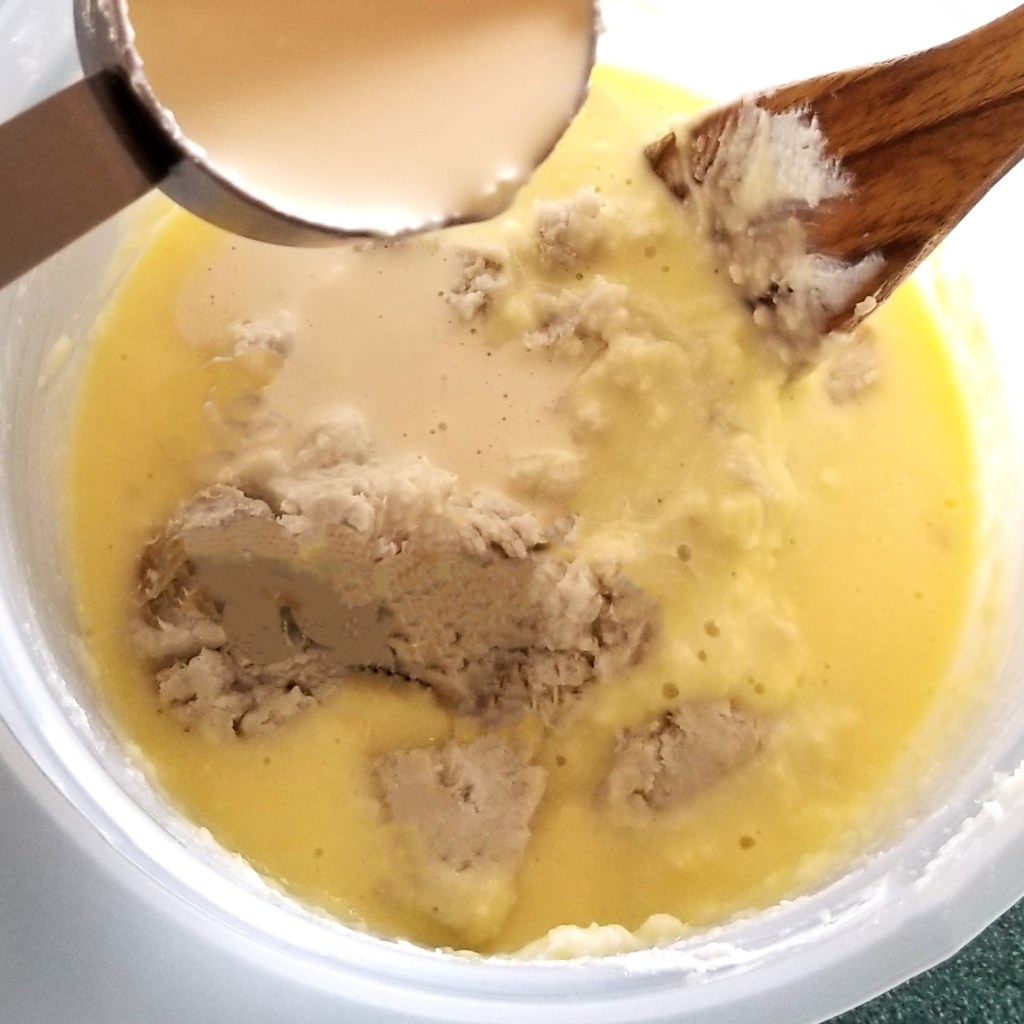
The mix might have a few clumps, that is normal. For a completely smooth texture, first mix mash with evaporated milk in a separate bowl, then gradually add the egg mixture.
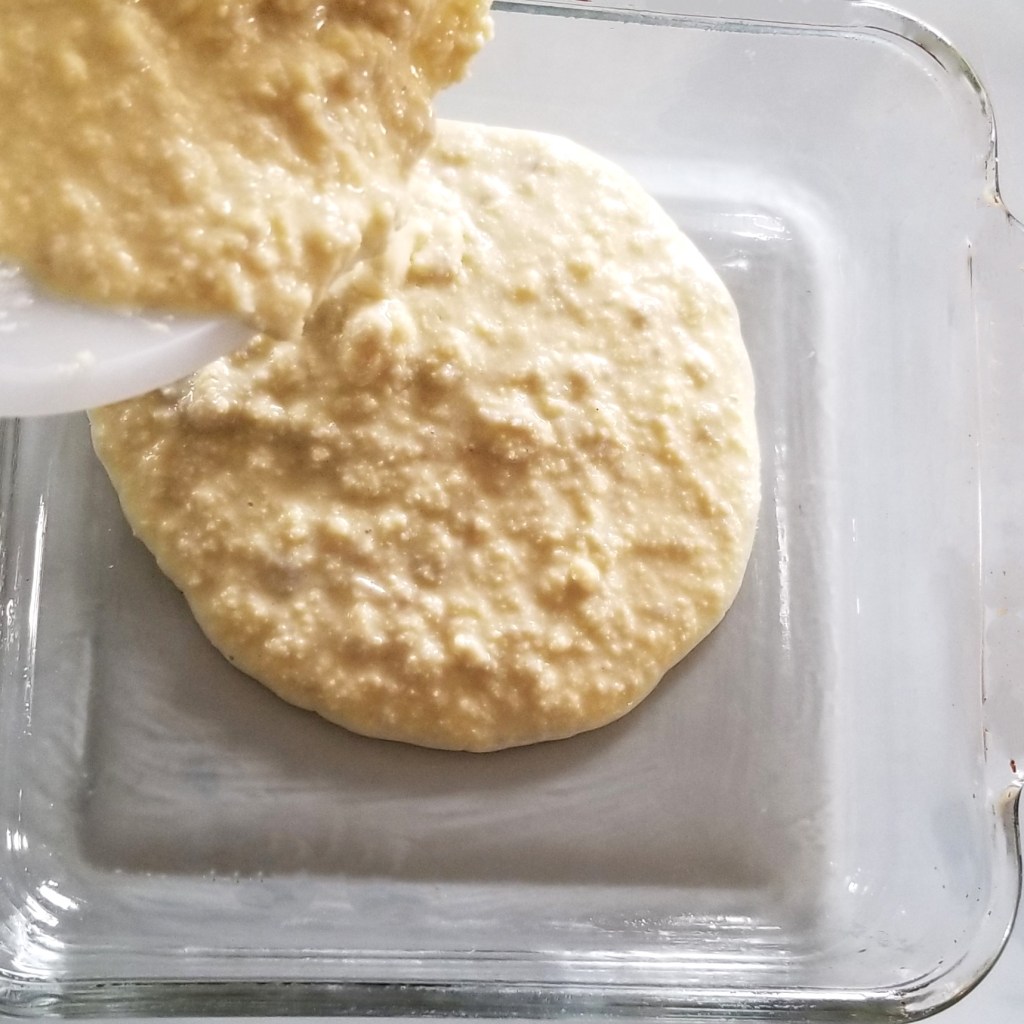
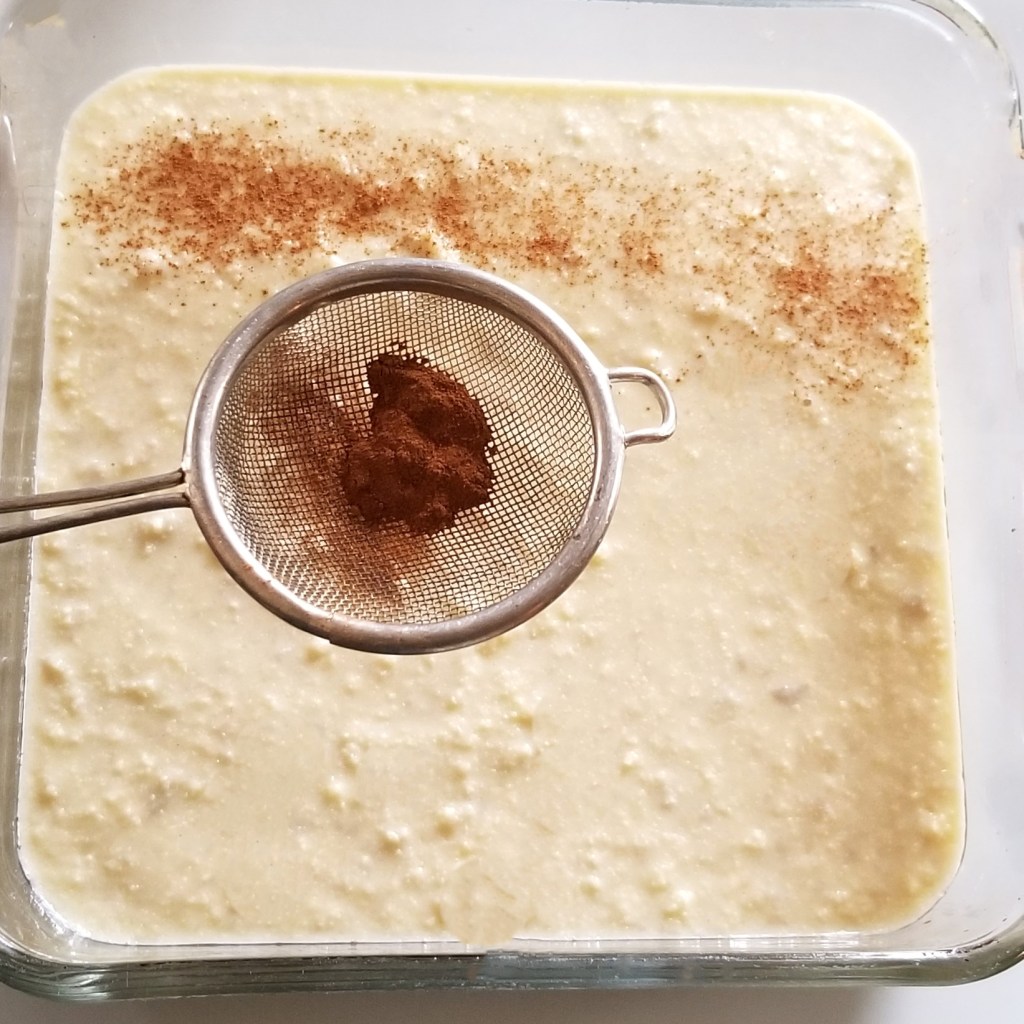
Pour batter in greased baking dish (photo below, left). Sprinkle ground cinnamon on top, through a fine mesh (photo below, right):
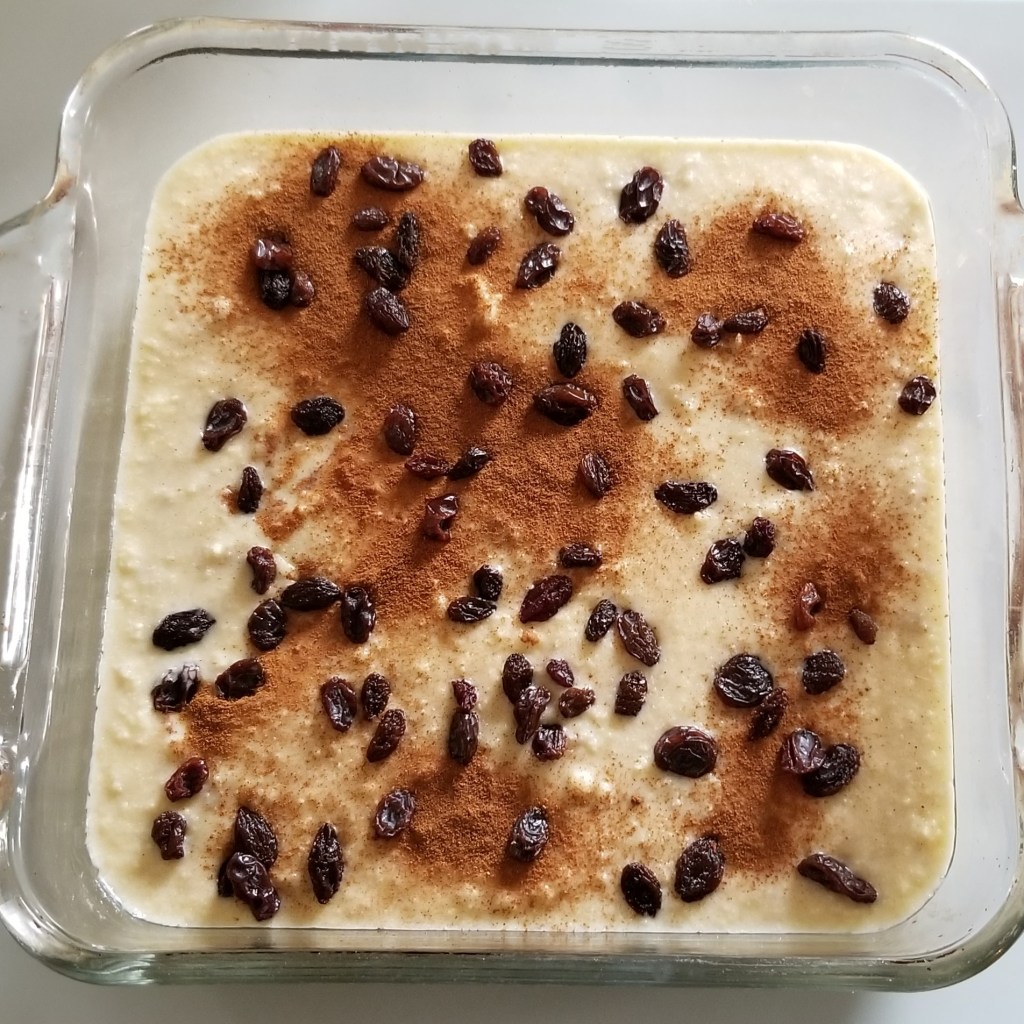
Spread raisins on top (photo below, left). Bake for 20 minutes, then remove from oven onto a cooling rack (photo below, right):
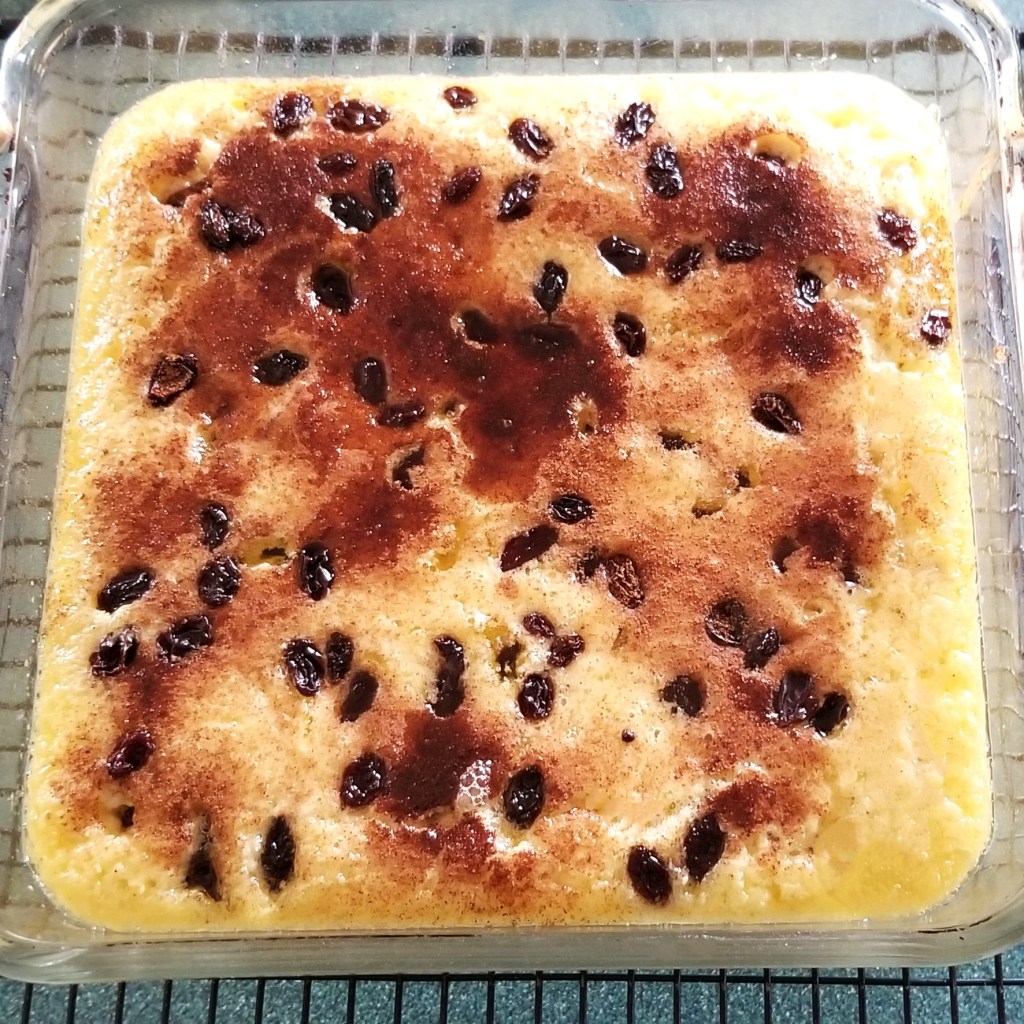
Allow to cool down completely before slicing.
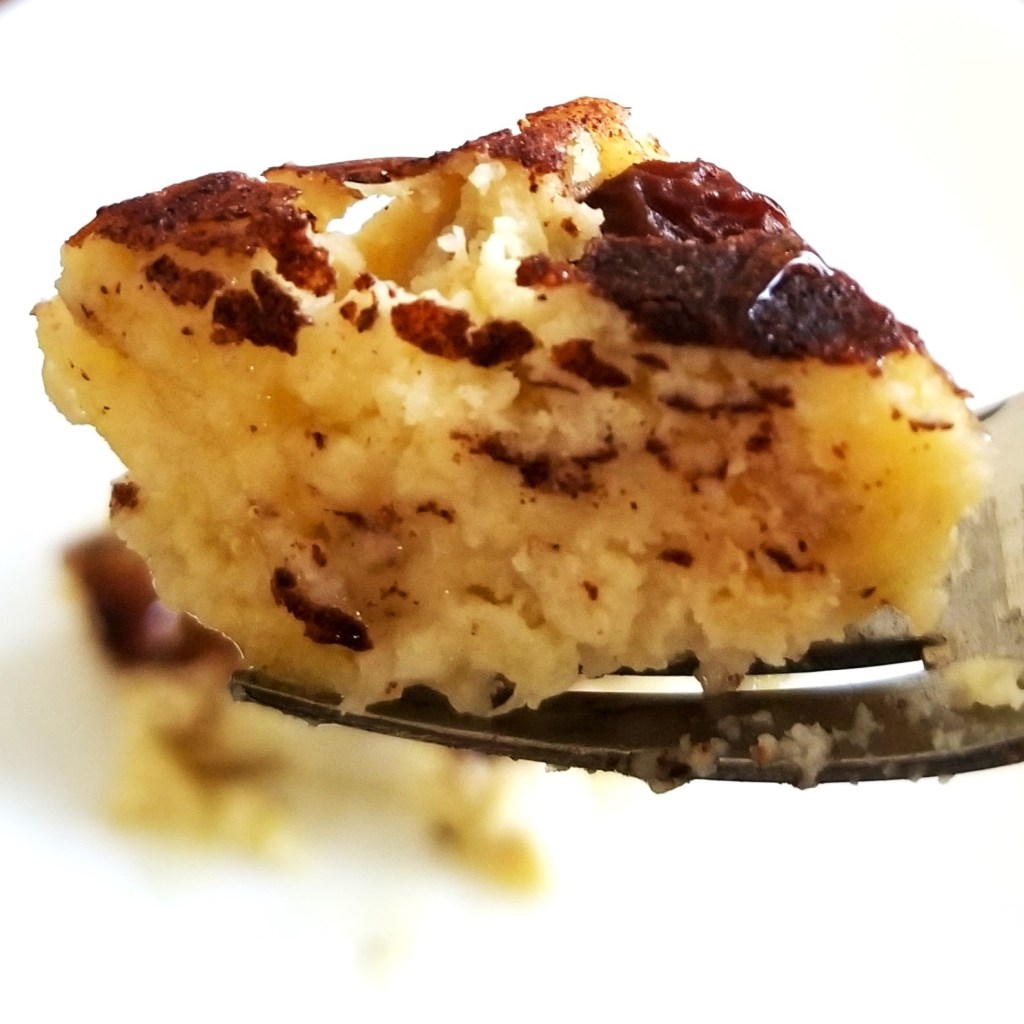
This dessert has some sugar, and natural flavours from the macal (or eddo, or taro), raisins and cinnamon contribute to a placid and balanced taste, but some honey or agave syrup may be drizzled on top, for an extra touch of sweetness:
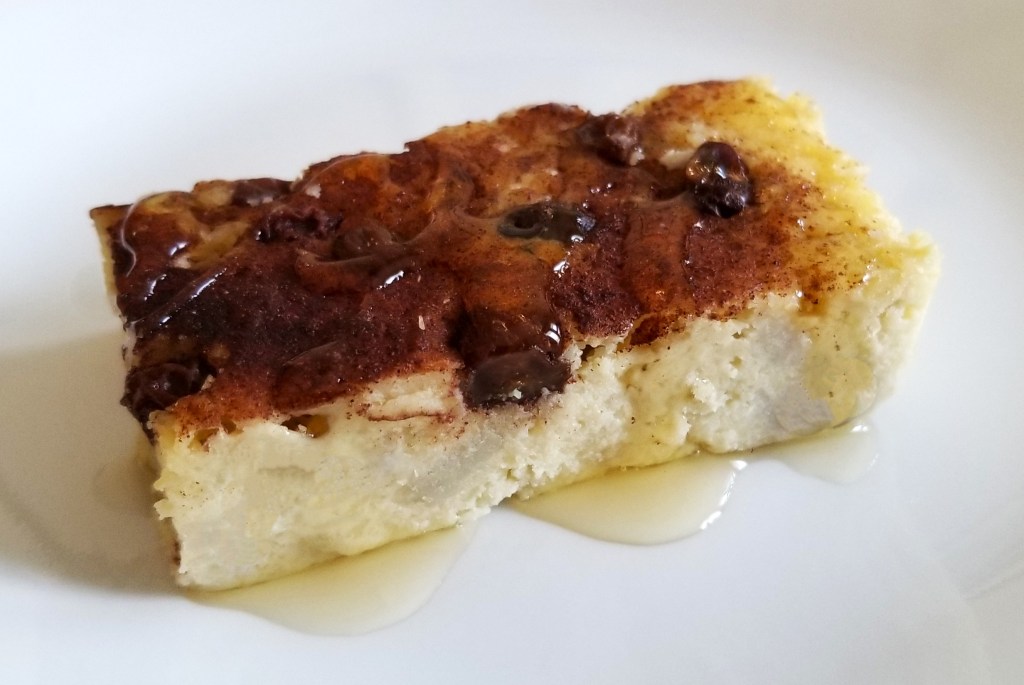
Inside, the creamy texture enhances all the flavours:
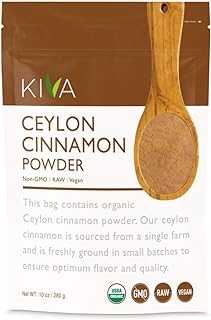
For your convenience, click on the highlighted text below for products available on Amazon™. DISCLAIMER: Any reviews included in this post are my own, for items I have purchased, not provided by any company; as an Amazon Associates Program affiliate, I might receive a commission for any purchases originated from the links below, at no extra cost to you. Thank you to readers who have bought any other products starting with a click from my links!

I am bringing my recipe to Full Plate Thursday #668 with Miz Helen @ Miz Helen’s Country Cottage.
I am also sharing my post at Thursday Favourite Things #635, with Bev @ Eclectic Red Barn, Pam @ An Artful Mom, Katherine @ Katherine’s Corner, Amber @ Follow the Yellow Brick Home, and Linda @ Crafts a la Mode.
I am joining Fiesta Friday #511 with Angie @ Fiesta Friday, this week co-hosting with Jhuls @ The Not So Creative Cook.
I am sharing my recipe at What’s for Dinner? Sunday Link-Up #446 with Helen @ The Lazy Gastronome.




 My Slice of Mexico
Looks delicious. 😊
LikeLiked by 1 person
I am not sure if this is the same taro that can be found in the Philippines but the cake looks delicious! Thank you so much for joining Fiesta Friday party! Hope to see you next week!
LikeLiked by 1 person
I think any variety of taro would work well in this recipe. Thank you for hosting, Jhuls!
LikeLike
how can we store it,and for how long. Thanks
LikeLike
I think this treat is at its best when fresh, so I would recommend no more than a couple of days in the fridge.
LikeLike