

Click here to go to printable recipe: Grilled Meat and Vegetable Medley – Discada
The farm disc plow (plough) was invented in Texas, USA, in 1872 by Ole Ringness; while working in the family farm, he noticed that a wheel of his wagon was misaligned, and as the wagon advanced, the wheel was moving mud, so he thought of using that principle with metal discs to plow the fields. Below, a photo of a multiple-disc plow, from WikiCommons:
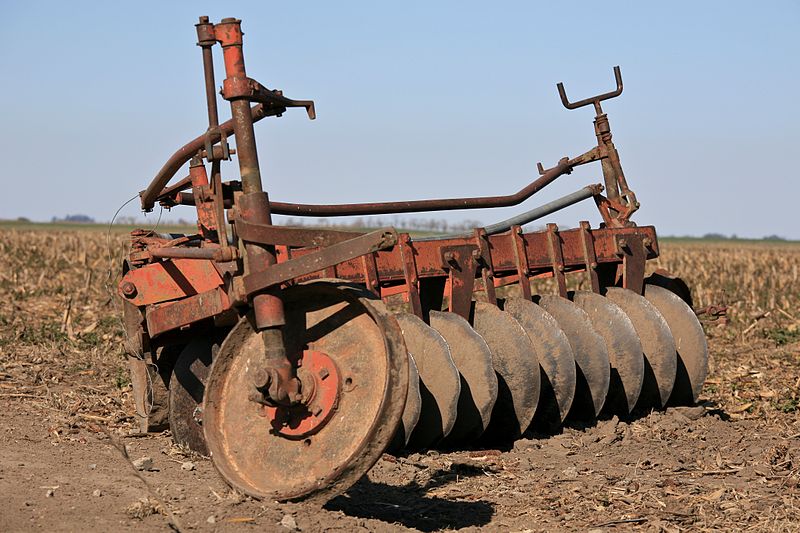
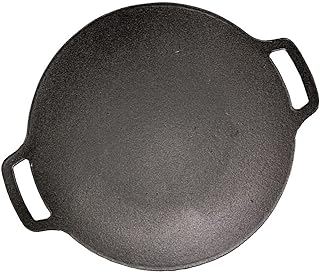
Sometime in the 20th century, farmers working in the fields of Northern Mexico, particularly in the Comarca Lagunera (Lagoon region), in the states of Coahuila and Durango, started using one of those old plow discs as a comal (Mexican griddle) over a wood fire; it is said that a farmer would start the fire, prop the concave disc on top, and everybody would contribute with whatever ingredients they had, any meat (often game), vegetables, and quelites (potherbs from the fields), which were all chopped and thrown on the disc. This bucolic scene of cooking on “el disco” became a regular occurrence, ideal for large gatherings, and people started calling the resulting dish “discada”. There are some sources that cite this happening around the time of the Mexican Revolution war in the 1910s, and it would fit with the practice of moving troops using whatever they could find on their way, for a quick meal. Last year, I shared a post commemorating the onset of the Mexican Revolutionary war (November 20, 1910), featuring General Pancho Villa. He was born in Durango, and joined the war efforts in that region, so a discada could have been something he and his troops shared, to distract them from the doldrums of the war front. Nowadays, discada pans have handles and often legs, to stand them firmly over the fire, or when cooking indoors, a paella pan or an iron skillet, as in my case, will do in a pinch for a small batch.
Traditional discadas included a variety of meats, fresh or cured, such as venison, beef, or pork, and bacon and chorizo (Mexican sausage). Onions, tomatoes and hot peppers, particularly jalapeños, were brought from the fields for the disc. More contemporary recipes have added cold cuts, such as ham, and hotdog sausages, and other vegetables and aromatics, such as bell or güero peppers, potatoes, and garlic; there are some recipes from Durango that even call for chunks of pineapple. Pouring some beer in towards the end of the cooking process was probably introduced by a sassy cook who was drinking by the side of the disc, noticing the dish getting too dry, which works well and also helps to scrape all the good charred bits at the bottom of the pan.
Grilled Meat and Vegetable Medley – Discada
Printable recipe: Grilled Meat and Vegetable Medley – Discada
Ingredients (for four to six portions)
1 lb (454 g) beef steak, such as sirloin
3 slices bacon
½ lb (225 g) Mexican chorizo; click here for my recipe or from store
2 hotdog sausages
4 slices ham
¼ white onion; peeled
3 green onions, such as knob onions
Small bunch cilantro
4-5 jalapeño peppers
2 tomatoes
½ cup beer (or water)
Salt and black pepper, to taste
Optional:
½ lb (225 g) fast fry pork, such as boneless chops or loin; cut into bite-size chunks
½ green bell pepper; washed, chopped
2 potatoes; washed, cooked, and cut into cubes
1 cup pineapple chunks
4-5 fresh whole peppers, such as güeros; washed
2 cloves garlic; peeled, and chopped finely
To serve:
Corn or/and wheat warm tortillas
Limes; washed and halved
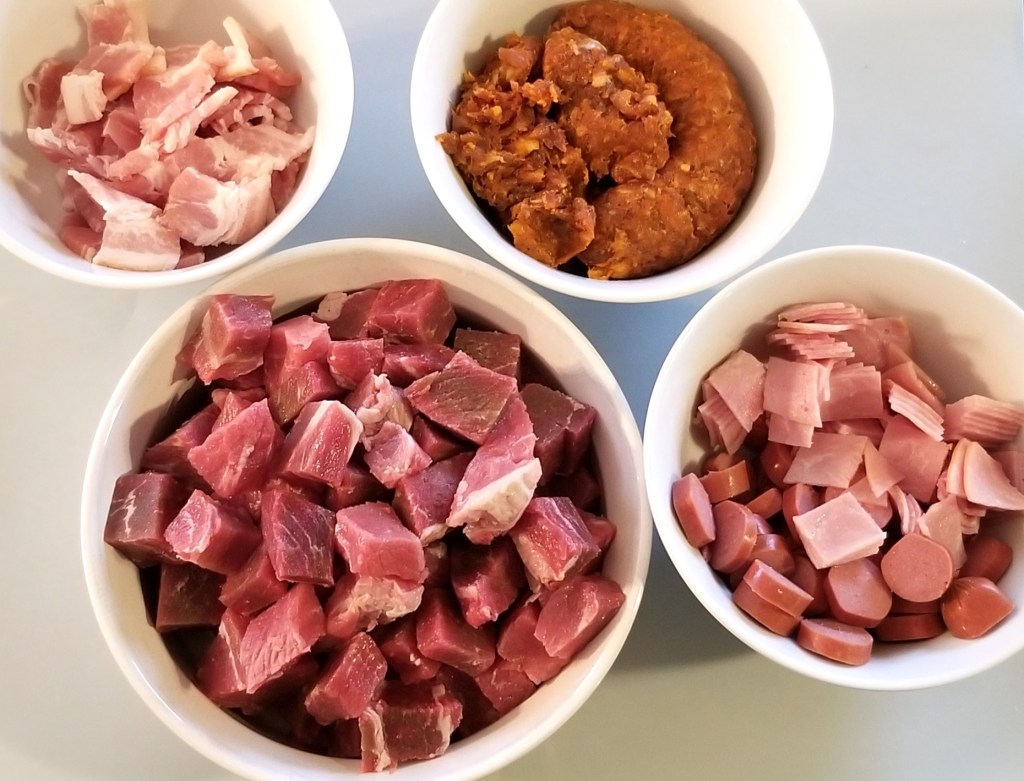
Prepare meats, clockwise from top left: slice bacon, remove casing from chorizo, cut ham into squares, hotdog sausages into coins, and steak into bite-size chunks:
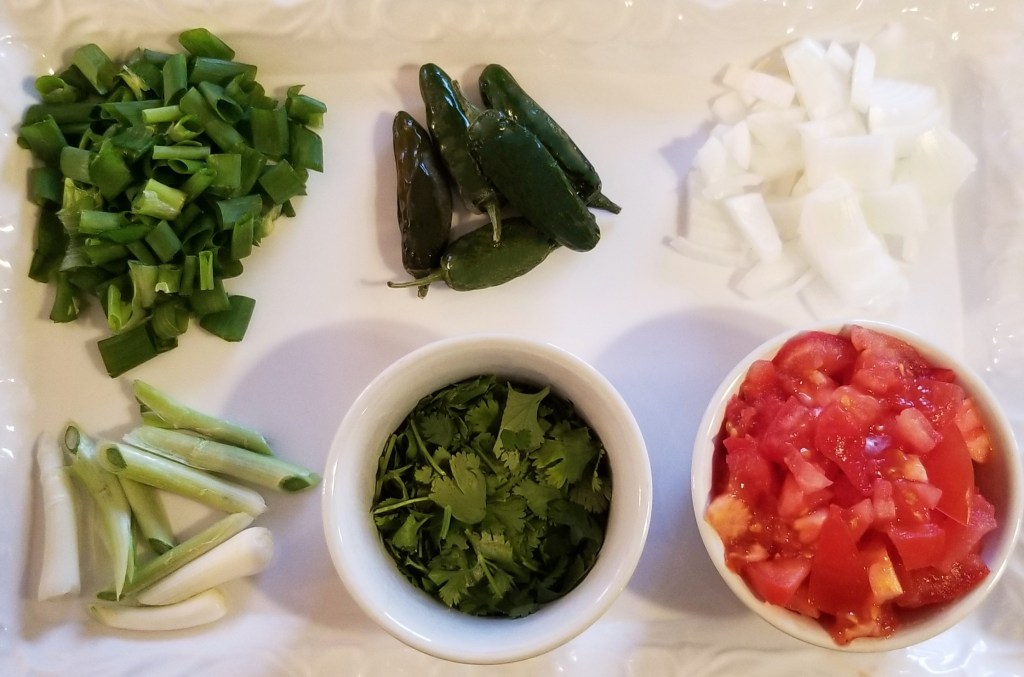
Prepare the veggies: wash and dry green onions, jalapeños, cilantro and tomatoes. Photo below, counter-clockwise from top left: chopped green parts of green onions, and white parts sliced into logs, chopped cilantro, chopped tomatoes, coarsely chopped white onion, whole jalapeño peppers:
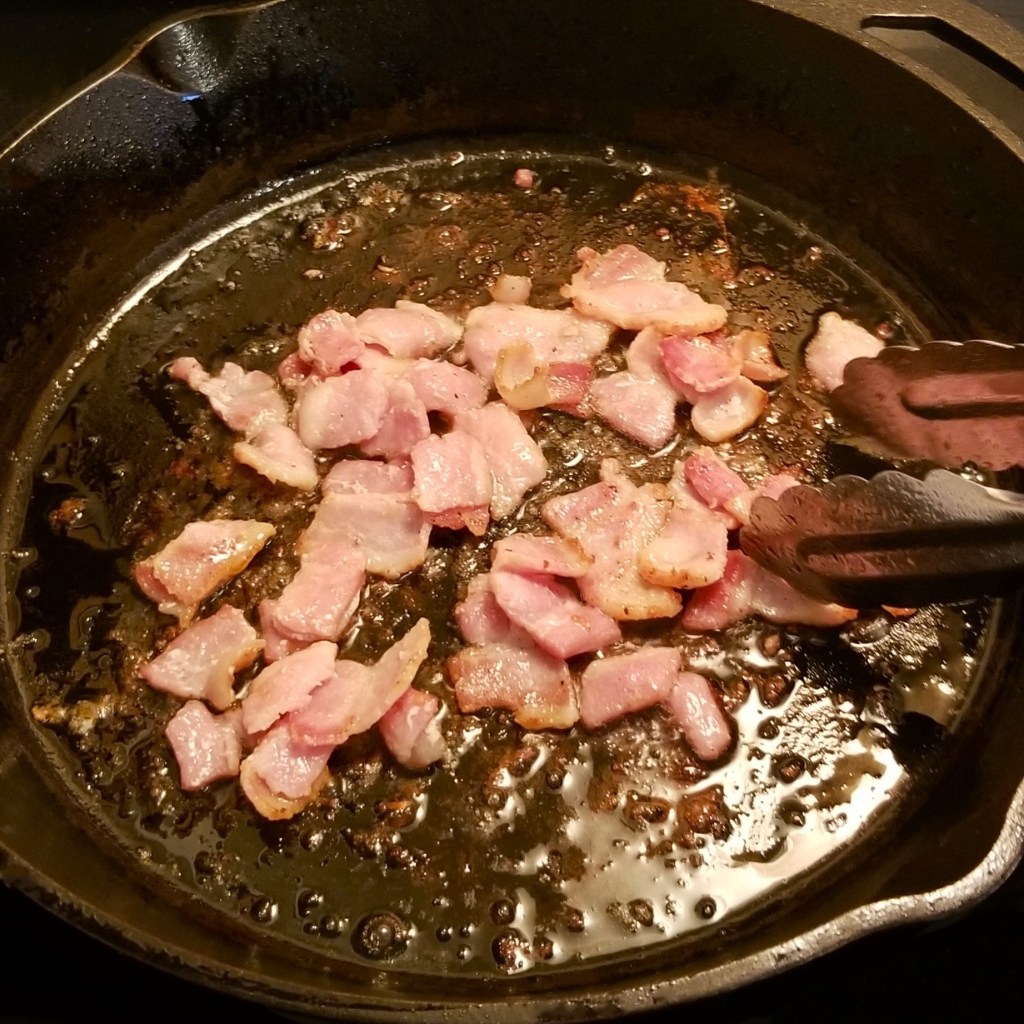
When using a disco, as the different ingredients are cooked, they may be pushed to the side to cook another; when using a pan or iron skillet, have a second pan by the side, to reserve cooked ingredients. In a large pan or iron skillet over medium heat, add bacon, turning to cook on both sides (photo below, left); transfer to a second pan and reserve. Fry the beef chunks (and pork, if using) in the bacon fat (photo below, right):
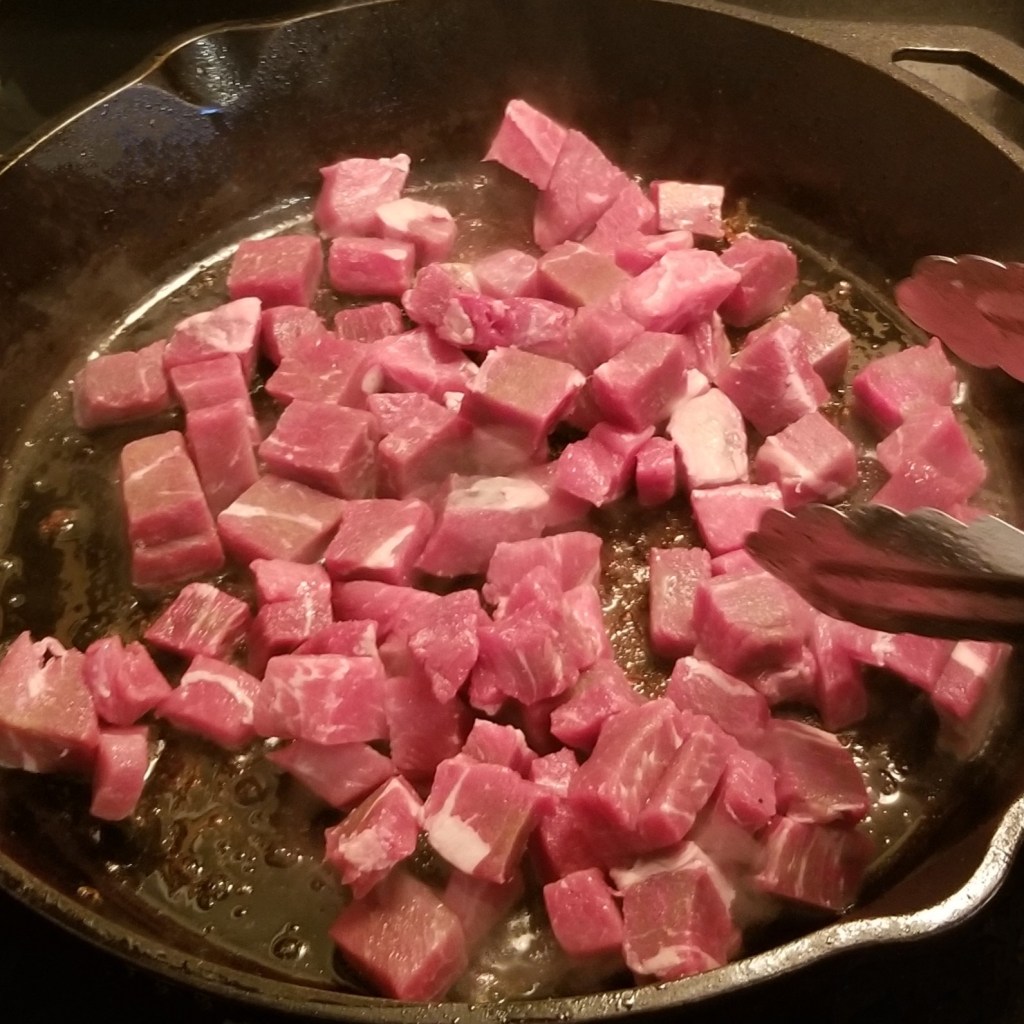
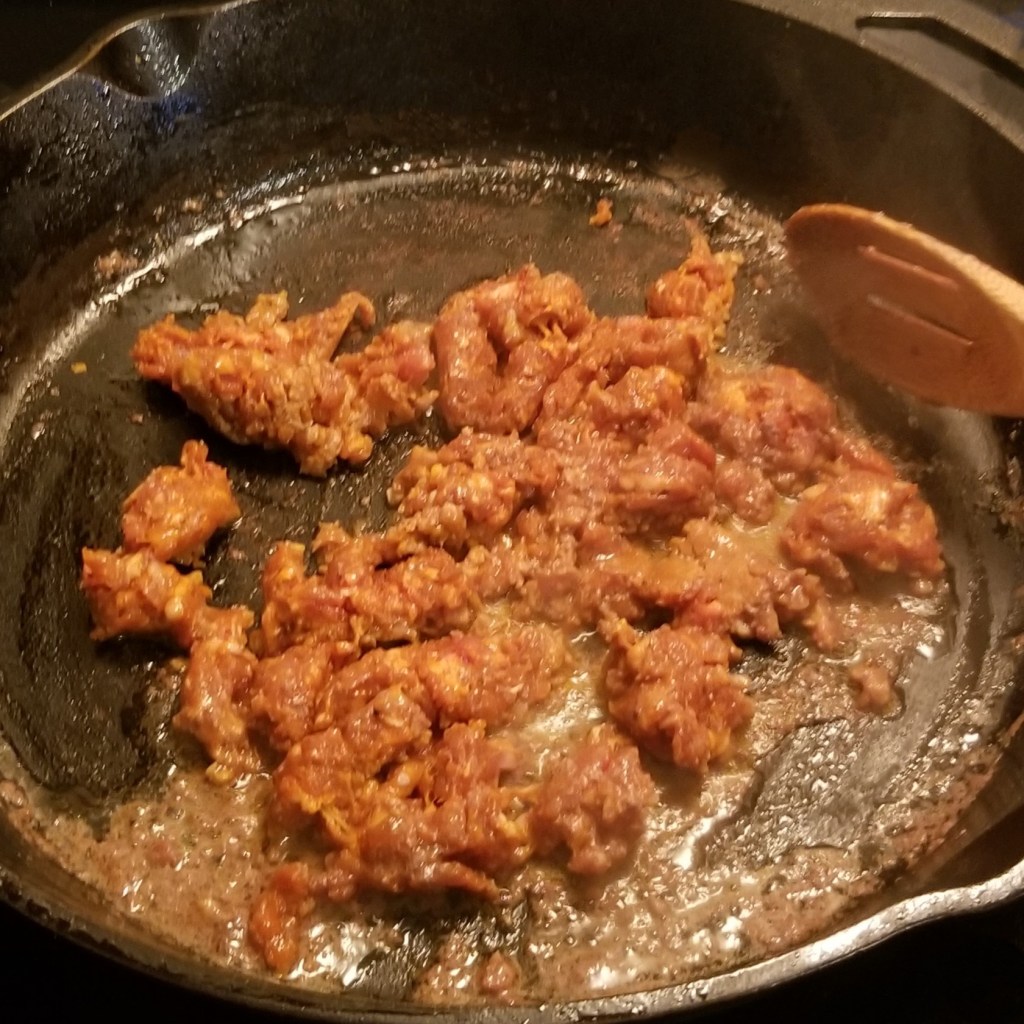
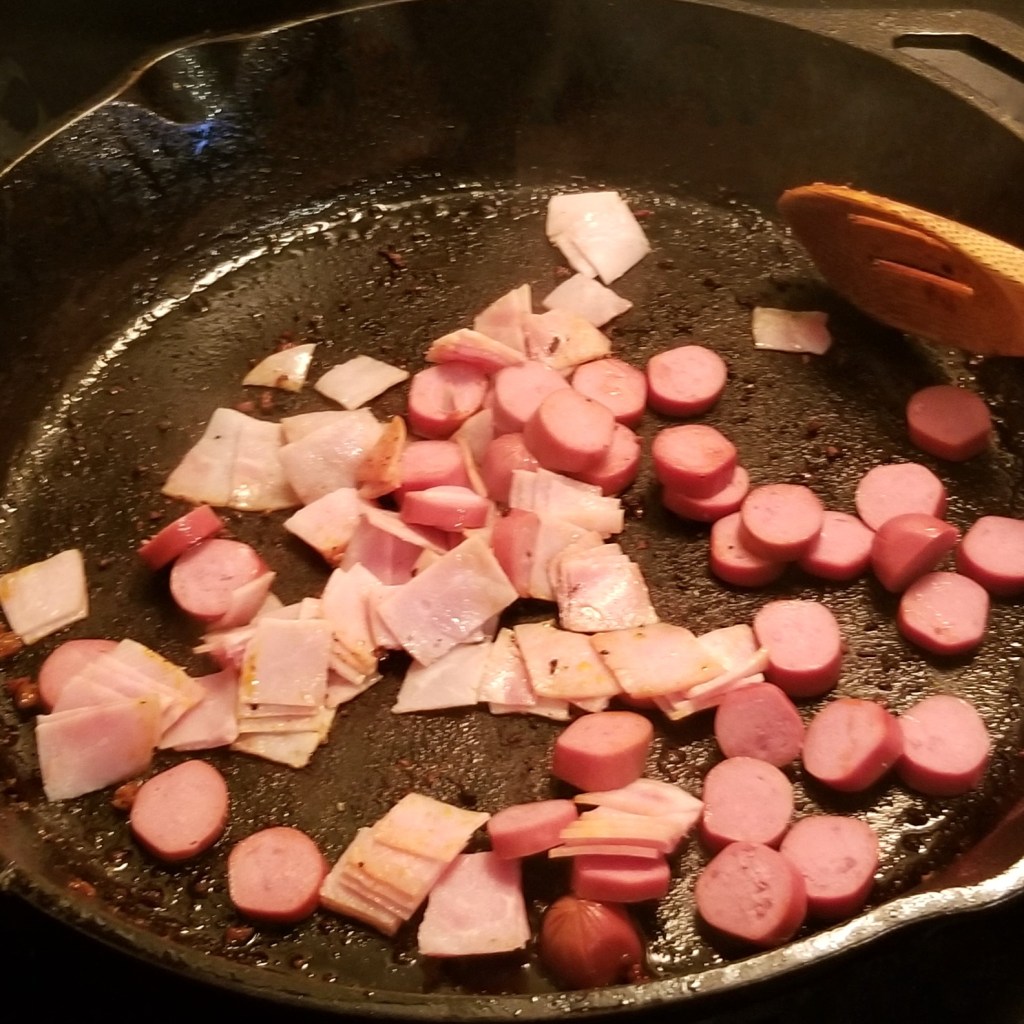
Turn beef chunks to brown all sides, then transfer to the second pan. Fry chorizo in the skillet, breaking up into chunks (photo below, left). Continue until fully cooked; transfer to the second pan, then drain and discard excess fast from the skillet. Return to medium heat, then add hotdog coins and ham squares (photo below, right):
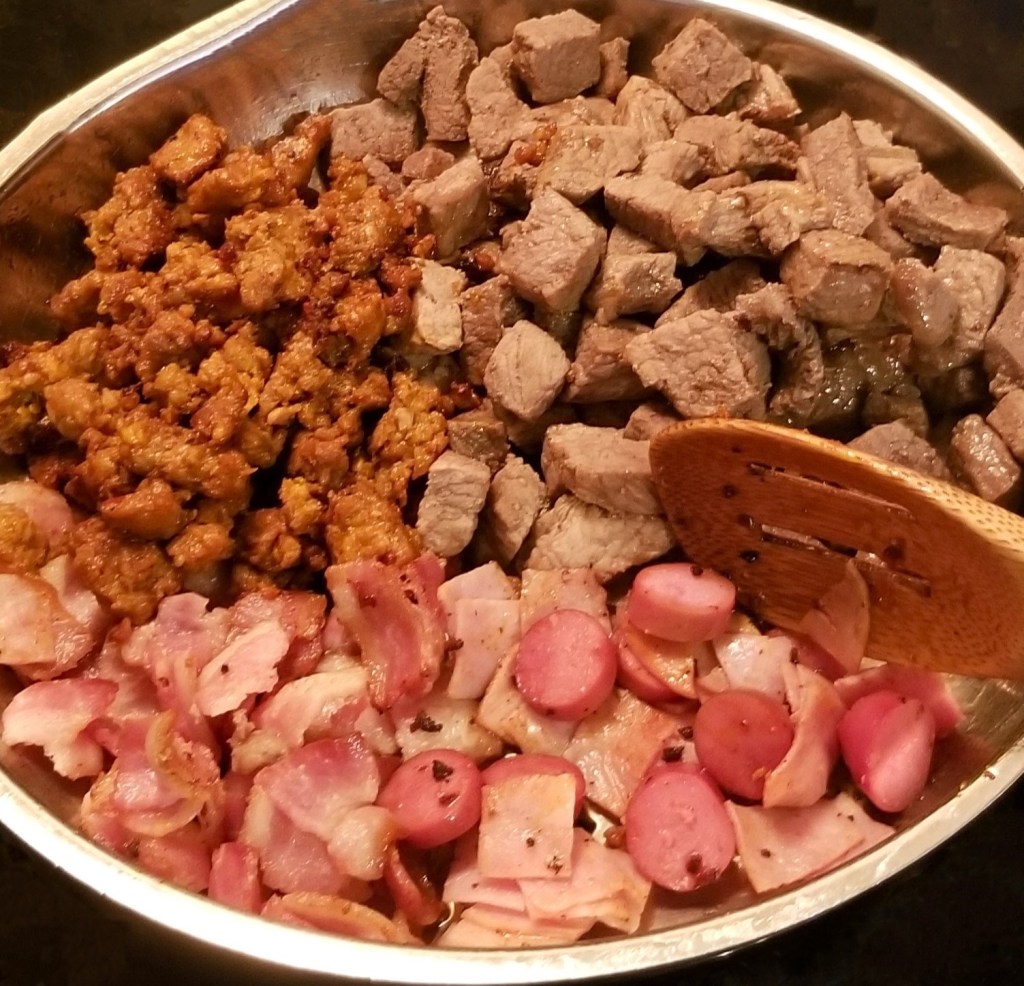
Cook and stir for one minute, then transfer to the second pan, with the rest of the reserved meats:
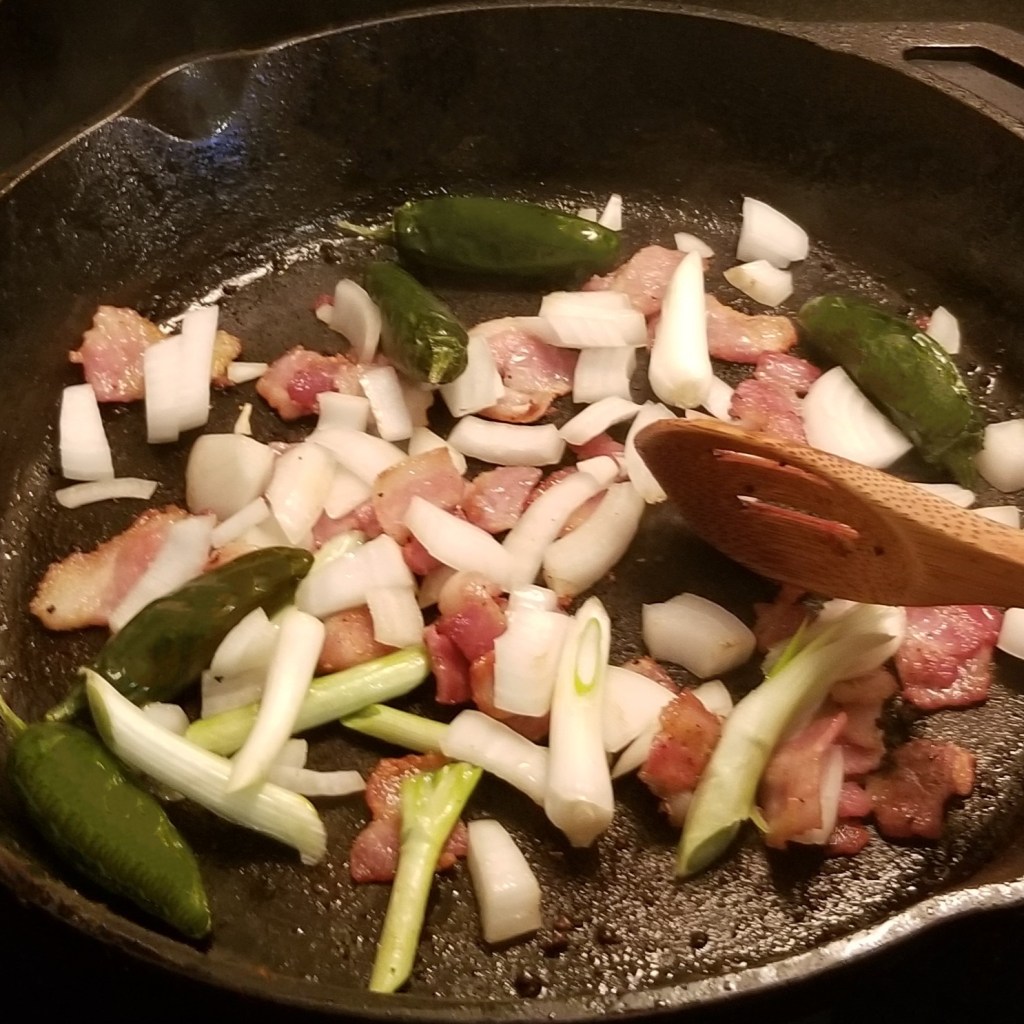
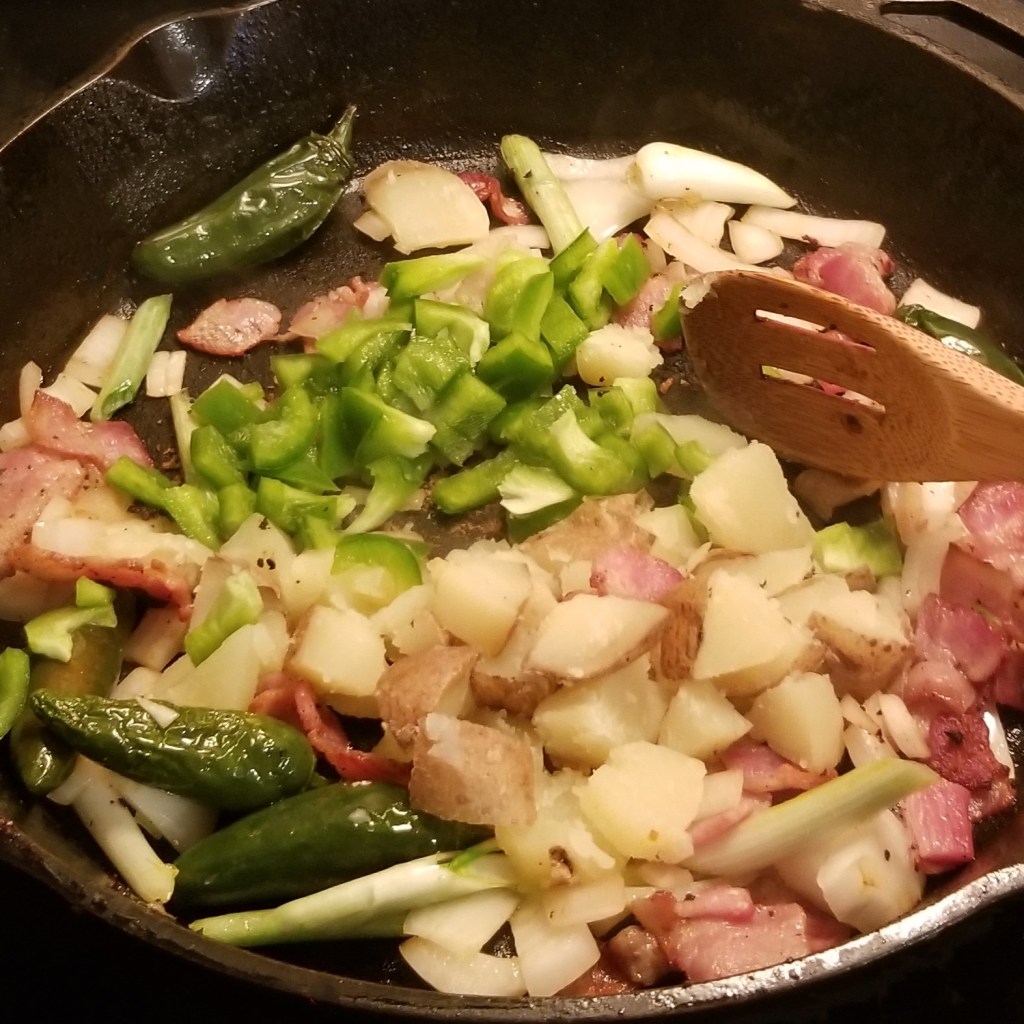
Return bacon to the skillet, and allow to crisp for one minute, to render a little more fat, then add white onions, white parts of green onions, and jalapeño peppers (photo below, left). Stir and cook until onions are translucent, then add any extra veggies, optional, in my case, cooked cubed potatoes and chopped bell peppers (photo below, right):
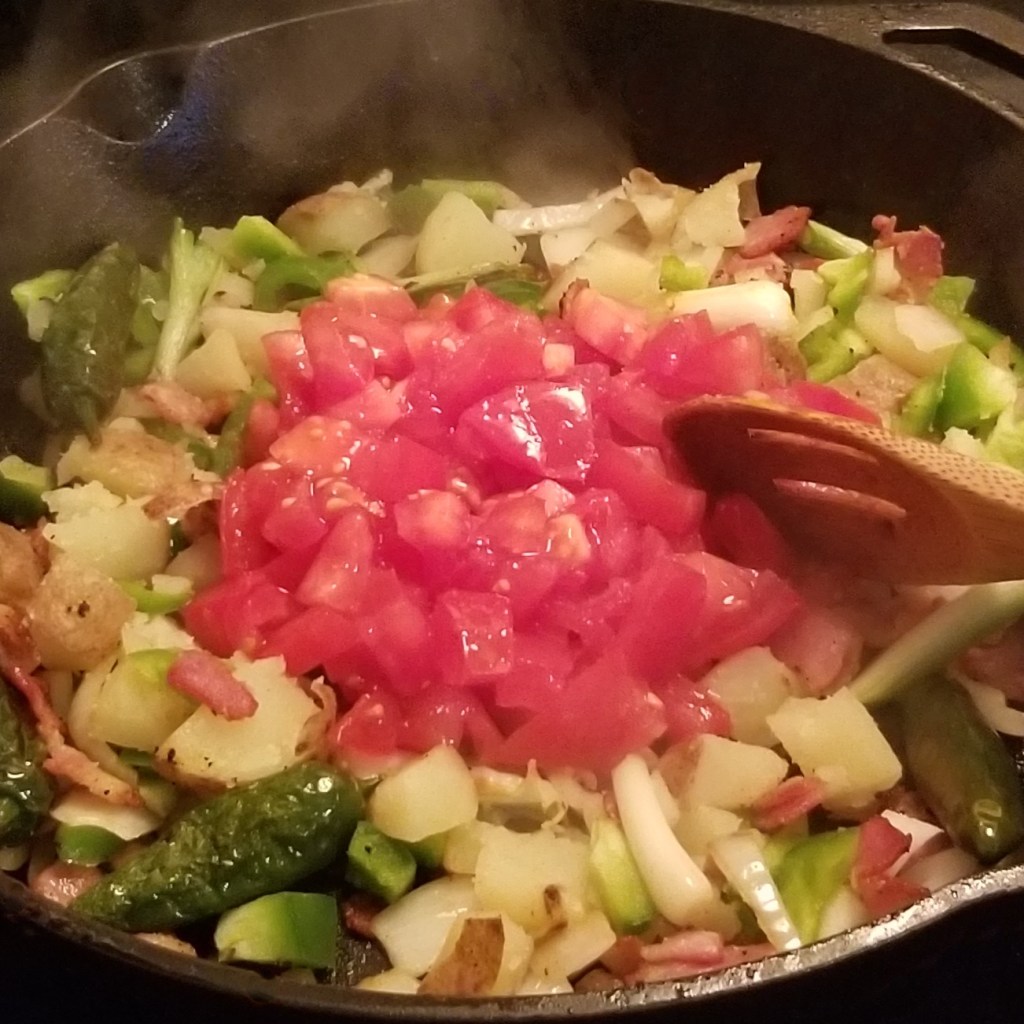
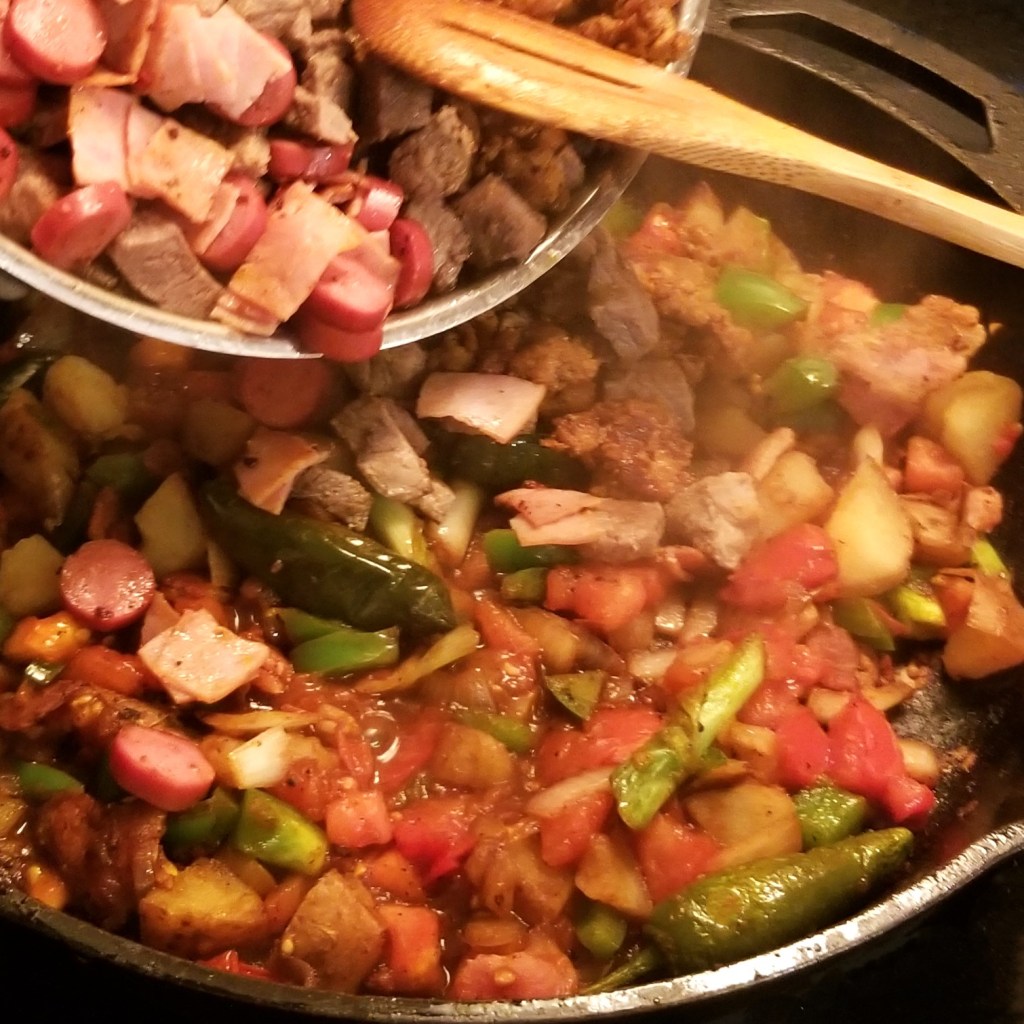
Cook for a couple of minutes, stirring; push veggies to the edge of the skillet, then add chopped tomatoes in the centre (photo below, left). Allow to cook for two to three minutes, without stirring, then incorporate everything, and continue cooking until tomatoes are soft and have released their juices, then return all the reserved meats to the skillet (photo below, right):
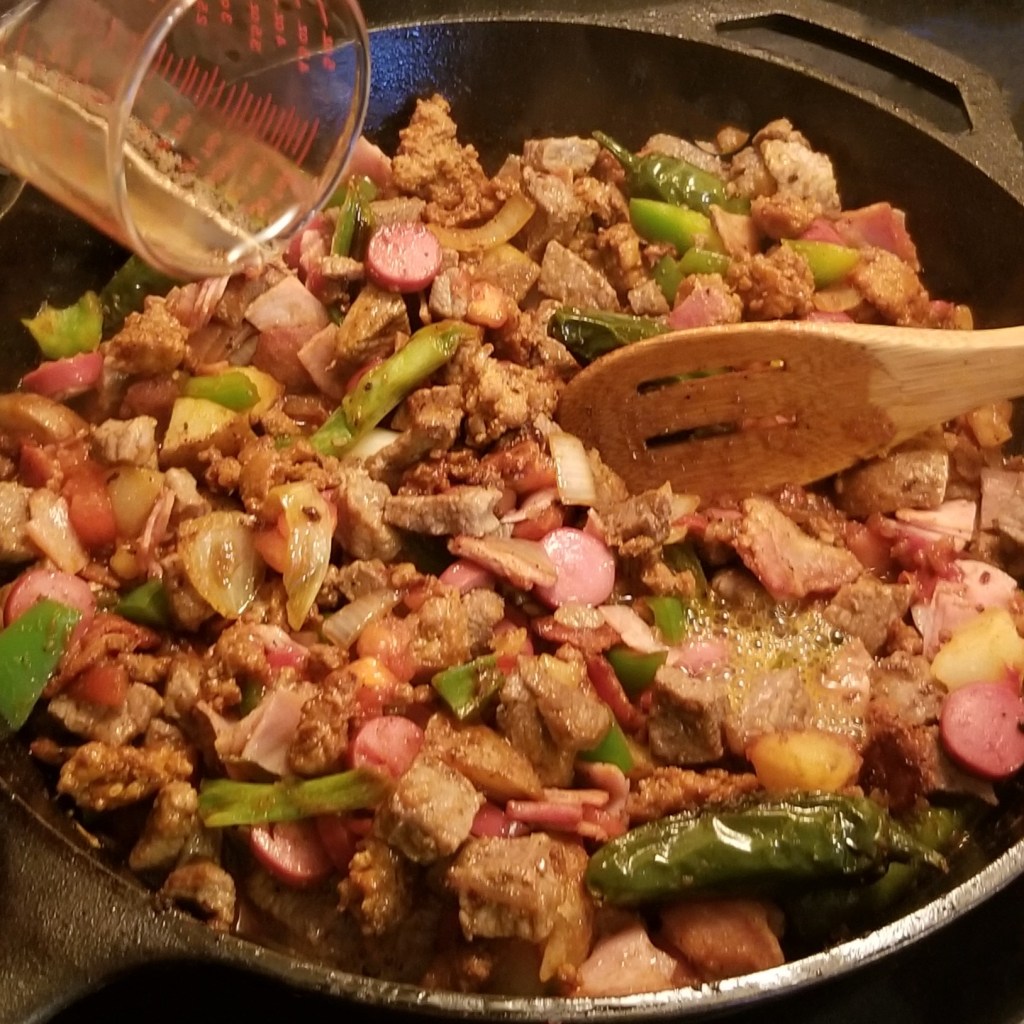
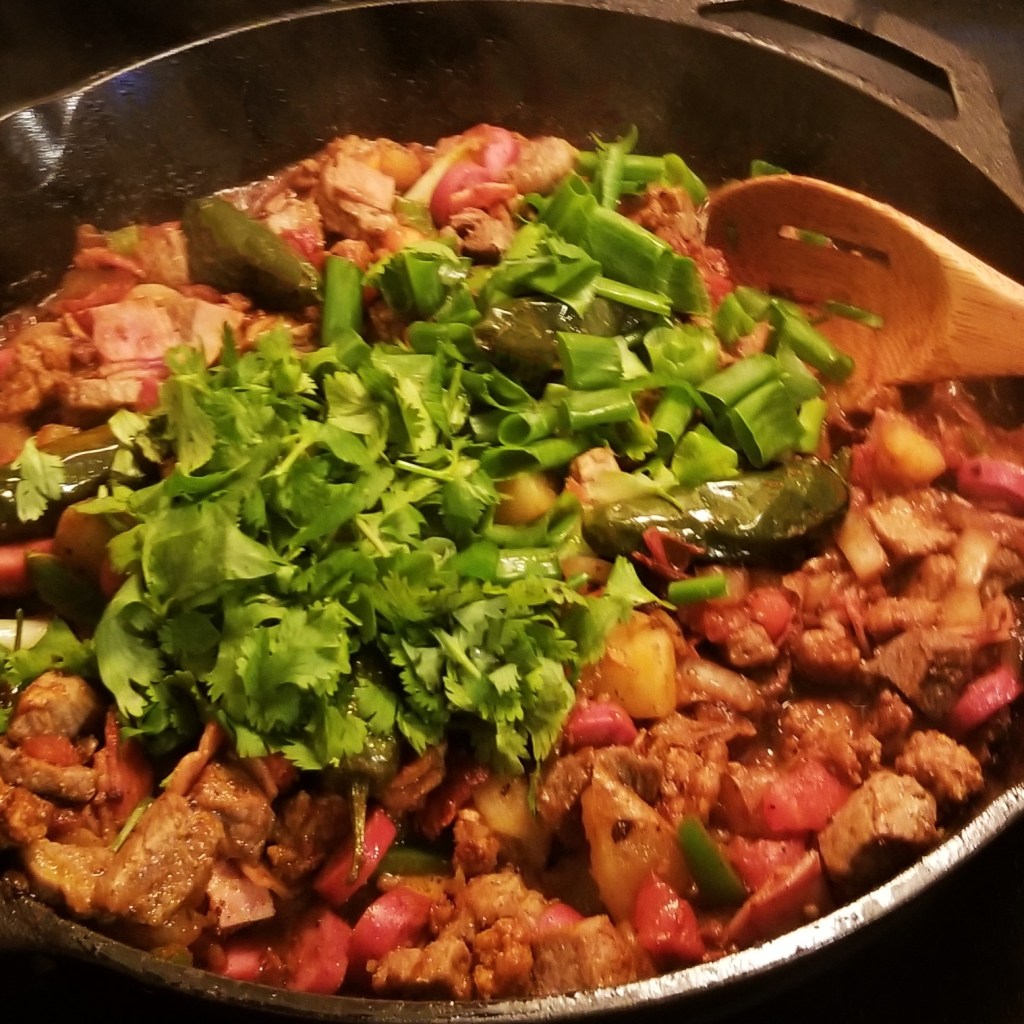
Stir, then pour in beer, scraping any bits from the bottom of the skillet (photo below, left). Season with black pepper, and salt, if needed, to taste, then finish by adding cilantro and green parts of green onions (photo below, right):
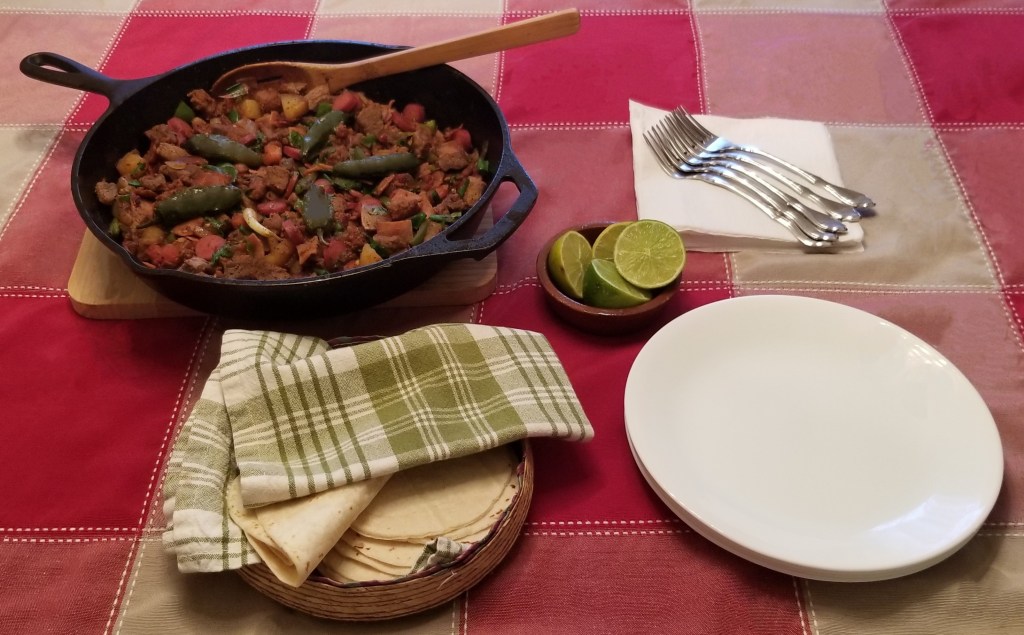
Bring the skillet to the table, careful to place a trivet underneath, and keeping from direct contact with the hot iron. Offer warm tortillas, and lime halves, for everyone to help themselves to the discada:
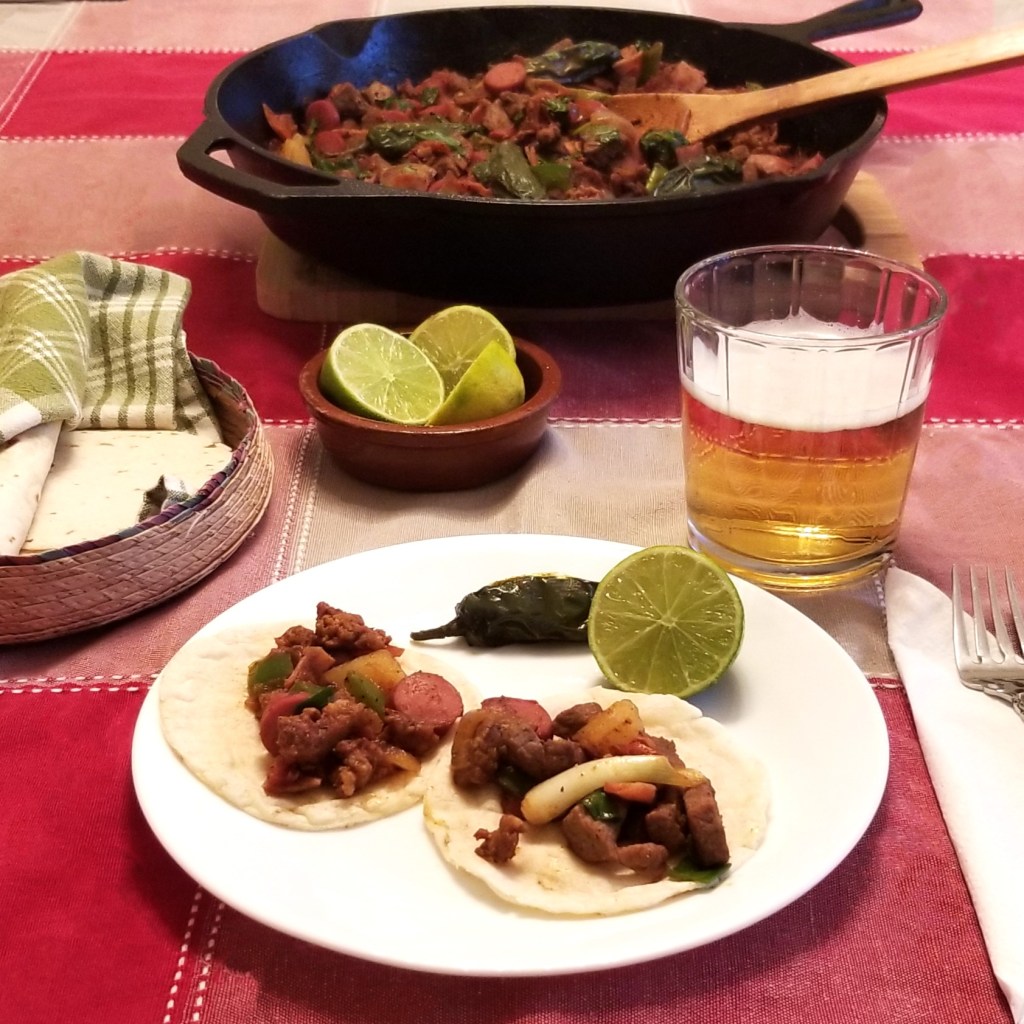
Discada tacos, with a generous sprinkle of lime juice, and paired with a cold beer are a very satisfying meal, for a Sunday family gathering, parties, or to celebrate Mexican Revolution Day:
Discada makes great leftovers for a hearty nibble the next day, and may be served with beans, or used to stuff my previous post’s gorditas de guisados.
For your convenience, click on the highlighted text below for products available on Amazon™. DISCLAIMER: Any reviews included in this post are my own, for items I have purchased, not provided by any company; as an Amazon Associates Program affiliate, I might receive a commission for any purchases originated from the links below, at no extra cost to you. Thank you to readers who have bought other products starting with a click from my links!

I am bringing my recipe to Full Plate Thursday #671 with Miz Helen @ Miz Helen’s Country Cottage.
I am also sharing my post at Thursday Favourite Things #637, with Bev @ Eclectic Red Barn, Pam @ An Artful Mom, Katherine @ Katherine’s Corner, Amber @ Follow the Yellow Brick Home, and Linda @ Crafts a la Mode.




 My Slice of Mexico
.jpg)
Glad to learn the origin of the disc plow and the discada dish. Your iron skillet is like the one I use *every* day in some form or another. Couldn’t cook without it. The discada pan looks a lot like a cast iron wok. The community dish, where everyone pitches in, is a wonderful concept and I bet it tastes so good with knowing a community put it together ❤
LikeLike
Yes, I love my skillet, too! I imagine the scene, like that story of the rock soup, hehe.
LikeLiked by 1 person
🙂
LikeLiked by 1 person
Looks pretty tasty. I like learning how they took what was available to make a cooking implement from a farming one.
LikeLike
It really is yummy, and I can imagine it would be even better cooked over a wood fire.
LikeLiked by 1 person
Another great story and history lesson.
LikeLike
Thank you, Stefan!
LikeLiked by 1 person
Looks like it’s easy enough to make. 1 pan meals are perfect for small dinner parties.
LikeLiked by 1 person
Hope you get to try it Alice!
LikeLiked by 1 person