
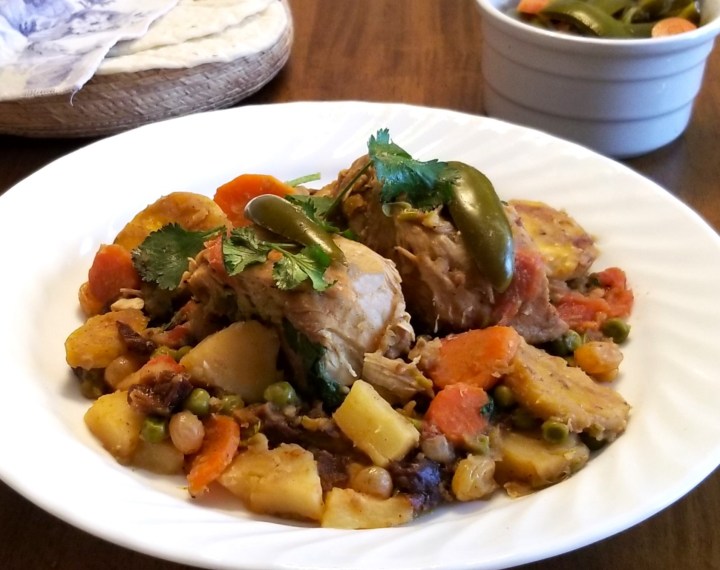
Click here to go to printable recipe: Guerrero Style Chicken Stew
History Tidbit: Black History Month – African descendants in “La Costa Chica” (Pacific Coast in Southern Mexico, in the states of Guerrero and Oaxaca) – After the fall of the Mexica (Aztec) Empire in 1521, Spanish conquerors and catholic clergy were able to integrate and convert large portions of indigenous groups in central and southern Mexico; the number of female Europeans in Mexico was always low throughout the 300 years of colonial time, so this led to a process of mestizaje (inter-mixing of foreign and indigenous people). By the mid 1500s, catholic clergy, such as Fray Bartolomé de Las Casas, advocated for dispensing indigenous Mexicans from forced labour [1}, and there was a need for a new work force in the mines and fields. Therefore, the Spanish crown granted Portuguese traders the introduction of enslaved people from Africa. In a previous post, I have talked about “La Nao de China” – also known as the Manila Galleon. Although this route was established mainly to bring merchandise from Asia to the New world, from Manila, capital of The Philippines, to Acapulco, an important port in the Mexican state of Guerrero, cunning Portuguese traders captured people from North-western African countries (such as Senegal and Ghana) and transported them on these ships as slaves. The great presence of Mexican indigenous culture in colonial life was one of the main reasons why Black History has been greatly ignored in Mexico, and even after the Spanish rule was shattered and slavery was abolished in the new formed country in the early 1800s, African descendants were basically marginalized. Many remained in the region, establishing communities along the Pacific coast, East of Acapulco and into the neighbouring state of Oaxaca, all the way near the towns of Huatulco and Puerto Angel [2]; this region is known as “La Costa Chica” – “The Short Coast”. In spite of this marginalization, many mixed traditions from African and mestizo backgrounds are now present not only in that region, but in the states of Guerrero and Oaxaca: dances (such as The Devil Dance, or Toro de Petate), language (words like mucama – maid, or macaco – macaque) and for food, fusion dishes with ingredients originally African, such as watermelon, tamarind pods, rice or plantain, often intermixed with Mexican corn, beans, vegetables and fruits, such as tomatoes and peppers.
[1] Obra Antropológica XVI – El Negro Esclavo en Nueva España; Gonzalo Aguirre Beltrán; Fondo de Cultura Económica, 1994.
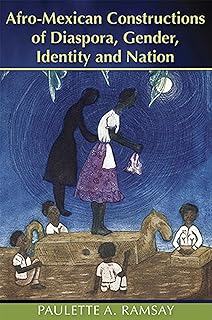
[2] Afro-Mexican Constructions of Diaspora, Gender, Identity and Nation; Paulette A. Ramsay; The University of the West Indies Press, 2016.
To finish this leap-year February and Black History Month, I chose a traditional stew from the Mexican state of Guerrero, which has clear North-western African influences, with the use of dry fruit, spices and plantain, and New World mestizo notes from the use of tomatoes, potatoes, pickled peppers, and pineapple.
Guerrero Style Chicken Stew – Estofado de pollo
Printable recipe: Guerrero Style Chicken Stew
Ingredients
2 lb (1 kg) chicken, cut up in pieces; skinless and/or boneless, optional
2 plantain; washed
1 lb (about 4 medium) potatoes; washed
½ lb (about 3 medium) carrots; washed
2 tomatoes; washed
1 small bunch cilantro; washed
½ cup raisins; Thompson, golden, or mixed
1/3 cup prunes
1 can pineapple slices, packed in juice
1 can sweet peas with their liquid
½ white onion; peeled
2 cloves garlic; peeled
2 bay leaves
½ tsp ground all-spice
¼ tsp ground cloves
3 tbsp oil
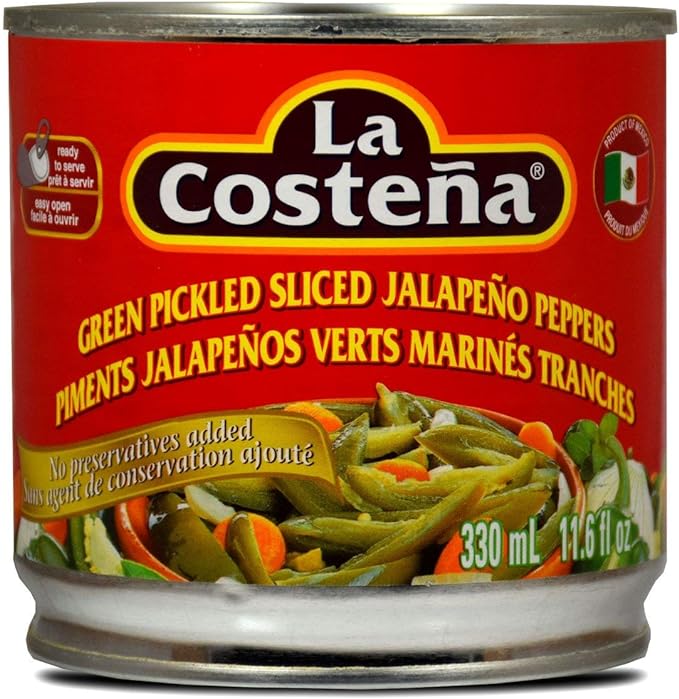
Pickled jalapeño peppers, in escabeche (click here for recipe, or from can)
Salt and black pepper, to taste
Water, as needed
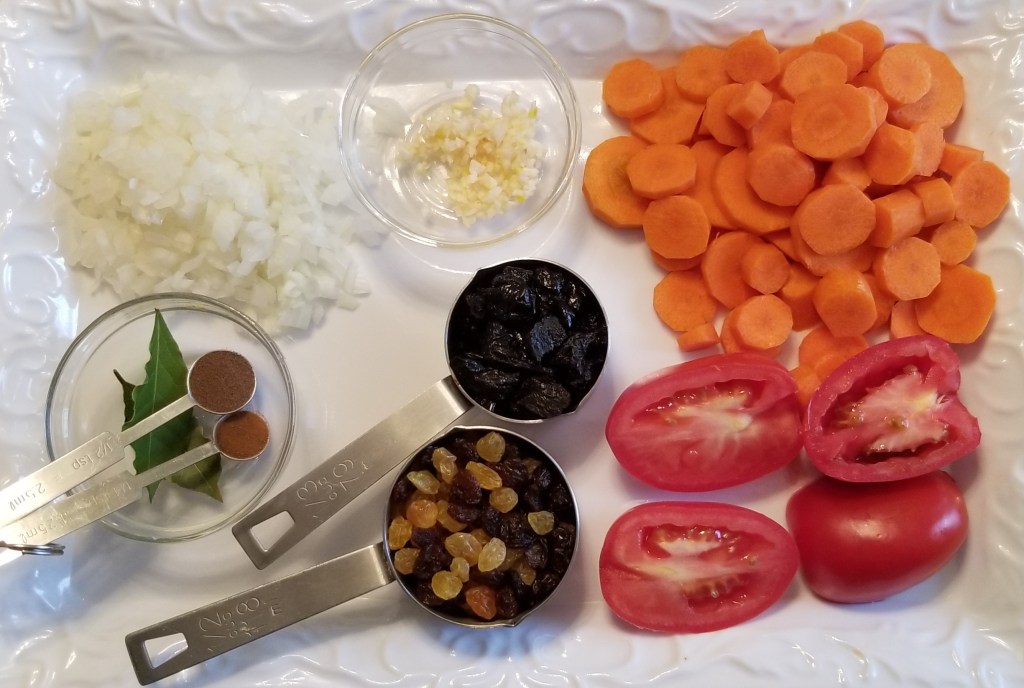
Prepare ingredients, clockwise from top left: finely chop onions; finely chop garlic; for carrots remove ends, peel and slice into coins; slice tomatoes in half lengthwise, and remove stem spots; coarsely chop prunes; I am using half Thompson and half golden raisins; and measure spices:
Counter clockwise from top right: Open cans of peas and pineapple, drain liquid from both cans into a measuring cup; reserve half the can of pineapple for a different recipe, then cut up the rest into chunks, place peas in a bowl; set up pickled jalapeños with their vinegary liquid; chop cilantro stems and leaves separately into two bowls:
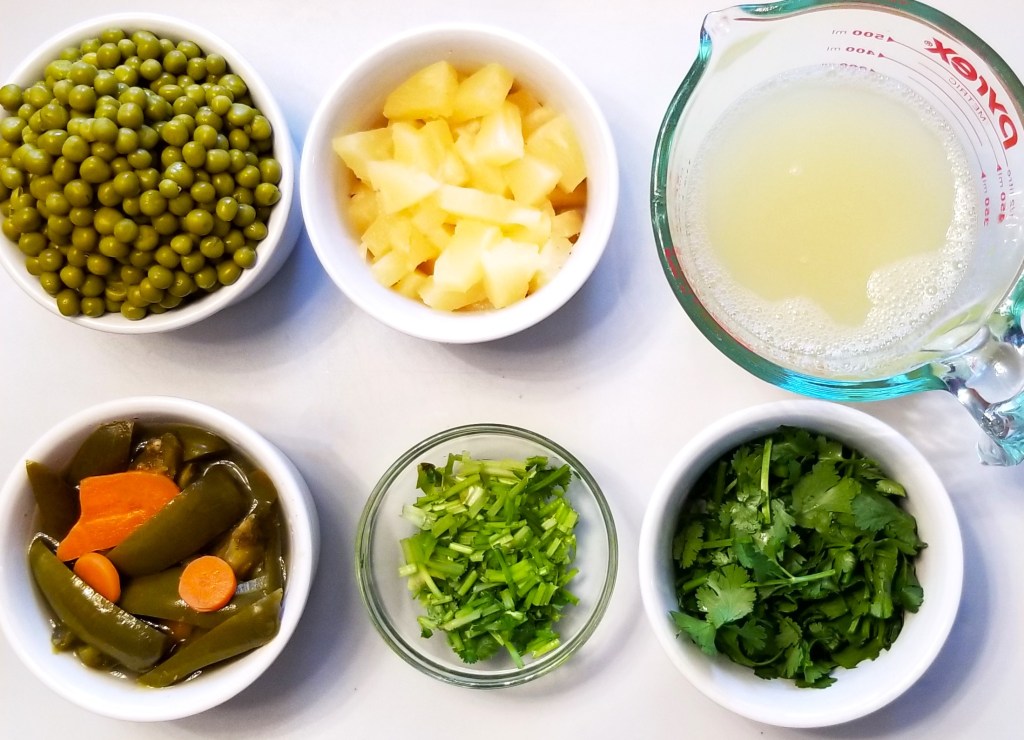
I collected about one and a half cups of liquid from the cans. Top up with water as needed, to complete two cups of liquid.
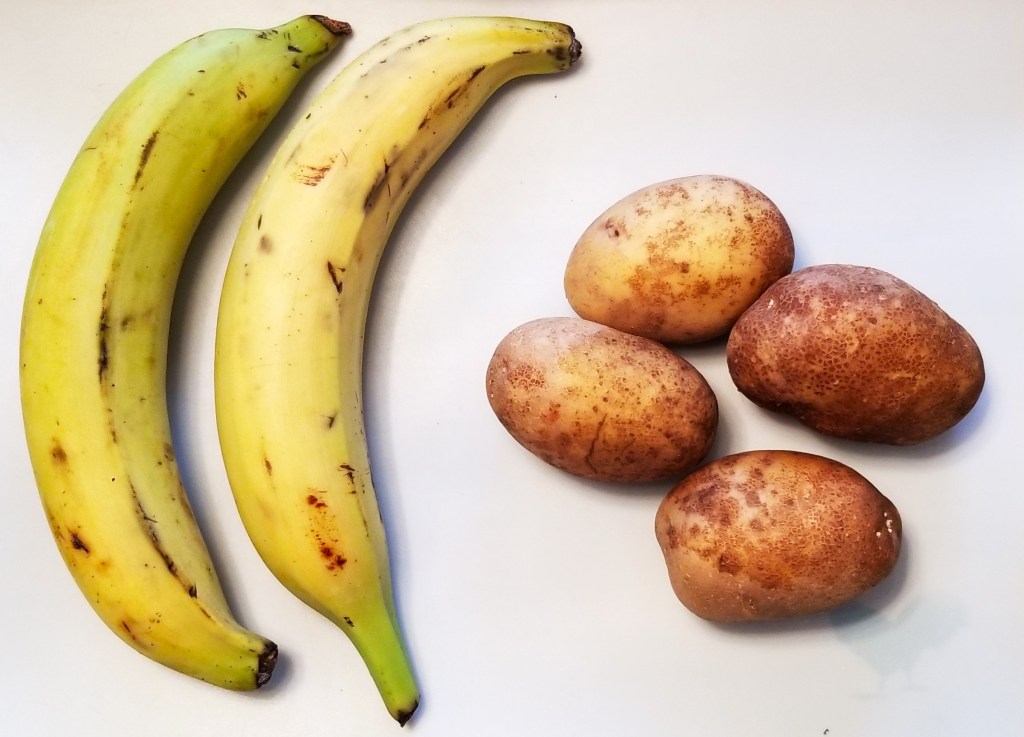
Keep washed plantains and potatoes whole until ready to use, so they will not turn dark:
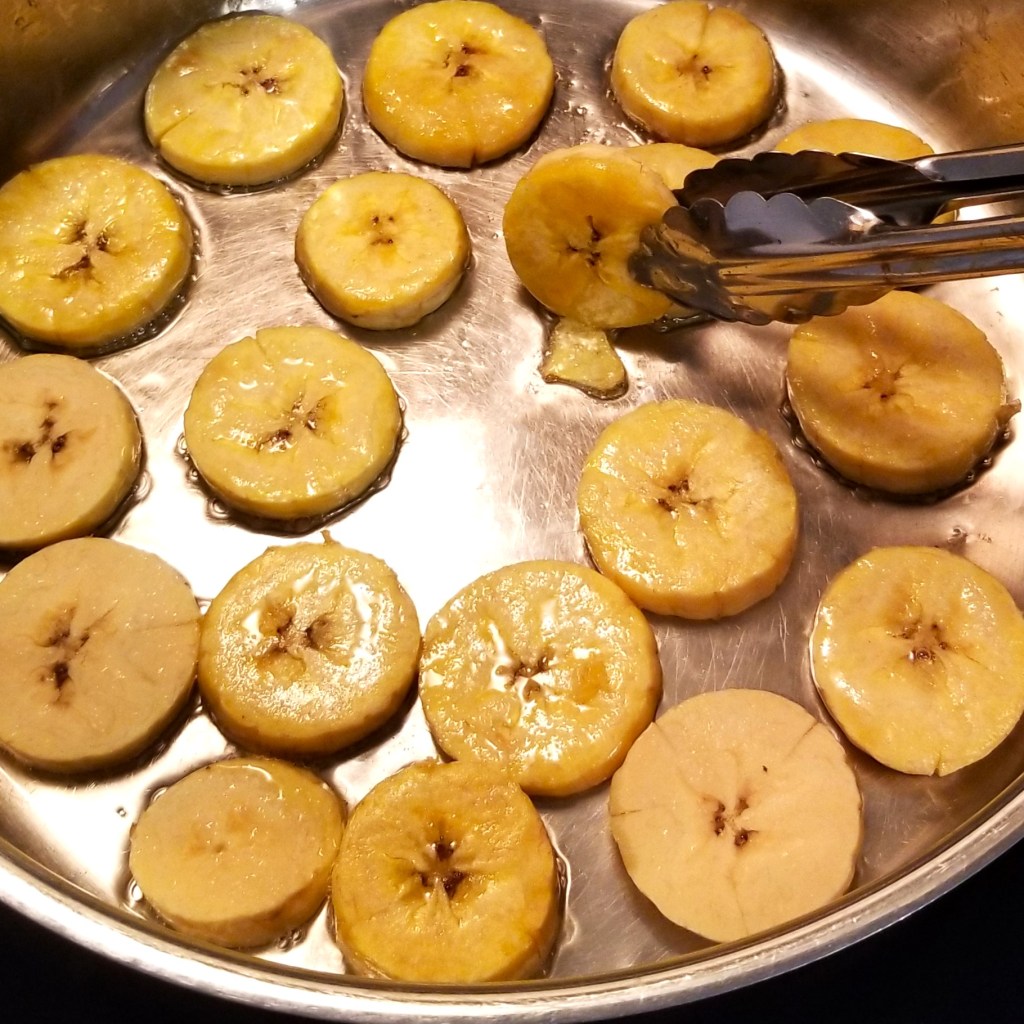
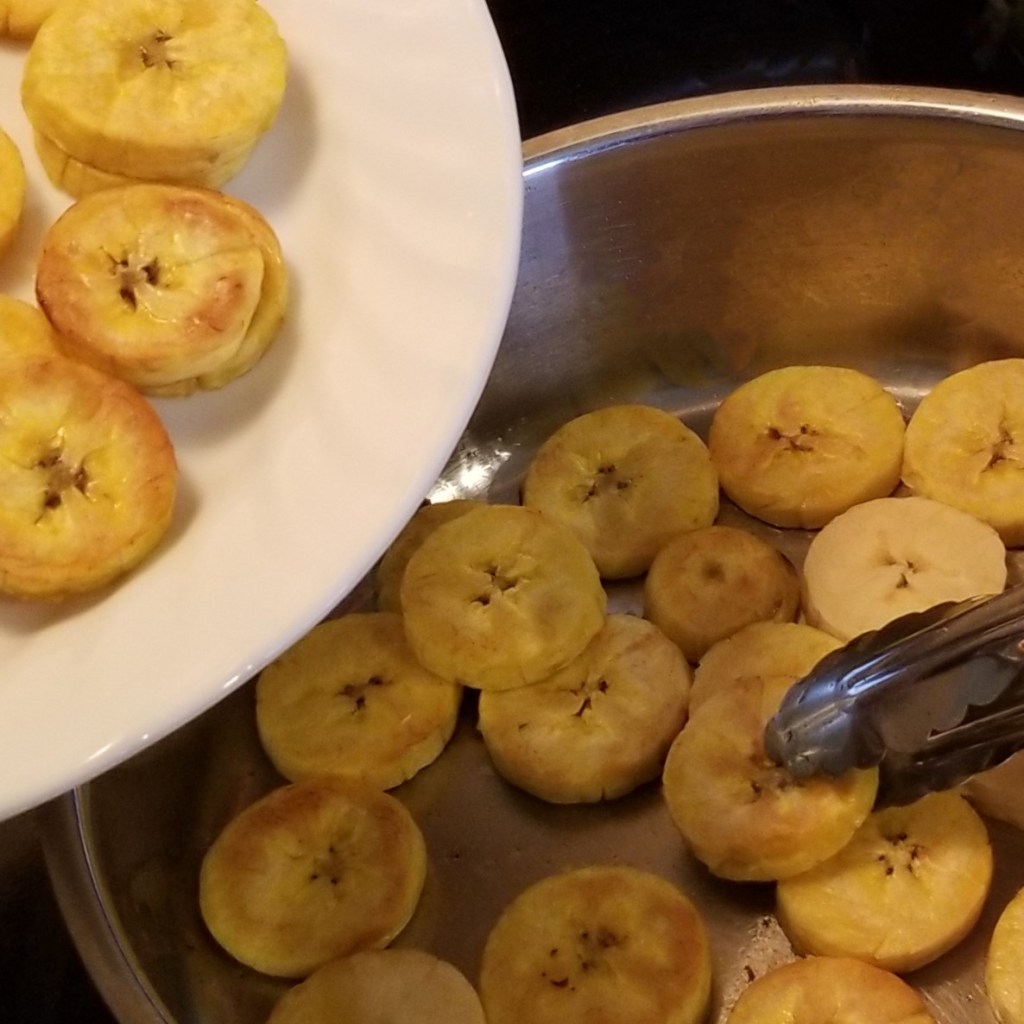
Warm up one tablespoon of oil in a large, wide pan over medium heat. Peel plantain and slice into coins; add to the pan, in a single layer, in two batches if necessary, turning to brown on both sides (photo below, left). Continue frying until they are crispy, then transfer to a plate and repeat with the rest (photo below, right):
Reserve.
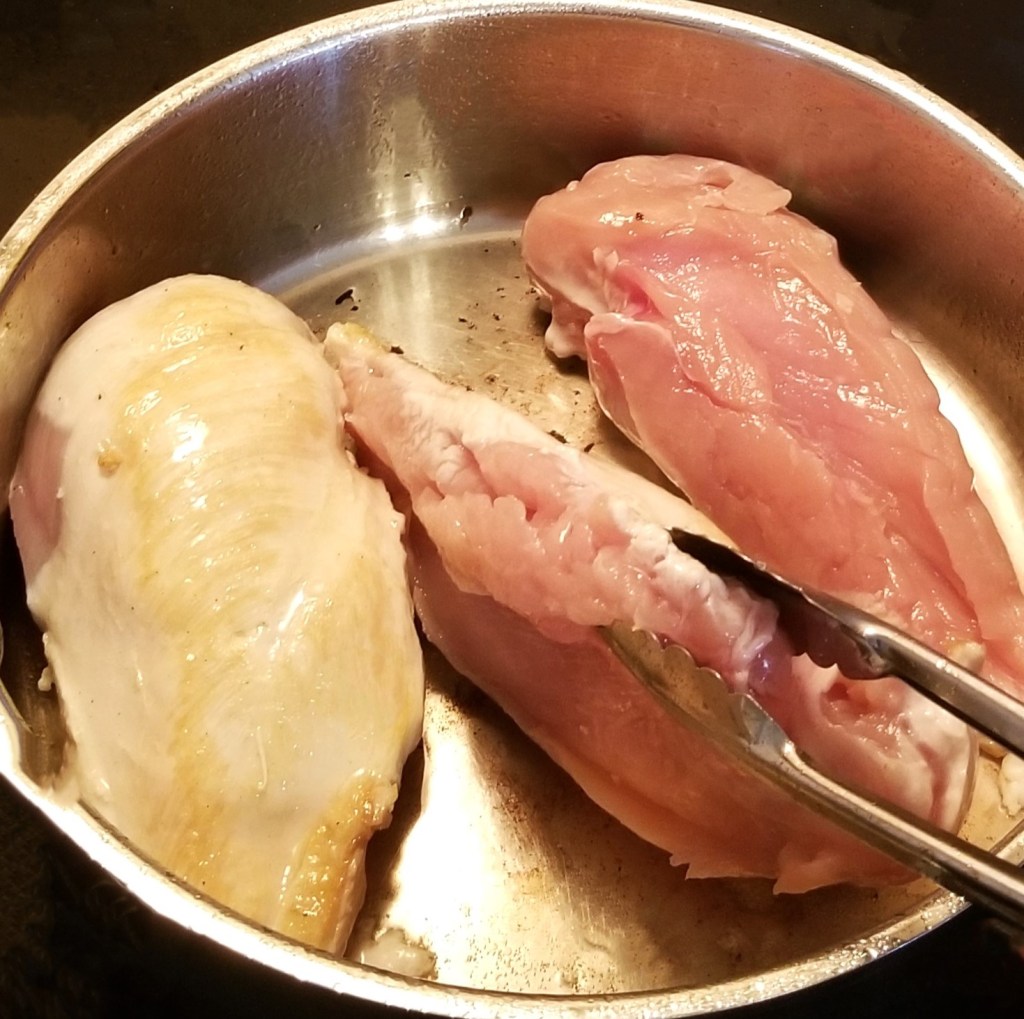
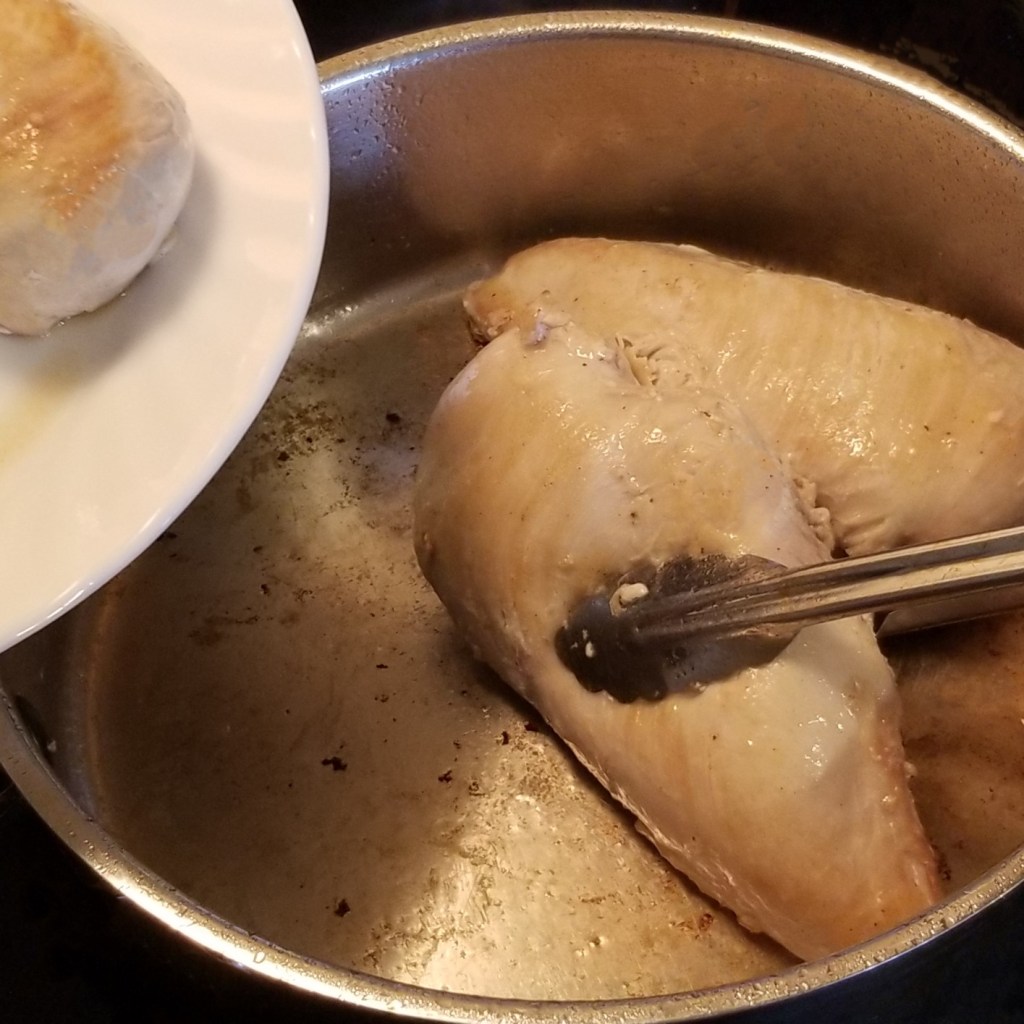
Add another tablespoon of oil to the same pan, and fry the pieces of chicken, again, in batches, if needed, turning to sear on all sides (photo below, left). Transfer to a plate, and repeat with the rest of the chicken pieces (photo below, right):
NOTE: When using bone-in thighs, drumsticks, etc. it is not necessary, but these pieces were quite large breasts, so I divided them into thirds at this point, easily done because they were boneless and skinless.
Reserve.
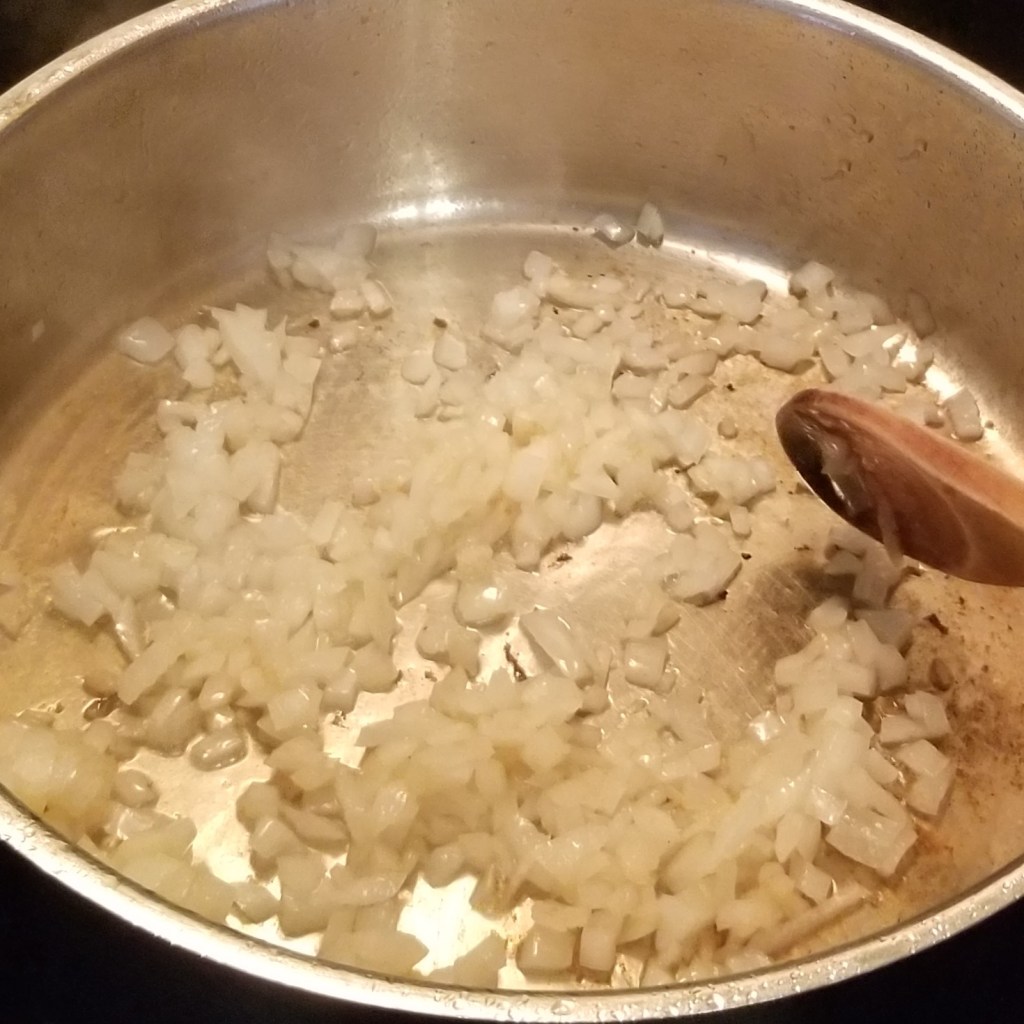
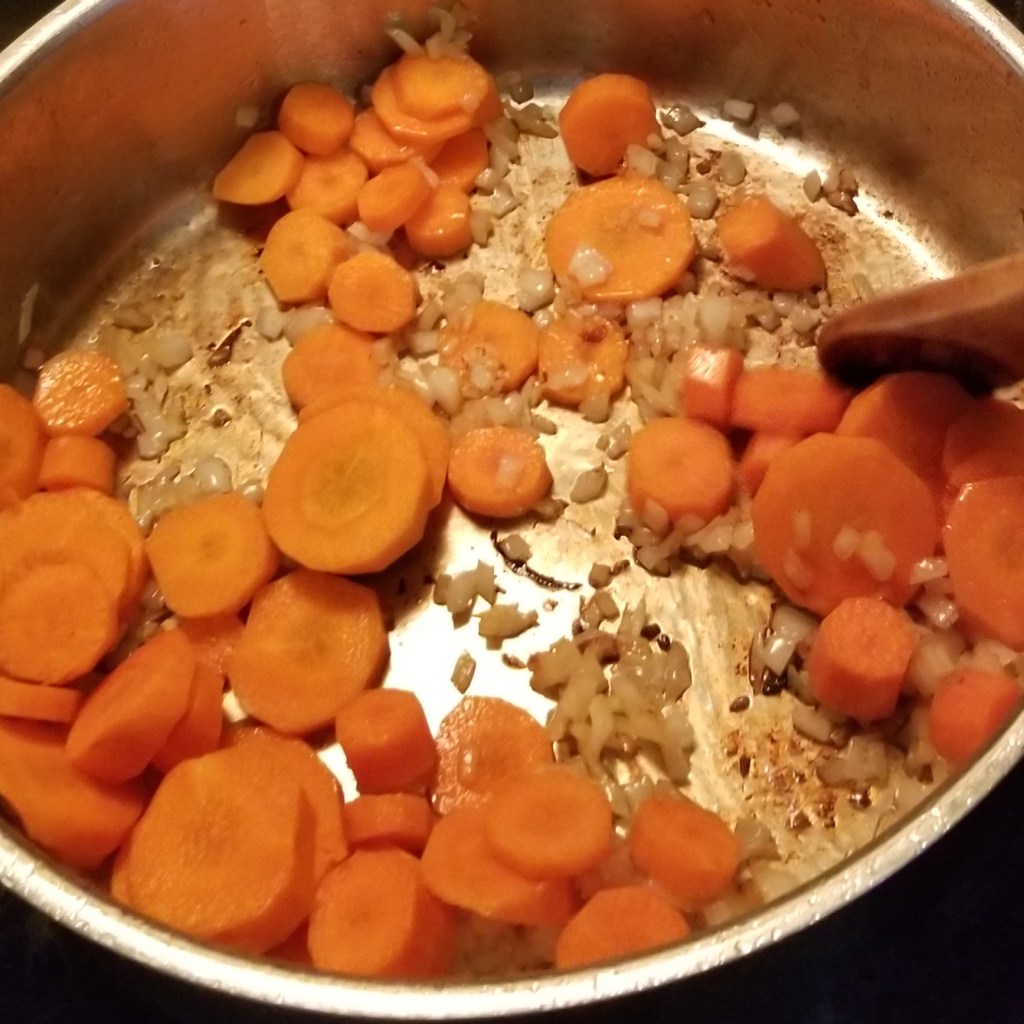
Add the last tablespoon of oil to the same pan; add chopped onions and sauté until translucent (photo below, left). Add sliced carrots, mixing to coat with the oil and onion (photo below, right):
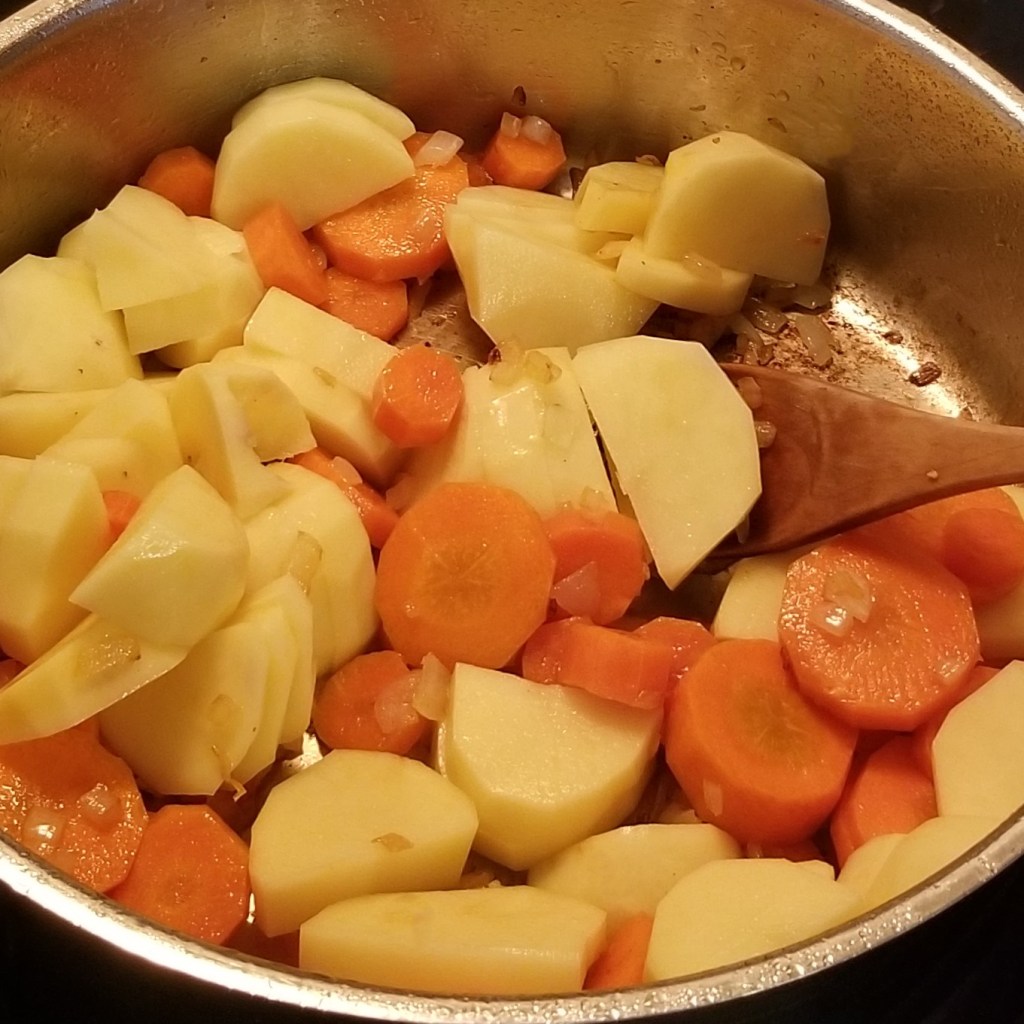
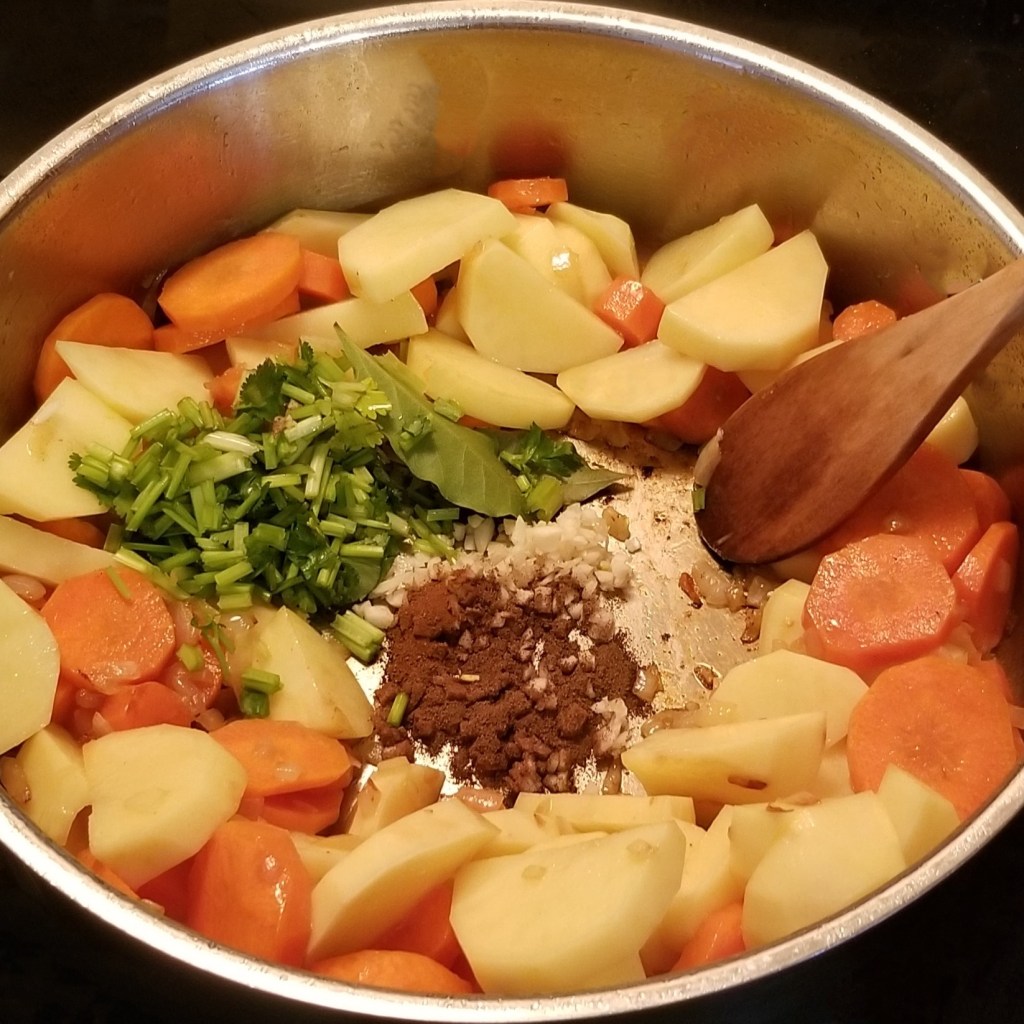
While the carrots cook for a couple of minutes, peel and slice the potatoes. Add to the pan and mix in (photo below, left). Push veggies to the side, making an opening in the centre of the pan, then add all-spice, cloves, garlic, bay leaves and cilantro stems (photo below, right):
Stir to allow the spices and aromatics to bloom, while preventing them from burning. After a few seconds, add raisins and prunes (photo below, left), then pour in a little of the reserved liquid, scraping any brown bits from the bottom of the pan (photo below, right):
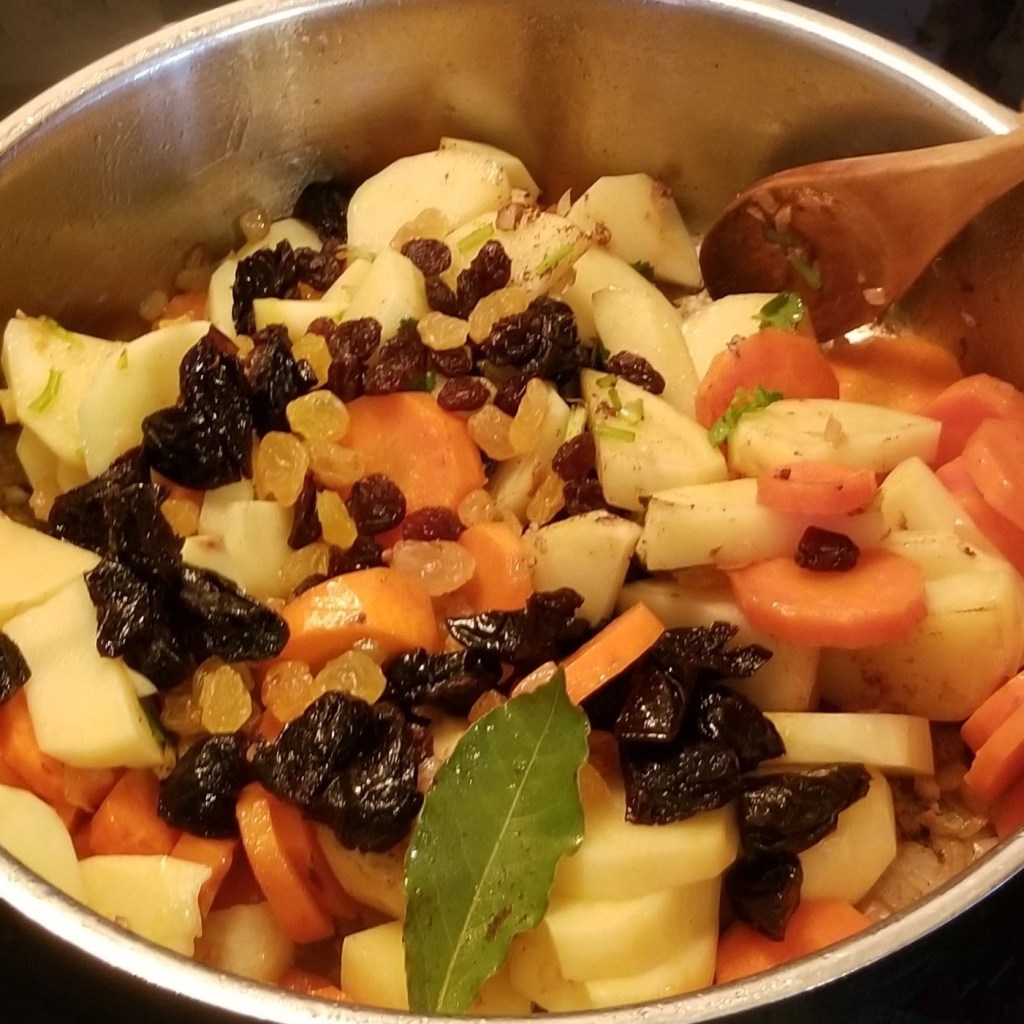
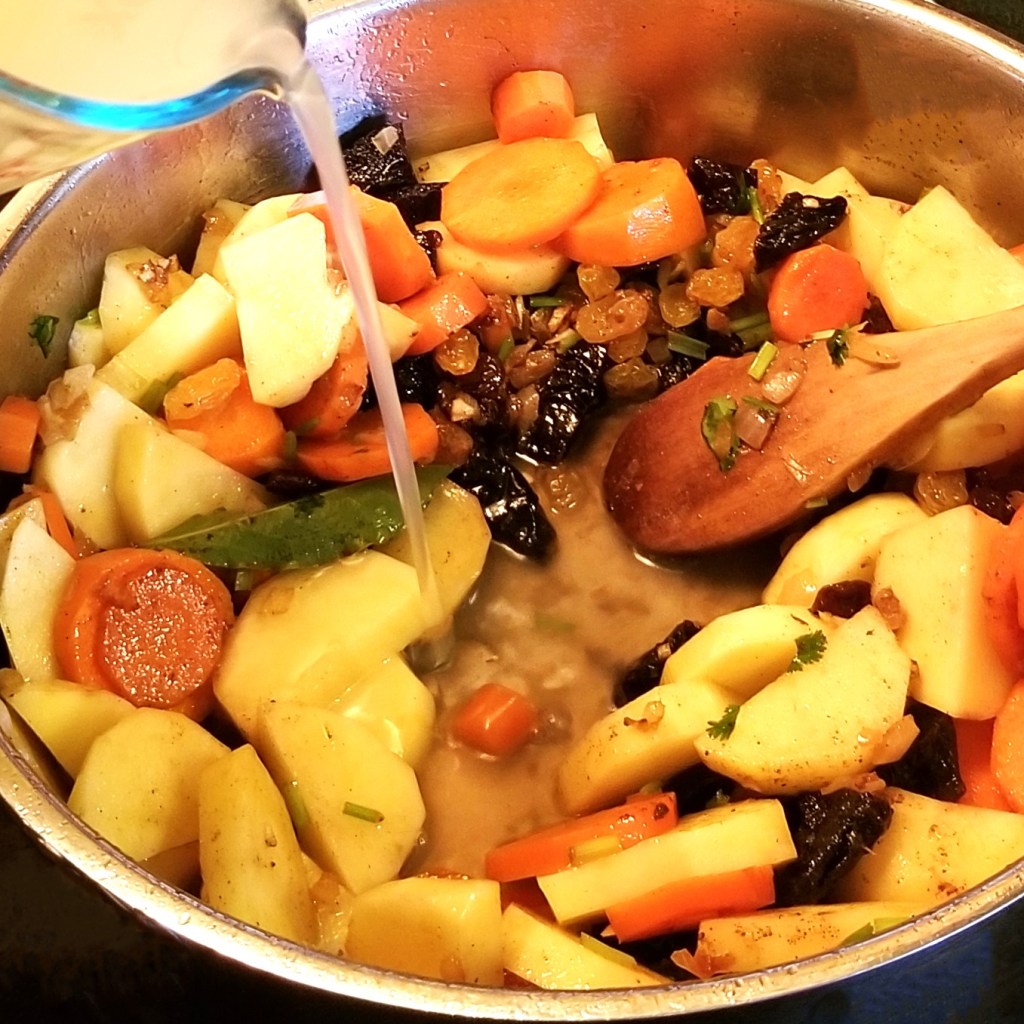
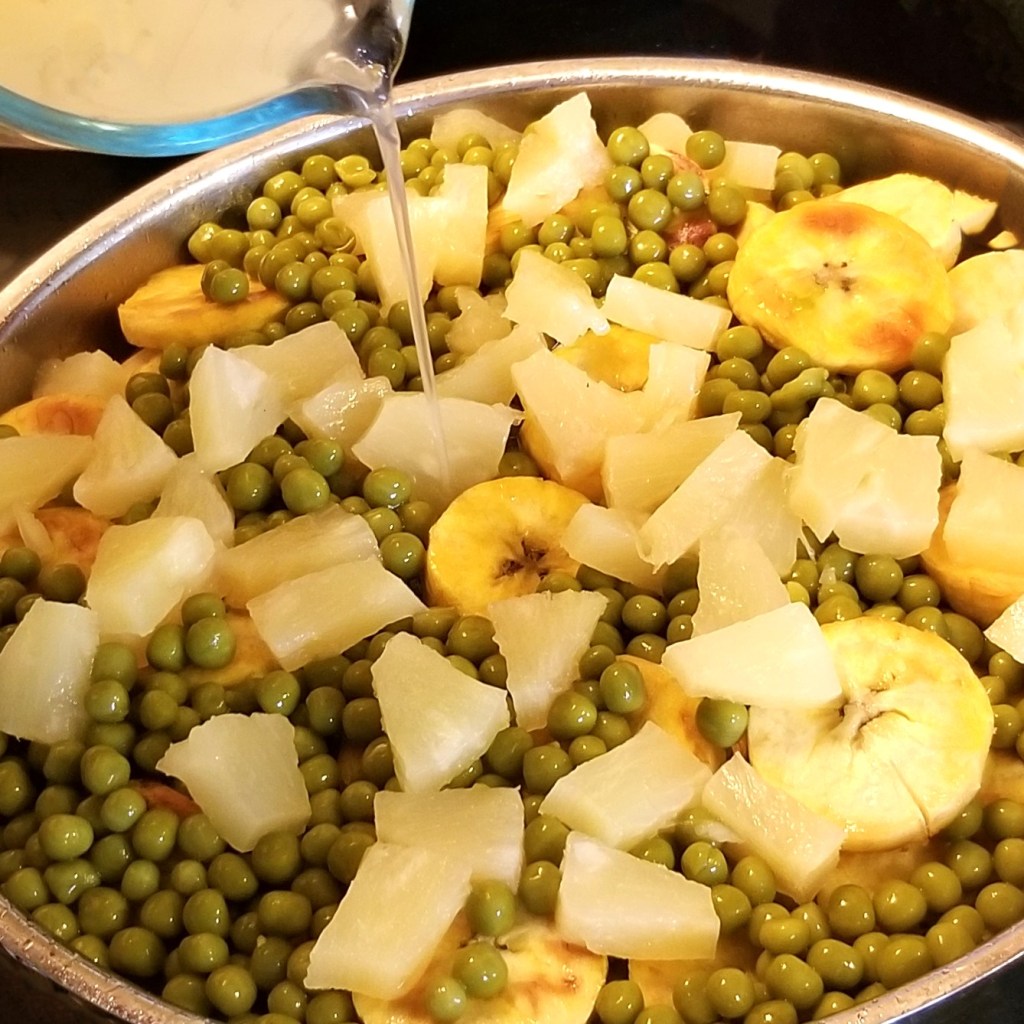
Tuck in the seared chicken (photo below, left). Arrange peas, fried plantain and pineapple chunks on top, then pour in the rest of the liquid (photo below, right):

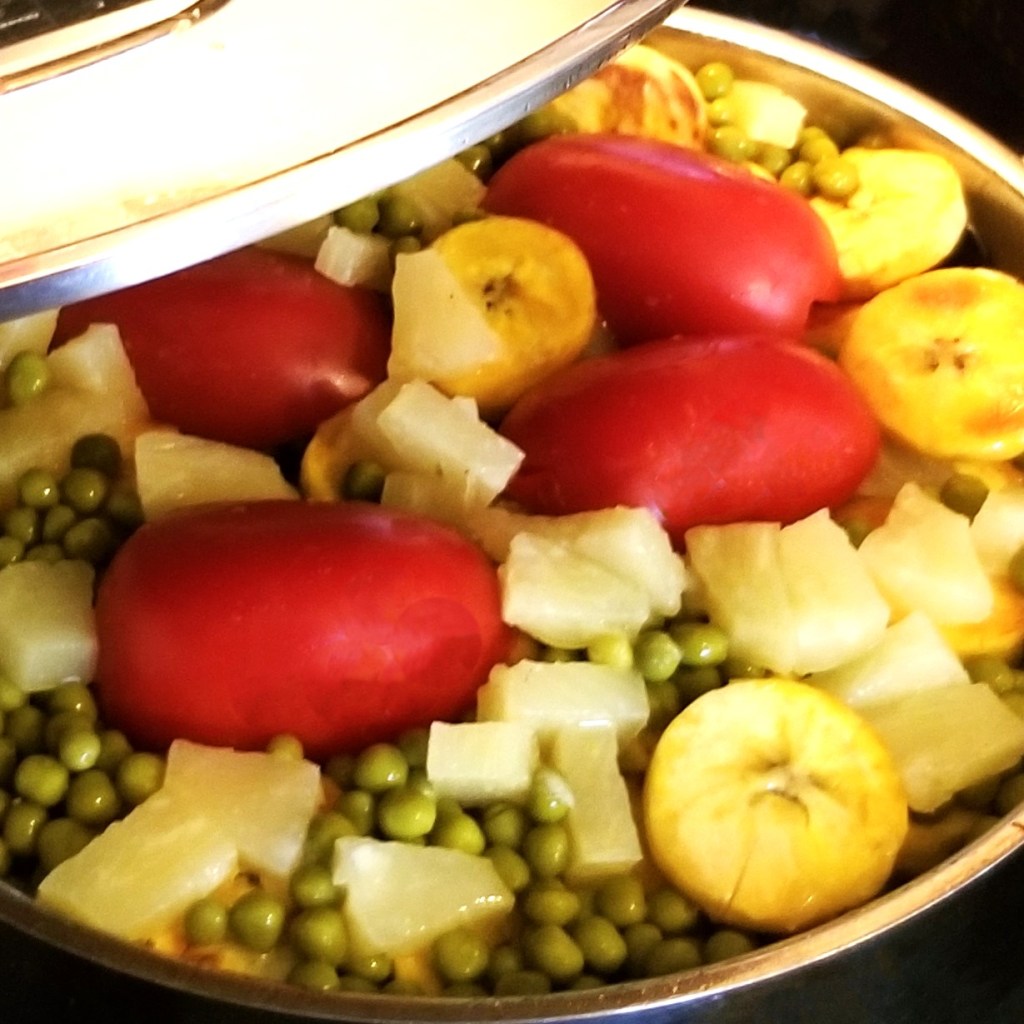
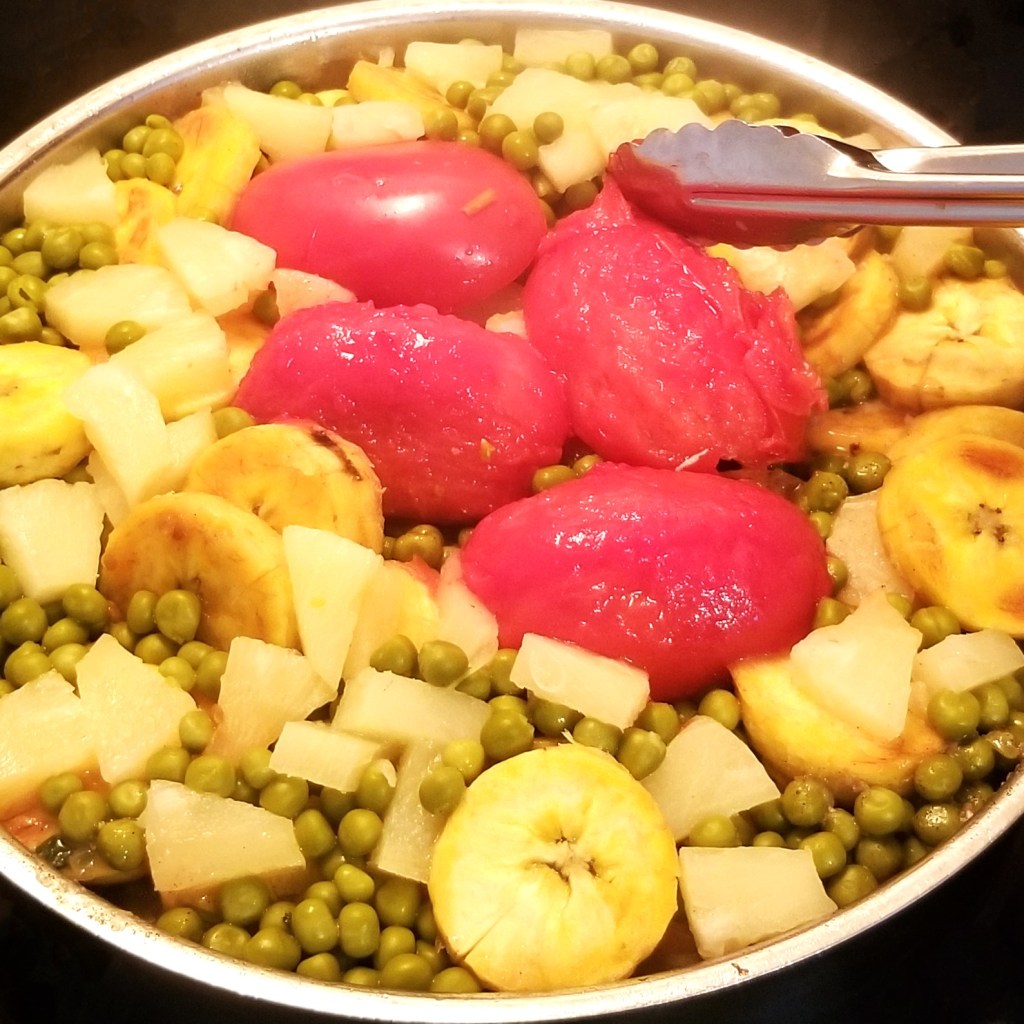
Place halved tomatoes on top, cut side down, then cover the pan (photo below, left). Allow to cook until the tomato skins begin to wrinkle, about three minutes, then uncover pan; pick and discard the tomato skins, using a fork, or kitchen tongs (photo below, right):
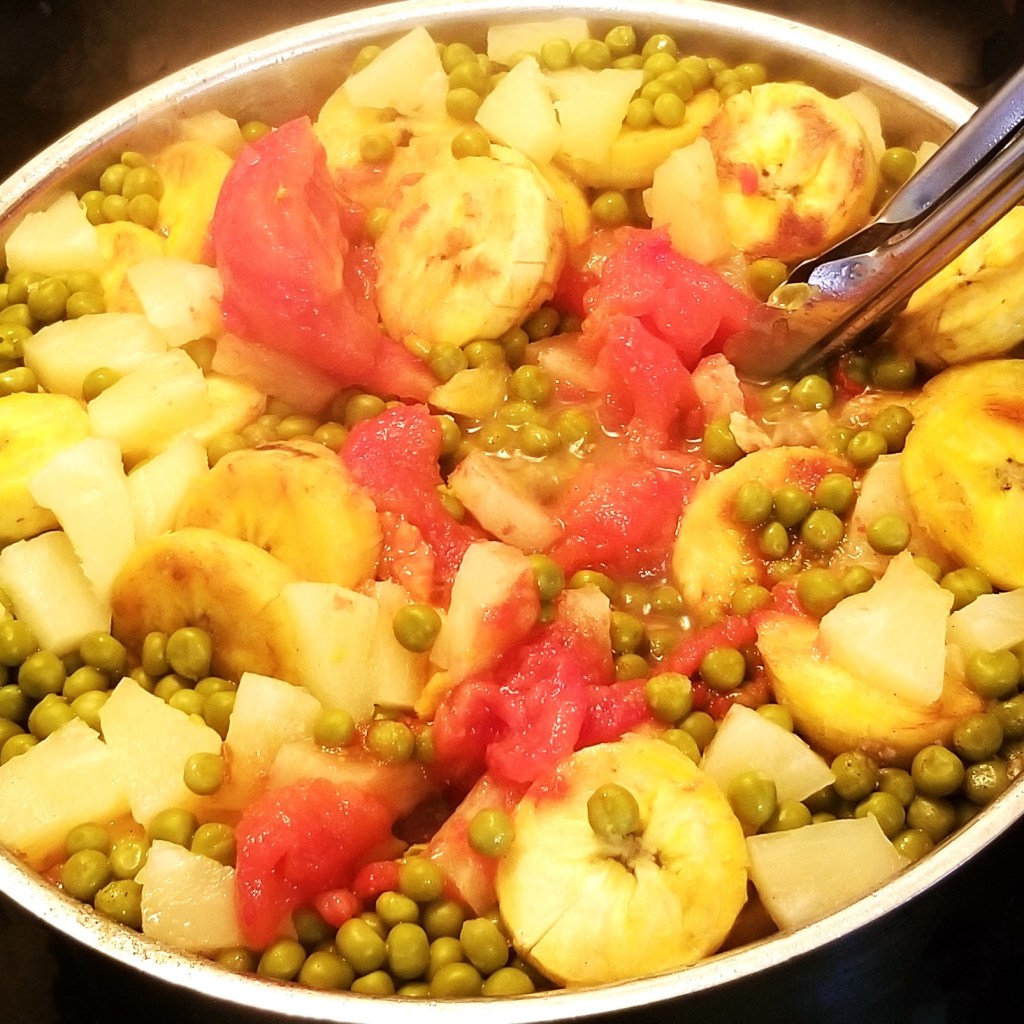
Break up the tomatoes, and push down into the mix (photo below, left). Season with salt and pepper, to taste (photo below, right):

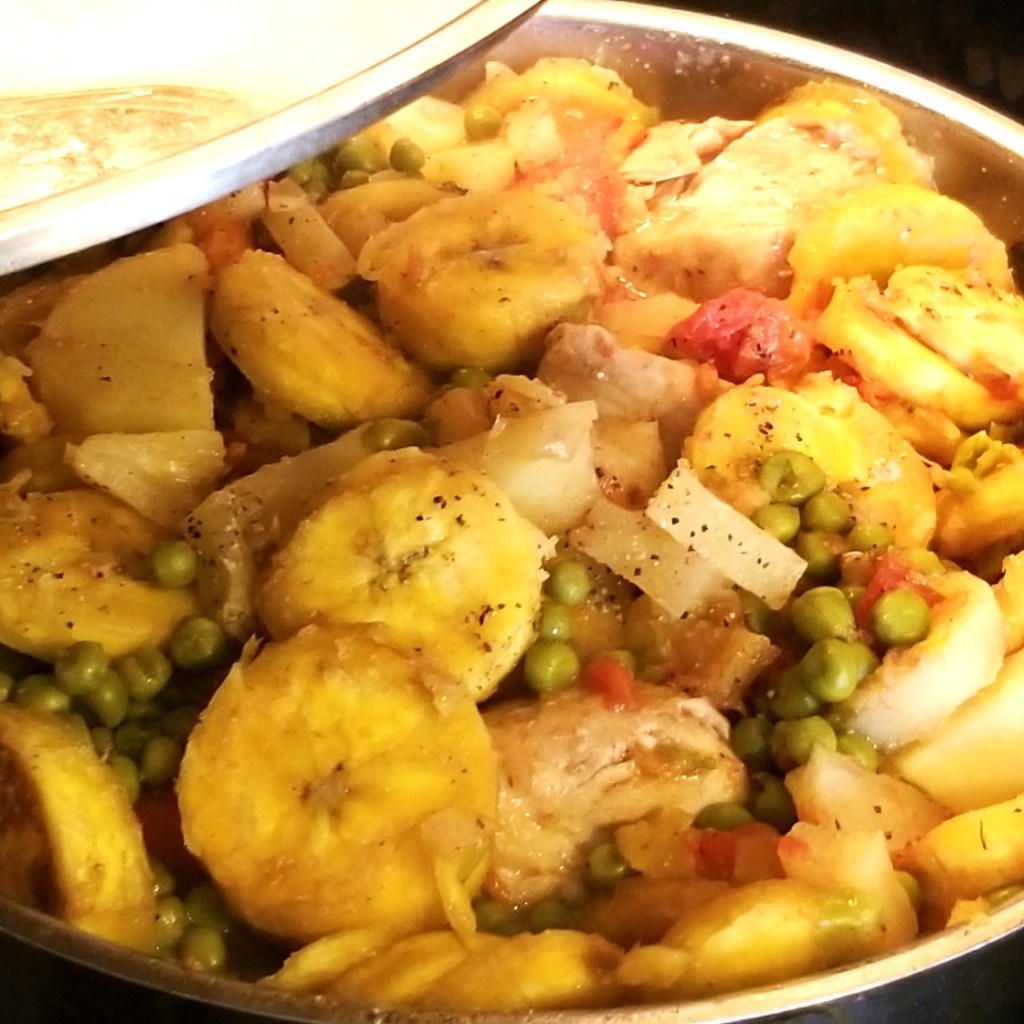
Bring to a boil, then reduce to a simmer, and cover (photo below, left). Cook until chicken is fully cooked (15 to 30 minutes, depending on the type used). Uncover, then add jalapeño peppers and/or some of their vinegary liquid, optional (I poured some liquid, and offered the peppers later, at the table, photo below, right):
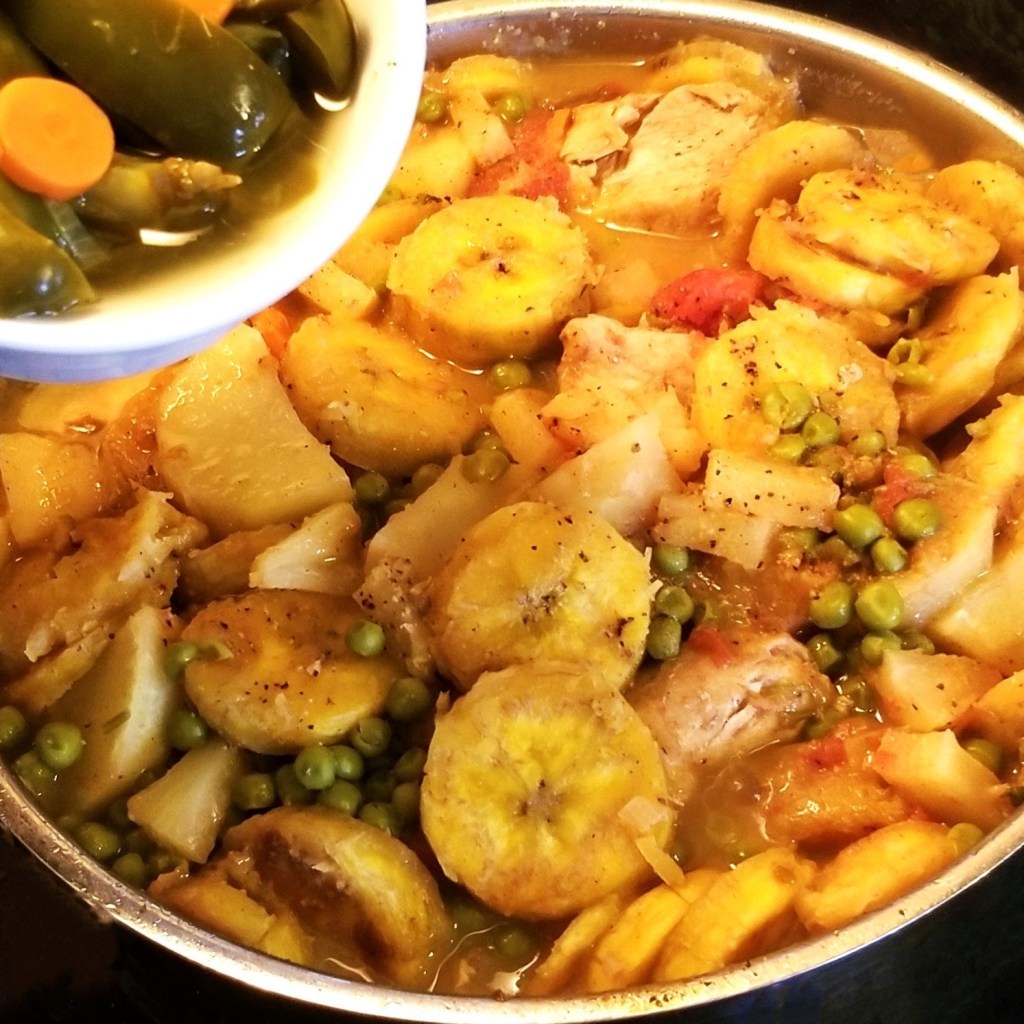
Give it a gentle stir (the potatoes and plantain will be very soft at this point), adjusting seasoning with more salt and pepper, as needed. Just before serving, turn off the heat and top with cilantro leaves:
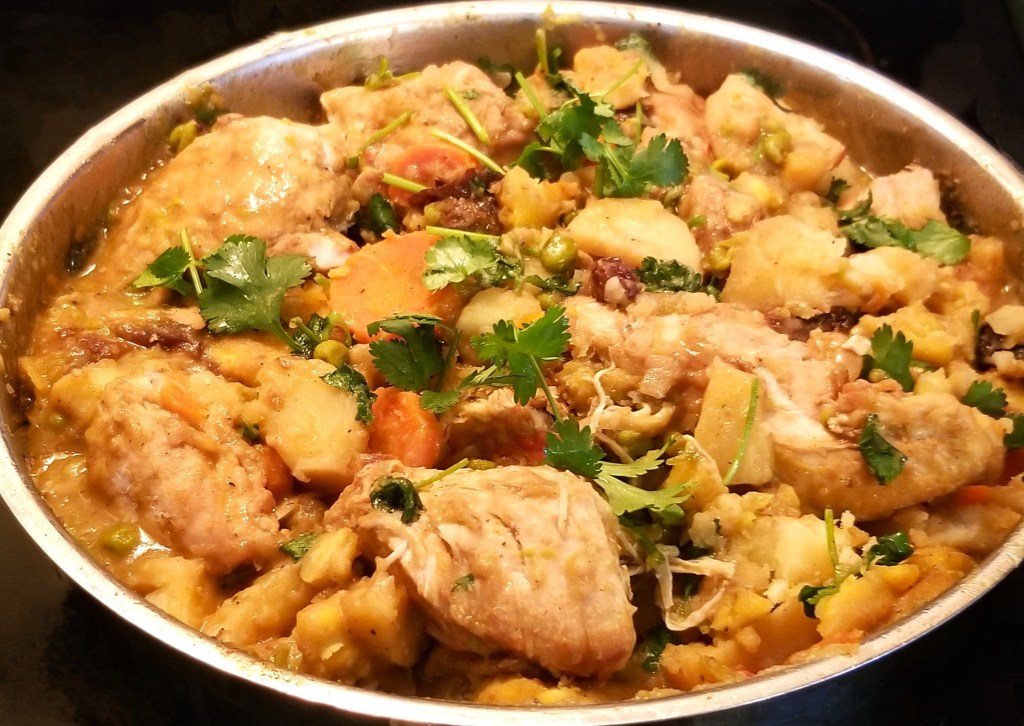
Serve hot with warm corn tortillas, and pickled jalapeños on the side:

For your convenience, click on the highlighted text below for products available on Amazon™. DISCLAIMER: Any reviews included in this post are my own, for items I have purchased, not provided by any company; as an Amazon Associates Program affiliate, I might receive a commission for any purchases originated from the links below, at no extra cost to you. Thank you to readers who have bought other products starting with a click from my links. Here is some food for thought, and for a spicy stew:
I am bringing my recipe to Full Plate Thursday #682 with Miz Helen @ Miz Helen’s Country Cottage.
I am also sharing my post at Thursday Favourite Things #649, with Bev @ Eclectic Red Barn, Pam @ An Artful Mom, Katherine @ Katherine’s Corner, Amber @ Follow the Yellow Brick Home, and Linda @ Crafts a la Mode.
I am joining Fiesta Friday #526 with Angie @ Fiesta Friday, this week co-hosting with Jhuls @ The Not So Creative Cook.
I am sharing my recipe at What’s for Dinner? Sunday Link-Up #462 with Helen @ The Lazy Gastronome.



 My Slice of Mexico
Another big pot recipe that looks fabulous full of so many flavours. I thought the peas would be mushy being cooked for that length of time or is mushy peas part of the dish? I would throw frozen peas in at the end otherwise.
Thanks for joining in Irene 🙂 🙂
LikeLike
I think old Mexican dishes like the mushy texture, mine were ok because the breast pieces cooked in 15 minutes, but for bone in chicken it might not be a bad idea to wait before adding the peas. And also, the potatoes should be thick half moons, or they will disappear (again, some cooks like that for a supper thick sauce). Thanks for hosting, Brian.
LikeLiked by 1 person
I like mushy in some meals and my potatoes firmish. I had the disappearing potatoes in a lamb casserole a while ago 😅
LikeLiked by 1 person
🤭
LikeLiked by 1 person
I think, like bushboy, that I would add frozen peas at the end. Canned peas just don’t look very appetizing to me. Otherwise looks like a wonderful, spicy and healthy stew!
LikeLiked by 2 people
Irene,
This looks so yummy! Congratulations, you are being featured on TFT. I hope you stop by. https://www.eclecticredbarn.com/2024/03/what-is-for-dinner-on-tft.htmlHugs,Bev
LikeLike
Thank you, Bev, and thank you for hosting, see you there!
LikeLike