
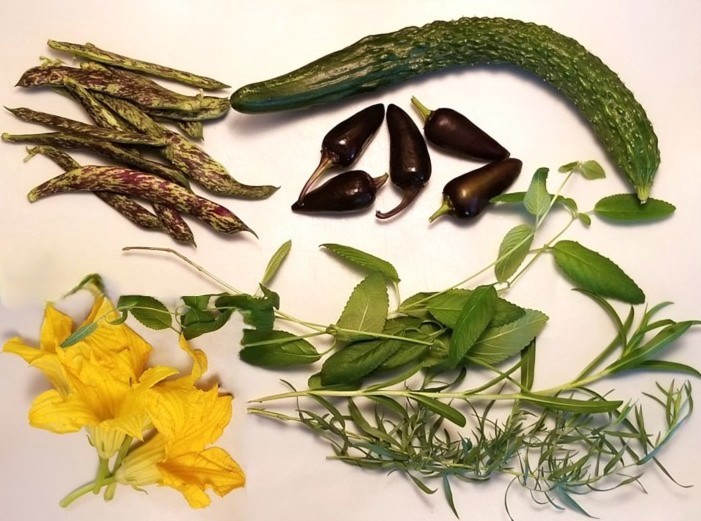
There has been definitely a change in weather in the last couple of weeks. The fresh breeze and sunny, dry days announce the end of summer, and the change in leaf colours and slowing growth are sure signs of the upcoming fall season. My harvest this week was not bad, though, and I am still seeing a lot of flowers and developing fruit in many of my crops. In the photo above, six types of harvest, from herbs to flowers to pods and fruit, clockwise from top left: dragon tongue beans, cucumber, black Hungarian peppers, Mexican oregano, Tarragons (Mexican and French), and squash flowers.
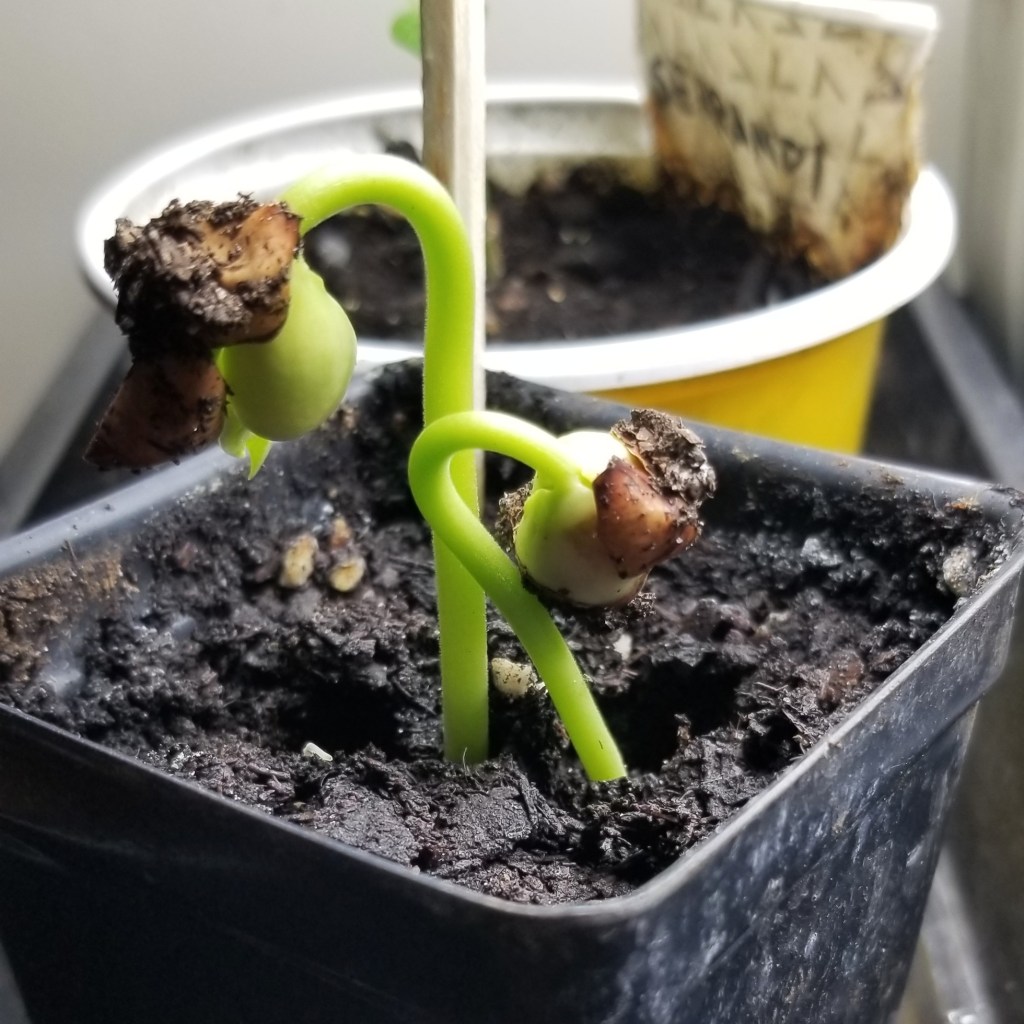
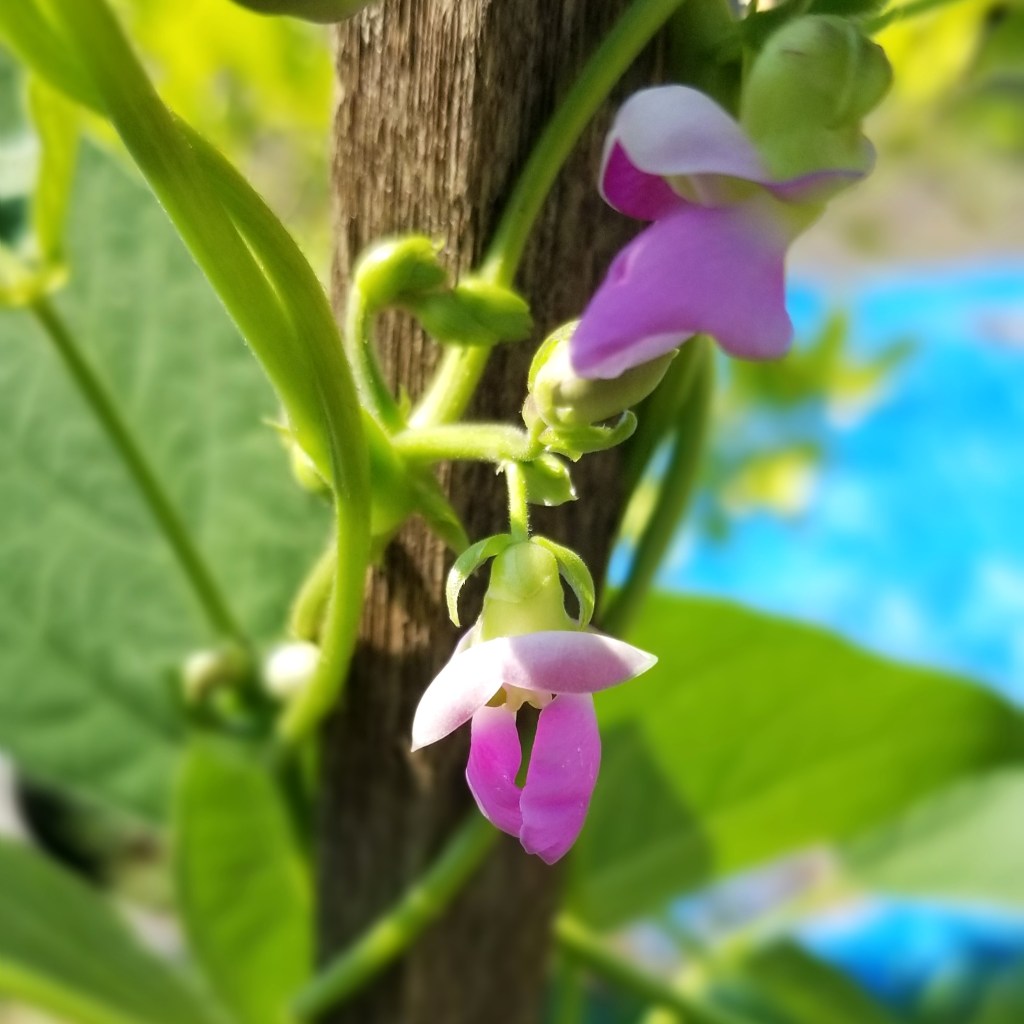
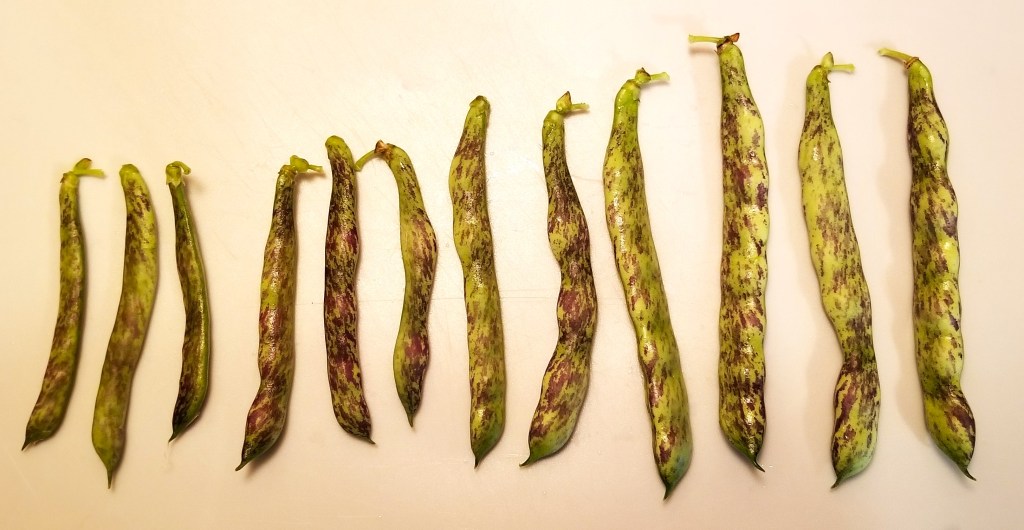
As I have mentioned in a couple of my previous posts, my daughter gave me a few dragon tongue seeds, which I started indoors in the spring (photo below, left). Once transplanted outside, they proved adaptable; growing taller than expected, they developed pretty pinkish flowers (photo below, centre). The pods started as thin green sticks, and then became longer and wider, with showy purple stripes (photo below, right):
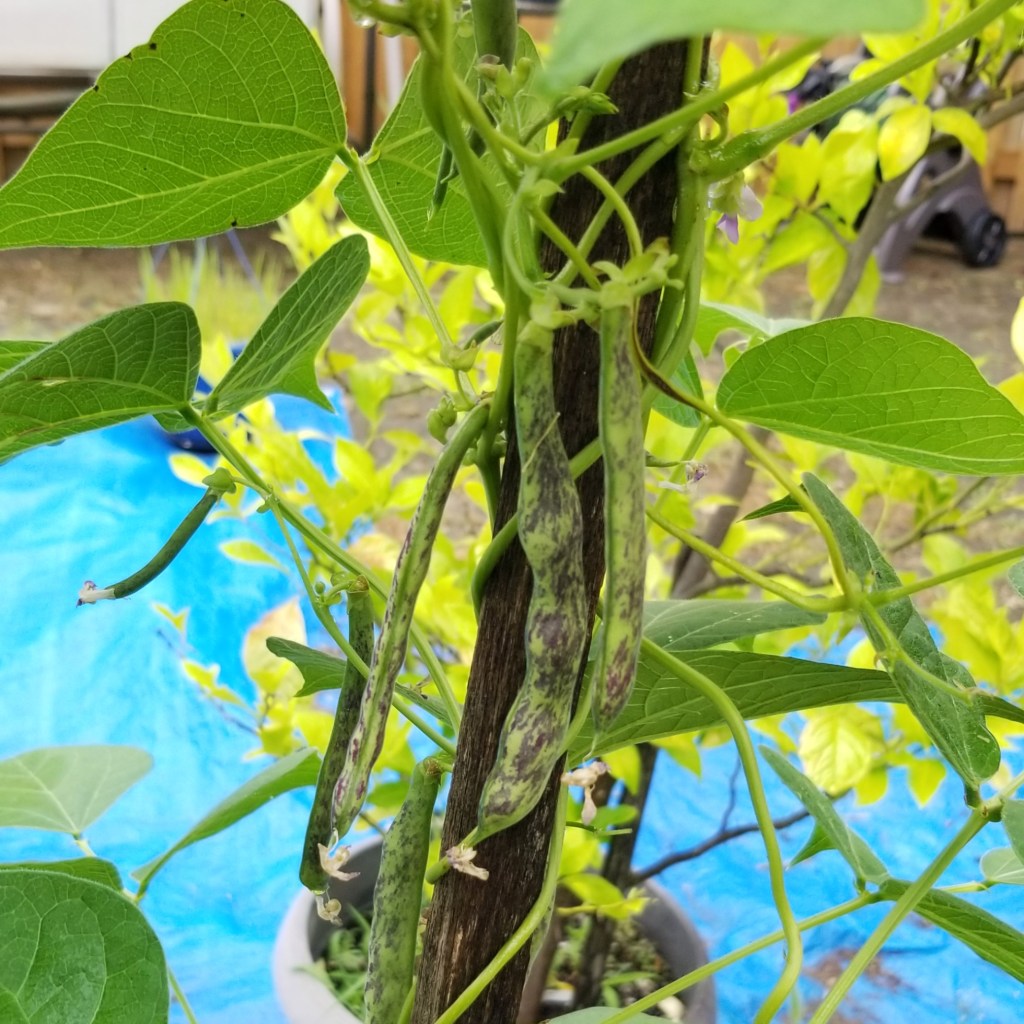
The pods are edible at any stage:
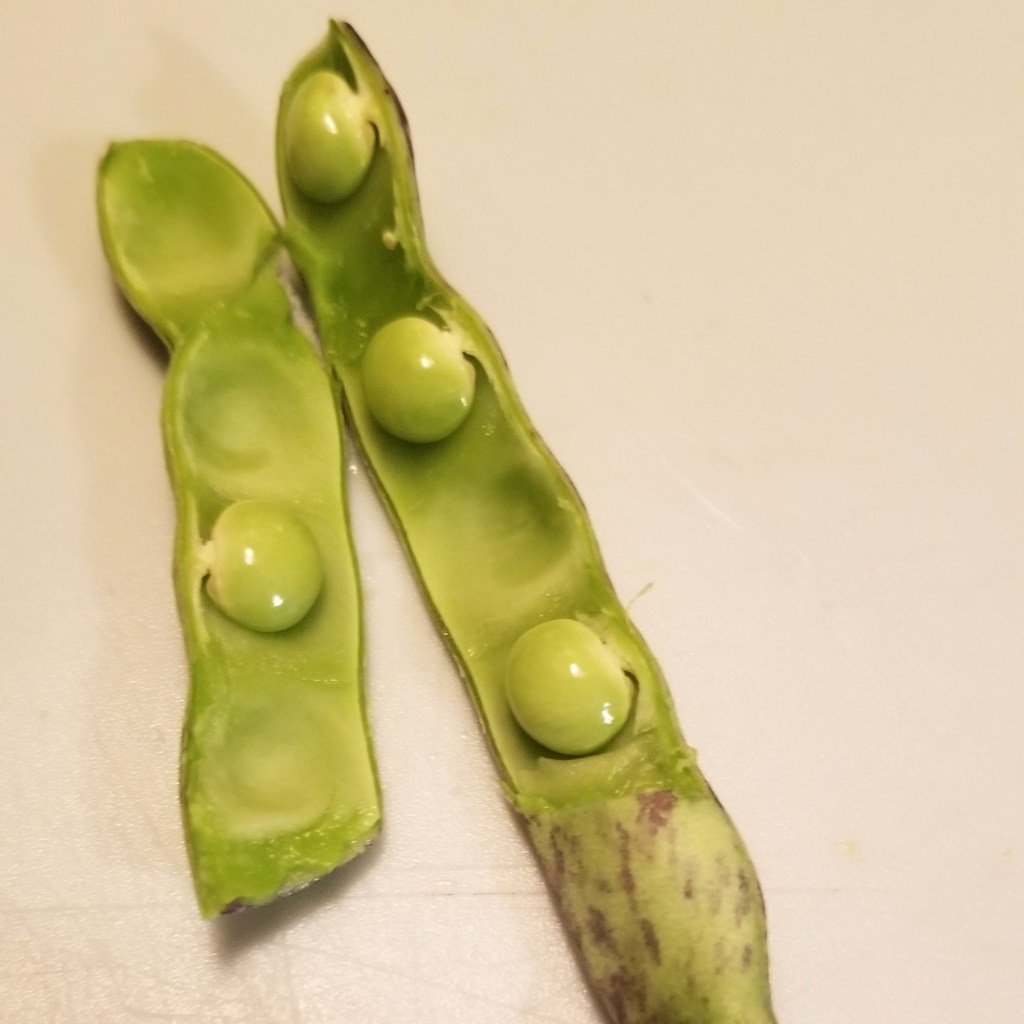
The beans may also be eaten from early stages, even when still green:
I harvested a couple of good batches of pods, and ate a few of the green beans; I am letting the rest of the pods on the vines:

These pods will mature into fresh shelling beans, and some will dry for next year’s seed.
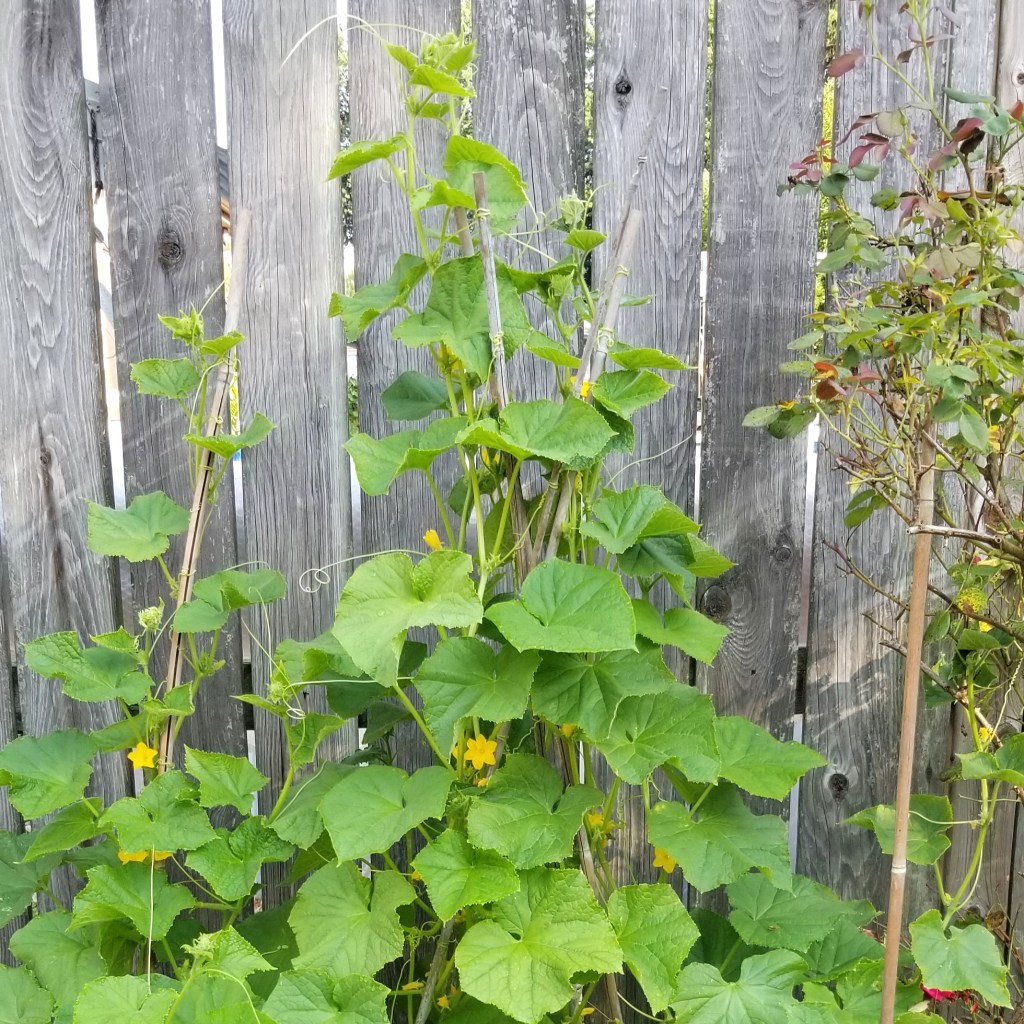
For some reason or another, my cucumber vines are usually healthy, but do not start blooming and producing fruit until late summer. This year has not been the exception, with bright green, large leaves on strong vines, growing all through July and August (photo below, left), and growing small cucumbers only as of last week (photos below, centre and right):
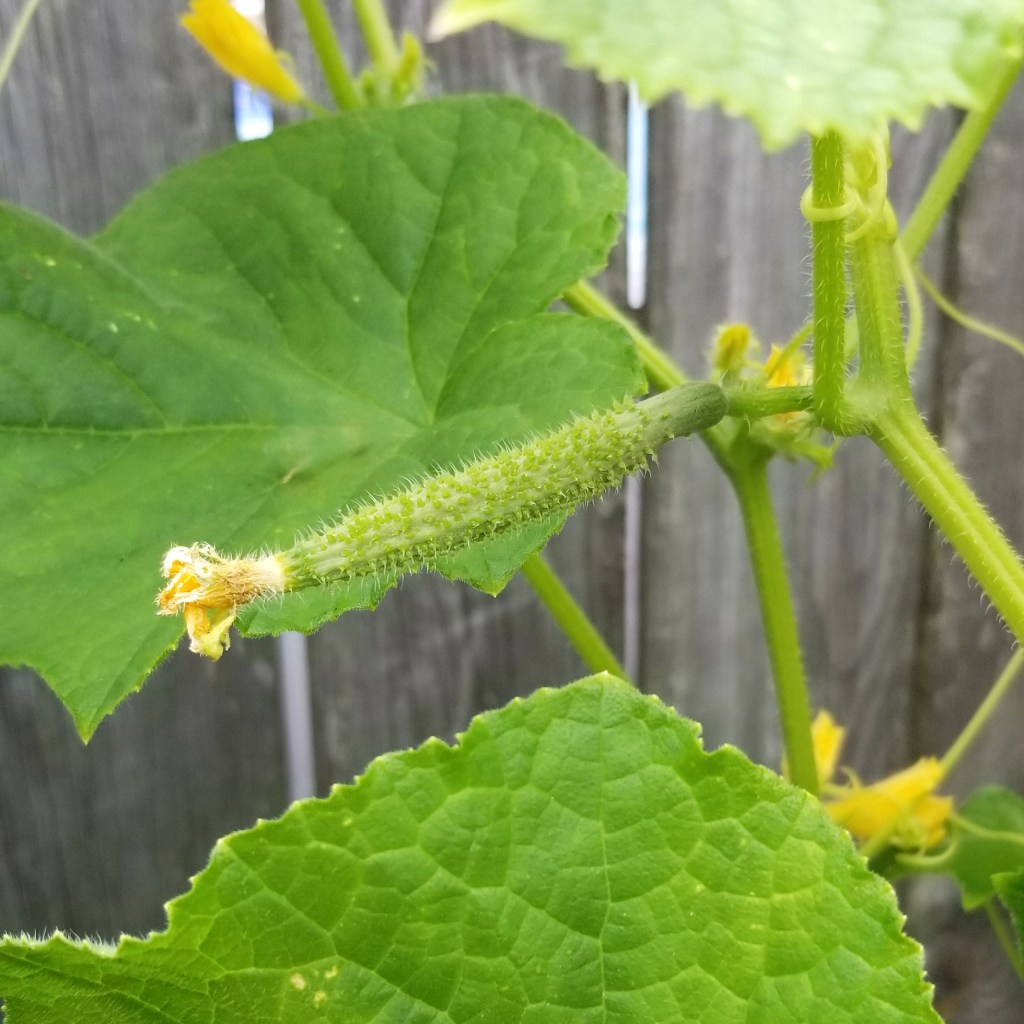
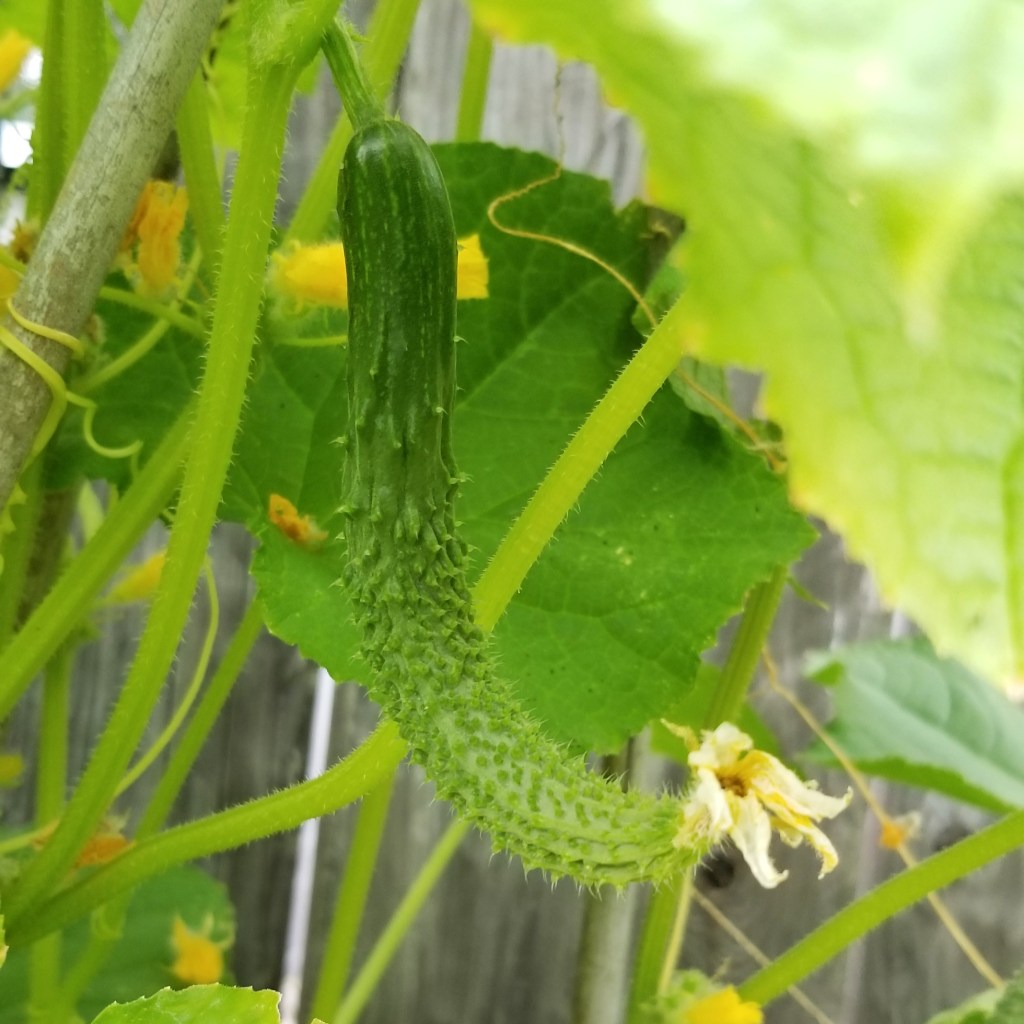
The cucumber at the top of the post is only the first ready to pick, but there are at least another ten on the vines, hopefully they will have a chance to mature before the cold weather arrives.
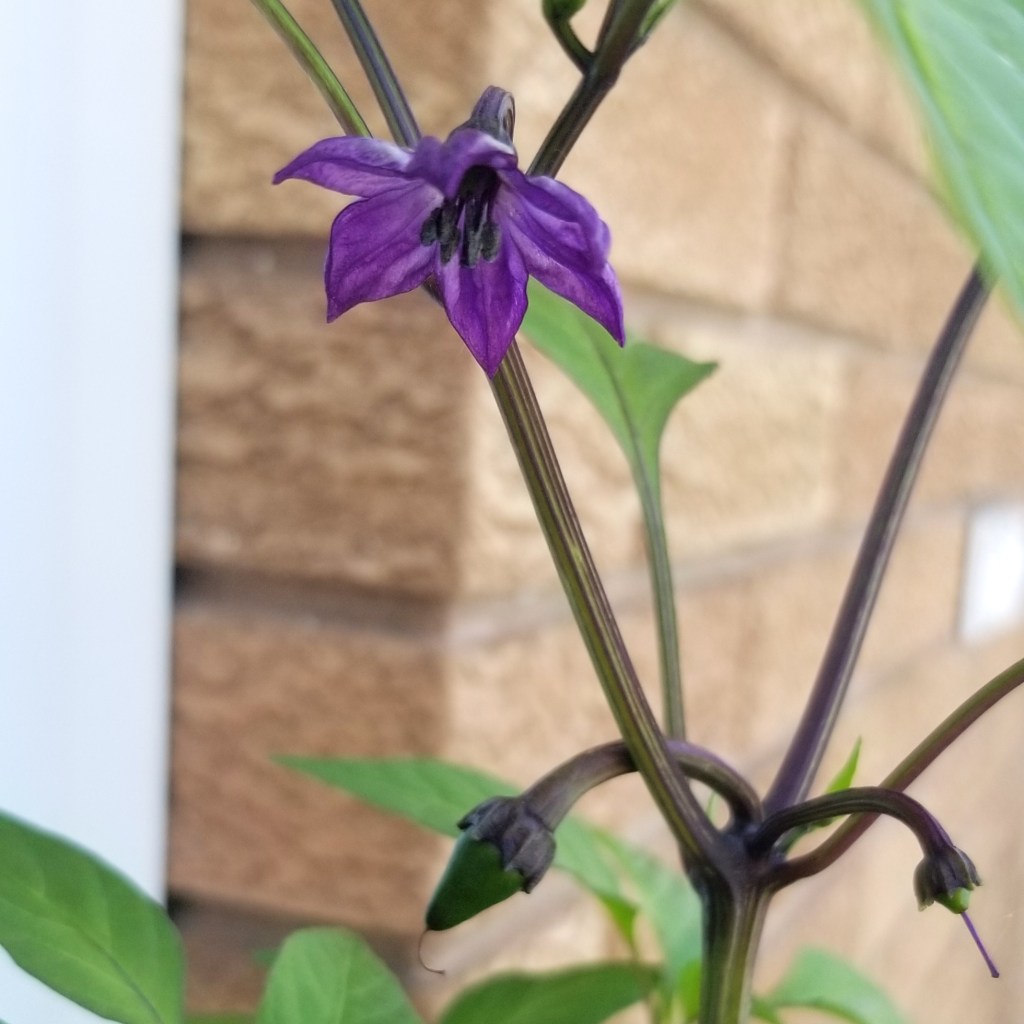
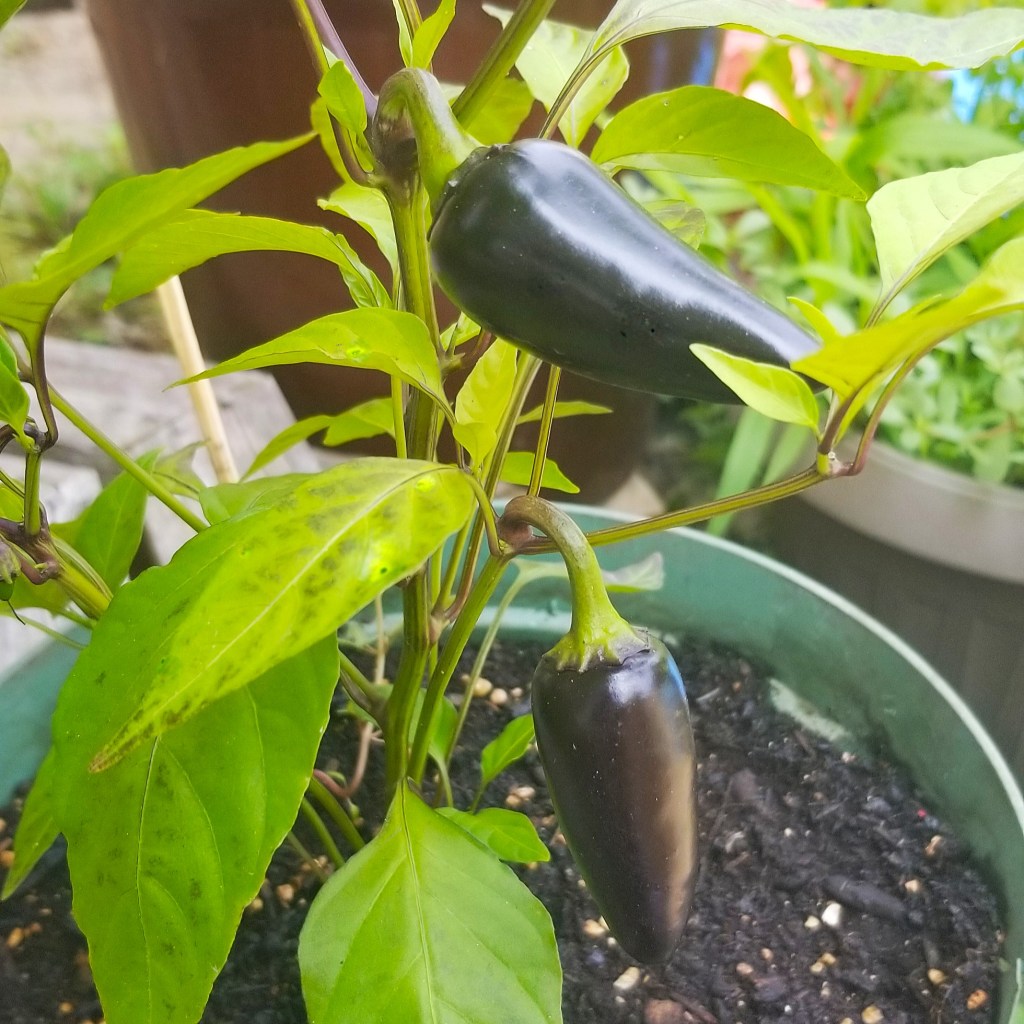
The first year I grew Black Hungarian peppers was 2018, the same as my first year as a blogger; I have been growing them on and off over the years, and I still get really nice plants from the original packet of seed. In the photos below, (left) pretty purple flowers, seen as soon as late June, and (right) peppers on the plant in July:
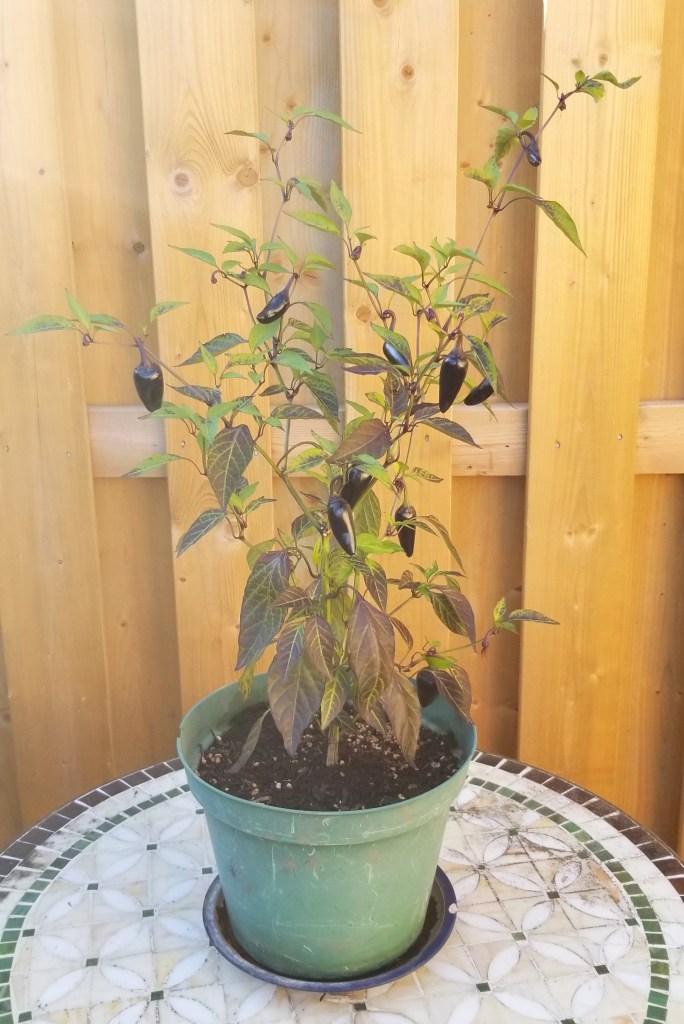
The plant is growing tall and still producing peppers:
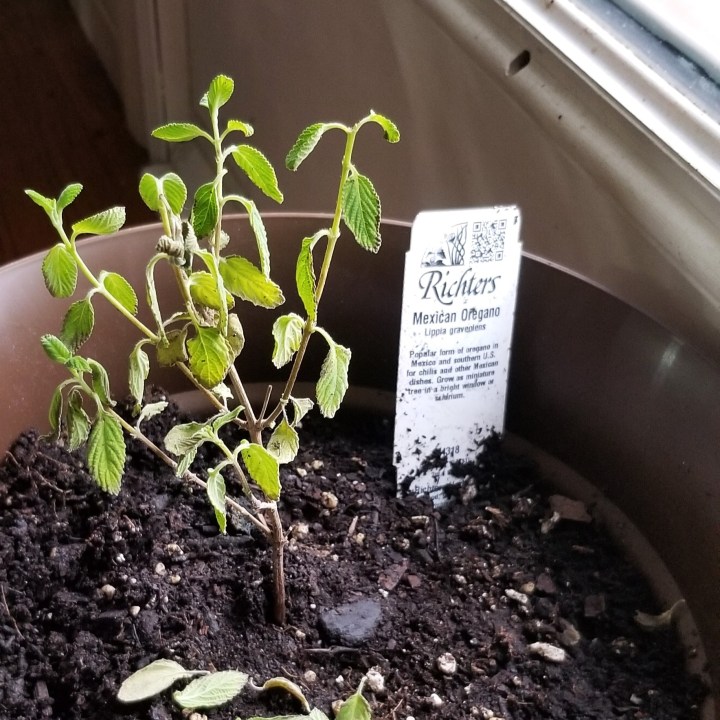
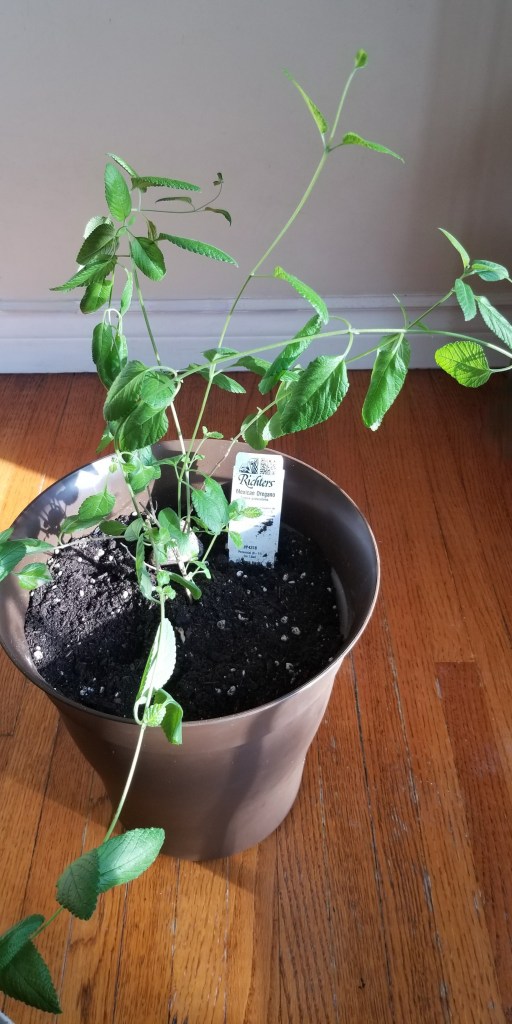
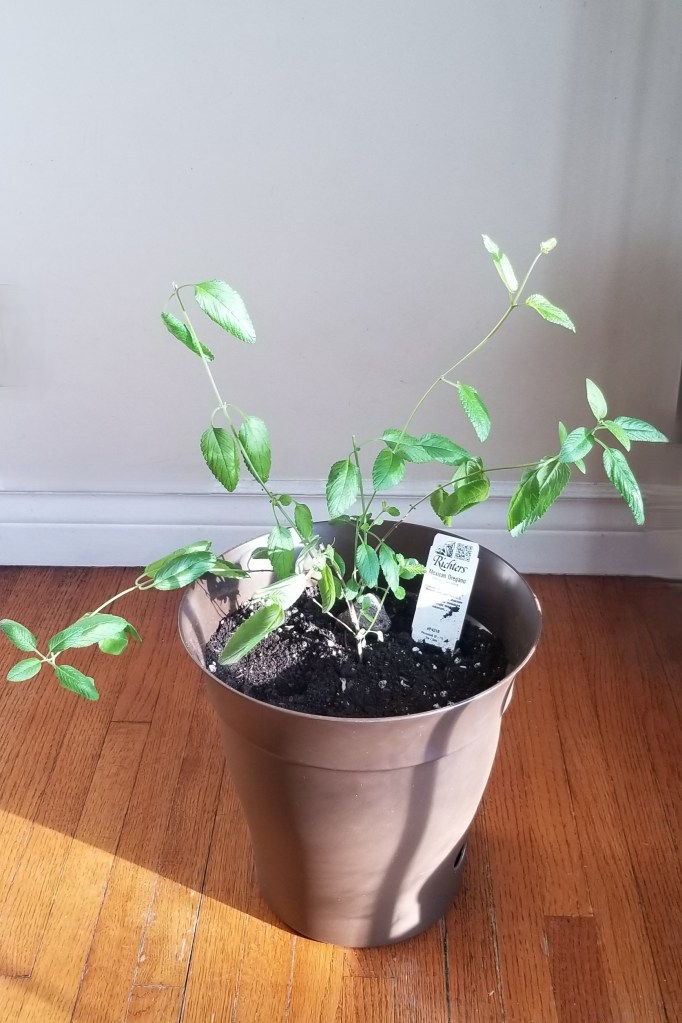
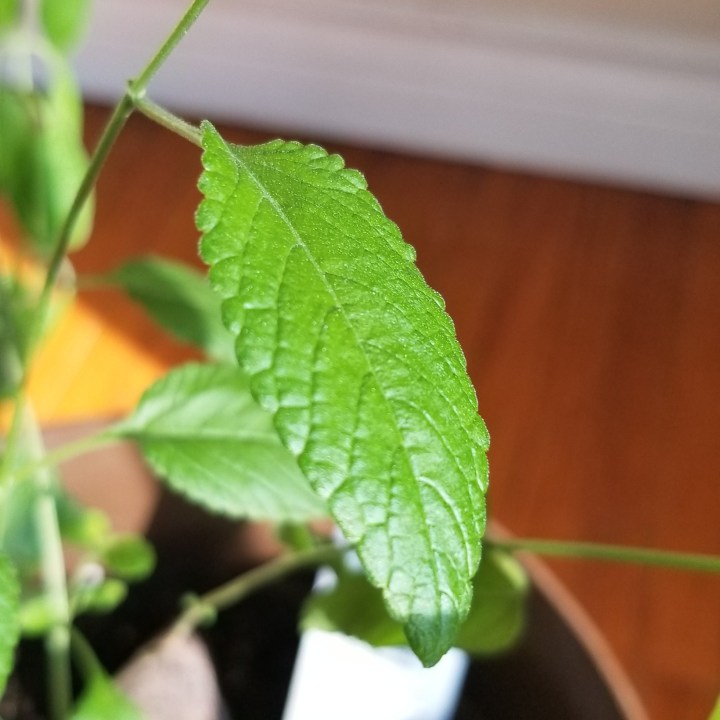
I am growing Mexican oregano for the first time this year. I ordered one seedling in the spring, and once transplanted, it did not look that great at the beginning. I decided to leave the pot indoors, to have consistent environmental conditions and keep an eye on its recovery. It was doing so well, I just did not take it outside, and the plant even needed a good trim (see slide show below):
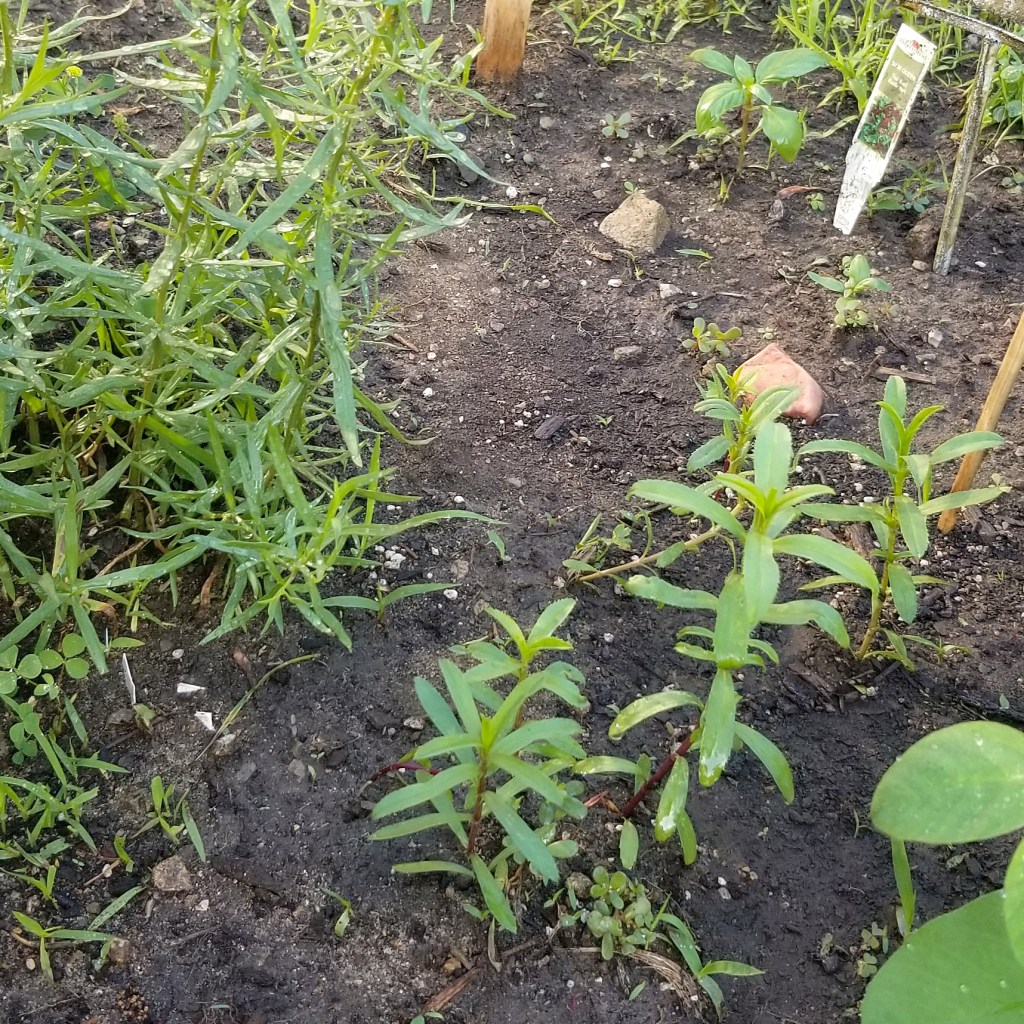
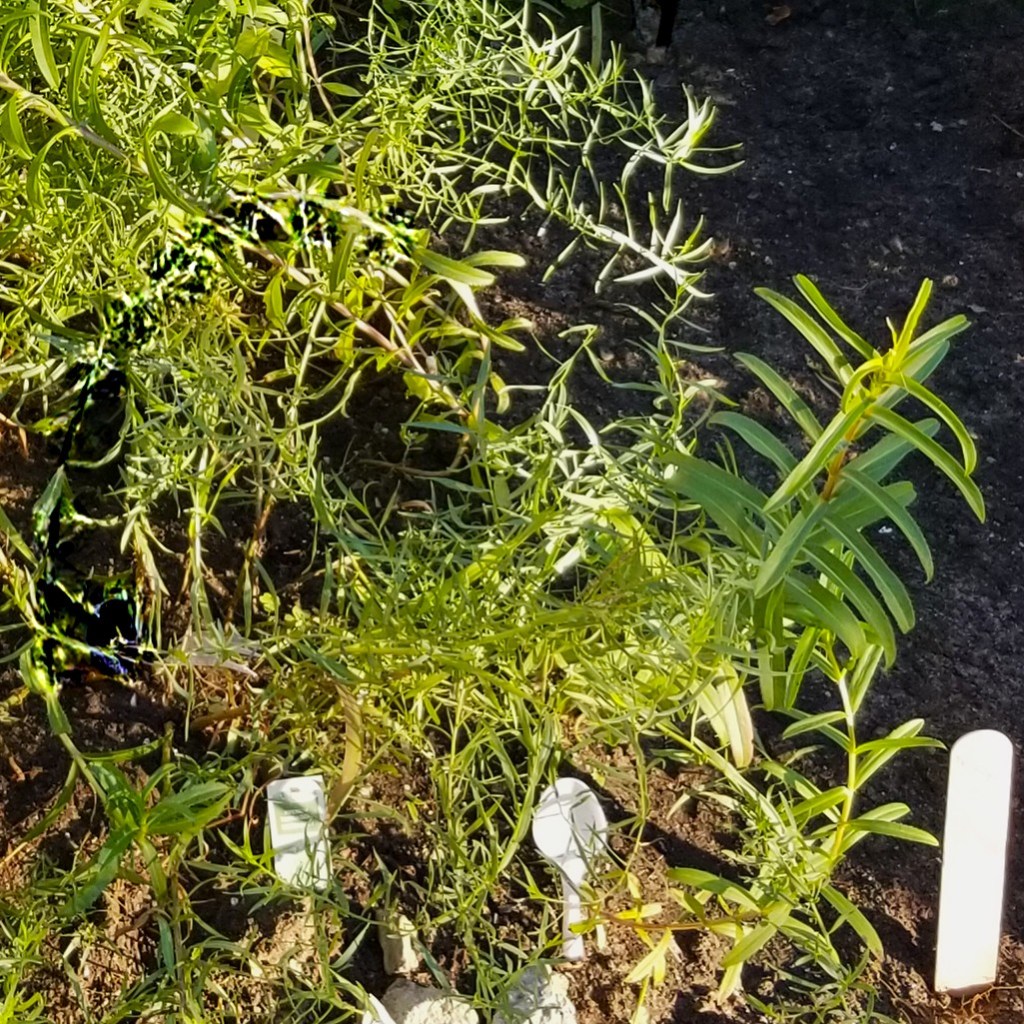
This year I planted Mexican tarragon (Tagetes lucida) next to my French tarragon (Artemisia dracunculus var sativa) to really appreciate their similarities and differences from the same angle. Although the Mexican one is really a fake tarragon – belonging to the marigold family – the shape, scent and taste of its leaves makes it a good substitute for French tarragon in the kitchen, and hence the name. One big difference is that although the tops of French tarragon die in winter, the plant is a hardy perennial, whereas the Mexican does not tolerate frost and dies, so I grow it as an annual. In the photo below, left, the perennial French tarragon shows stems with delicate leaves in the month of June, and the Mexican seedlings look sturdier. By now, as seen in the photo below, right, both kinds are tall and quite unruly, with the Mexican tarragon catching up in size:
Comparing samples from each tarragon, the French shows leaves that are thin yet form a dense mat, while the Mexican has a well-defined pattern of pairs of leaves opposite to each other:
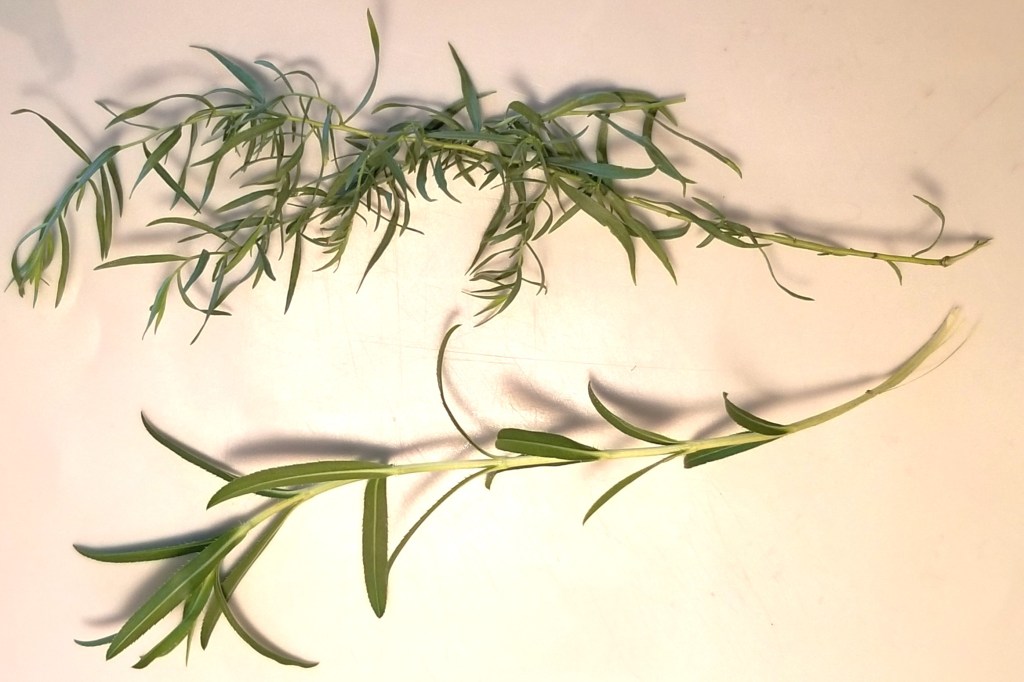
The flavour of both has notes of anise, but the Mexican is stronger and also has a citrus undertone. Both tarragons have been attributed medicinal properties, as digestive aids, and for their antibacterial and antioxidant qualities. French tarragon rarely blooms nor produces viable seed, while Mexican tarragon produces small yellow flowers, which are edible, and easily self-seeds in warm climates.
Last but not least, another newcomer to my garden is vegetable marrow, a variety of summer squash; the plants developed quickly and very healthy. In the photos below, plants in June (left) and July (right):
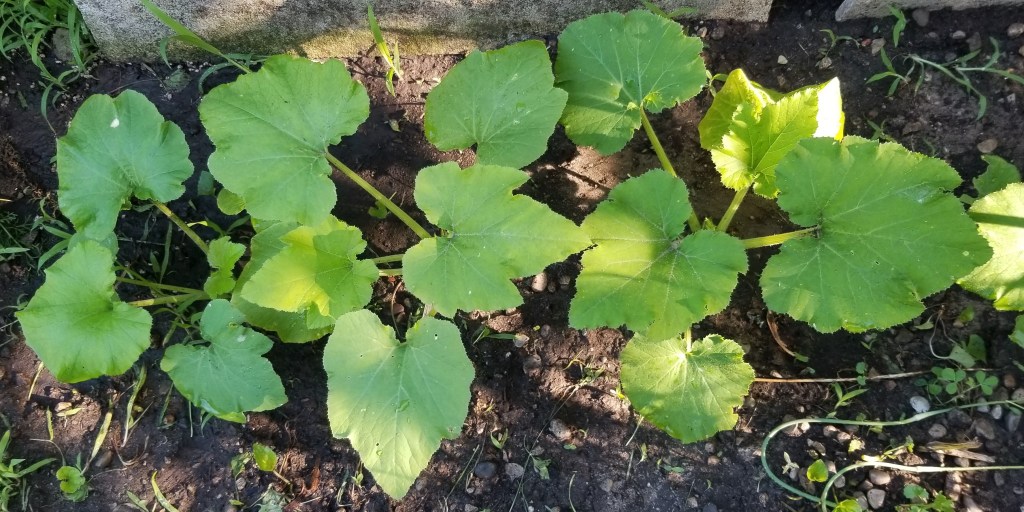
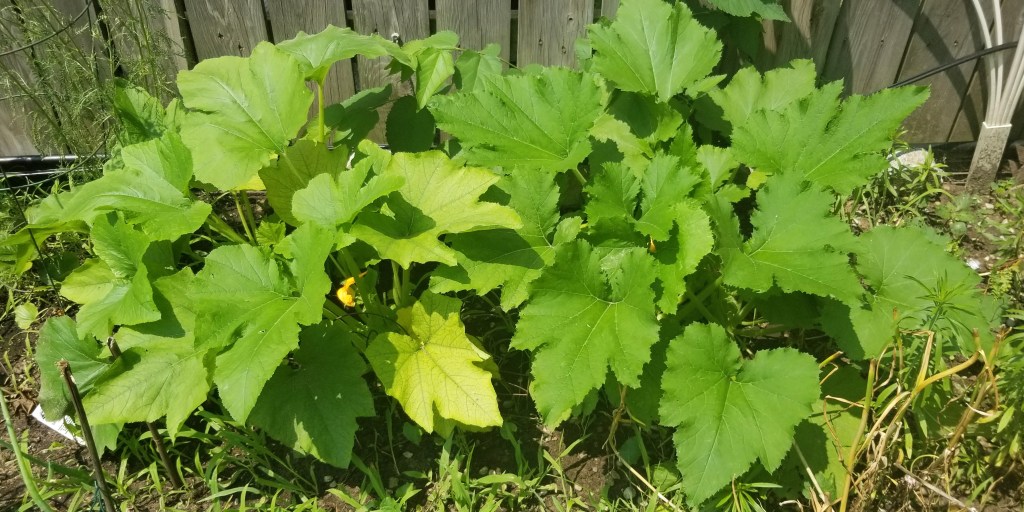
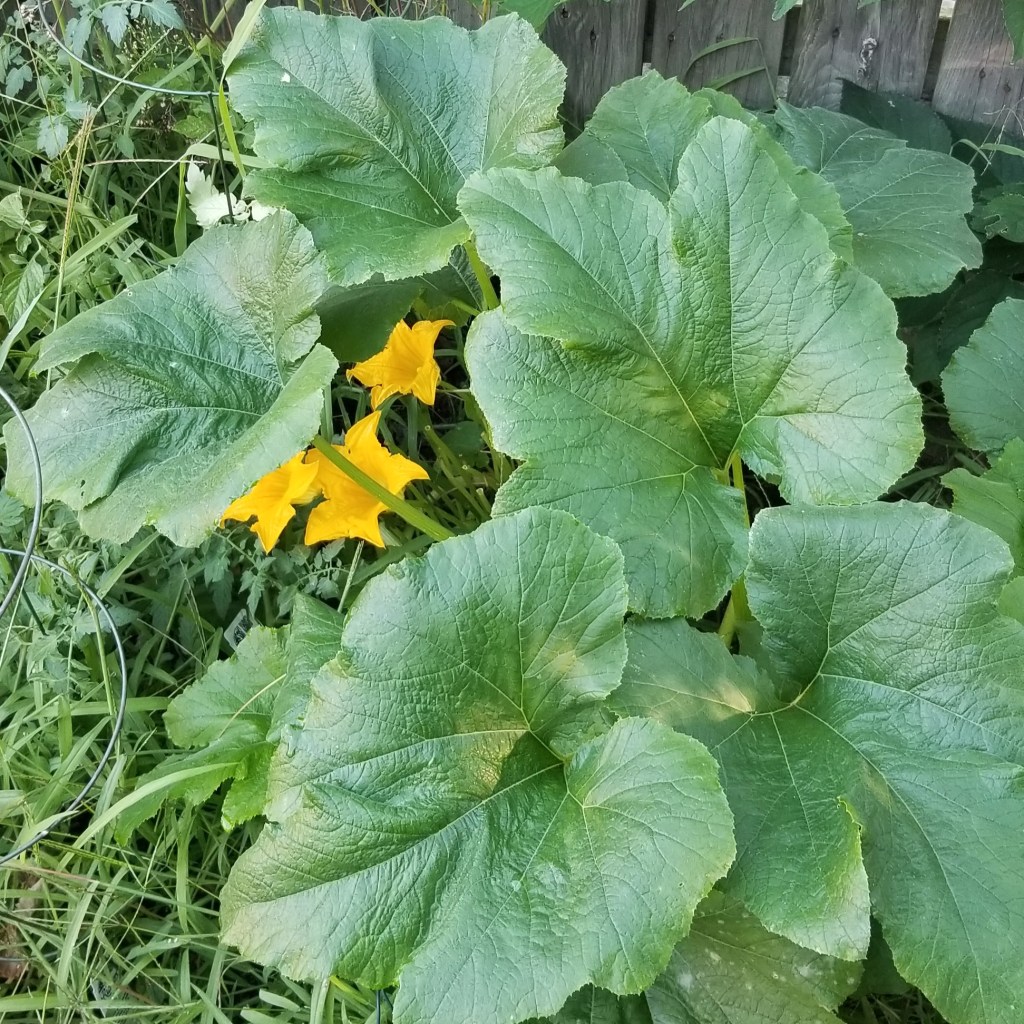
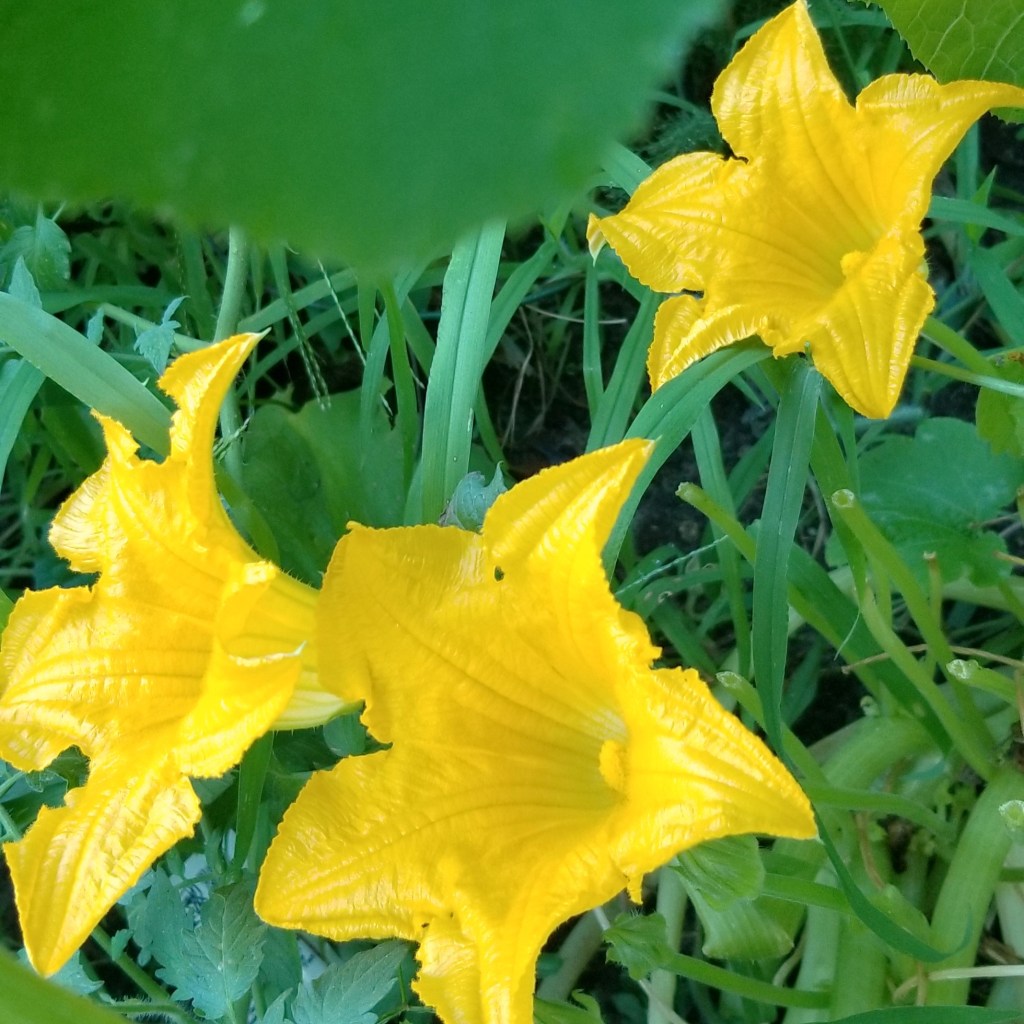
The plants have been producing a lot of male flowers for a couple of months now:
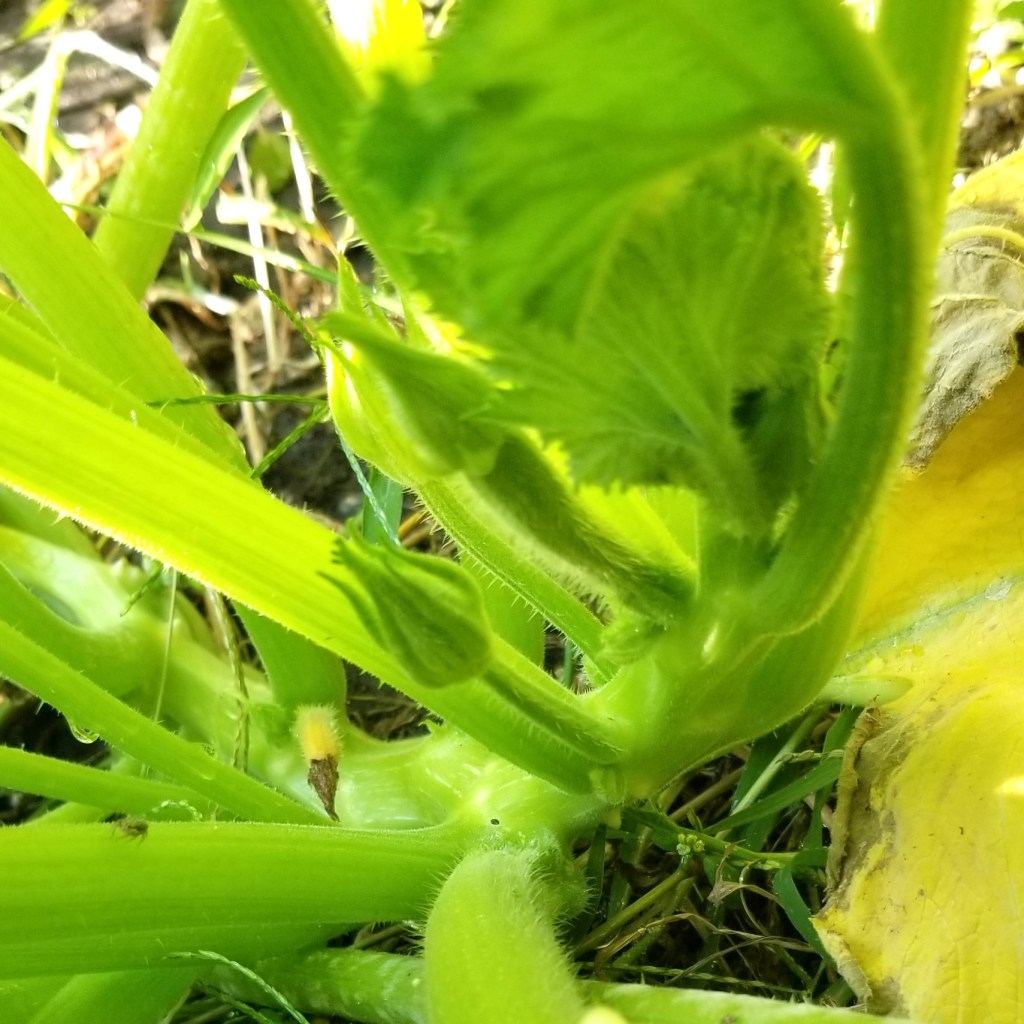
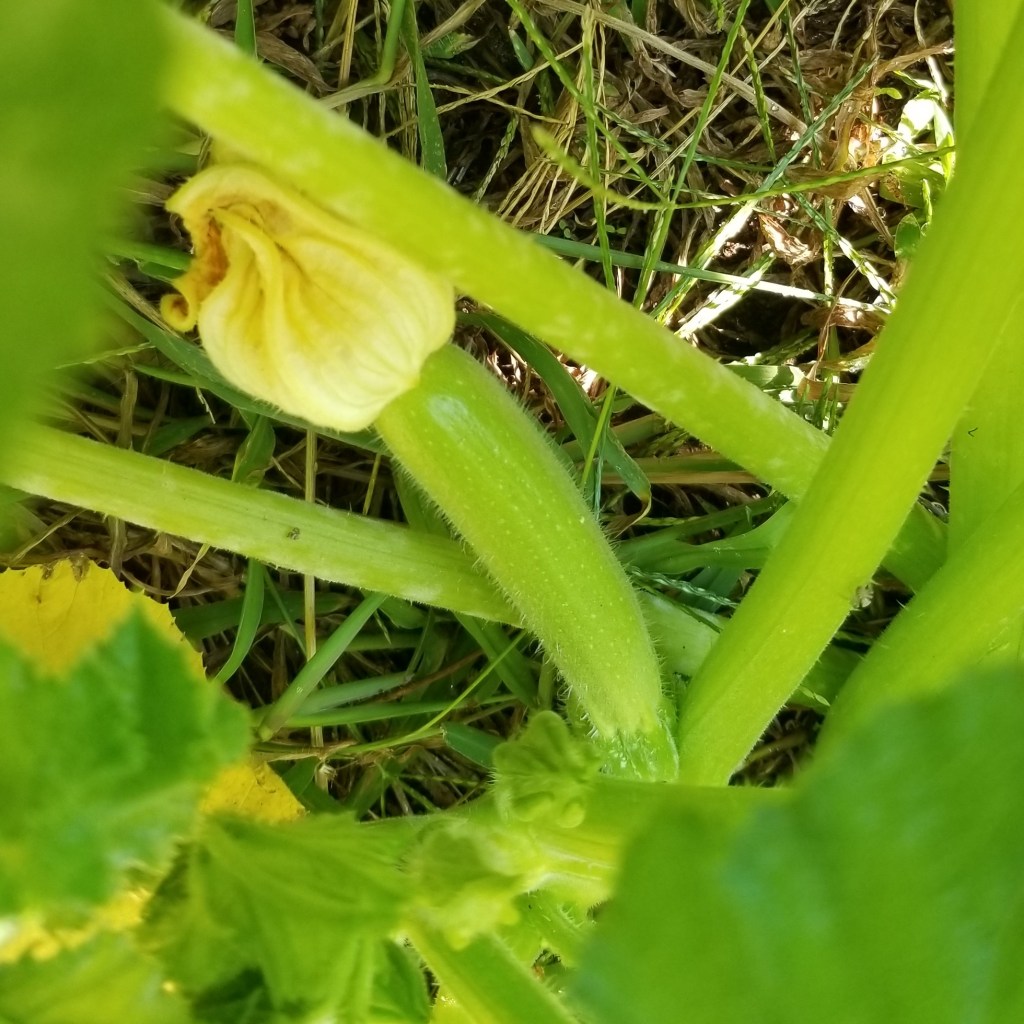
The female flowers were elusive until just a couple of weeks ago. In the photo below left, a budding female flower (thick stem) and the first squash developing (right):
Stay tuned for some recipes using these fresh ingredients.
I am joining Six on Saturday for September 20, 2025, hosted by Jim Stephens @ Garden Ruminations.






 My Slice of Mexico
You had a great summer!
LikeLiked by 1 person
Thank you, Lou!
LikeLiked by 1 person
Excellent harvest!
LikeLike
Thank you, Rebecca!
LikeLiked by 1 person
Wonderful pics. So much fresh goodness that you know is healthy to eat. My peppers did nothing and the delicata squash, which was in the same bed, likewise flopped. It was a new raised bed and I think the soil was too dense for both. The mortgage lifter tomatoes are less in # but are growing quite large, and taste great. I’m very pleased with the birdhouse gourds. I am sorry I didn’t plant zucchini this year.
LikeLike
Yeah, I don’t know what it is with crops from year to year, or as you said, depending on the bed. Those mortgage lifters sound good.
LikeLiked by 1 person
I’ve grown them more than any other variety and they are consistently good.
LikeLiked by 1 person
Good harvest! Looking forward to the recipes.
LikeLike
Thank you, Alice!
LikeLike
Those Black Hungarian peppers look very interesting; I’ve never seen them before. Are they hot? And what do they taste like?
LikeLike
They are close to jalapeño in shape and flavour, maybe a little crunchier texture.
LikeLiked by 6 people
Yum! Your edibles look delicious! The Mexican Oregano really came back, and all the other produce looks impressive, too.
LikeLike
Thank you for your kind comment, Beth!
LikeLike
Love your edibles! I’ll soon be planting my cucumbers and am preparing the bed with compost. Your beans are very attractive. 🌸🥒🌶
LikeLiked by 1 person
Happy gardening!
LikeLike