
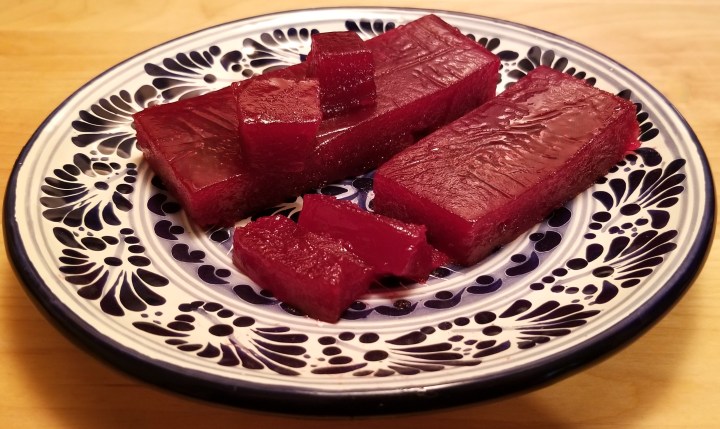
Click here to go to printable recipe: Apple or Crabapple Jelly
In my previous post, I harvested a bowl full of crabapples from my garden. Because the fruit was so small, it would have been hard to peel or core, and since I use no pesticides in my garden, a lot of it had mould or insect damage:
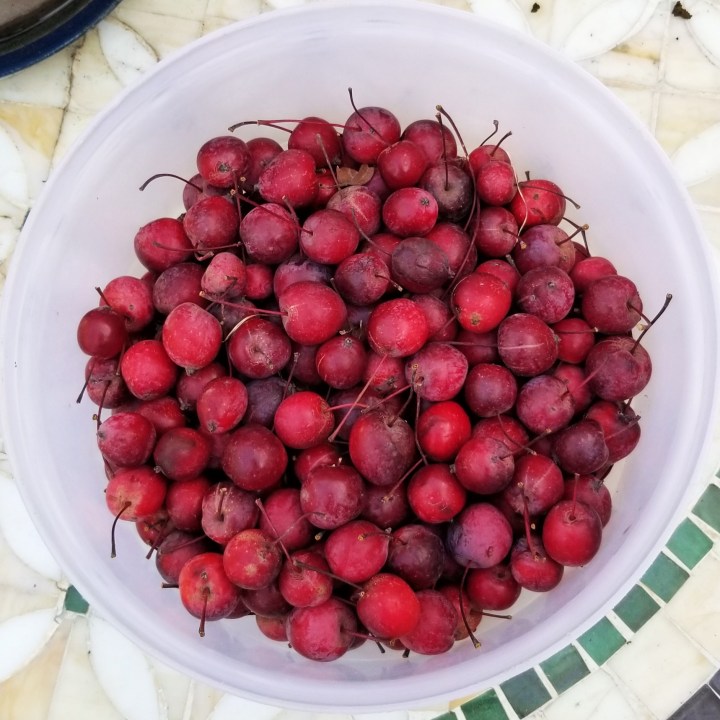
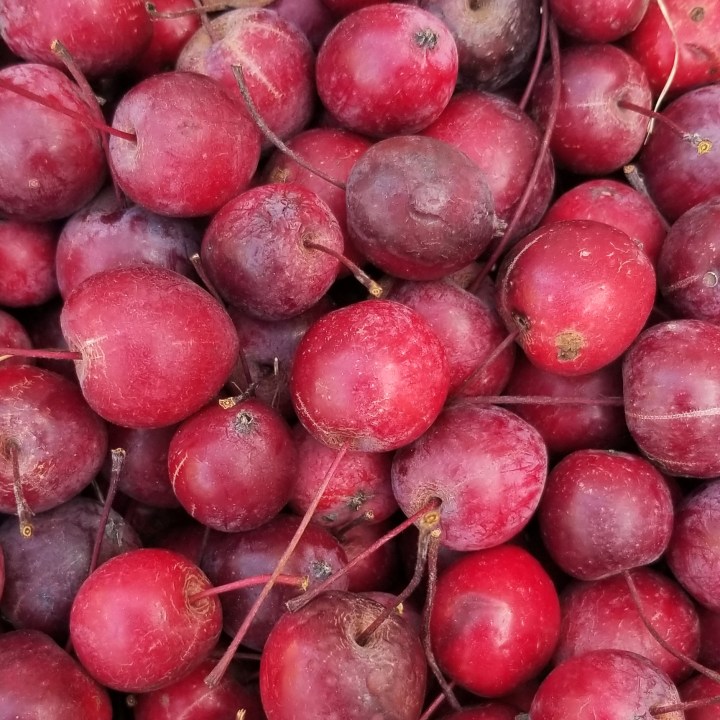
The best solution in the kitchen was to discard damaged fruit, then clean and cook the rest into a jelly. In Mexico, jellies are often made solid enough to be sliced, called ate (pronounced “ah-teh”), a tradition brought directly from Spain originally as ate de membrillo (quince), a fruit with high pectin content; other popular options also with high pectin content are guava, tejocote (Mexican hawthorn) and apple. I have mentioned ate in this blog, but this is the first time I attempt to prepare this fruity sweet at home.
After washing the fruit, to be able to pick all the damaged pieces, it was necessary to individually inspect them, remove their stem, and slice in half to check all the crannies. In the photo below, good fruit along the top row, and damaged fruit on the bottom row:
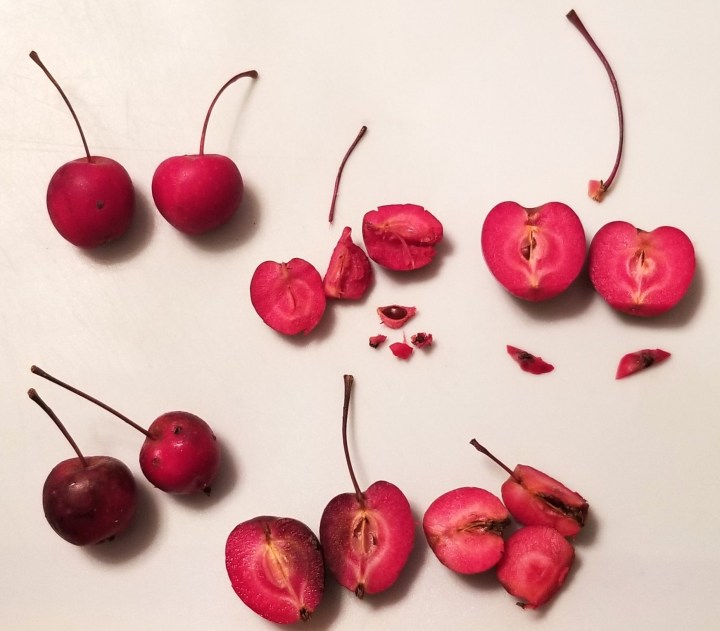
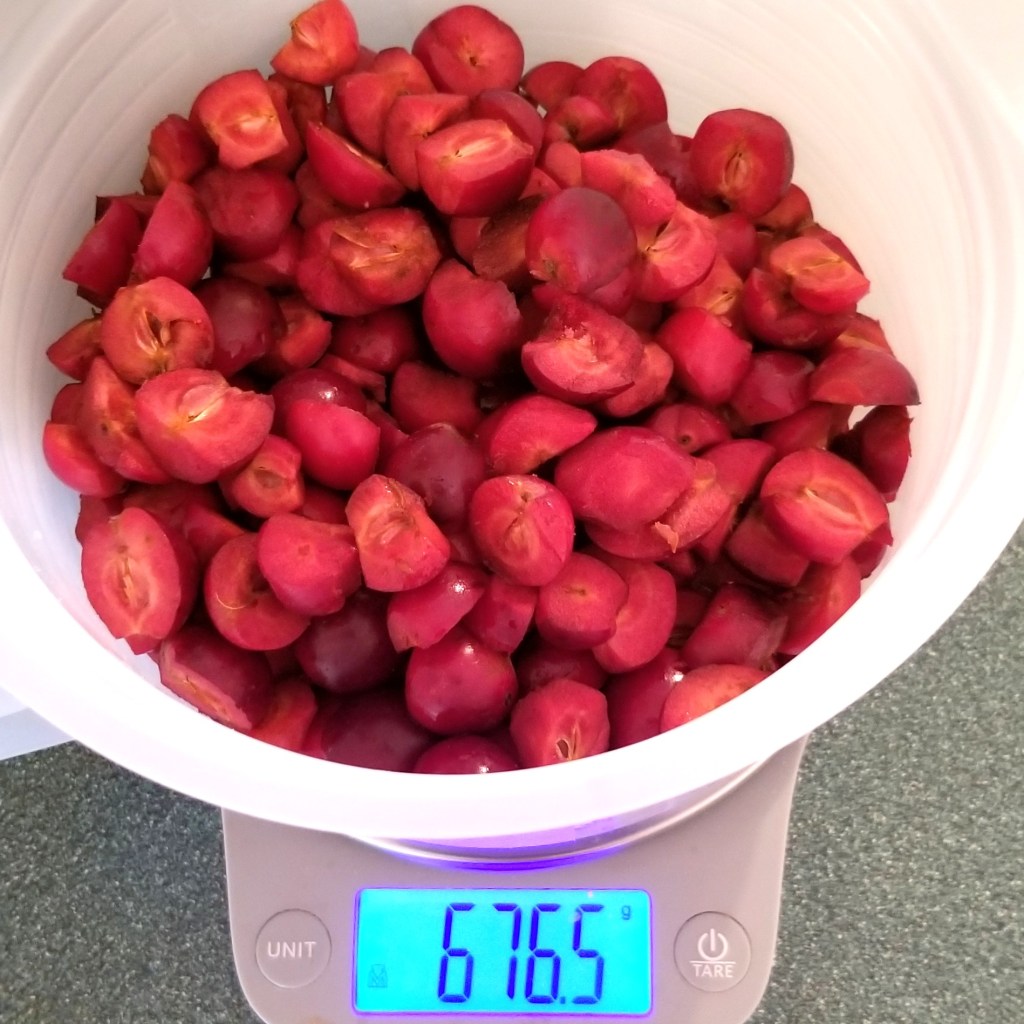
Sometimes the seeds popped out, so I discarded as well, when possible. After cleaning my original batch of almost three pounds (1.3 kg), I had about half that amount:
If crabapples are not available, regular apples, such as golden delicious or Mcintosh, may be used in this recipe.
Apple (or Crabapple) Jelly – Ate de manzana (silvestre)
Printable recipe: Apple or Crabapple Jelly
Ingredients
1 ½ lb (680 g) crabapples or apples; washed, stems removed, and halved
2-3 cups (400 – 600 g) granulated sugar
1 cup water
2 tbsp lime juice (optional, depending on acidity of the apples)
Prepare a rectangular mould by lining with strips of parchment paper. For this batch, I used a 9×7 inch (23×18 cm) glass container. Reserve.
If using regular apples, peel and core, slicing into chunks.
Place fruit and water in a large pot over high heat; bring to boil, then reduce heat to medium and cover pot:
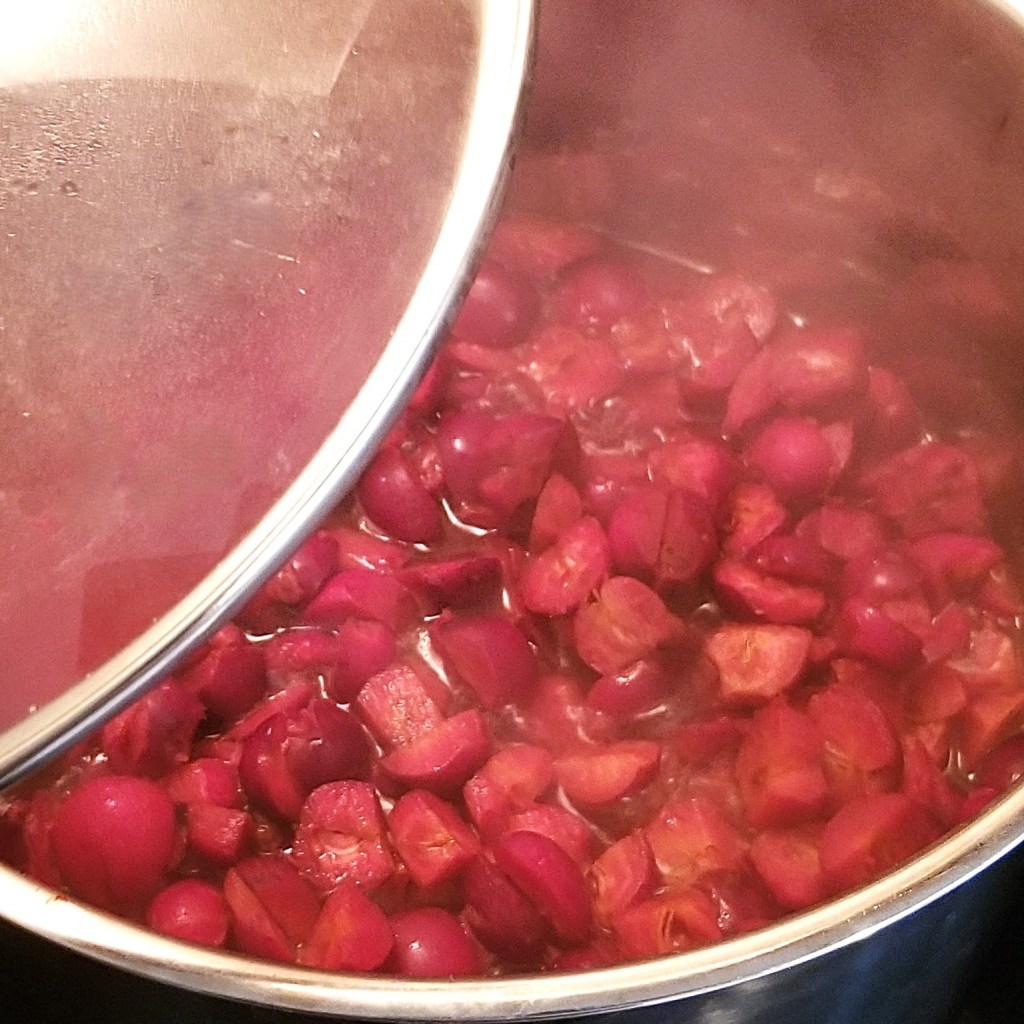
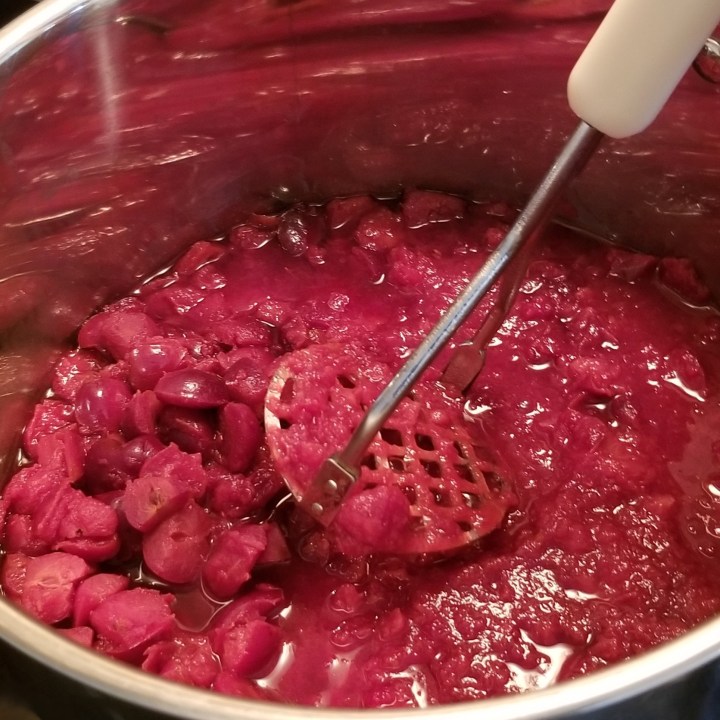
Allow to cook for thirty minutes, stirring occasionally. Uncover pot and remove from heat. Mash fruit:
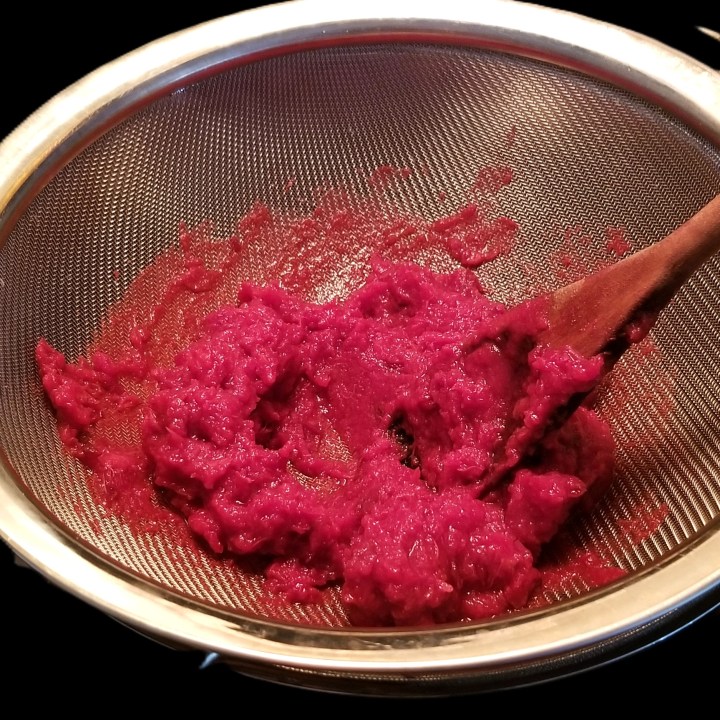
Strain the mashed and cooked fruit through a mesh into a bowl, to remove crabapple seeds, cores, and skin, pressing down with the back of a spoon (if using regular apples, this step is optional, for a smoother jelly):
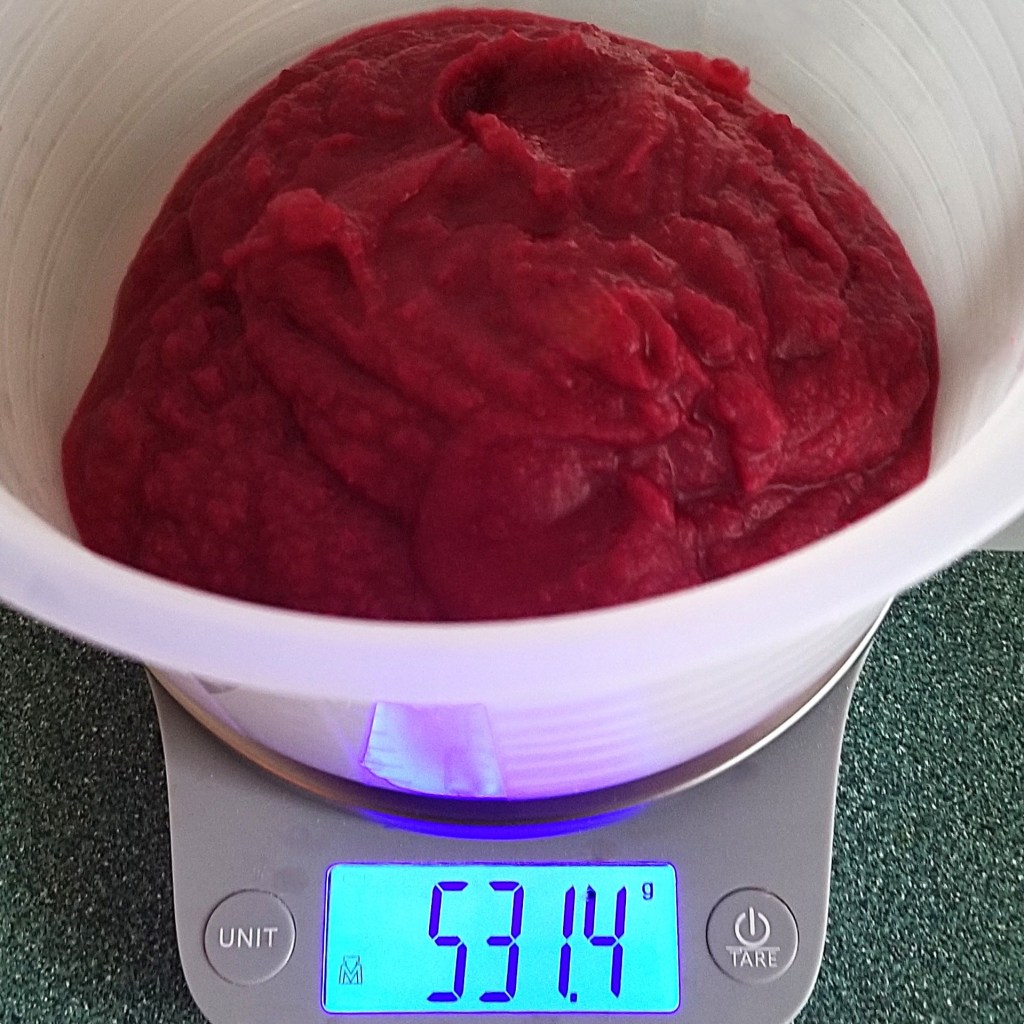
Weigh the strained pulp (if using regular apples, skip this step); for this batch the strained pulp weighed 1.2 lb (531.4 g):
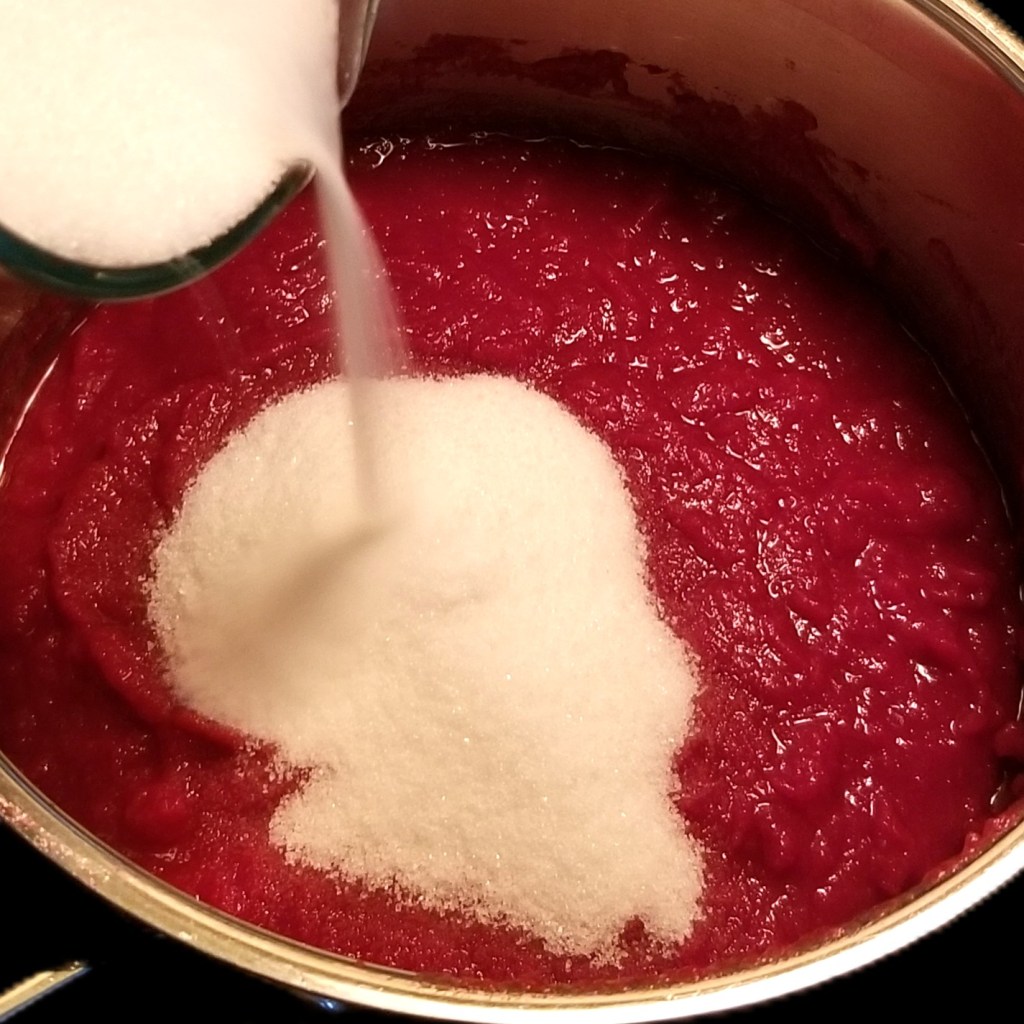
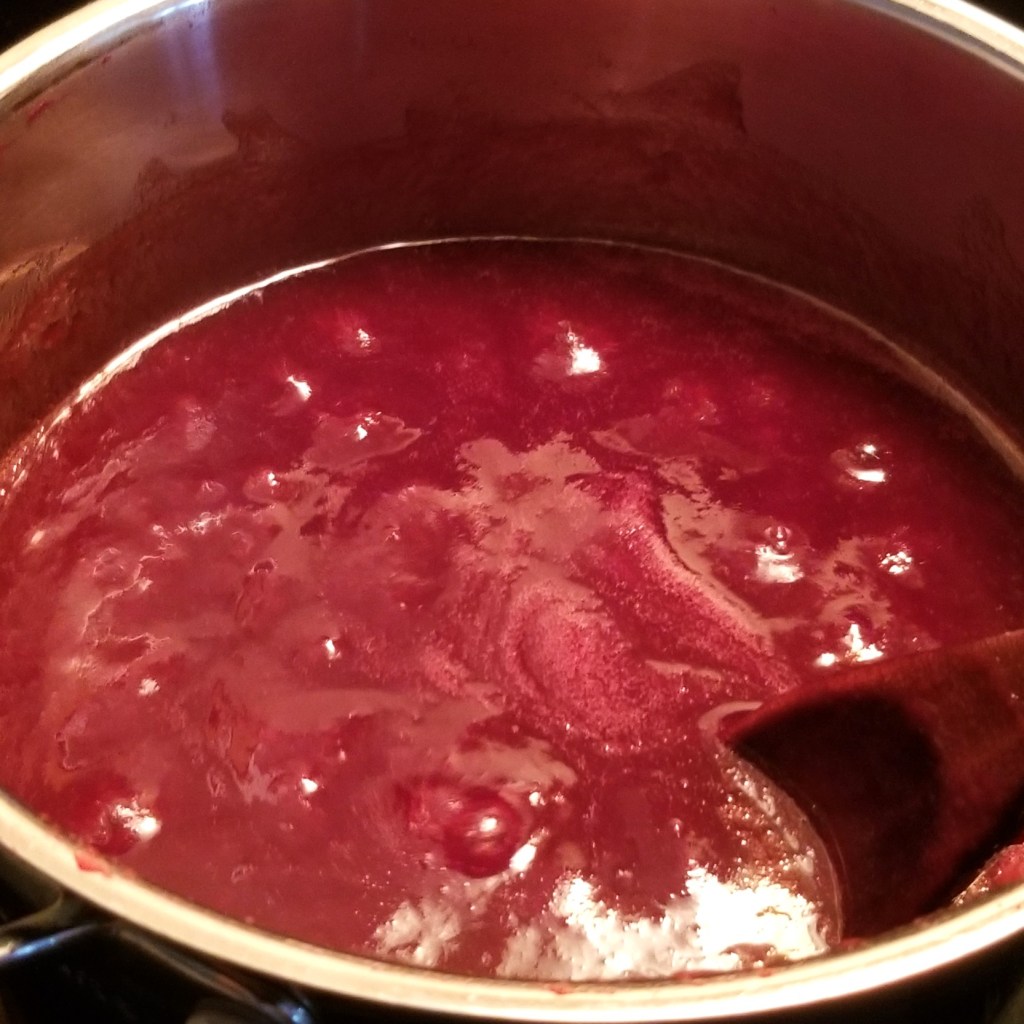
Return the pulp to the pot, and place on the stove over medium heat. Add lime juice (if using), and a little under the same amount of granulated sugar, in weight (if using regular apples, add three cups). For this batch of crabapples, I did not use lime juice, and I added two and a half cups of sugar (photo below, left), which are the equivalent of 1.1 lb (500g). Continue cooking, stirring constantly, to dissolve the sugar (photo below, right):
Continue cooking, and stirring frequently, for forty five minutes to one hour, until thick as a paste, and a clean streak stays after swiping the bottom of the pan with the back of the spoon:
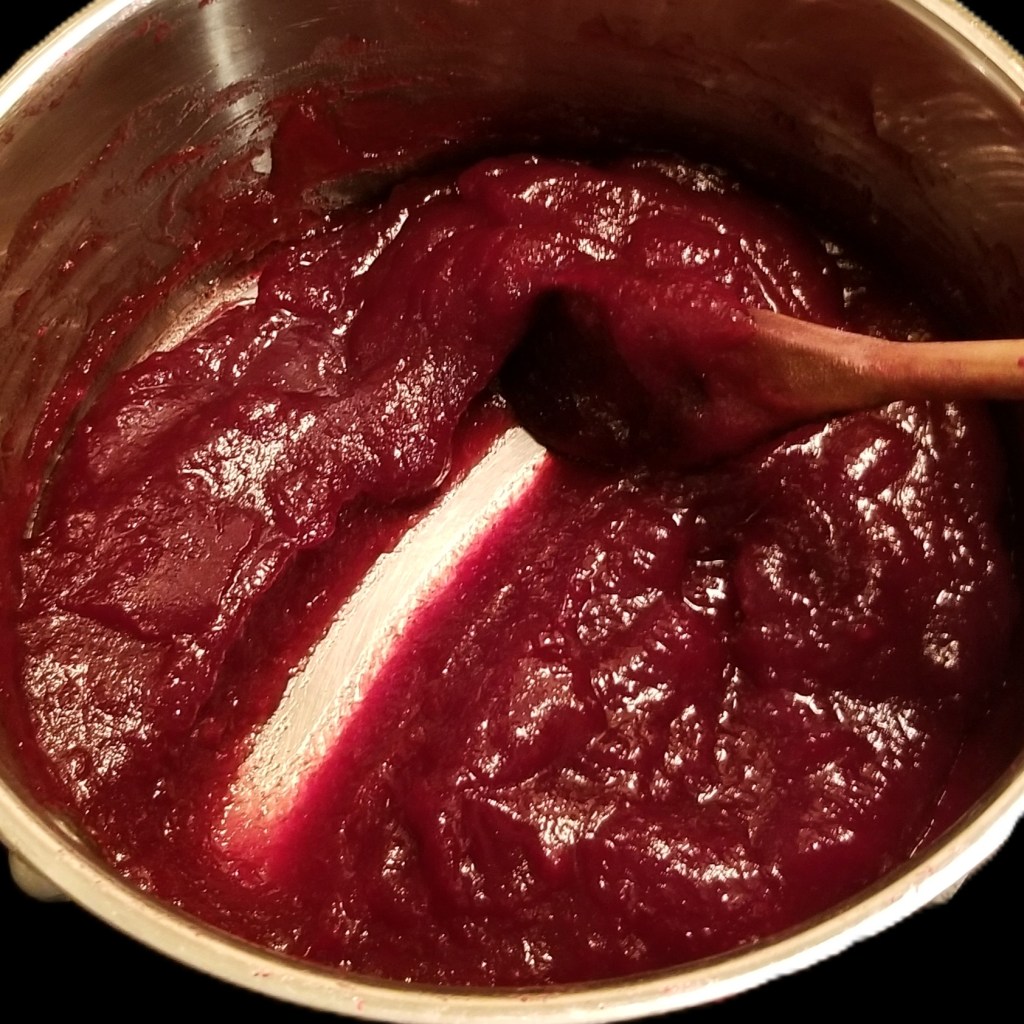
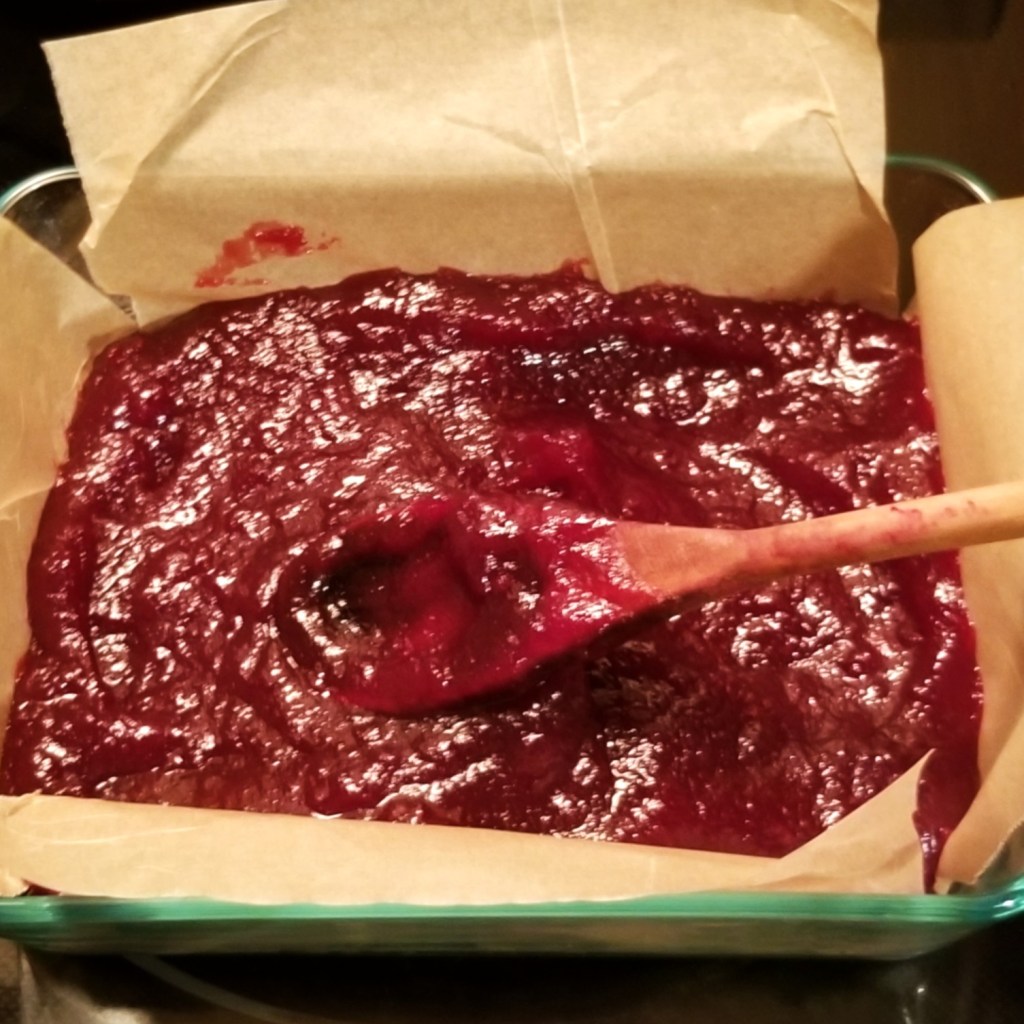
Remove from heat, and pour paste onto prepared mould, spreading uniformly with a spoon:
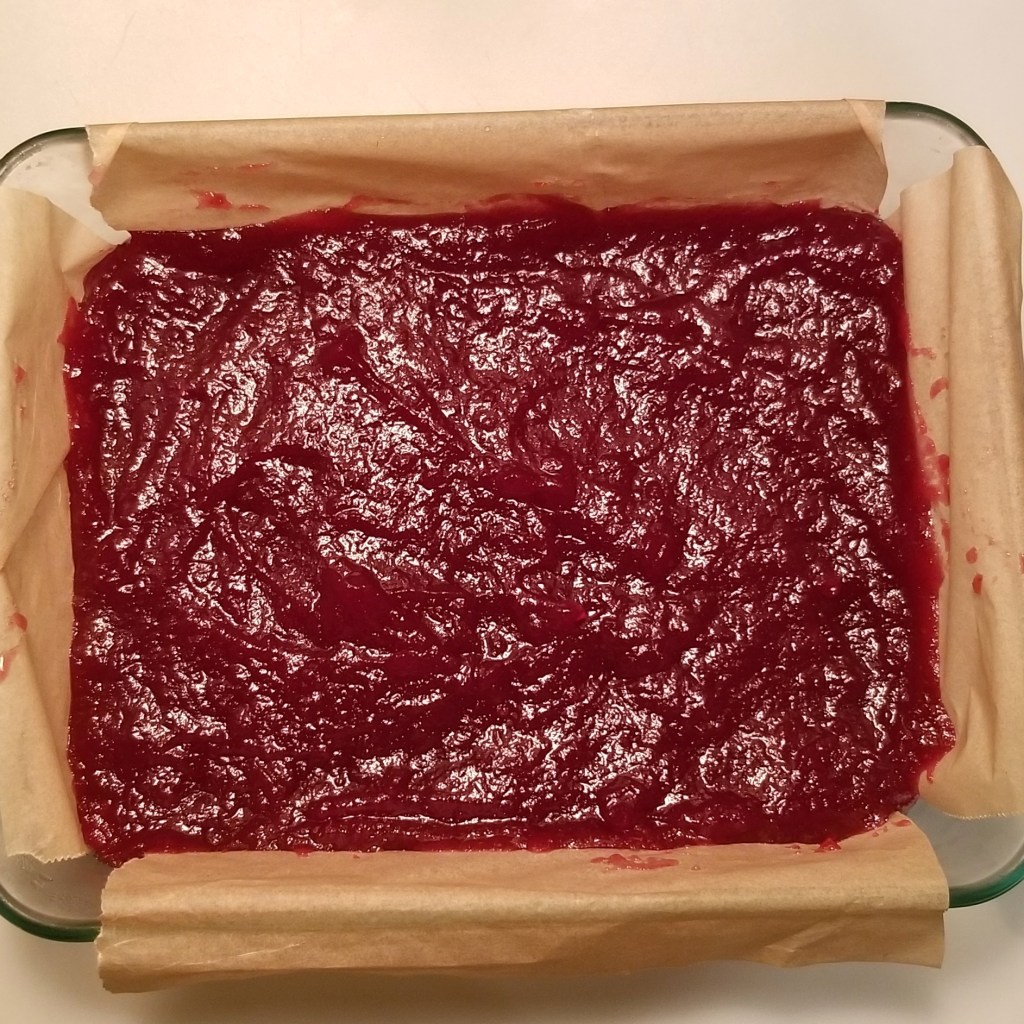
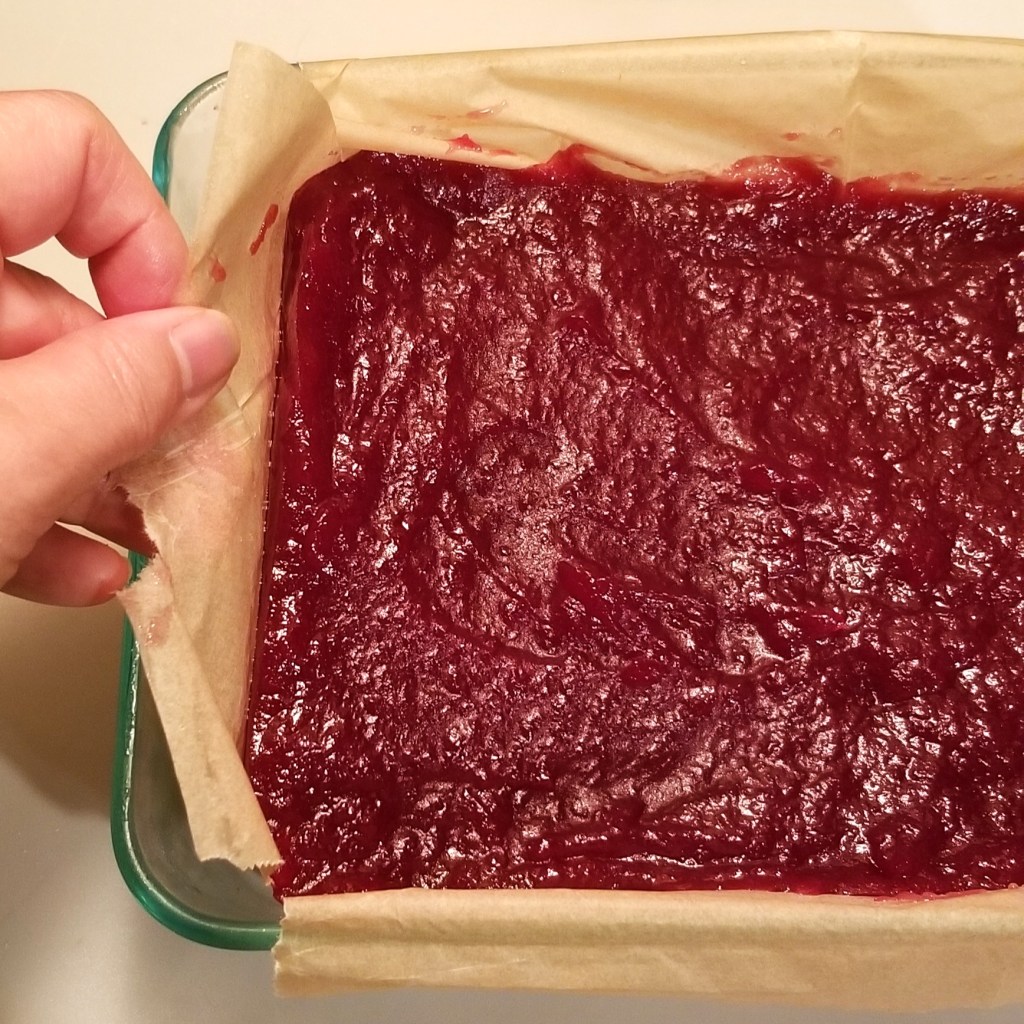
Cover and store in the fridge overnight. The next day, the jelly has set (photo below, left). Remove from the mould by holding and lifting the paper strips (photo below, right):
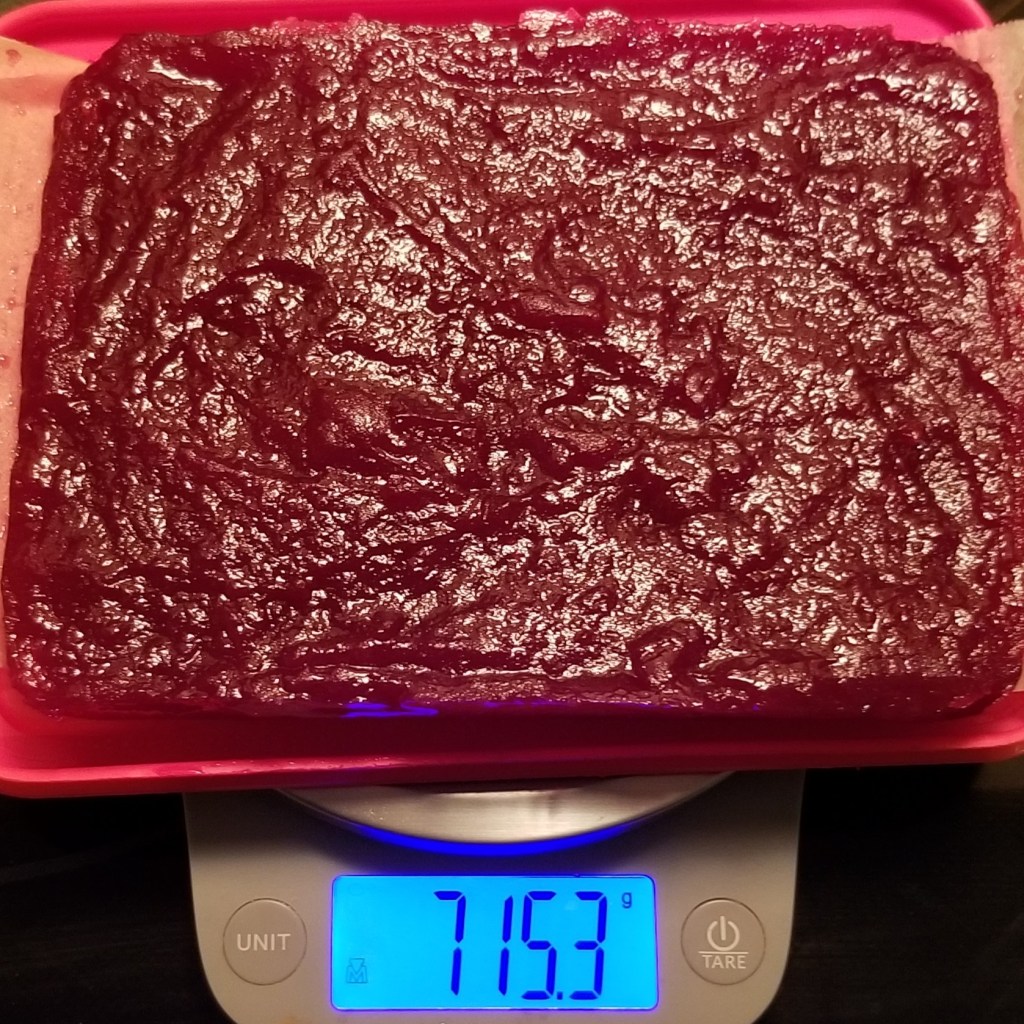
My final product weighed about 1.5 lb (715.3 g):
Place upside down on a cutting board (photo below, left), and remove paper strips (photos below, centre and right):
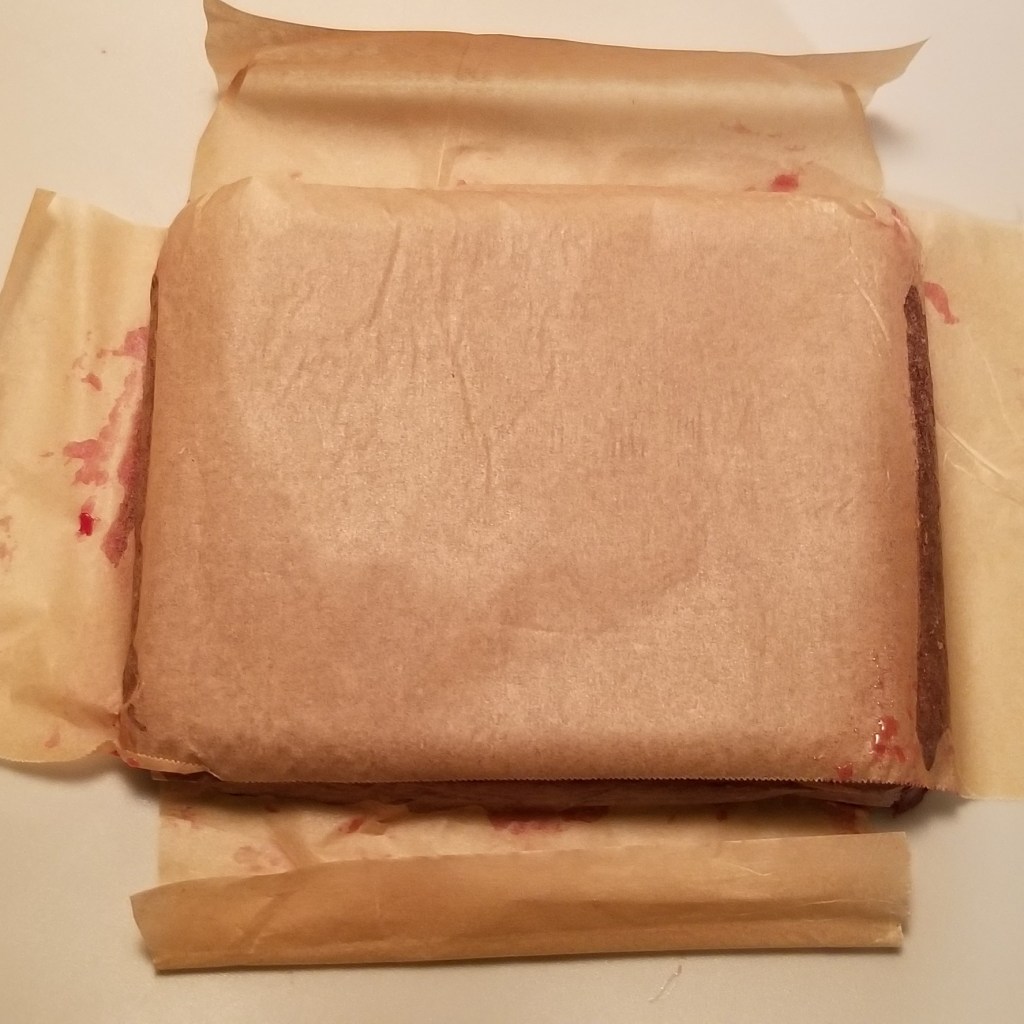
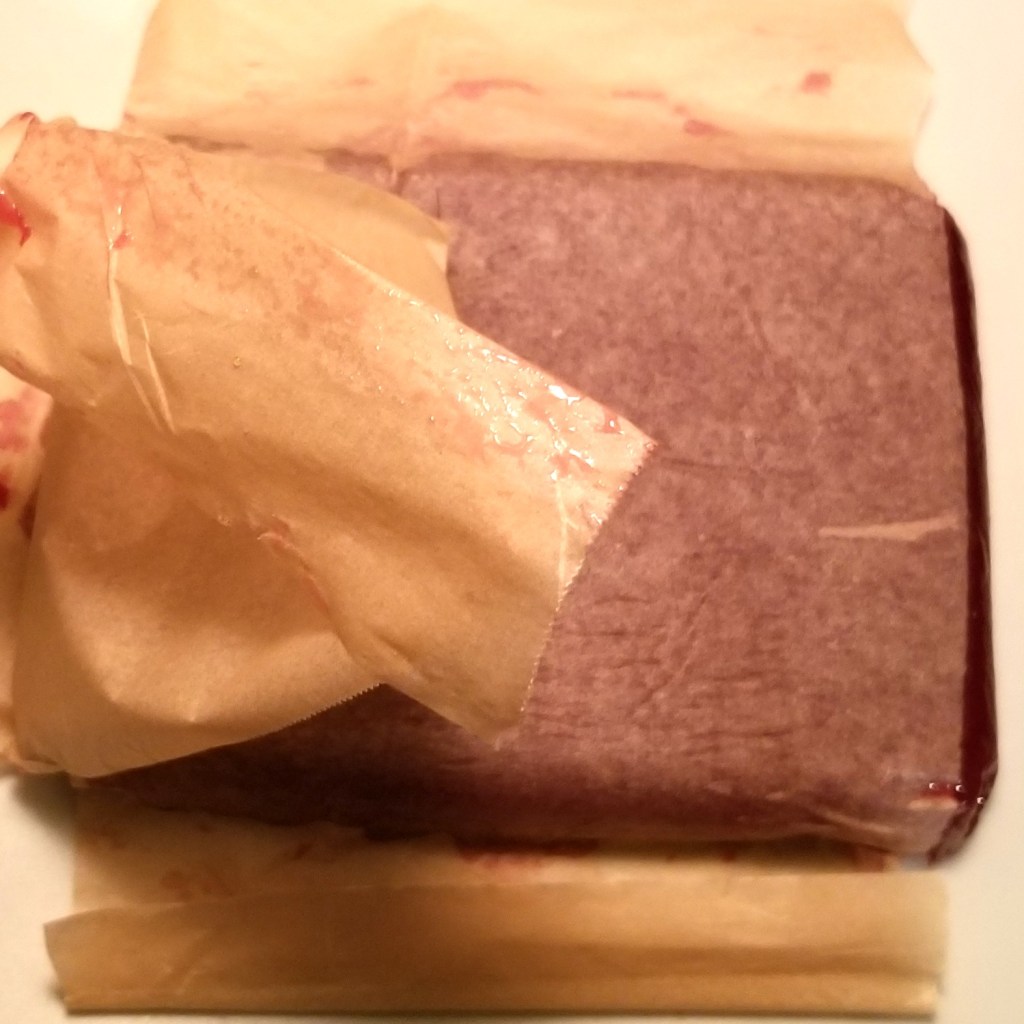
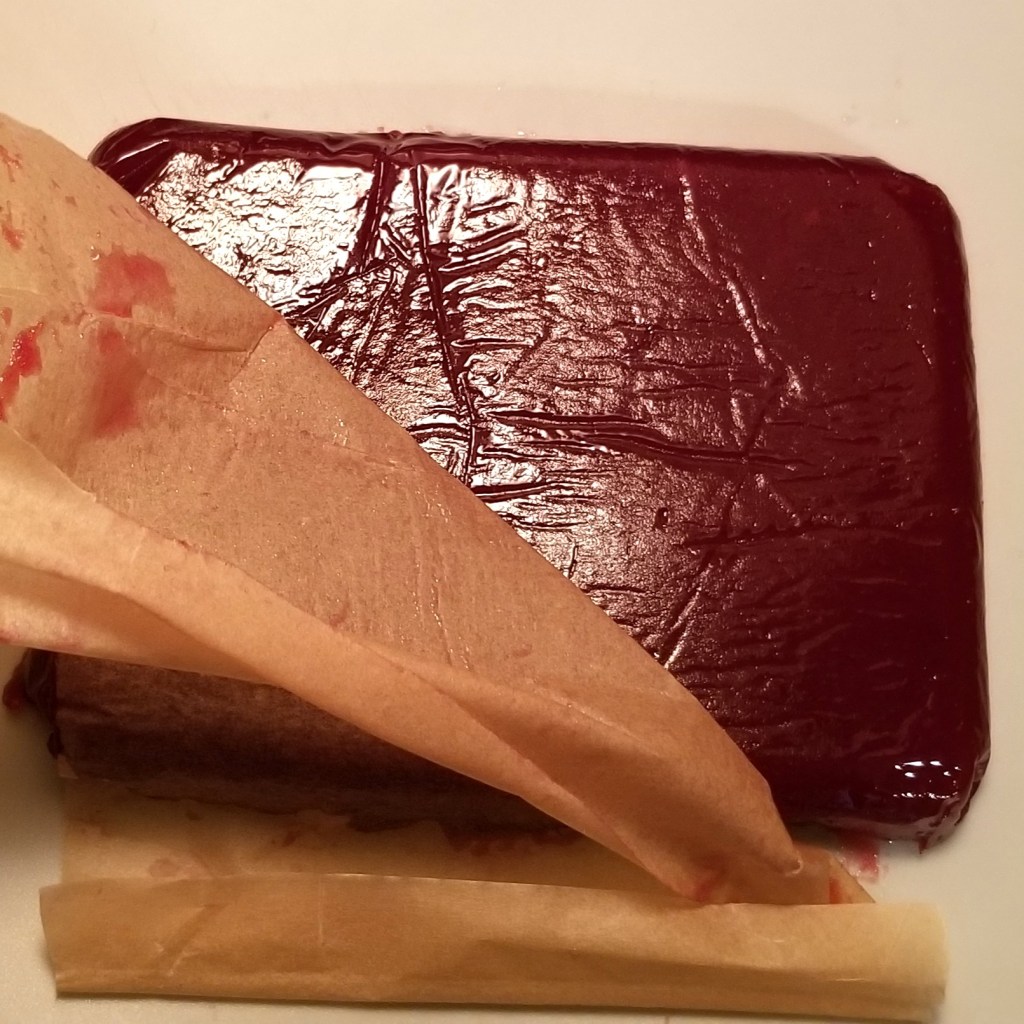
The shiny side of the jelly is revealed:
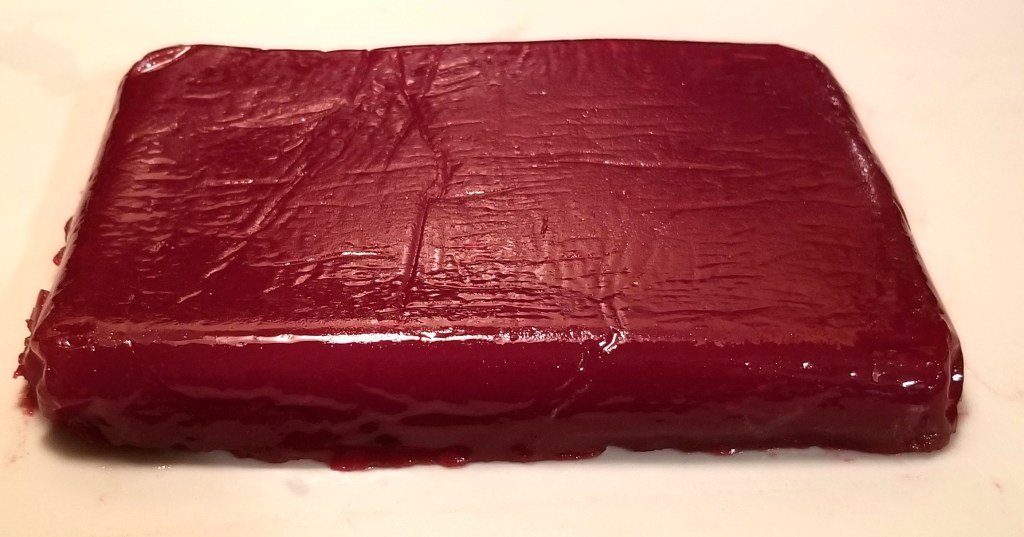
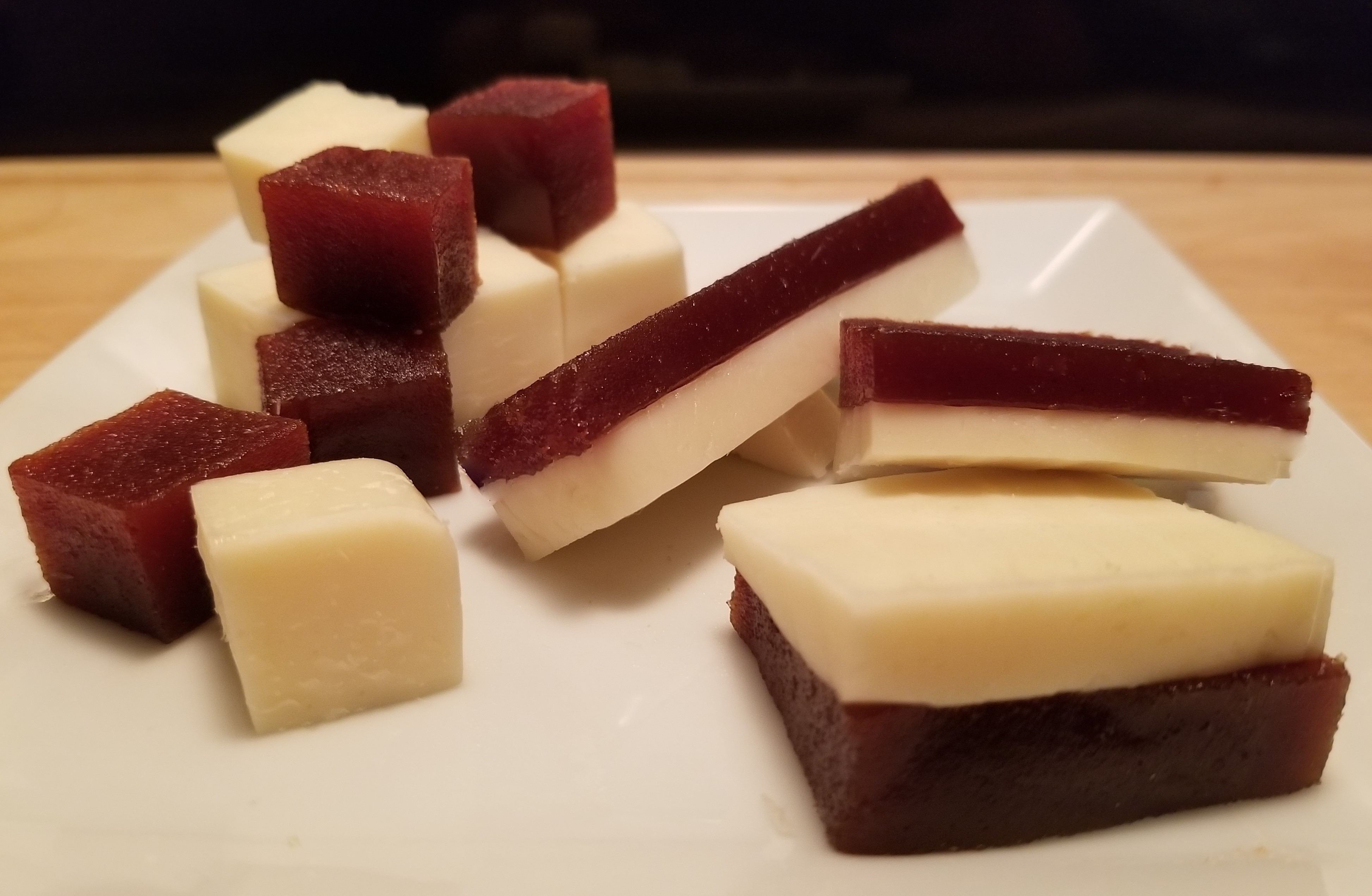
The jelly may be spread on toast, or served by itself as a treat, sliced or cubed, as shown at the top of this post. in Mexico, the most popular way to enjoy ate is as a snack or appetizer, built into layers with cheese such as Mexican Manchego (friulano is a close option, as shown below):
The flavour of the crabapples is similar to regular apples, but it definitely has distinct undertones that get enhanced when the fruit is cooked with sugar. I admit that cooking with crabapples was a labourious project, but it was very rewarding to be able to use the gifts from nature, and well worth trying at least once, especially seeing my family enjoy a new and unique flavour, and the jelly.
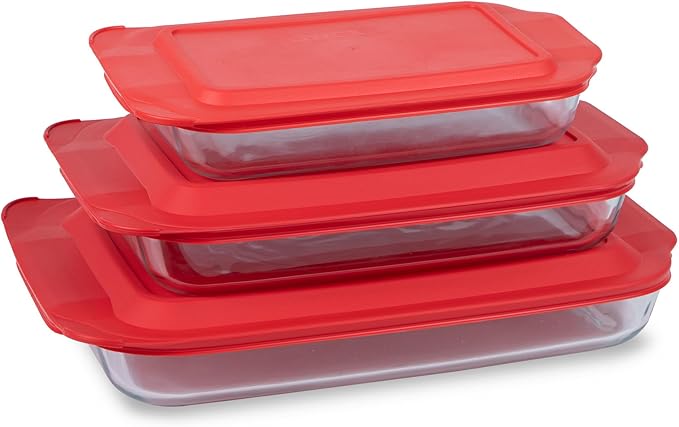
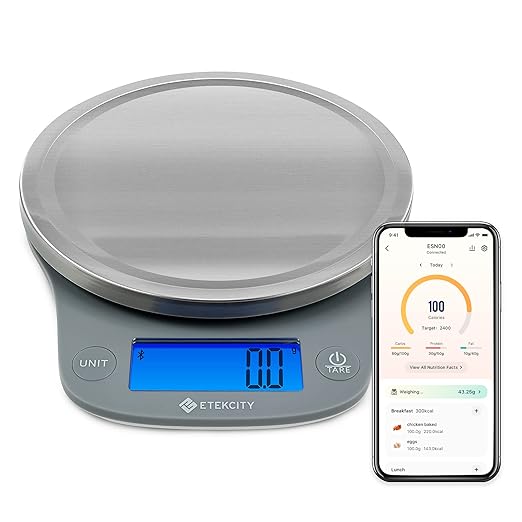
For your convenience, click on the images below for products available on Amazon™. DISCLAIMER: Any reviews included in this post are my own, for items I have purchased, not provided by any company; as an Amazon Associates Program affiliate, I might receive a commission for any purchases originated from the links below, at no extra cost to you. Thank you to all who have bought other products starting with a click from my links!:
I am bringing my recipe to Full Plate Thursday #766 with Miz Helen @ Miz Helen’s Country Cottage.
I am sharing my post at Thursday Favourite Things #564, with Bev @ Eclectic Red Barn, Pam @ An Artful Mom, Katherine @ Katherine’s Corner, Amber @ Follow the Yellow Brick Home, Theresa @ Shoestring Elegance and Linda @ Crafts a la Mode.
I am joining Fiesta Friday #612 with Angie @ Fiesta Friday.



 My Slice of Mexico
Irene–this looks good! Crabapple jam with cheese…that is my kind of snack.
LikeLiked by 1 person
Glad you liked it, thank you, Lois!
LikeLiked by 1 person
Thank you, Irene. Recipe saved and I might just get out there and pick some of the apples and try it. In a bit of a coincidence, I am trying some freezer cranberry relish that I hope turns out.
LikeLike
Oh, yummy! Let me know how it works out for you.
LikeLiked by 1 person
I will 🙂
LikeLiked by 1 person
We went to a party recently where a they served the treat as shown at the end of this post.
LikeLiked by 1 person
How did you like it?
LikeLiked by 1 person
My husband had one and enjoyed it. I did not have one.
LikeLiked by 1 person