
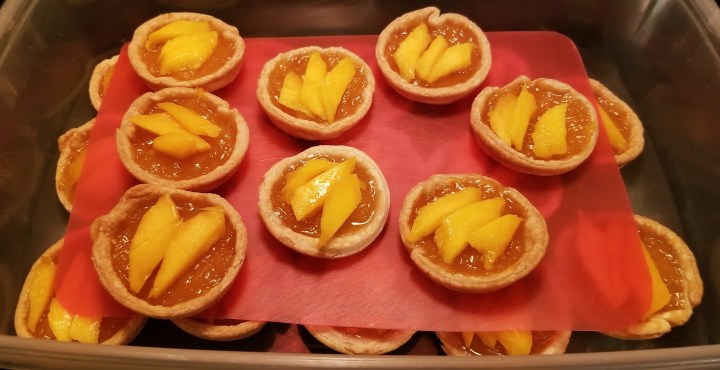
I am back from France! I have so many stories to share, but I wanted to publish this recipe today, Pi Day (3/14, see note at the end):
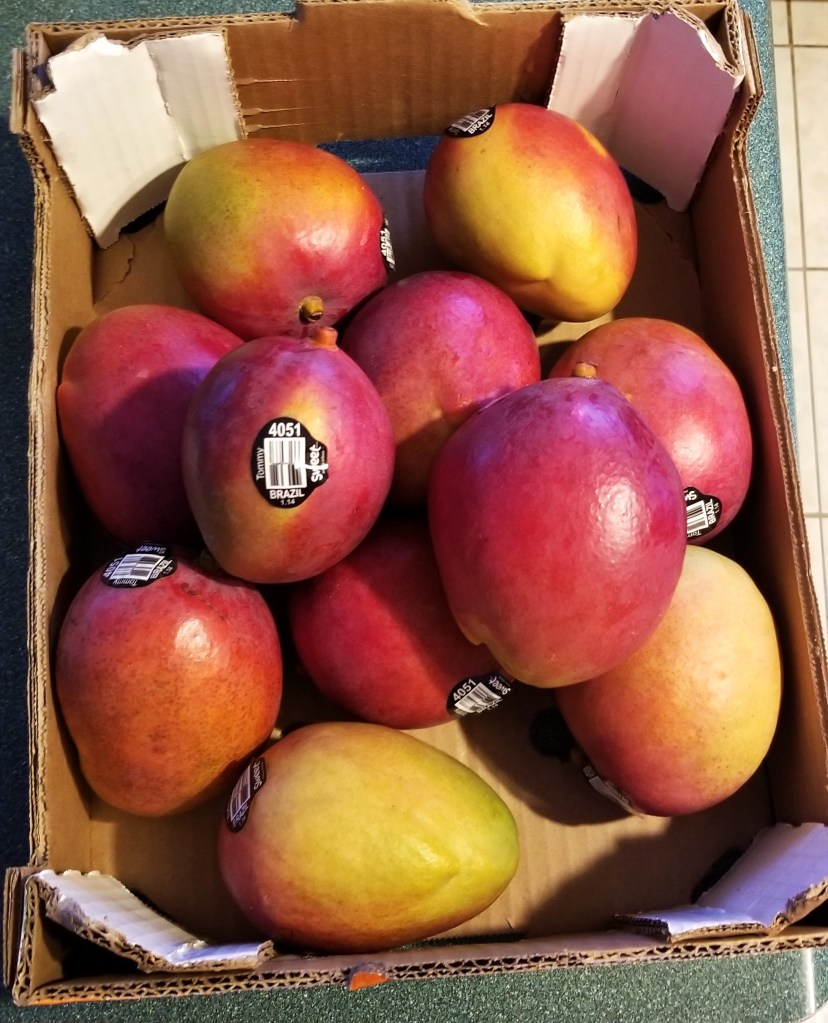
The other day at the supermarket, I spotted mangoes on sale; they looked beautiful, but could only be purchased by the case. So much potential … I could not resist, so one case of mangoes made it home:
I have mentioned before that, back when I was growing up in Mexico, my dad worked at an international commerce company owned by a Japanese family. Their pharmaceutical products line was the principal branch of the company, but they also had a property near Ciudad Valles, in the Mexican state of San Luis Potosí, where they kept sugar cane, avocado and mango orchards. A variety of mango, called Miyako, was developed there; large in size and with a very small pit, it became famous, and made the farm the only one in Mexico selling mango to the Japanese and European markets in the 1960s and 70s. I remember fondly when my dad would bring home a case or two; we would eat as much as we wanted, fresh, and my mom would earnestly cook and bottle mango preserves and jam, for pies, patties, or as a topping.
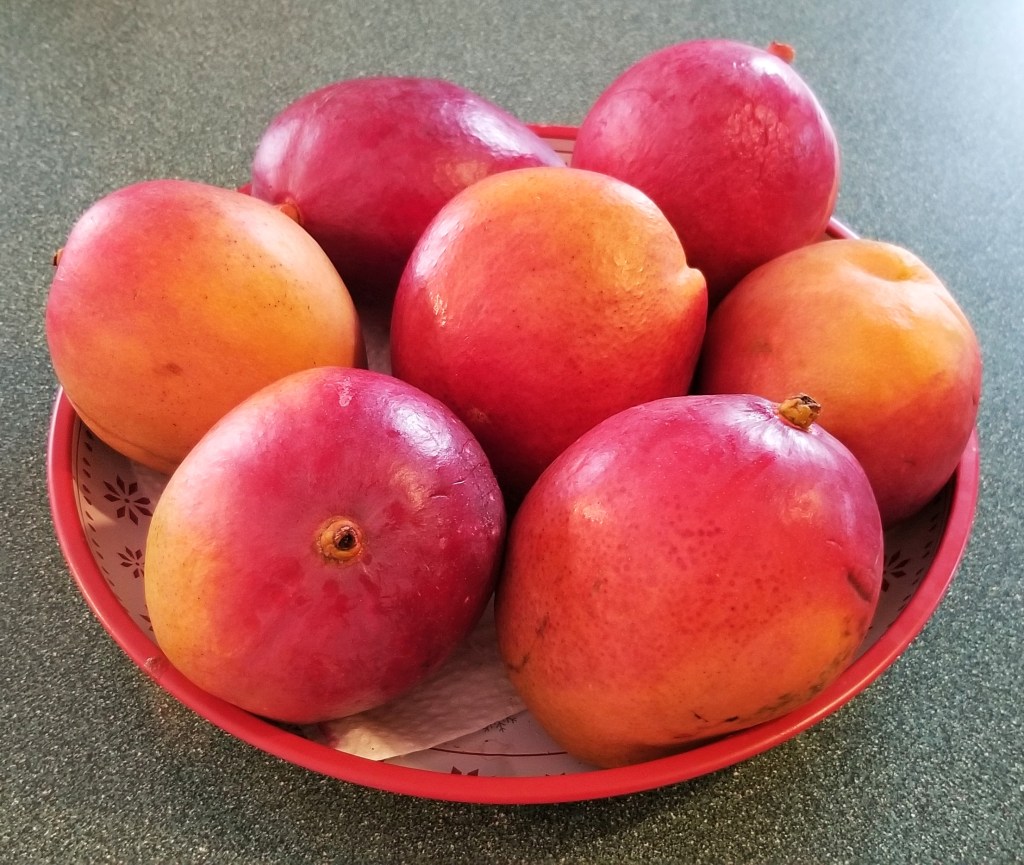
My mangoes came from Brazil, but the sight of a whole case made me smile, remembering those days. My husband and I then proceeded as my family did: we ate as many fresh mangoes as we wanted. A few days later, I decided it was time to make some preserves, and now I had these many mangoes left:
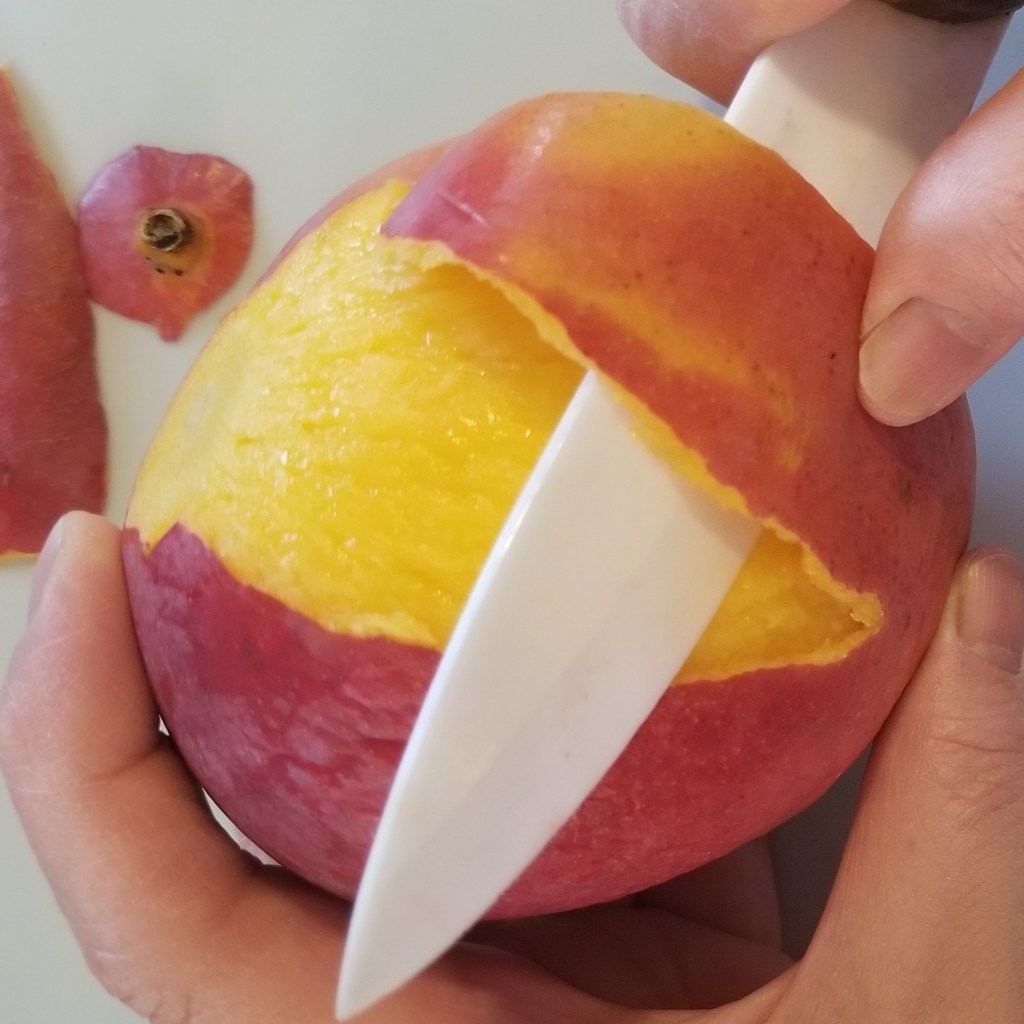
To process, wash and dry the mangoes. Remove stem end, and use a knife to pull strips of skin away from pulp; the skin should easily peel (photo below, left). Cut slices of pulp as close to the pit as possible (photo below, right):
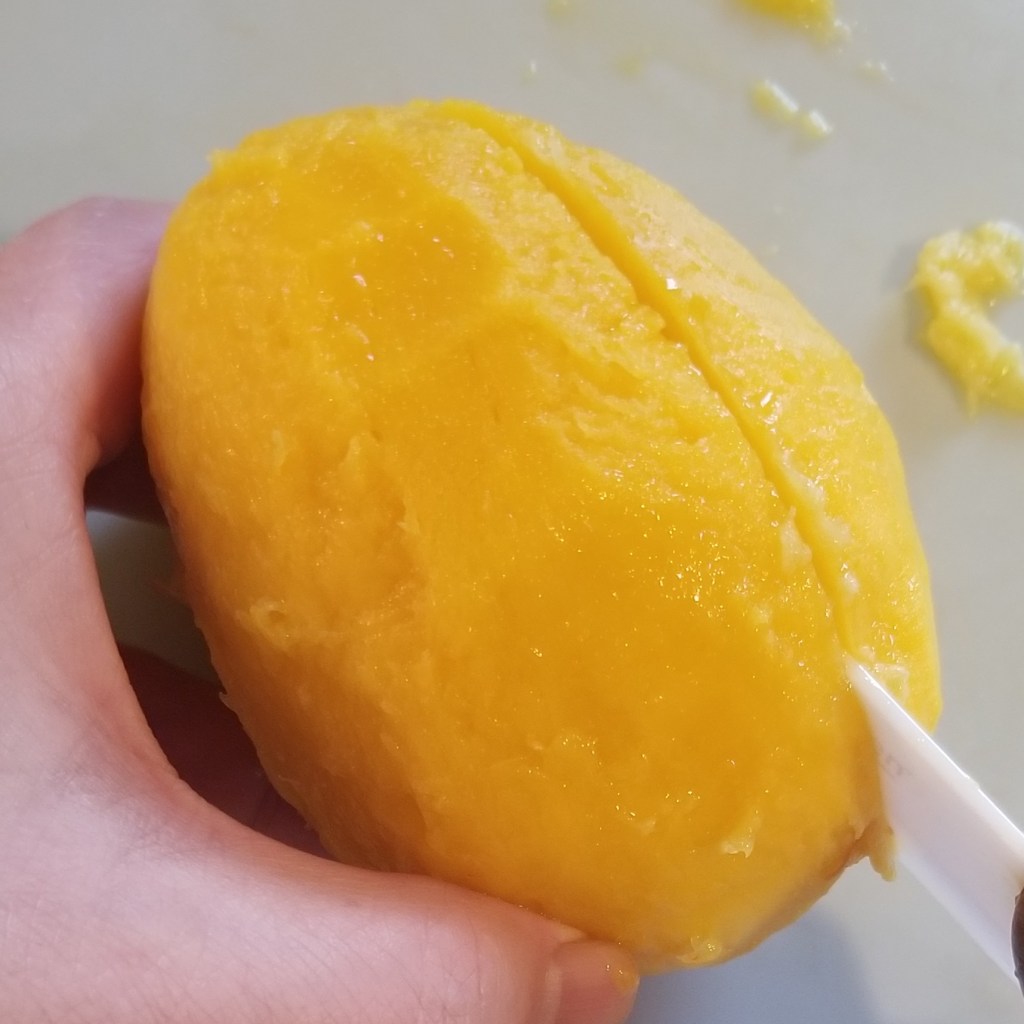
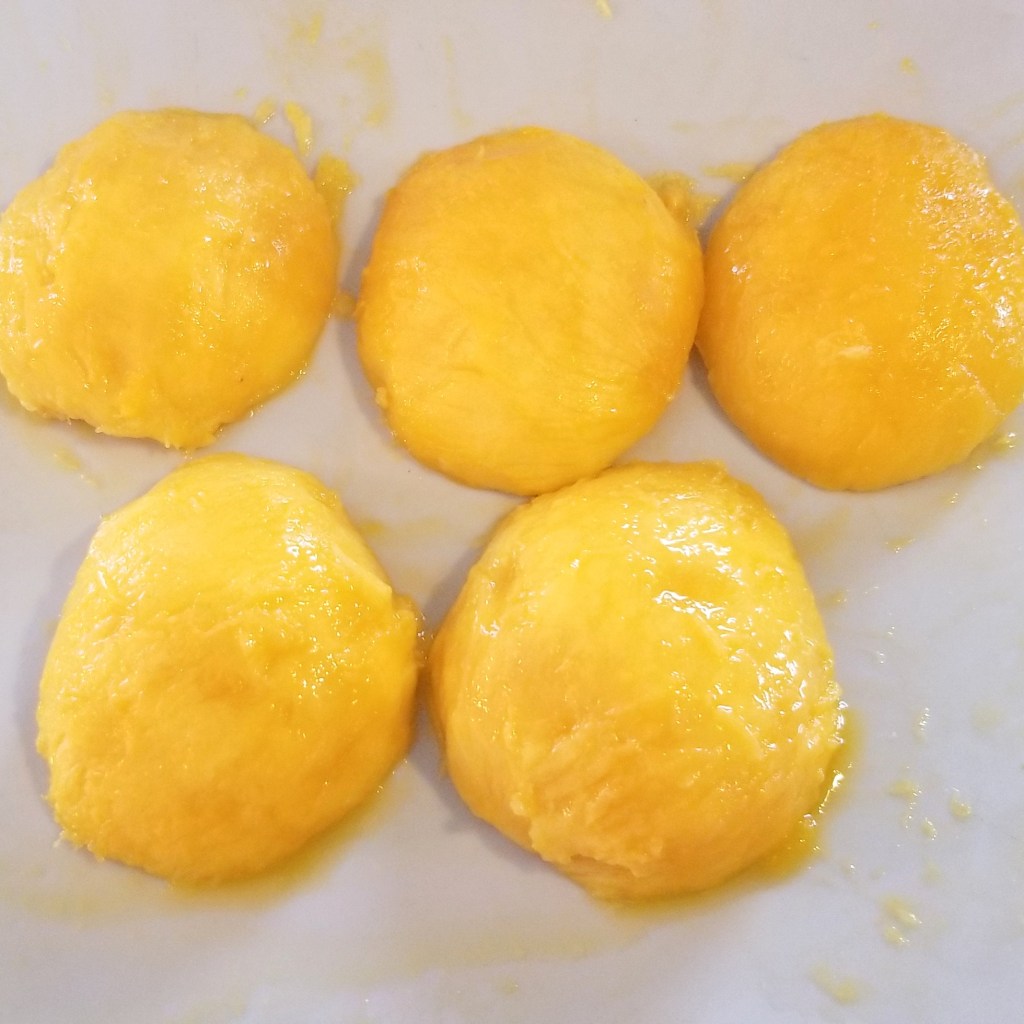
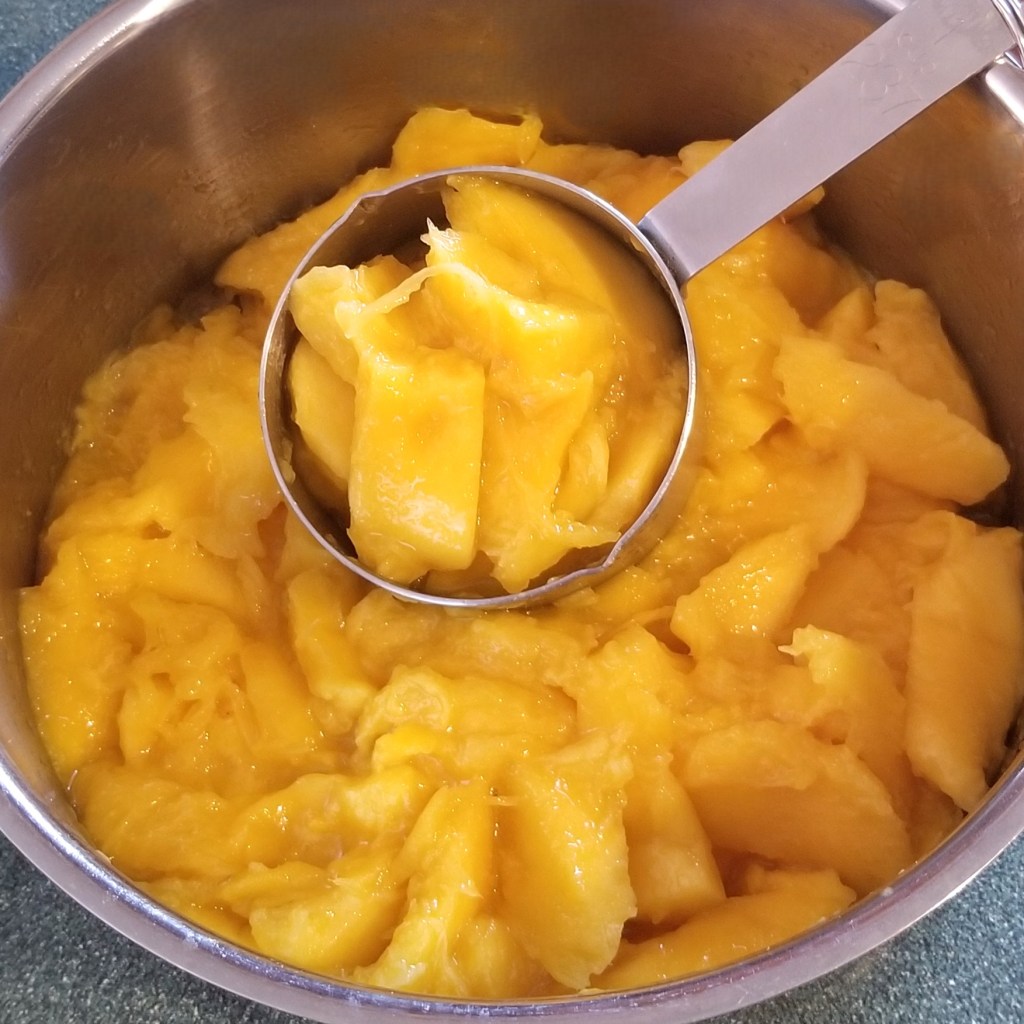
Cut the rest of the pulp, going around the pit, to get some extra chunks. I had initially planned to make mango jam, but the fruit was so sweet I decided to use less sugar and cook mango spread instead, keep some of the prettiest slices fresh, and make tarts. In the photo below, left, the slices kept fresh, and right, the rest after cutting into chunks, measuring and placing in a pot:
Mango Spread – Pasta de mango para untar
Printable recipe: Mango Spread
Ingredients
5 large mangoes, such as Tommy; washed, peeled, pit removed, and cut into chunks
1 ½ cups sugar
½ cup water
1 tbsp lime juice
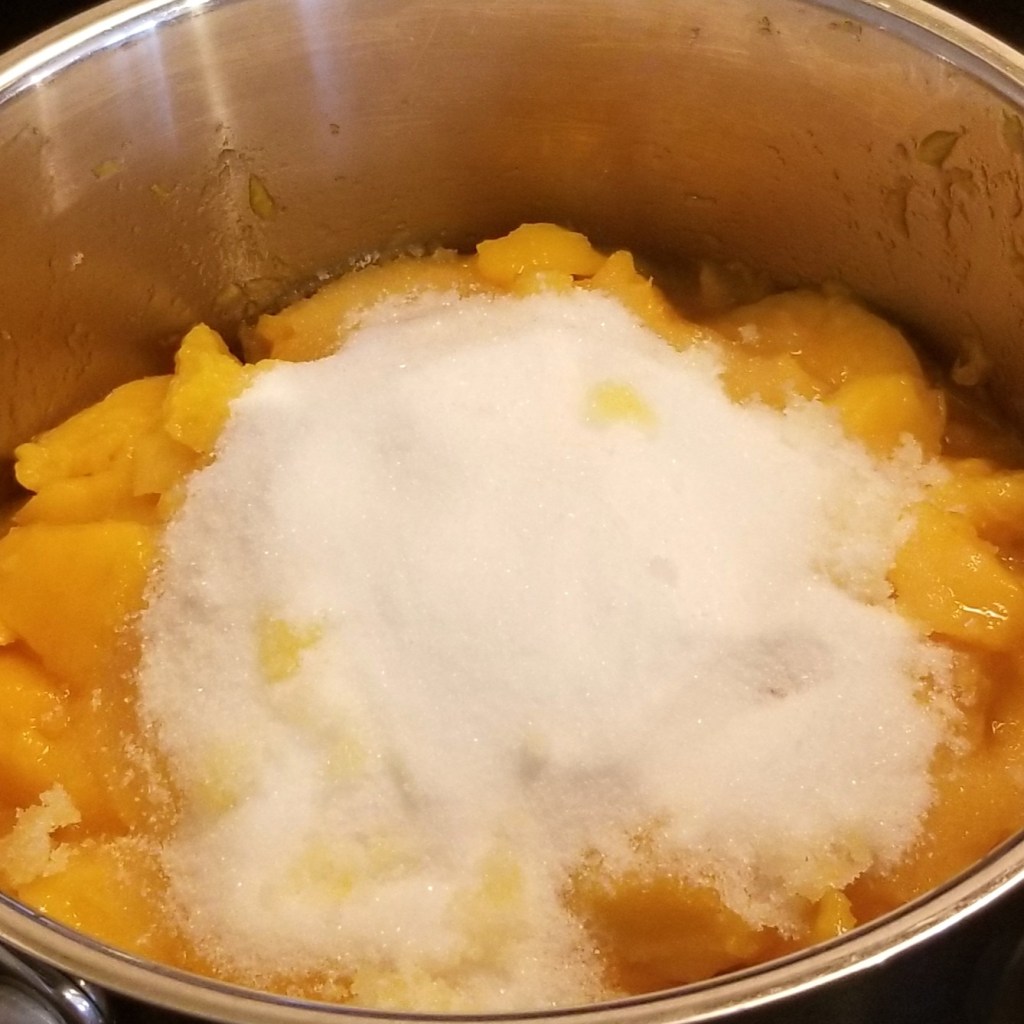
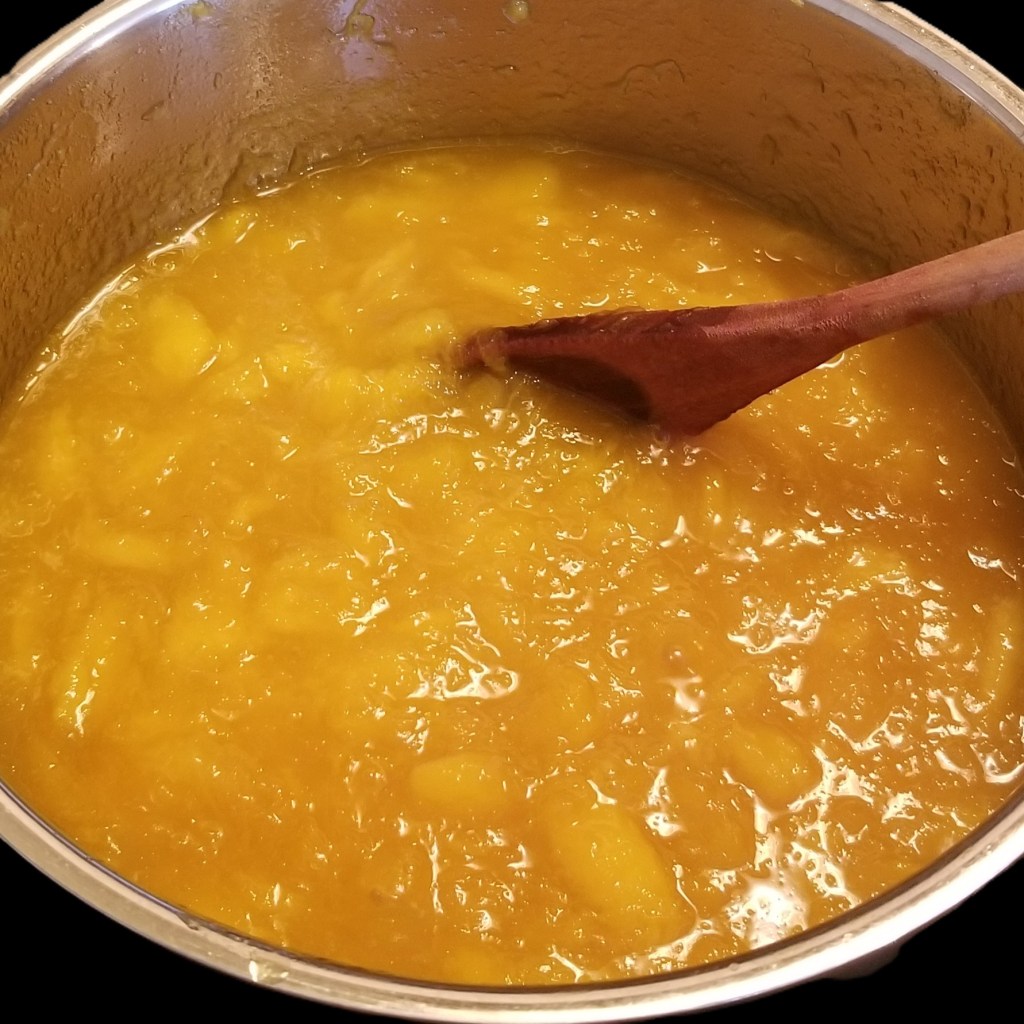
Place mango chunks (approximately five cups), water and sugar in a pot over high heat (photo below, left). Cook for approximately twenty minutes, stirring occasionally, until the fruit is soft and the mixture looks shiny (photo below, right):
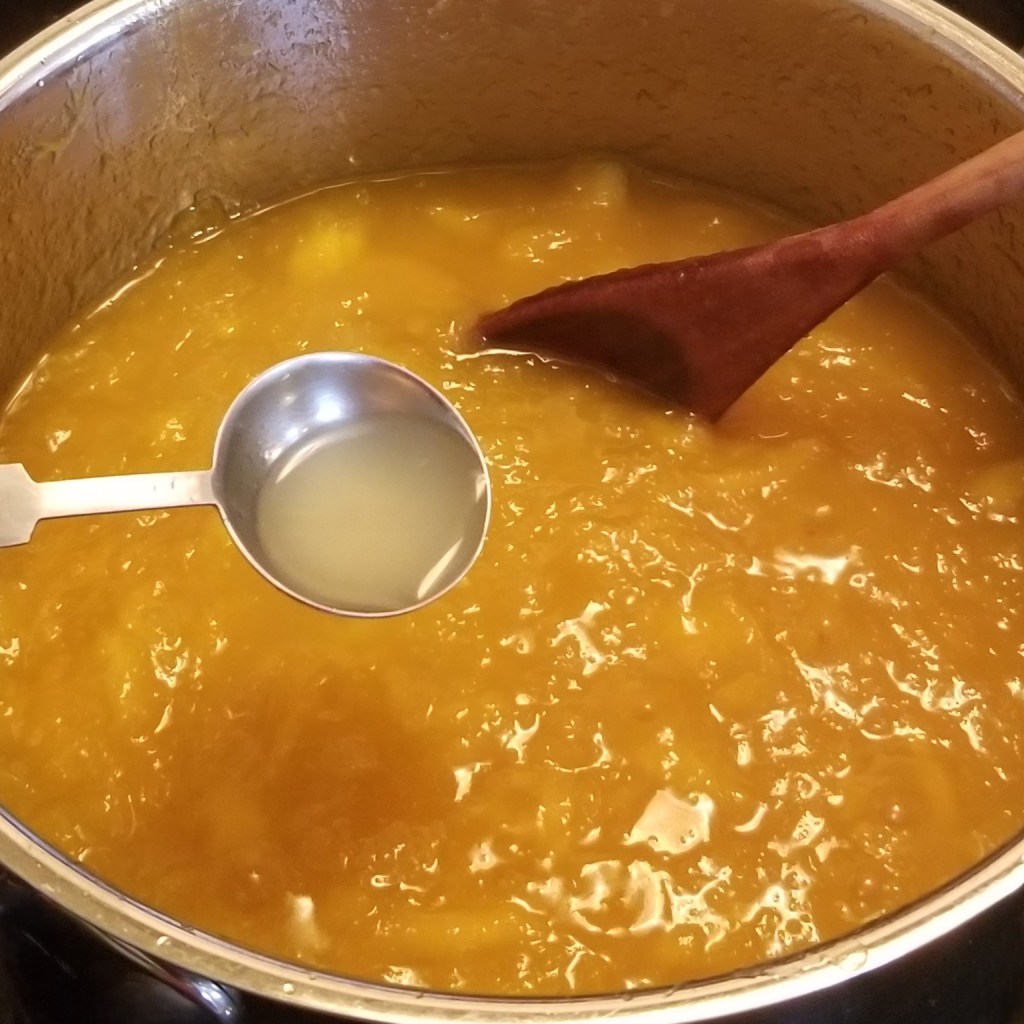
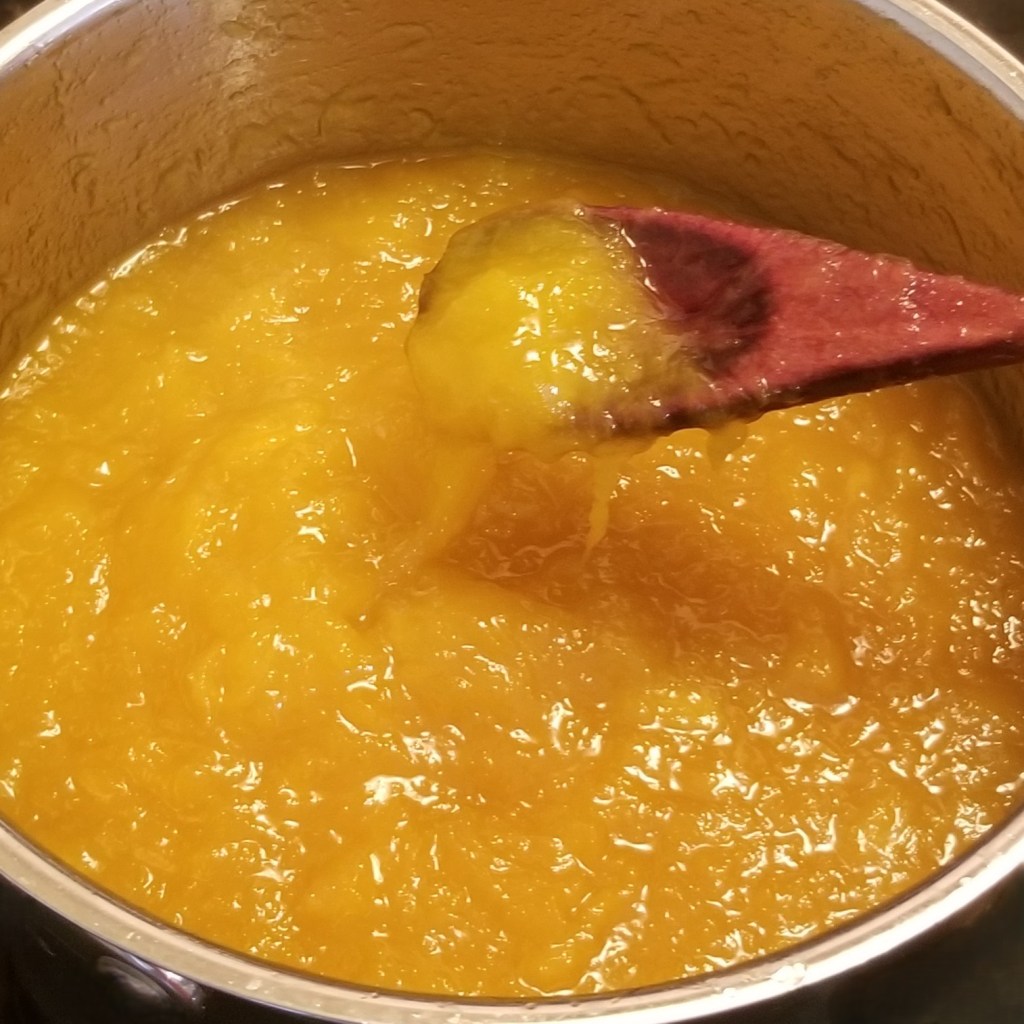
Add lime juice (photo below, left), and continue cooking and stirring for another five to eight minutes, until a spreadable consistency is achieved (photo below, right):
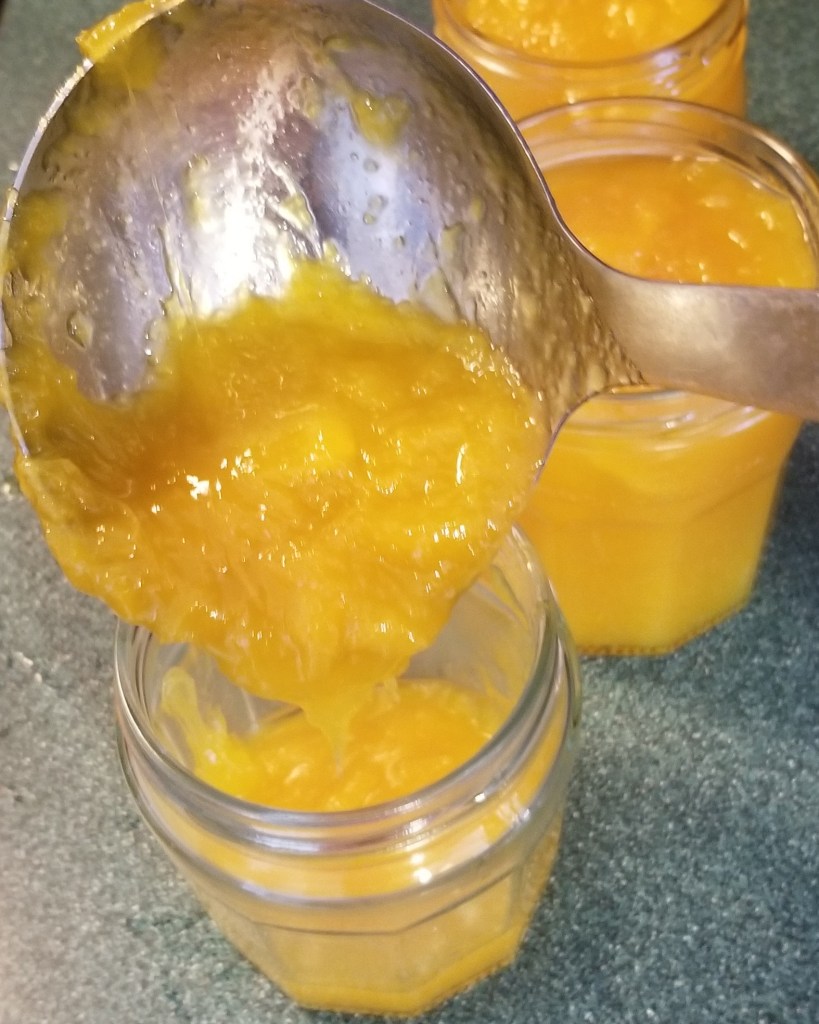
Transfer to clean jars with lids (makes about three and a half cups):
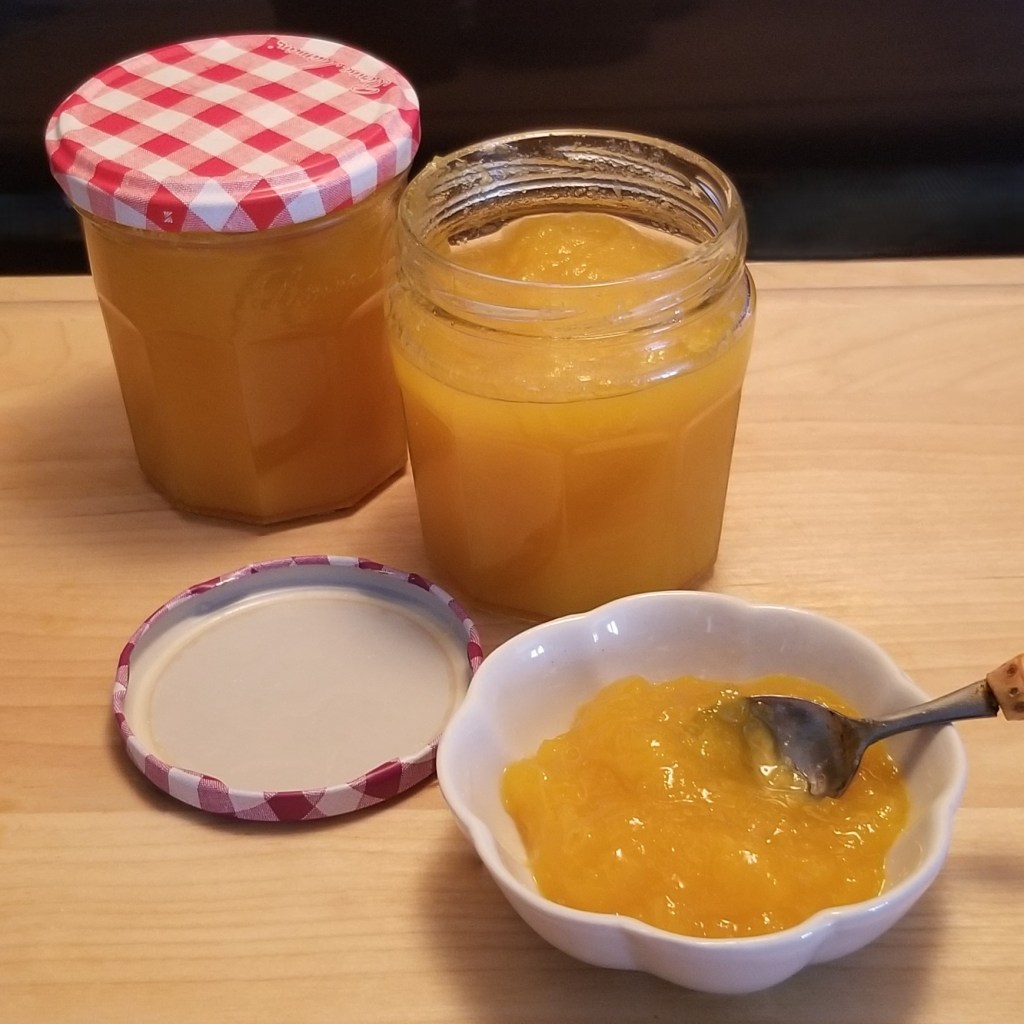
Keep refrigerated, and use within three to four weeks.
Mango Tarts – Tartas de mango
Ingredients (for 24 small tarts)
2 batches pie crust dough (click here for my recipe or from store)
2 cups mango spread
1-2 cups fresh mango slices
Equipment: Rolling pin, 2 muffin tins (2-2.5 in = 5-6.5 cm, top diameter of a mould), round cutter (same diameter.)
Roll dough to about 1/8 inch (3 mm) thick. Cut circles using the rim of a glass or a round cookie cutter, roughly the same size as the diameter of a muffin mould. Press one dough circle down each muffin mould, to line the inside, then fill with a generous tablespoon of mango spread; repeat with all the dough and spread:
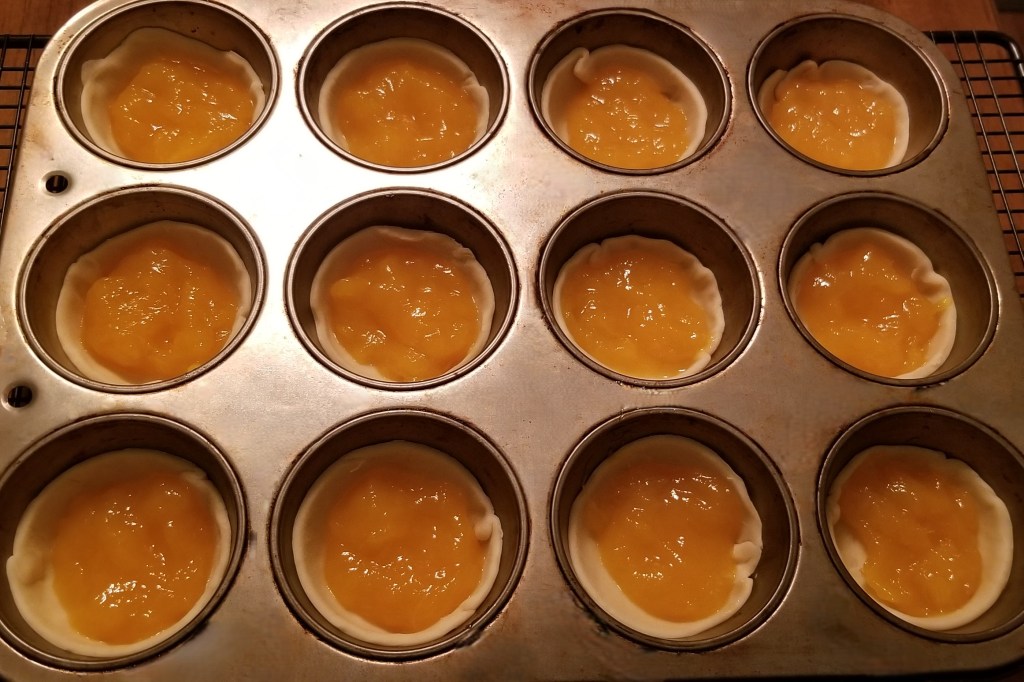
Bake in preheated oven to 350ºF (180ºC) for 25-35 minutes, until crusts are golden brown. Remove trays from oven and let cool for at least 20 minutes before removing tarts from moulds. Once cooled, top with a few slices of fresh mango:
Store in a sealed container in the fridge until serving time; they are better when consumed within one day or two.
Today is π Day! – March 14 is PI Day (π- Day), a celebration of the mathematical constant π, defined as the ratio of a circle’s circumference to its diameter, which is always equal to an irrational number beginning with the digits 3.14; for this reason, March 14, if written as 3/14, was a good fit for the celebration. The first celebration of Pi Day took place on March 14, 1988, and since then, it has become a well-oiled engine: many schools, libraries and Math institutions celebrate by eating pies and other circular treats, as well as holding Math competitions, such as who can recite, by memory, the longest list of π’s significant digits.
These delicious mango tarts, just like any circular shapes, obey the π ratio, and are a great treat to celebrate Pi Day!
For your convenience, click on the images below for products available on Amazon™. DISCLAIMER: Any reviews included in this post are my own, for items I have purchased, not provided by any company; as an Amazon Associates Program affiliate, I might receive a commission for any purchases originated from the links below, at no extra cost to you (thank you to readers who have bought other products starting with a click from my links!):
I am bringing my recipe to Full Plate Thursday #786 with Miz Helen @ Miz Helen’s Country Cottage.
I am sharing my post at Thursday Favourite Things #751, with Bev @ Eclectic Red Barn, Pam @ An Artful Mom, Katherine @ Katherine’s Corner, Amber @ Follow the Yellow Brick Home, and Linda @ Crafts a la Mode.
I am joining Fiesta Friday #633 with Angie @ Fiesta Friday.





 My Slice of Mexico
Welcome back home 🙌 those tarts look divine 😋
LikeLike
Thank you!!
LikeLiked by 1 person
♥️
LikeLiked by 1 person
Thanks for the recipes, they are easy enough!
LikeLiked by 1 person
Hope you get to try them , Alice!
LikeLiked by 1 person
Omg those look delicious!
LikeLiked by 1 person
Thank you, Lisa!
LikeLiked by 1 person
You are welcome, Irene. I bet they were delicious.
LikeLiked by 1 person
They were! 😊
LikeLiked by 1 person
Mango season is right round the corner for us, Irene!
Those tarts are droolworthy.
LikeLike
Ooo, yummy!
LikeLiked by 1 person