

Click here to go to printable recipe: Huaraches
As I mentioned in my previous post, huarache is a type of Mexican sandal, and also a Mexican dish. The shoes have been made since pre-Hispanic times by braiding leather straps on top of a flat, leather sole. The word comes from kwaṛáči (warachi), meaning sandal, a word from the Purépecha language (previously Tarascan); still spoken in the Mexican state of Michoacán, this language has no links to any other, and has been designated as a language isolate. Currently, although authentic huaraches are always handcrafted in Mexico in leather, the word is a generic name for flat-sole sandal-type footwear, ranging from some with rubber soles, to others made of wool, plastic, and even high-tech shoes, such as the Nike Air Huarache.
The Mexican dish got its name from the sandal, and has a very well-known origin story. In the 1930s, a young woman named Carmen Gómez, found herself a widow with five children; she moved to Mexico City, and to support her family, set up a stand by the then Canal de la Viga, and began selling corn dough (masa) patties filled with refried beans and topped with salsa. She was not very proficient at first, and the size and shape of her product were bigger than a tortilla, and elongated. She did not get discouraged and continued selling her patties, and people liked them for being very filling, and for the virtues of her salsas, perfectly seasoned and made in molcajete (Mexican mortar); amongst the ruckus of people ordering their patties, at some point someone jokingly called them “huaraches” for the size, as big as a shoe sole, and the shape, long and flat, and the name stuck. In the 1950s, when the Mercado de Jamaica (Jamaica Market) was built in the area, Doña Carmelita secured a stand inside, but eventually spent some time trolling for locations with more traffic, and relocated to a spot on nearby Torno street; along the way, she and her descendants also added toppings to the plain huarache, from beef rib, to eggs, cheese, sautéed vegetables or mushrooms, etc.
The original name of the established business was “Huaraches La Azteca”, which still operates with no branches, keeping their ingredients and recipes as true as possible to Doña Carmelita’s; in 2005, one of her grandchildren decided to split from the family business and re-brand the product with a restaurant named “El Huarache de Jamaica”, with a more contemporary approach, now with several branches, as well as some international toppings, such as Uruguayan cheese and Canadian beef.
After almost 90 years of the creation of this masa dish, the huarache is now known not only in all of Mexico, but in the US, Canada and other countries. There are many renditions, and each cook or restaurant has chosen different sizes, proportions, and toppings, for their huaraches. In the photos below, three examples, from left, from Mexico, The US, and Canada:

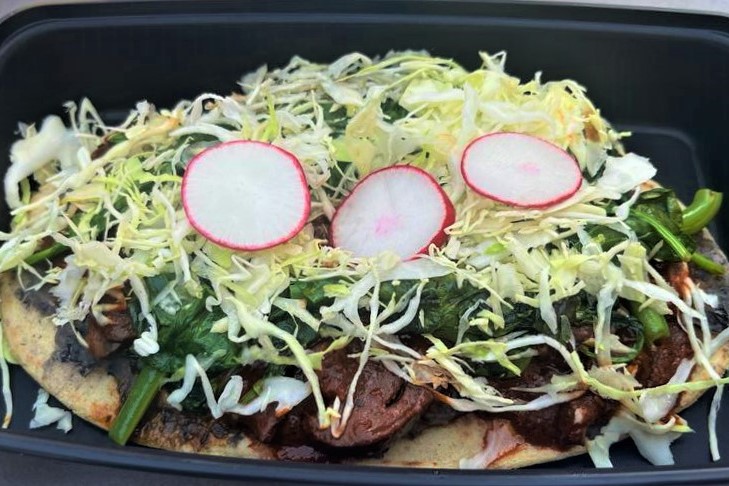

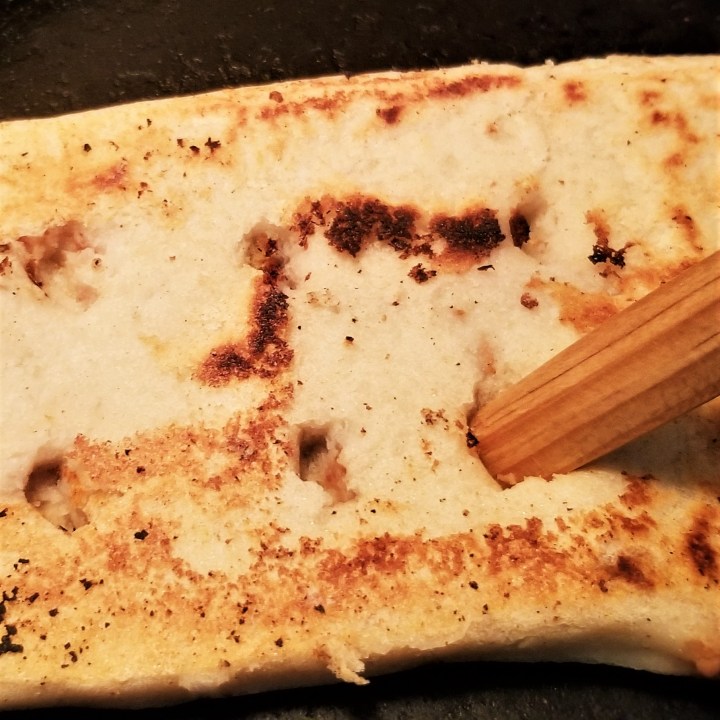
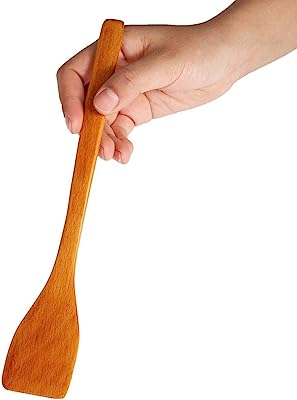
All of these examples have refried beans, but as a topping, as opposed to filling the dough oval, as it is always done in the original version; they are also more rounded than the original, which really looks like a shoe sole (“La Azteca” quotes dimensions of 29×8 cm – 11.4×4.2″). Because of the bean filling and large size, Doña Carmelita’s huaraches were formed thick, then extended to their final length on the griddle (comal). The sole-shaped ovals were cooked, then pinched on the surface, to make sure they were not raw inside; her family continues this unique feature, by indenting with a wooden tool with a rectangular flat tip. The ovals are also offered either fried with lard, or grilled.
For my huaraches, I decided to preserve the original features of beans as a filling, doing the final shaping on the griddle, and indenting. I first prepared the classic, fried with lard and topped with salsa, then I ventured with grilled patties, and several toppings.
Huaraches
Ingredients (for six pieces)
3 cups nixtamalized corn flour (masa harina, such as Maseca™ or Bob’s Red Mill™)
4 cups water, plus more, as needed
1 ½ cups refried beans (click here for homemade, or from can)
Cooked tomatillo green salsa (click here for homemade, or bottled)
Tomato red salsa (click here for red with dry guajillo, pasilla, etc., or click here for red spicy, or bottled)
½ cup lard or vegetable oil (optional); for pan frying
Toppings (optional)
Sautéed Mixed Greens (one batch)
4 cups mixed fresh greens, such as spinach, Swiss chard, purslane, pea vine, quelites, etc.; washed, and chopped coarsely
4-5 green onions; washed, roots removed, and white and green parts chopped
¼ cup epazote (if available, or omit); washed and chopped
1 tbsp oil
Salt and black pepper, to taste
Sautéed Mushrooms (one batch)
4 cups mixed mushrooms, such as Cremini, Oyster, Enoki, etc.; wiped clean, and chopped coarsely
¼ white onion; peeled, and chopped finely
¼ cup epazote (if available, or omit); washed and chopped
1 tbsp oil
Salt and black pepper, to taste
Con bistec – With Steak (for six portions):
6 steaks, such as Sirloin or Skirt (arrachera)
Salt and black pepper, to taste
Vegetariano – Vegetarian (for six portions):
1 ½ cups crumbled cheese, such as Cotija, Añejo, or light Feta
1 batch sautéed mixed greens
6 sprigs cilantro, or pea vines; washed, for garnish
Vegano – Vegan (for six portions):
1 batch sautéed mixed greens
1 batch sautéed mushrooms
3 cups cabbage; shredded, washed, and drained
Con todo – With Everything on (for six portions):
3 steaks, such as Sirloin or Skirt (arrachera)
1 ½ cups crumbled cheese, such as Cotija, Añejo, or light Feta
3 cups cabbage; shredded, washed, and drained
¼ white onion; peeled, and sliced finely
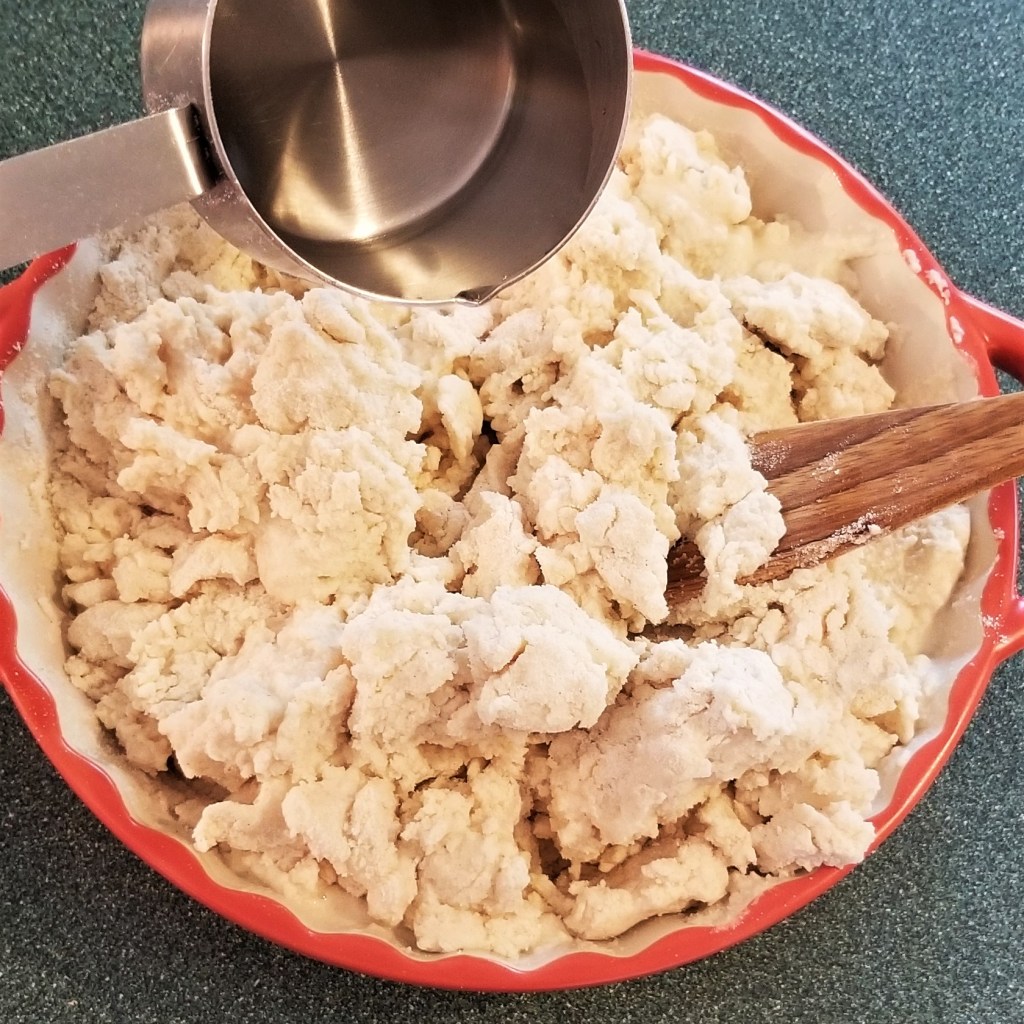
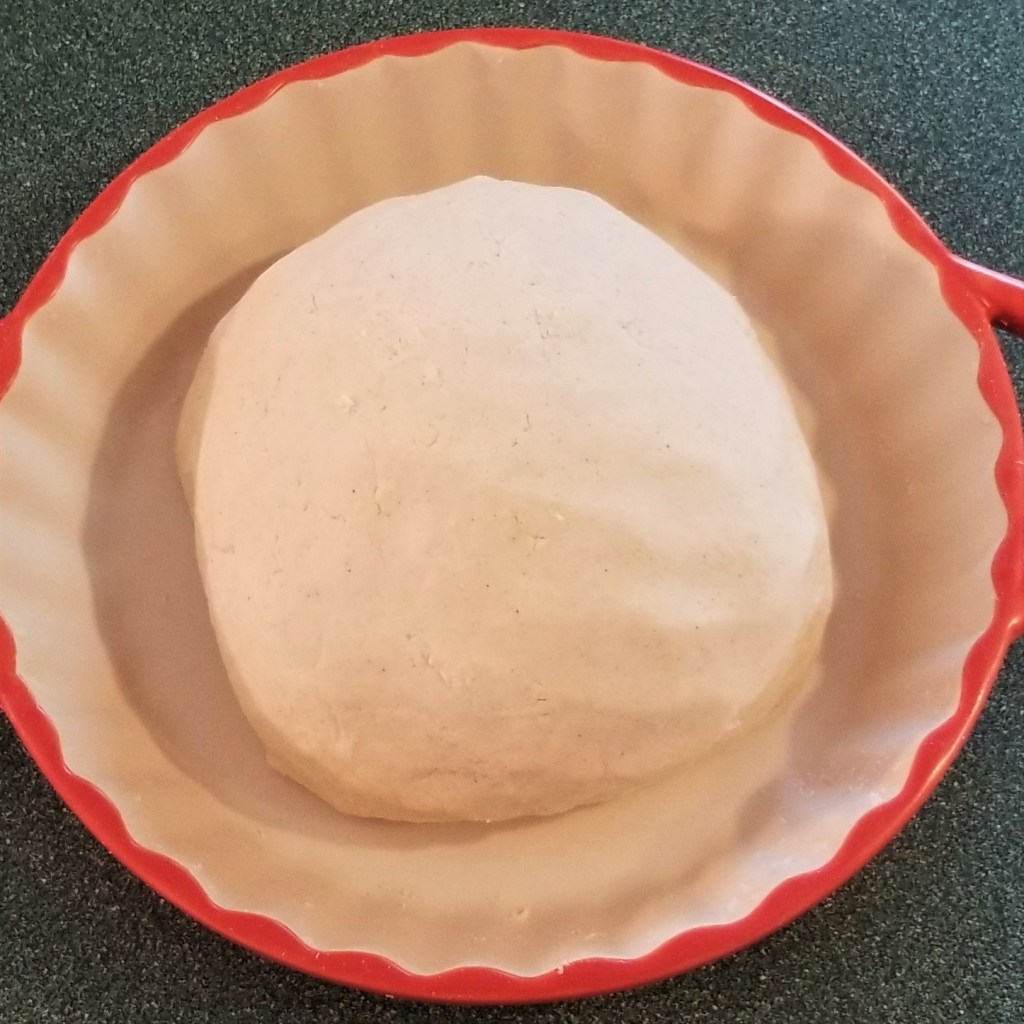
Prepare dough (masa): Place nixtamalized corn flour in a mixing bowl; add water gradually, stirring with a spatula, to hydrate the flour (photo below, left). Continue adding water (approximately four cups) and mixing, kneading gently with hands, until all the flour has been incorporated, and the dough may be formed into a very moist ball (photo below, centre). Cover with a kitchen towel (photo below, right):
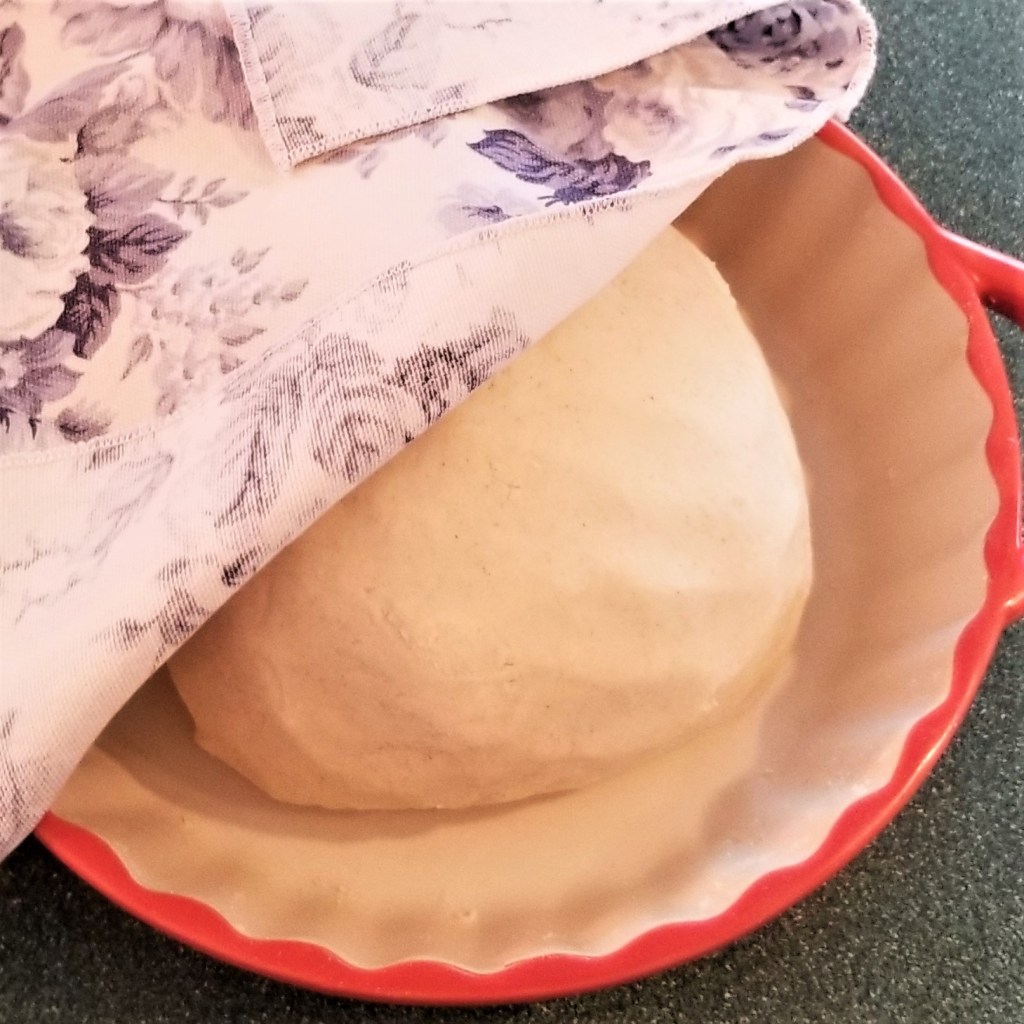
Set aside and allow to rest at least for twenty, to thirty minutes. It may be stored in a sealed container in the fridge for a few hours.
If using, prepare sautéed mixed greens: In a previous post, I had a mix of garden purslane (verdolaga), lamb’s quarters (quelite de cocina), parsley and pea vine that I am using as my greens. In the photo below, all washed and chopped, along with green onions and epazote:

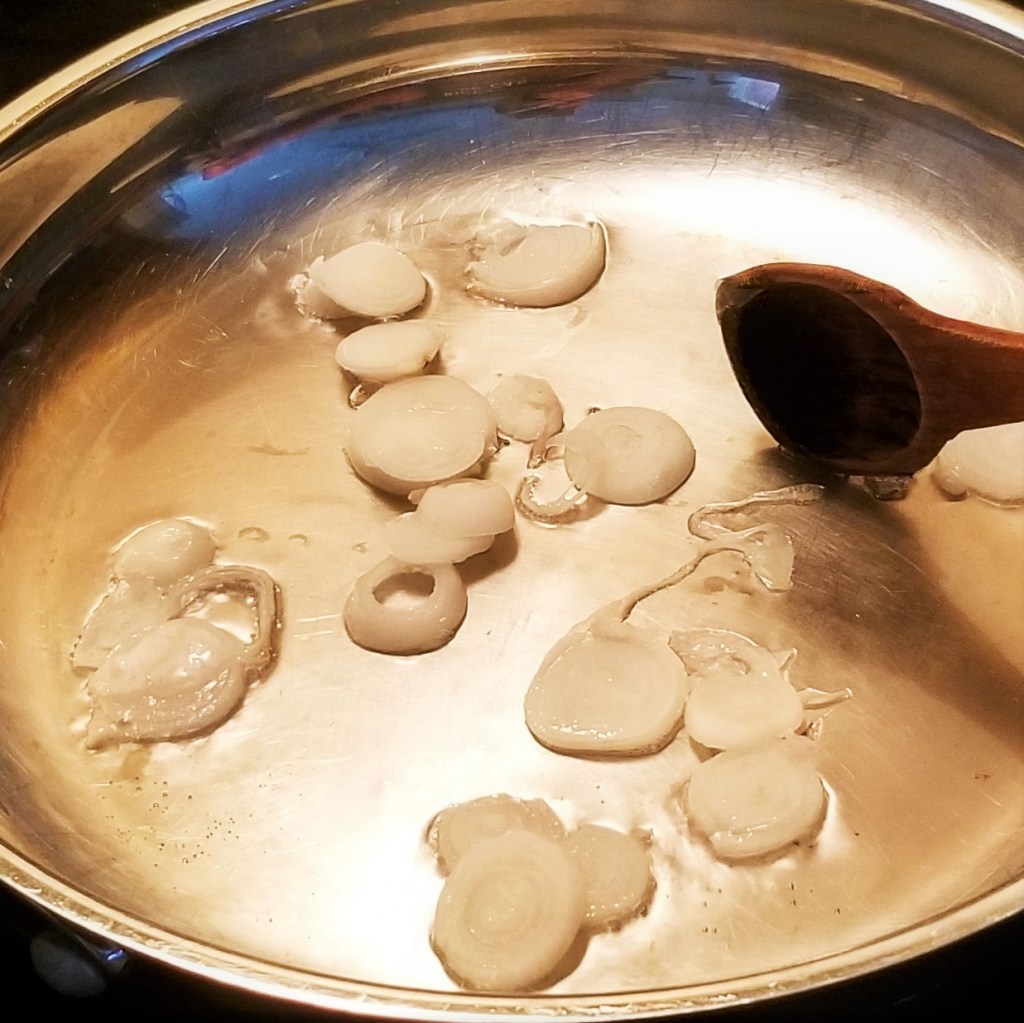
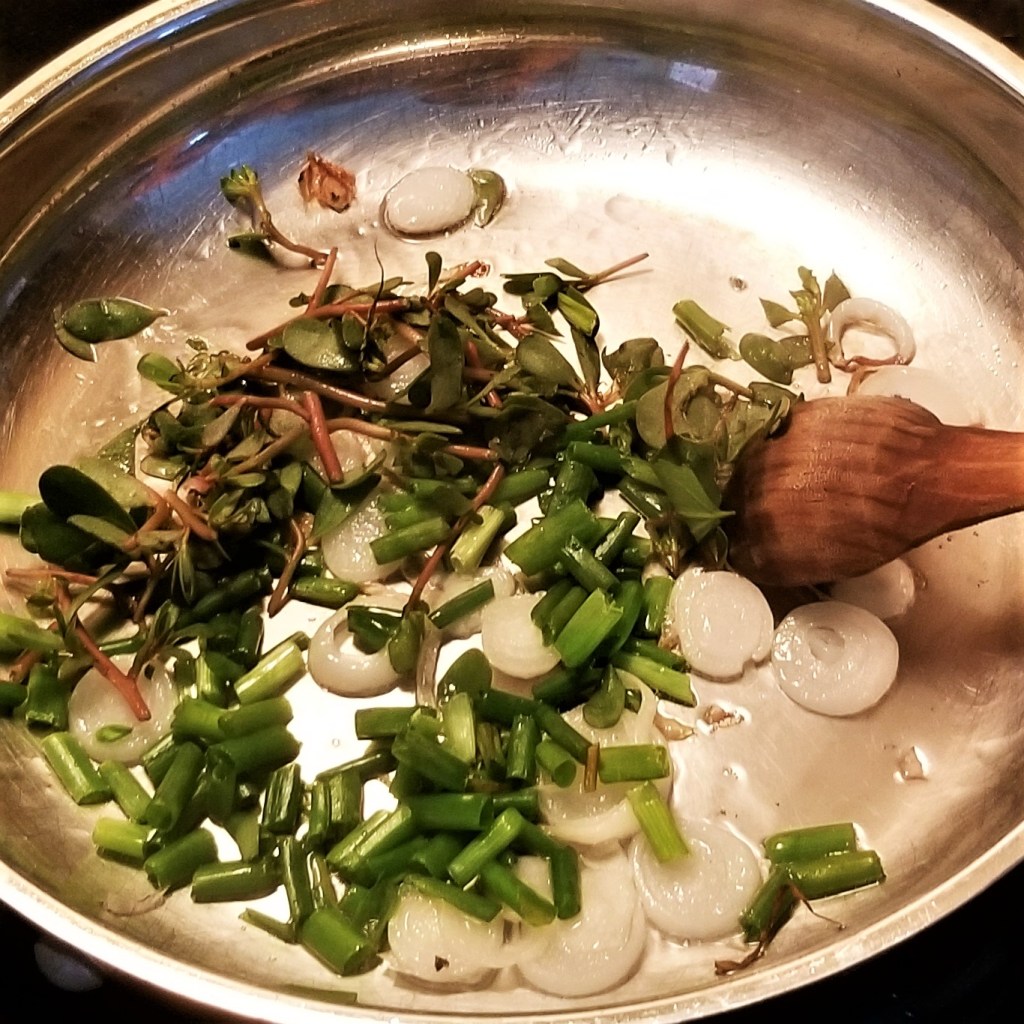
Warm up oil in a frying pan over medium heat; add and sauté the white parts of the green onions (photo below, left), until they become translucent; add green parts of onions, plus any thick greens, such as purslane (photo below, right):
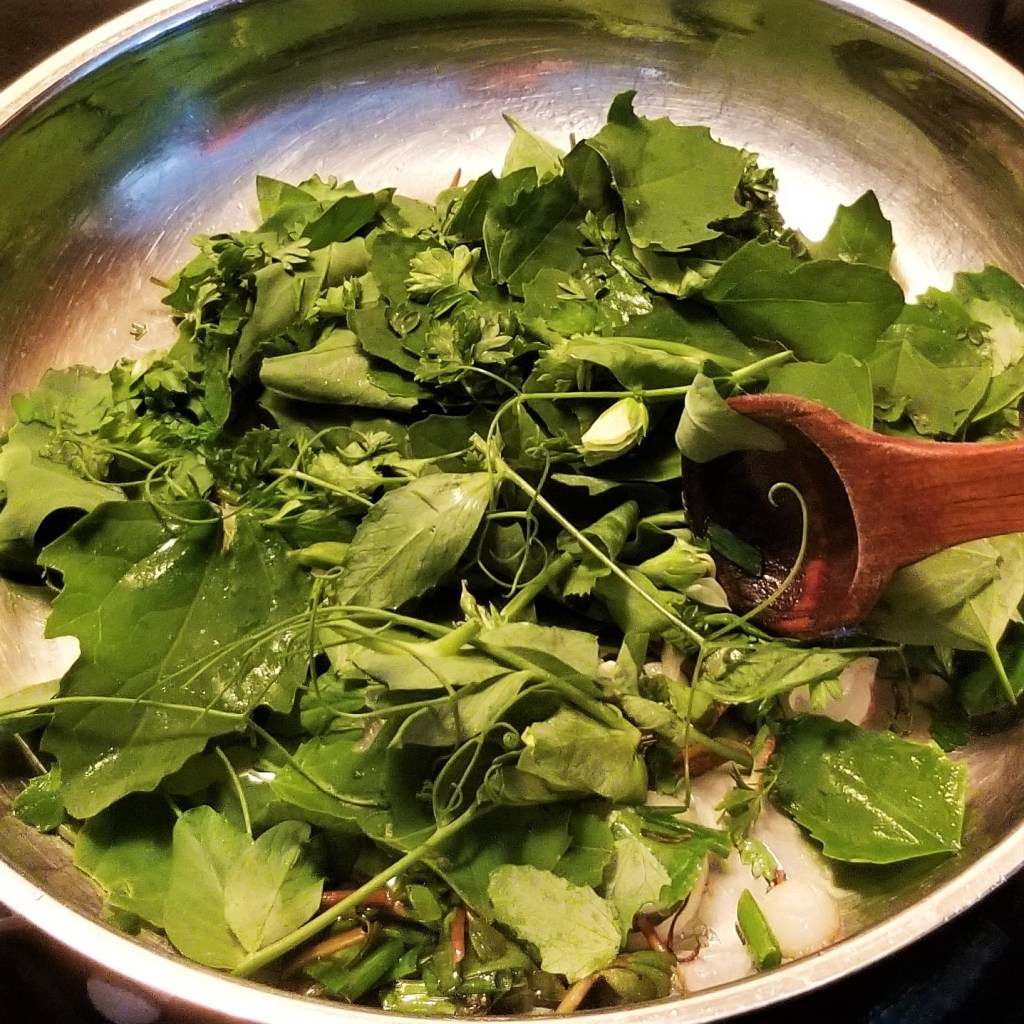
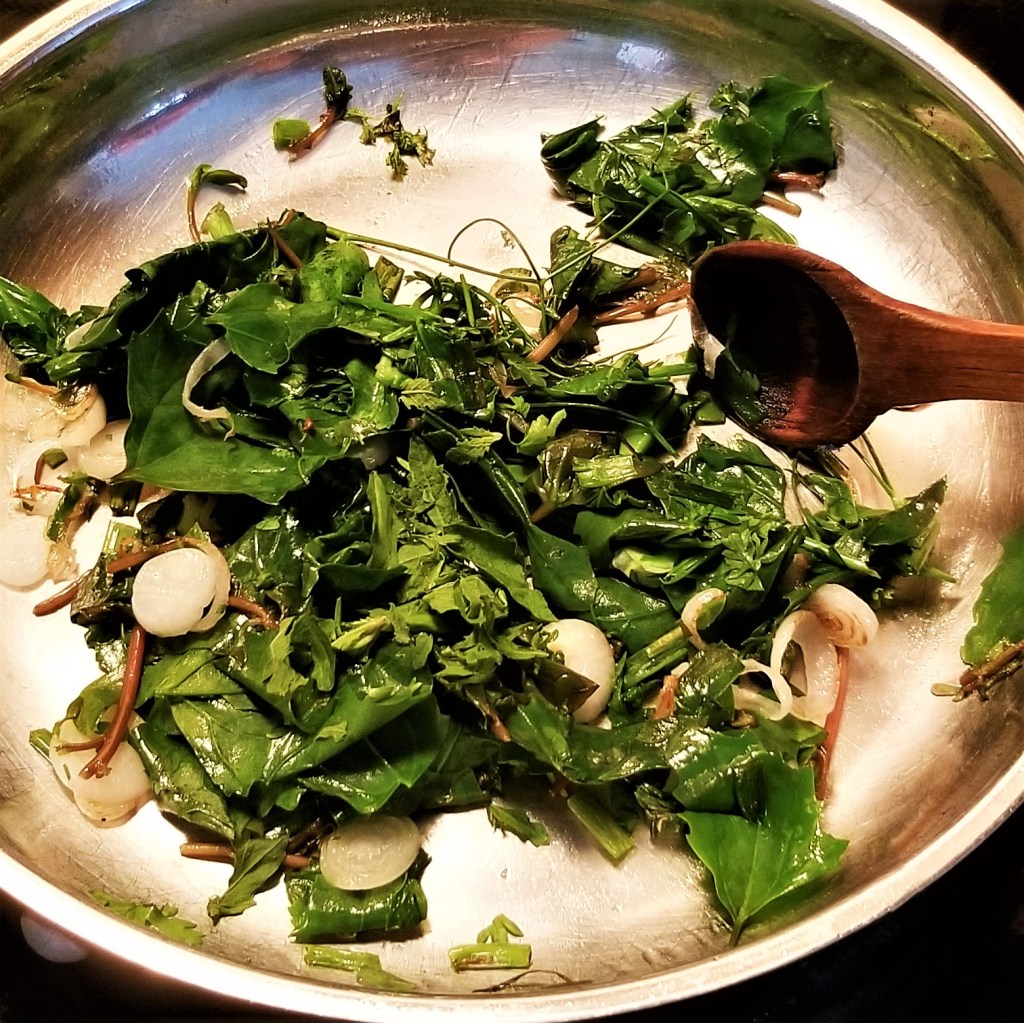
Incorporate the rest of the greens (photo below, left); cook just until wilted, then turn off the heat and add epazote (if using, photo below, right):
Season with salt and black pepper, to taste. Keep warm until needed.
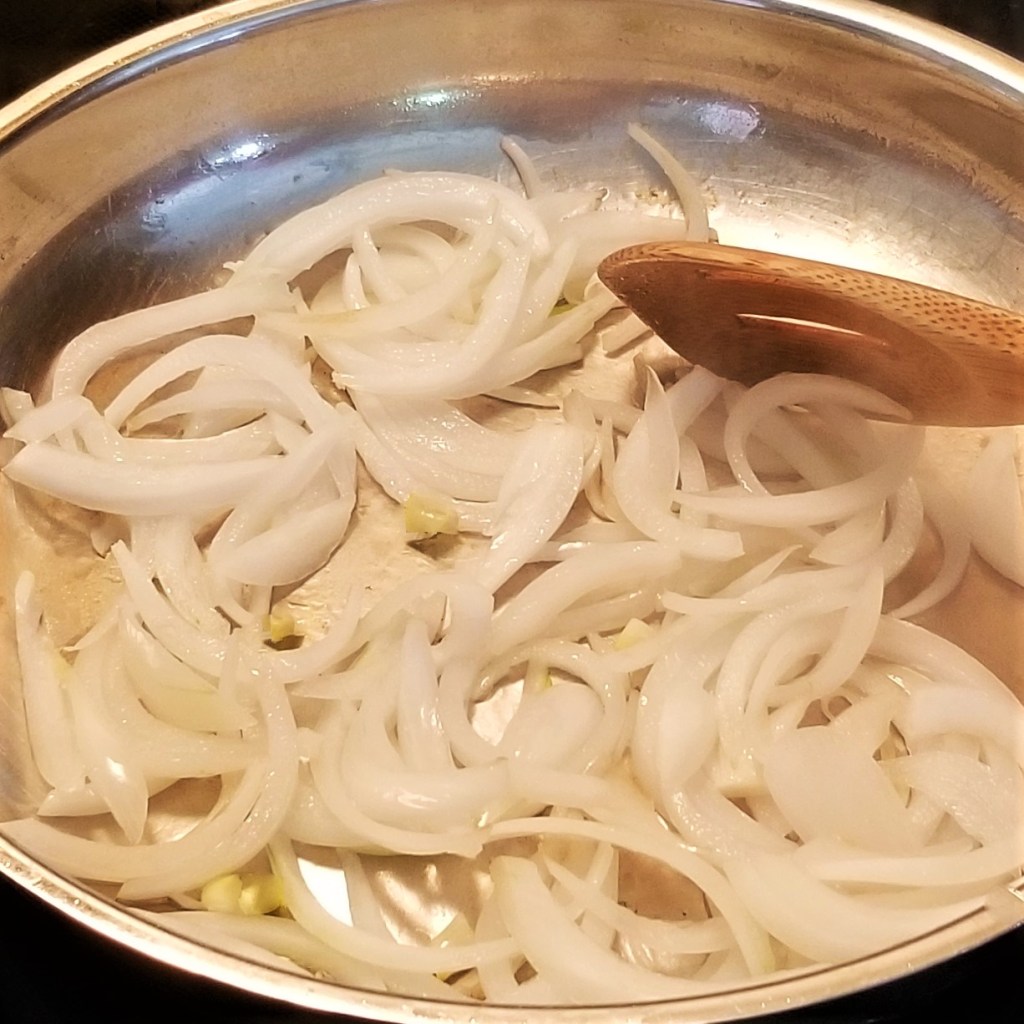
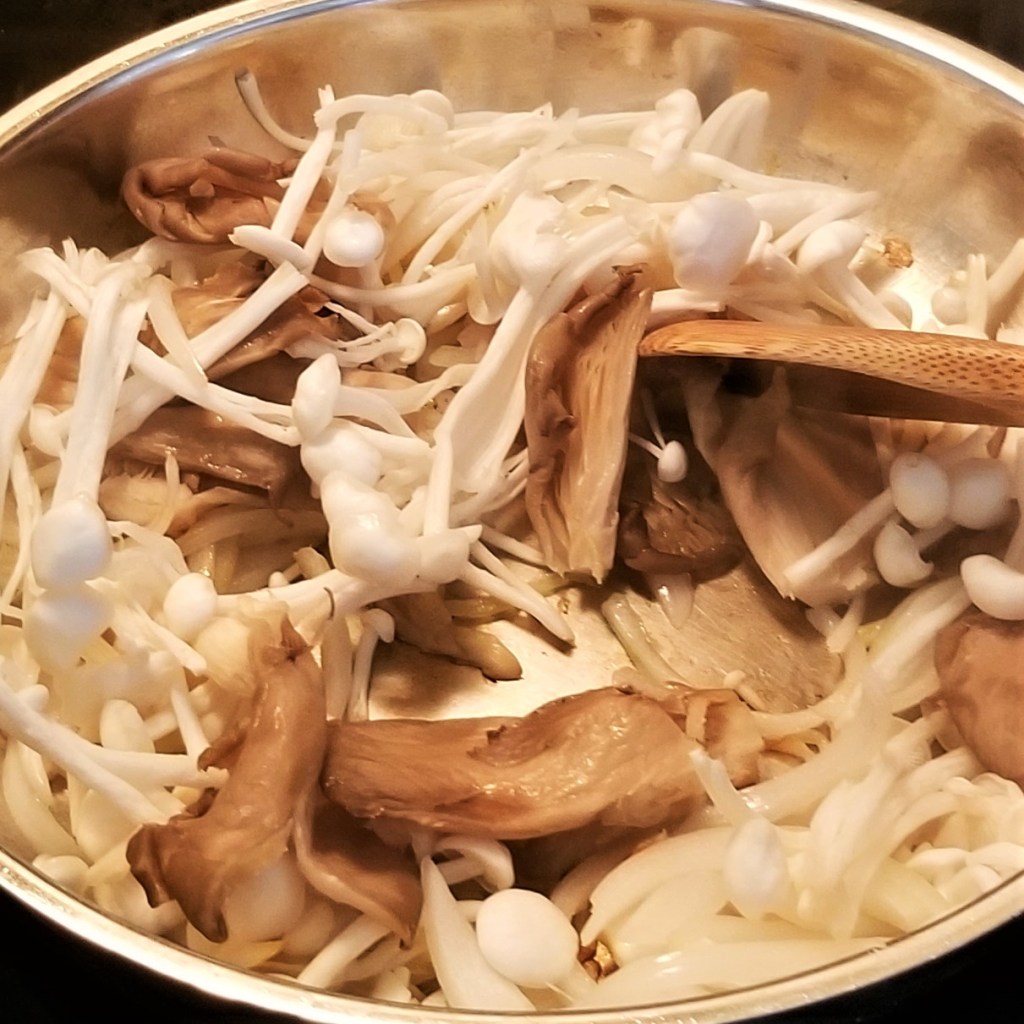
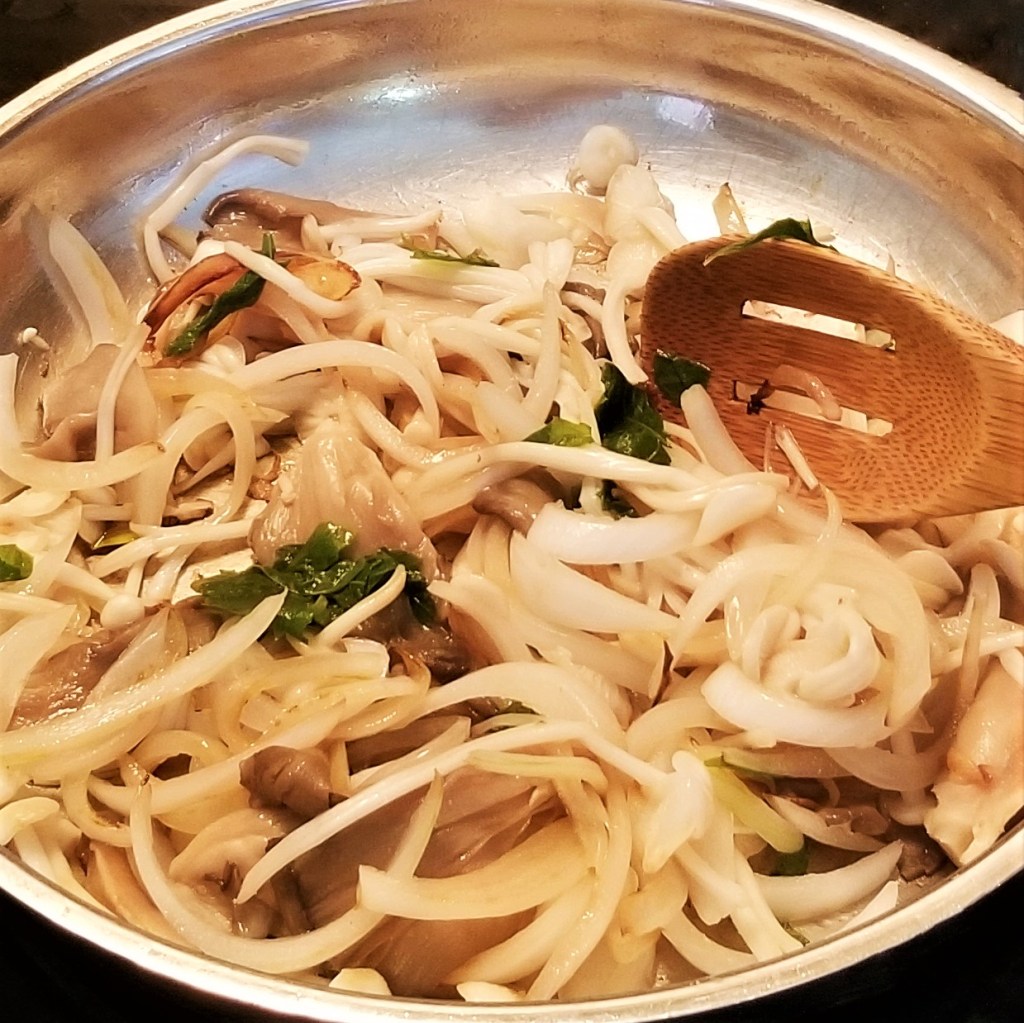
If using, prepare sautéed mushrooms: Warm up oil in a frying pan over medium heat; add and sauté onions (photo below, left), until they become translucent; add mushrooms and incorporate (photo below, centre). After two minutes, turn off heat, season with salt and black pepper, to taste, and add epazote (if using, photo below, right):
Keep warm until needed.
If using, grill steaks right before preparing huaraches:
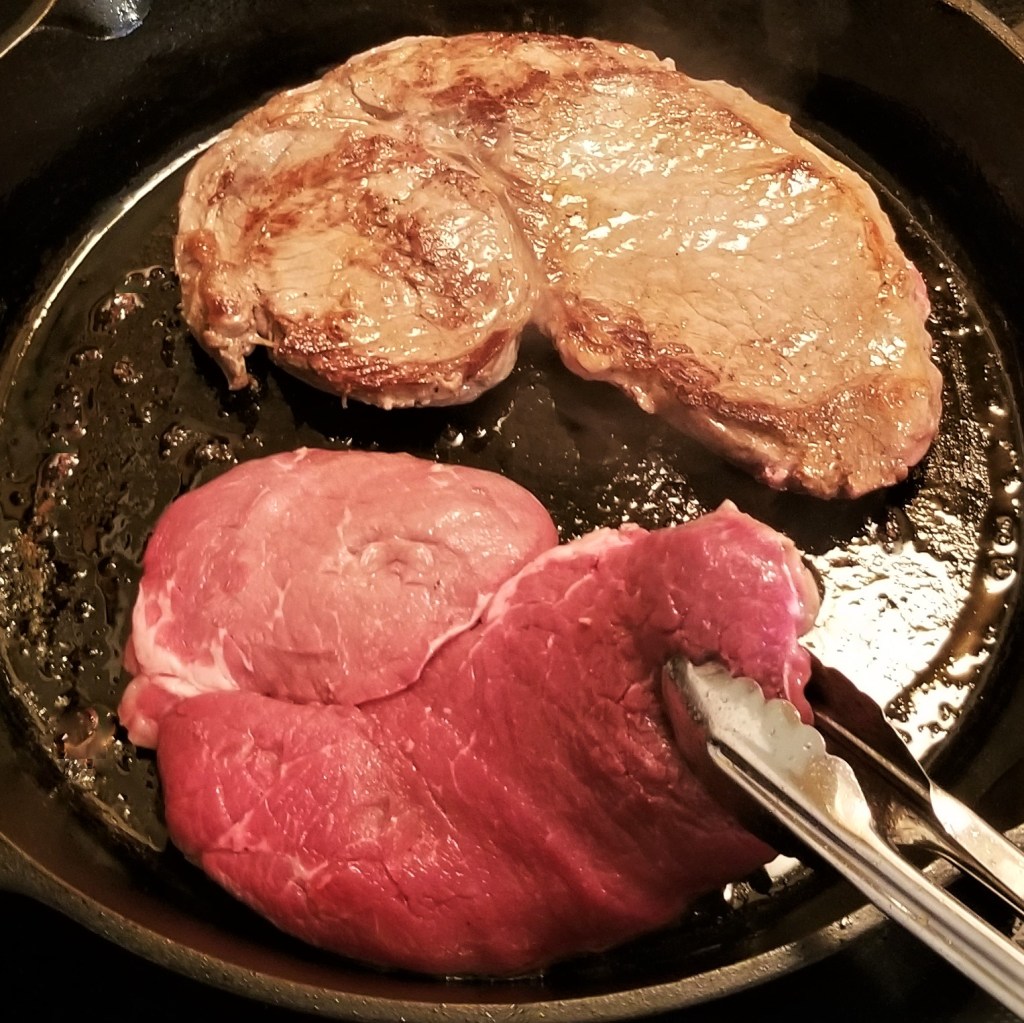
Season with salt and black pepper, to taste. Keep warm until serving time.
If using, place lard (or oil) in a saucepan over medium heat (photo below, left), cook until very hot and starting to bubble, but not smoking (photo below, right):
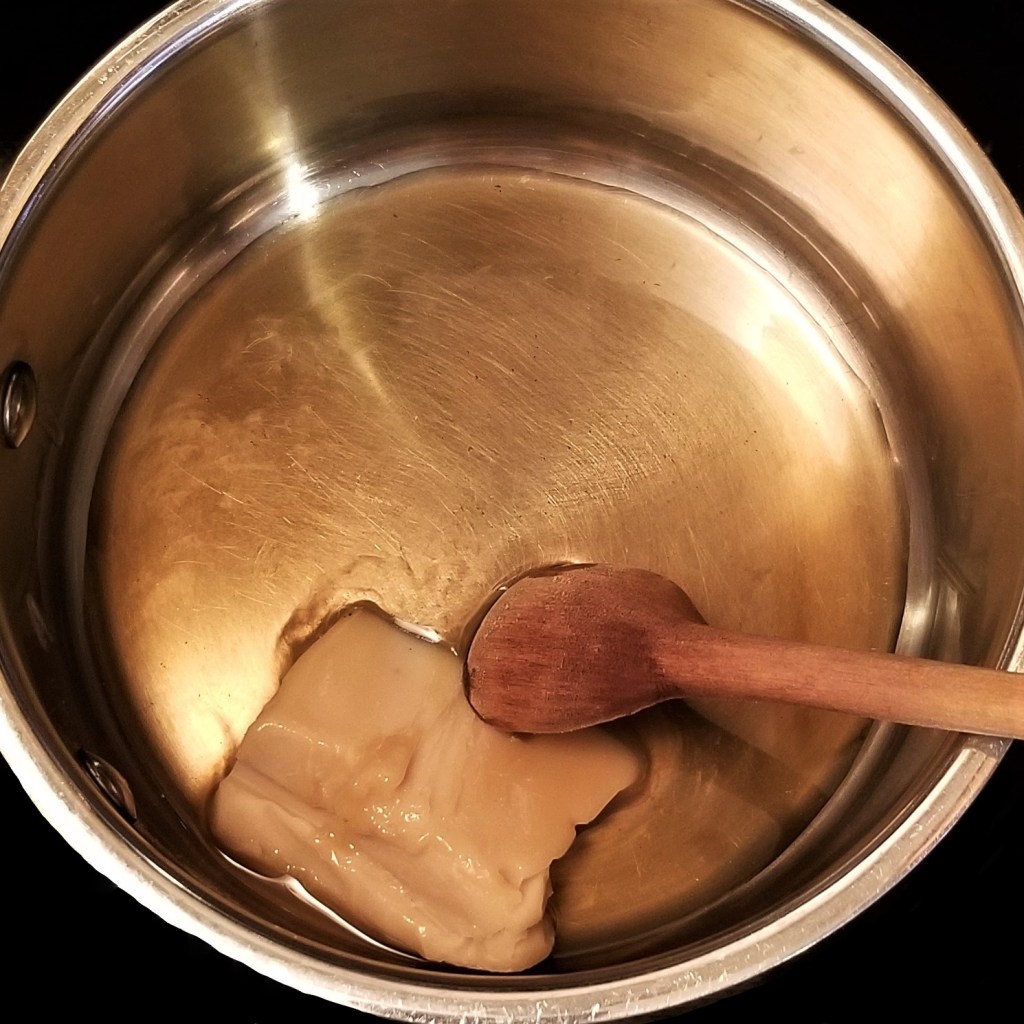

Reduce heat to low, and keep lard (or oil) hot.
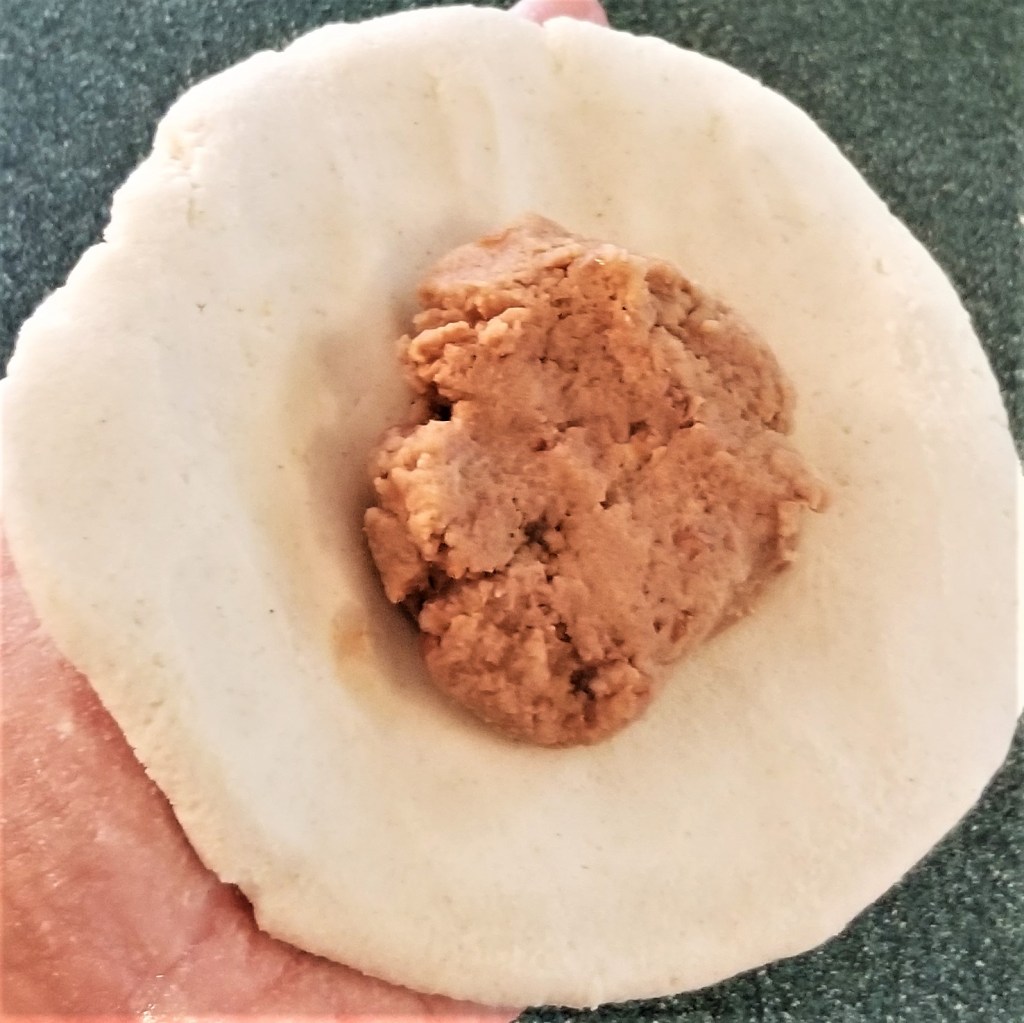
Prepare huaraches: Divide reserved dough into six portions, rolling each into a ball (photo below, left). Working with one portion of soft dough at a time, add water if not soft and moist, and with wet hands, flatten and pat into a thick disk, then place about one quarter of a cup of refried beans in the centre (photo below, right):

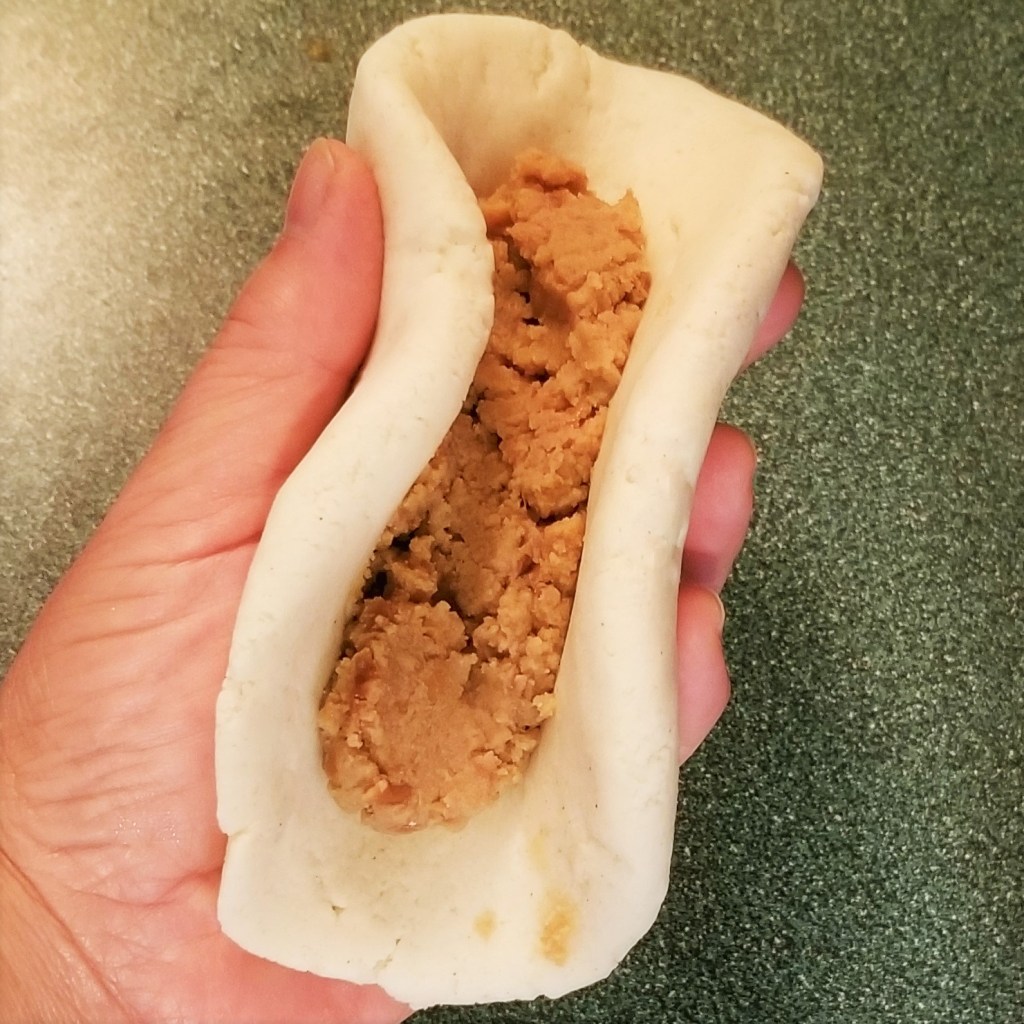
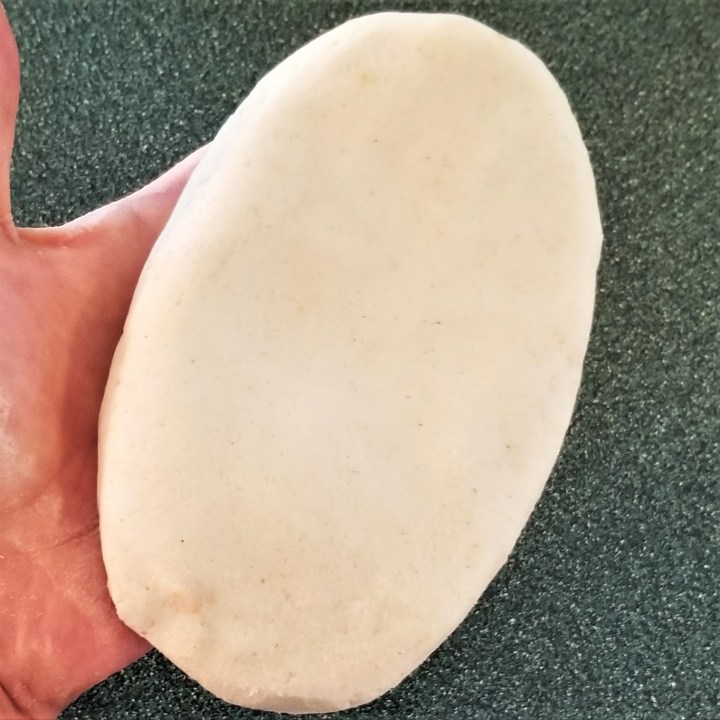
Close dough over beans, sealing edges of dough together (photo below, left). Flatten with hands into an elongated patty (photo below, right):
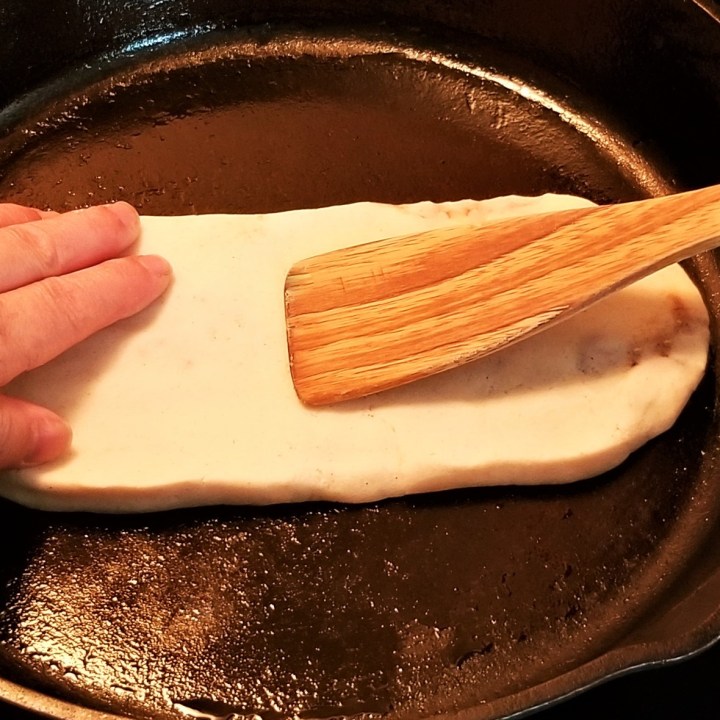
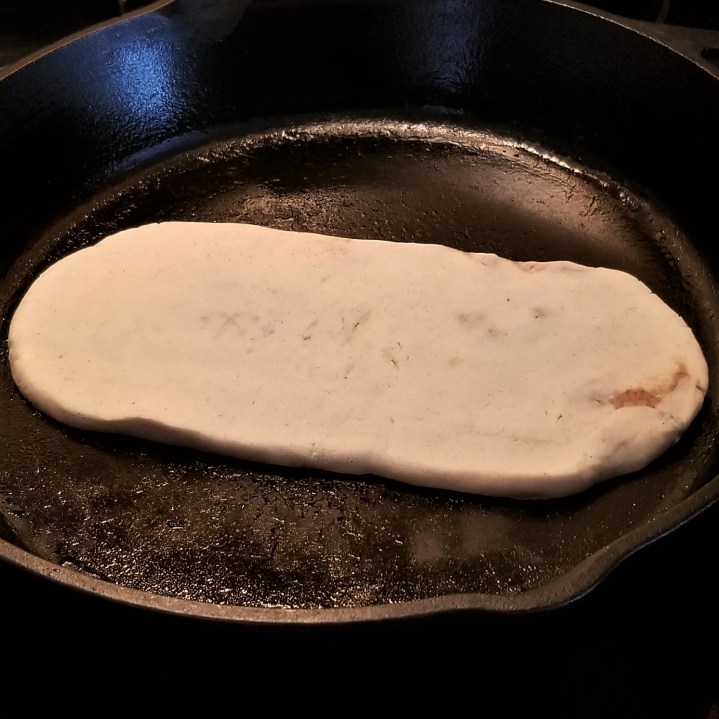
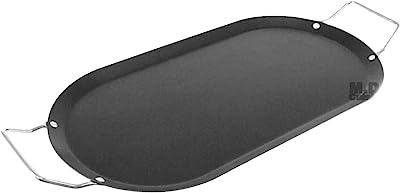
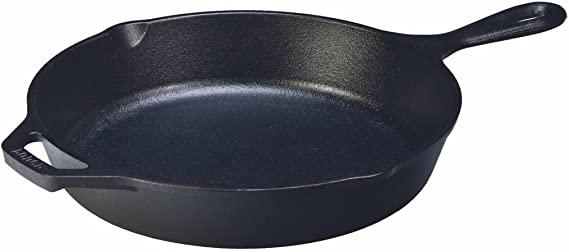
Heat up a comal (Mexican griddle) or large iron skillet over medium heat; place patty on hot surface, then extend it lengthwise with wet hands and a wet spatula (photo below left); go as long as possible (my skillet is 11 inches in diameter). Allow to cook on that side for three to four minutes (photo below, right):
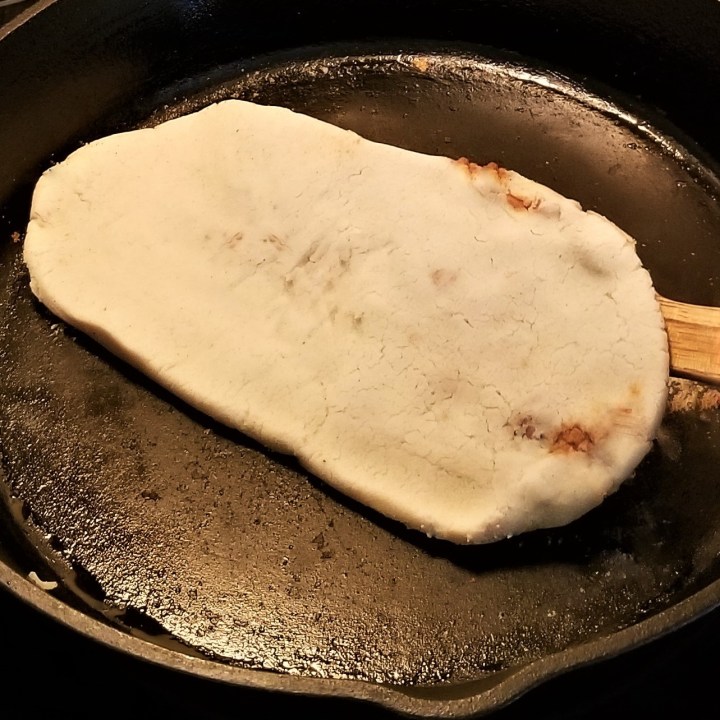
Flip once the top side is starting to dry (photo below, left). While that side is cooking, make indents on the surface with the handle of a wooden spoon or spatula with a flat tip, so the indents look like small rectangles (photo below, right):
If frying, add about two tablespoons of hot lard (or oil), dousing all over and around the patty, and allow to fry for one minute. The fat will go into the indents, seasoning and warming up the beans, as well as the inner layer of dough:
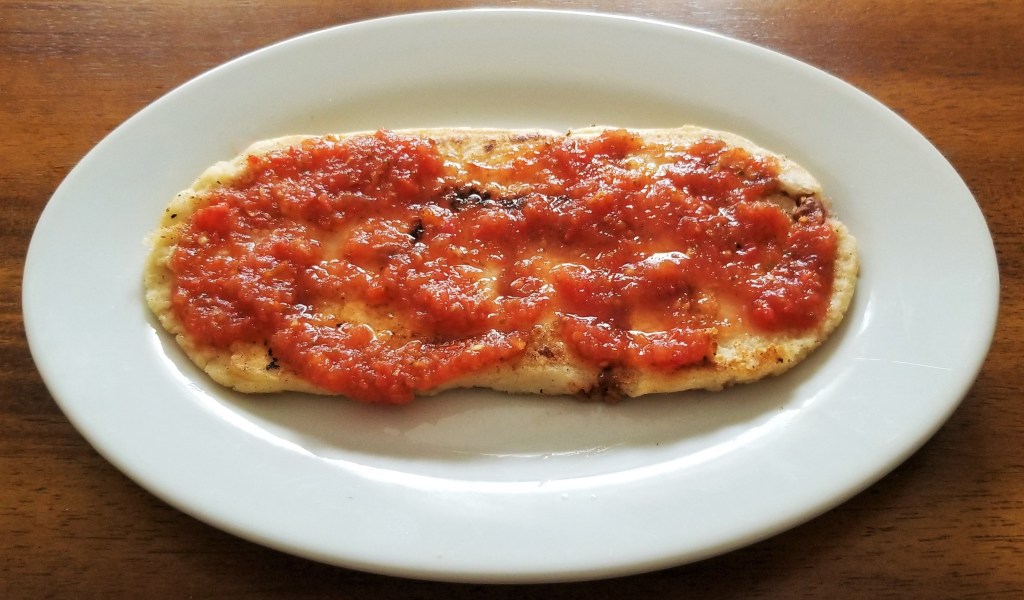
Flip and cook for one more minute, to make sure the patty is fully cooked, and the excess fat is drained. Flip onto a plate, indented side up, and top generously with sauce of choice (photo below with homemade red spicy salsa):

In the photo below, a classic red huarache:
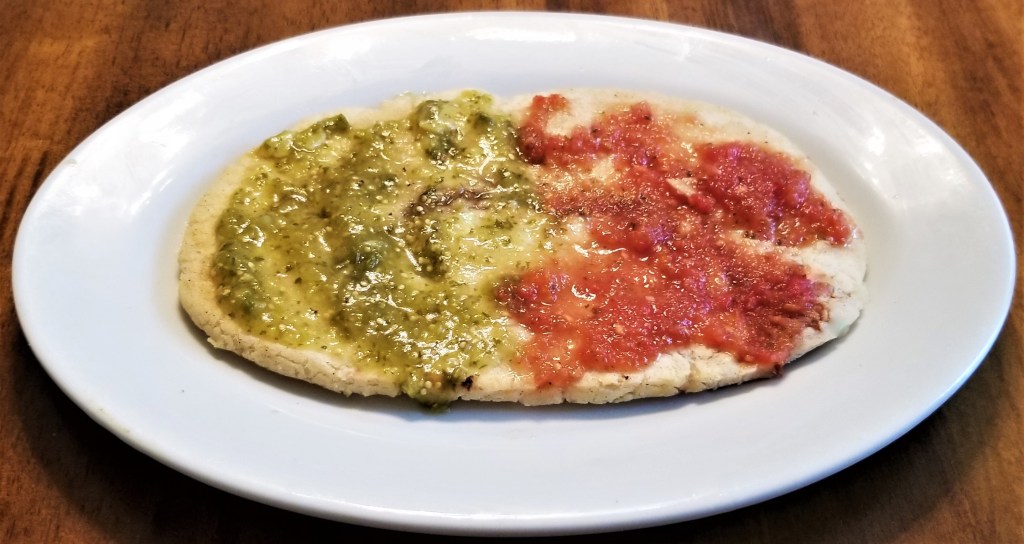
In the photo below, a grilled-only huarache “con de las dos” with both green and red salsas:
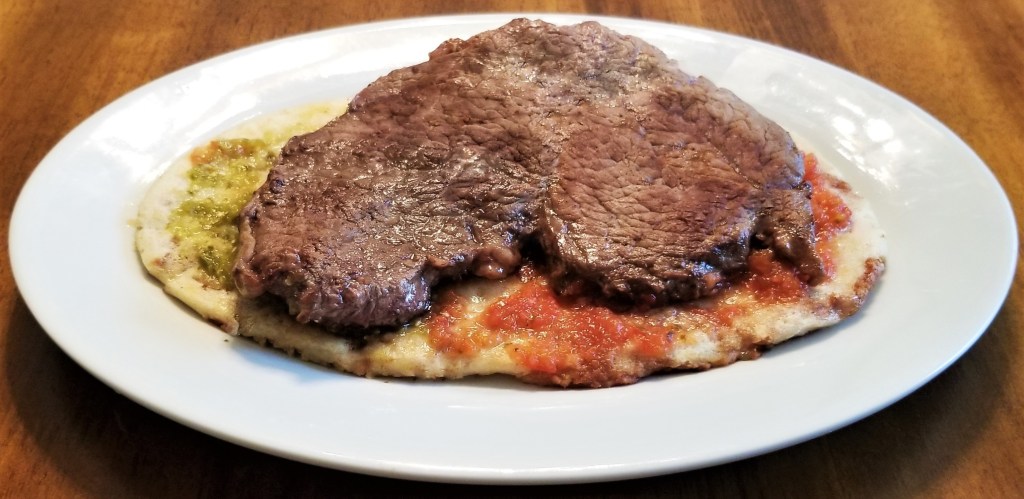
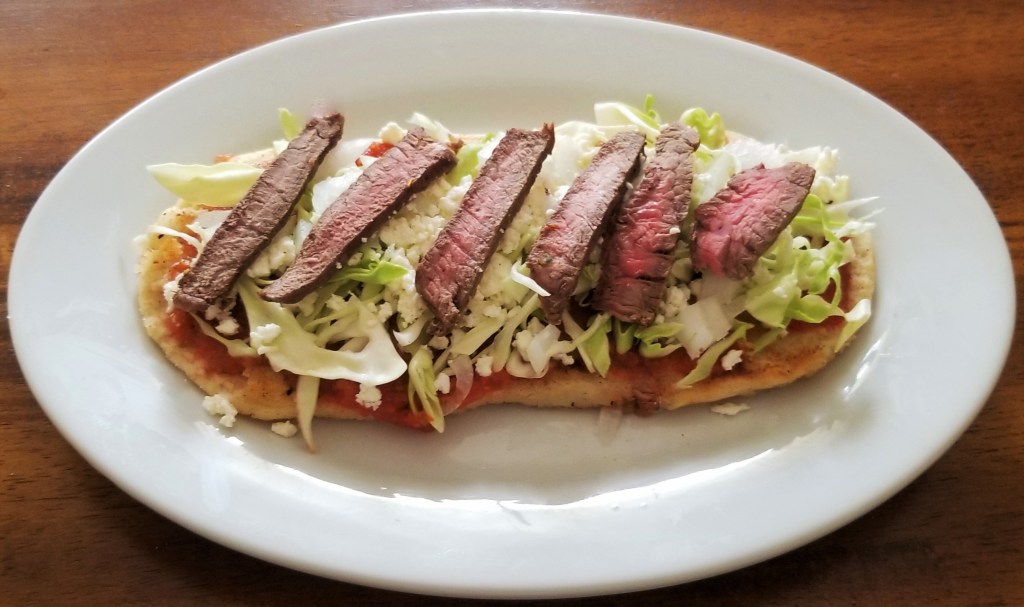
Con bistec – With Steak – Top a classic huarache with a grilled steak:
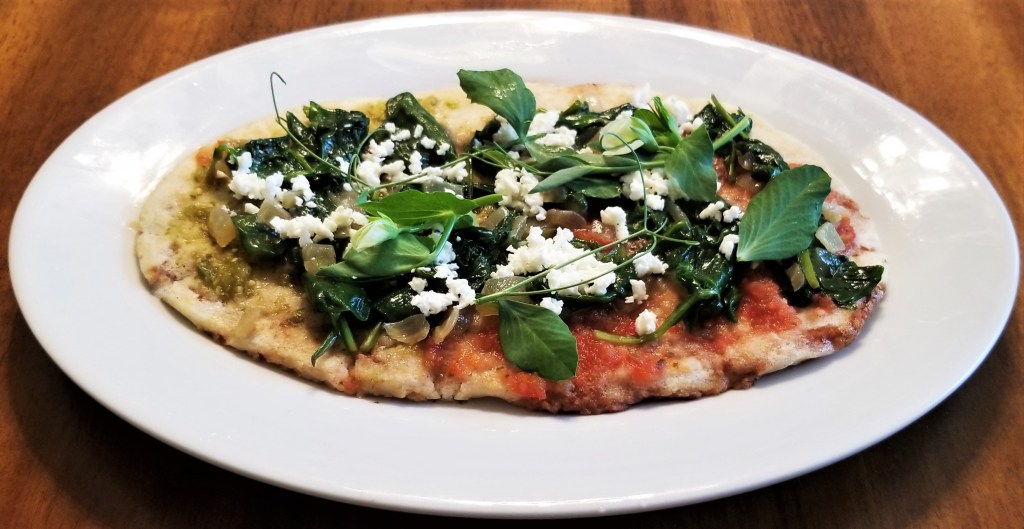
Vegetariano – Vegetarian – Grilled-only (or fried with oil), topped with both green and red salsas. Add sautéed greens, crumbled cheese, and finish with a sprig of cilantro (or pea vine, as seen below):
Vegano – Vegan – Fried with oil (or skip frying step), with dry pasilla pepper salsa, sautéed greens, sautéed mushrooms, and shredded cabbage:
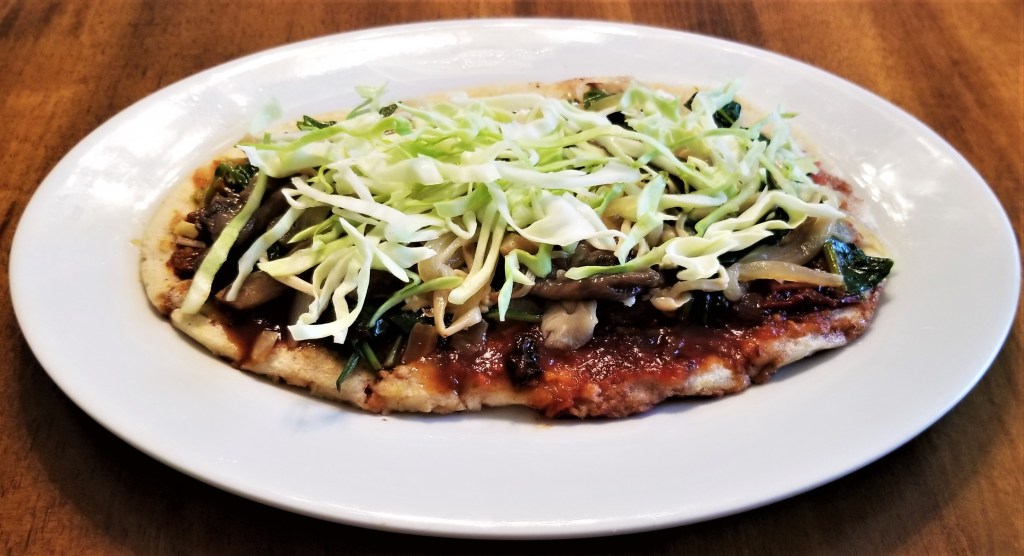
Con todo – With Everything On – At the top of this post, and in the photo below, a fried huarache with red spicy salsa, sliced onions, shredded cabbage, crumbled cheese and sliced grilled beef steak:
Fried or grilled; red, green or with both sauces on; vegan, vegetarian or for meat lovers; classic plain or with everything on; there is one huarache for every taste, and for that craving for an authentic Mexican antojito, there is the one and only huarache.
For your convenience, click on the highlighted text below for products available on Amazon™. DISCLAIMER: Any reviews included in this post are my own, for items I have purchased, not provided by any company; as an Amazon Associates Program affiliate, I might receive a commission for any purchases originated from the links below, at no extra cost to you. Thank you to readers who have bought other products starting with a click from my links!
I am also sharing my recipe at What’s for Dinner? Sunday Link-Up #428 with Helen @ The Lazy Gastronome.



 My Slice of Mexico
Yummy 😊
LikeLiked by 1 person
Pinning this as its something new for me to try out.
I visited you via What’s for Dinner? Sunday Link up #428
My entries this week = 16+17.
If you have not joined us at SSPS yet, this is a personal invite to come and share your awesome post/s with us
You will find the linkup information (1) In the Top bar under Blogging: Weekly Senior Salon Pit Stop OR 2nd image In the sidebar.
We hope to meet you there virtually.
LikeLike
Refried beans stuffed inside the tortillas?! Wow, that sounds soo… good!!
LikeLike
It is, lightly crisped, salsa, …😋
LikeLike