Click here to go to printable recipe: Pambazo Buns
Click here to go to printable recipes: Pambazos and Guajillo Adobo
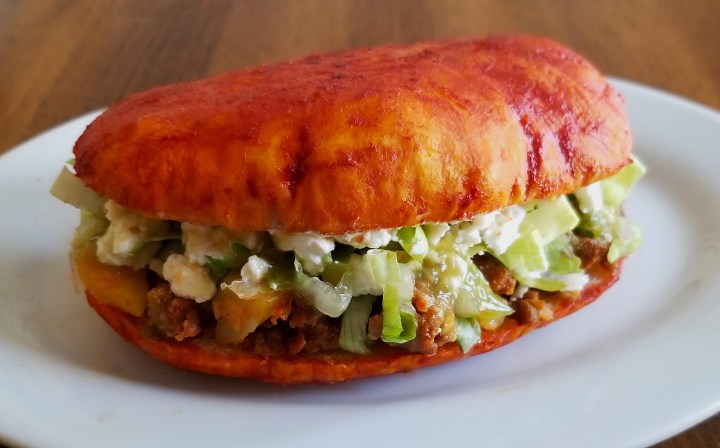
This weekend, Mexicans will be once again commemorating the onset of the Mexican Independence War. Late on the night of September 15, 1810, Miguel Hidalgo y Costilla, a Roman Catholic priest in the town of Dolores, in the Mexican state of Guanajuato, called people to fight against the vice-regal European government, while his parish bell rang. The insurgents began the war wanting Spanish king Ferdinand VII to reign in Mexico, since he had been deposed by French General Napoleon Bonaparte; over the course of the following eleven years, and after the death of many (including Hidalgo), the ultimate result was the birth of Mexico as an independent nation. That faithful night of September 15 is commemorated in many places around the country by re-enacting the dramatic call, named “El grito de Dolores” or “El grito de Independencia” (“The Cry for Independence”). The town of Dolores was renamed Dolores Hidalgo, and the bell from its parish was brought to the National Palace in Mexico City, situated right in front of the main square (Zócalo). There, the president comes out to the central balcony to re-enact “El grito”, finishing with the cry of “¡Viva México!” Then, the Bell of Dolores rings once again, resonating around the Plaza de la Constitución (“Constitution Square”), official name of the main square, completely filled with people gathered to participate in the ceremony. The celebration continues with music, light displays, fireworks, and of course, lots of street food. One of the stars of this night is a sandwich called pambazo, being perfect for this celebration because the Mexico City version features Mexico’s flag colours (as seen at the top of this post), with a crispy red crust, and white and green ingredients inside.
The sandwich is named after the bun traditionally used in its preparation; there is consensus that the name of the bun itself comes from the term “pan basso” a Judeo-Spanish term that means “low bread”, consumed by the poor in Spain, and later exported to colonial Mexico. It was made with lower quality or unrefined flour, at times not even wheat. In Mexico, pambazos are nowadays made with regular wheat flour, but is still indeed a plain looking bun, inexpensively made with no eggs or milk, and pale from a coating of flour before baking:

As for the origin of the sandwich, several Mexican states claim their version to be “the real pambazo”, with stories that go from always being a humble morsel, to have been created for no less than emperor Maximilian I and his queen Charlotte, rulers of Mexico during the French occupation (1864-67). In the state of Veracruz, this version of pambazo is filled with beans, chorizo and veggies, and remains pristine white on the outside, as a homage to their snowy Pico de Orizaba, the tallest volcano in North America, which empress Carlota admired. In the neighbouring state of Puebla, the top of a pambazo sandwich may be white, or covered with a red sauce, or half and half!
In Mexico City, pambazos have always been coated red and fried, a messy process, which might explain why it has not appeared on fancy restaurant or cafeteria menus, but has remained a true street food. There are different techniques to dress and crisp the buns; in a previous post, I shared my recipe for pambazos, as I remembered them from my childhood in Mexico City, dipped in chorizo drippings before crisped in a pan:

Other methods include dipping the bun in a guajillo adobo for the brightest shade of red (as shown at the top of this post), or directly frying in pork lard. For this recipe, I am giving the choice between chorizo drippings and guajillo adobo.
Back in my other post, I used Portuguese and panini buns, which were the store-bought buns available to me here in Canada (which will do in a pinch), but this time, I decided to really start from scratch, making the buns at home (as seen in all photos in this post.)
Pambazo Buns – Pan para pambazos
Printable recipe: Pambazo Buns
Ingredients
4 cups (500 g) flour, plus more to dust
1 tbsp (9 g) dry yeast
2 tsp (12 g) granulated sugar
2 tsp (12 g) salt
4 tsp (20 g) vegetable shortening OR non-hydrogenated margarine
1 ½ to 1 ¾ cups lukewarm water
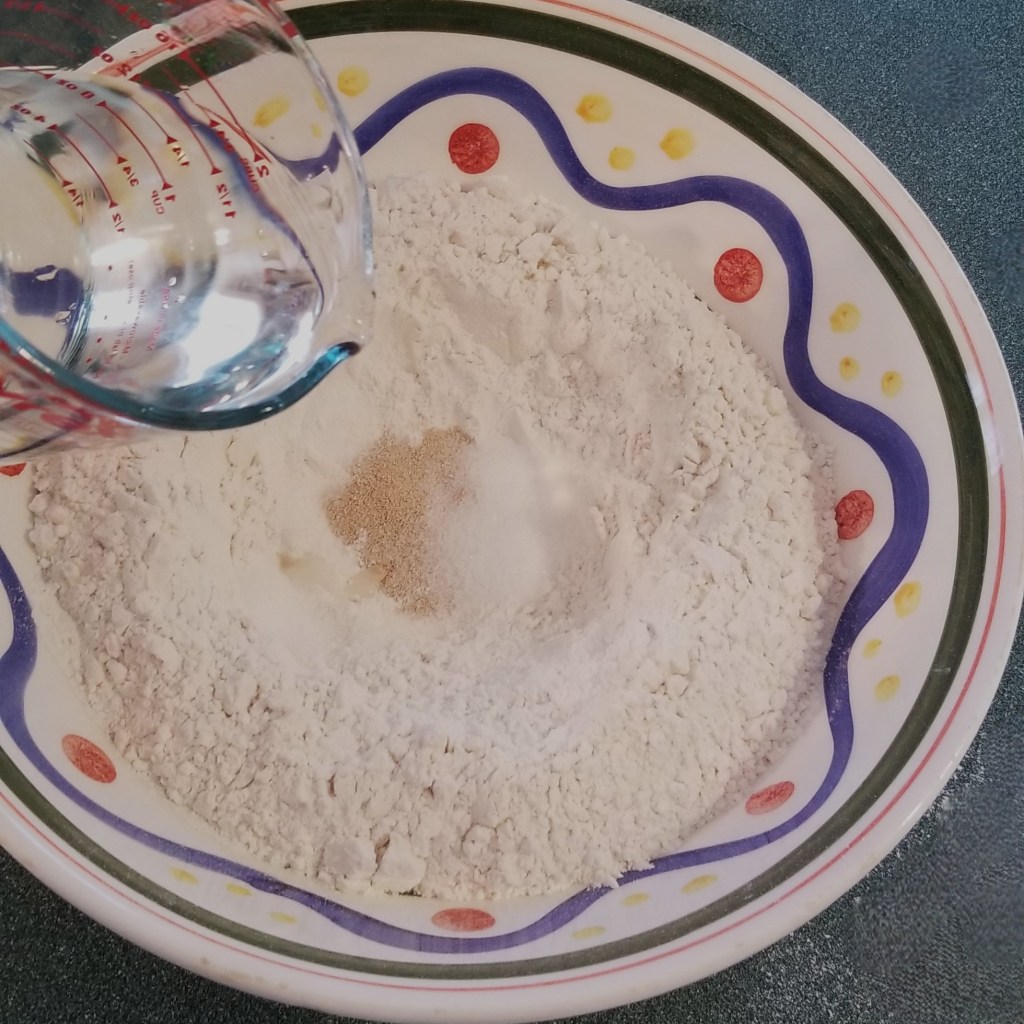
In a large bowl, place flour and open a well in the centre. sprinkle dry yeast and sugar in the well, then add half a cup of the warm water (photo below, left). Mix ingredients in the well with a fork or beater (photo below, right):

Allow to rest for a couple of minutes, to ensure that the yeast is active, as it starts to bubble, then sprinkle salt on the flour around the edge (photo below, left). Add fat (shortening or as in this case, margarine) and another cup of water (photo below, right):


Using a wooden spatula, start to incorporate wet mix with dry ingredients (photo below, left). Add more water gradually, as needed (in this case, another quarter cup, photo below, right):


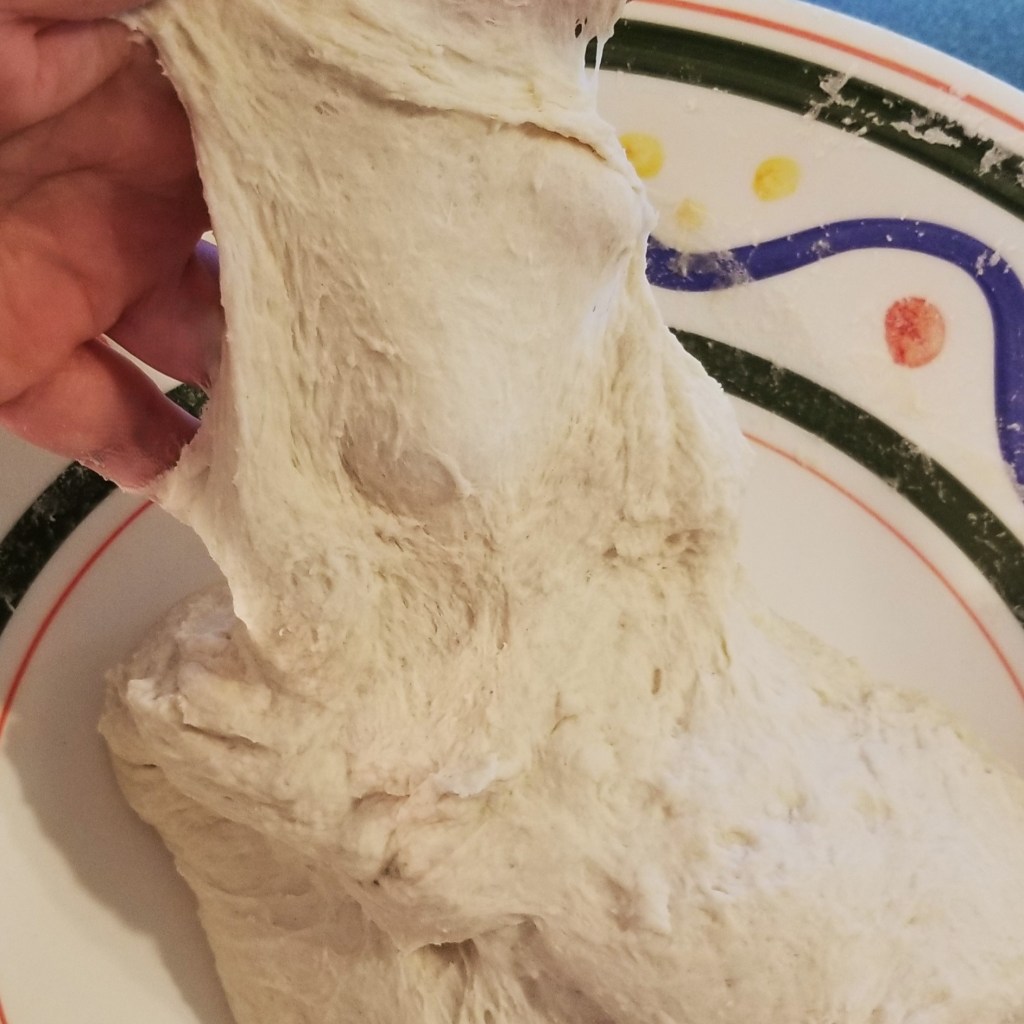
Knead with spatula and/or hands, folding and occasionally flipping the dough; the dough will be very sticky and brittle at first (photo below, left). Continue kneading until the dough is not sticky anymore, may be gathered together, and is very elastic (in this case, 25 minutes; photo below, right):

Pick up dough, gently pull edges towards centre to form a ball, and place back in the bowl, seam down (photo below, left). Cover with a clean kitchen towel, and allow to rest in a warm spot away from drafts, until the dough has doubled in size (in this case forty minutes, photo below, right):

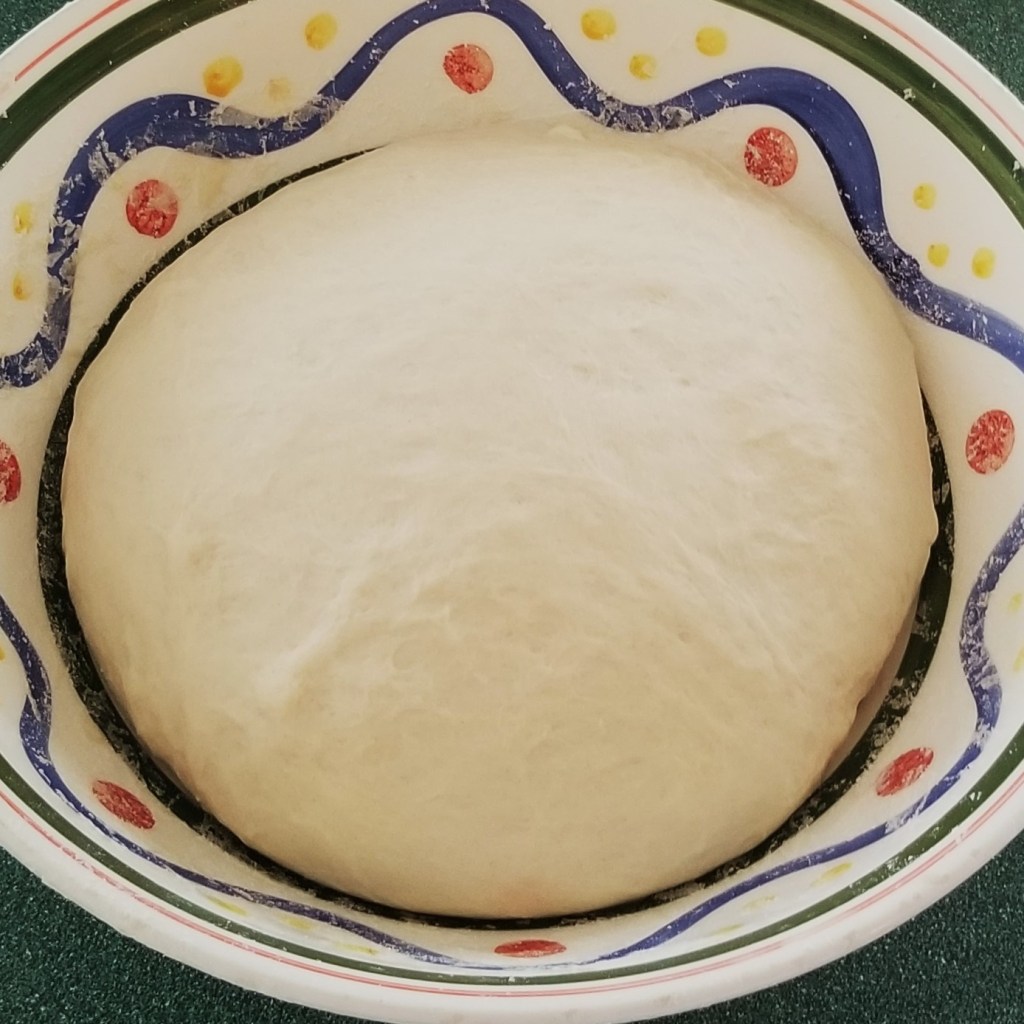
Divide the dough into portions for individual buns. For traditional large buns, about ten portions of 100 g each. In this case, I wanted smaller buns, so I aimed for twelve:

I did end up weighing portions of 80 g each, and got twelve, plus a small portion of 35 g.
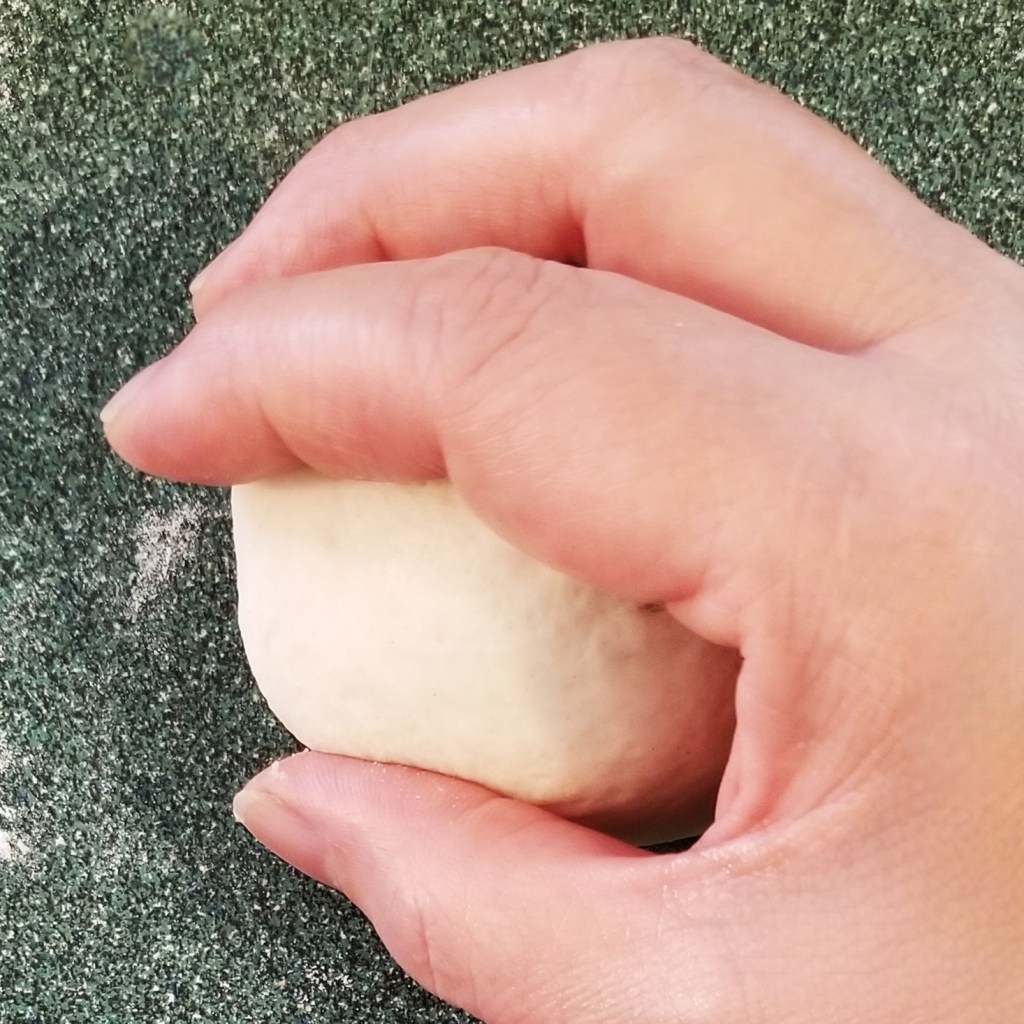
Working with one portion at a time, pull edges back and pinch towards the centre, to form a ball (photo below, left); place ball on working surface, seam side down, and cup ball under one hand, rolling to smooth (photo below, right):

Repeat with the rest of the portions:

Let the dough relax for a few minutes. Meanwhile, prepare two baking sheets with parchment paper.
Make a small mound of flour on the working surface. Place one ball on top, then press down and flatten to form a disc (photo below, left). Flip the disc to cover the other side with flour, then pick it up and using both hands, hold it at two opposite ends and pull, to form an oval (photo below, centre). Place oval on prepared tray, and gently pull ends and pat down, to thin the oval to a thickness of approximately one quarter of an inch (around 7 mm) (photo below, right):


Repeat with each portion:


Allow to rest for 25-30 minutes. Meanwhile, preheat oven to 325ºF (163ºC). In the photos below, buns after resting for 30 minutes:


Bake for 10 minutes, then switch bottom tray to top shelf and vice versa, and rotate each tray, so the back side faces the front. Because the temperature is relatively low, and the buns are coated with flour, they will puff but not too much, and will remain white on the top side. Bake for another 10-15 minutes until the bottom of the buns has started to brown, then remove from the oven and allow to cool down. In the photos below, the buns after baking for 25 minutes, with one bun flipped upside down, to check doneness:
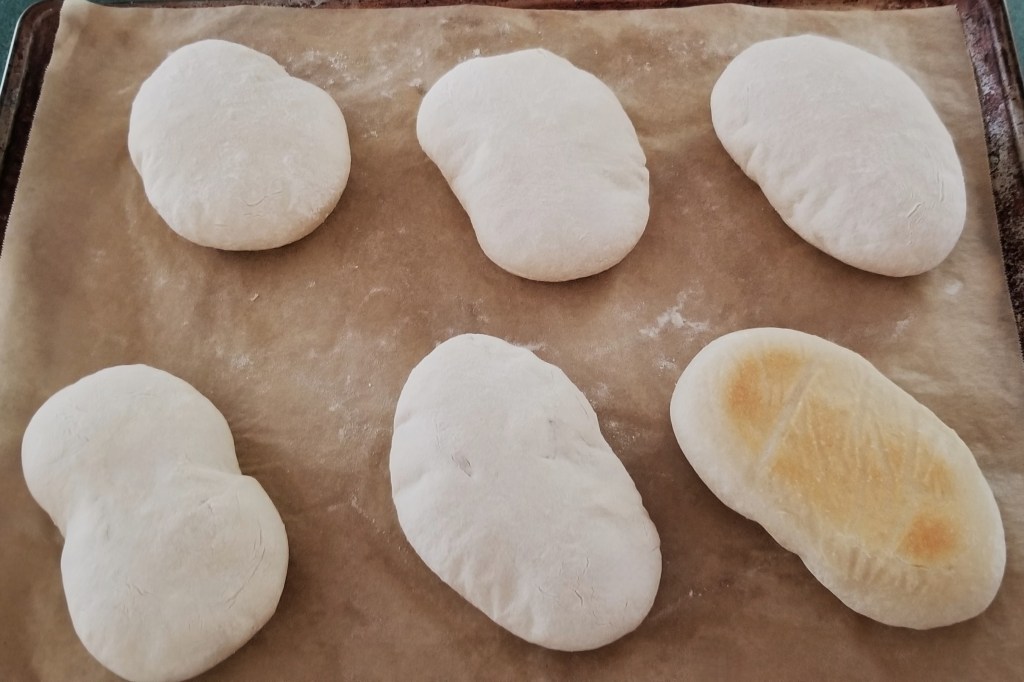

The pambazos (buns) are ready to prepare pambazos (sandwiches):

Pambazos
Printable recipes: Pambazos and Guajillo Adobo
Ingredients (for a dozen sandwiches)
12 pambazo buns (Portuguese buns or panini may be used instead)
1 lb (454g) Mexican chorizo
4-6 medium potatoes; washed, boiled, peeled, and cut into small cubes
2 cups lettuce; washed, patted dry, and chopped thinly
¾ cup Mexican cream (or sour cream mixed with a bit of milk)
¾ cup fresh cheese, such as panela, añejo, or feta; crumbled
Salsa verde (cooked tomatillo sauce); check my recipe for homemade, or bottled
Oil, for pan frying, if needed
Guajillo adobo, optional (printable recipe above)
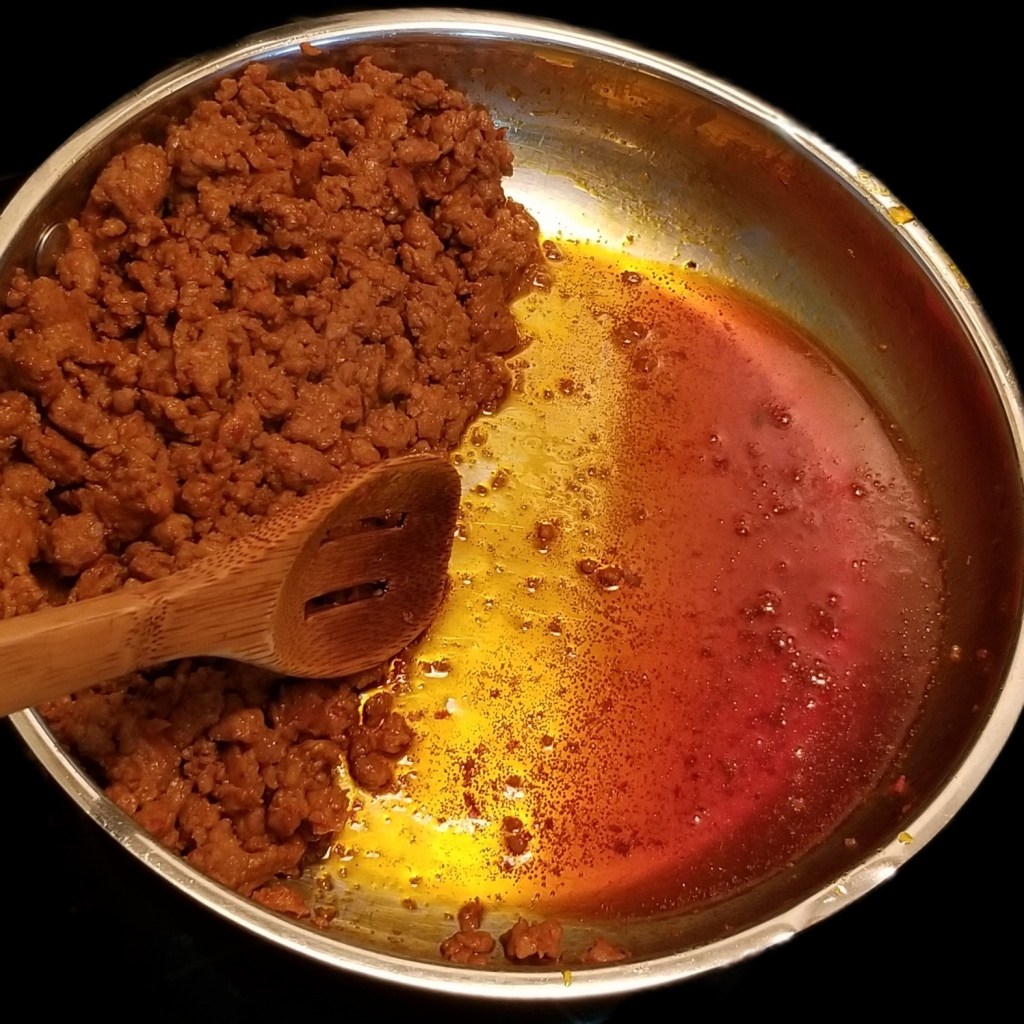
Prepare filling: Remove case from chorizo; fry in a pan over medium heat, stirring and breaking the meat up into small pieces with a spoon (photo below, left); when perfectly cooked, turn off heat, tilt pan and press down on chorizo with the spoon, to drain fat (photo below, right):

Transfer chorizo to a bowl and reserve. Transfer drippings to a bowl (if using for dipping buns), leaving about two tablespoons in the pan (photo below, left). Return the pan to the stove, on medium heat (photo below, right):


Add cubed potatoes, and fold gently to coat with chorizo drippings (photo below, left). Fry for a couple of minutes, stirring occasionally, to crisp the potatoes, then return the reserved cooked chorizo to the pan, and incorporate with the potatoes (photo below, right):

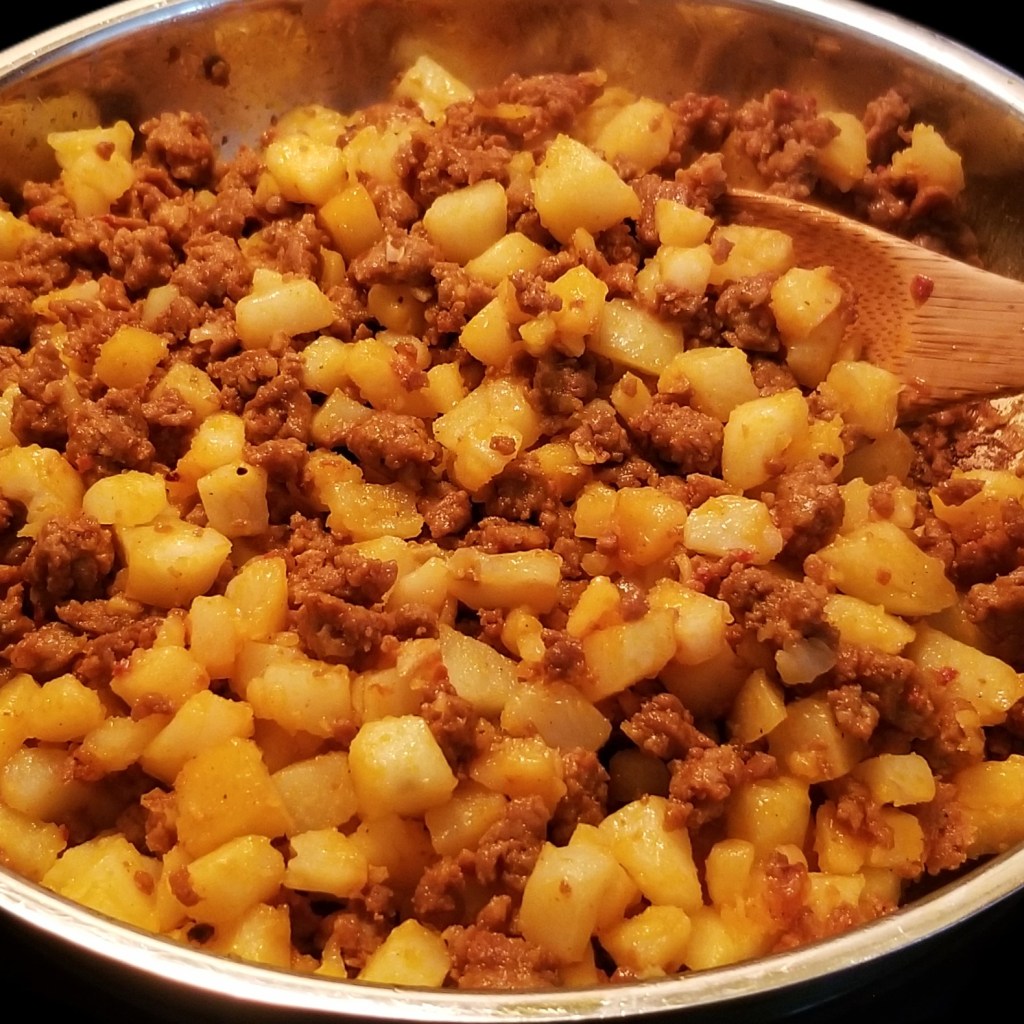
Remove from heat, but keep warm until serving time.
Assemble pambazos: open buns in the middle lengthwise, leaving the end connected:

Dip both sides of bun in either reserved chorizo drippings (photo below, left), or guajillo adobo; for the latter, remove excess sauce with a kitchen brush, or the back of a spoon (photo below, right):


Warm up a frying pan over medium-low heat; if using chorizo drippings, simply place the dipped bun on the pan, and flip a couple of times, to crisp both sides (photo below, left). For guajillo, first warm up one tablespoon of oil in the pan, then proceed as before (photo below, right):

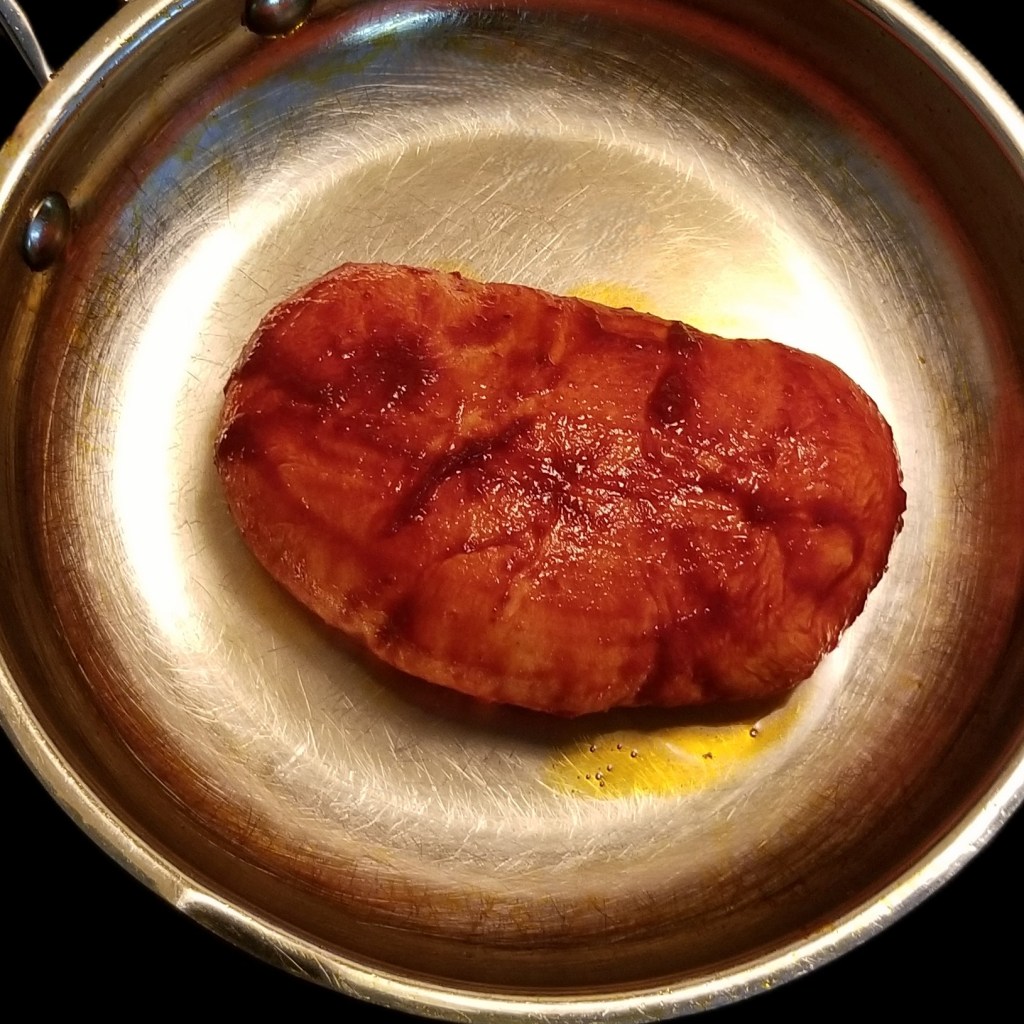
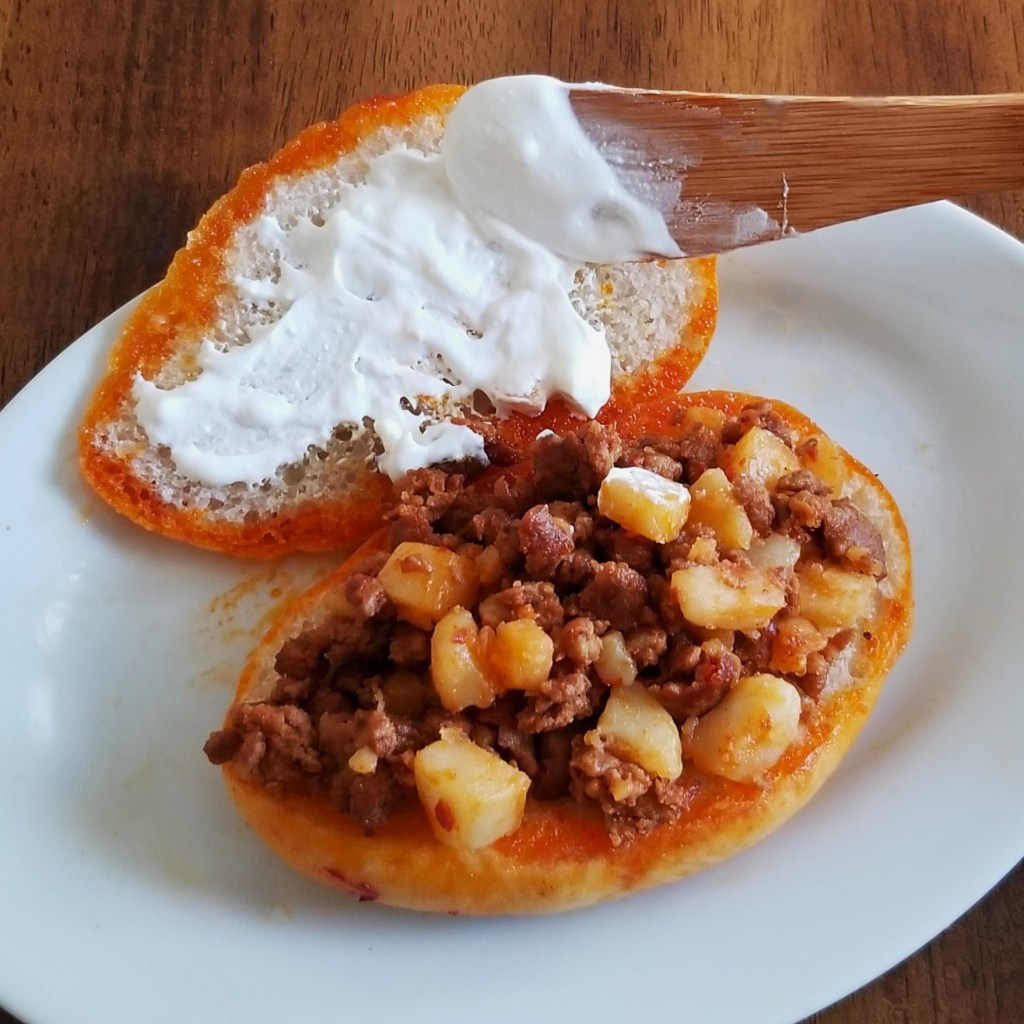
Transfer to a plate; open the bun, careful not to break the connection at the edge; place some filling on one side, and spread cream on the other (photo below, left). Add lettuce on top of the filling (photo below, right):

Sprinkle some cheese on top of the lettuce (photo below, left), then finish with green sauce (photo below, right):


Close the bun and gently press down; serve immediately. In the photos below, pambazo dipped in chorizo drippings (left) and in guajillo adobo (right):

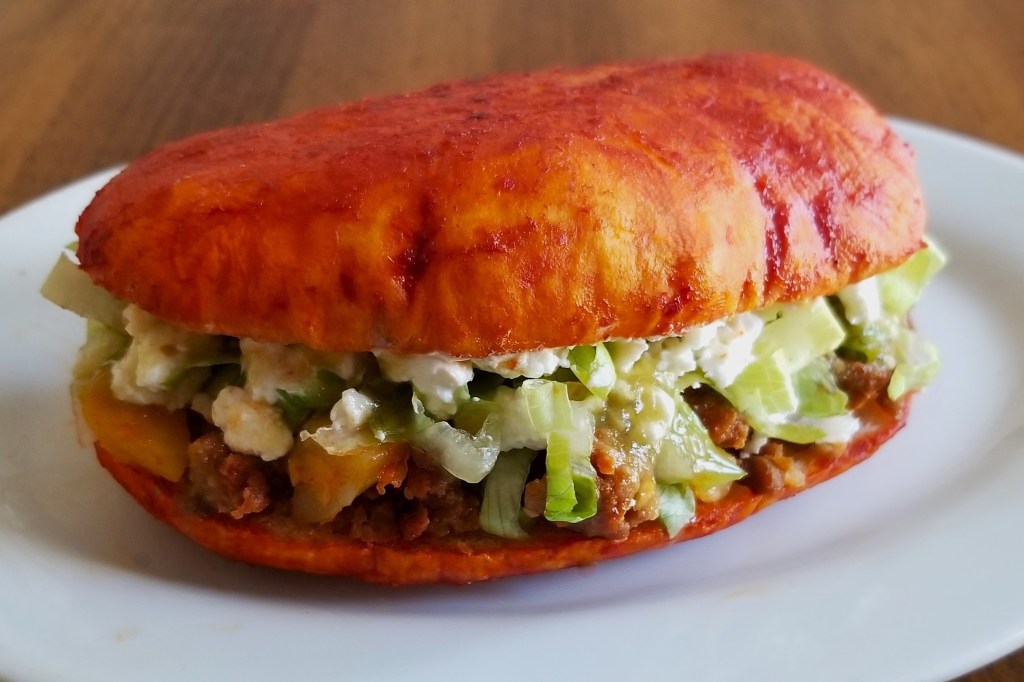
In terms of colour, the guajillo really stands out, but otherwise, the flavour was equally delicious for both versions. Dipping with chorizo drippings saved the time of preparing adobo, as well as oil for frying, and did not spatter as much as the adobo, also making them less messy at eating time.
It was a real treat for me to eat these crispy pambazos, which I always got at tourist attractions nearby Mexico City; they were also frequently offered at outdoor events, such as fairs, and religious or civic holidays, of course including “El Grito”.
This September 15, 2024, will mark the last “grito” for Mexican president Andrés Manuel López Obrador, who will finish his six-year term at the end of the month. He has promised some additions to the program, and it is expected to be a special celebration, since he has declared that the country is in a very important stage of development and change, as he leaves the office of the presidency.
For your convenience, click on the highlighted text below for products available on Amazon™. DISCLAIMER: Any reviews included in this post are my own, for items I have purchased, not provided by any company; as an Amazon Associates Program affiliate, I might receive a commission for any purchases originated from the links below, at no extra cost to you. Thank you to readers who have bought other products starting with a click from my links!
I am sharing my recipe at Full Plate Thursday #712 with Miz Helen @ Miz Helen’s Country Cottage.
I am bringing my recipe to Thursday Favourite Things #678 with Bev @ Eclectic Red Barn, Pam @ An Artful Mom, Katherine @ Katherine’s Corner, Amber @ Follow the Yellow Brick Home, and Linda @ Crafts a la Mode.
I am joining Fiesta Friday #555 with Angie @ Fiesta Friday, co-hosting this week with Jhuls @ The Not So Creative Cook.




Very very interesting indeed as well as the name.Found your post on Fiesta Friday. My entries this week are numbered #28+29Hope you will join/share M-Sat at https://esmesalon.com/tag/seniorsalonpitstop/
LikeLike