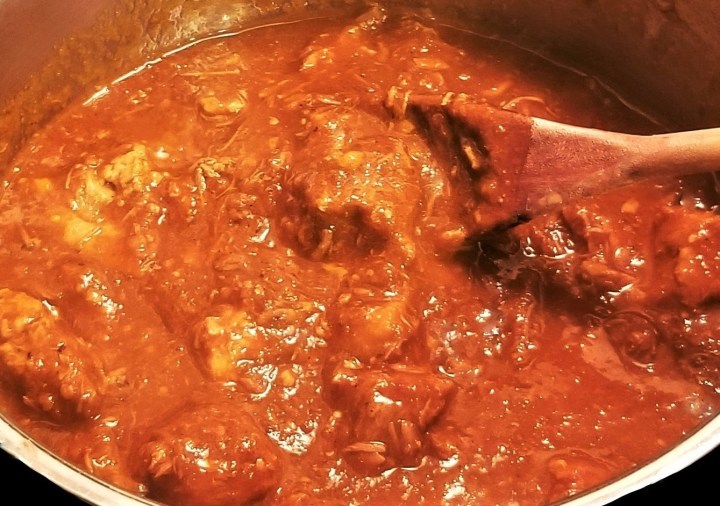
The town of Mixquic, in the valley of Central Mexico, has preserved many features of its pre-Hispanic aquatic culture, and one of the dishes that has survived since then is mixmole, a fish stew in red or green sauce ... click on title for more
Discover and re-discover Mexico’s cuisine, culture and history through the recipes, backyard stories and other interesting findings of an expatriate in Canada
Cempasúchil (Tagetes erecta) is an annual plant, originally native to Mexico, known in English as Mexican marigold, Aztec marigold, or wrongly, African marigold. Used as the traditional flor de muertos (flower of the dead) in Mexico, cempasúchil is extensively found adorning tombs, and in offerings for All Saints Day, and Day of the Dead (November 1 and 2). In my garden, cempasúchil was one of the new-to-me backyard crops this year; back in September, the plants showed a precocious blooming peak, and I wondered if there would be any flowers left by early November ... click on title for more
Pan de muerto (literally, bread of the dead) is sweet bread that is almost always included in Day of the Dead offerings, and traditionally eaten on November 2nd, observed in Mexico as El día de los fieles difuntos, or Día de los muertos (Day of the Faithful Departed, or Day of the Dead.) In previous years, I have shared two types of this bread: the best-known version, a round bread decorated on top with dough bones and tears, and coated with sugar; the second is known as Pan de yema, a type of egg bread topped with sesame seed, from the Mexican state of Oaxaca, which is baked all year round, but decorated in a very special way for the Day of the Dead. This year, I have tried making Golletes, a less-known but very traditional Day of the Dead bread recipe, prepared mainly in Central Mexico. Golletes are more compact compared to the other two types; they are shaped as rings, and coated with granulated sugar coloured in a bright shade of pink ... click on title for more
For Halloween treats, I have bought a variety pack of individual-sized bags of chips, and they made me think of a kind of popular snacks that started to appear as a street food in Mexico back in the 1990s; after the plain bag of chips is opened on one side (as opposed to the top), and heavily loaded with toppings, seasonings and lime juice, it becomes a “crazy” snack ... click on title for more