
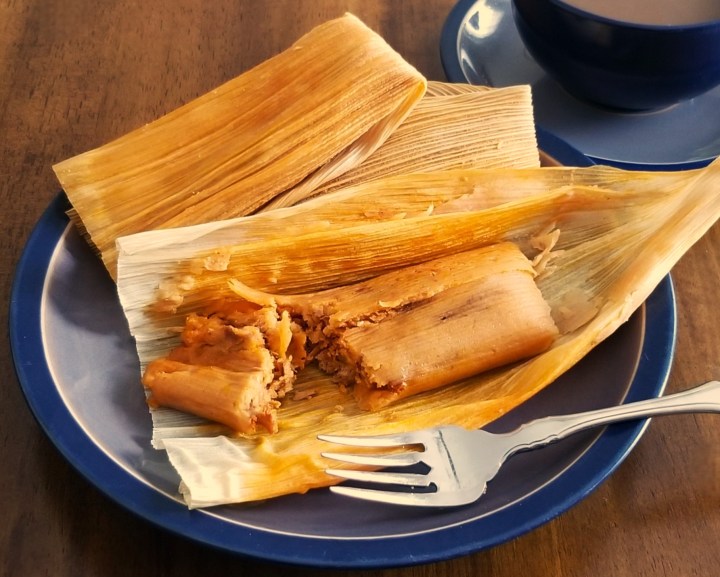
Candlemas (Día de la Candelaria) is observed by Christians around the world on February 2, and in Mexico, Día de la Candelaria celebrations involve church services for the blessing of candles and figurines representing baby Jesus; as a vestige of pre-Hispanic ceremonies, corn-based foodstuffs, such as tamales and atole, are shared later, at a meal usually hosted by the person(s) who found figurines representing baby Jesus, masked inside the special bread wreath, served on Epiphany Day on January 6; it seems like yesterday, but time flies, and it is time to make a batch of tamales!
Continuing with the Northern Style theme, I am sharing this recipe for red tamales, which are traditionally filled with pork in a guajillo pepper sauce, and wrapped in corn husks. Preparing the components (filling, red corn paste, husks, steamer) is a lengthy process, but the result is well worth the time and effort; also, the filling may be prepared the day before, if there is not enough time to do it all at once.
Northern Style Red Tamales – Tamales rojos estilo norteño
Printable recipe: Northern Style Red Tamales
Printable directions: How to prep dry corn husks
Ingredients (for approximately 24 pieces)
3 lb (1.4 kg) pork shoulder
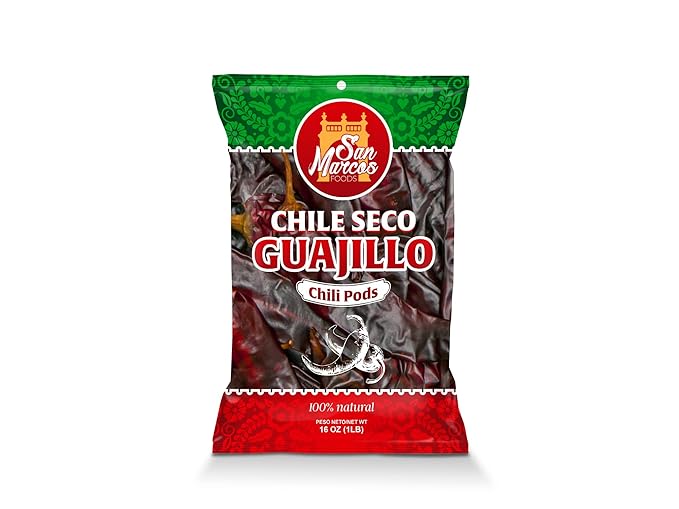
10 guajillo peppers; wiped clean
1.1 lb (480g, 4 cups) nixtamalized corn flour (such as Bob’s Red Mill™ or Maseca™)
1 tbsp baking powder
1 cup lard (see *note)
¼ white onion; peeled
3 cloves garlic; peeled
5 cups broth (see **note)
2 bay leaves
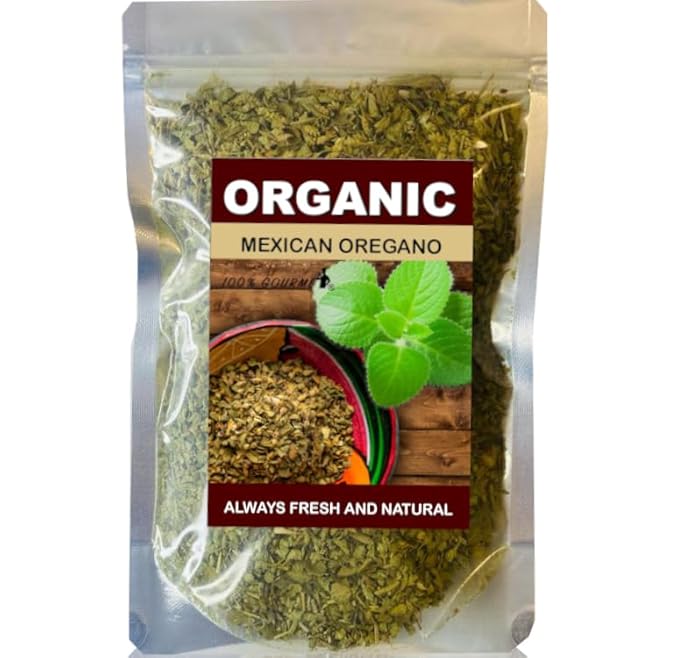
½ tsp dried Mexican oregano (or marjoram)
½ tsp ground coriander seed
½ tsp ground all spice
½ tsp ground black pepper
Salt
Water, as needed
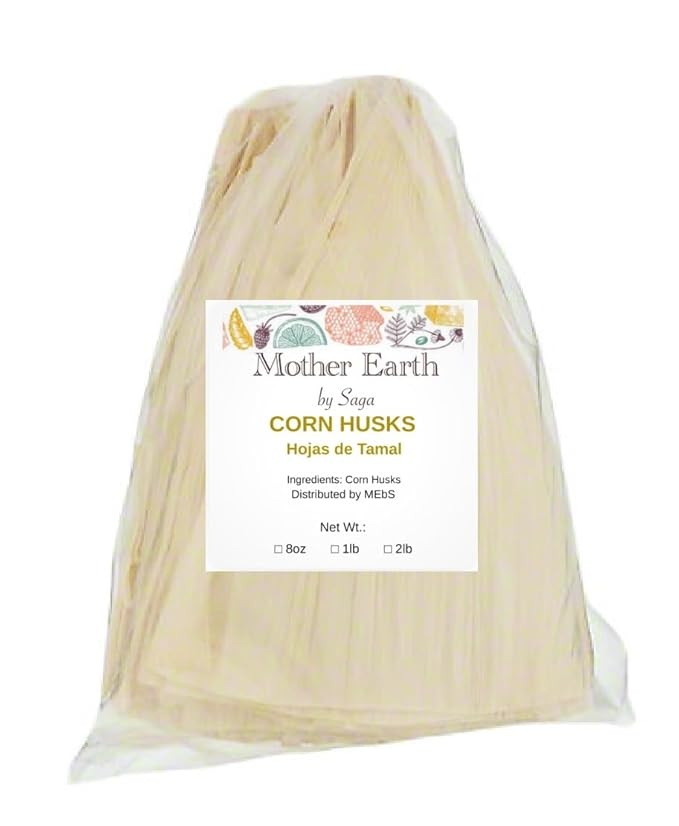
40-50 dry corn husks
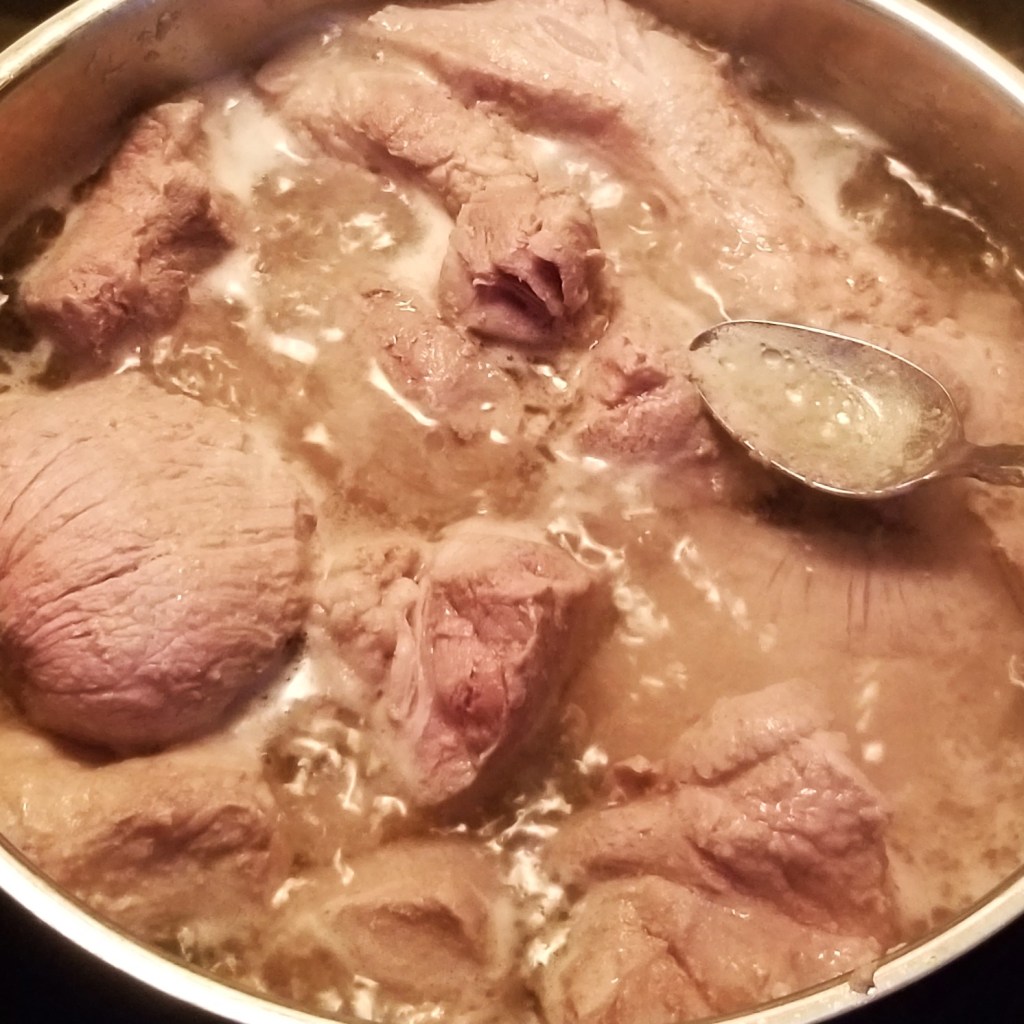
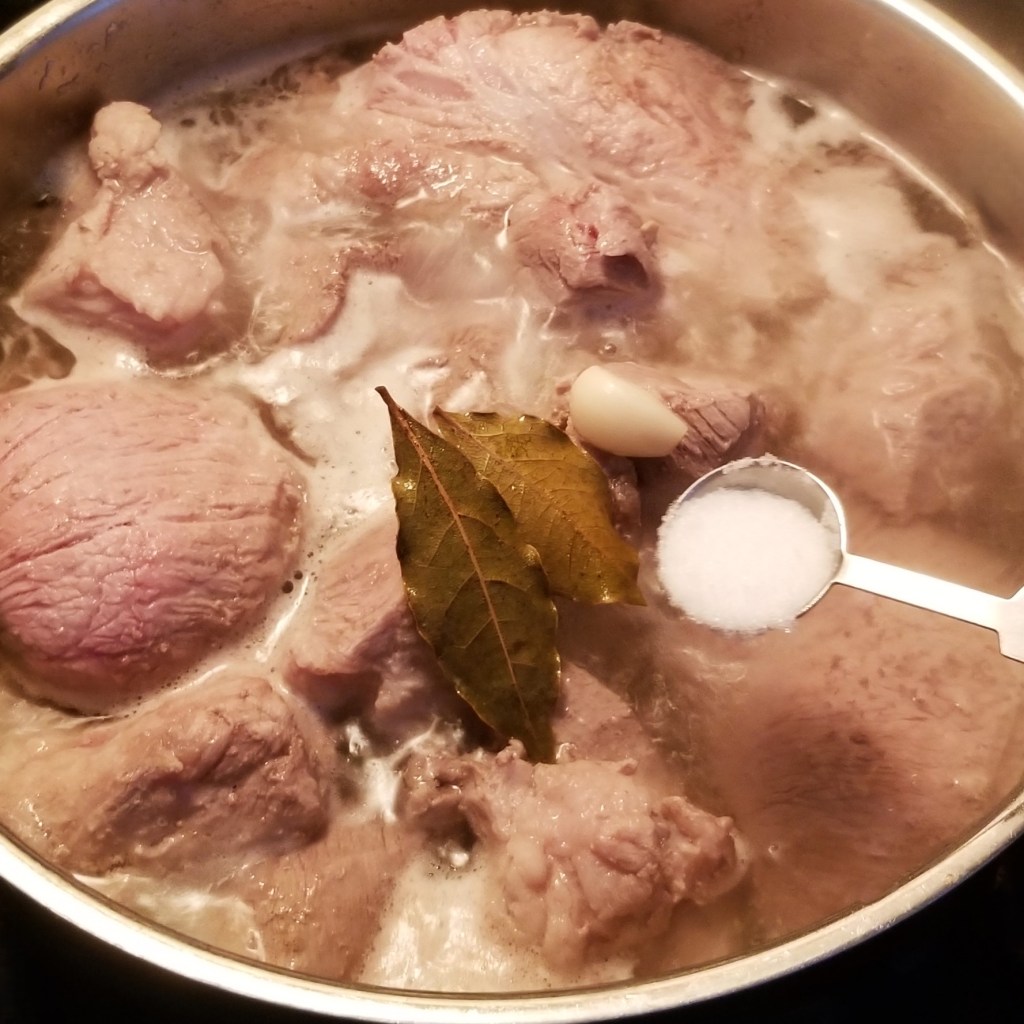
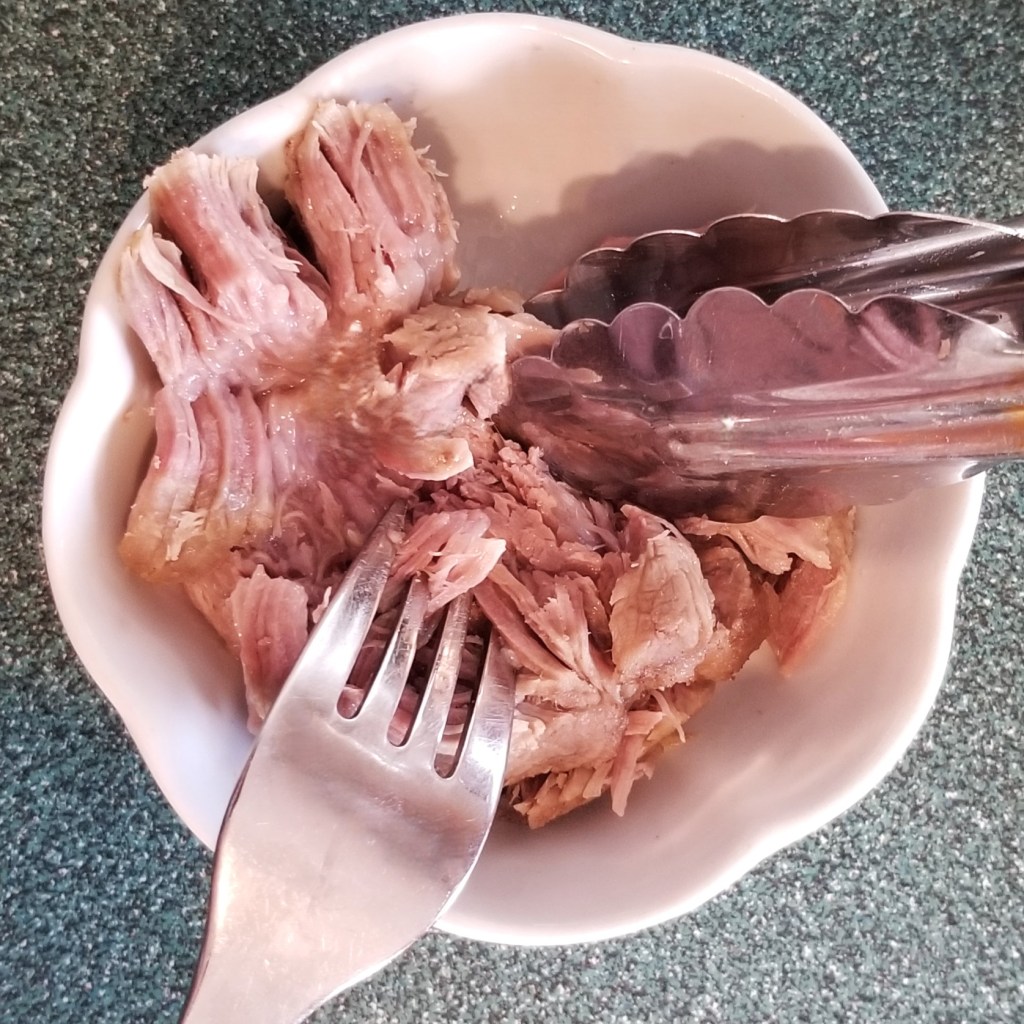
Prepare meat: Cut up pork into large chunks and place in a large pot with water over high heat. Bring to boil, then reduce to medium, skimming any foam with a spoon (photo below, left). Add bay leaves and a teaspoon of salt (photo below, centre). Cover pot and cook for one hour. Take one piece of meat on a board or plate, and prick with a fork, and as needed, continue cooking and testing, until meat shreds easily (photo below, right):
Remove pot from heat and let cool down. Transfer meat and aromatics to a large bowl or container, and pour broth into a large measuring cup or jar. Reserve.
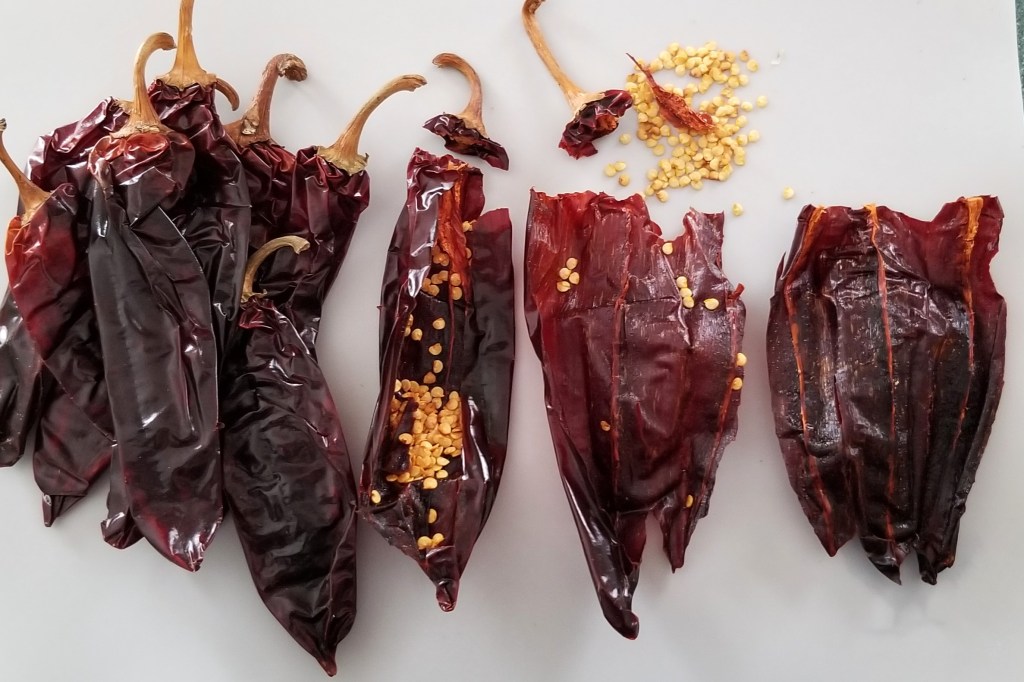
Prepare sauce: remove and discard stems and seeds from guajillo peppers:
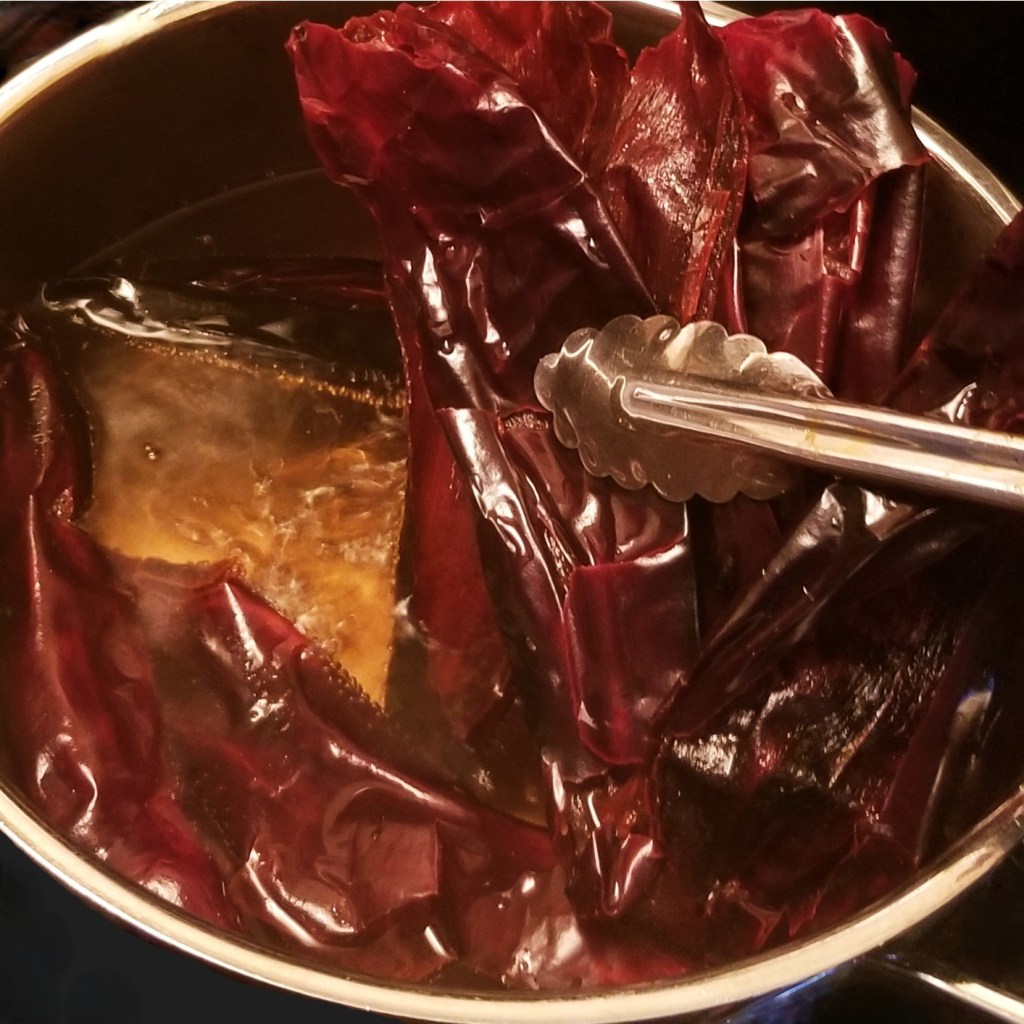
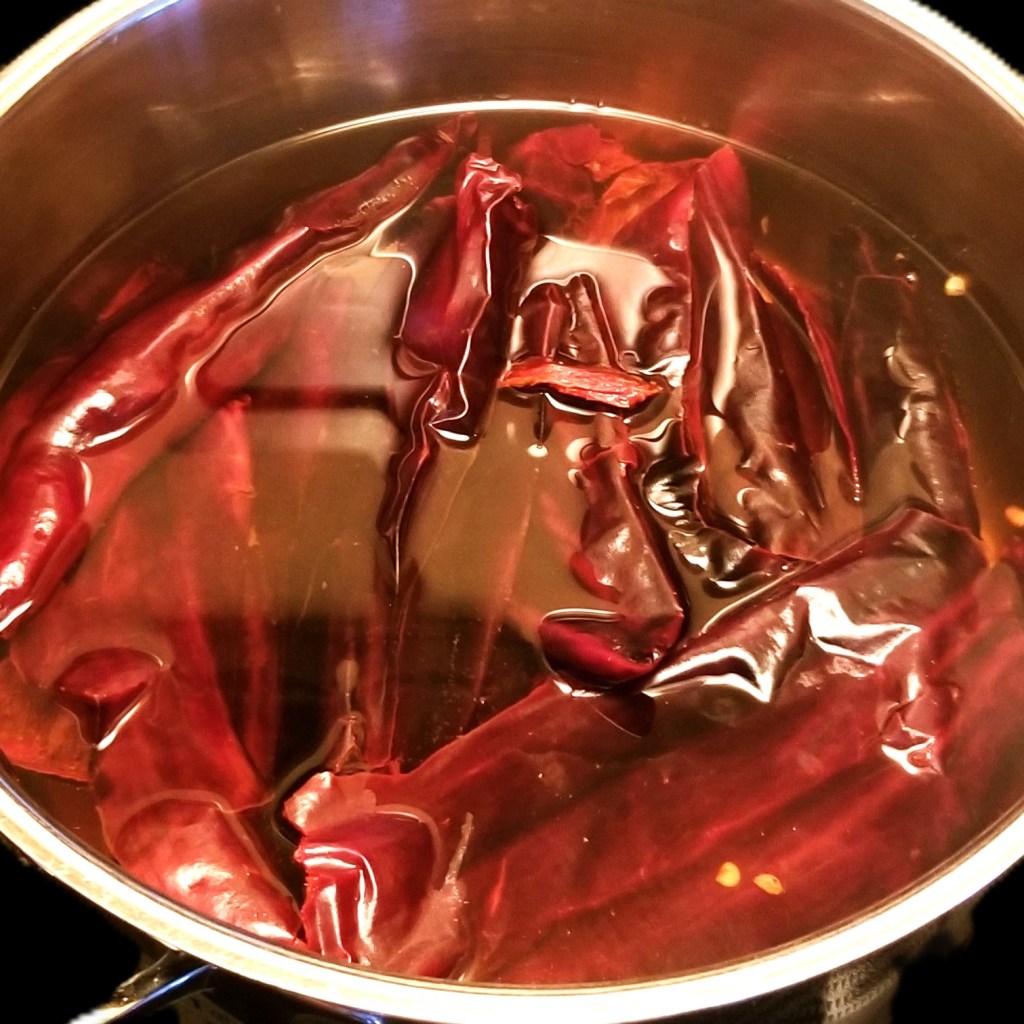
Place cleaned peppers in a pot with boiling water (photo below, left); allow to soak until they cool down, about twenty minutes (photo below, right):
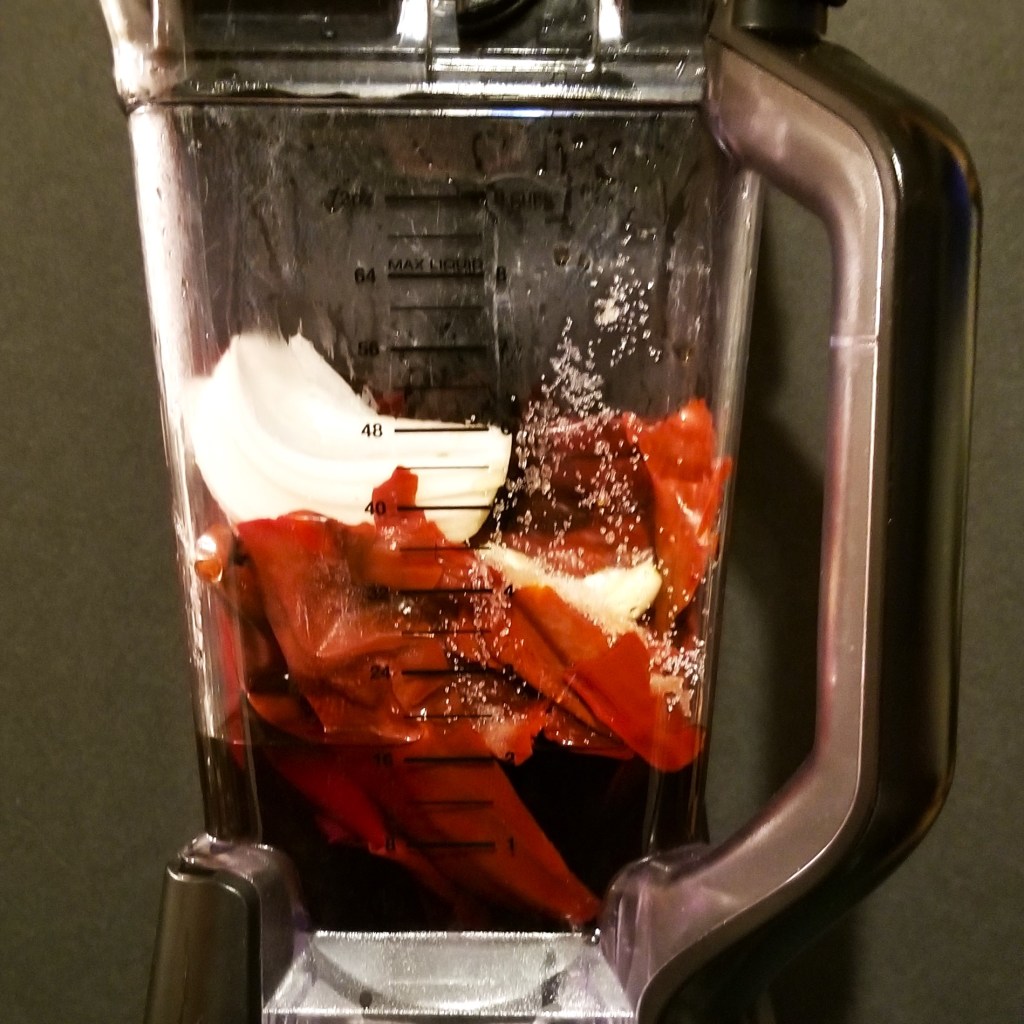
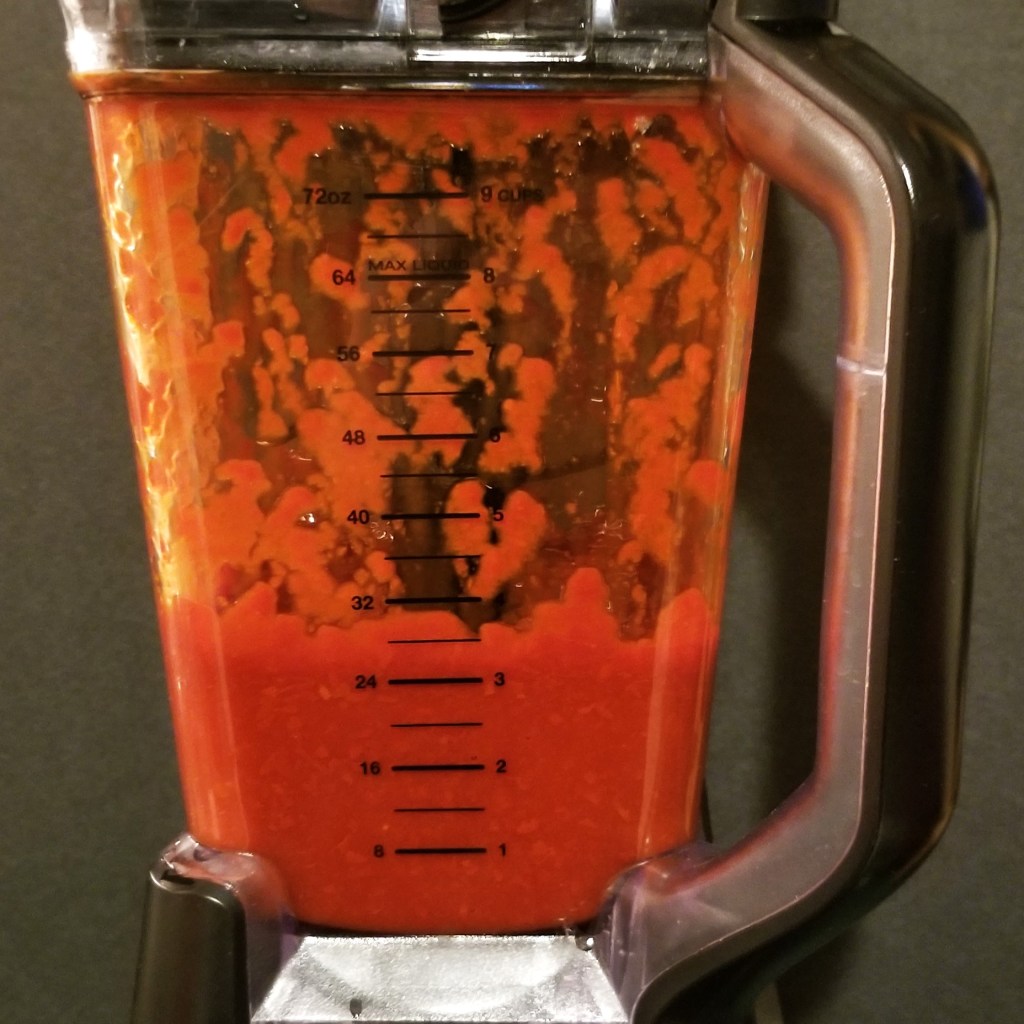
Transfer drained peppers to a blender jar, and add onion, two cloves of garlic, one teaspoon of salt, and about one cup of liquid from soaking the peppers (photo below, left); process until well blended (photo below, right):
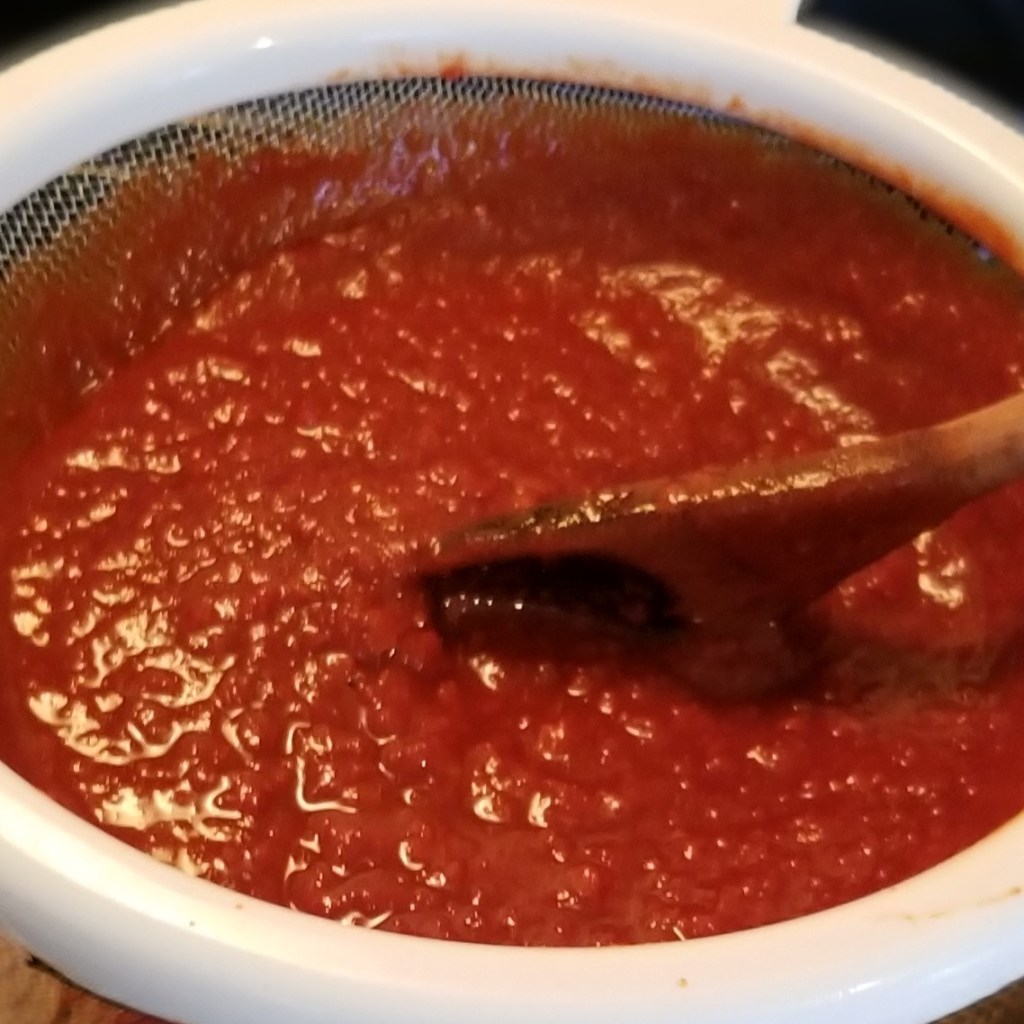
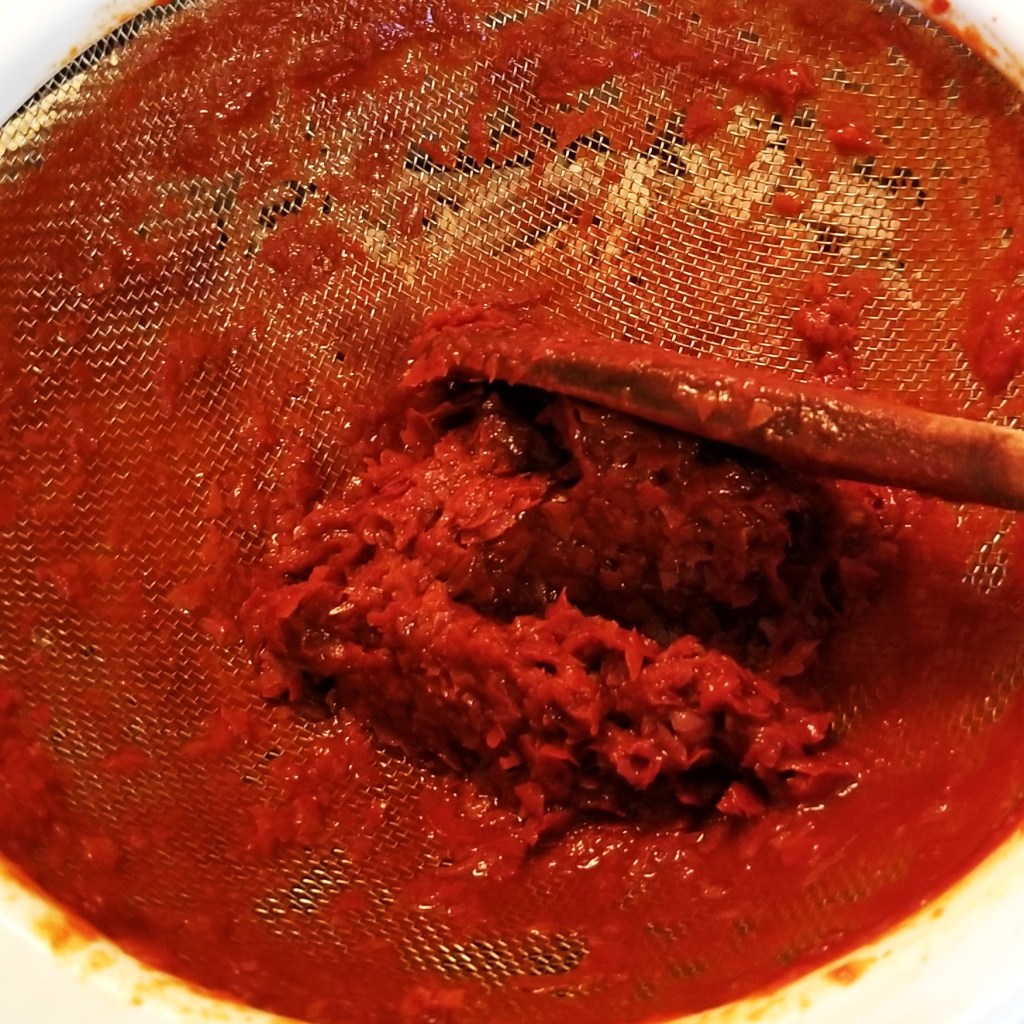
Strain sauce through a sieve (photo below, left). Reserve sauce and discard solids in the mesh (photo below, right):
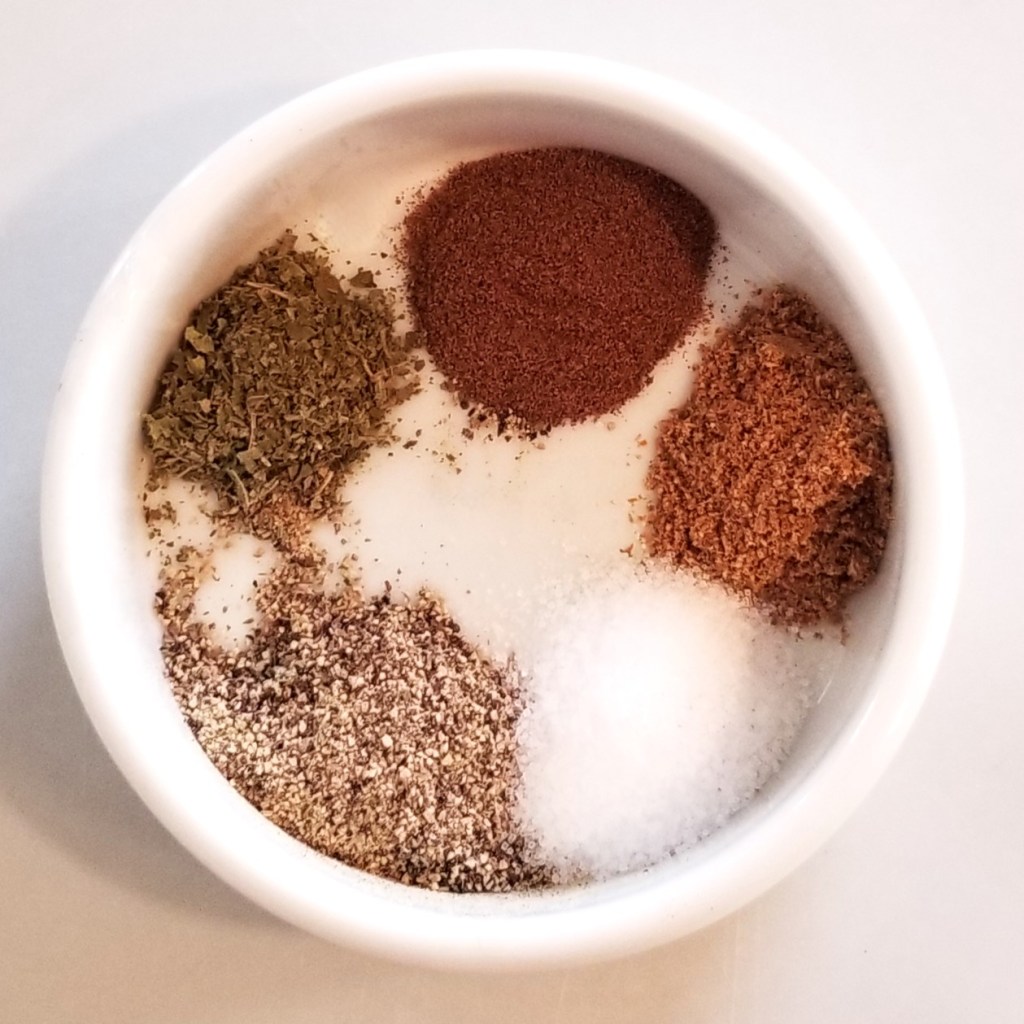
Finish filling: measure seasonings, half a teaspoon each, from top left, Mexican oregano (or marjoram), all-spice, coriander seed, salt, and black pepper:
Shred the pork, placing aside any membrane or fatty bits, and bay leaves (the garlic dissolved during cooking):
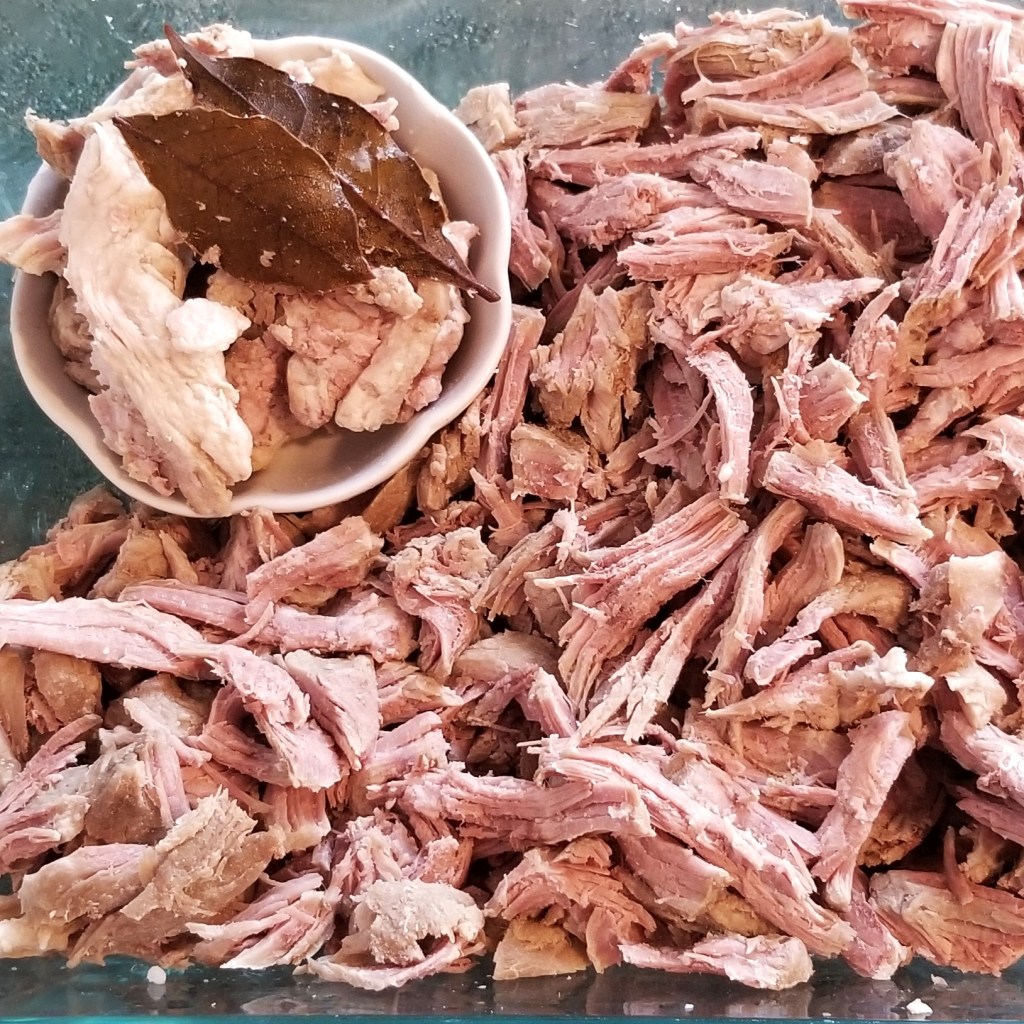
Discard bay leaves. Warm up a large pan over medium heat. Add fatty bits, stir and sauté until they turn golden brown, rendering enough fat to coat the bottom of the pan (photo below, left). Remove crisped bits (photo below, right):
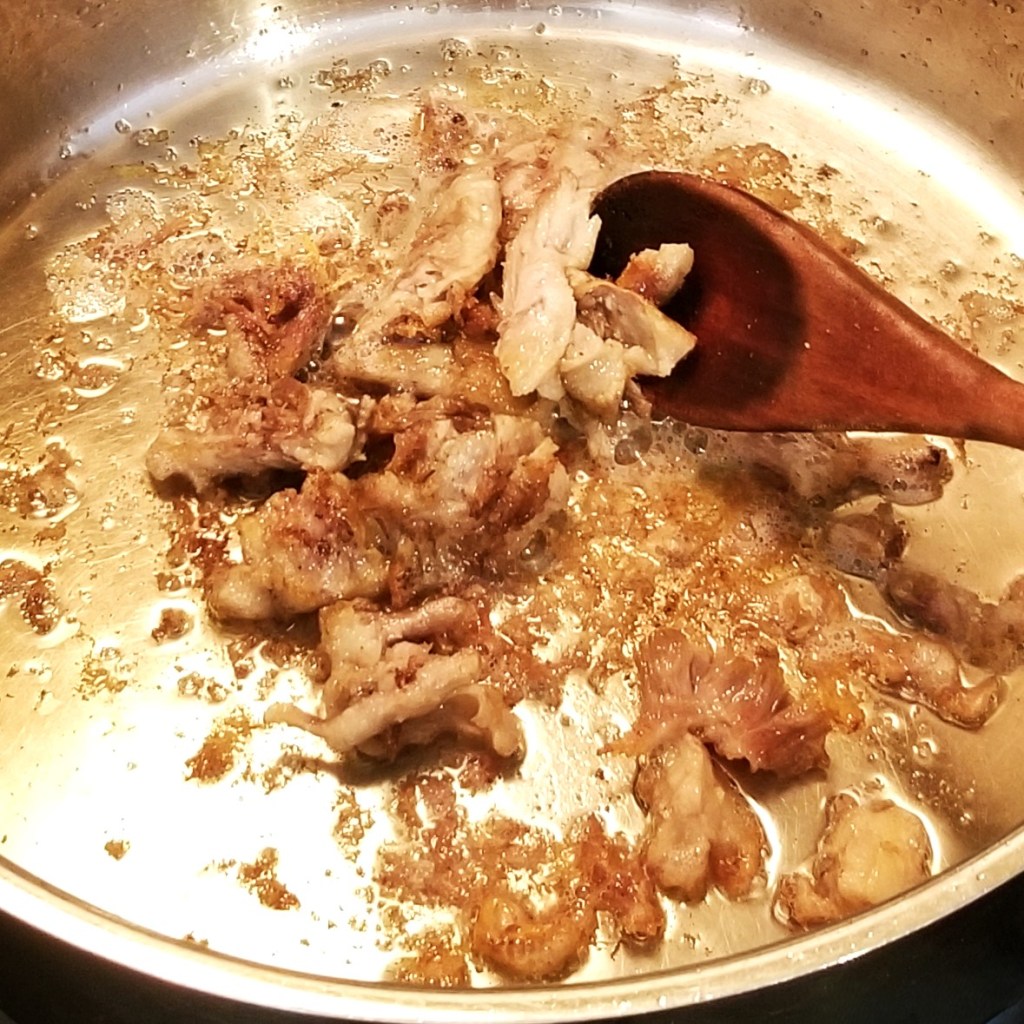
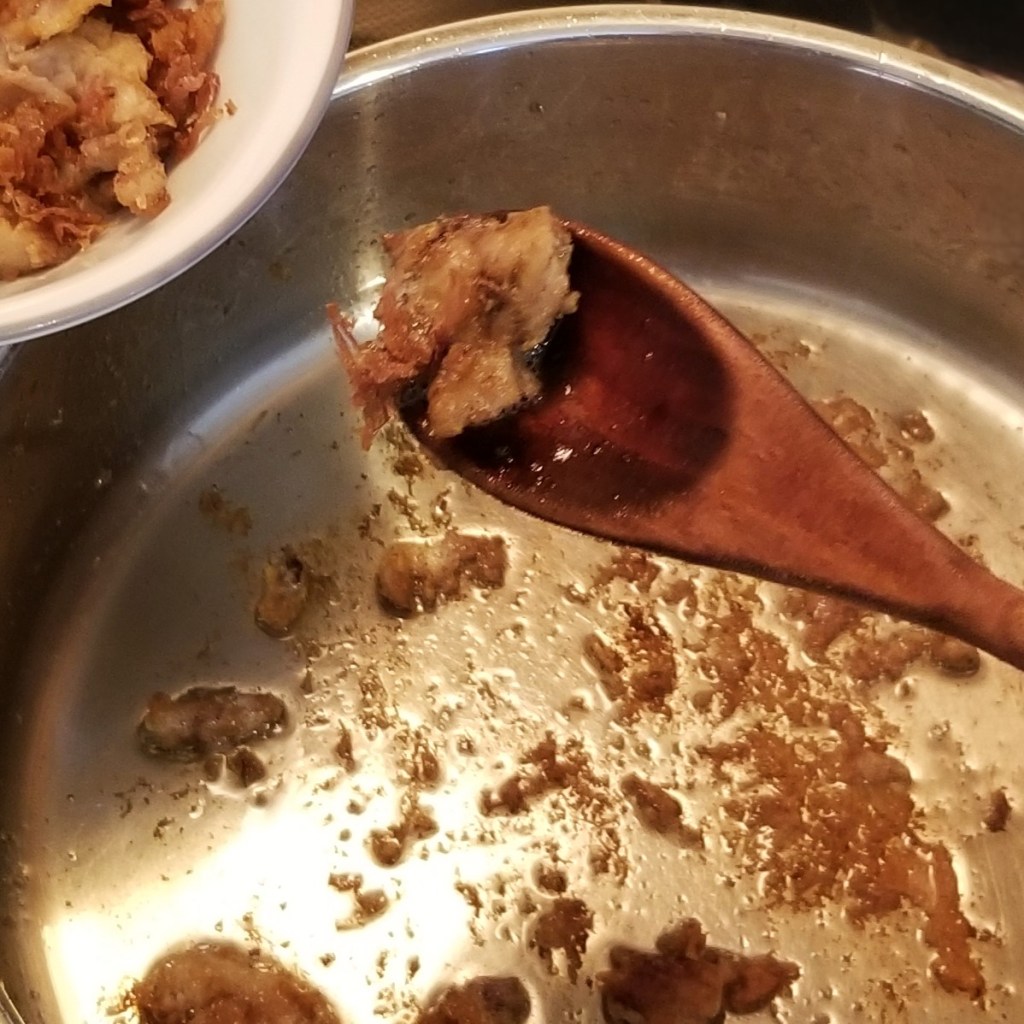
(Some people like to put some of these bits, called asientos, on a crisped tortilla and have it as an appetizer, or snack).
Add shredded meat to the pan (photo below, left); stir meat, just lightly crisping, for a couple of minutes, then add two cups of the reserved strained sauce (photo below, right):
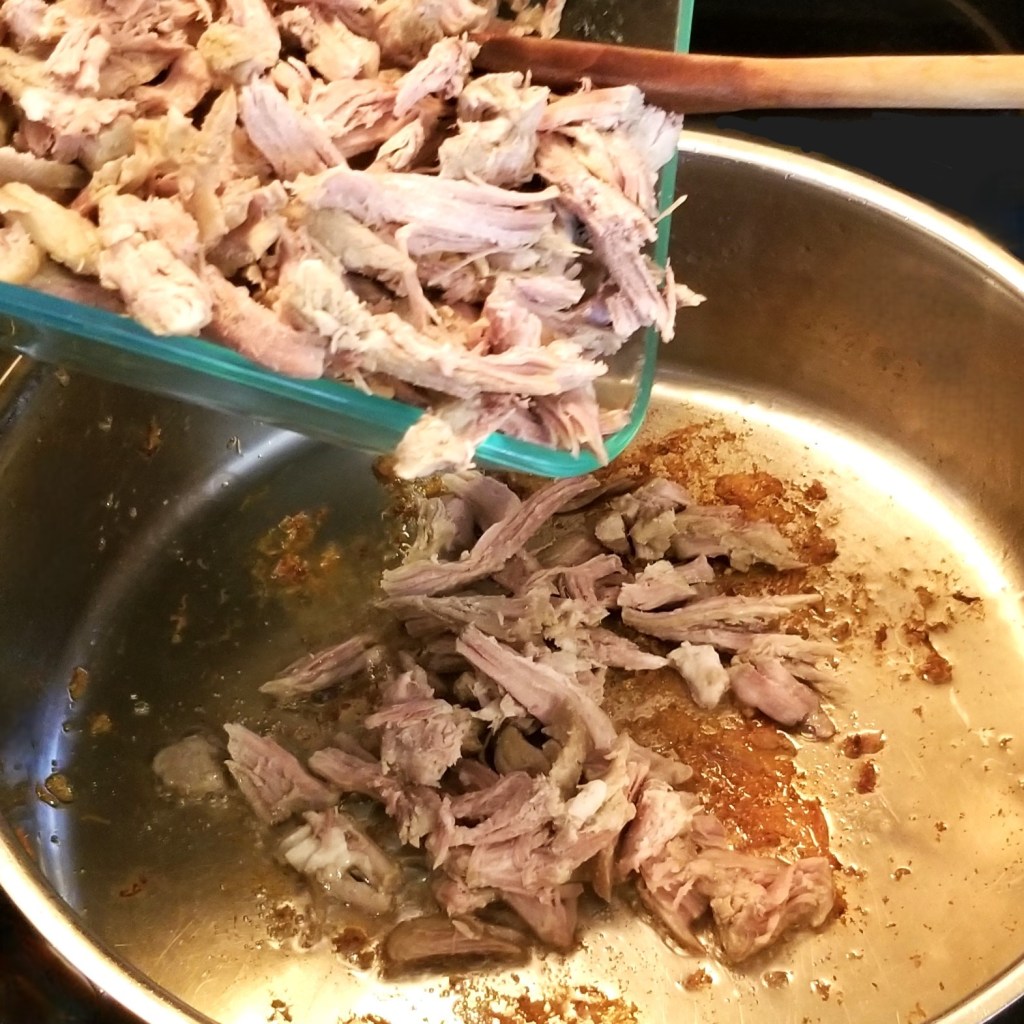
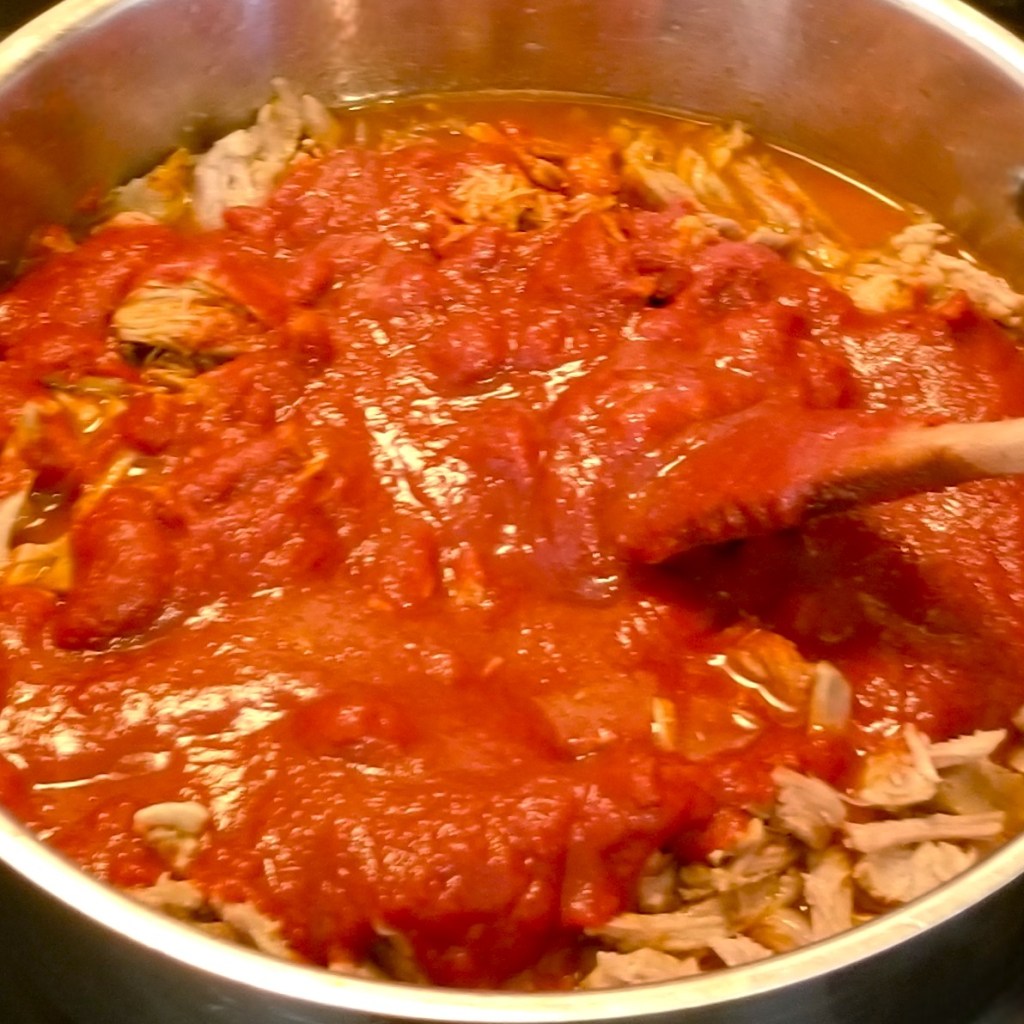
Reserve the rest of the sauce for the corn paste.
Mix meat and sauce together, then incorporate seasonings (photo below, left). Cover pan (photo below, right):
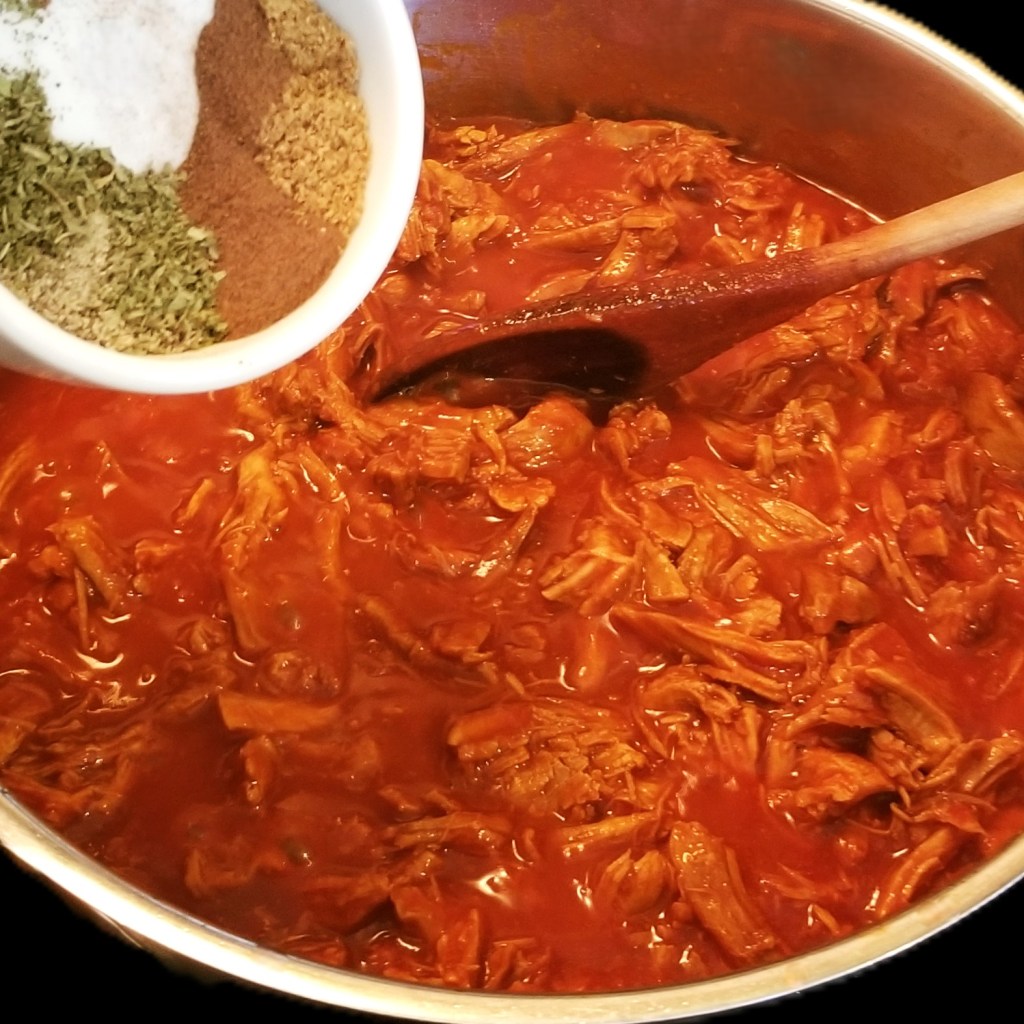
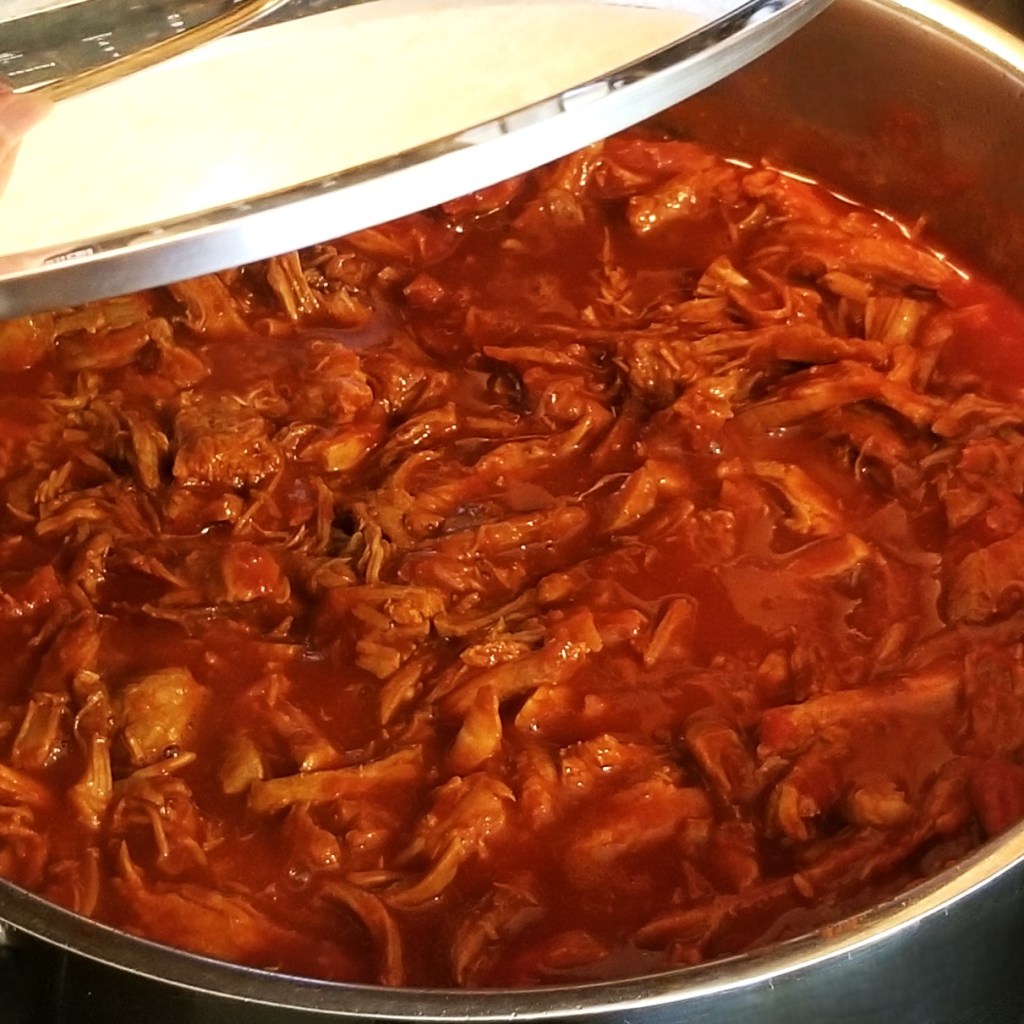
Cook for another fifteen minutes, then remove from heat and allow to cool down.
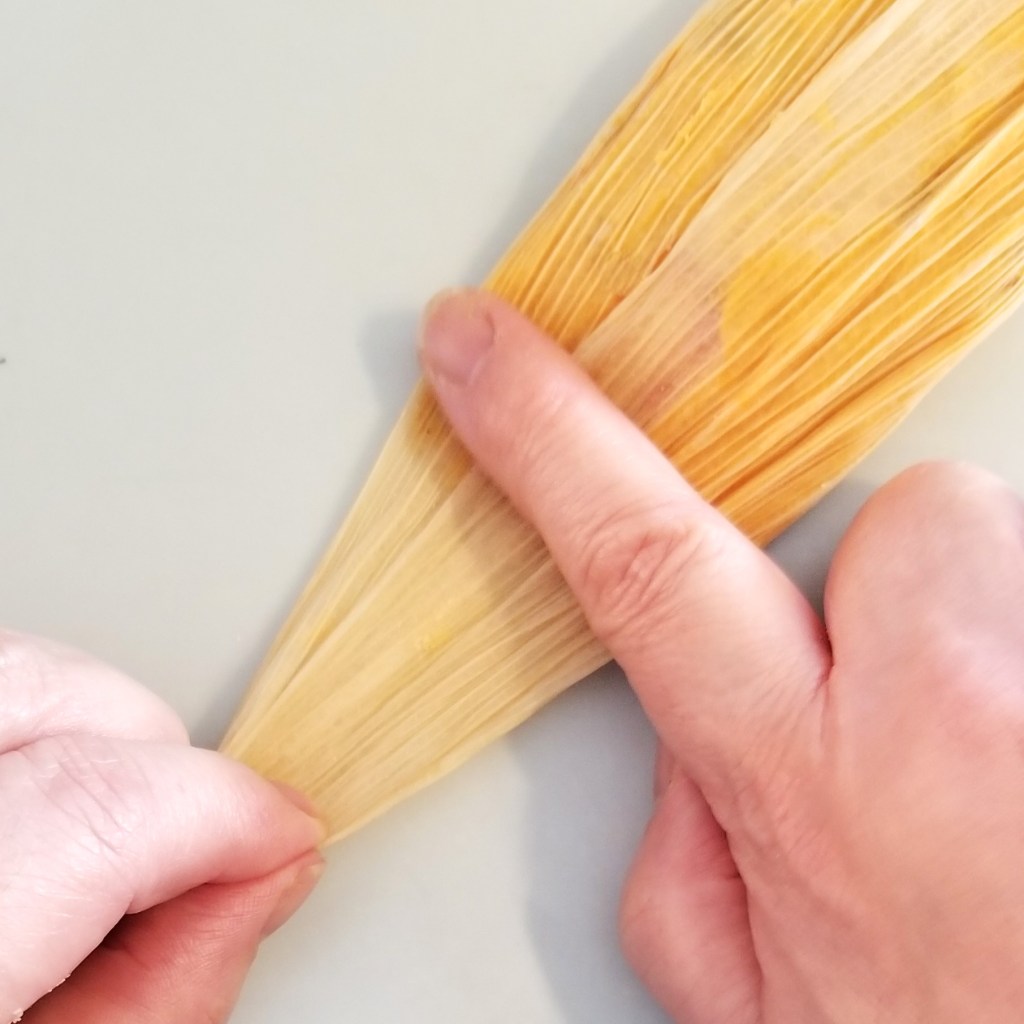
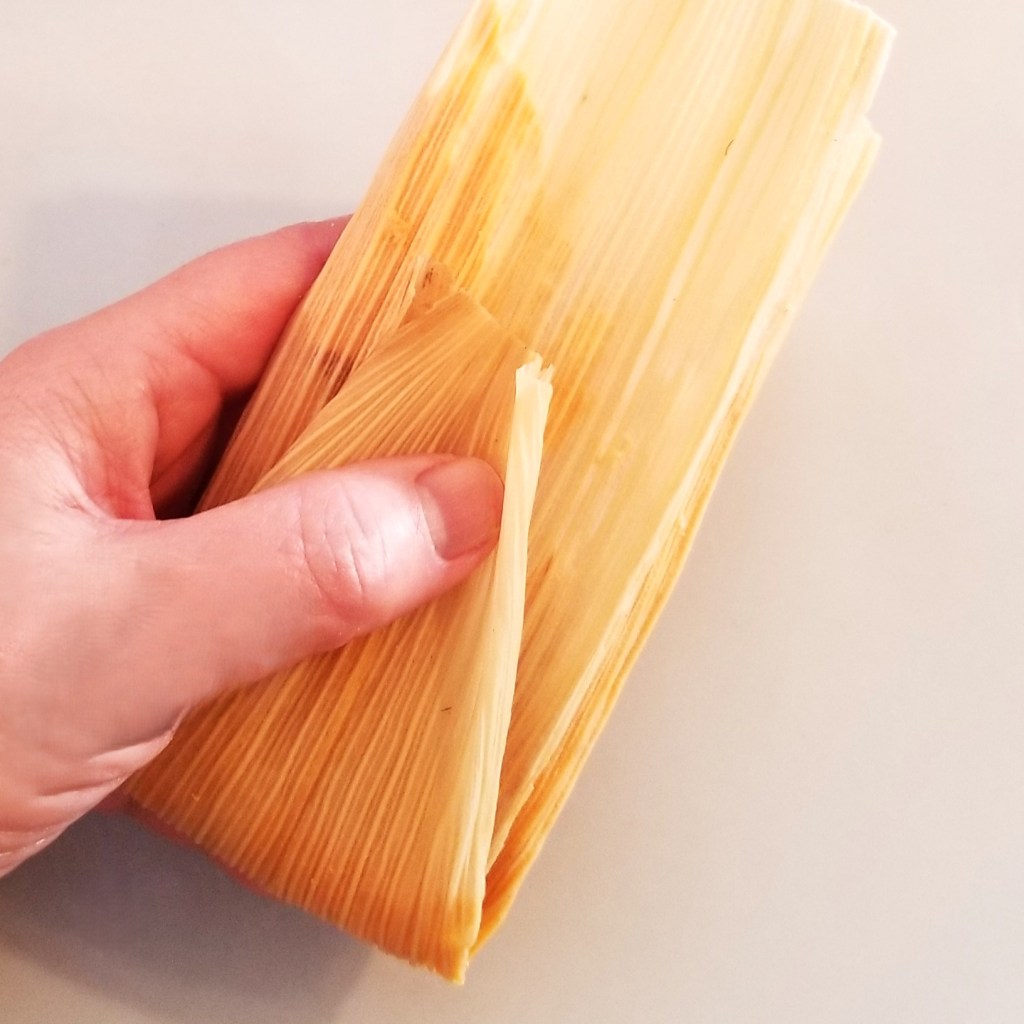
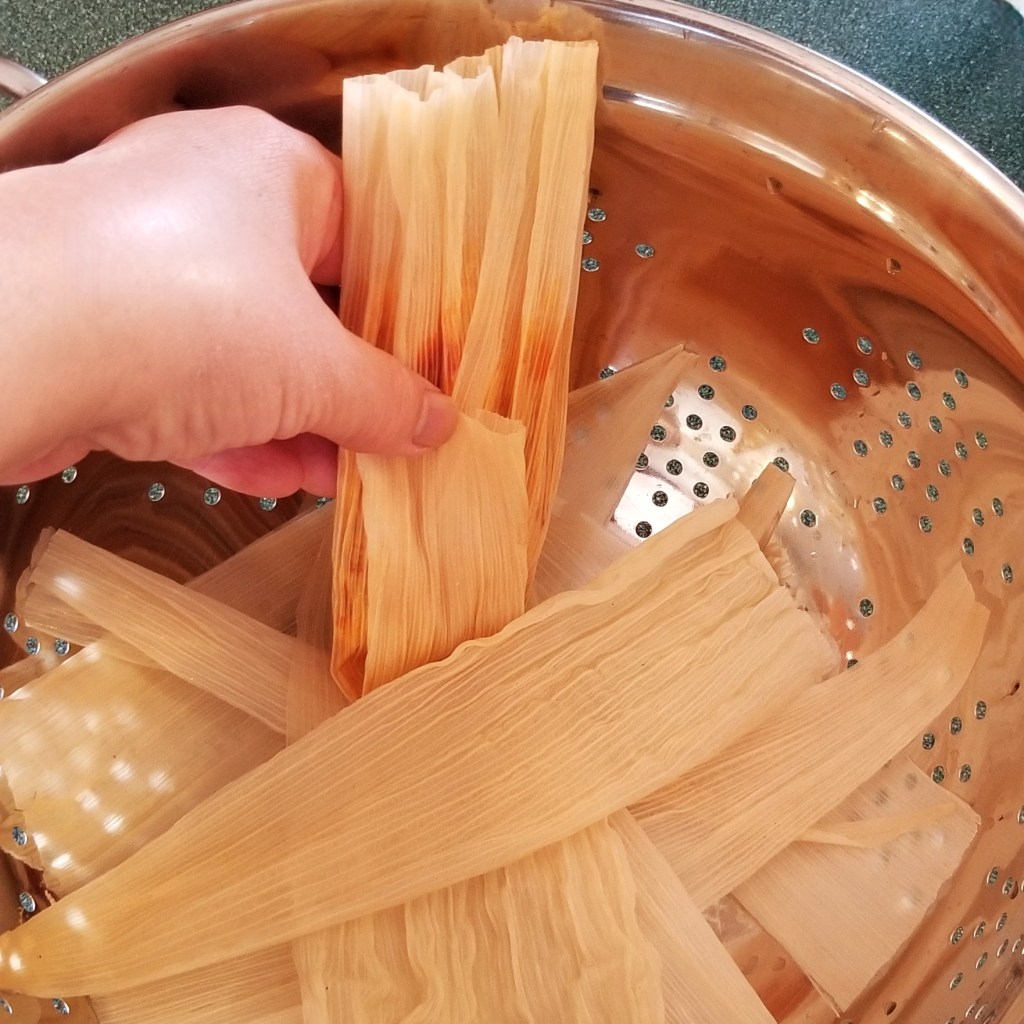
Prepare corn husks: Take dry husks out of their packaging. Wash husks under running water, separating them very carefully, discarding pieces with stains or dark spots, probably from mould. Dunk the good husks in water and drain a couple of times, then let soak in freshly boiled water for at least 20 minutes (photo below, left). Remove from water, gently squeeze excess water and reserve, propped in a colander (photo below, right):
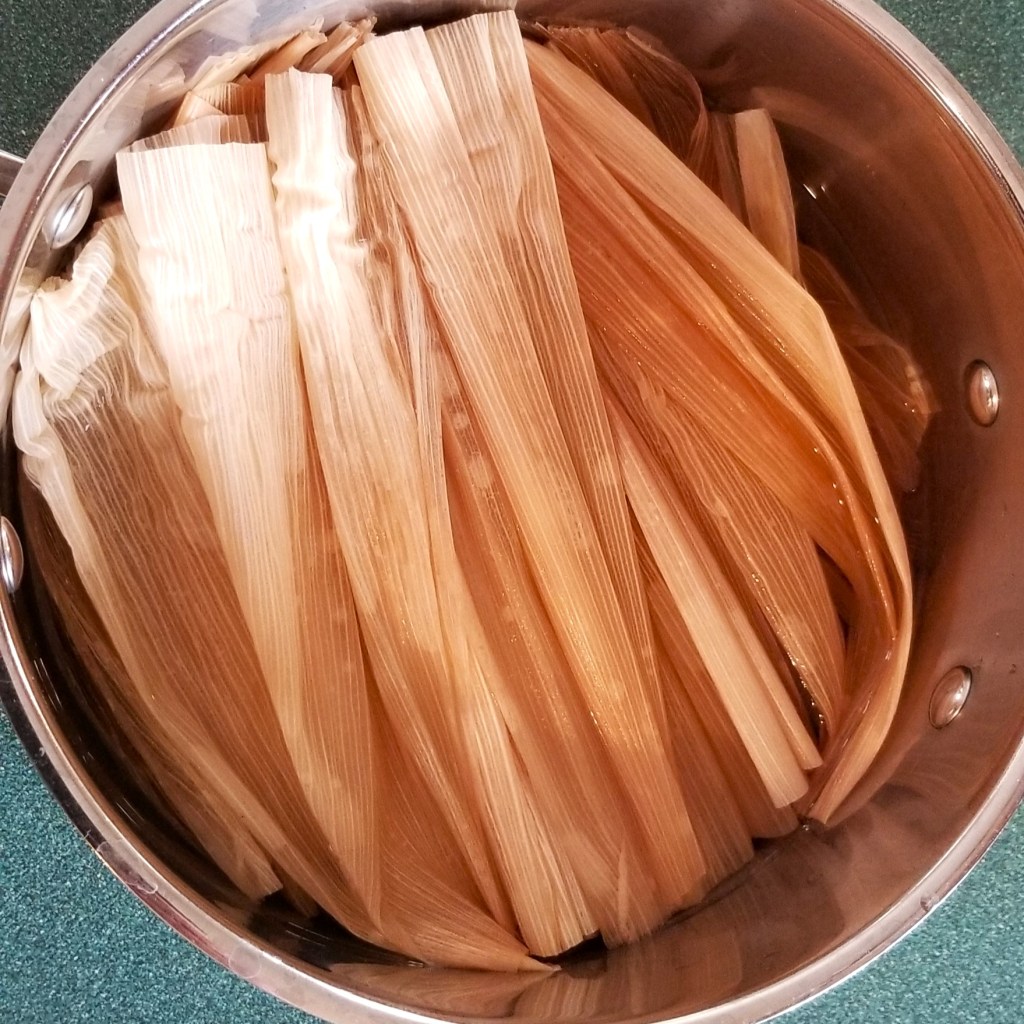
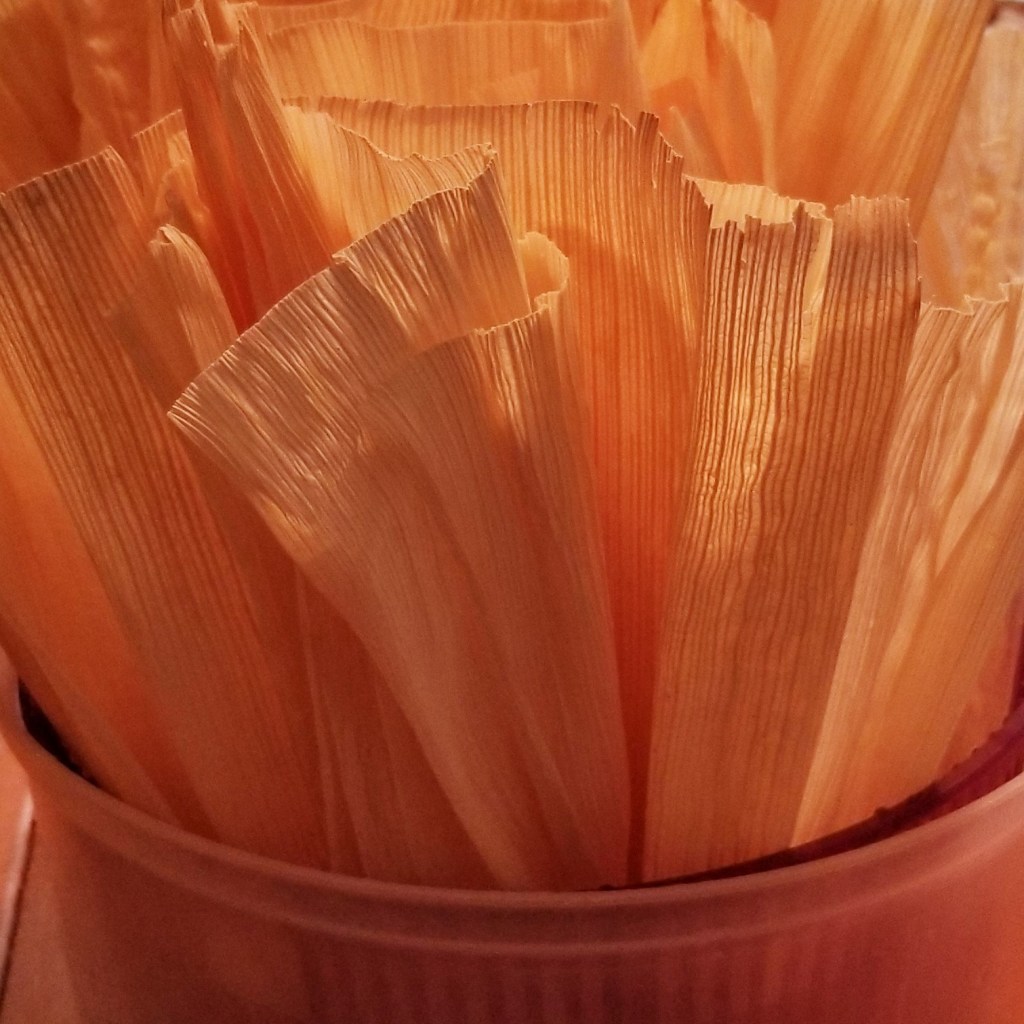
If they become stiff, dunk in water and drain again before attempting to fold.
Prepare corn paste: The reserved broth from cooking the pork will separate upon cooling, with lard floating to the top:
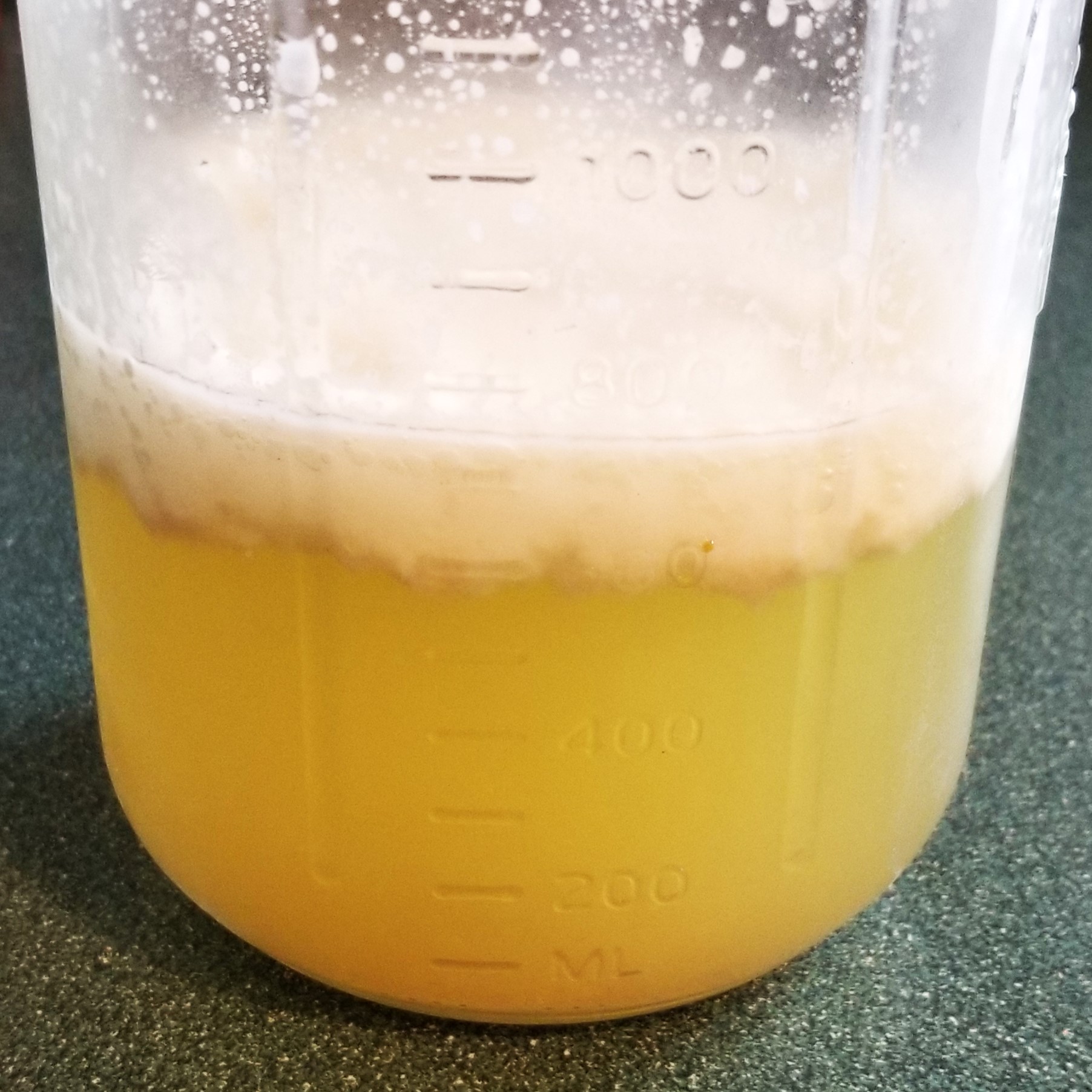
*note: Skim the lard on top, and measure; if needed, supplement with store-bought lard to one cup.
**note: measure the broth and transfer to a pot, topping up with water, if needed, to five cups. Place pot over high heat and bring to boil, keeping hot until needed.
There is about one cup of reserved sauce left, as well:
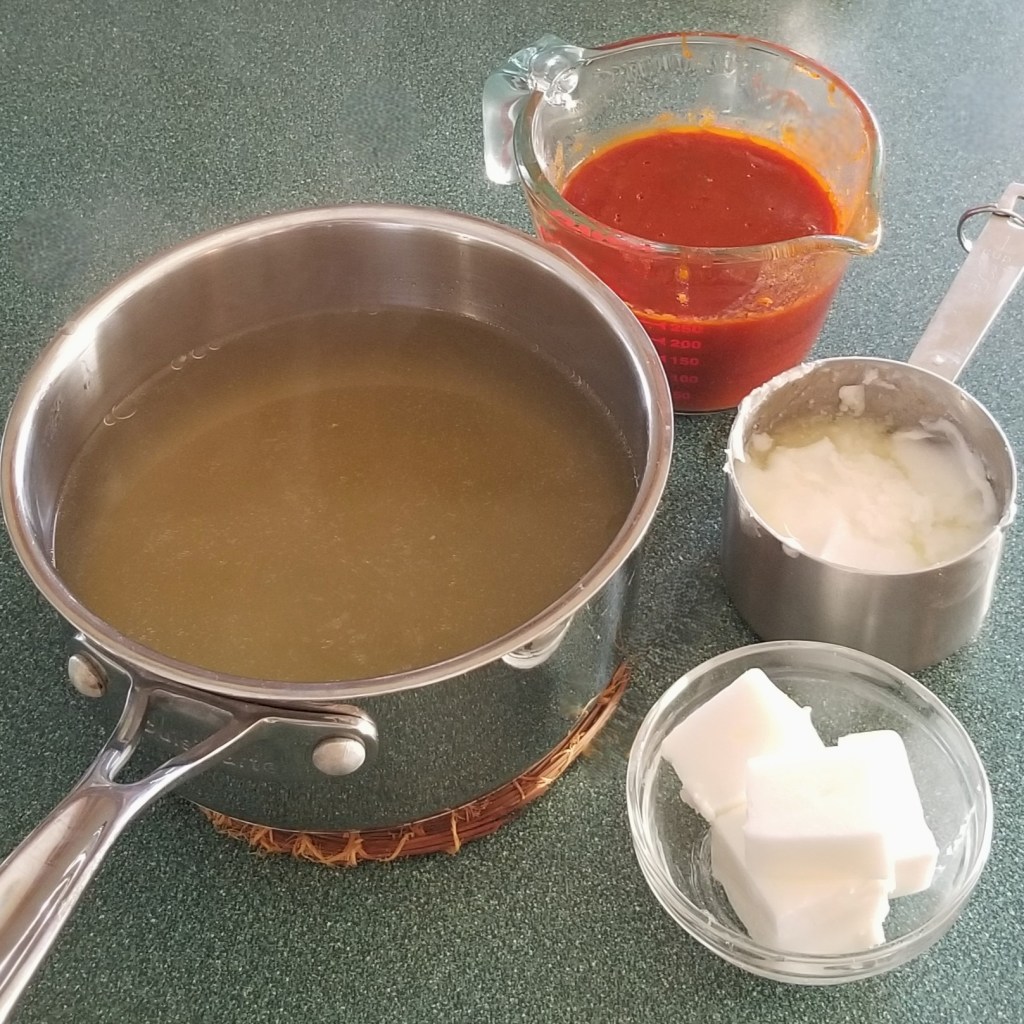
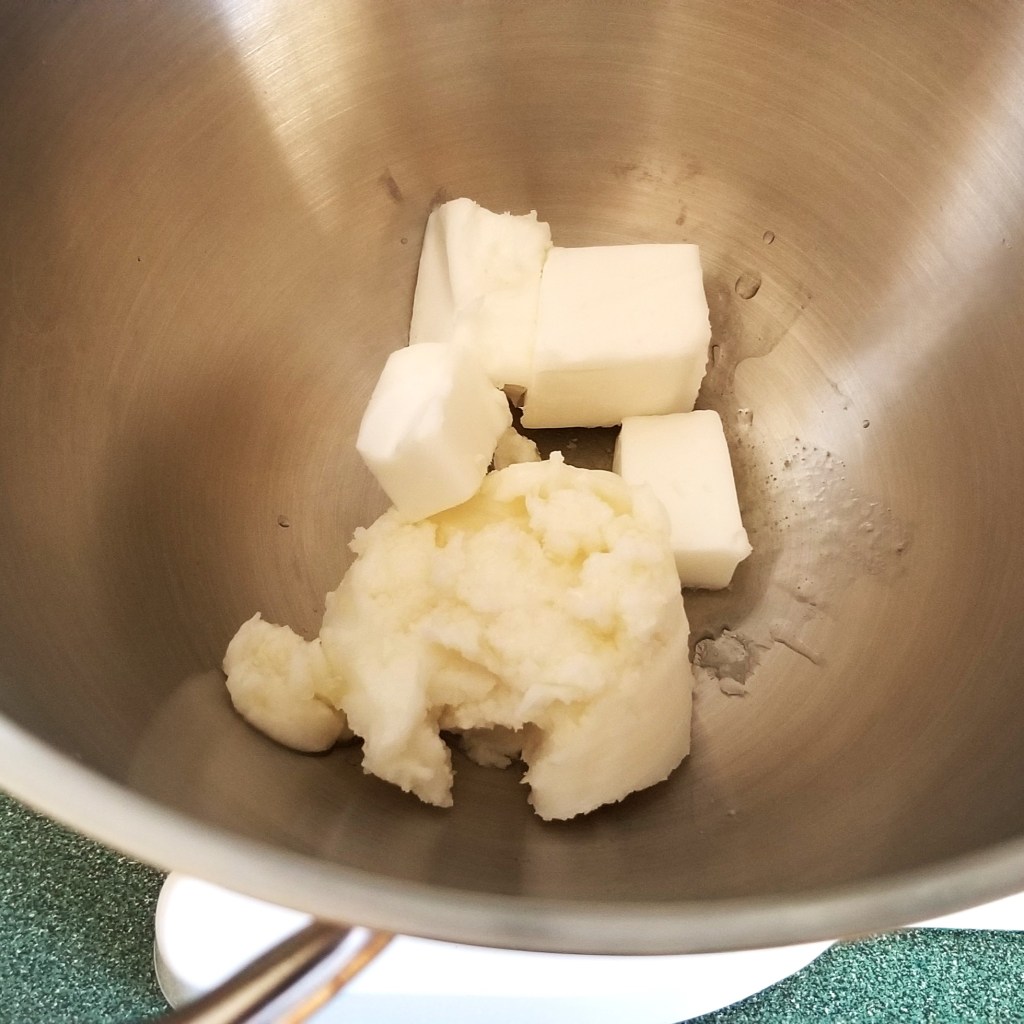
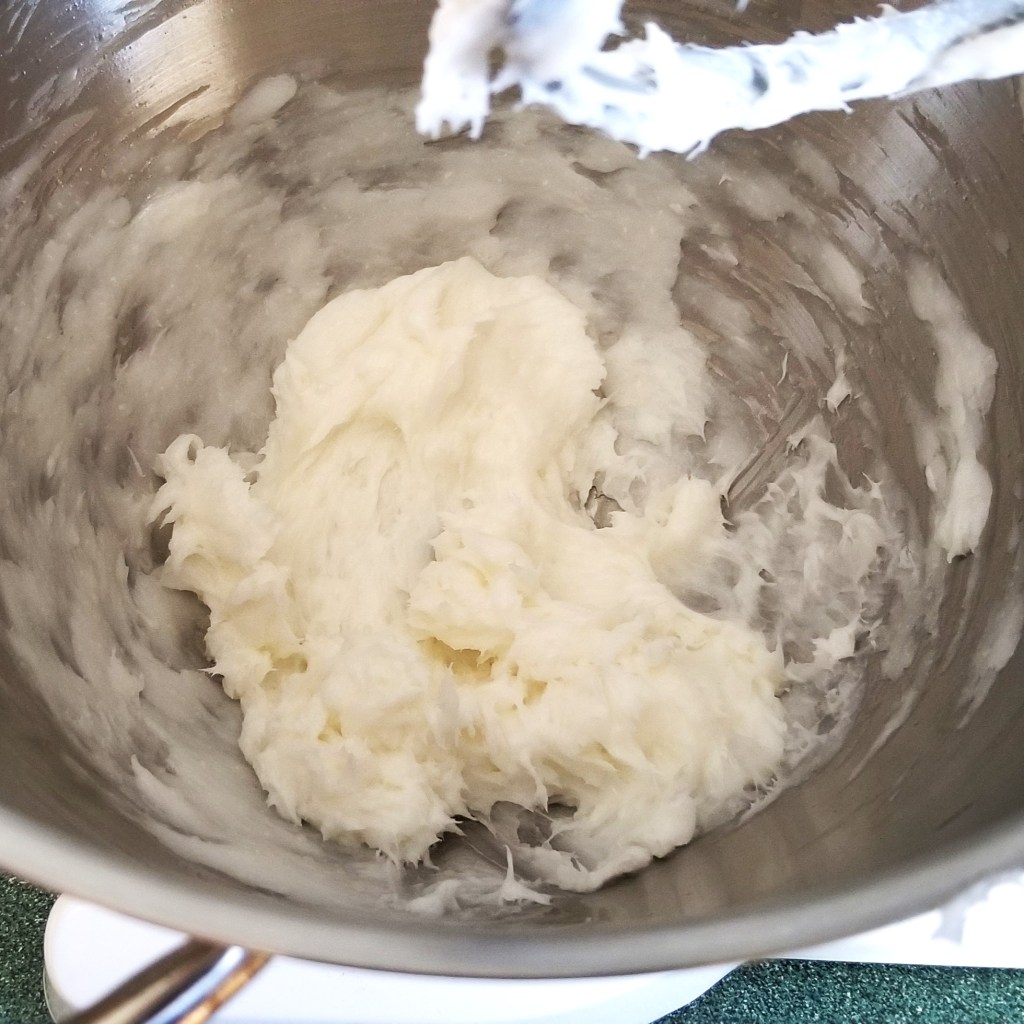
Place the one cup of lard in a large mixing bowl (photo below, left). Beat until creamy and fluffy (photo below, right):
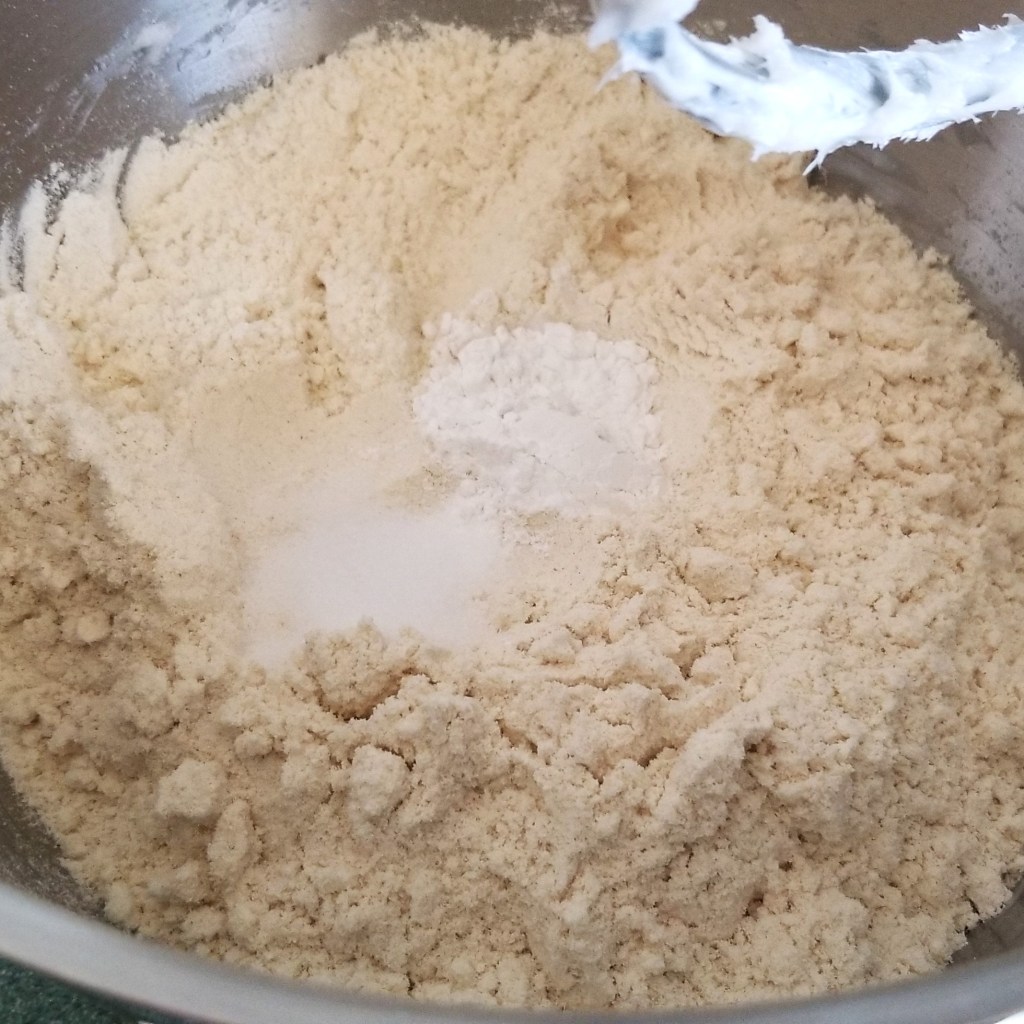
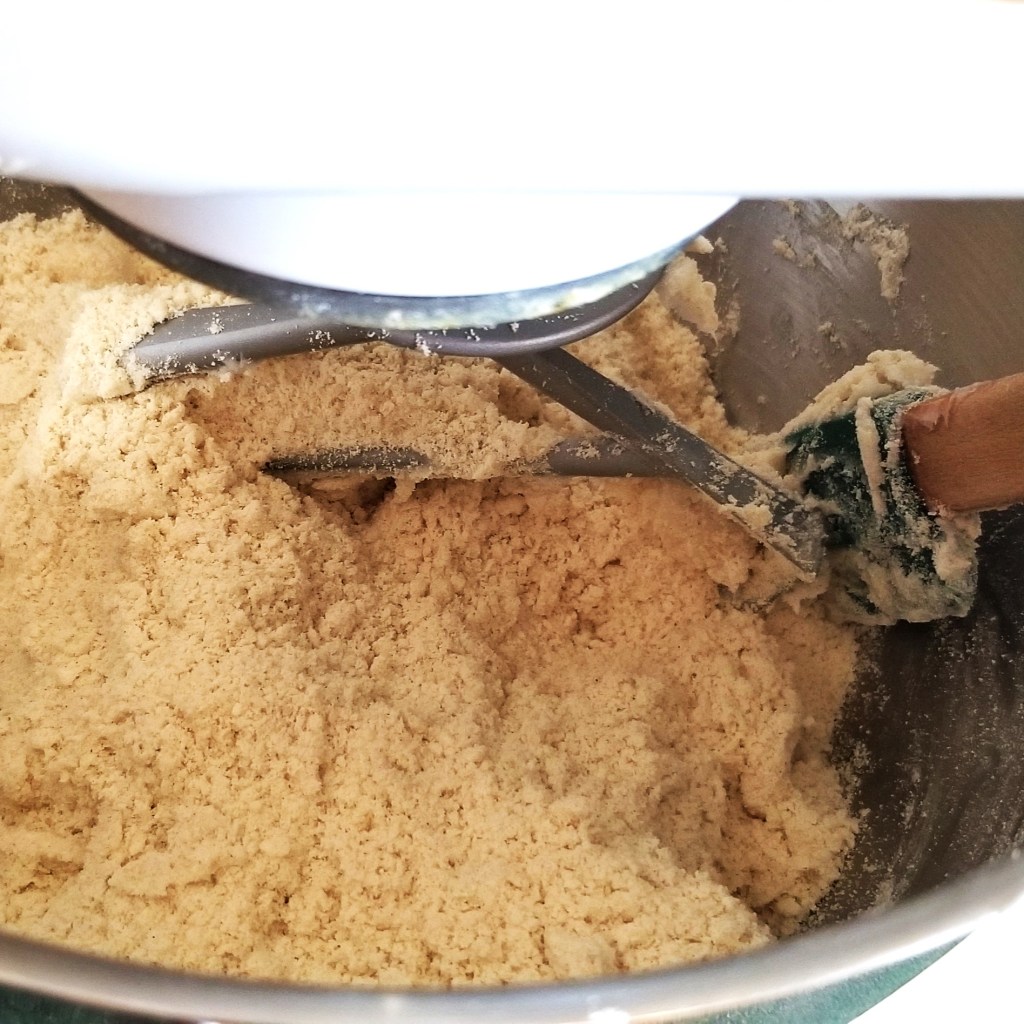
Add nixtamalized corn flour, baking powder, and one teaspoon of salt (photo below, left). Mix to incorporate, occasionally stopping to scrap edges with a spatula (photo below, right):
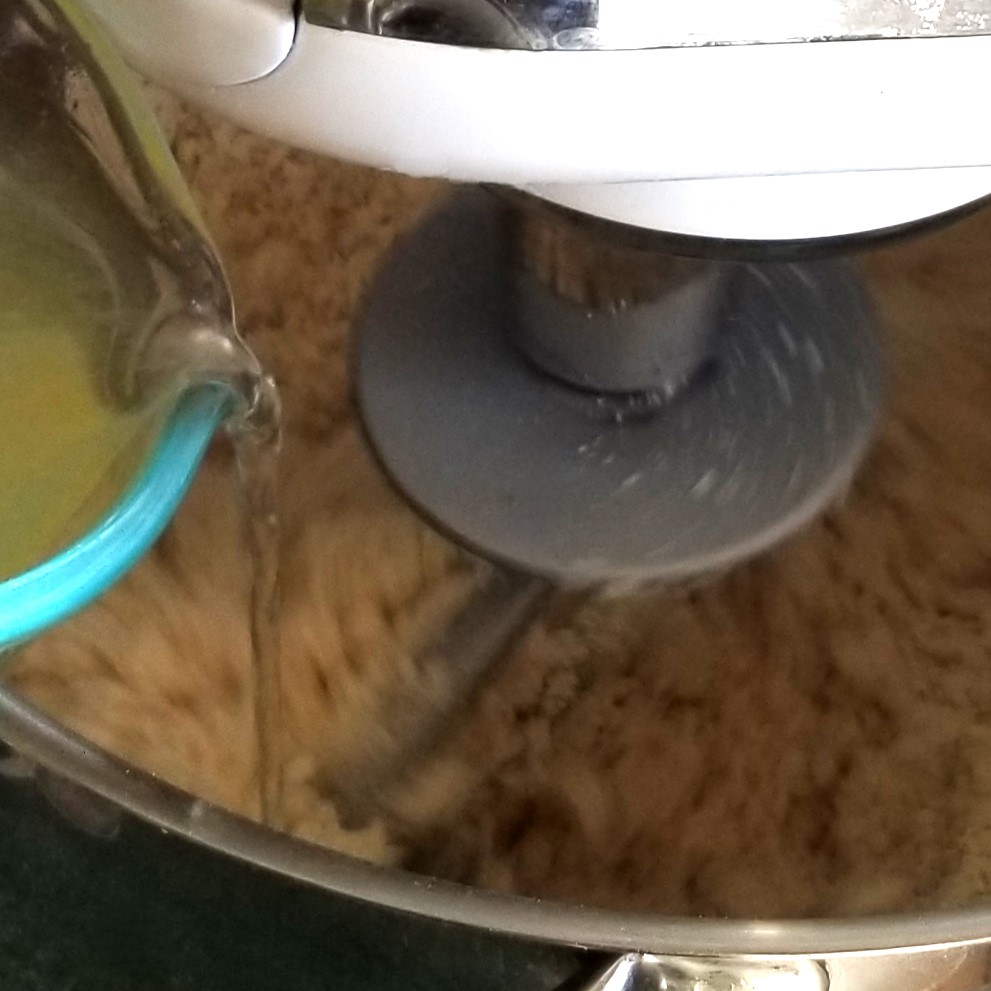
Add two cups of hot broth, while mixing (photo below, left). Once incorporated, add the reserved sauce (photo below, right):
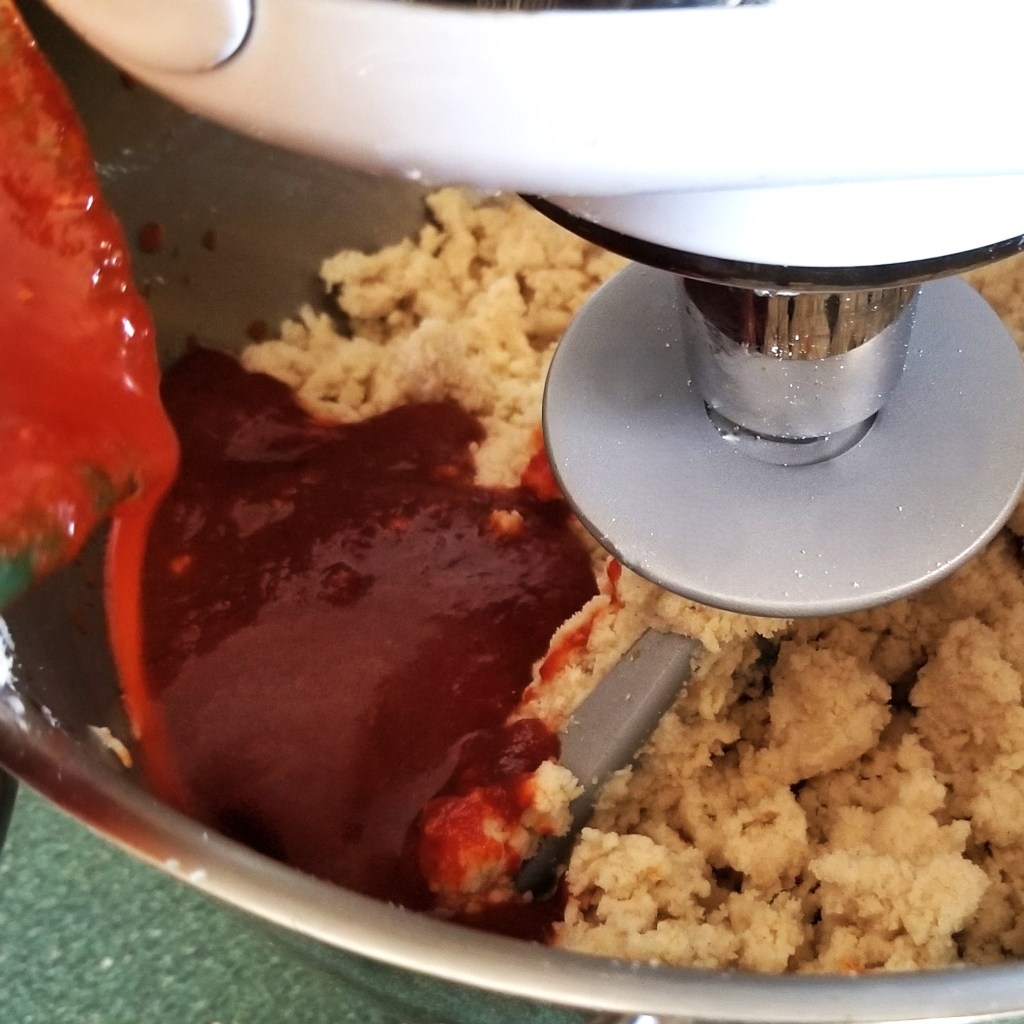
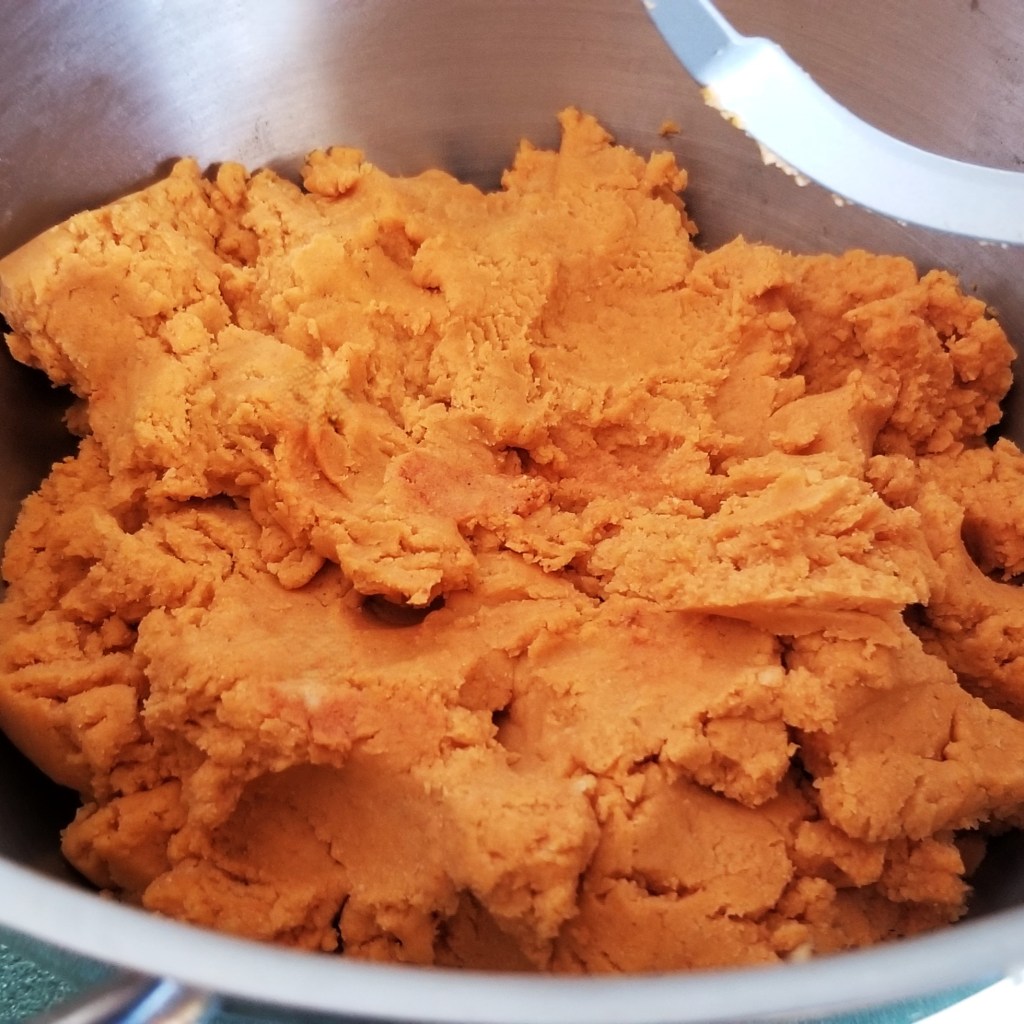
Mix and knead, until a uniform soft dough is formed (photo below, left). Continue mixing, adding the rest of the broth, as needed (photo below, right):
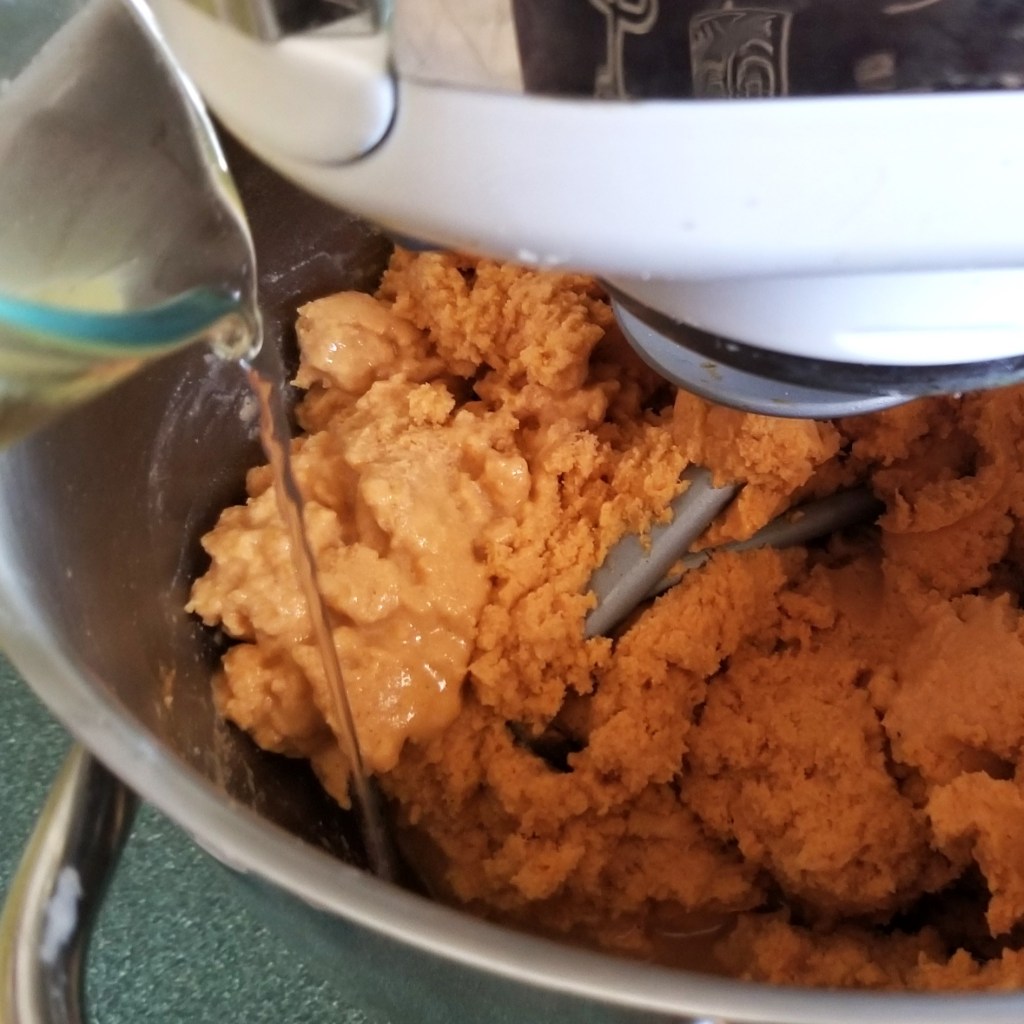
The final texture should be a fluffy, spreadable paste (photo below, left). Cover bowl (photo below, right):
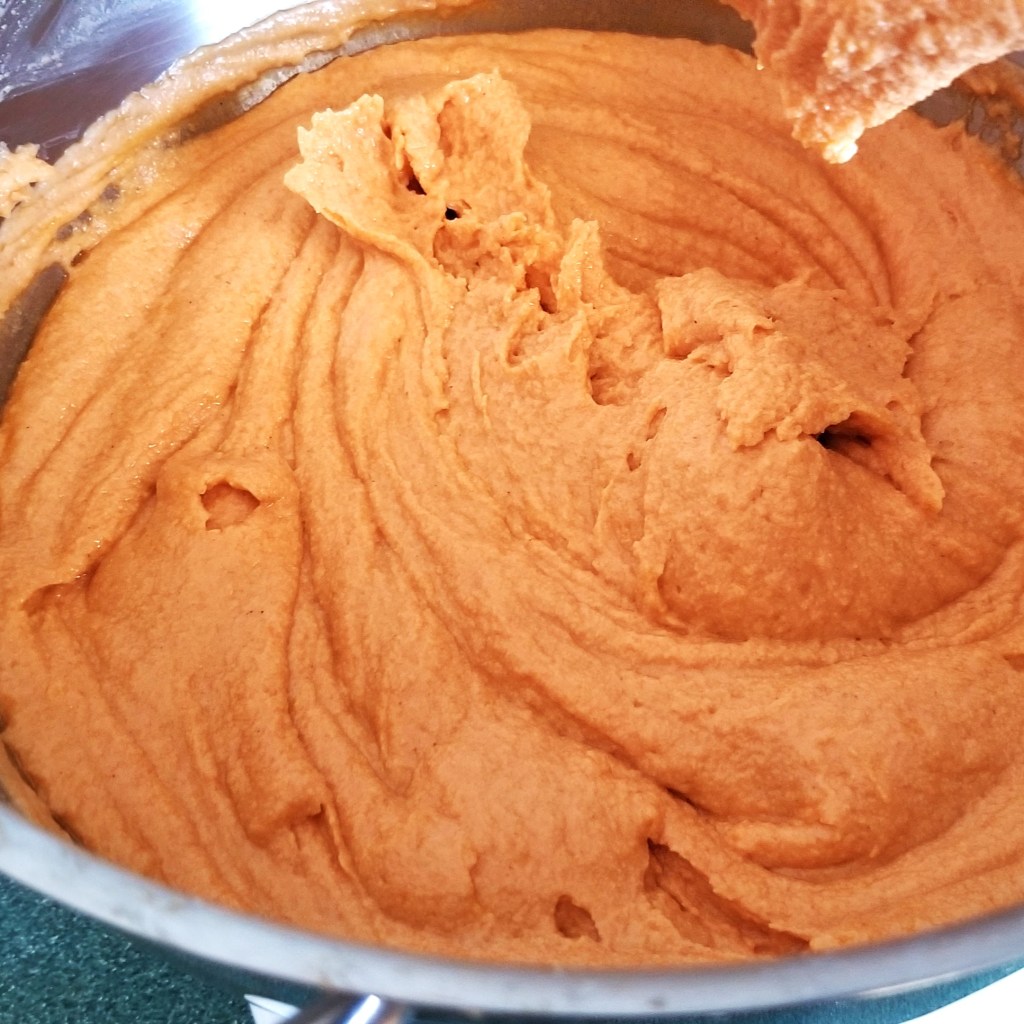
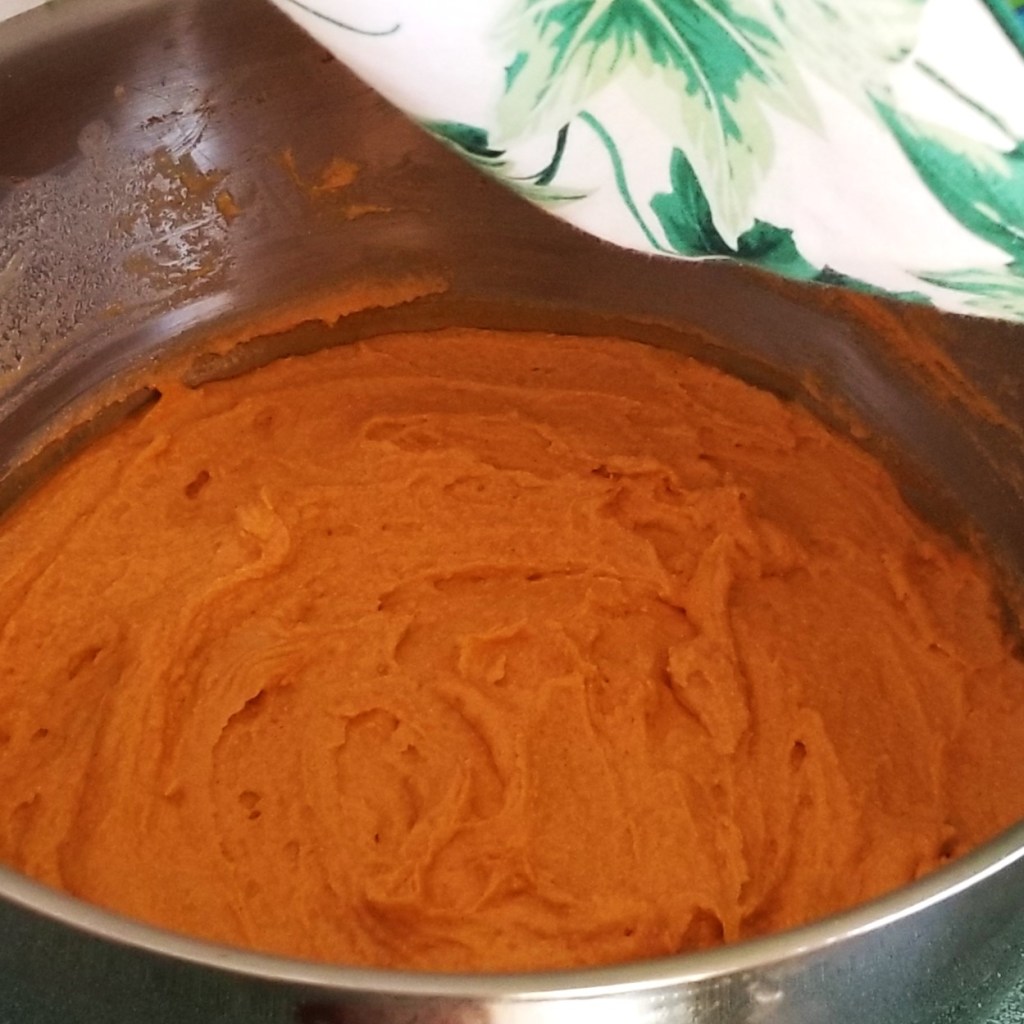
Allow to rest for twenty minutes.
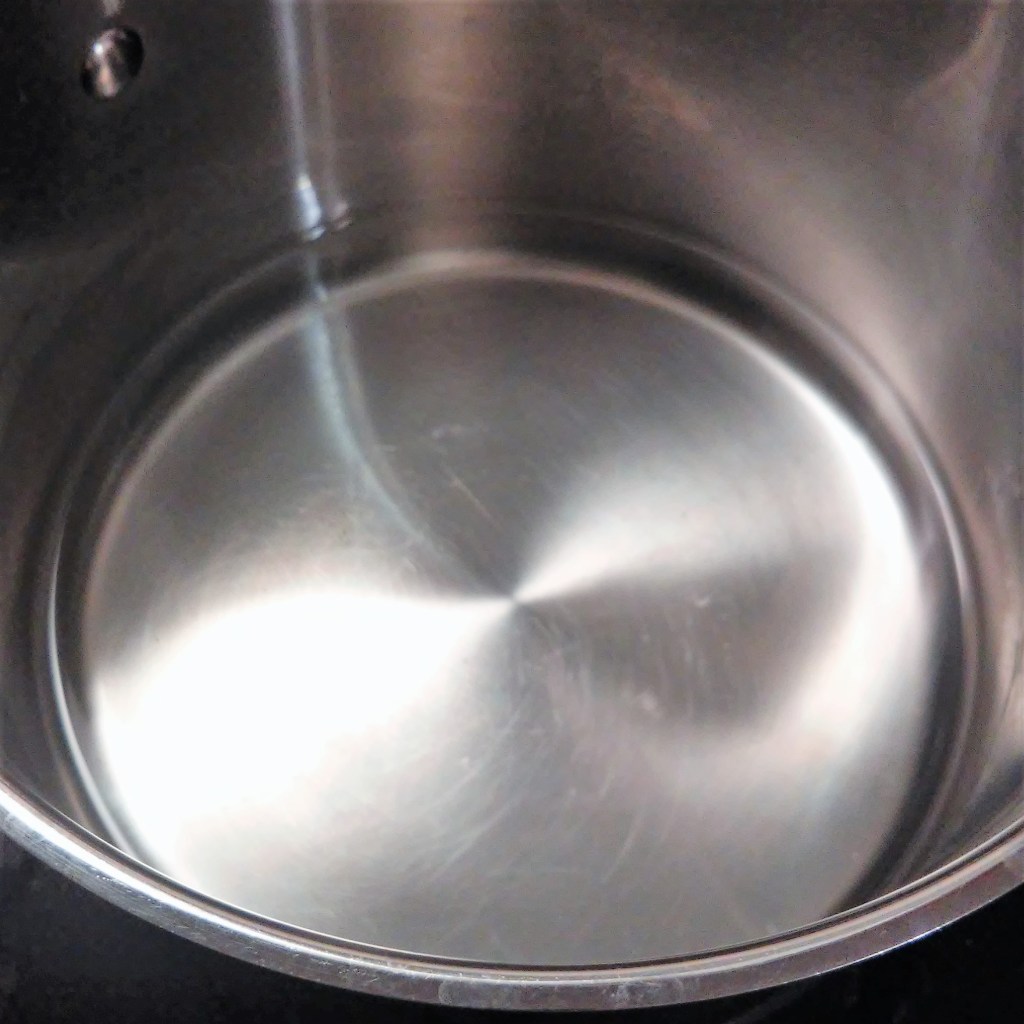
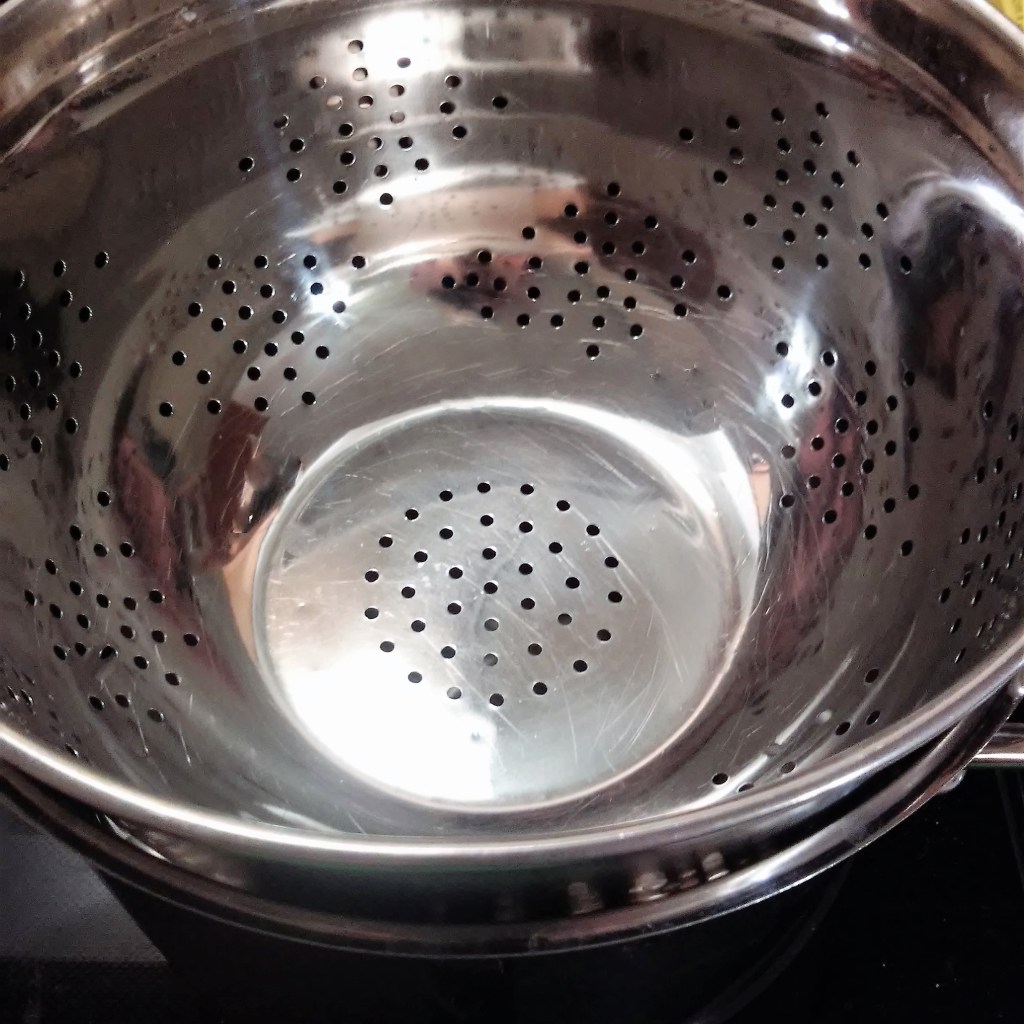
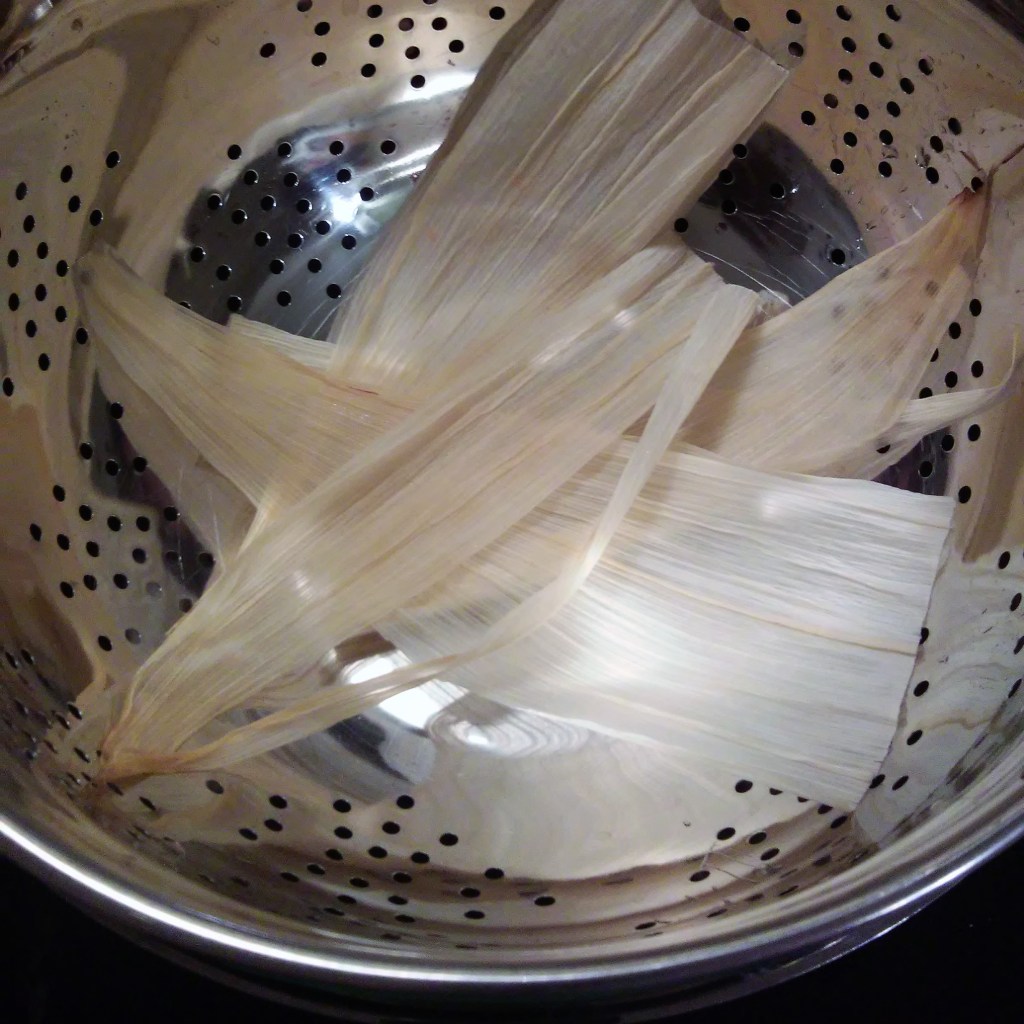
Prepare steamer: Fill the steamer bottom (or a large pot) with at least one inch of water (photo below, left), then place steamer basket on top, making sure the water does not touch. I do not own a large steamer, so I always use a metal colander fitted on top of a large pot (photo below, centre). Place a few of the smallest corn husks at the bottom of the basket/colander (photo below, right):
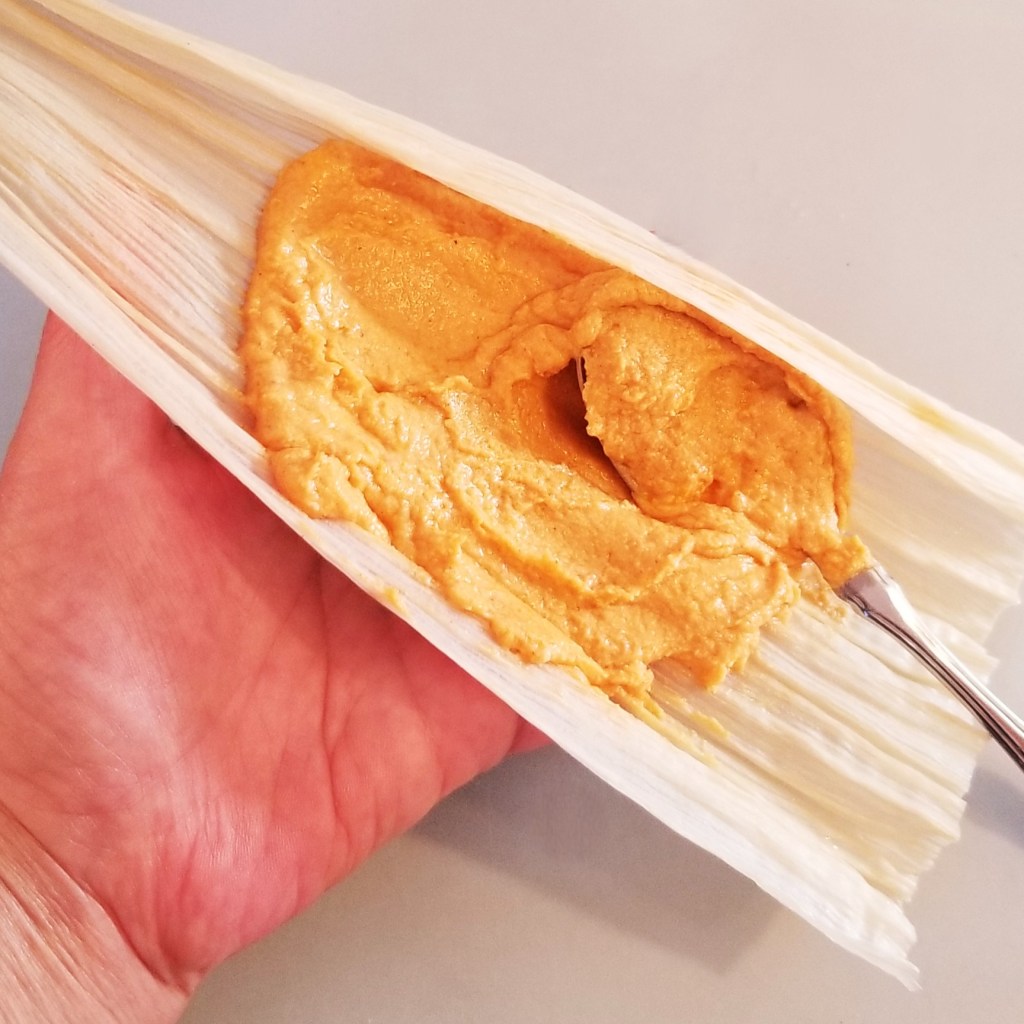
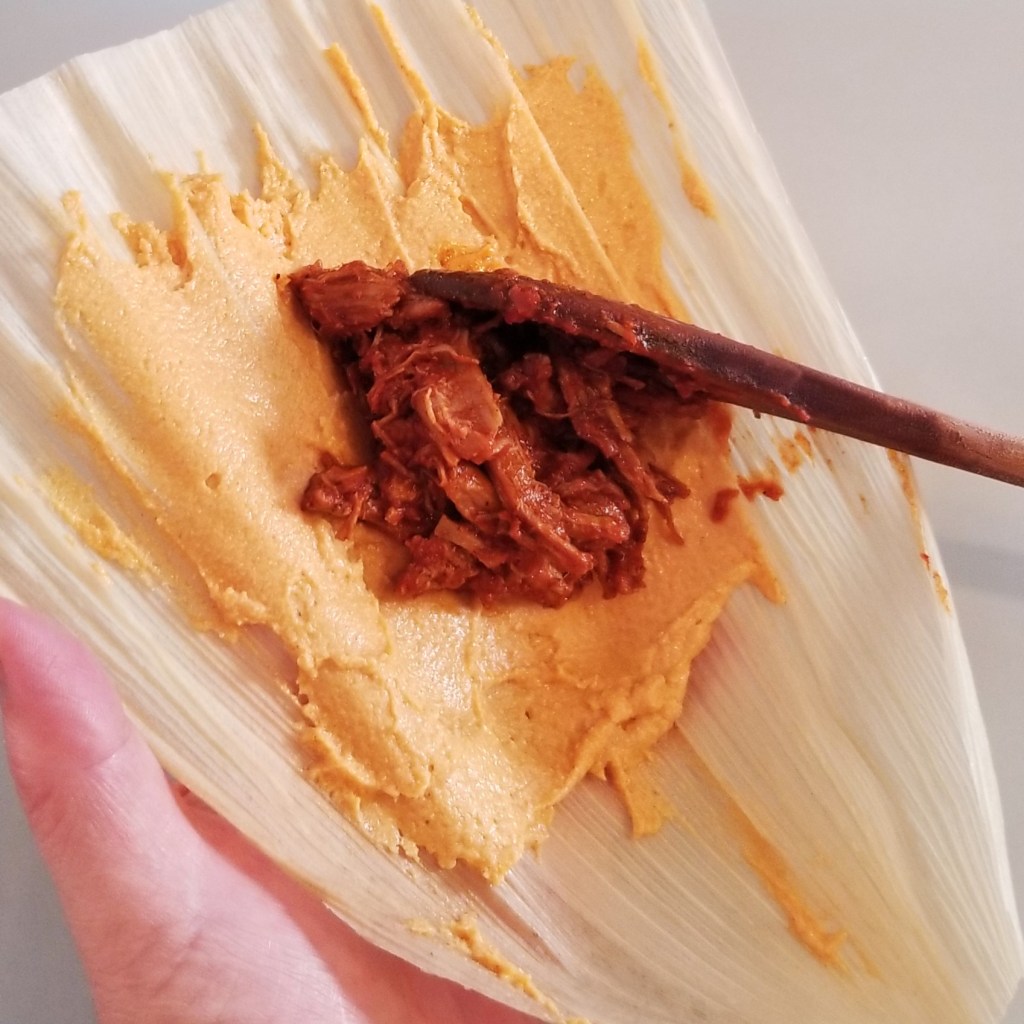
Assemble and cook tamales: Take one husk and scoop about a third of a cup of corn paste in the centre, spreading towards the sides (photo below, left); add some filling on top (photo below, right):
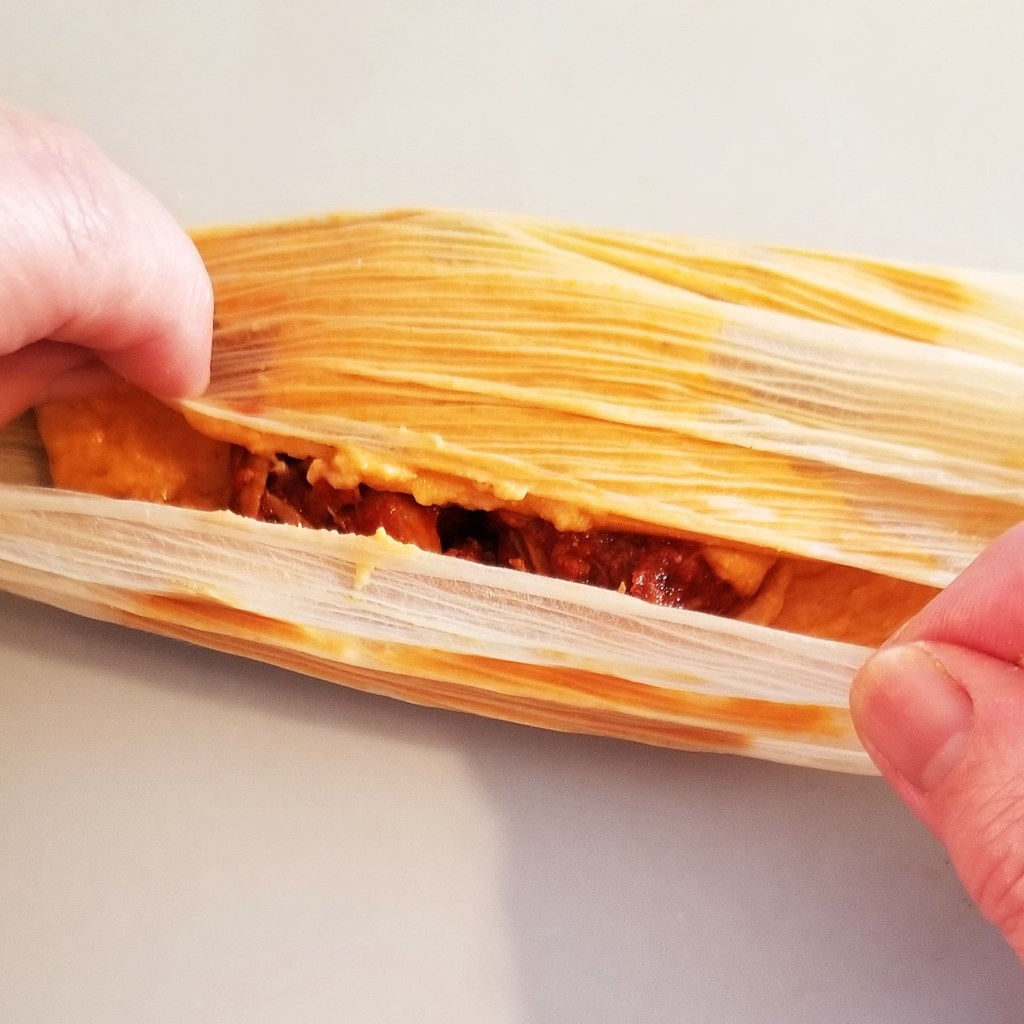
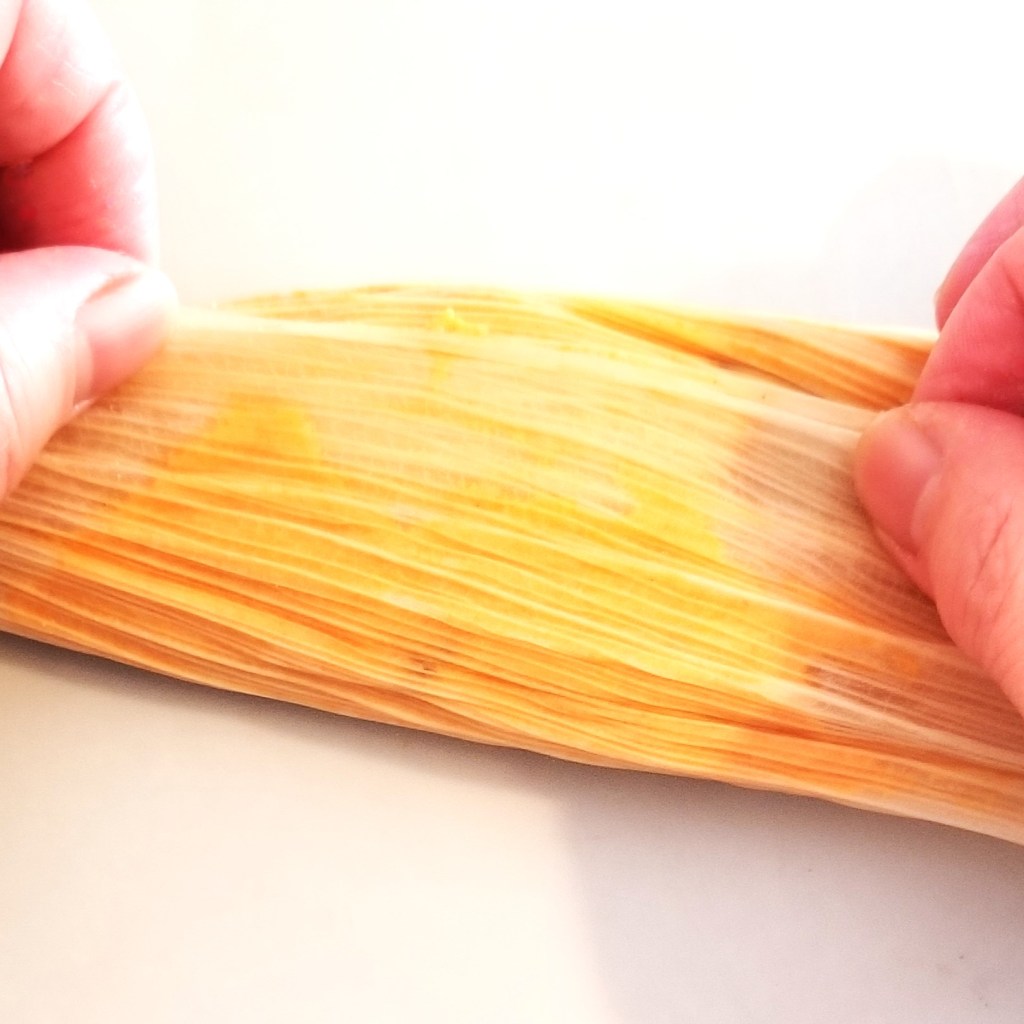
Fold edges towards each other (photo below, left), overlapping to close (photo below, right):
Holding the narrower end, press corn paste away from it with a finger or two (photo below, left), then fold narrow end over, to close the wrap (photo below, right):
Place tamale in the prepared steamer, propping vertically (photo below, left). Continue with more husks, paste and filling; insert remaining corn husks around the edge of the basket/colander, then fold to cover the tamales (photo below, right):
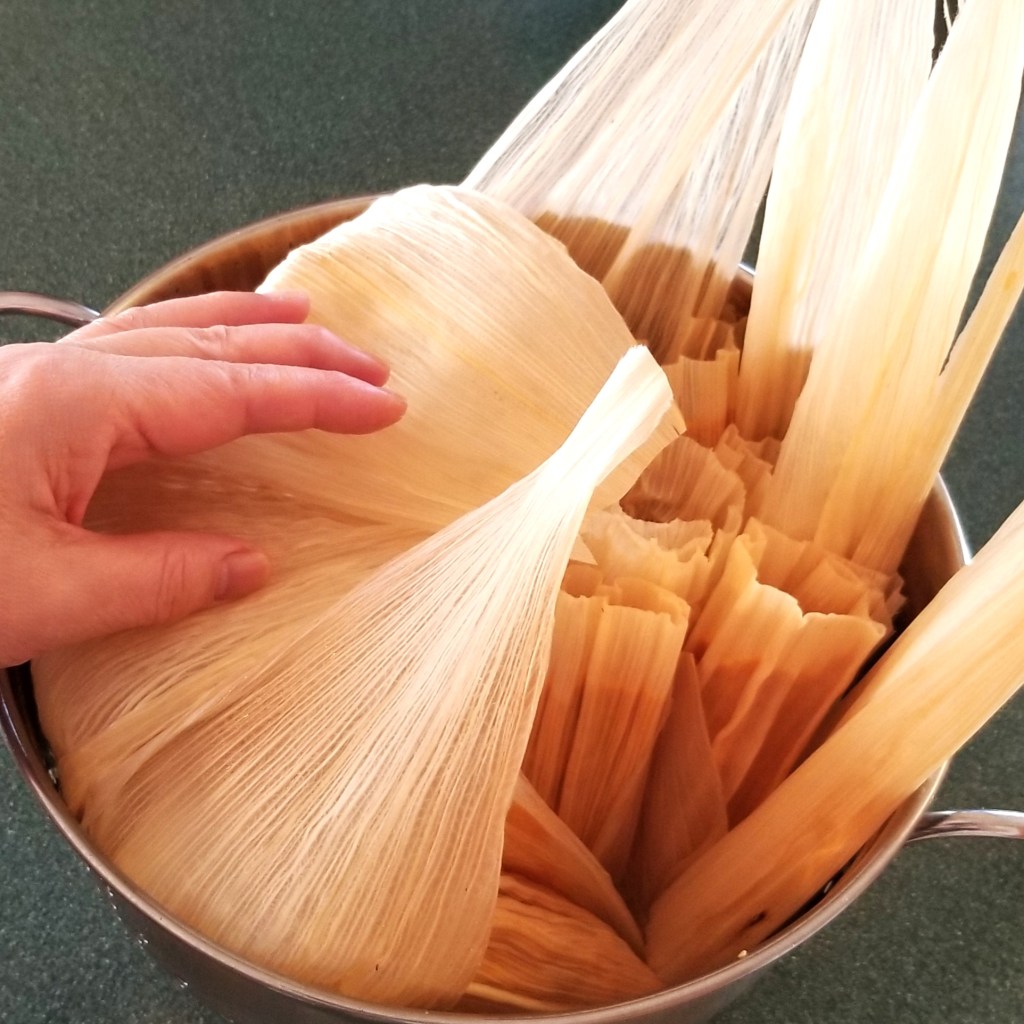
Top with a clean kitchen towel, tucking over the tamales inside the edge of the basket/colander, so the tamales will not get wet with condensation during steaming (photo below, left); place lid, completely closing the pot (photo below, right):
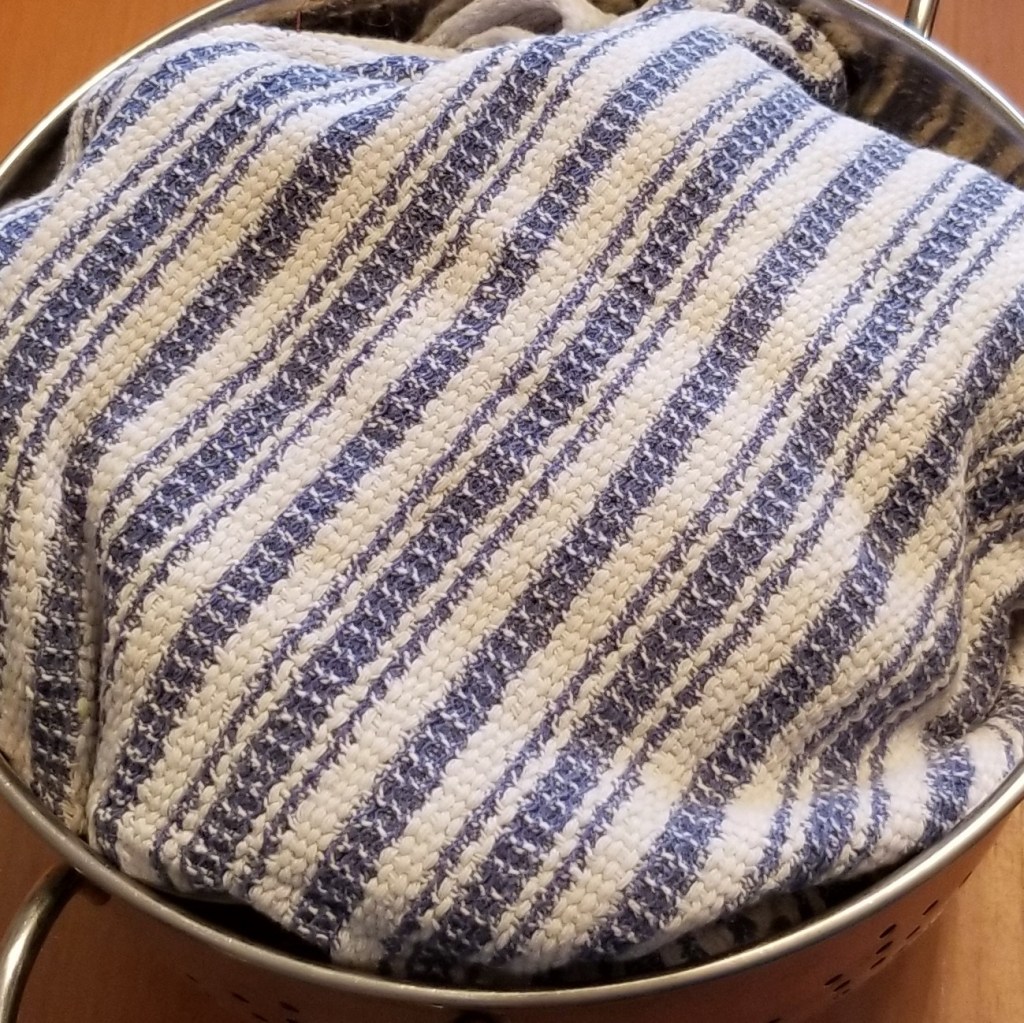
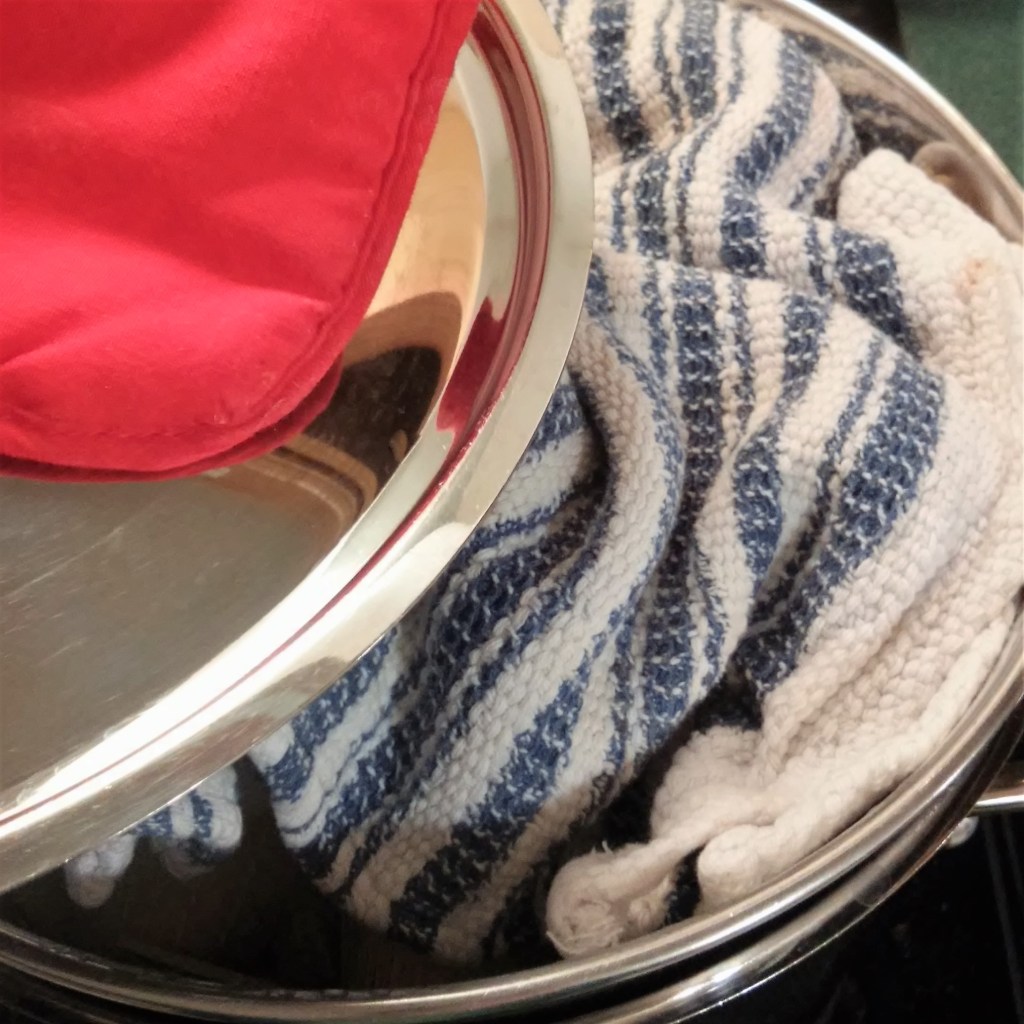
Place prepared steamer on the stove top, and bring water in the pot to a boil over high heat, then reduce to a rolling boil, and let tamales steam for at least one hour. Always check the bottom of the pot halfway through, to make sure it is not drying too fast; if needed, add boiling water.
Carefully open the pot and remove one tamale; check doneness by opening husk, the tamale is ready when it separates easily from the husk:
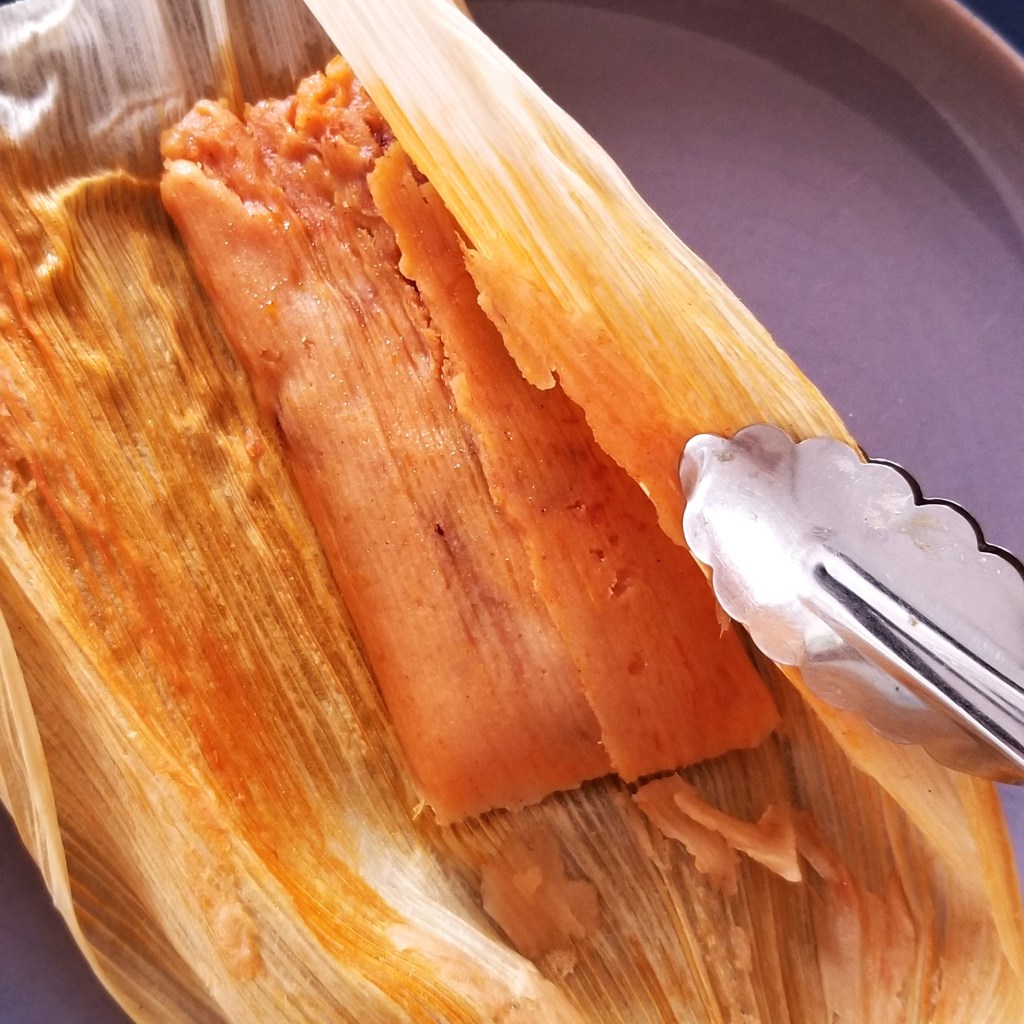
This batch took two hours, and I had to replenish the hot water midway.
Serve hot with a cup of atole, Mexican hot chocolate, or coffee:
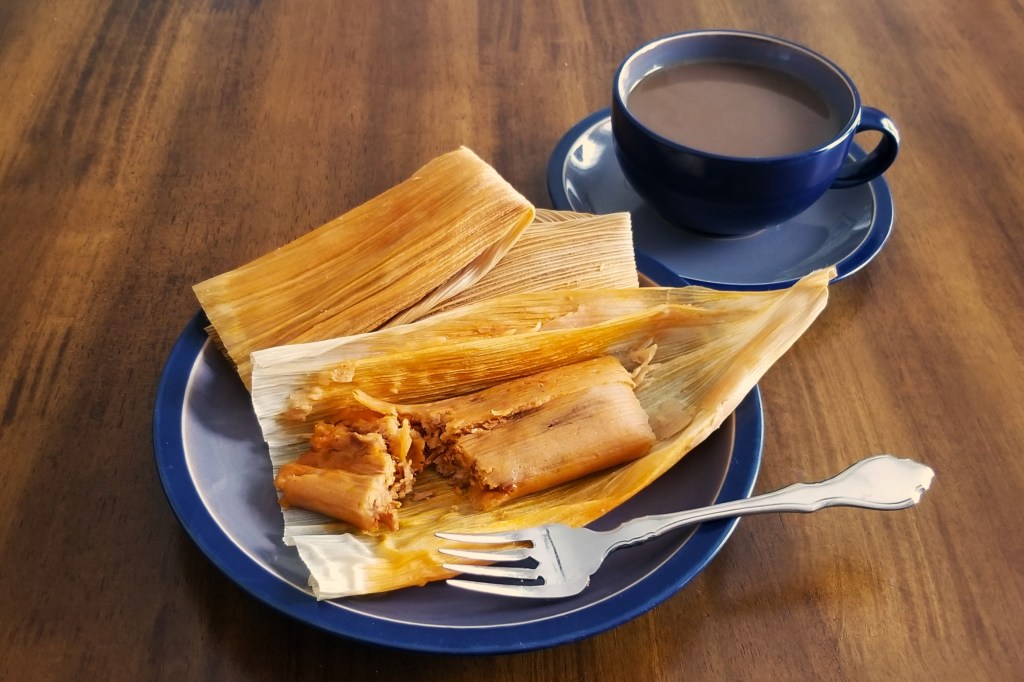
The flavours of the delicious pork in guajillo filling get a boost from the sauce in the corn paste, which has cooked into a porous wrap. This comforting meal brings back memories of Candlemas days in Mexico, even on a mid-winter blizzardy day here in Canada.
For your convenience, click on the highlighted text below for products available on Amazon™. DISCLAIMER: Any reviews included in this post are my own, for items I have purchased, not provided by any company; as an Amazon Associates Program affiliate, I might receive a commission for any purchases originated from the links below, at no extra cost to you. Thank you to readers who have bought other products starting with a click from my links!
I am bringing my recipe to Full Plate Thursday #731 with Miz Helen @ Miz Helen’s Country Cottage.
I am sharing my post at Thursday Favourite Things #695, with Bev @ Eclectic Red Barn, Pam @ An Artful Mom, Katherine @ Katherine’s Corner, Amber @ Follow the Yellow Brick Home, and Linda @ Crafts a la Mode.
I am joining Fiesta Friday #574 with Angie @ Fiesta Friday.



 My Slice of Mexico
Irene, much appreciated this recipe. Happy Candlemas! Happy to learn about the celebration. I remember the baby Jesus in bread for Mardi Gras. Are these 2 holidays connected, do you know?
LikeLike
Hi, MsJadeLi! All these holidays are definitely connected. Here is an excerpt from my post talking about it: “… French settlers in Louisiana and other Southern states brought the tradition of the King Cake to the United States in the 1800s. It became so popular that it continued to be enjoyed throughout the days between Epiphany Day and Fat Tuesday (Mardi Gras), the last day of celebrations before Lent; to this day, the cake is still known as King cake, and it is often decorated with green, purple and yellow (gold) coloured sugar, the carnival colours representing faith, justice and power, respectively…” the full story may be found in the post: https://mysliceofmexico.ca/2019/01/05/epiphany-bread/
LikeLiked by 1 person
Irene, I knew you would know. Much appreciated your educating me on it.
LikeLiked by 1 person
I have never had a tamale, but I’m ready to try them
LikeLiked by 1 person
Hope you like them!
LikeLiked by 1 person