

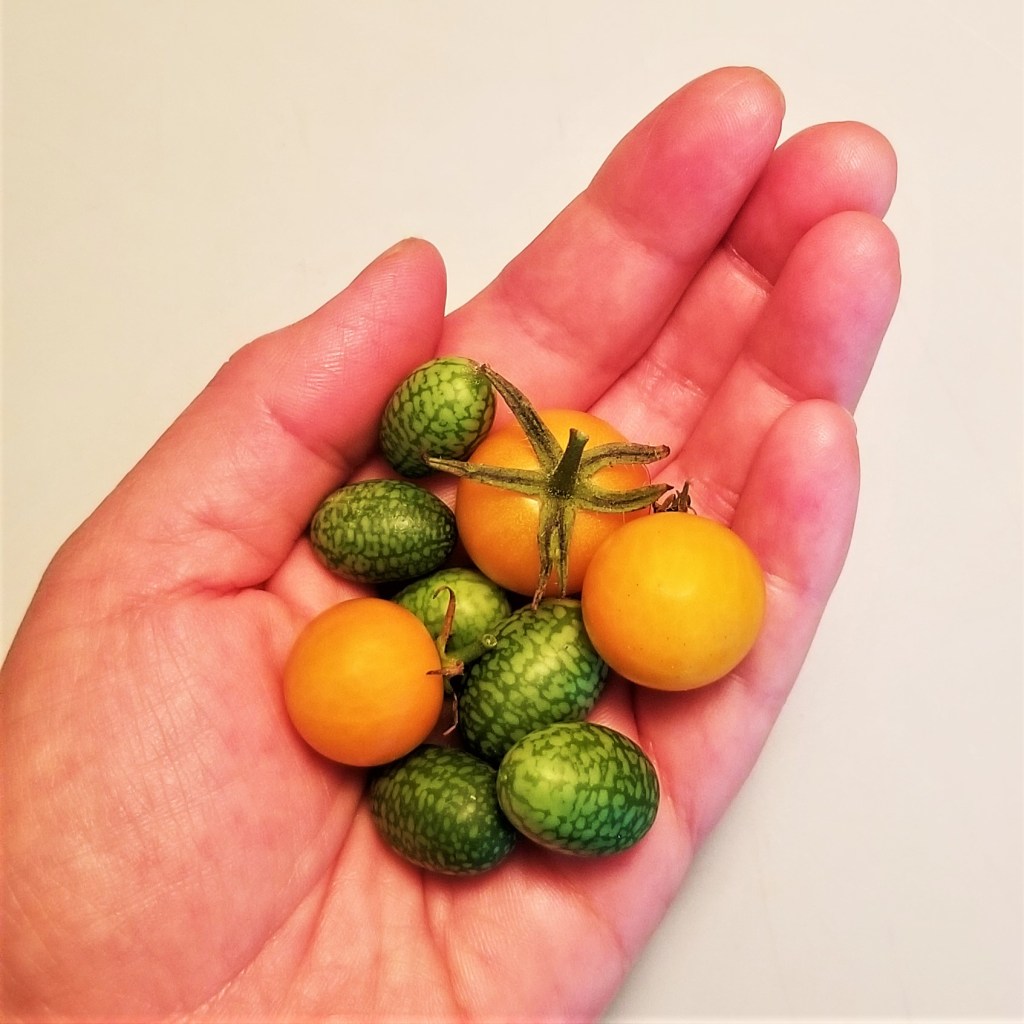
In a previous post, I introduced two crops with a playful vibe from my backyard garden, bright green cucamelon, and yellow-orange Sungold cherry tomatoes:
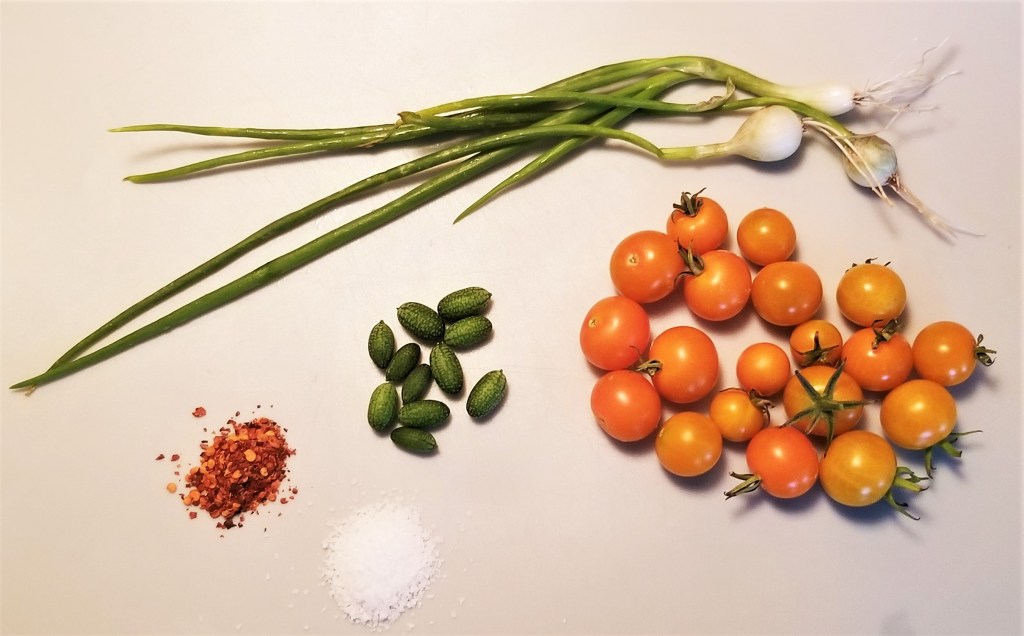
I added a few green onions (also from my garden), coarse salt, and crushed Chiltepín pepper (chili):
I simply washed and coarsely sliced the veggies, and seasoned with a sprinkle of the salt and crushed chili:
This salsa was so refreshing and delicious on its own, my husband and I ended up eating it by the spoonful, like a salad.
A rustic and simple dish, this salsa is also very interesting because all the ingredients could have been on a Mexican menu well before the arrival of European explorers or conquerors:
Sungold Cherry Tomatoes (Lycopersicon esculentum, Sungold) are a hybrid variety, but their small size and golden tone are probably similar to the first specimens of tomato that arrived to Europe from Mexico. The royal coterie in Spain found them suspicious at first since, to the neophyte, the plant looked similar to the highly poisonous deadly nightshade (Atropa belladonna), indeed both from the Solanaceae family. Italy was one of the first European countries to adopt the new fruit, where they were aptly named Pomo d’oro (golden apple).
The oldest wild relatives of the modern tomato were found in Ecuador, later spreading their range to Central America and Mexico, where they were domesticated, some 7,000 thousand years ago. The name tomato comes from the Nahuatl word tomatl, from tomohuac – fat and atl – water; the larger red varieties were developed separately, called in Nahuatl xictomatl, from xictli – navel as a prefix for tomatl, meaning “navel tomato”, to refer to the pronounced depression at the stem end. In central Mexico, red tomatoes are called jitomate (pronounced hee-tomah-teh) for this reason.
Green onions were available in pre-Hispanic Mexico, particularly a type of small onion (Allium glandulosum), native to Mexico and with a range all over the country; other varieties, similar to chives, are still found wild and in cultivated forms in the Yucatán (Maya) peninsula. From The history of Mexico: Collected from Spanish and Mexican Historians, Volume 1: “Onions were sold in the markets of Mexico, as Cortez mentions in his letters to Charles V, so that there was no necessity for importing them from Europe … the name Xonacatl, which is given to the onion, let[s] us understand that this plant was very ancient in this country, and never transplanted there from Europe.”
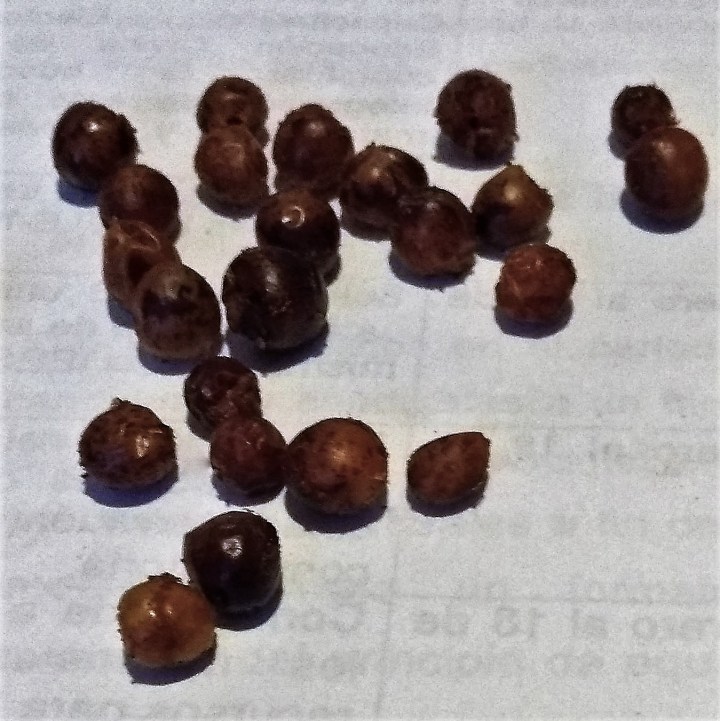
Chiltepín (Capsicum annuum var. glabriusculum) is a type of hot pepper (a.k.a. chili, chile) that grows wild in high grounds; probably one of the oldest varieties of capsicum, Chiltepín is the likely ancestor of domesticated peppers. In pre-Hispanic Mexico, these and other fruits of this kind were called chilli, and nowadays, chiles; it is probable that the round and small appearance of Chiltepín is what caused Spaniards to call it pimienta – pepper:
Salt has been an important commodity in Mexico since pre-Hispanic times; the Nahuatl name is iztatl. Coastal communities extracted salt from sea water, for example in the state of Colima. In central Mexico, several lakes presented different degrees of salinity from ancient mineral deposits, and salt and other mineral edible products, such as tequesquite, were exploited by clarifying lake sediments; many salt-processing communities in the area were named after it, such as Iztacalco, now a borough of Mexico City, and Ixtapan de la Sal in the neighbouring Estado de México. Salt was important not only as a condiment, but as a preservative, as well as a remedy for toothaches, gum disease, cough and throat irritation, and to mend wounds.
Cucamelon (Melothria scabra) is a member of the cucurbit family, along with squash, melons, and cucumbers. Its name is a form of “cucumber and melon” because it tastes similar to cucumber, and looks just like a miniature watermelon; botanically speaking, though, it is its own species, and unlike cucumber and watermelon’s Old World origins, this curious little fruit is native to Mexico and Central America. Francisco Hernández de Toledo (1514-1587) was a Spanish botanist and the physician of King Felipe II. In 1570, he was part of one of the first scientific expeditions to the New World colonies. Hernández studied medicinal plants and animals for seven years, collecting samples, interviewing natives, and conducting medical studies in Mexico. In his texts, Hernández described over 3, 000 plants, many in their original native names, or with a root from them, including vanilla (tlilxochitl), cocoa (cacaua), tomato (tomatl), and chiles (chilli). The original texts were written in Latin, later translated to Spanish and Nahuatl; the complete works in Spanish were compiled by the National University of Mexico (UNAM), and may be found in their library and on their website; in Historia Natural de la Nueva España 1, volume II, chapter XIV, Hernández describes cucamelon:
“Del TOMPILILLIN o tzilacayotli
Tiene el TOMPILILLIN raíz fibrosa de donde nacen tallos volubles que arrastran por la tierra, con hojas sinuosas y de tres puntas, flores oblongas y amarillas contenidas en cálices, y frutos no mayores que bellotas, blandos, llenos de jugo, comestibles, de sabor ácido y agradable, y que imitan en todo la naturaleza de los melones, entre cuyas especies tal vez deben clasificarse aunque son mucho más pequeños, pues como ya dijimos no exceden en tamaño a las bellotas. Son de temperamento frío y seco, y los comen los indios, principalmente cuando han tenido fiebre. La raíz es fría y húmeda, y muy provechosa para los que tienen fiebre. Nace en Hoaxtépec, en Tepoztlan y en otras muchas regiones cálidas.”
A lose translation: “About Tompillin or tzilacayotli – Tompillin has fibrous roots from which grow winding stems that crawl on the ground, with sinuous three-point leaves, oblong yellow flowers contained in a calyx, and fruits no bigger than acorns, soft, juicy, edible, with a sour and pleasant taste, imitating in all ways the nature of melons – for which this plant should be classified amongst their species – although much smaller, as we have said, no bigger in size than acorns. Having a cold and dry temperament*, the Indians [natives] eat them when they have had a fever. The root is cold and moist, and very nurturing for those running a fever, too. It grows in Hoaxtépec [Oaxtepec, Morelos], in Tepoztlan [also in Morelos] and in many other warm regions.”
* NOTE – A “cold and dry temperament” and “cold and moist” are probably references to the Four Humours of the Body Theory, described by Hippocrates and further developed by Galen. The first believed that a healthy body would have a balance of four humours (black bile, yellow bile, phlegm and blood), and ailments (and their treatment) could be classified depending on the humour imbalances of the patient; the latter established four temperaments related to four qualities (cold, warm, dry and moist), and another four temperaments of combinations of these qualities: warm and moist (sanguine), warm and dry (choleric), cold and dry (melancholic), and cold and moist(phlegmatic).
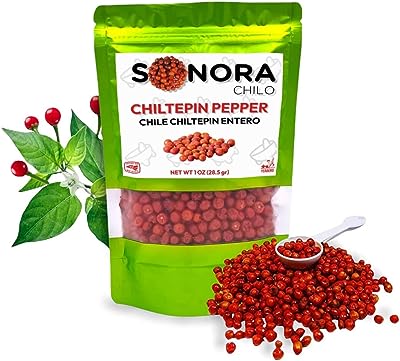
For your convenience, click on the highlighted text below for products available on Amazon™. DISCLAIMER: Any reviews included in this post are my own, for items I have purchased, not provided by any company; as an Amazon Associates Program affiliate, I might receive a commission for any purchases originated from the links below, at no extra cost to you. Thank you to readers who have bought other products starting with a click from my links!

I am bringing my recipe to Full Plate Thursday #658 with Miz Helen @ Miz Helen’s Country Cottage.
I am also sharing my post at Thursday Favourite Things #626, with Bev @ Eclectic Red Barn, Pam @ An Artful Mom, Katherine @ Katherine’s Corner, Amber @ Follow the Yellow Brick Home, and Linda @ Crafts a la Mode.
I am joining Fiesta Friday #502 with Angie @ Fiesta Friday, this week co-hosting with Jhuls @ The Not So Creative Cook.







That looks delicious, Irene. The cucamelon are so interesting.
LikeLiked by 1 person
Thank you, Tracy. I am really enjoying the cucamelons; productive vines, and tasty little fruits, just pop them in your mouth.
LikeLiked by 1 person